

Malaysia — From Historic Malacca to Kuala Lumpur
After four days in Singapore, it was time to shoulder the backpack again and cross into Malaysia.
My first destination was supposed to be Malacca, also officially known as Melaka, before continuing north to Kuala Lumpur.
I say supposed to be, because getting there didn’t quite go according to plan.
Malacca — Day 1: An Unexpected Start
Weather: Sunny intervals with evening rain, 32°C
The Overnight Journey from Singapore
I left Singapore on an overnight bus at 12:55 am, expecting to wake up somewhere near Malacca.
Instead, I ended up in Kuala Lumpur.
Not quite the plan.
Fortunately, the coach driver was heading back towards Singapore and agreed to take me back towards the correct drop-off point.
By the time I finally arrived, the heat was intense. Even walking about 250 metres with my backpack left me drenched in sweat.
I eventually managed to get a taxi from the motorway drop-off point, and the 25-minute drive into Malacca gave me a welcome opportunity to cool down.
Long-term independent travel doesn’t always run smoothly.
Sometimes you simply have to work out where you are, where you’re supposed to be and how you’re going to get there.
“Oh Dear”
When we finally stopped outside my accommodation, my first thought was:
“Oh dear.”
From the outside, it didn’t look particularly promising.
Then I walked through the door.
What a difference.
I had a large room with a queen-sized bed, and the owner was friendly and extremely accommodating.
It was another reminder not to judge accommodation entirely by its exterior.
At approximately NZ$32.60 for two nights, it was also excellent value.
First Impressions of Malacca
Malacca was busy with tourists from many different countries, including large numbers arriving on organised bus tours.
It reminded me slightly of Venice — or even Tauranga when a cruise ship arrives.
Hundreds or thousands of visitors appear, explore for several hours and then disappear again.
I was glad I had decided to stay.
My accommodation was on the outskirts of the historic centre, away from much of the tourist bustle. That gave me the best of both worlds: I could walk into the old town but retreat somewhere quieter afterwards.
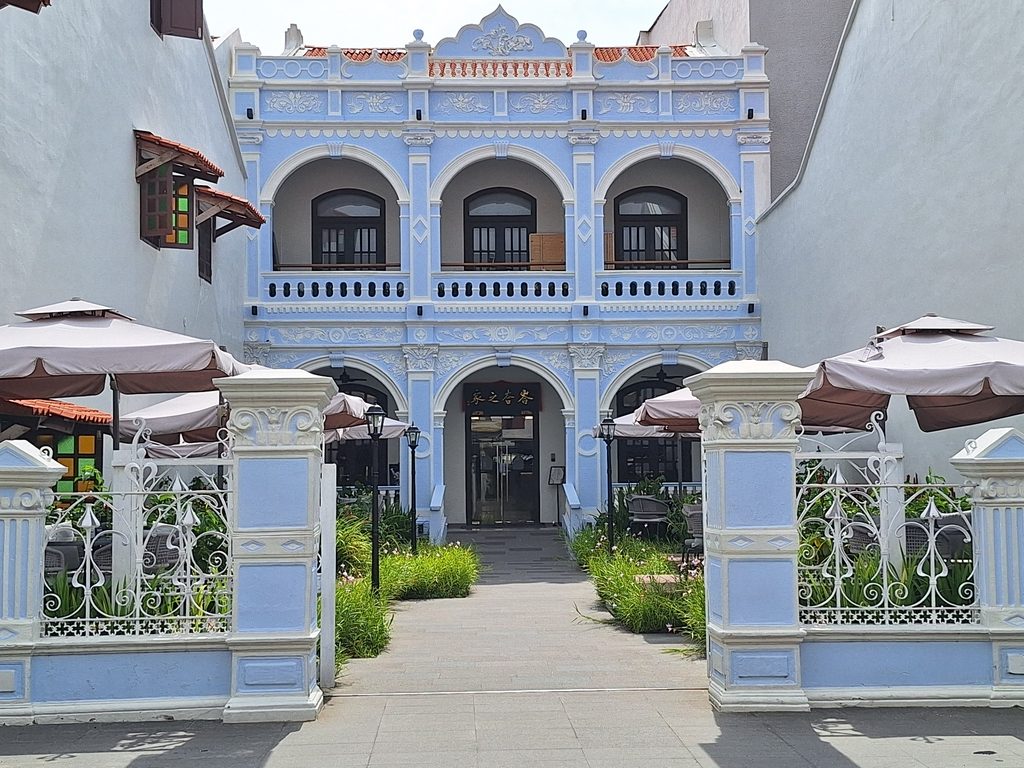
Baba House Melaka in the historic streets of Malacca, Malaysia
As I wandered through the old streets, Baba House Melaka was one of the buildings that caught my attention. Its traditional appearance was another glimpse of the city’s rich cultural heritage and a reminder that away from the busy tourist areas, Malacca’s history could be found simply by walking its streets.
The centre was filled with restaurants, shops and endless tourist trinkets — the sort of things that seem essential when you’re travelling and leave you wondering why you bought them when you eventually get home.
With everything I owned travelling on my back, I wasn’t particularly tempted.
Eating Away from the Tourist Areas
One lesson I was already learning was that food became considerably cheaper once I moved away from the main tourist streets.
I found a simple stir-fried pork meal for around RM6, roughly NZ$2.34 at the time.
It wasn’t fine dining, but it was inexpensive, filling and local.
Alcohol was a different story.
Imported beer and wine could be surprisingly expensive compared with the food. After paying a premium for a beer, I also discovered that sometimes a generous head occupied rather more of the glass than I would have preferred.
If I’m paying for a pint, I rather like receiving something reasonably close to a pint.
Cheap accommodation and inexpensive local food, however, more than compensated for the occasional expensive drink.
And many of the things I wanted to see could be explored simply by walking.
Malacca — Day 2: Exploring My Surroundings
Weather: Sunny intervals with evening rain, 33°C
Breakfast with My Host
My host served me an unusual sweet black-bean dish for breakfast.
I wasn’t entirely sure what was in it, but trying unfamiliar food is part of travelling.
After breakfast, I set out on foot.
The river was already busy with tourist boats as I followed it towards one of Malacca’s best-known areas — Dutch Square, often called Red Square.

Dutch Square
You certainly can’t miss it.
The historic buildings around the square are painted a distinctive terracotta red.
Among them are the Stadthuys and Christ Church, while the Queen Victoria Fountain stands nearby.
Dutch Square
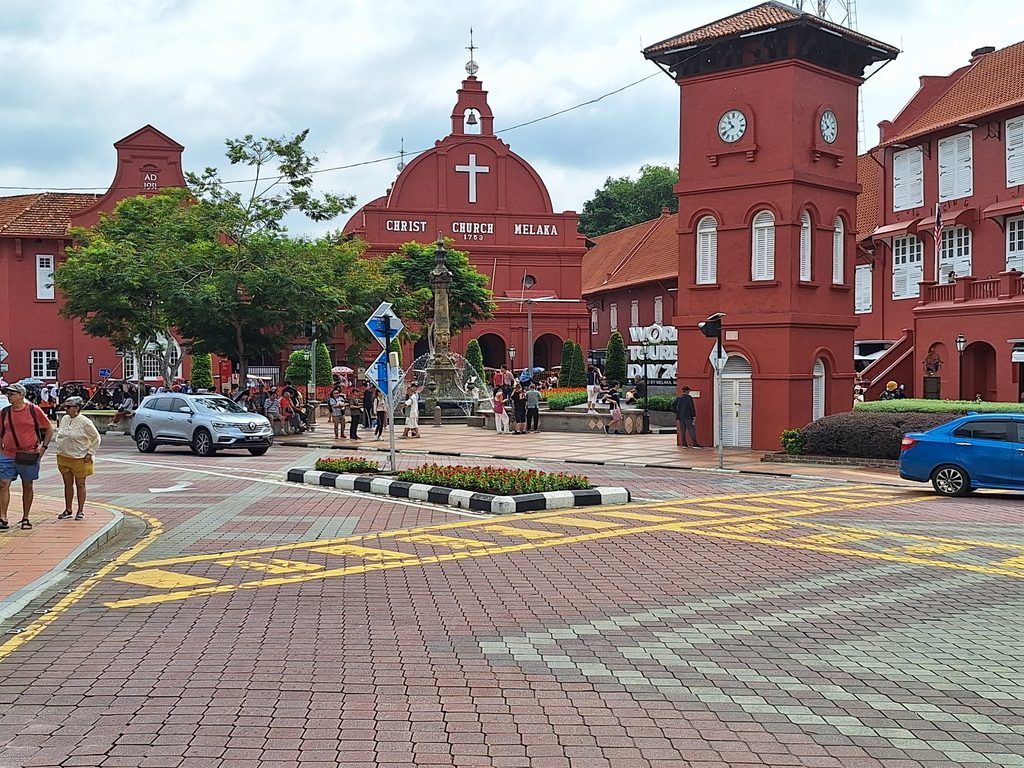
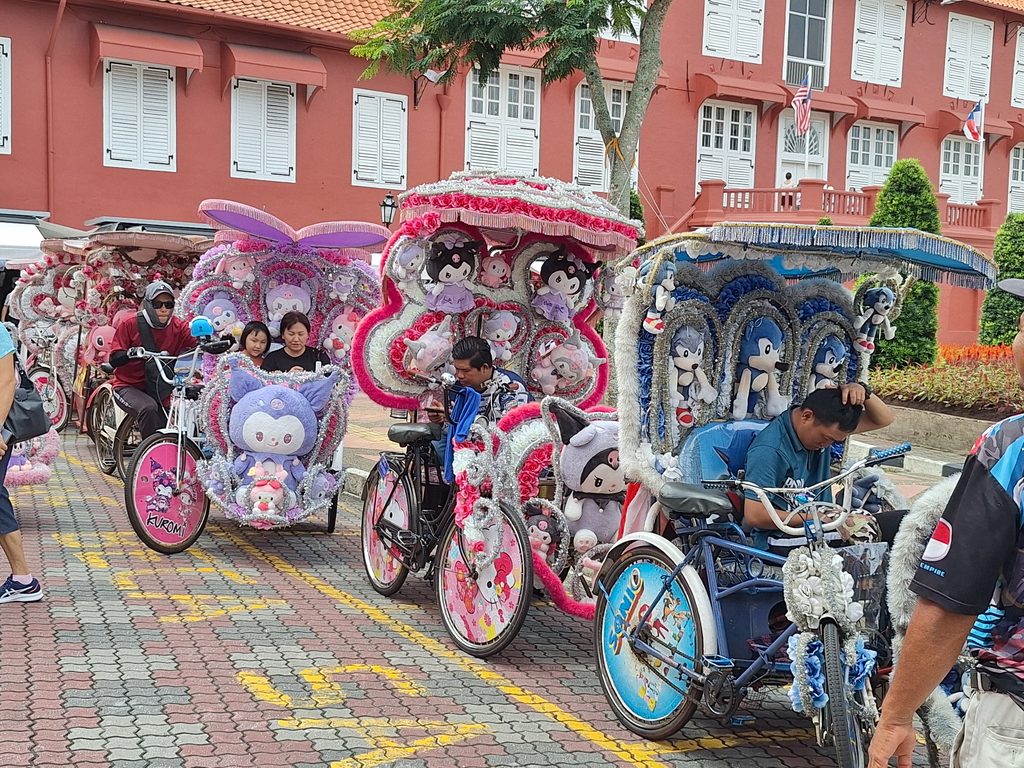
The architecture reflects Malacca’s long colonial history.
Over the centuries, control of this strategically important trading port passed through Portuguese, Dutch and British hands.
Today the square is packed with visitors and cameras, but the buildings are reminders of how important Malacca once was to maritime trade between Asia and Europe.
Porta de Santiago
Continuing my walk through the historic centre, I came across Porta de Santiago, one of the surviving remains of the old Portuguese fortress of A Famosa.
The fortress dates back to the early 1500s, when the Portuguese controlled Malacca. Much of it has disappeared over the centuries, but the old gateway remains as a reminder of the different colonial powers that once fought for control of this important trading port.
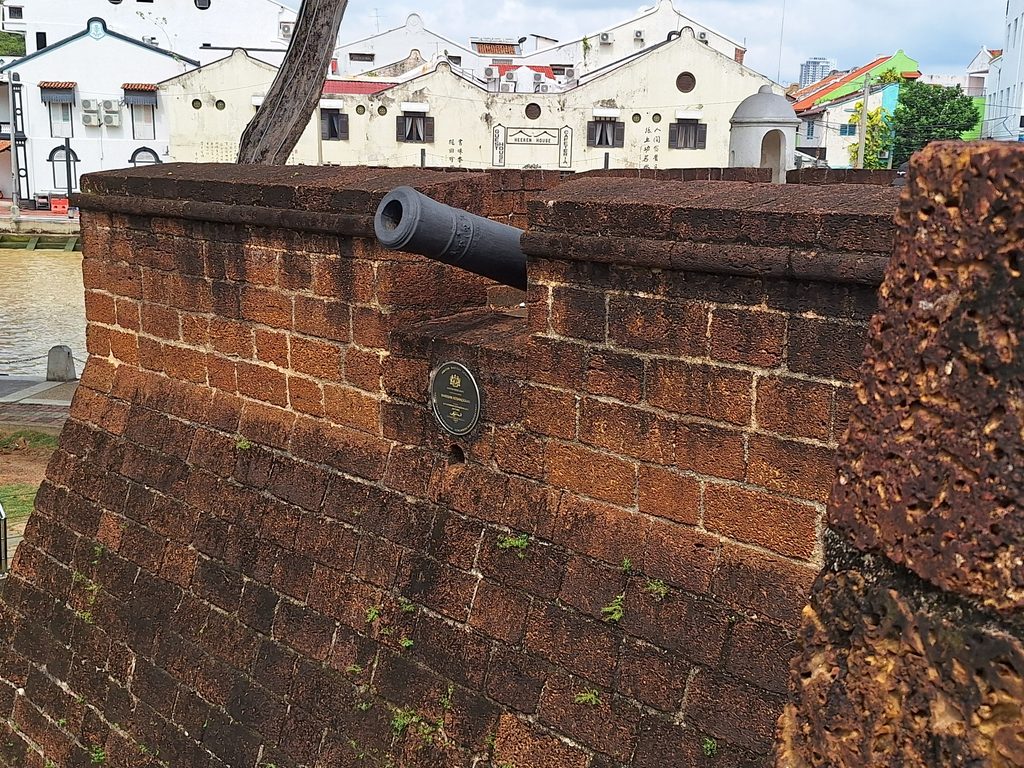
Historic cannon at Porta de Santiago in Malacca, Malaysia
Nearby, an old cannon added to the feeling that I was walking through another chapter of Malacca’s history.
Eight Kilometres Was Enough
By the time I had walked around 8 kilometres, the heat was taking its toll.
I returned to my accommodation for a couple of hours to rest.
This was becoming an important part of travelling in my seventies.
I didn’t have to prove anything by walking continuously through tropical heat.
If my body told me it needed a break, I took one.
Later, with the temperature becoming slightly more manageable, I headed back out.
Busy Friday night market in Malacca, Malaysia

The night market was incredibly busy.
The smells of cooking filled the streets as stallholders prepared every imaginable type of food.
There were also souvenirs everywhere.
Fortunately, travelling with a backpack provides an excellent cure for unnecessary shopping.
Every time you’re tempted to buy something, you only need to ask:
“Do I really want to carry this for the next several thousand kilometres?”
Usually, the answer is no.
Gravy Baby in Malacca, Malaysia
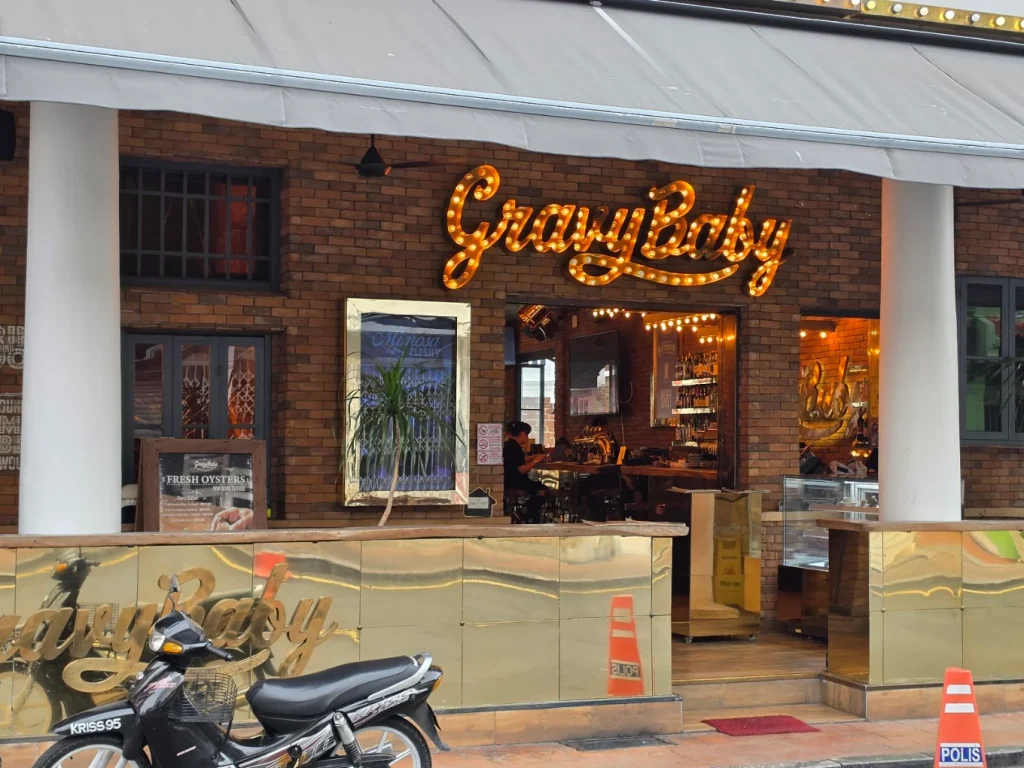
Eventually, I came across somewhere with a name that immediately caught my attention:
Gravy Baby.
For some reason it reminded me of Mike Myers and characters who seemed to finish everything with “baby.”
I asked the staff about the name, but the language barrier didn’t get me very far.
Whatever the story behind it, the name certainly stuck in my memory.
Afterwards, I headed back to my accommodation.
Even with a fan running throughout the night, it was hot.
Tomorrow I would be moving again.
This time, hopefully, I would arrive in Kuala Lumpur intentionally.
Kuala Lumpur — Day 1
Weather Update: Partly cloudy with sunny intervals. High 32°C.
The Journey to Kuala Lumpur
The day started a bit rocky. I had ordered a taxi for 8 am, but it never showed up. Thankfully, my host stepped in and arranged a Grab car to the bus station.
The journey was nerve-racking as the driver spent far too much time on his mobile phone, texting and talking while travelling at around 100 km/h.
I managed to take his photo and kept my ticket and the bus number because I was seriously considering making a complaint. Driving while using a mobile phone is dangerous enough, but doing it with passengers on board made it even worse.
Eventually, though, I arrived safely in Kuala Lumpur.
Arriving in the City
The weather was scorching hot, and walking around was exhausting.
Fortunately, I had booked accommodation close to the Metro and various facilities.
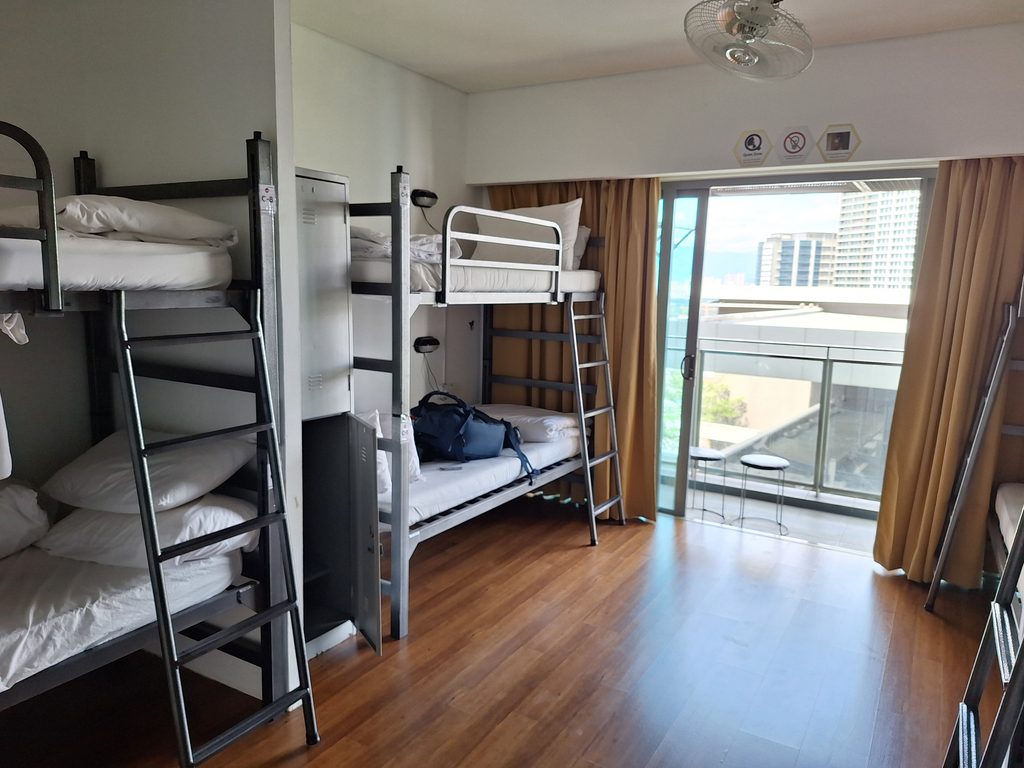
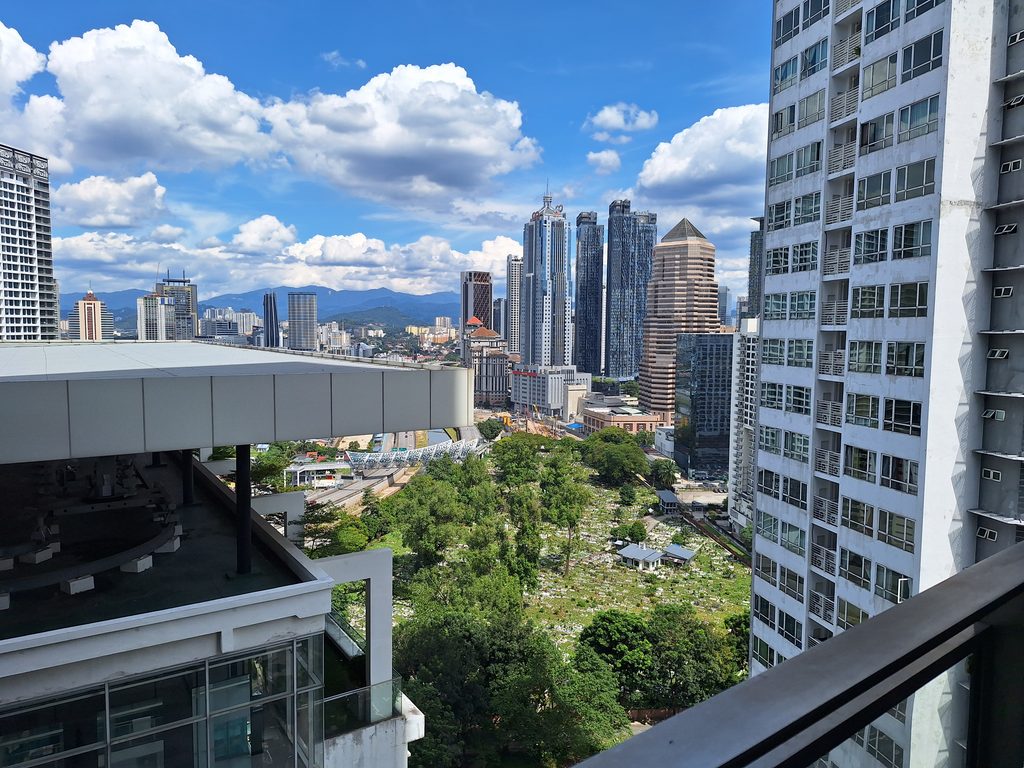
My accommodation was on the 26th floor, giving me a tremendous view across Kuala Lumpur, including one half of the famous Petronas Twin Towers.
Exploring Kuala Lumpur
Street food in Kuala Lumpur was delightfully inexpensive.
I found a meal for just RM9, which was about NZ$3.51 at the time.
Avoiding the obvious tourist traps for food and drink can make quite a difference to the budget. Even something as simple as a Tiger beer could cost considerably more in a tourist bar than buying one from a local convenience store.
Kuala Lumpur After Dark
That evening, I sat on the balcony on the 26th floor looking across the city.
The buildings were beautifully illuminated, with lights stretching into the night sky.
I had a decision to make.
Should I continue admiring the view or watch Netflix?
Netflix won.
It had been an interesting first day in Kuala Lumpur, and tomorrow I was heading somewhere completely different.
Batu Caves.
Kuala Lumpur — Day 2: Batu Caves
Weather Update: Sunny with cloudy periods. Thunderstorms expected during the evening. High 32°C.
A Restless Night
Last night was restless.
It was hot, and I had itchy feet, which made sleep difficult. Despite that, my curiosity about the Batu Caves had me eager to get moving.
Visiting Batu Caves
I had read about Batu Caves before arriving.
My own faith is rooted in Christianity, but travelling gives me an opportunity to see and understand how other people practise their beliefs.
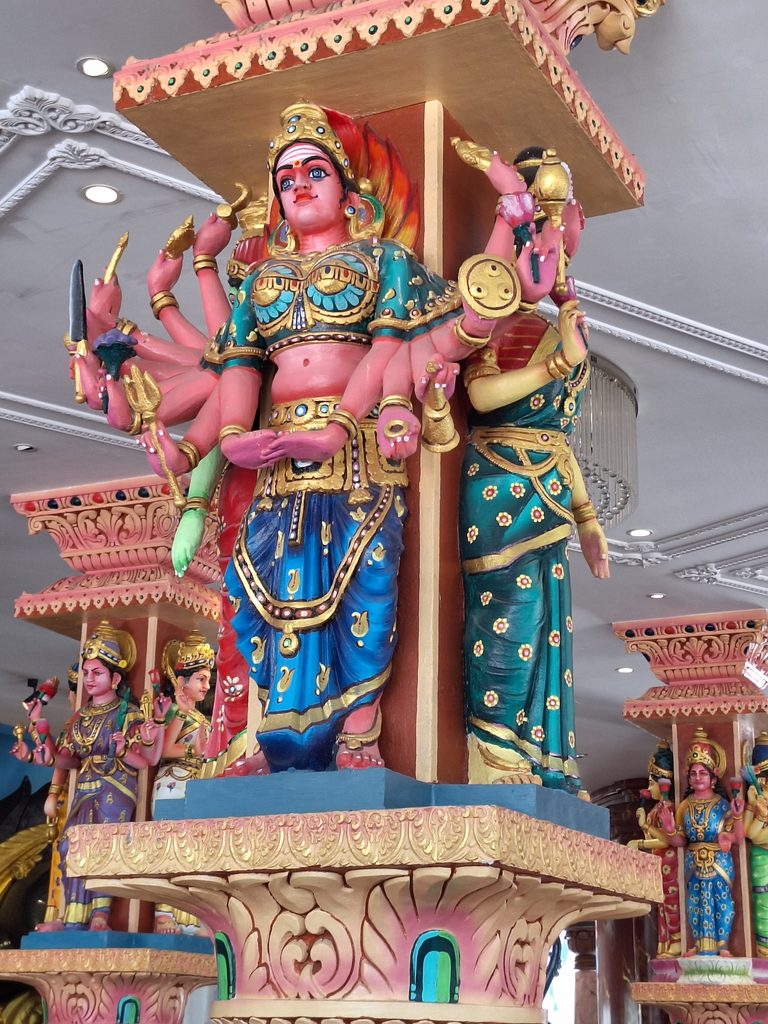
Batu Caves is one of Malaysia’s most important Hindu religious sites, with temples, shrines and statues set around an extraordinary limestone cave system.
Among the religious figures I saw were Lord Hanuman, Lord Murugan and Goddess Durga.

Whatever your own beliefs, the colours, statues and scale of the complex make quite an impression.
The enormous golden Lord Murugan Statue, standing at the foot of the staircase, is particularly difficult to miss.
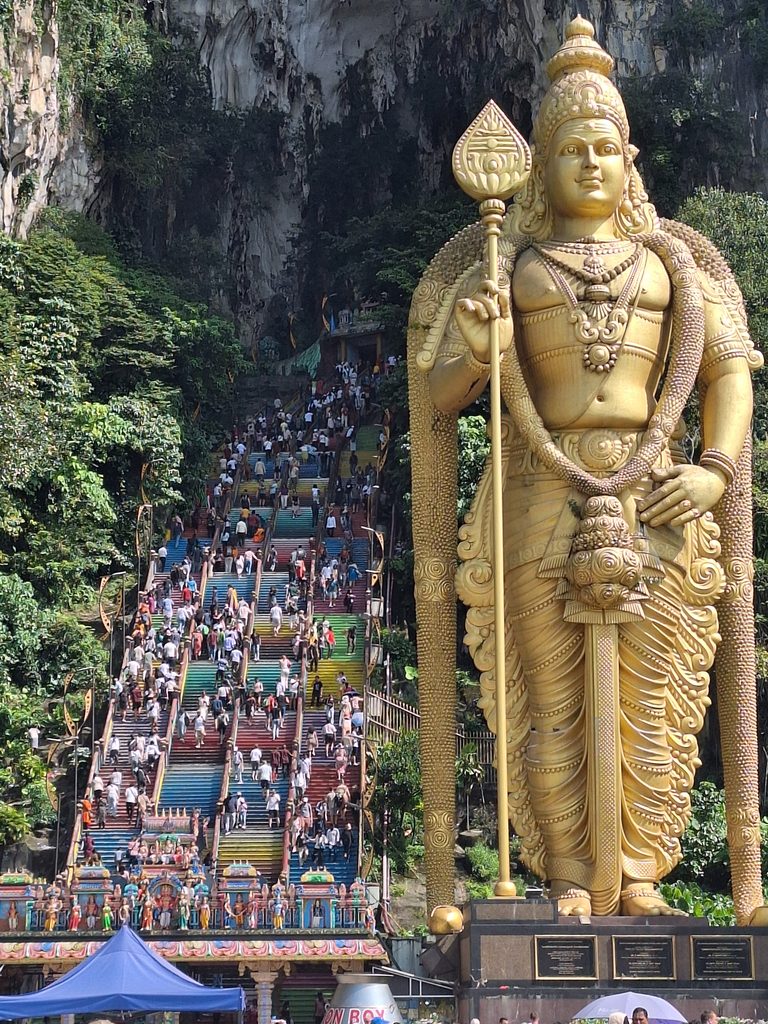
Busloads of tourists and worshippers were arriving, and it was the first time I had witnessed devotion on this sort of scale.
I respected that.
For me, travelling isn’t about expecting other people to believe what I believe. It’s also about seeing how other people live, worship and understand the world.
Those 272 Steps
Then came the climb.
To reach the main Temple Cave, there are 272 steps.
In 32°C heat, it was exhausting.
The staircase is steep, and I certainly wasn’t going to rush it. By the time I reached the top, I was dripping with sweat and extremely grateful to get my hands on a bottle of water.
The original staircase was wooden before being replaced with concrete steps, and today the brightly coloured staircase has become one of the most recognisable sights at Batu Caves.
For senior travellers, my advice is simple:
Take your time, carry water and don’t turn the climb into a race.
Once inside, the enormous limestone cave opens above you with Hindu temples and shrines incorporated into the natural surroundings.
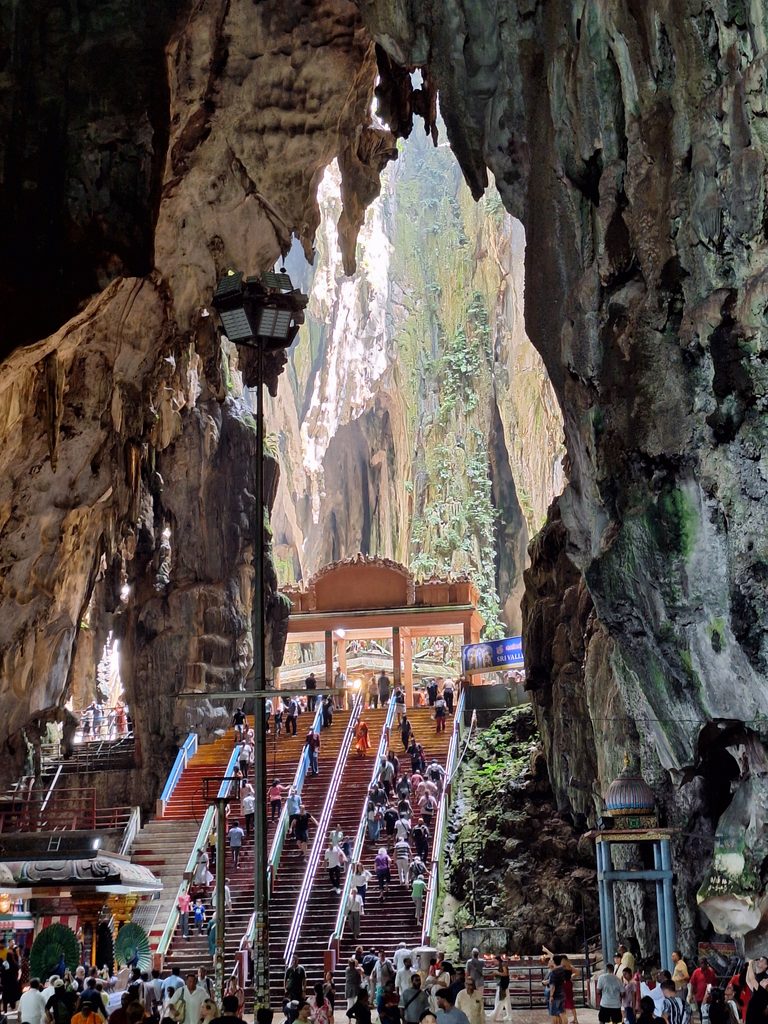
It was worth the climb.
Watch Out for Monkeys
There is another thing to watch at Batu Caves.
Monkeys.
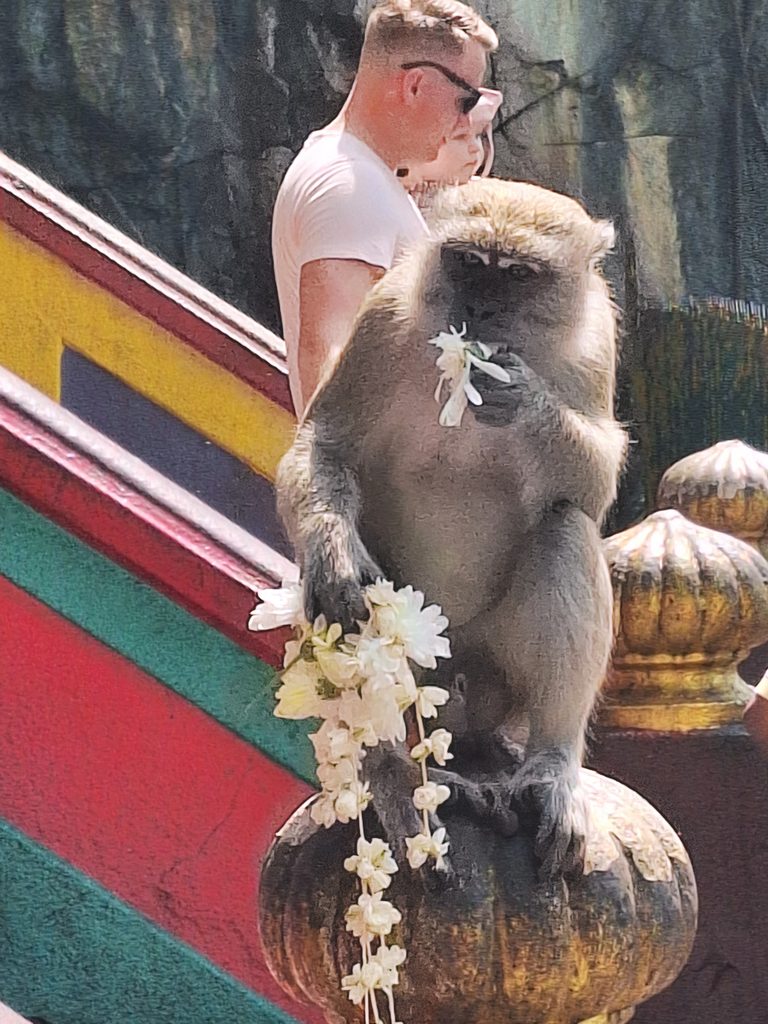
They may look harmless, but they are extremely good at spotting food.
If you’re carrying an ice cream, banana or another snack, don’t be surprised if a monkey decides it would rather have it.
I encountered several during my visit and kept a close eye on anything I was carrying.
Markets, Religion and Tourism
Around the temples was a bustling market atmosphere, with vendors selling street food, trinkets, souvenirs and religious items.
The commercial side of such an important religious site was interesting to observe.
Entry to the main complex was free, but there were certainly plenty of opportunities to spend money once inside the surrounding area.
Enough for One Day
After visiting Batu Caves, I headed towards Central Market and Chinatown.
By the time I arrived, though, I was exhausted.
The heat, walking and 272 steps had caught up with me, so rather than push myself further, I headed back towards my accommodation and relaxed for a couple of hours.
Chinatown could wait until tomorrow.
Kuala Lumpur — Day 3: Disappointing, But That’s Life
Weather Update: Hazy with sunny intervals. High 34°C.
A Sluggish Start to the Day
It was another very hot day.
Even at 10 am, moving around was becoming hard work as the temperature climbed quickly towards 34°C.
I travelled by Metro to Independence Square — Dataran Merdeka.
Independence Square
Independence Square sits in front of the impressive Sultan Abdul Samad Building.
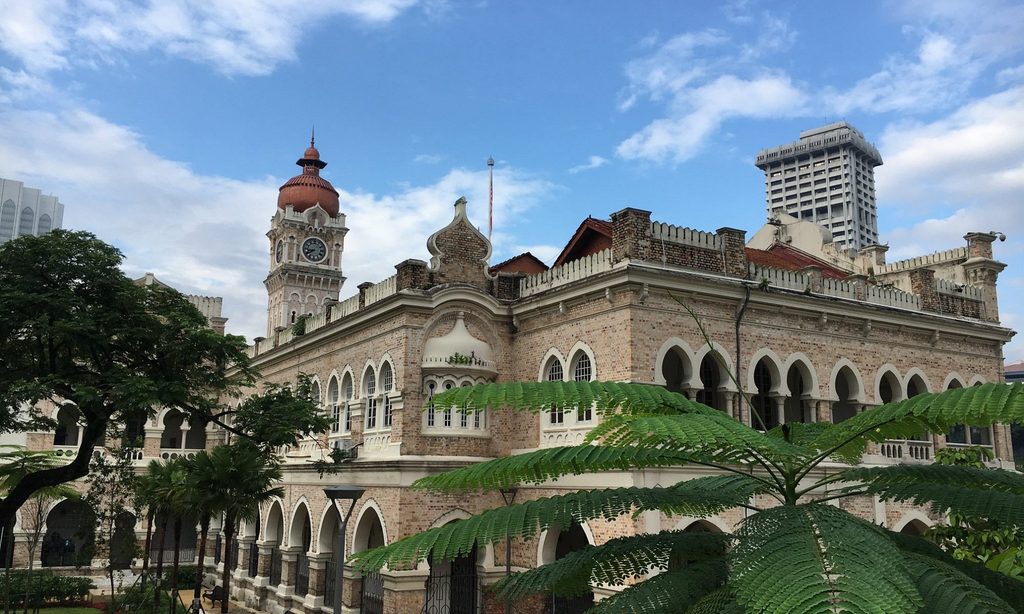
It was formerly known as the Selangor Club Padang and was used as the cricket green of the Selangor Club, now the Royal Selangor Club.
More importantly, this was where the Union Flag was lowered and the Malaysian flag raised at midnight on 31 August 1957.
Since then, Independence Square has remained an important location for Malaysia’s Independence Day celebrations.
Standing there added some history to the modern Kuala Lumpur I had been exploring.
Navigating the Metro
I headed across town again on the Metro.
The train journey itself might take only five minutes. Sometimes navigating the station and working out how to buy the ticket seemed to take longer.
At some stations, I could buy a ticket at a counter.
At others, somebody would simply point towards a machine.
“You buy ticket.”
Then it was up to me.
Eventually, you work these things out. It’s all part of travelling independently.
Chinatown and Petaling Street
Next was Chinatown and Petaling Street.
It wasn’t the first Chinatown I had visited, and it certainly wouldn’t be the last, but it was still worth exploring.
Petaling Street was crowded with traders, locals and tourists.
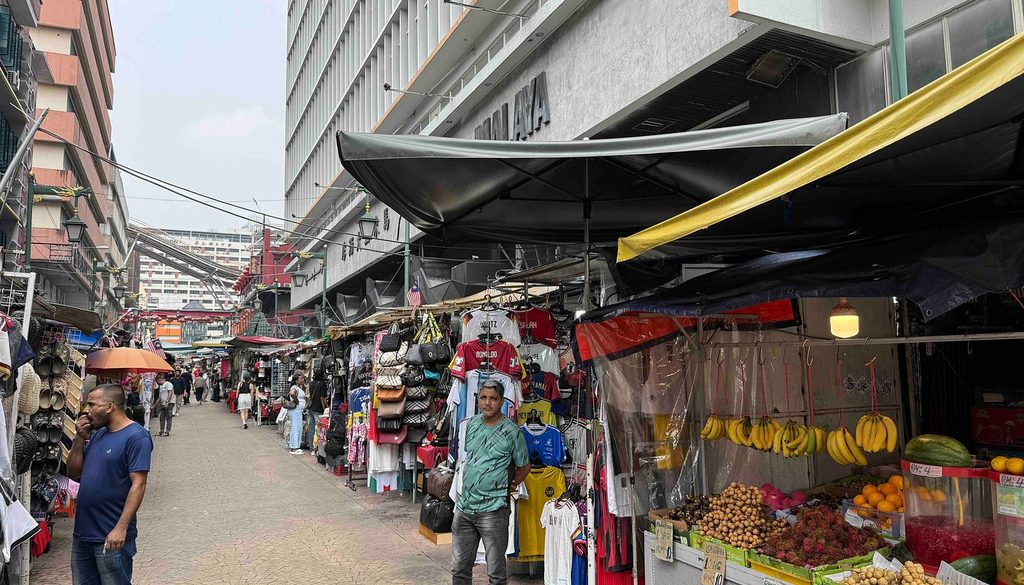
Haggling was common, and the first price quoted certainly didn’t have to be the final price. If someone started at RM100, you might hope to negotiate considerably closer to RM50.
The area was packed with restaurants and food stalls serving local favourites, including Hokkien mee, barbecued fish, asam laksa and curry noodles.
Some looked more appetising to me than others.
After a long day walking around Kuala Lumpur, the Reggae Bar offered somewhere to take a break from the chaos of Petaling Street.
By now, though, I was more than tired.
The Petronas Towers — Not Today
I headed back towards the Petronas Twin Towers, only around a 10-to-15-minute walk from where I was staying.
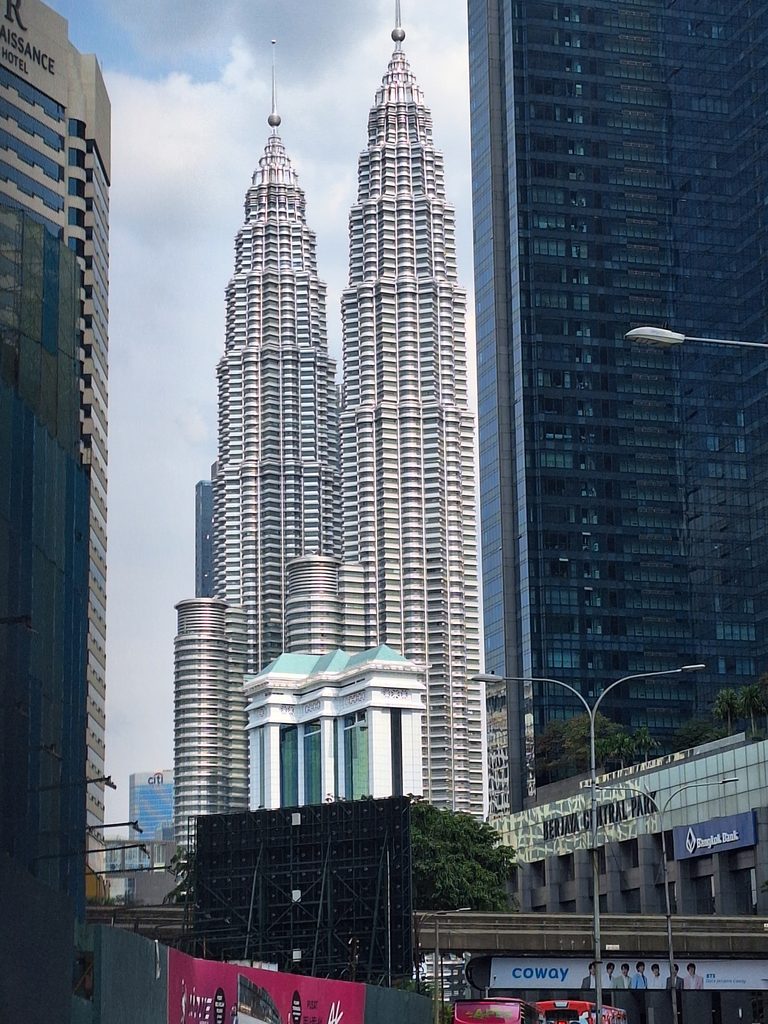
I had planned to go up to the observation area.
Unfortunately, I discovered it was closed on Mondays.
That was disappointing.
But that’s life.
There was nothing I could do about it, so I headed to a local bar instead, ordered a cold and refreshing Tiger beer, opened the computer and spent some time catching up.
Travel doesn’t always go according to plan.
Sometimes the taxi doesn’t arrive.
Sometimes you have to climb 272 steps in 32°C heat.
And sometimes you arrive at one of the world’s most famous buildings on the one day of the week when the observation deck is closed.
You adapt and carry on.
Tomorrow, it would be time to continue the journey.