

Montenegro turned out to be a country full of surprises. Magnificent mountains, medieval fortresses, beautiful coastal towns, dramatic railway journeys and, unfortunately, plenty of rain.
Travelling independently meant that not everything went according to plan, but that has always been part of my adventure. From climbing above Kotor to crossing one of Europe’s highest railway bridges, Montenegro gave me experiences I won’t forget.
Day 1 — From Shkodër to Kotor: Crossing into Montenegro
Weather Update: Sunny with a cold wind, high 14°C Elevation Above Sea Level: Approximately 16 metres in Kotor
Leaving Albania Behind
After an enjoyable stay in Albania, it was time to cross another border and discover Montenegro.
I caught a bus from Shkodër to Podgorica for €10, followed by another bus costing €8 to Kotor.
The journey through the countryside was magnificent. Snow-covered mountains rose above deep valleys, and the surrounding landscape seemed to become increasingly dramatic as we travelled north.
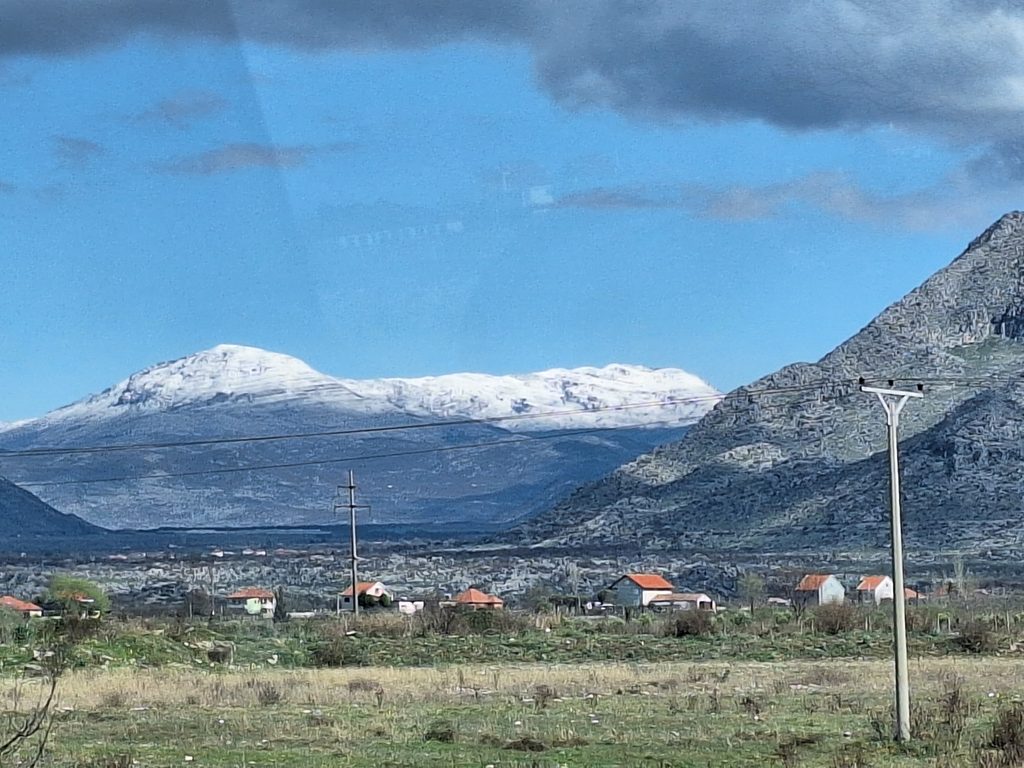
One of the things I enjoy most about travelling overland is watching the scenery change as I move from one country to another.
You simply don’t experience this when flying.
An Easy Border Crossing
Arriving at the Montenegro border, I was pleasantly surprised by how straightforward everything was.
There was none of the tension or confusion that can sometimes accompany international border crossings.
A nod, a handshake and a little laughter, and we were on our way.
After travelling through so many different countries, I’ve learned that border crossings can be unpredictable. Sometimes they take hours, while others are completed almost before you realise what’s happening.
This was certainly one of the easier ones.
Climbing into the Mountains
After leaving the border behind, the journey became even more spectacular.
The road climbed through rugged mountainous countryside, reaching an altitude of approximately 884 metres.
The landscape reminded me of parts of Israel, where rocky hillsides and barren stretches of countryside create an almost otherworldly appearance.
Then came the descent towards the Adriatic coast.
For nearly an hour, the bus followed winding mountain roads, twisting and turning as we gradually lost altitude.

The views were breathtaking.
Montenegro might be a relatively small country, but its mountainous landscape certainly makes an impression.
The Historic Road to Kotor
One of Montenegro’s most remarkable mountain routes is the historic road connecting Cetinje with Kotor.
The famous serpentine section winds down the mountainside, offering extraordinary views over the Bay of Kotor.
The route has connections with older trading routes, while the modern mountain road was developed during the nineteenth century.
Travelling through this region, I couldn’t help thinking about the enormous effort required to build roads into such steep terrain.
Before modern machinery, constructing these routes must have been an extraordinary undertaking.
For generations, mountain passes and coastal roads provided vital links between communities, allowing goods and people to move through otherwise difficult country.
My First Impressions of Kotor
When I eventually stepped off the bus in Kotor, the first thing I noticed was the cold wind.
Although the temperature was around 14°C, it felt considerably colder.
Walking downhill towards the harbour, I was immediately impressed by the surroundings.
To my right, enormous defensive walls rose above the town, climbing the mountainside towards the fortress high above.
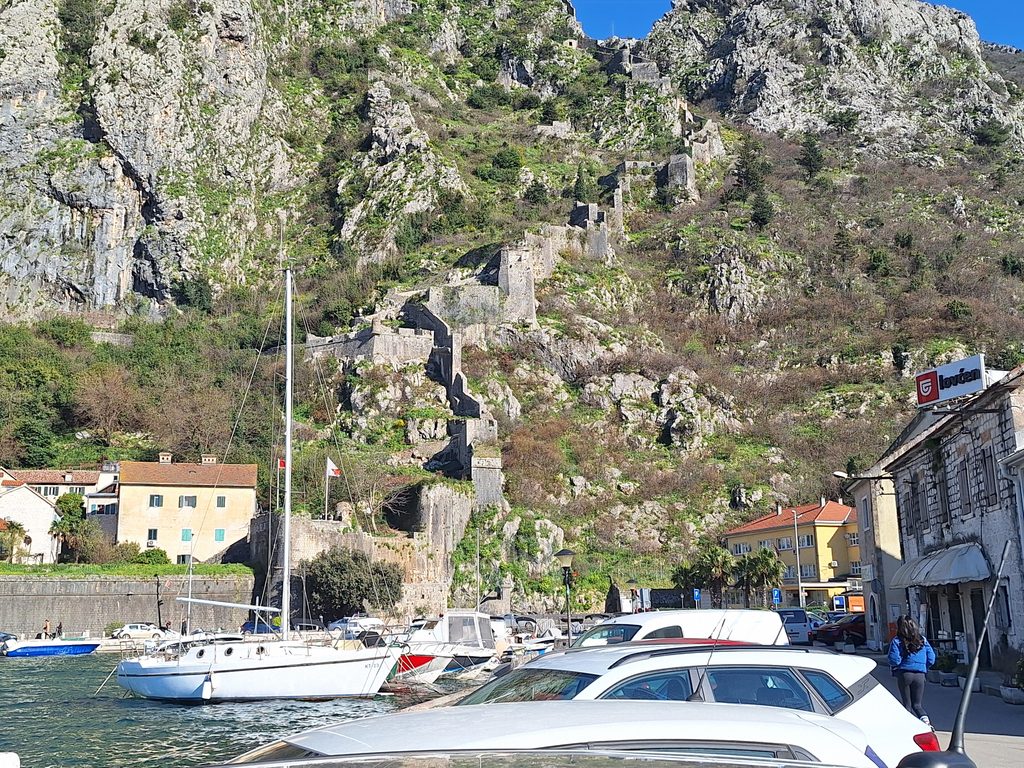
Looking upwards, I could see the stone fortifications winding across the steep slopes.
It was an extraordinary sight.
How on earth had people managed to construct something so enormous in such difficult terrain?
That was a question I hoped to answer during my stay.
Kotor’s Beautiful Harbour
Straight ahead lay the harbour, surrounded by magnificent mountains.
There were boats of all shapes and sizes, including a large cruise ship.

Kotor is a popular destination for cruise passengers, particularly during summer, when several ships can visit on the same day.
I could imagine how crowded the narrow streets must become when thousands of visitors arrive together.
Fortunately, I was visiting outside the main tourist season.
The streets were relatively quiet, giving me an opportunity to explore without fighting my way through enormous crowds.
Sometimes travelling during the quieter months has considerable advantages.
Exploring Kotor’s Old Town
I spent the afternoon wandering through Kotor’s magnificent Old Town.
Narrow stone streets twisted between historic buildings, opening unexpectedly into charming little squares.
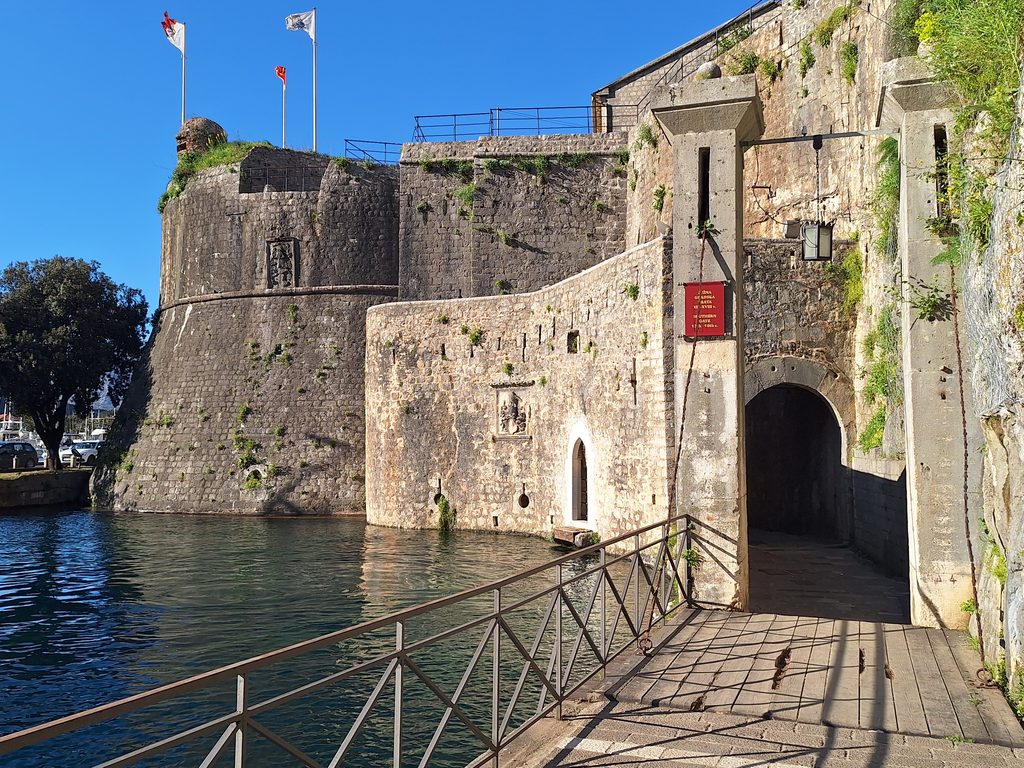
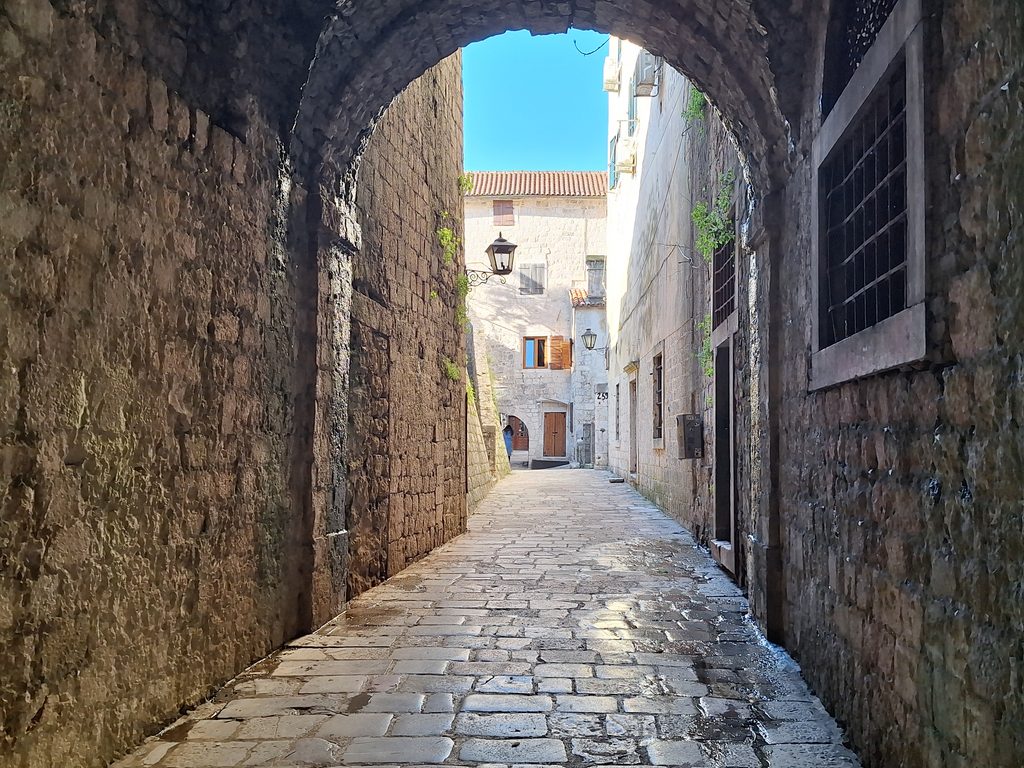
The old town has a rich medieval history, with much of its architectural character shaped during centuries of Venetian influence.
Walking through these streets felt like travelling backwards through time.
Everywhere I looked, there were ancient walls, beautifully preserved buildings and reminders of the town’s long maritime history.

Kotor was once an important centre for sailors, merchants and traders travelling throughout the Adriatic.
Standing among those buildings, I imagined the generations of people who had walked the same streets before me.
Conversations at the Hostel
Later, back at the hostel, I spent time talking with other travellers.
One subject that came up was the amount of rubbish being dumped around Montenegro’s countryside.
It was disappointing to hear about fly-tipping and littering in a country blessed with such spectacular natural beauty.
Unfortunately, this is something I’ve noticed in several countries.
Beautiful landscapes can be spoiled by rubbish that people simply abandon without considering the consequences.
It’s difficult to understand why anyone would treat their own countryside that way.
Tomorrow’s Challenge
My first day in Montenegro had been wonderful.
The mountains, the harbour and the beautiful medieval streets had already convinced me that Kotor was somewhere special.
Tomorrow, I planned to climb towards the fortress overlooking the town.
Looking at those enormous walls high above me, I suspected it wasn’t going to be easy.
But that’s what travelling is all about.
Day 2 — Climbing the Mountain Above Kotor
Weather Update: Sunny, high 12°C Elevation Above Sea Level: Approximately 280 metres at the fortress
A Beautiful Morning for Walking
What a difference a day makes!
Yesterday’s cold wind had disappeared, leaving beautiful sunshine and clear skies.
After enjoying breakfast, I decided to attempt the mountain trail leading towards Kotor’s fortress.
There was a route that some travellers used to reach the fortifications without entering through the official ticket entrance.
Naturally, I was interested.
When you’re travelling on a pensioner’s budget, finding legitimate opportunities to save money is always worthwhile.
However, there is a considerable difference between saving money and putting yourself in danger.
As I was about to discover, this route presented more difficulties than I had expected.
The Long Climb
The trail was steep and covered in loose stones.

For approximately an hour, I climbed steadily upwards, gaining more than 250 metres in elevation.
At times, the loose surface made walking difficult.
Every step required concentration.
One misplaced foot could easily send you sliding down the slope.
Nevertheless, the higher I climbed, the more magnificent the views became.

Below me, Kotor’s Old Town looked increasingly small.
The harbour stretched along the waterfront, surrounded by mountains rising steeply from the bay.

It was an extraordinary panorama.
Even if I didn’t reach the fortress, the climb was already worthwhile.
Searching for the Elusive Entrance
I wasn’t the only traveller attempting to find the alternative entrance.
Several others were searching for what had become something of a Holy Grail.
Unfortunately, the trail we followed appeared to be heading in the wrong direction.
Eventually, I realised that continuing wasn’t going to achieve anything.
Some travellers decided to press on, but I chose to turn around.
I’ve learned that knowing when to stop is just as important as knowing when to continue.
An Unexpected Detour
On my way back, I reached a crossroads.
One path descended towards Kotor, while another appeared to lead towards a ruined church.

Curiosity got the better of me.
I decided to investigate.
Eventually, I reached a section of the fortress wall where there appeared to have once been an alternative access point.
However, the ladder that had apparently provided access was no longer usable.
Instead, there were loose stones piled against the wall.
I stood looking at them, considering whether I should attempt the climb.
For a moment, I was tempted.
But scrambling over unstable rocks at my age, especially so far above the town, wasn’t a particularly sensible idea.
If I slipped and injured myself, the consequences could be serious.
After considering the situation, I decided to return to safer ground.
The fortress would still be there another day.
The Rewards of Travelling Slowly
Although I hadn’t achieved everything I originally intended, it had still been an enjoyable day.
I met several interesting people along the trail and spent time exchanging stories about our travels.
These unexpected conversations often become some of my favourite memories.
I also bought postcards for my grandchildren, intending to send them the following day.
With so much of my life spent moving from one destination to another, little connections with family back home are important.
Planning Tomorrow’s Adventure
Tomorrow, I intended to travel along the coast to Perast.
I’d heard that it was a beautiful little settlement beside the bay, surrounded by mountains and steeped in maritime history.
After today’s demanding climb, a more relaxing outing sounded appealing.
One thing I’ve learned during my travels is that not every day needs to involve a major physical challenge.
Sometimes the greatest pleasure comes from simply enjoying where you are.
Day 3 — Perast: A Peaceful Day Beside the Adriatic
Weather Update: Sunny, high 14°C Elevation Above Sea Level: Approximately 16 metres
Taking My Time in Montenegro
I decided to book another night in Kotor.
There was no particular reason to rush onwards, and I wanted more time to explore the surrounding area.
One of the advantages of travelling independently is being able to change my plans whenever I find somewhere worth exploring.
Today, my destination was Perast, a small coastal settlement approximately 14 kilometres from Kotor.
Situated beside the magnificent Bay of Kotor, Perast lies beneath steep mountains that rise almost directly from the water.
It is a beautiful setting.
My First Impressions of Perast
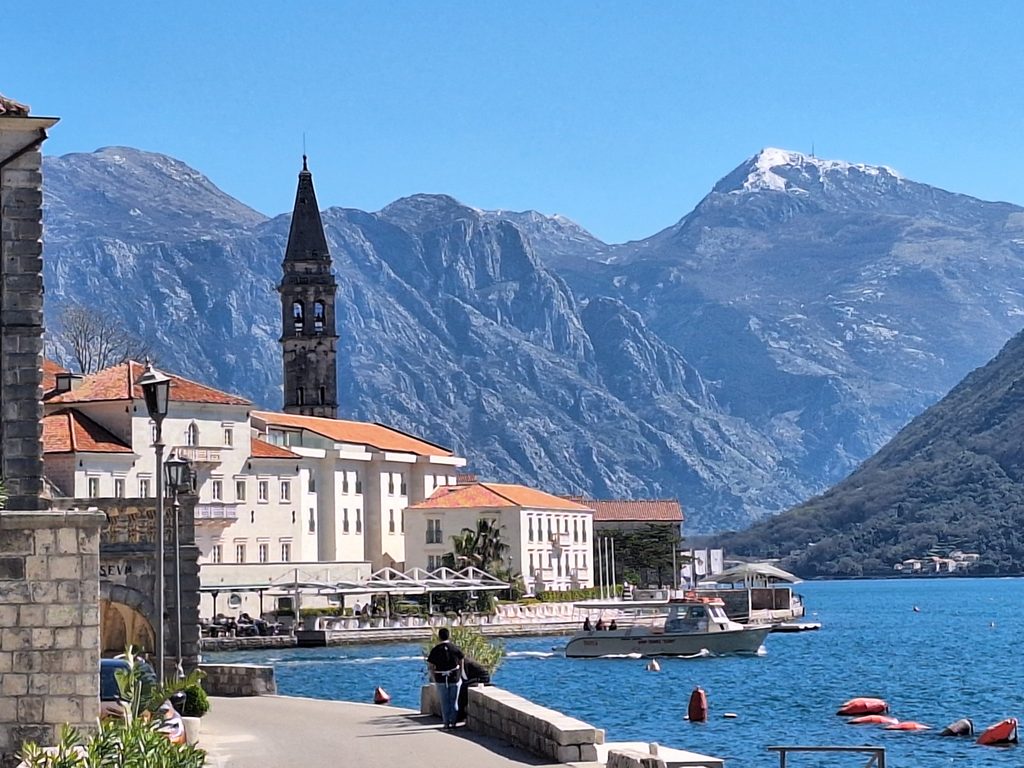
Arriving in Perast, I was immediately struck by the peaceful atmosphere.
There were relatively few visitors, and the waterfront was wonderfully quiet.
I could imagine the place becoming extremely busy during summer, but at this time of year it was possible to enjoy the scenery without large crowds.
The houses and historic buildings stretched along the narrow waterfront, with the mountains providing a spectacular backdrop.
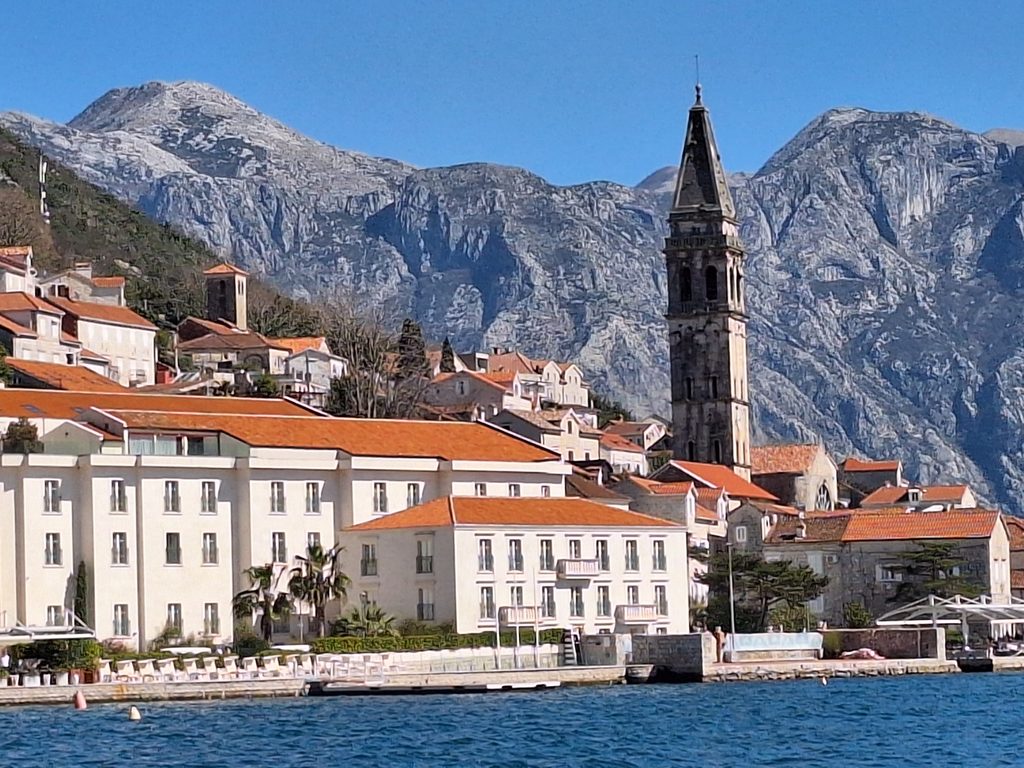
Across the water, two small islands stood out against the surrounding scenery.
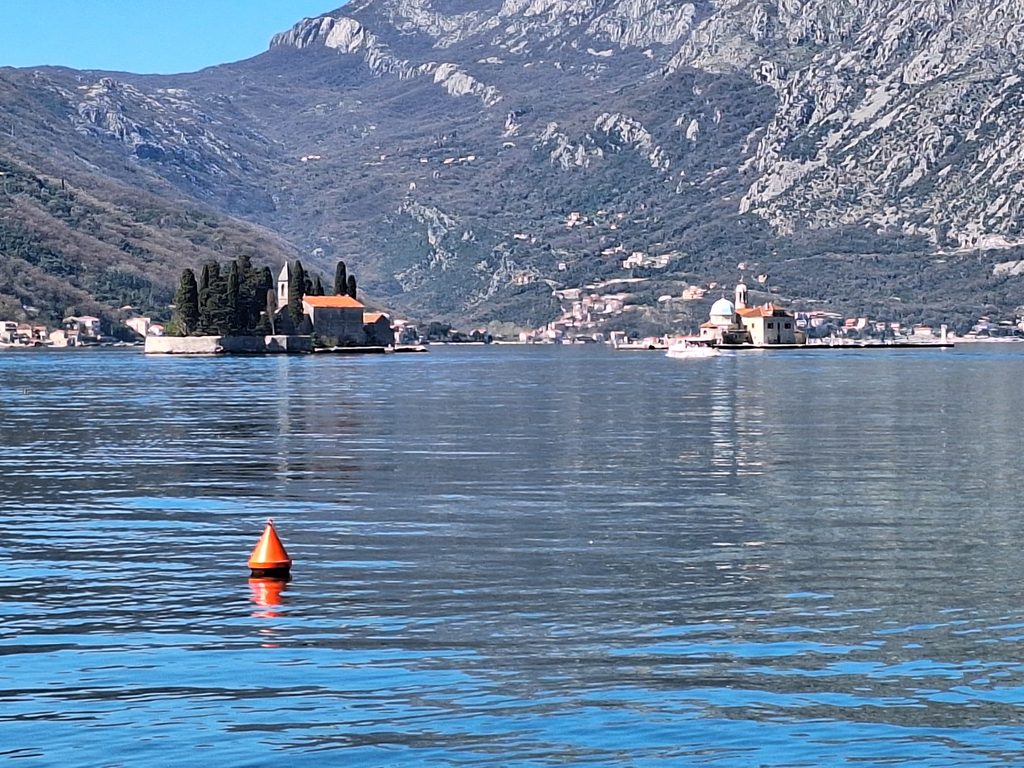
The setting reminded me of Lake Bled in Slovenia, another place where a small island church creates a beautiful focal point in the landscape.
There is something particularly appealing about historic buildings surrounded by water and mountains.
Perast’s Remarkable Maritime History
Despite its small size, Perast has an extraordinary history.
For centuries, the town was closely associated with seafaring, shipbuilding and maritime trade.
The settlement has ancient origins, with evidence of human occupation in the surrounding area dating back long before the medieval period.
Its name is traditionally associated with the Illyrian Pirustae tribe.
By the fourteenth century, Perast had developed maritime activities, including shipbuilding.
During the Venetian period, the town became increasingly prosperous.
Its greatest period of development occurred during the seventeenth and eighteenth centuries, when local sailors and merchants operated ships across the Mediterranean and beyond.
At one stage, approximately one hundred vessels were associated with Perast’s maritime community.
For such a small settlement, that was an extraordinary achievement.
Teaching the Russians to Navigate
One particularly interesting chapter in Perast’s history concerns Marko Martinović, a respected mathematician and navigator.
Towards the end of the seventeenth century, Perast had developed a reputation for maritime education.
Peter the Great of Russia wanted to strengthen his country’s naval capabilities, and young Russian noblemen were sent to learn navigation and seamanship.
During 1697 and 1698, Martinović instructed a group of Russian students, helping them acquire the skills necessary for naval service.
Standing beside the peaceful waterfront, it was difficult to imagine that this little town had once played a role in the development of Russia’s naval ambitions.
It is remarkable how much history can be concentrated in such a small place.
Our Lady of the Rocks
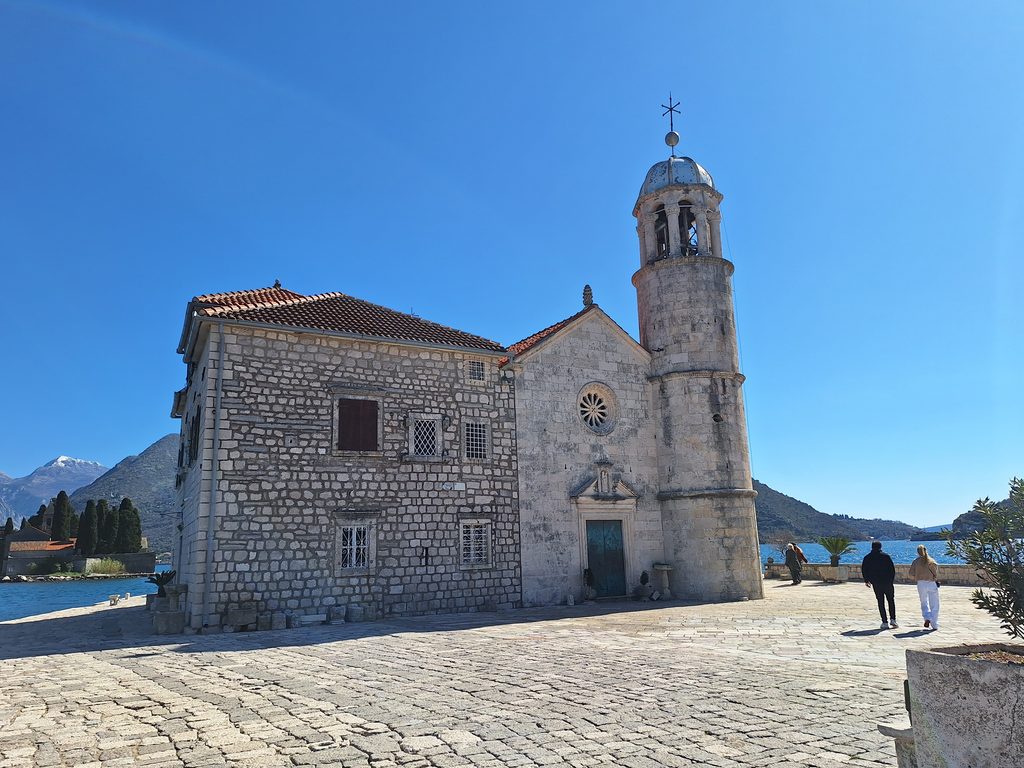
One of Perast’s most famous landmarks is Our Lady of the Rocks, an artificial island situated just offshore.
According to local tradition, sailors discovered an image of the Virgin Mary on a rock in the bay during the fifteenth century.
The discovery eventually inspired the creation of a religious site.
Over generations, local people helped enlarge the island by depositing stones and sinking old vessels.
The tradition of carrying stones to the island is remembered through the annual Fašinada ceremony.
The present church, built during the seventeenth century and subsequently altered, is dedicated to Our Lady of the Rocks.
It is one of the most recognisable landmarks in the Bay of Kotor.
Nearby lies the natural island of St George, with its historic religious buildings.
Together, the two islands create a wonderful scene against the mountains.
The Disadvantages of Travelling Out of Season
Unfortunately, several attractions were closed during my visit.
That’s one of the disadvantages of travelling outside the main tourist season.
You enjoy quieter streets and fewer crowds, but some museums, churches and other attractions may operate limited hours or remain closed altogether.
Nevertheless, I thoroughly enjoyed the visit.
There was plenty to appreciate simply by walking along the waterfront and admiring the scenery.
A Day to Remember
Perast was one of those places where I could have happily spent several more hours.
There was no need to rush.
The quiet waterfront, beautiful mountains and fascinating maritime history made it a memorable day.
Sometimes a relaxing excursion can be every bit as rewarding as climbing a mountain.
And tomorrow, I intended to return to Kotor’s fortress and finally tackle the official climb.
Day 4 — Conquering Kotor Castle: 1,350 Steps into History
Weather Update: Sunny, high 16°C Elevation Above Sea Level: Approximately 280 metres at the fortress
The Challenge Ahead
After a good night’s sleep, I was ready to tackle Kotor Castle properly.
This time there would be no searching for alternative entrances or scrambling over loose stones.
I intended to follow the official route.
The climb involved approximately 1,350 steps, rising towards the fortress high above Kotor.

Looking upwards from the town, the enormous stone walls seemed to stretch endlessly towards the mountains.
It was difficult to imagine how such a structure could have been built.
The weather was perfect.
Clear skies and bright sunshine promised magnificent views across the bay.
Beginning the Climb
The route consisted of steep stone steps and sections of narrow cobbled pathway.
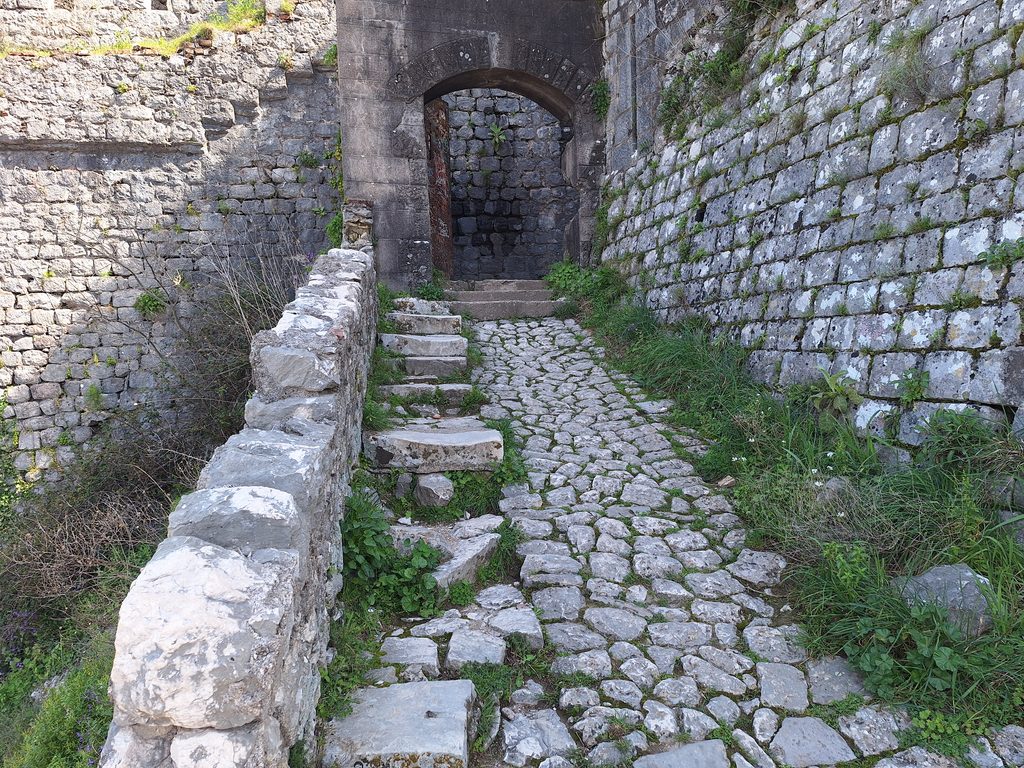
I alternated between them, choosing whichever appeared easier underfoot.
Where the path was relatively smooth, walking was manageable.
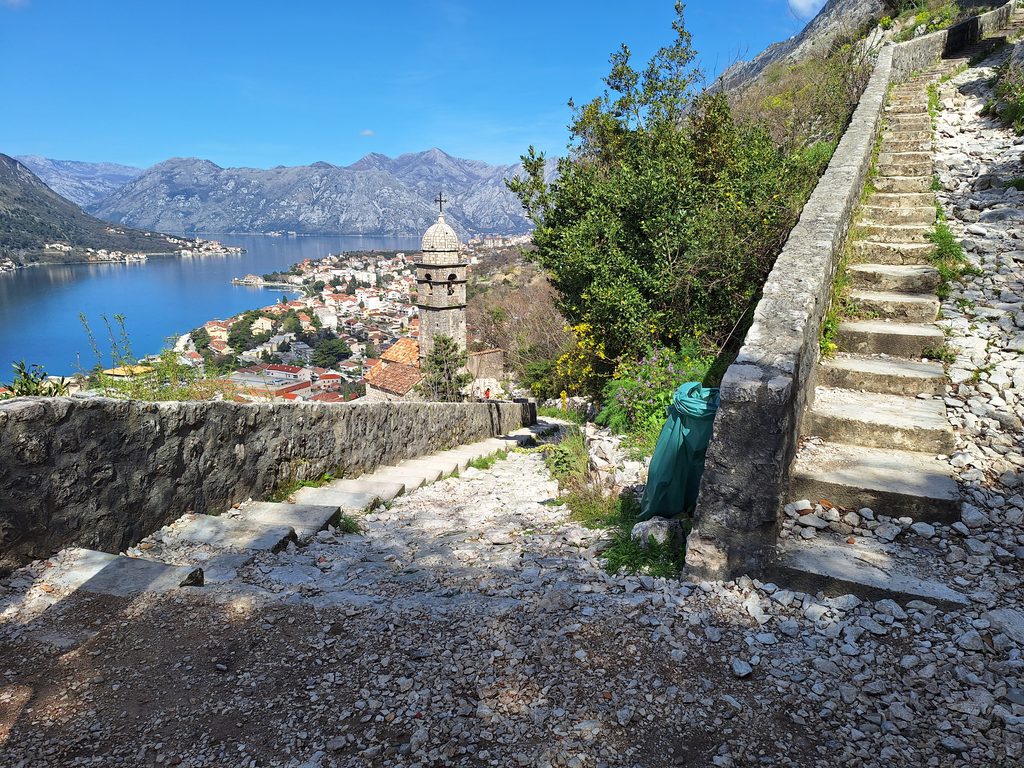
However, some stretches were loose and uneven, requiring considerably more care.
I decided to take my time rather than attempt to reach the summit as quickly as possible.
There was no prize for arriving first.
At my age, pacing yourself is important, particularly when climbing steep paths.
The magnificent scenery also provided a wonderful excuse to stop regularly.
Every few minutes, I turned around to admire the town and harbour below.
How Could Anyone Capture This Fortress?
As I climbed, one question kept returning to my mind.
How could an attacking army possibly capture a fortress built in such an extraordinary position?
The steep mountainside alone would have presented enormous difficulties.
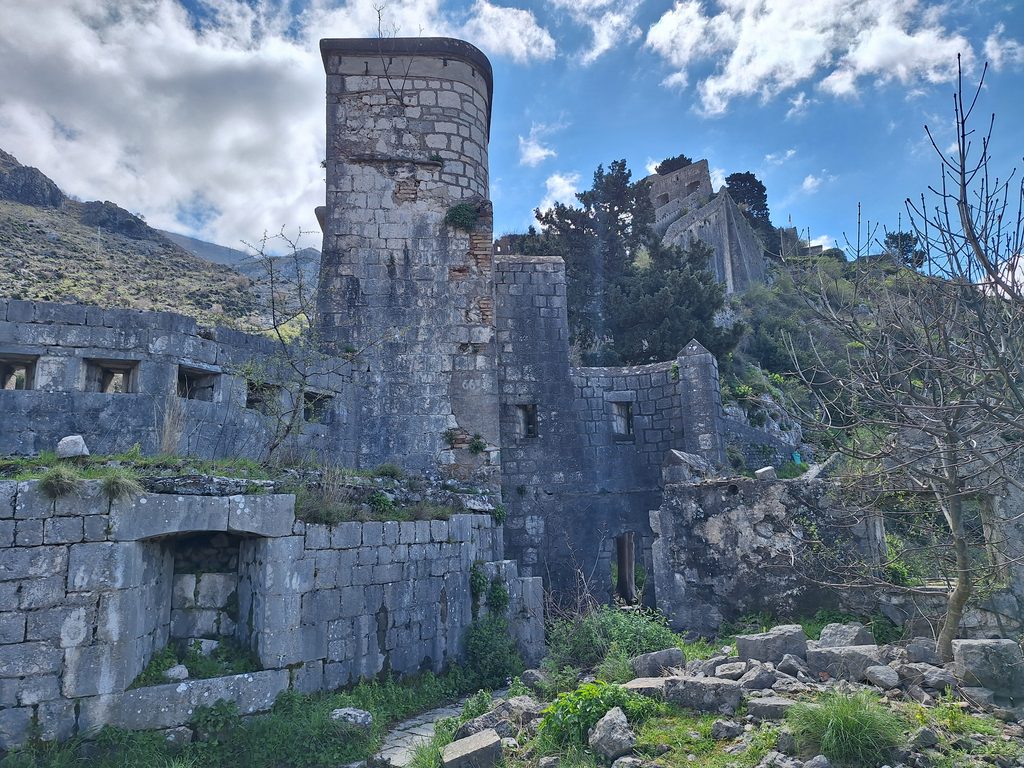
Defenders stationed above would have enjoyed a considerable advantage.
Imagine attempting the climb while carrying weapons, wearing heavy armour and being attacked from above.
It would have been a terrifying experience.
The higher I climbed, the more I appreciated the ingenuity of the people responsible for building these fortifications.
The History of Kotor’s Defences
Kotor’s fortified walls represent centuries of military construction and development.
The town, historically known as Cattaro, occupied a strategically important position along the Adriatic coast.
Its natural harbour, surrounding mountains and narrow approaches made it a valuable settlement for successive rulers.
Early defensive structures existed during antiquity, while later Byzantine rulers strengthened the settlement.
The Byzantine emperor Justinian I is traditionally associated with fortification work during the sixth century.
Over time, the city came under the influence of different regional powers.
In 1420, Kotor accepted Venetian protection, beginning a long period of Venetian rule that significantly shaped its defensive architecture.
The Venetians expanded and strengthened the fortifications, constructing towers, gates, bastions and sections of the enormous walls that visitors see today.
Centuries of Conflict
Kotor’s strategic importance meant that it was frequently threatened during periods of conflict.
The Ottoman Empire made repeated attempts to expand its influence along the Adriatic coast, while Venetian forces worked to maintain control of important ports.
The town’s defensive position helped it withstand several major threats.
During the Napoleonic era, control of the region changed repeatedly.
In 1814, British naval forces under Captain William Hoste helped capture Kotor from French forces.
One extraordinary aspect of the operation involved transporting artillery into commanding positions above the town.
It demonstrated that even the strongest fortifications could become vulnerable when attackers controlled the surrounding heights.
Later, the region passed through further periods of political upheaval, including the two world wars.
Kotor was liberated from Axis occupation in November 1944.
Today, the Sea Gate contains an inscription commemorating that liberation.
Earthquakes and Survival
Warfare wasn’t the only threat to Kotor’s historic buildings.
The region has experienced several destructive earthquakes over the centuries.
Major earthquakes in 1667 and 1979 caused serious damage to the town and its historic structures.
Despite these disasters, considerable sections of the fortifications have survived.
The walls, stairways and fortress ruins provide a remarkable connection to the people who built and defended this settlement.
Walking through them, I felt as though I was moving through centuries of history.
Reaching the Summit
Eventually, after a steady climb, I reached the upper fortress.
I was feeling a few aches and pains, but nothing unexpected.
In fact, the climb had been less difficult than I originally feared.
Taking my time had made all the difference.
The reward was magnificent.
Far below, Kotor’s Old Town looked like a collection of miniature buildings surrounded by enormous stone walls.
The harbour stretched out into the beautiful bay, with mountains rising steeply from the water.

It was one of those views that made every step worthwhile.
I stood admiring the scenery, pleased that I had returned for another attempt.
Advice for Senior Travellers
For anyone considering climbing Kotor’s fortress, particularly older travellers, I would recommend allowing plenty of time.
The stone steps are uneven, and some sections are steep.
Good walking shoes are essential.
Take water, stop regularly and don’t feel pressured to keep up with younger visitors.
There is no need to rush.
If you are reasonably mobile and comfortable walking uphill, the climb can be enormously rewarding.
However, anyone with balance or mobility difficulties should consider the terrain carefully before attempting it.
Changing My Plans Again
With my time in Kotor coming to an end, I began thinking about the next stage of my journey.
Originally, I had intended to travel to Podgorica and catch a train towards Belgrade.
However, I discovered that the daytime international train service was not operating during my visit.
That complicated matters.
After studying the available options, I decided to travel to Bar instead.
From there, I hoped to use Montenegro’s scenic railway to work my way north, eventually connecting with the night train to Belgrade.
The route would require more planning, but it also promised some spectacular mountain scenery.
And if there’s one thing I’ve learned from travelling, it’s that plans are made to be changed.
Day 5 — Leaving Kotor for Bar: A Bittersweet Goodbye
Weather Update: Rain clearing later, high 16°C Elevation Above Sea Level: Approximately 19 metres
Saying Goodbye to Kotor
Leaving a hostel can sometimes be surprisingly emotional.
You arrive as a stranger, spend several days getting to know the surroundings and the people, and then suddenly it’s time to move on.
That’s one of the peculiar things about travelling.
Relationships develop quickly, particularly in hostels where everyone shares a common interest in exploring the world.
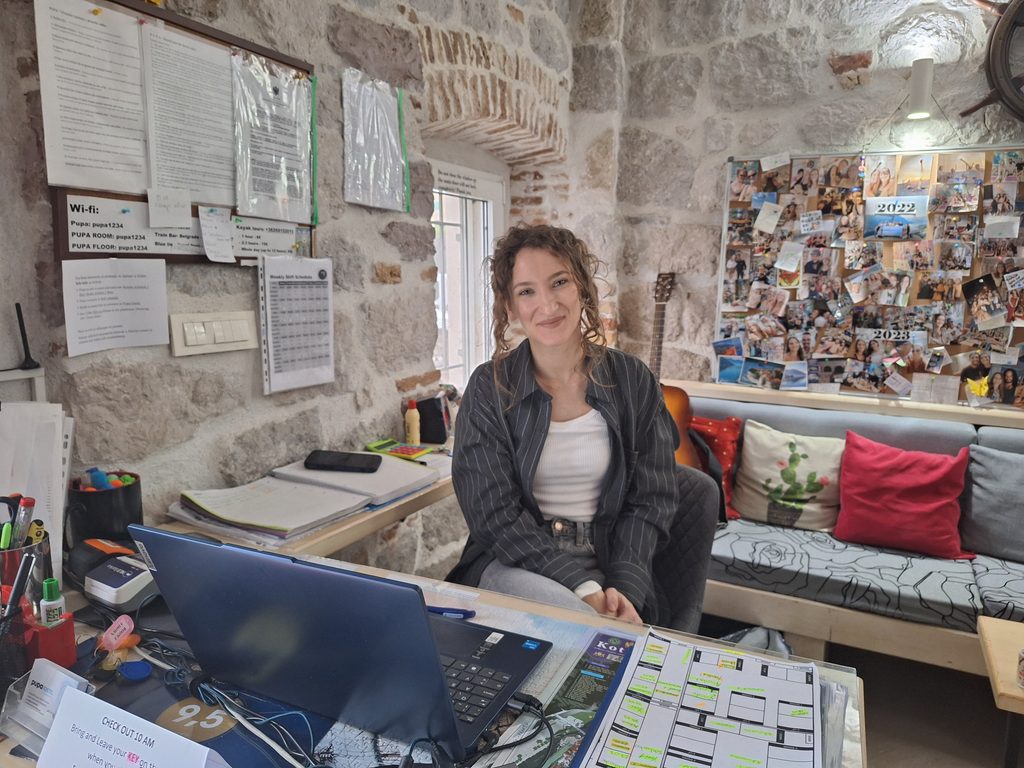
Saying goodbye to Nicolina, who had been such a wonderful host, was especially difficult.
She had helped make my stay in Kotor comfortable and enjoyable.
Even after just a few days, you can become attached to the people who make somewhere feel like home.
But the journey must continue.
Travelling South to Bar
Unfortunately, the weather wasn’t particularly encouraging.
Rain accompanied my departure from Kotor.
As we travelled towards Bar, however, the heavy rain gradually eased and the skies became overcast.
At least it was dry when I arrived.
I made my way towards the hostel, which turned out to be somewhat inconveniently located.
It was off the beaten track and involved a steep uphill walk.
After carrying my luggage, I was beginning to wonder whether I had made the right accommodation choice.
Nevertheless, I hoped the views would compensate for the effort once the weather improved.
Sunday in Bar
As it was Sunday, many businesses were closed.
Finding somewhere suitable to eat required a little patience.
Eventually, I discovered a restaurant serving pizza and ordered a Capricciosa.
It was a welcome meal after travelling.
One thing I’ve noticed throughout this region is the popularity of pizza.
Sometimes it seems easier to find a pizza restaurant than somewhere serving traditional local food.
Fortunately, the pizzas are generally very good.
Hostel Life Isn’t Always Peaceful
Back at the hostel, I shared a room with a young woman aged nineteen who worked remotely.
She was busy working late into the evening.
By 9:30 pm, I was ready for bed and explained that I intended to turn off the light.
Fortunately, she decided to continue working elsewhere.
Unfortunately, the following morning she got up at approximately 6:30 am and made quite a bit of noise while packing.
I’ve always tried to prepare my belongings the night before an early departure.
That way, I can leave without disturbing the other people sharing the room.
Some travellers are considerate in this respect, while others don’t seem to realise how much noise they’re making.
It’s one of the disadvantages of shared accommodation.
Nevertheless, hostel travel remains an important part of keeping my journey affordable.
Day 6 — Bar: The Train Ticket Mission
Weather Update: Heavy rain easing to drizzle Elevation Above Sea Level: Approximately 19 metres
Another Wet Morning
The day began with heavy rain.
Not particularly encouraging when you have several kilometres to walk.
Fortunately, by mid-morning the downpour had eased into a light drizzle.
My main task was to visit the railway station and arrange the next stage of my journey towards Belgrade.
The station was approximately four kilometres from my hostel.
I decided to walk.
Trying to Buy a Train Ticket
By the time I reached the station, the rain had stopped.
I spoke with someone at the ticket counter, hoping to arrange my onward travel.
Unfortunately, despite receiving assistance, I wasn’t entirely convinced that I had understood the arrangements correctly.
International railway journeys can be complicated, particularly when services change according to the season.
I didn’t want to discover at the last minute that I had purchased the wrong ticket.
Rather than risk making a costly mistake, I decided to return the following day.
Time to Change Accommodation
Another issue was becoming increasingly obvious.
My hostel was too far from the railway station.
With more train journeys ahead, I wanted somewhere more conveniently located.
I decided to move to an apartment closer to the town and transport connections.
Sometimes paying a little more for accommodation can save considerable time and effort.
As an older traveller carrying luggage, I increasingly appreciate the value of convenience.
Searching for Spaghetti Bolognese
By the evening, I fancied a change from pizza.
Spaghetti Bolognese sounded wonderful.
Unfortunately, almost everywhere I looked seemed to specialise in pizza.
Even Italian restaurants appeared to have pizza dominating their menus.
To be fair, the pizzas I’d eaten in Montenegro had been excellent.
But sometimes you simply want something different.
Caught in the Rain Again
On the return journey, the weather deteriorated.
A heavy downpour caught me before I could reach the hostel.
By the time I arrived, I was soaked.
There wasn’t much I could do except change into dry clothing and get warm.
I climbed into bed and switched on the heat pump, setting the temperature to a comfortable 20°C.
The weather had effectively prevented me from doing any sightseeing.
There were no new photographs worth sharing today.
Still, not every day of long-term travelling can be an adventure.
Sometimes life on the road involves nothing more exciting than buying tickets, arranging accommodation and trying to stay dry.
Day 7 — Moving Closer to Bar Railway Station
Weather Update: Cloudy but mostly dry Elevation Above Sea Level: Approximately 19 metres
Leaving the Hostel
At last, a day without rain!
I gathered my belongings and set off towards my new accommodation.
Although the temperature wasn’t particularly high, carrying my bags made the journey feel much warmer.
It’s amazing how quickly a backpack becomes heavy when you’re walking through unfamiliar streets.
I followed Google Maps towards the apartment.
Unfortunately, when I arrived at the supposed destination, there was no obvious sign identifying the property.
Had I found the correct building?
I wasn’t entirely sure.
Waiting for Check-In
It was approximately 11 am, but check-in wasn’t until 2 pm.
That left me with three hours to fill.
I decided to find a nearby bar, have something to drink and try contacting the apartment owner by email.
Hopefully, I might be able to check in early.
One difficulty with travelling internationally is maintaining reliable internet access.
I no longer bother purchasing a SIM card in every country.
Instead, I generally rely on Wi-Fi in cafés, restaurants, hostels and other public places.
Occasionally, I even ask a helpful stranger whether I can briefly use their internet connection.
It isn’t always convenient, but it saves money.
And when you’re travelling for months at a time, these savings add up.
Another Visit to the Station
Later in the afternoon, I returned to the railway station.
I still needed to confirm my train arrangements.
This time, I was told that the ticket I wanted could only be purchased on the day of travel.
That was frustrating after making another journey to the station.
However, there was some good news.
Purchasing the ticket locally was considerably cheaper than the prices I had seen online.
At least something was going in my favour.
The Complications of Independent Travel
When you book an organised tour, someone else arranges your accommodation, tickets and transport.
Travelling independently is very different.
I needed to coordinate several railway journeys, arrange overnight accommodation and work out how to get between stations and hostels.
Each decision depended on the others.
A delayed train could mean missing a connection.
A poorly located hostel could mean a long walk carrying luggage.
And unreliable internet access could make last-minute changes difficult.
Fortunately, my itinerary was beginning to come together.
I expected my longest walk between connections to be around three kilometres.
Eventually, I hoped to arrive in Belgrade at approximately seven in the morning, leaving plenty of time to find my accommodation and begin exploring Serbia.
For the moment, however, I still had more of Montenegro to discover.
Day 8 — Exploring the Historic Ruins of Old Town Bar
Weather Update: Rainy with occasional dry periods Elevation Above Sea Level: Approximately 19 metres in Bar
A Welcome Change of Accommodation
My new one-bedroom apartment was on the sixth floor.
At €50, it was more expensive than my usual hostel accommodation, but I appreciated having some privacy and space.
After sharing dormitories for so long, a comfortable apartment can feel like a luxury.
The weather forecast wasn’t particularly promising.
Rain was expected.
However, when I looked outside, it was still dry.
I decided to make the most of the opportunity and head out towards Old Town Bar.
Another Downpour
Unfortunately, the weather had other ideas.
About an hour later, the rain returned.
Before long, I was thoroughly soaked.
I eventually found somewhere to shelter and bought an enormous kebab, approximately a foot long.
It was far too much to eat in one sitting.
I managed about two-thirds and saved the rest for breakfast.
One thing I’ve learned while travelling is never to waste perfectly good food.
Getting to Old Town Bar
Old Town Bar, known locally as Stari Bar, is situated inland from the modern coastal town.
It stands on higher ground beneath the mountains, surrounded by historic stone walls.
Originally, I had considered walking up towards the ruins.
However, the road climbed steeply, and after looking at the conditions, I decided that taking a bus would be the better option.
I was glad I did.
The climb would have been challenging, particularly in wet weather.
Sometimes public transport is worth every cent.
Stepping Back Through History
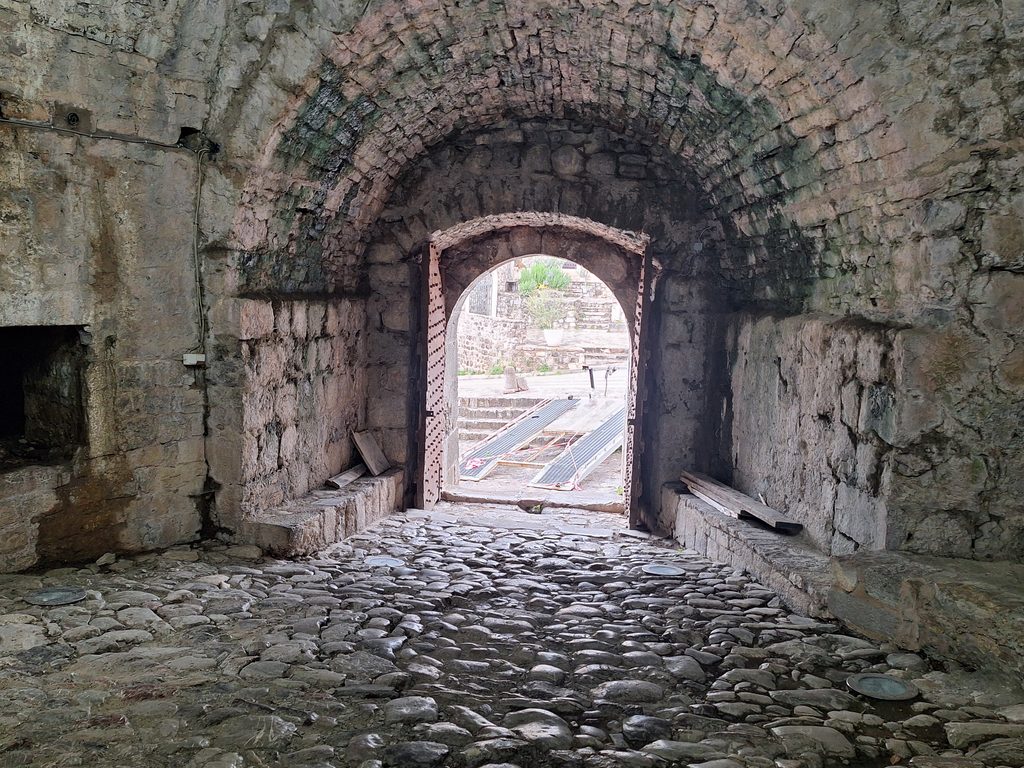
Walking through the entrance to Old Town Bar was a remarkable experience.

The remains of ancient buildings lined narrow stone streets.
Walls that had once enclosed homes, businesses and important public buildings now stood roofless and exposed to the weather.


It was a fascinating place.
As I wandered through the ruins, I tried to imagine what everyday life must have been like centuries earlier.
Children playing in the streets.
Merchants opening their shops.
Families gathering for meals.
Soldiers guarding the entrances.
Religious leaders moving between churches and mosques.
These buildings were not always ruins.
They were once part of a living, working community.
And the people who lived here experienced the same ordinary concerns as people everywhere.
They worked, raised families, worried about their futures and hoped for better lives.
The Long History of Stari Bar
Old Town Bar has a history stretching back many centuries.
Its strategic position made it an important fortified settlement.
Over time, the town came under the influence of different rulers and cultures, including Byzantine, Slavic, Venetian and Ottoman powers.
Each left an impression on the settlement’s architecture.
The surviving ruins contain a fascinating mixture of religious buildings, defensive structures and domestic architecture.

Unlike Kotor, where much of the old town remains occupied, much of Stari Bar became abandoned following conflict and other upheavals during the late nineteenth century.
It has since become an important archaeological and heritage site.
Exploring the Historic Buildings
Among the structures and remains associated with Old Town Bar are its medieval entrance gates, defensive walls, churches, citadel and Ottoman-era buildings.
The Main Gate still provides an impressive approach to the fortified settlement.
Other historic features include the Customs House, the remains of Saint Nicholas’ Church, the Tatarovica Citadel and the ruins associated with Saint George’s Cathedral.
The Clock Tower, built during the eighteenth century, is another prominent landmark.
There are also remains of a Turkish bath and buildings once associated with prominent local families and religious leaders.
The combination of different architectural traditions makes Stari Bar particularly interesting.
Everywhere I looked, there seemed to be another archway, ancient wall or ruined building waiting to be explored.

Imagining the People Who Lived Here
I particularly enjoyed wandering along the old cobbled streets.
Sometimes I stopped and looked through a doorway into what had once been someone’s home.
It was difficult not to wonder about the families who had lived there.
What did they eat?
What did their houses look like when they were furnished?
How did they survive during periods of warfare?
What were their hopes for their children?
History books often focus on kings, emperors and military battles.
But for me, the everyday lives of ordinary people are just as fascinating.
Standing among the ruins, I felt a connection with the countless generations who had lived and worked within these walls.
Was Bar Worth Visiting?
I have to admit that modern Bar wasn’t somewhere I would particularly recommend for an extended holiday based on my own experience.
The weather certainly didn’t help.
However, Old Town Bar was a completely different story.
It was well worth visiting.
In hindsight, I would probably have preferred to spend a couple of nights closer to the old town rather than stay four nights around modern Bar.
But travelling is full of these lessons.
Sometimes you only discover the best arrangement after you’ve already made your plans.
For me, Bar was primarily a stepping stone towards the scenic railway journey north.
Nevertheless, Stari Bar proved to be one of the highlights of my stay.
Tomorrow, I hoped the weather would finally improve.
Day 9 — Podgorica: A Rainy Day in Montenegro’s Capital
Weather Update: Cloudy with rain, high 16°C Elevation Above Sea Level: Approximately 40 metres
Taking the Train to Podgorica
After several days in Bar, it was time to travel inland towards Podgorica, the capital of Montenegro.
I began the morning with breakfast before heading to the railway station.
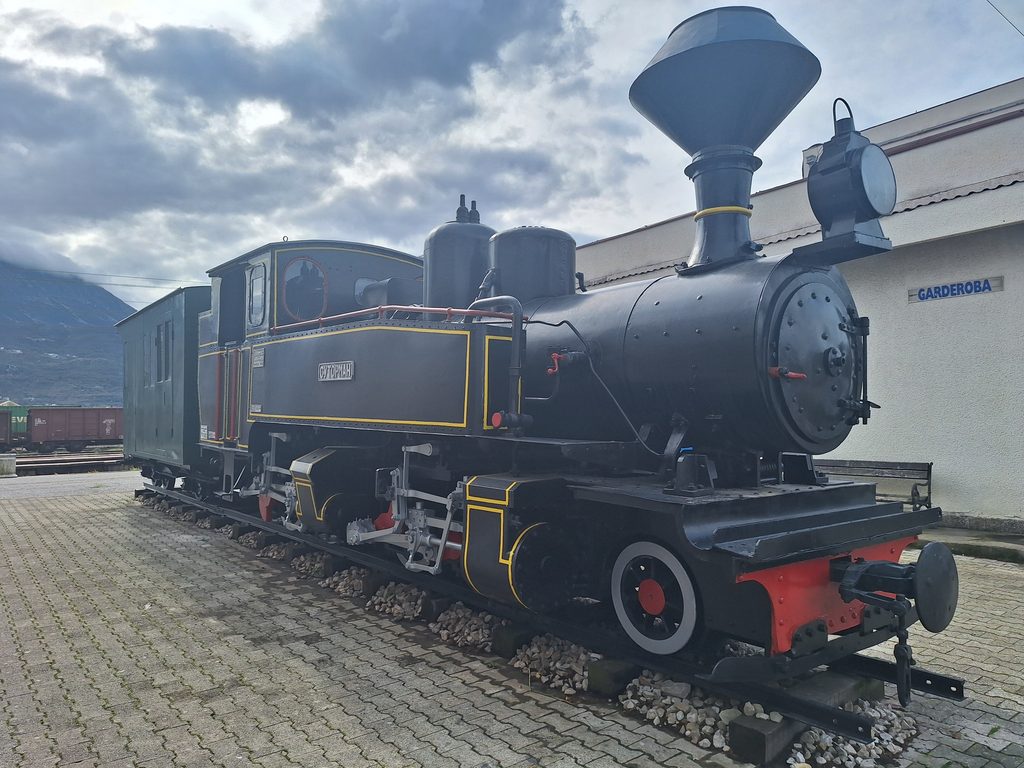
The ticket cost just €2.50, approximately NZ$4.70.
For a journey of around seventy kilometres, that was excellent value.
The train took approximately ninety minutes, travelling through attractive countryside towards the capital.
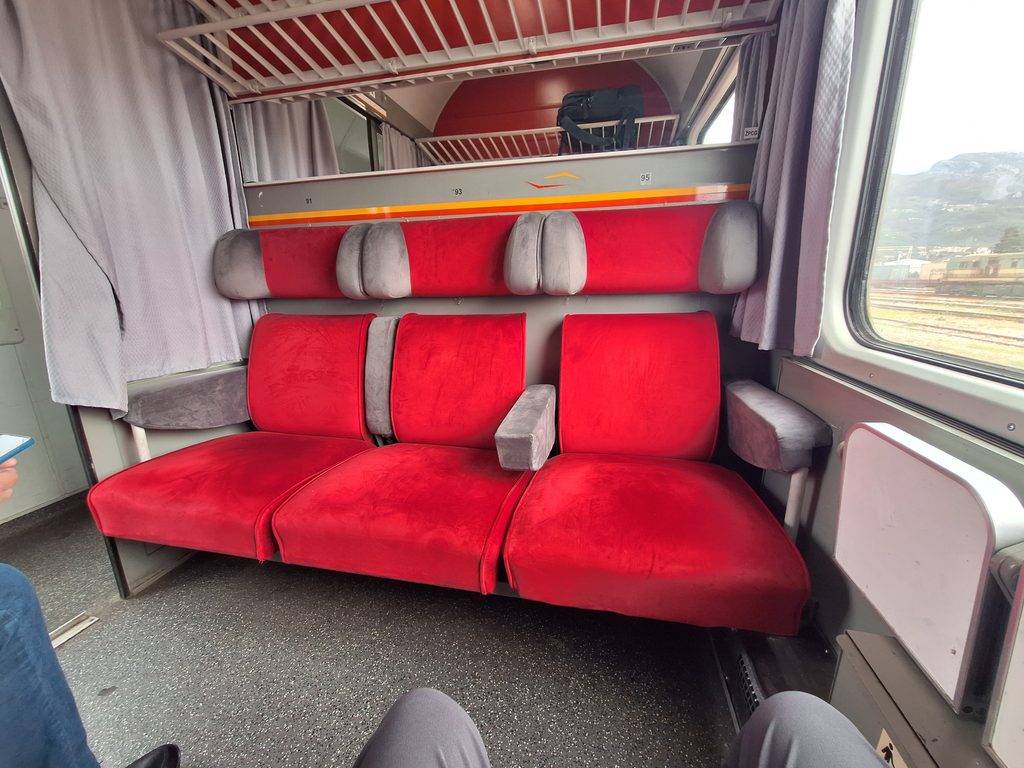
I always enjoy railway journeys.
You can sit comfortably, watch the changing landscape and avoid the stress of driving through unfamiliar towns.
Arriving in the Capital
I arrived in Podgorica at approximately eleven in the morning.
One pleasant surprise was the absence of aggressive taxi drivers and touts around the station.
In some countries, arriving at a transport terminal means immediately being surrounded by people offering taxis or accommodation.
Here, everything was relatively peaceful.
My hostel was only about five minutes’ walk from the railway station.
That was ideal.
The main bus terminal was also nearby, making the area particularly convenient for onward travel.
A Very Basic Hostel
Unfortunately, the accommodation itself was disappointing.
The hostel was essentially a converted house.
It lacked several facilities I’ve come to expect from budget accommodation.
There was no proper communal area where travellers could gather.
There were no useful kitchen facilities, and the beds lacked individual reading lights.
The Wi-Fi was also unreliable.
However, there was one considerable advantage.
The price was just €11.
With an early train departure planned for the following morning, the hostel’s location was more important than its comfort.
Sometimes you have to make compromises.
Exploring Podgorica in the Rain
After settling in, I headed out to explore the city.
Unfortunately, the weather deteriorated almost immediately.
A heavy downpour forced me to take shelter in a restaurant.
I ordered a beer and waited for the rain to ease.
After about an hour, the skies began clearing.
I decided to continue towards one of the city’s historic landmarks, the old Ribnica Bridge.
The Historic Ribnica Bridge
The Ribnica Bridge is a stone crossing associated with Podgorica’s older settlement and its Ottoman-era history.
It stands near the meeting of the Ribnica and Morača rivers.

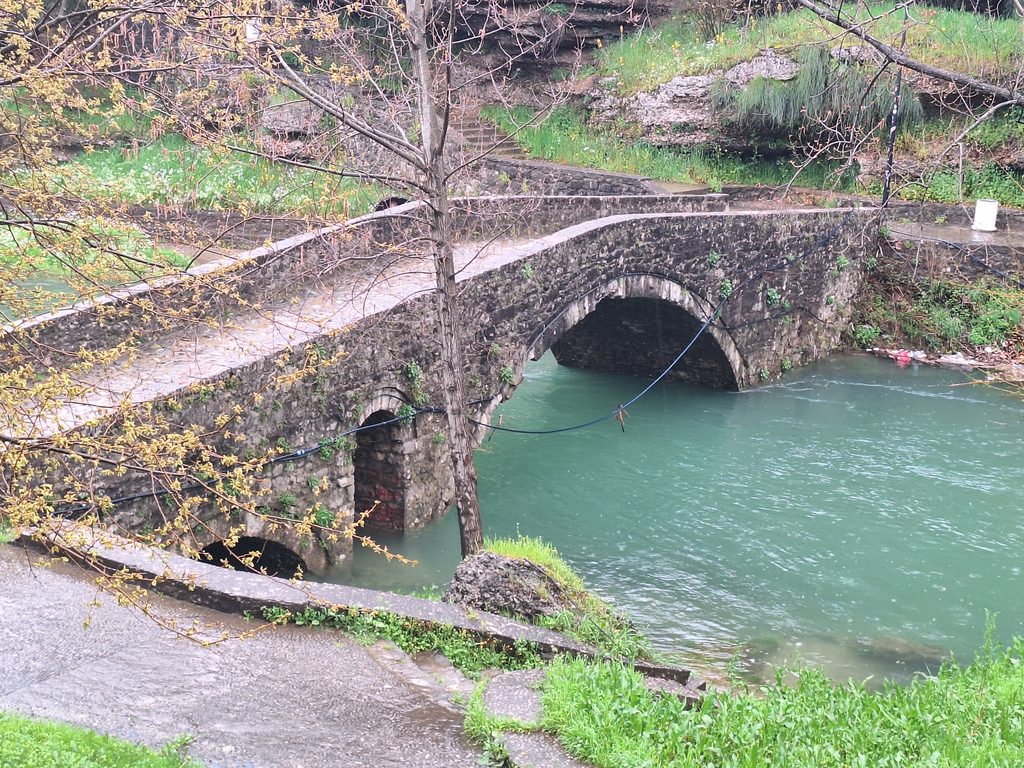
The surrounding area contains historic ruins and reminders of the city’s past.
Unfortunately, the heavy rain had raised the river levels considerably.
Water was flowing strongly beneath the bridge and through the nearby channels.
Parts of the riverside walkway were submerged.
Where the smaller Ribnica approached the larger Morača, the turbulent water created an impressive sight.
Debris had gathered along the banks, carried downstream by the powerful currents.
I would have enjoyed exploring more of the area, but the weather made that difficult.
Looking for Mr Bean and Finding Sherlock Holmes
On my way back towards the hostel, the rain returned.
This time, I wasn’t fortunate enough to find shelter quickly.
I became completely soaked.
Eventually, I decided that the best solution was to find somewhere warm and comfortable.
I had been looking for a pub called Mr Bean.
However, while searching, I came across another establishment called the Sherlock Holmes Pub.
That immediately caught my attention.
Being English-born, I couldn’t resist investigating.
A Little Piece of England
Inside, the pub had a distinctly English atmosphere.
It was a welcome contrast to the cold, wet streets outside.
I ordered a drink and began talking with the manager.
We ended up having a fascinating conversation about life in the Balkans and the changes experienced by the region following the collapse of communism and the breakup of Yugoslavia.
These conversations are one of the great pleasures of travelling.
You can read books and visit museums, but talking with local people offers another perspective.
Their personal experiences often reveal things that tourist information doesn’t mention.
Drying Everything Out
I returned to the hostel at approximately seven in the evening.
Unfortunately, the Wi-Fi was still unreliable.
My clothing was wet, so I spread everything out and turned the heat pump up to 30°C.
Hopefully, everything would be dry by morning.
Despite the weather, I’d enjoyed parts of the day.
Tomorrow promised something completely different.
I was planning to travel into the mountains by train, crossing one of Montenegro’s most remarkable railway bridges.
Day 10 — The Spectacular Railway Journey to Kolašin
Weather Update: Showers clearing to sunny periods, high 9°C Elevation Above Sea Level: Approximately 1,032 metres
An Early Morning Departure
My day began at 4:45 am.
I needed to prepare for the 6:19 am train from Podgorica towards Kolašin.
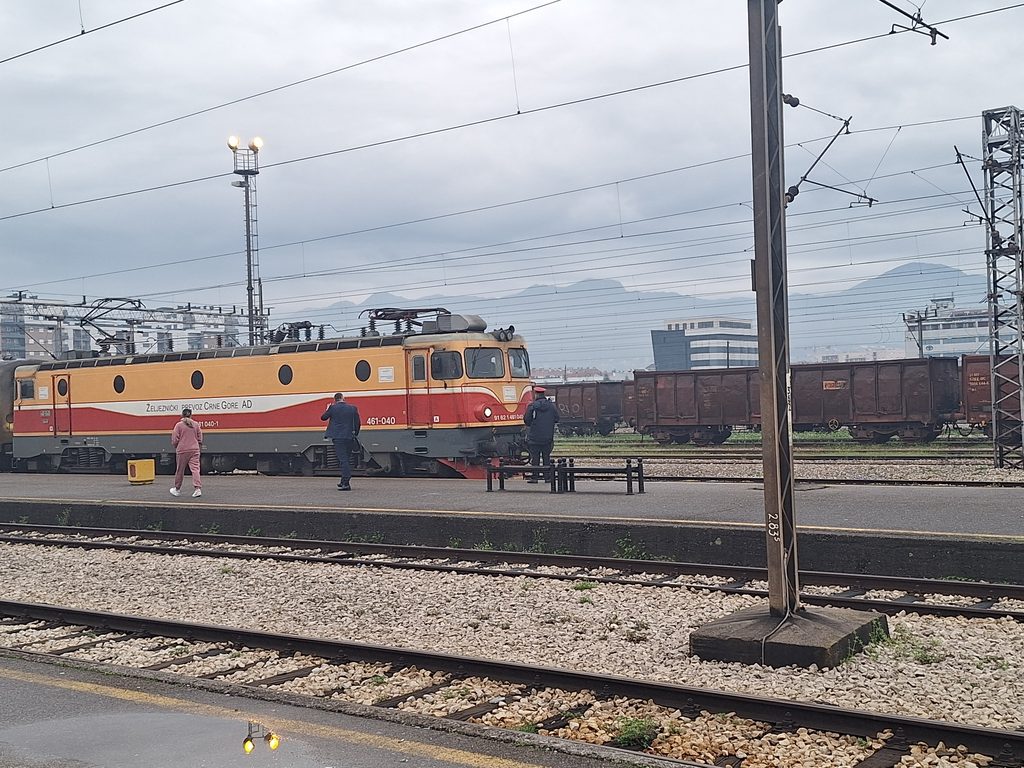
The weather looked reasonably promising, although I had learned not to trust Montenegro’s spring conditions.
One minute there could be sunshine, and the next you could be caught in a downpour.
Nevertheless, I was excited.
I’d heard that the railway through the mountains offered some of the most spectacular scenery in the Balkans.
I wasn’t disappointed.
Climbing into the Mountains
As the train left Podgorica behind, the landscape gradually changed.
The railway climbed into increasingly rugged mountains, following valleys and crossing deep gorges.
Below us, rivers wound through the countryside.
At times, the railway seemed to cling to the mountainside, with enormous drops visible through the windows.
It was breathtaking.
Unfortunately, taking photographs proved difficult.

Just as a magnificent view appeared, the train would enter another tunnel.
Or trees and rocky embankments would obstruct the camera.
I spent much of the journey trying to anticipate the next opportunity.
But there was one sight I hadn’t expected.
The Mala Rijeka Viaduct Appears
In the distance, I noticed an enormous railway bridge stretching across a deep valley.

It looked impossibly high.
Surely our train wasn’t going to cross that?
I assumed the line would descend into the valley and continue along the river.
But as we approached, I began to realise what was about to happen.
We were heading directly towards the bridge.
And then, suddenly, we were on it.
Crossing One of Europe’s Highest Railway Bridges
The Mala Rijeka Viaduct is a remarkable feat of engineering.
Constructed between 1969 and 1973, it forms part of the famous Belgrade–Bar railway.
The bridge is approximately 499 metres long and rises around 200 metres above the valley below.
For many years, it held the distinction of being the world’s highest railway bridge.
Even today, its extraordinary height and location make it one of the most impressive railway structures in Europe.
Looking down from the train was a remarkable experience.
The valley floor seemed impossibly far below.
The surrounding mountains rose on either side, while the railway crossed the enormous open space between them.
A Rather Uncomfortable Moment
As we crossed, I looked directly down into the valley.
That was enough to make my stomach turn.
I’m not particularly frightened of heights, but this was something different.
The bridge seemed to be suspended in mid-air.
Knowing that engineers had calculated every load and constructed enormous concrete and steel supports was reassuring.
But looking down was another matter entirely.
Then the train appeared to slow or stop momentarily.
I certainly wasn’t expecting that!
For a few seconds, I found myself wondering why we weren’t moving.
It probably wasn’t anything unusual, but at that height it felt rather unsettling.
I was relieved when we continued and reached the mountainside on the other side.
An Extraordinary Engineering Achievement
The Belgrade–Bar railway is one of the great engineering achievements of the former Yugoslavia.
Construction required numerous tunnels, bridges and viaducts to carry the line through extremely difficult mountainous terrain.

The Mala Rijeka Viaduct is among its most impressive structures.
Standing on enormous concrete piers, it demonstrates the skill and determination of the engineers and workers responsible for creating the railway.
Looking at the surrounding mountains, I found it difficult to imagine how they had constructed something so large in such an inaccessible location.
The railway is much more than a way of travelling between cities.
It is an attraction in its own right.
Arriving in Kolašin
Eventually, I arrived in Kolašin, a mountain town known for its skiing and outdoor recreation.
The temperature was considerably cooler than on the coast.
One pleasant surprise came almost immediately.
A kind stranger offered me a lift from the railway station down towards the town.
After travelling independently for so long, I continue to be impressed by the generosity of people who help strangers without expecting anything in return.
It’s one of the things that restores your faith in humanity.
Breakfast in the Mountains
After reaching town, I found a small restaurant and ordered bacon and eggs.
The cost was just €5.
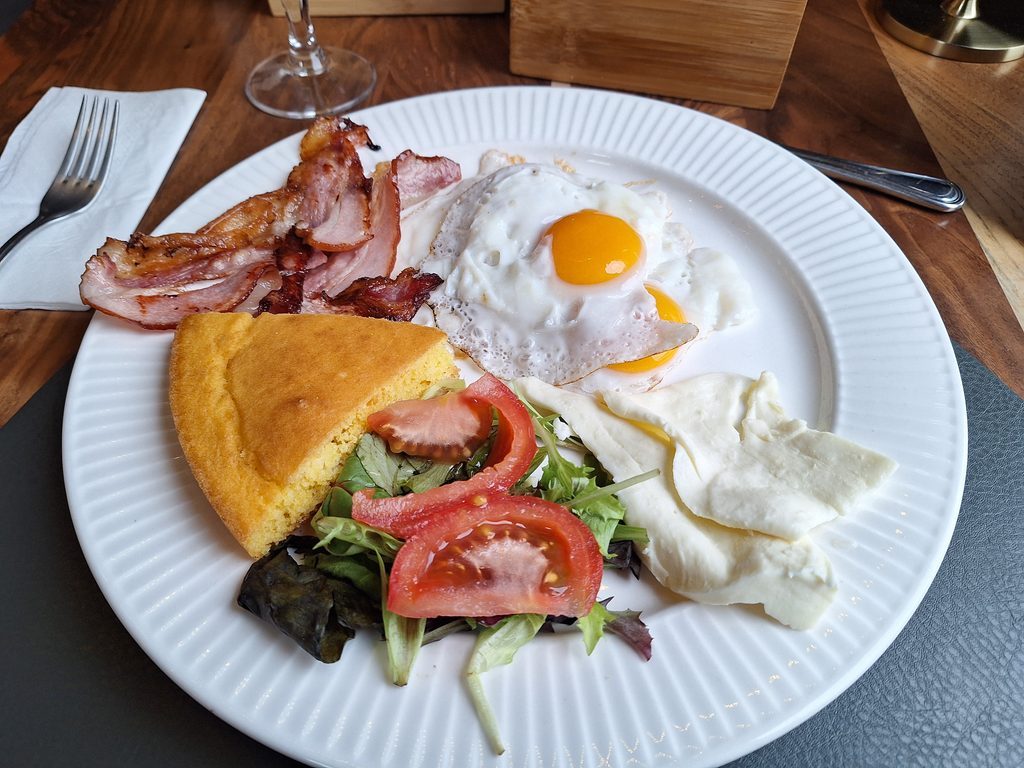
It was exactly what I needed after such an early start.
With breakfast behind me, I decided to explore the surrounding area.
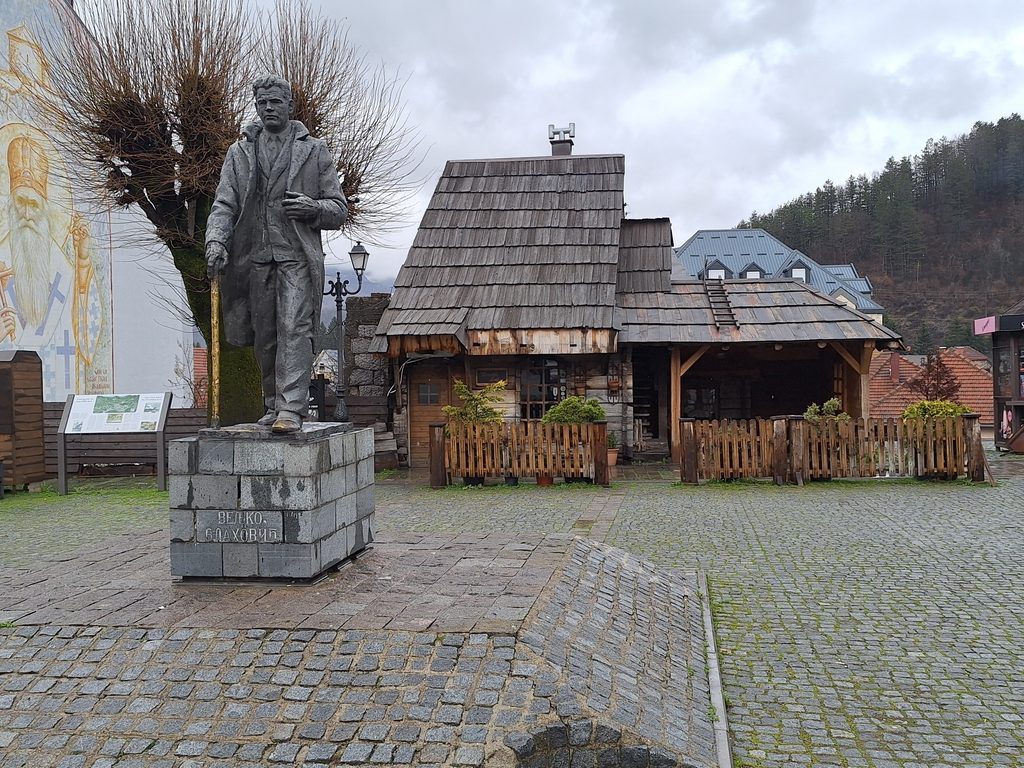

The weather was overcast, with occasional light drizzle.
Not ideal, but certainly manageable.
Or so I thought.
Searching for Historic Ruins
I’d discovered information about some historic ruins and wanted to see whether I could find them.
Unfortunately, the tourist maps I had obtained didn’t seem to agree with each other.
Both suggested slightly different routes.
I followed what appeared to be the correct road until I reached a bridge crossing a river.
According to the map, the road should have continued straight ahead.
But it didn’t.
Instead, I had to choose between turning left or right.
There was no obvious indication of which direction was correct.
I studied the map again.
Still no help.
Eventually, I made a fifty-fifty decision and turned left.
It was the wrong choice.
Lost in the Rain
What followed was a frustrating journey around the surrounding streets.
Eventually, I realised I had travelled in an enormous circle.
The ruins were nowhere to be seen.
To make matters worse, the drizzle had become a heavy downpour.
Before long, I was completely soaked.
After walking around for some time and getting nowhere, I decided I’d had enough.
There comes a point when continuing simply isn’t worth the effort.
I abandoned the search and headed back towards town.
A Disappointing Lunch
The first restaurant I came across looked like a good place to escape the rain.
I went inside and ordered spaghetti Bolognese.
Unfortunately, it was far too salty.
Under normal circumstances, I might have complained.
But by this stage, all I wanted was somewhere warm and dry.
So I ate what I could and enjoyed the opportunity to sit down.
Kolašin itself wasn’t particularly photogenic during my visit.
It is primarily known as a mountain and skiing destination, and I suspect the scenery is much more impressive higher up.
Unfortunately, I was only visiting for the day.
Waiting for the Night Train
Earlier, I had arranged to leave my luggage at a local bar.
After lunch, I returned to collect it.
My night train towards Belgrade wasn’t due until approximately 10:30 pm.
That left several hours to fill.
I settled down in the bar and began slowly working my way through a few drinks.
I wasn’t entirely sure how long the staff would allow me to remain there without continuously ordering something.
But I intended to stay as long as reasonably possible.
Outside, the weather began improving.
The rain eventually stopped, and by mid-afternoon the sun was shining again.
Montenegro’s spring weather certainly knew how to keep me guessing.
Reflecting on Montenegro
As I waited for my train, I began thinking about everything I’d experienced during my stay.
The spectacular mountains surrounding Kotor.
The beautiful medieval streets and enormous fortress walls.
The peaceful waterfront of Perast.
The historic ruins of Old Town Bar.
The rainy streets of Podgorica.
And finally, the extraordinary railway journey across the Mala Rijeka Viaduct.
There had certainly been frustrations.
Heavy rain, confusing railway arrangements, uncomfortable accommodation and occasions when I’d become completely lost.
But these difficulties had been balanced by wonderful experiences and unexpected kindness from strangers.
Travelling isn’t always comfortable.
Sometimes it’s exhausting, frustrating and occasionally a little frightening.
But the rewards can be extraordinary.
Final Thoughts on Montenegro
Montenegro is a country I would happily recommend to anyone interested in spectacular scenery, history and independent travel.
Despite its relatively small size, there is enormous variety.
The Adriatic coast offers beautiful historic towns, while the mountains provide extraordinary landscapes and railway journeys.
For senior travellers, I would particularly recommend allowing plenty of time when visiting Kotor’s fortress and other steep historical sites.
Good footwear and a willingness to take regular breaks can make an enormous difference.
Public transport is generally affordable, although schedules and seasonal services need careful checking.
Most importantly, don’t rush.
Some of my favourite memories came from simply wandering through old towns, talking with other travellers and admiring the beautiful scenery.
Now, as I prepare to leave Montenegro behind, another adventure awaits.
Next stop: Belgrade, Serbia.
And as always, my journey continues — stepping out of fear, one step at a time, into the unknown.