

Day 1 — Wednesday, 2 April 2025: Moving Day — Serbia to Kosovo
Weather Update: Cloudy, high 16°C
Elevation Above Sea Level: 652 metres (2,139 feet)
Navigating the Journey
Another early start, another country and another adventure waiting to unfold.
After my time in Serbia, it was time to move on to Kosovo, with Pristina, the capital, as my next destination.
Getting to the bus station was straightforward enough. A short 250-metre walk to the top of the street brought me to the number 95 bus stop, which conveniently dropped me near the station. One useful tip for fellow travellers is that the local buses I used were free, something I certainly appreciated when travelling on a pensioner’s budget.
At the station, the information desk directed me to platform 36 for the 10:40 am departure. However, despite already having my ticket, I discovered that I had to pay another 300 Serbian dinars (€2.50 or approximately NZ$4.82) just to gain access to the platform.
Even using the public toilets came at a price — another 100 dinars.
These little expenses might not sound like much individually, but when you are travelling for months on a limited budget, they soon add up.
The Road to Kosovo
The bus journey was expected to take approximately six hours, and for the most part, it was uneventful.
However, one thing that caught my attention was the amount of rubbish dumped along the roadsides. Fly-tipping appeared to be widespread, with piles of discarded waste scattered across the countryside.
I have noticed this problem in several countries during my travels. It is disappointing to see otherwise beautiful landscapes spoiled by rubbish that people have simply abandoned.
As we approached the border, the condition of the road deteriorated dramatically.
Potholes appeared everywhere, and the bus bounced and shook as the driver attempted to navigate around them. Mile after mile, we were jolted from one side to the other.
Then came the border crossing.
What amazed me was the enormous queue of lorries waiting to pass through. There must have been at least a hundred, perhaps more, stretching along the road as drivers waited for inspection.
Eventually, we continued towards Pristina.
First Impressions of Pristina
Arriving at Pristina’s bus station, I faced my usual decision: walk to the hostel or take a taxi.
The hostel was approximately 3.7 kilometres away. Normally, that distance would not bother me, although carrying my luggage always makes the journey more demanding.
Looking at the traffic, however, the decision was made for me.
The roads were almost completely gridlocked. Cars were barely moving, and I could easily imagine myself sitting in a taxi watching the meter continue to climb.
Walking seemed the sensible option.
My first impression of Pristina was not particularly inspiring.
Large concrete apartment buildings dominated the surrounding hillsides, many of them looking rather tired and weathered. It was a landscape quite different from the historic European cities I had recently visited.
There were extensive roadworks on the outskirts, suggesting that improvements to the city’s infrastructure were underway.
Judging by the traffic congestion, they were certainly needed.
Walking Through the Capital
The walk to my hostel took approximately an hour, giving me an opportunity to see a little of Pristina on foot.
As I approached the centre, the atmosphere began to change.
Shops, cafés and businesses lined the streets around Mother Teresa Boulevard, creating a busy commercial area where people were going about their daily lives.
One rather unusual sight caught my attention.
Christmas lights were still hanging above the streets, even though Christmas had long since passed!

It seemed rather strange to see festive decorations in April, but as the evening approached, they added a welcoming touch to the city.
I hadn’t taken any photographs during the journey because my attention was on reaching the hostel. However, later that evening I managed to capture a few views of Pristina illuminated at night, including the decorative street lights and mosques.

Sometimes it is these little unexpected details that make travelling interesting.
Settling Into My Hostel
Fortunately, finding the hostel was straightforward, and I received a warm welcome on arrival.
After travelling all day, there is something wonderfully satisfying about finally putting your bag down and knowing you do not have to carry it any further.
I made my way to the hostel bar and treated myself to a beer.
At just €1.50, approximately NZ$2.85, it was a pleasant surprise.
By 9 pm, I was ready for bed. I settled down to watch a football match and unwind after another day spent crossing borders and exploring unfamiliar surroundings.
Tomorrow, I will venture out and discover what Pristina has to offer.
Another country added to my journey, another capital reached and another chapter in my adventure.
Andrew
Day 2 — Thursday, 3 April 2025: An Underwhelming Day in Pristina
Weather Update: Partly cloudy with sunny intervals, high 13°C
Elevation Above Sea Level: 652 metres (2,139 feet)
Morning Conversations and Travel Plans
After a good night’s sleep, I made my way to the hostel kitchen to finish writing yesterday’s travel diary.
One of the things I enjoy most about staying in hostels is meeting people from different countries and backgrounds.
This morning was no exception.
I met Veronica, a freelance professional from Venezuela, and Florent from France. Both were fellow travellers, each with their own stories, experiences and plans for the road ahead.

It is fascinating how people from completely different walks of life can find themselves sitting around the same kitchen table, sharing stories about the places they have visited and the adventures still waiting for them.
These conversations are often among the most memorable parts of travelling.
I had originally planned to spend three nights in Pristina, but after considering what there was to see, I was beginning to wonder whether that might be longer than necessary.
My next destination would be Skopje, the capital of North Macedonia.
A City of Closed Doors
Armed with a short list of places I wanted to visit, I set off to explore Pristina.
Unfortunately, the day did not go quite as planned.
Several of the religious buildings I hoped to enter were closed or inaccessible. One church near my hostel was closed because of structural concerns.
However, not everything was closed.
My photographs show that I managed to explore several parts of the city, including the historic clock tower, Yashar Pasha Mosque and the Cathedral of Saint Mother Teresa.
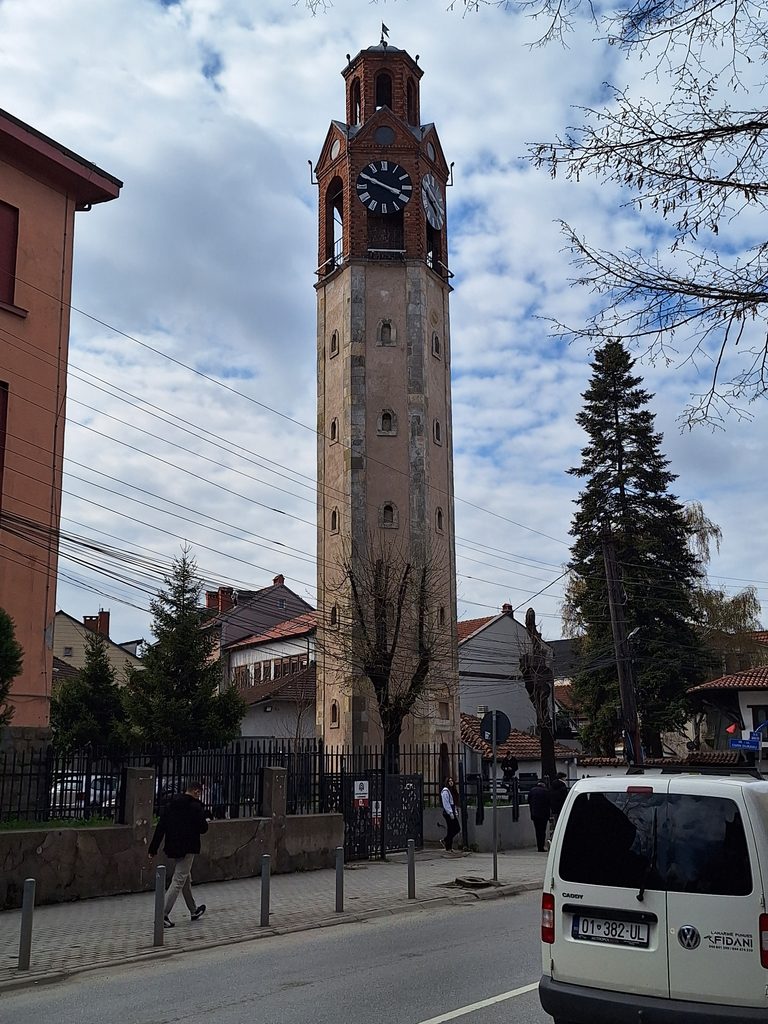
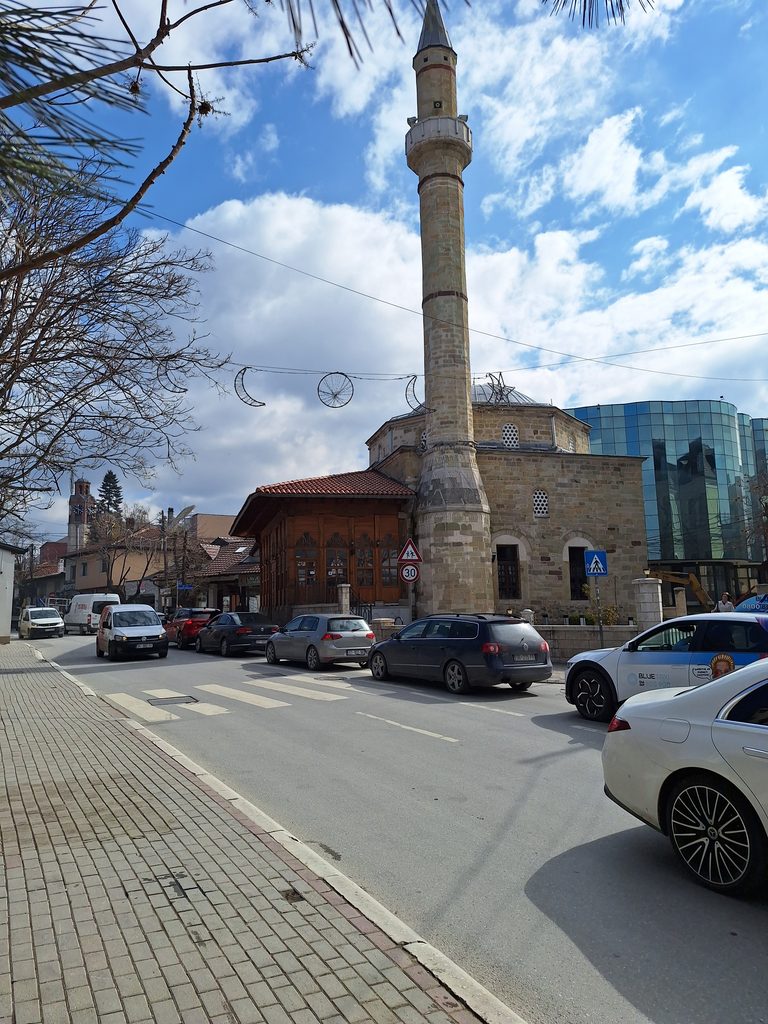
The cathedral was particularly impressive, with its towering exterior, spacious interior, arched ceilings and stained-glass windows.


Although I had been disappointed by some of the closed buildings, the cathedral gave me an opportunity to appreciate another side of Pristina’s religious architecture.
Monuments and Mother Teresa Boulevard
Continuing through the centre, I came across several monuments and statues, including the impressive equestrian statue of Skanderbeg.

Skanderbeg, also known as Gjergj Kastrioti, is an important historical figure for Albanians, remembered for his resistance to Ottoman rule during the 15th century.
I also saw a statue of Mother Teresa, whose family roots were Albanian. Mother Teresa was born in Skopje in 1910, when it was part of the Ottoman Empire, and later became internationally known for her humanitarian work.
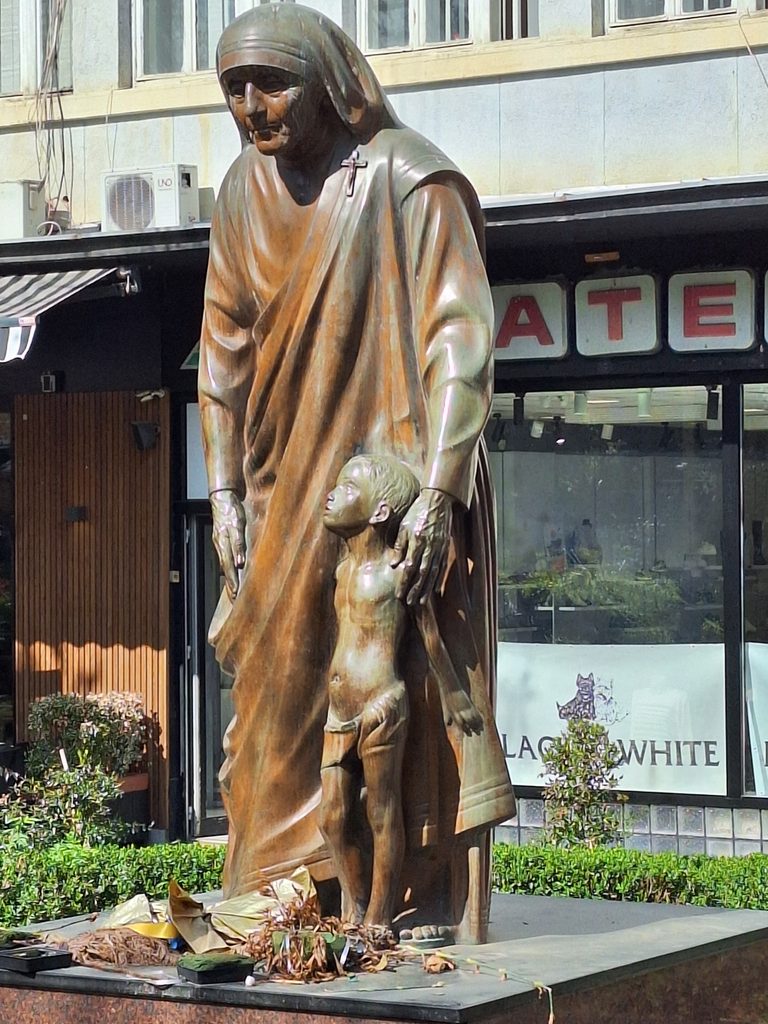
The pedestrian boulevard was busy with people walking, shopping and enjoying the cafés.
There was certainly life in the city, although I was still struggling to find the same sense of excitement that I had experienced in some of the other capitals on my journey.
Kosovo’s Complicated History
Kosovo has a complicated and sometimes painful history, and understanding a little of that history helps explain some of the tensions that still exist today.
I remember travelling through this part of Europe in the early 1970s, when the region was part of Yugoslavia.
It was a very different political landscape then.
The breakup of Yugoslavia during the 1990s brought a series of devastating conflicts, leaving communities divided and families struggling with memories of violence and displacement.
The 1998–1999 Kosovo War was part of this turbulent period. Its consequences are still felt by many people today.
During my travels through the Balkans, I have heard different perspectives about life under Yugoslavia. Some people remember aspects of that period favourably, particularly economic security and everyday stability. Others recall political repression and the lack of freedoms experienced by different communities.
History is rarely as straightforward as it first appears.
The wars also left terrible scars elsewhere in the former Yugoslavia, particularly in Bosnia, where ethnic cleansing and mass atrocities caused enormous suffering.
What strikes me most is how events that took place decades ago can continue to influence people’s lives and relationships today.
Conversations with a Local Teacher
One of the more interesting moments of the day came during a conversation with a local teacher.
He explained that despite being an educated professional, he earned just €720 a month.
When he described the cost of housing and the difficulties of making ends meet, I began to understand why many people look towards other European countries for better opportunities.
He told me that he had applied for citizenship in Norway, hoping to create a better future for himself.
It was a reminder that while I am travelling through different countries by choice, many people dream of leaving their home countries because they feel they have little opportunity to improve their circumstances.
Yet, as I continued walking through Pristina, I noticed something that seemed rather contradictory.
Restaurants and bars were busy, with customers enjoying meals, drinks and time with friends.
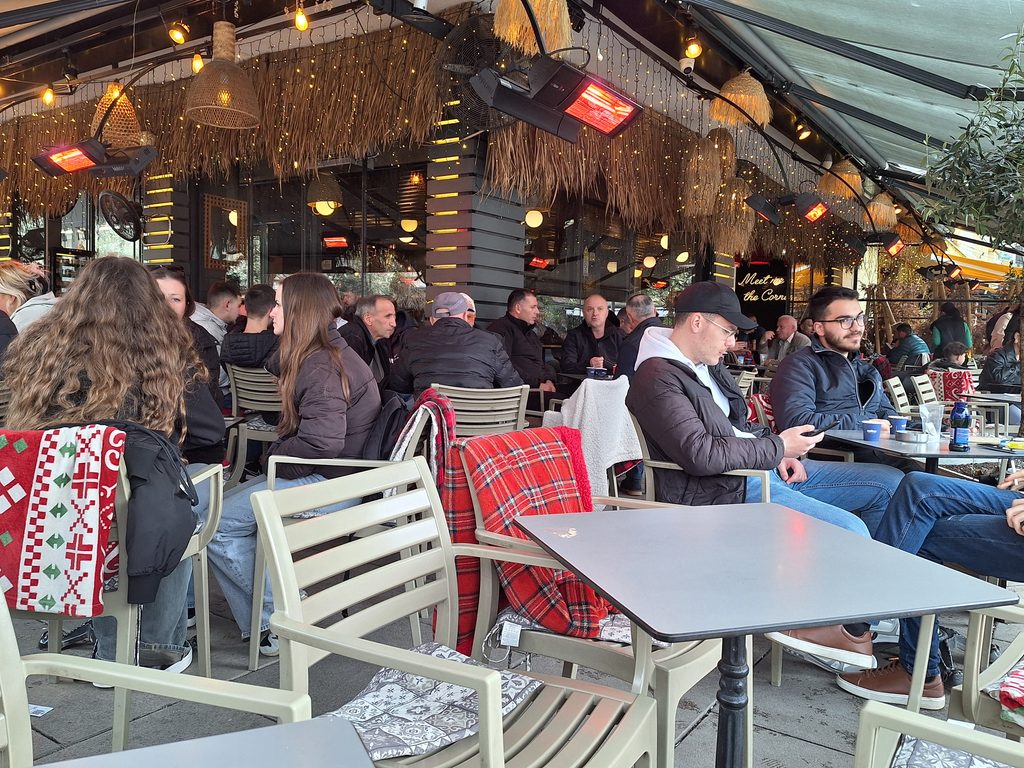
On the surface, parts of the city appeared lively and prosperous.
It made me wonder about the differences in people’s incomes and living standards. Of course, a busy café does not tell the whole story of a country’s economy, but the contrast was noticeable.
These are the everyday realities that interest me when travelling.
It is not always about famous landmarks. Sometimes, listening to people talk about their lives gives you a much better understanding of a place.
Reflections on the Day
By the end of the afternoon, I had to admit that today had been rather underwhelming.
I had seen some interesting buildings and monuments, but Pristina had not captured my imagination in quite the same way as other cities I had visited.
Perhaps I was expecting too much.
Perhaps it was simply one of those days when everything seemed a little disappointing.
Whatever the reason, I decided there was no point in forcing myself to enjoy something just because I happened to be there.
I would book my bus ticket to Skopje for Saturday and continue my journey through the Balkans.
For me, Pristina is probably a destination best suited to a short visit — perhaps one or two days.
That does not mean other travellers will feel the same. We all see places differently, and what disappoints one person might fascinate another.
You cannot expect every destination to be extraordinary.
Andrew
Day 3 — Friday, 4 April 2025: Another Look at Pristina
Discovering More of the City
Although yesterday had been rather disappointing, I still had another day in Pristina before my planned departure for North Macedonia.
My photographs from today show that there was more to see than I had initially appreciated.
Among the places I photographed were traditional buildings, religious sites, public squares and a local market.
Sometimes a city does not reveal itself immediately. You have to wander through its streets and look beyond the obvious tourist attractions.
Mosques and Traditional Architecture
The mosques were among the most interesting buildings in my photographs today.
I captured their courtyards, traditional fountains, decorative arches and spacious prayer halls.

One interior featured beautiful architectural details and blue prayer carpets, creating a striking contrast with the busy streets outside.

Religious buildings tell an important part of a country’s story. They reflect the beliefs, traditions and history of the people who have lived there over the centuries.
I also photographed traditional buildings with balconies, a reminder that Pristina has architectural features beyond the concrete apartment blocks that had dominated my first impressions.
Markets and Everyday Life
One of the photographs shows clothing and other goods displayed for sale at a street market.

I have always enjoyed seeing local markets during my travels.
They are places where everyday life unfolds, often giving a more revealing picture of a city than its major attractions.
There were also public squares, monuments and opportunities to stop and take a break from walking.
It is these ordinary moments that form part of a long journey.
A Look Around My Hostel
Later in the afternoon, I took photographs around the hostel, including the reception, bar, communal lounge, kitchen, dormitory and bathroom facilities.

Hostels have become an important part of how I travel.
They allow me to keep accommodation costs manageable, but just as importantly, they provide opportunities to meet people from all over the world.
For a senior traveller, I also pay attention to practical details such as the layout of the accommodation, access to the rooms, bathroom facilities and comfortable communal areas.
These are things that can make a considerable difference after a long day of walking.
Final Thoughts on Pristina
My time in Kosovo’s capital has been an interesting mixture of experiences.
I have seen impressive religious buildings, historic monuments, bustling cafés and markets, but I have also encountered closed attractions, traffic congestion and some rather uninspiring urban scenery.
Perhaps the most valuable part of my visit has been talking with people and gaining a little understanding of the challenges they face.
Every country has its own story, and Kosovo is no exception.
Although Pristina has not been among my favourite destinations, I am glad I made the journey.
Travelling is about experiencing places for yourself rather than relying entirely on what other people tell you.
Tomorrow, I plan to continue south towards Skopje, North Macedonia.
Another border, another country and another chapter of my journey.
Andrew