

Croatia — From Sarajevo to the Adriatic Coast
Day 172 — A Fantastic Bus Journey from Sarajevo to Split
Weather: Sunny, high 25°C
Elevation: 20 metres
Leaving Sarajevo Behind
Today was one of those travel days when the journey itself turned out to be just as memorable as the destination.
After my time exploring Sarajevo and learning about Bosnia’s extraordinary and sometimes tragic history, it was time to move on. My next destination was Split, on Croatia’s beautiful Adriatic coast.
The bus even departed a few minutes early, which was a pleasant surprise. An even better surprise was the quality of the bus itself. There was plenty of legroom, comfortable seats and large panoramic windows offering excellent views of the countryside.
With approximately eight hours of travelling ahead, I couldn’t have asked for a much better start.
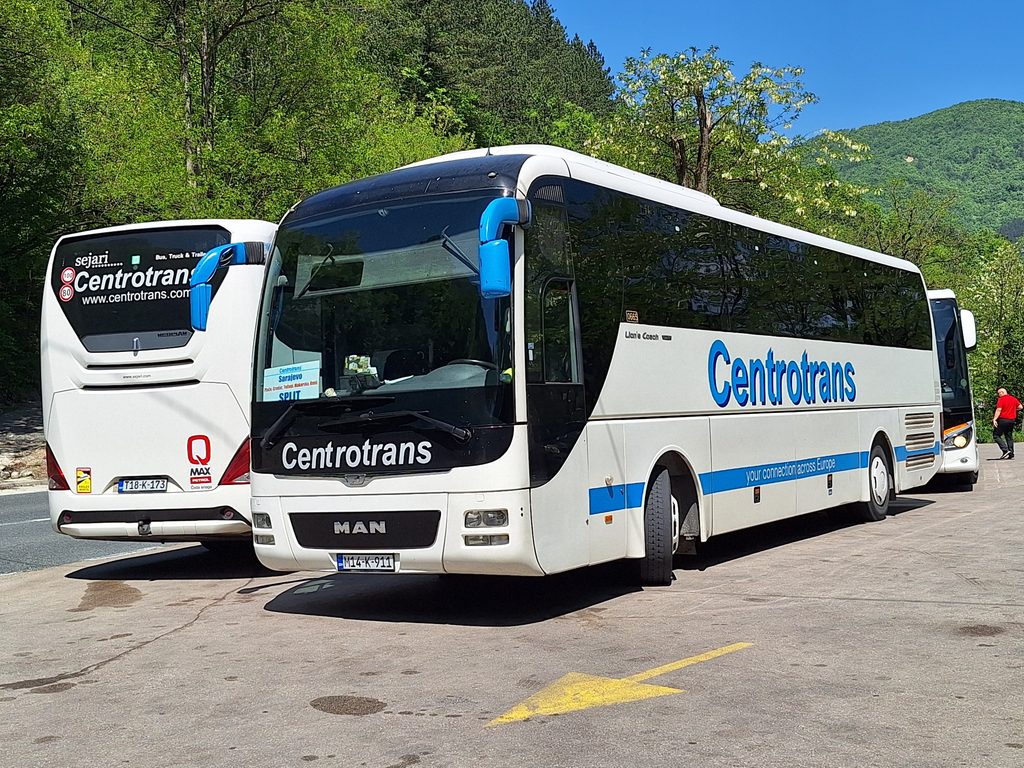
Bosnia’s Magnificent Green Countryside
As we left Sarajevo, I found myself surrounded by some of the greenest countryside I had encountered on my journey.
Rolling hills, densely wooded mountains and lush valleys stretched into the distance. The landscape was absolutely beautiful, and I spent much of the journey staring through the bus window.
Initially, we travelled along smooth, modern highways, passing through long tunnels carved into the mountains. It made for a comfortable ride, although eventually the newer roads gave way to older, bumpier stretches.

That’s part of travelling overland. You experience the countryside as it changes, rather than flying above it and missing everything in between.
Konjic and the Neretva River
About an hour into the journey, we encountered our first traffic jam approaching the town of Konjic.
Traffic slowed to a crawl as vehicles converged on the town centre. Eventually, we passed through and continued on our way.
The scenery more than compensated for the delay.
For a considerable distance, our route followed the Neretva River, its waters winding through the mountains and valleys.
At first, I was sitting on the perfect side of the bus for photographs. Later, however, the river changed direction, and the passengers on the opposite side enjoyed the best views.
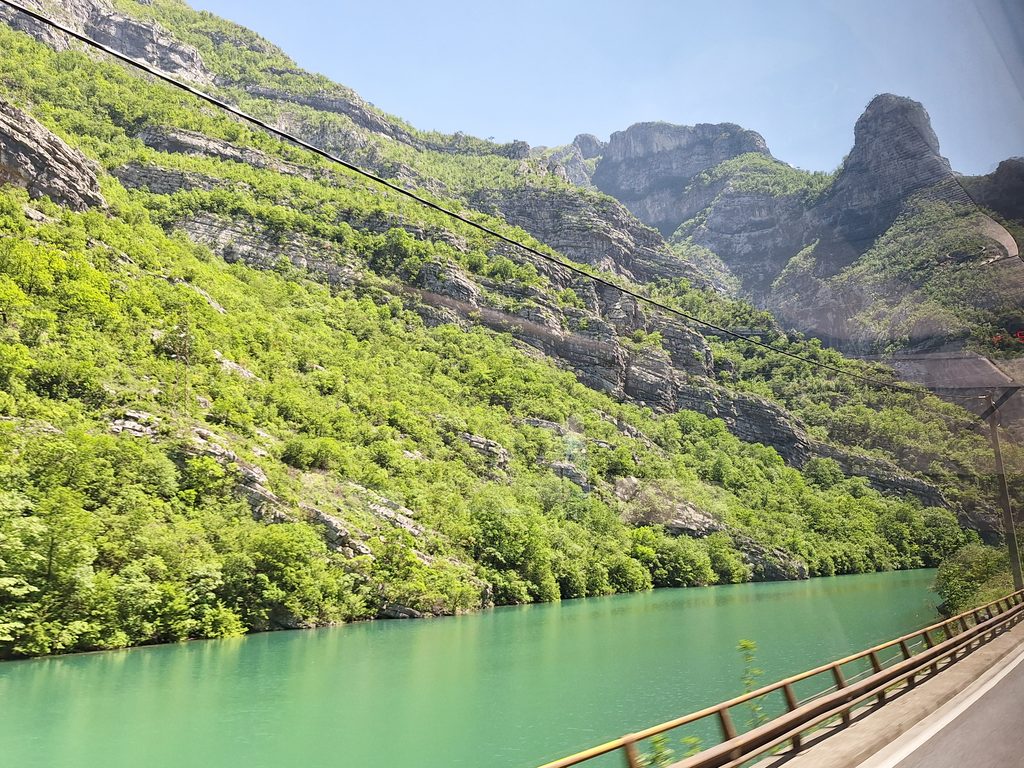
You can’t win them all!
Nevertheless, this was an exceptionally scenic journey, and I would recommend the route to anyone who enjoys travelling through the countryside.
Another Delay at Jablanica
Approaching Jablanica, we encountered another traffic bottleneck.
This time, it took around 30 minutes to negotiate our way through.
By now, I had become accustomed to the changes in pace. One minute we were travelling comfortably along open roads, and the next we were inching through a busy town.
But there was always something interesting to observe through the window.
Zdrava Voda — The Smell of Roasting Meat
One of the highlights of the journey came when we stopped for a 15-minute break in the mountains near Jablanica.
The restaurant was called Zdrava Voda, approximately 1.5 kilometres beyond Jablanica on the road towards Split.
The views were magnificent, but something else immediately captured my attention.

There were approximately ten roasting spits, with large pieces of meat slowly turning above the hot coals.
The smell was absolutely wonderful!
Some of the meat looked so tender that it was almost falling off the bone. I would have loved to reach across and pull off a strip to taste it.

Unfortunately, our stop was too short to order a proper meal.
We had time for a drink and a visit to the toilet before continuing our journey.
If I were travelling this route independently, I would certainly consider stopping here for a meal.
In fact, the journey through Bosnia would make an excellent slow-travel adventure. Rather than covering the entire distance in one day, you could stop in some of the towns along the river, spend a night or two and explore the surrounding countryside.
For me, that is what travelling through a country rather than flying over it is all about.
Passing Through Mostar
Continuing towards Croatia, we passed through Mostar.
From the bus, the city appeared quite sprawling, and the outskirts were not especially attractive. Of course, I was only seeing a small part of Mostar, not the historic old town and its famous bridge.
One building particularly caught my attention.
It was still riddled with bullet holes from the Bosnian War, yet people continued to live inside it.
It was a sobering reminder that the consequences of war remain visible many years after the fighting has ended.
I was so absorbed in looking at the building and thinking about its history that I forgot to take a photograph.
Crossing into Croatia
We reached the border at 2:23 pm and completed the crossing by 2:42 pm.
Just 19 minutes!
It was the quickest and easiest border crossing I had experienced on this journey.
No complications, no lengthy delays and no problems.
As we left Bosnia behind, I reflected on how impressed I had been by the countryside.
Another thing stood out: the remarkable absence of rubbish dumped along the roadsides, in fields and at stopping places.
Compared with some countries I had travelled through, Bosnia’s roadsides appeared particularly clean.
Well done, Bosnia!
Olive Groves, Orchards and Rocky Mountains
Once inside Croatia, the landscape began to change.
Olive trees, fruit orchards and vineyards appeared along the roadside.
I noticed irrigation channels carrying water through the agricultural land, helping to support the orchards and surrounding farms.
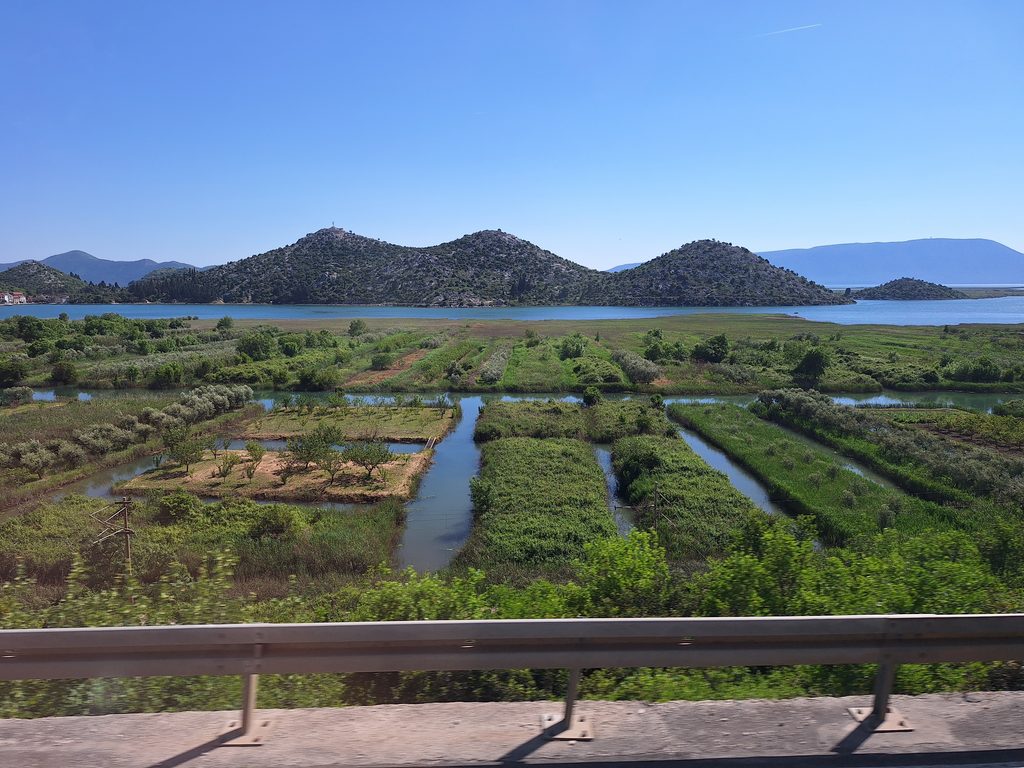
Gradually, we descended from the mountains towards sea level.
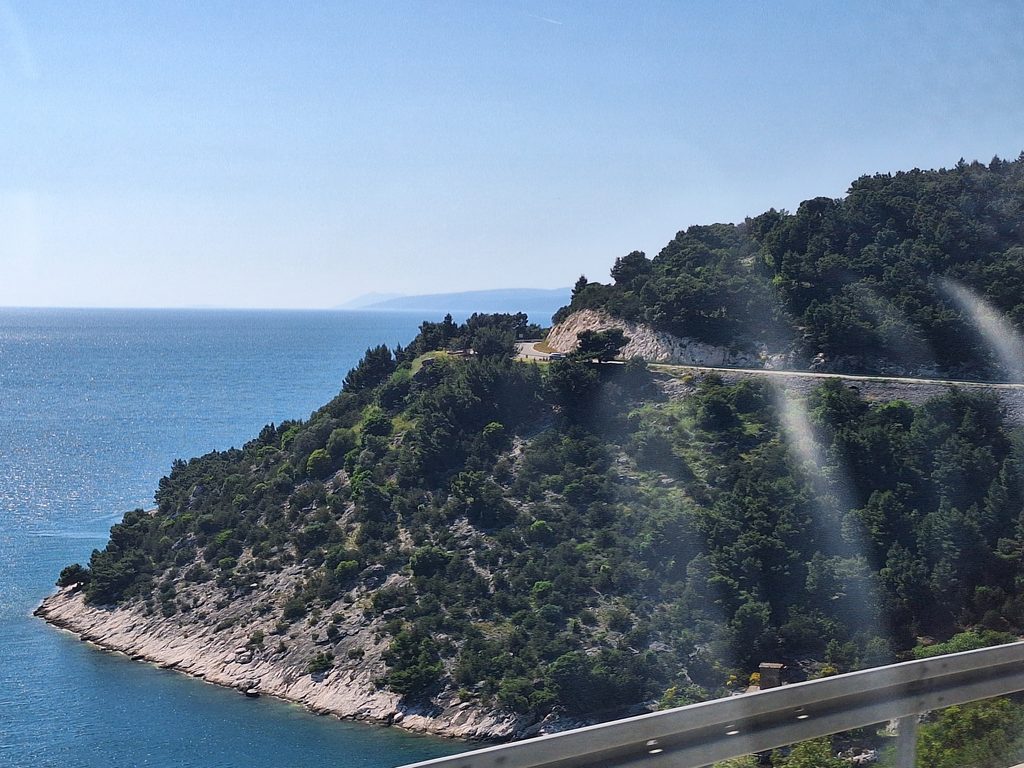
The countryside became rockier, reminding me of parts of Greece, Israel and other Mediterranean regions I had visited.
There was a rugged beauty to the landscape, and the closer we came to the coast, the more I looked forward to arriving in Split.
A Lesson About Food and Currency
During the journey, we had two short breaks.
The first lasted approximately 15 minutes, and the second only ten minutes.
Although food was available to order at the restaurants, there wasn’t enough time to sit down and enjoy a proper meal.
Another problem was cash.
I had used up my remaining Bosnian currency in Sarajevo and hadn’t checked what currency I would need during the journey.
Croatia now uses the euro, but I hadn’t been certain about that before leaving.
At one of the stops, cash was required, which left me unable to purchase anything.
A useful lesson for future journeys: always carry sufficient food and water, and check what currency you might need along the route.
Don’t depend on short bus stops for your meals.
Arriving in Split
Despite the delays at Konjic and Jablanica, we arrived in Split approximately 25 minutes ahead of schedule.
Not bad for an eight-hour journey!
The bus station was conveniently located beside the ferry terminal, making it easy for passengers continuing to the Croatian islands.
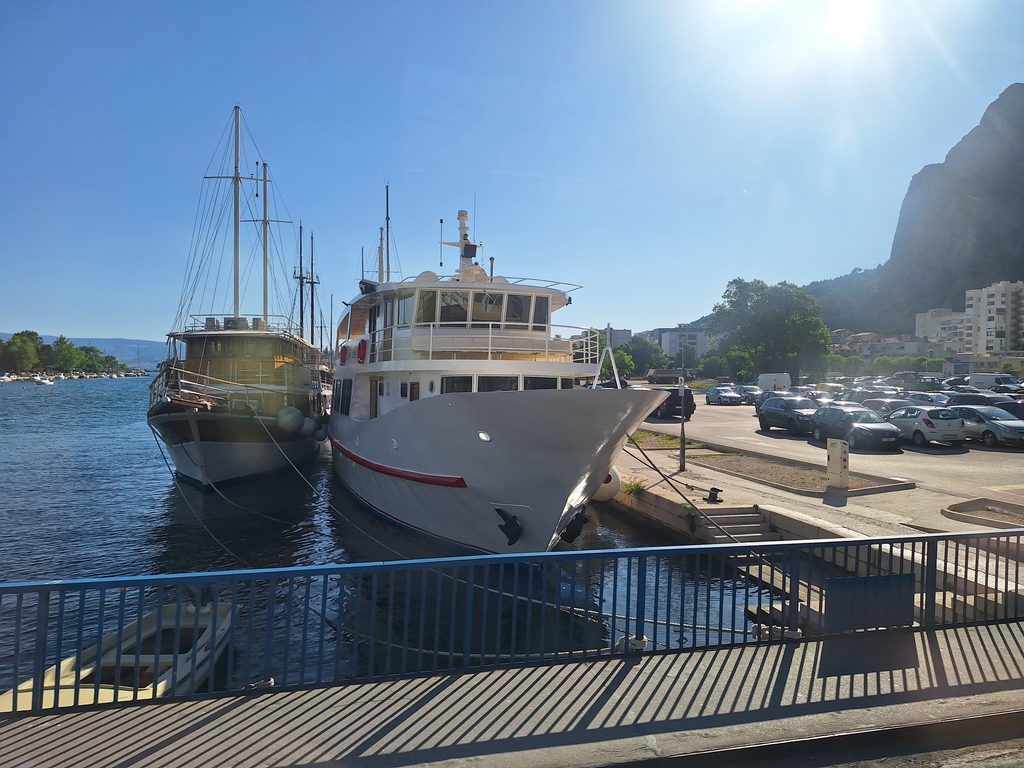
My hostel was approximately 1.3 kilometres away, so I set off on foot with my backpack.
It was around 6:30 pm, and the weather was still wonderfully warm.
After spending most of the day surrounded by mountains and rivers, I had finally reached the Adriatic coast.
What an extraordinary journey it had been.
I would describe about 70 per cent of the route as a real razzle-dazzle ride, with magnificent scenery almost everywhere I looked.
If you enjoy scenic bus journeys, this is one I would happily recommend.
Tomorrow, it would be time to explore Split.
Day 173 — Exploring Split’s Old Town
Weather: Sunny, high 25°C
Elevation: Approximately 13 metres
A Sunny Morning in Split
After yesterday’s long journey from Sarajevo, I woke to beautiful sunshine and another warm day.
My first night at the hostel had been enjoyable, although I had stayed up rather late talking with fellow travellers.
Daan, from Holland, and Hubert, from Poland, joined me in conversations covering everything from religion and faith to Darwinism.
These unexpected conversations are one of the pleasures of hostel life.
You meet people from different backgrounds, exchange ideas and discover how differently we all see the world.
Coffee, Bakeries and Helpful Advice
My hostel host, Mirjana, was extremely helpful.
After sorting out a minor problem with the electrical socket for the kettle, she pointed me towards several useful places nearby.
There was somewhere to get a good coffee, a recommended pizzeria and a bakery for breakfast.
Daan accompanied me to find the bakery.
It was a pleasant introduction to the neighbourhood, although I later discovered another bakery offering better prices.
When you’re travelling on a pensioner’s budget, these little discoveries make a difference.
The Harbour and Its Magnificent Ships
Our wanderings eventually brought us down to the harbour.
Split has a busy and attractive waterfront, with ferries, pleasure boats and enormous cruise ships coming and going.
One particularly impressive sight was a magnificent five-masted vessel moored near a huge cruise ship.

Looking at the two vessels, I couldn’t help wondering how much money was tied up in them.
Quite a contrast to my own modest approach to travelling, with everything I need carried in a backpack.
Searching for My Croatian Flag
I also had a small mission for the day.
I wanted to find postcards to send home and another flag for my backpack.
Collecting country flags has become one of my traditions.
Each little flag represents somewhere I’ve visited, another chapter of my journey and another collection of memories.
Unfortunately, flags aren’t always easy to find.
Magnets seem to have taken over the souvenir shops, and finding a small fabric flag can be surprisingly difficult.
I had discovered an online supplier in Holland called Backpackers Flags, which has been useful for countries where I couldn’t find anything locally.
Of course, eventually I’ll also need someone with a sewing machine to attach them all!
Diocletian’s Palace — Almost 1,700 Years of History
One of the main attractions in Split is Diocletian’s Palace.
The Roman Emperor Diocletian had this enormous complex built around the end of the third and beginning of the fourth centuries AD as his retirement residence.
It was no ordinary palace.
The complex covered approximately 30,000 square metres and combined luxurious imperial accommodation with the defensive features of a military fortress.
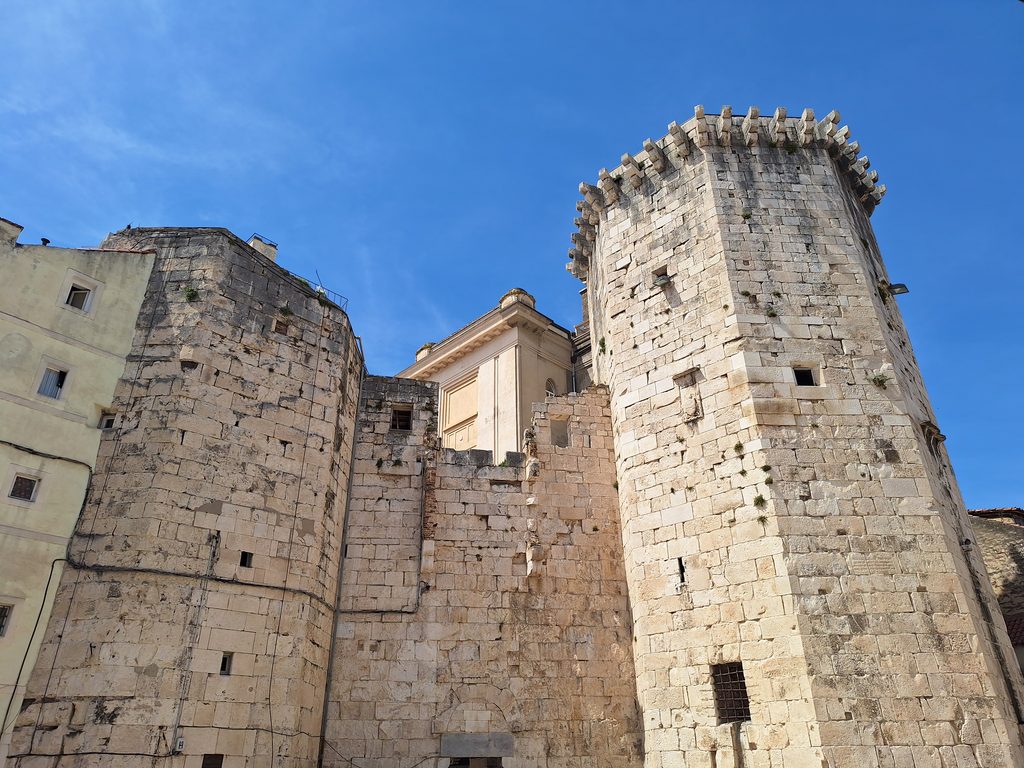
Following the decline of Roman rule, local people gradually moved into the former palace.
Over generations, homes, churches, shops and public spaces developed within its walls.
That is what makes the old town so unusual today.
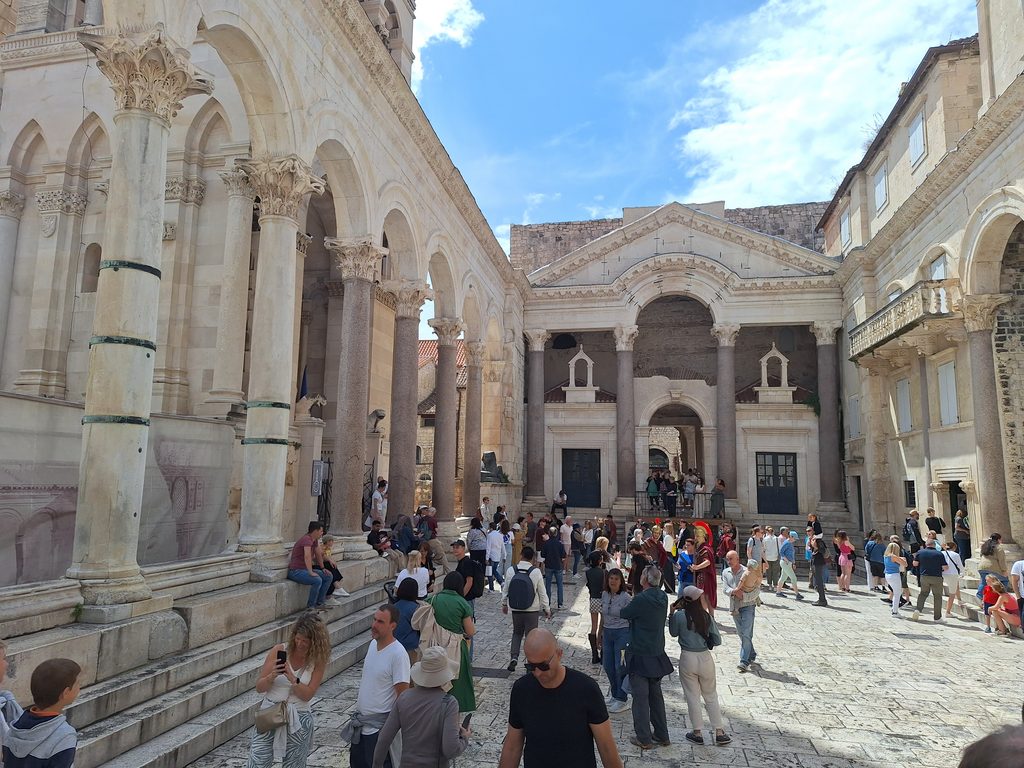
Rather than walking through an abandoned archaeological site, visitors are exploring a living city built within and around ancient Roman structures.

Medieval buildings stand alongside Roman walls, while modern cafés and shops occupy spaces with centuries of history.
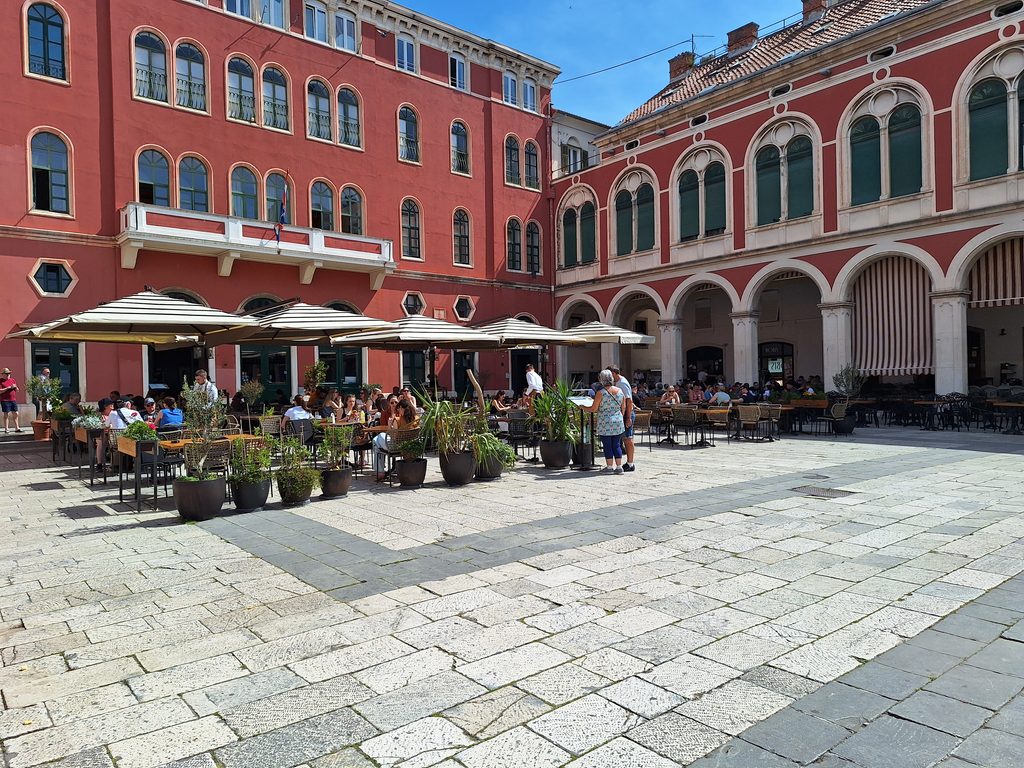
It is a remarkable example of how a city can continue evolving without completely losing its past.
The Cruise Ship Invasion
Unfortunately, my first attempt to explore the palace was an absolute nightmare.
It was Saturday, and the place was packed.
Cruise ship passengers and organised tour groups seemed to be everywhere.
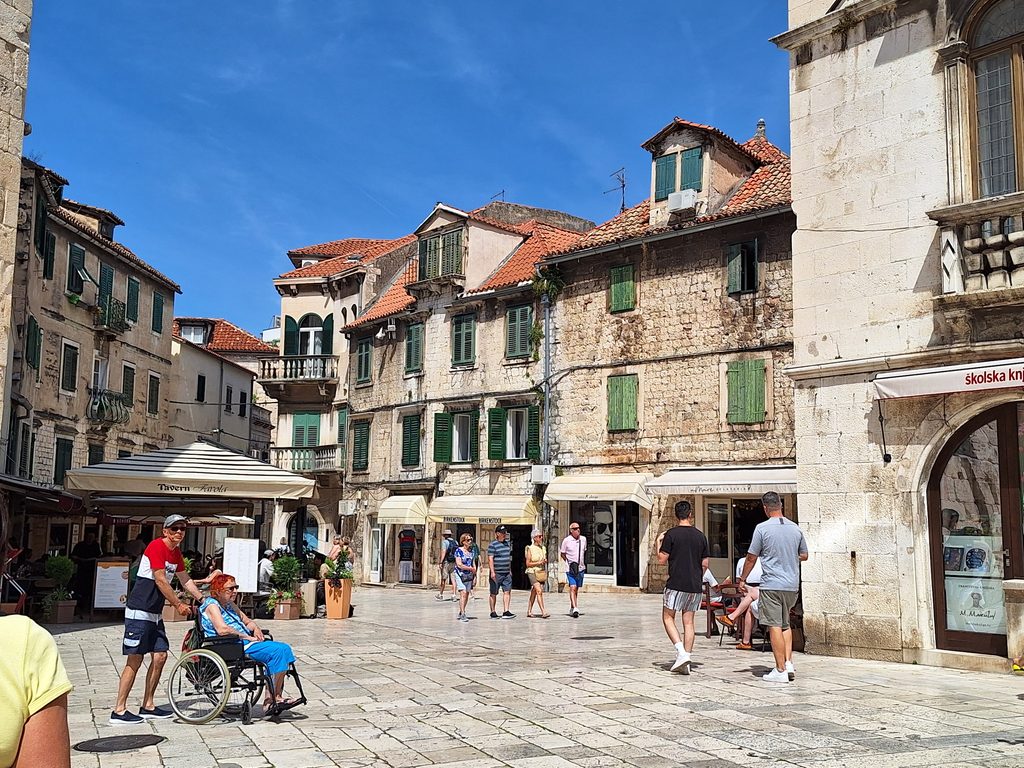
They spread through the narrow streets like ants on a hot day.
Trying to move around comfortably was almost impossible.
To make matters worse, there was a home football match scheduled for the afternoon, bringing even more people into the city.
I had been looking forward to exploring the historic streets, but with the crowds pressing in from every direction, it simply wasn’t enjoyable.
Rather than force myself through the congestion, I decided to leave the old town for another day.
Perhaps Monday would be quieter.
Sometimes you have to change your plans, even when you’ve been looking forward to visiting somewhere.
A Welcome Discovery — La Linea
After negotiating the crowds, I was ready to sit down and enjoy a beer.
Someone had recommended a bar called La Linea, claiming its prices were considerably cheaper than elsewhere.
Naturally, I decided to investigate.
And what a pleasant surprise!
In some bars, a pint of beer could cost €6, around NZ$11.40 at the exchange rate I was using.
At La Linea, I could enjoy a beer for around €3.
Half the price!
For someone travelling on a limited budget, finding a place like that is a little victory.
I suspect La Linea will become one of my regular stopping places during my stay in Split.
The Pizza That Never Arrived
Later, I decided to try the pizzeria Mirjana had recommended.
Finding it was straightforward, although my favourite type of pizza wasn’t on the menu.
I decided to stay anyway.
Unfortunately, the service was dreadful.
Two waiters stood chatting and looking at their phones while I sat waiting to be served.
Eventually, I’d had enough.
I got up, left and made it clear that they had lost a customer.
There are plenty of restaurants in Split, and I’m certainly not going to spend my time begging someone to take my order.
An Evening of Conversation
Back at the hostel, I opened a bottle of something refreshing and settled down for another evening of conversation.
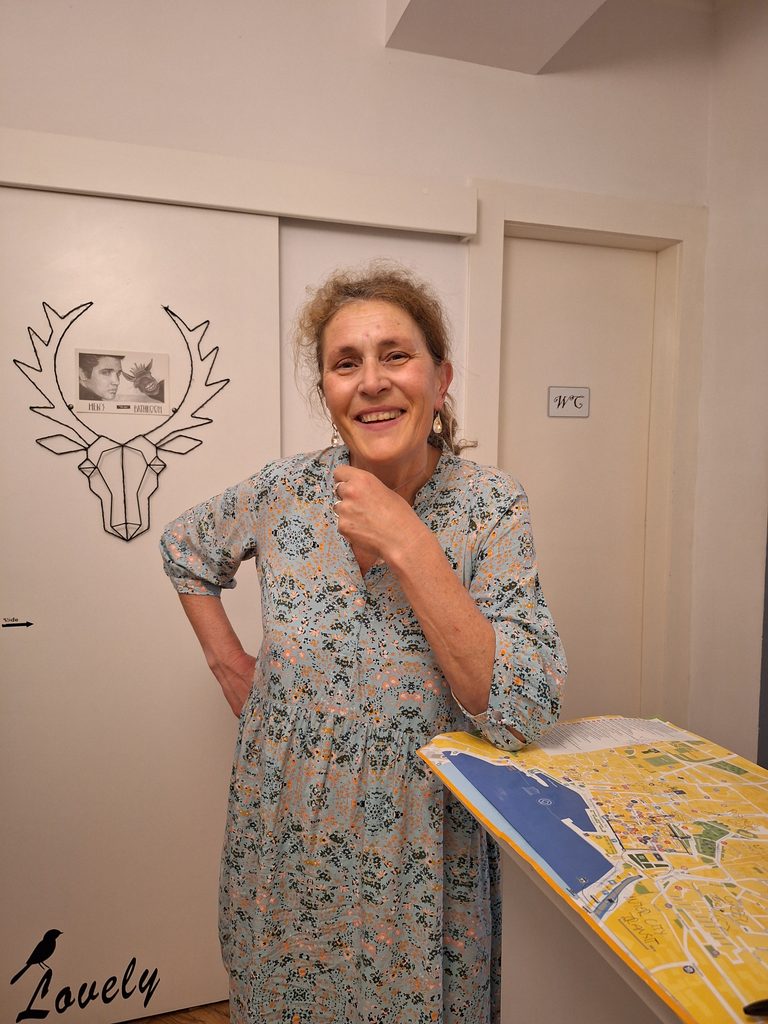
This time, I was chatting with Daan and Fabian, who worked at the hostel.
Once again, we exchanged stories, ideas and experiences.
These moments rarely appear in tourist brochures, yet they are among my favourite memories of travelling.
Tomorrow, I planned to escape the busiest streets and explore the coastline.
I had heard about a walk around the headland that might take two or three hours.
After today’s experience with the crowds, that sounded extremely appealing.
Day 174 — Walking Along Split’s Beautiful Coastline
A Change of Plans
Sunday morning arrived, and I was looking forward to a long walk.
After saying goodbye to Daan and getting something to eat, I set off to explore the coastline around Split.
My original intention was to find a more rugged walking route around the headland.
However, things didn’t quite work out as expected.
Instead, I discovered a pleasant paved pathway running along the coast.
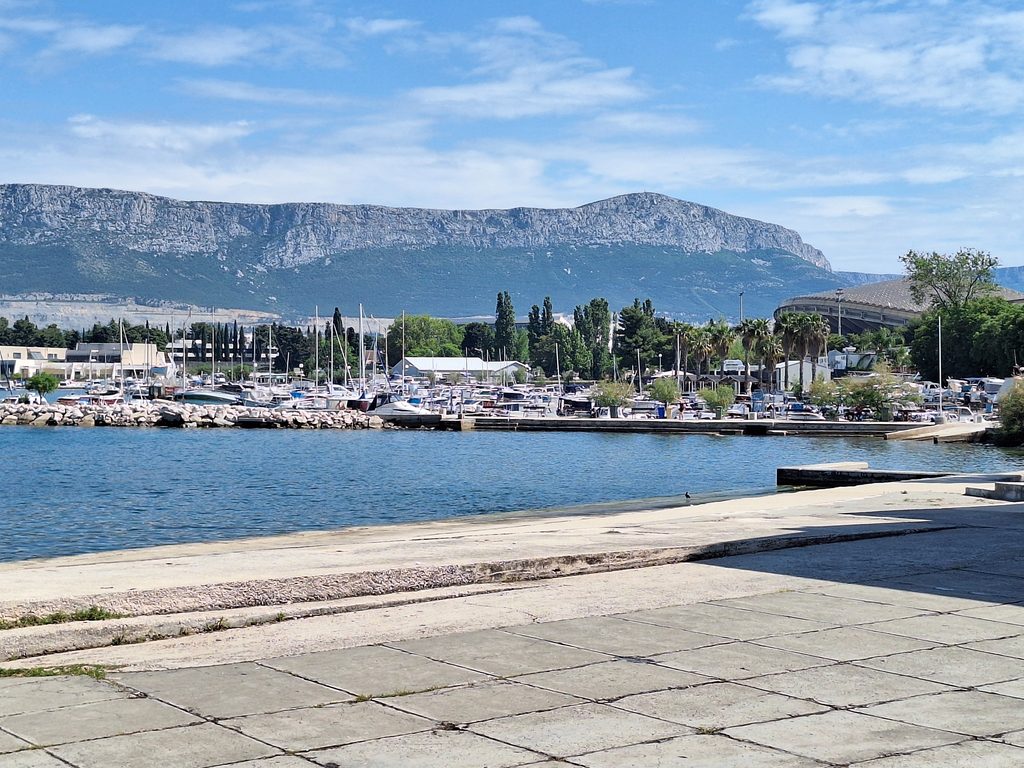
Sometimes the views of the sea were partly obscured by trees, but it was still a lovely place to walk.
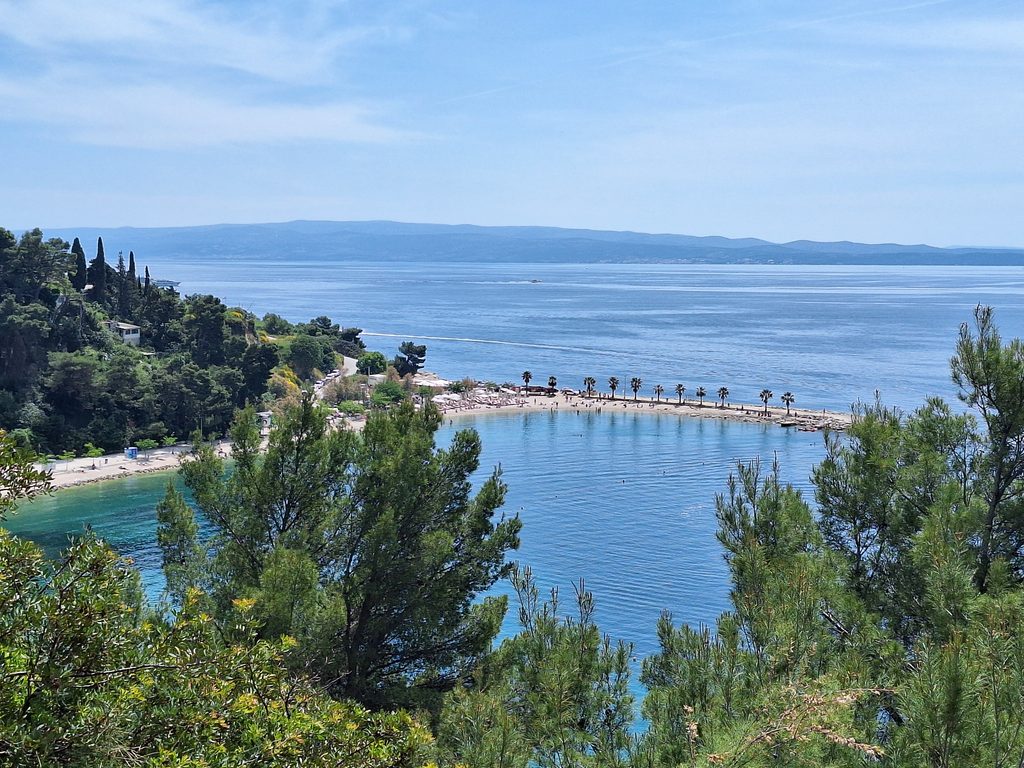
The weather was beautiful, the surroundings peaceful and the fresh coastal air made a welcome change from the crowded old town.

A 12.74-Kilometre Walk
By the time I finished, I had walked approximately 12.74 kilometres.
It felt wonderful to be out walking again, enjoying the countryside and discovering somewhere new at my own pace.
The paved route was particularly pleasant because I didn’t have to concentrate constantly on uneven surfaces.
For older travellers, and especially those managing arthritis or other mobility difficulties, finding a reasonably level walking route can make exploring much more enjoyable.
You don’t always need to climb mountains or tackle difficult trails to experience the beauty of a destination.
Sometimes a simple walk beside the sea is all you need.
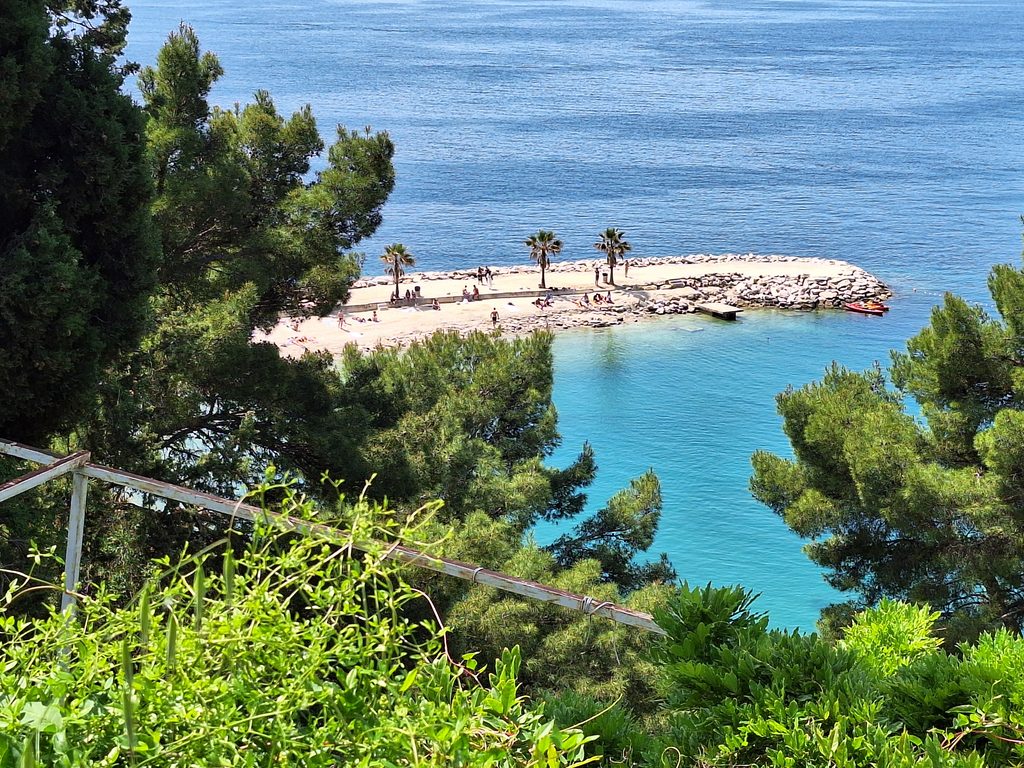
An Unexpected Triathlon
During my walk, I unexpectedly came across a triathlon.
There was plenty of activity, with competitors and spectators adding excitement to the area.
I hadn’t planned to encounter a sporting event, but that’s another pleasure of walking rather than relying on organised tours.
You never quite know what you’ll discover.
Back to the Busy Harbour
Eventually, I made my way back towards the harbour.
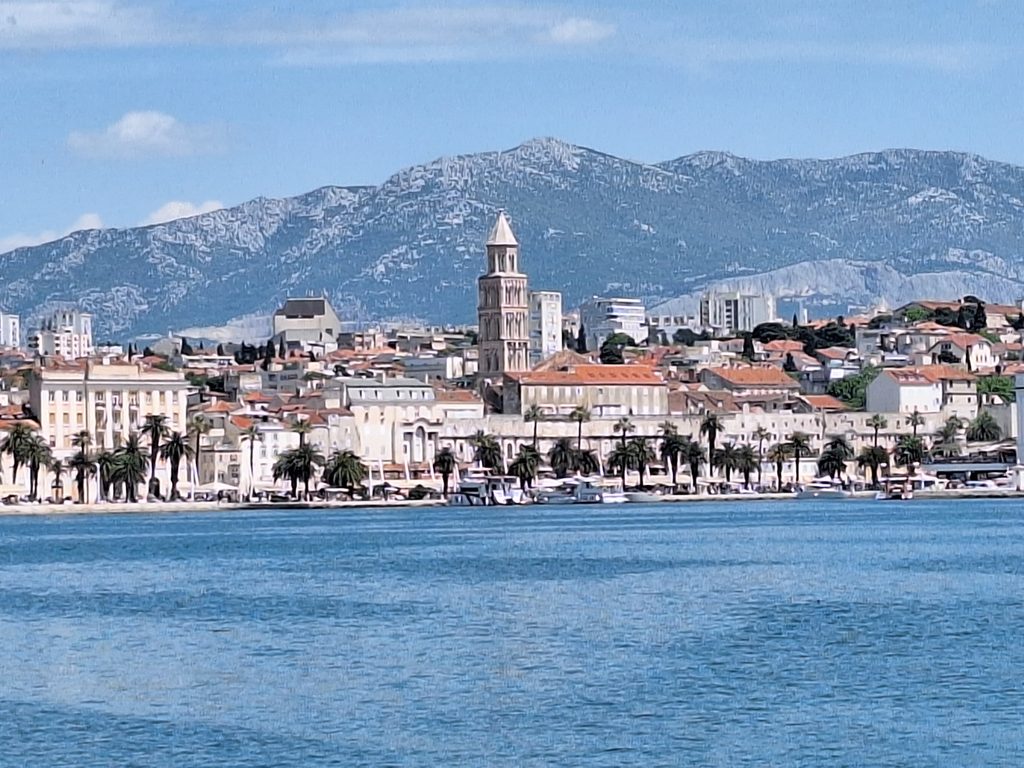
Unfortunately, another cruise ship had arrived, and the waterfront was busy again.
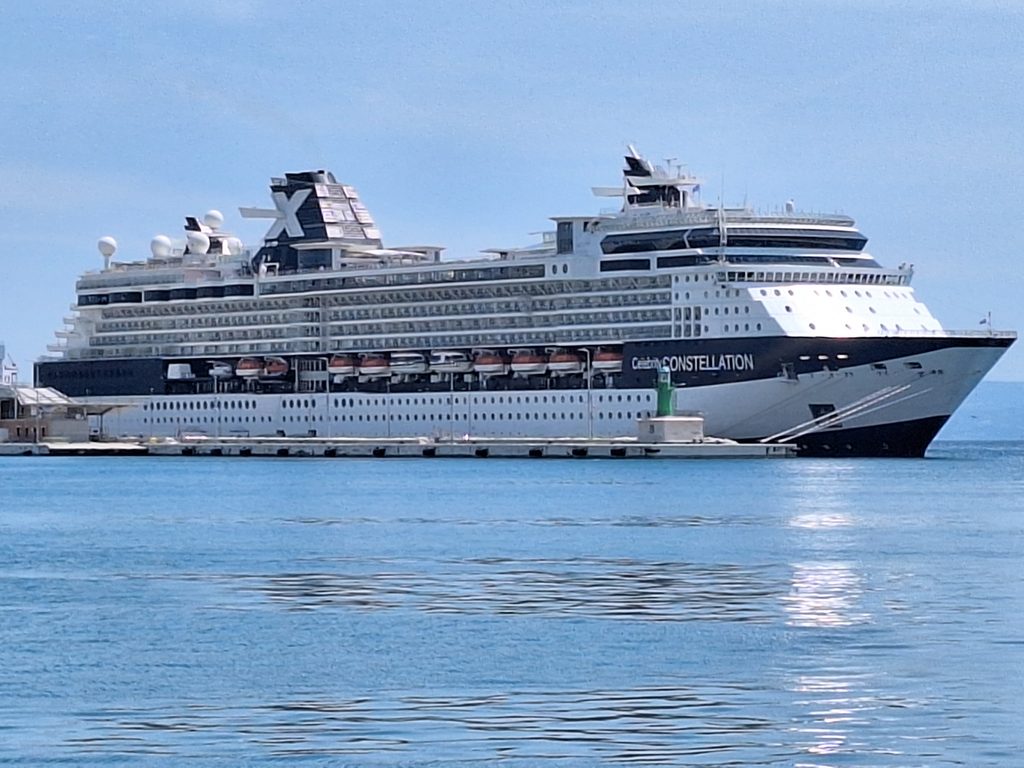
The crowds were everywhere.
Rather than push my way through them, I found somewhere comfortable to sit and relax.
I ended up at an Irish bar, enjoying a couple of beers and watching football with another traveller.
It was a pleasant way to spend part of the afternoon.
Not every hour of a journey has to involve visiting a monument or climbing a hill.
Sometimes you simply need to sit down, enjoy the atmosphere and watch the world go by.
Day 175 — More Cruise Ships and the Historic Streets of Split
A Grey and Windy Morning
Monday brought a change in the weather.
The skies were grey, the wind had picked up and rain threatened.
After breakfast, I spent some time catching up on my blog.
Keeping a daily record of this journey requires more discipline than I sometimes manage.
There are photographs to sort, experiences to write about and practical details I want to remember.
Occasionally, I fall behind, especially when there is so much to see and do.
Just as I set out, the rain began, although fortunately it was only a brief shower.
Another Invasion of Cruise Ships
I had hoped that Monday would be quieter than the weekend.
Unfortunately, I was wrong.
Two more cruise ships had arrived in port.
Once again, the old town was full of organised tour groups, and long queues had formed outside the main attractions.
It was frustrating because I really wanted to explore Diocletian’s Palace properly.
However, I wasn’t prepared to spend hours standing in queues or fighting my way through tightly packed groups.
Instead, I decided to explore the quieter streets around the edges of the old town.
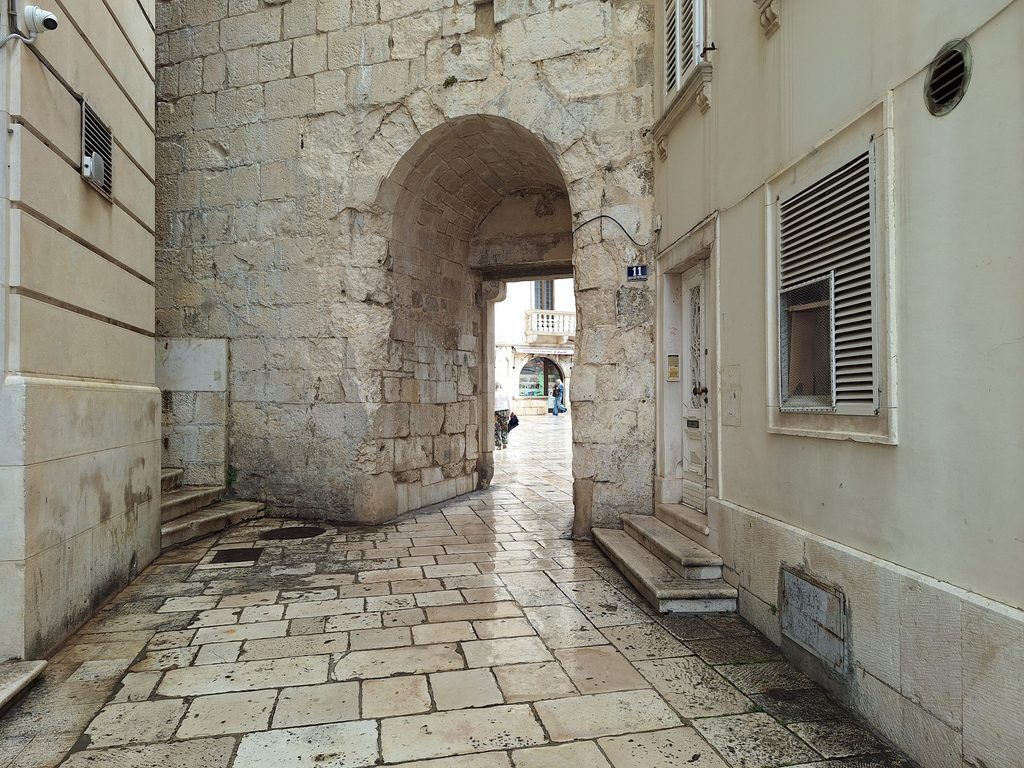
Finding Beauty Away from the Crowds
By avoiding the busiest routes, I found myself noticing details that might otherwise have passed me by.
Old stone walls, narrow passages, beautifully weathered buildings and architectural features provided plenty of photographic opportunities.
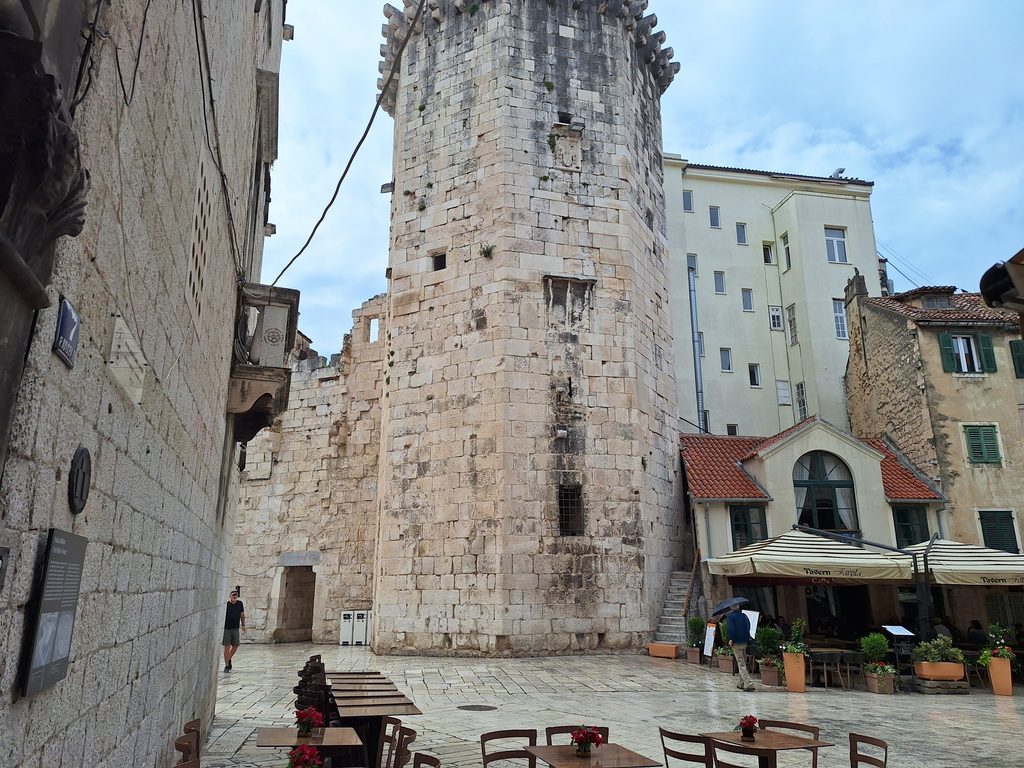
Sometimes I had to stand patiently and wait for the crowds to move before taking a picture.
But that gave me time to look more carefully.
Travelling isn’t always about rushing from one famous attraction to the next.
Occasionally, it’s more rewarding simply to wander, observe and absorb the atmosphere.
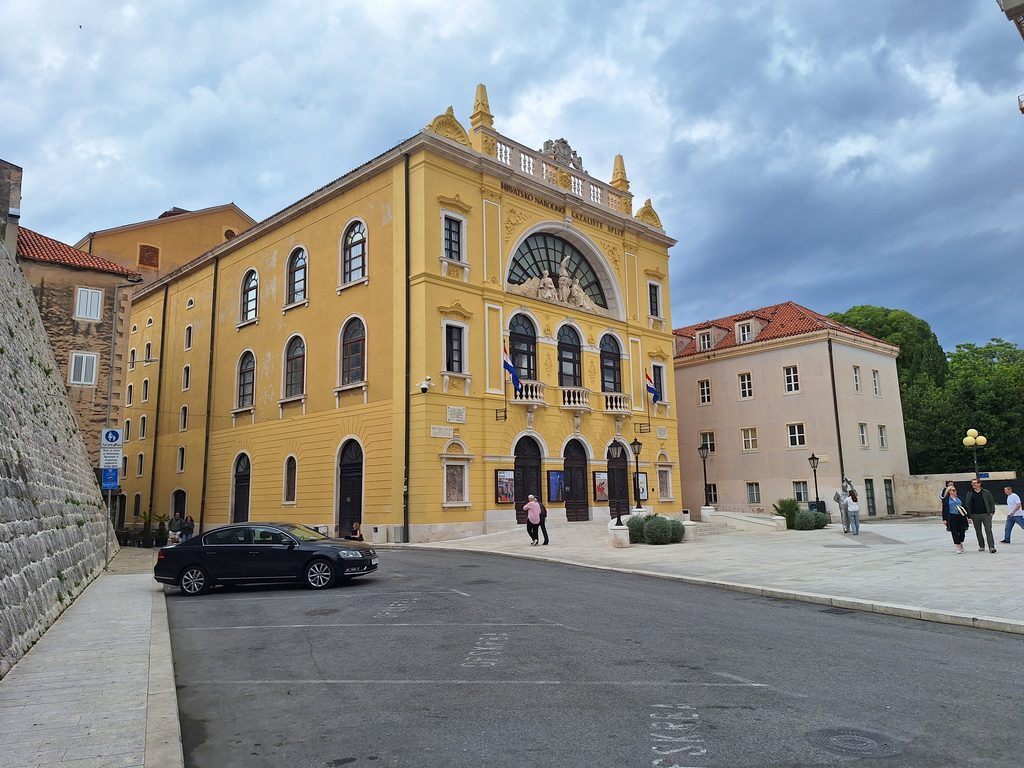
Sudamja 2025 — Split Prepares to Celebrate
While exploring, I noticed preparations for Sudamja 2025.
Sudamja is an important annual celebration in Split, associated with the city’s patron saint, Saint Domnius.
The celebrations traditionally take place around 7 May and bring a mixture of religious ceremonies, cultural events, music and public festivities.
Preparations were underway for concerts, exhibitions and other activities.

It was interesting to see another side of Split, beyond its cruise ships and historic tourist attractions.
This is a city where people live, work and celebrate their traditions, not simply a destination for visitors.
The Remarkable History of Split
The more I explored, the more fascinated I became by Split’s history.
Although Diocletian’s Palace is its most famous landmark, the city’s story extends far beyond Roman times.
Over the centuries, Split has experienced the influence of Byzantines, Venetians, Austrians and Yugoslav administrations.
Each period left traces in its architecture, culture and everyday life.
The remarkable thing about walking through Split is how these different periods of history exist side by side.
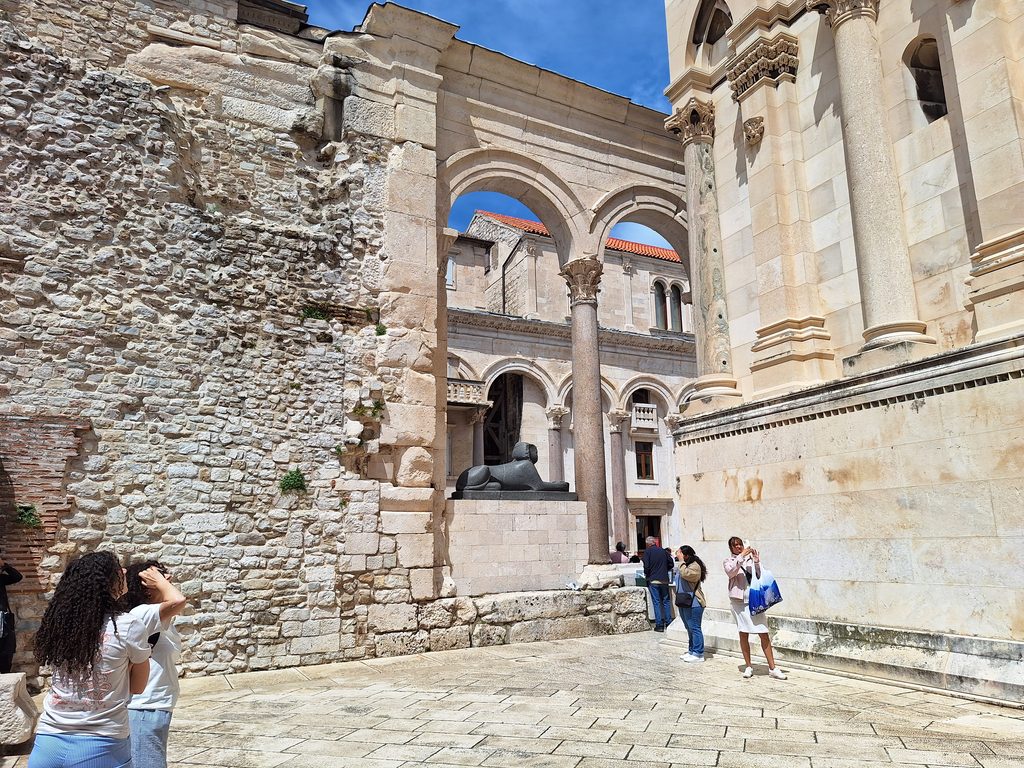
You might find yourself standing beside a Roman wall while looking at a medieval building, with a modern café just a few steps away.

Walking Along the Riva
Another enjoyable part of Split is the Riva, the broad pedestrian promenade along the harbour.
It is an excellent place for a gentle stroll.
The waterfront is lined with cafés and restaurants, while boats, ferries and passing visitors provide an endless stream of activity.
The promenade is largely flat, making it one of the easier places to explore on foot.
I enjoyed wandering along it, watching the boats and taking in the atmosphere.
Even with all the tourists, there is something special about a Mediterranean waterfront.
Reflections on My Time in Split
Split has been an interesting destination, although I haven’t managed my time here as well as I would have liked.
The constant arrival of cruise ships made exploring the historic centre more difficult than expected.
I also found myself getting behind with my photographs and blog entries.
I may need to return to some of these posts and add further pictures and details.
Nevertheless, there have been many enjoyable moments.
The spectacular bus journey from Sarajevo, the impressive harbour, my coastal walk, the ancient architecture and the people I’ve met have all contributed to my experience.
Once again, the most memorable parts of travelling haven’t necessarily been the famous attractions.
Sometimes they’re the conversations, unexpected discoveries and simple pleasures along the way.
A Brief Stop in Zagreb — Before Continuing to Hungary
After leaving Split, I arrived in Zagreb, Croatia’s capital.
I have to admit that I haven’t been feeling quite myself.
I’ve been a little flat and haven’t had the enthusiasm to venture out and explore the usual tourist attractions.
Long-term travelling can be tiring, even when you’re doing something you love.
There are constant decisions to make, places to find, accommodation to arrange and journeys to organise.
Sometimes I feel that I would love nothing more than to spend a couple of weeks sitting on a beach doing absolutely nothing.
I can almost hear someone saying, “But Andrew, you’re already on holiday!”
If only it were that simple!
Travelling continuously with a backpack is very different from taking a two-week holiday.
There are days when you need to rest, recharge and simply allow yourself to do very little.
That’s how I have felt in Zagreb.
Rather than push myself into sightseeing when my heart isn’t in it, I’ve decided to take things quietly.
Tomorrow, I’m leaving for Budapest in Hungary, where I plan to spend six days.
I’ve also been catching up with some of my photographs, including pictures from Sarajevo, so readers may find additional images appearing in earlier entries.
Croatia has given me some wonderful memories, especially the magnificent journey through Bosnia’s mountains and valleys to the Adriatic coast.
Now it’s time to move on to another country, another capital and another chapter of my adventure.
My journey continues — stepping out of fear, one step at a time, into the unknown.
Analyzing image