

Day 1: Arrival in Dhaka
Weather Update: Overcast, with heavy smog. 19°C
Elevation Above Sea Level: Approximately 9 metres, depending on the area.
Flight and First Impressions
My flight to Dhaka was uneventful, and with the difficulties of travelling overland, flying seemed to be the only practical option at the time.
We were served a meal on board, which, for airline food, was surprisingly good. I had chicken and rice accompanied by something I couldn’t quite identify, but whatever it was, it tasted delicious.
A friendly local gentleman sitting beside me offered to give me a lift into the city when we arrived. Unfortunately, the visa-on-arrival process took so long that by the time I had finished, he had already left.
So much for my free ride!
Haggling for a Ride
Stepping outside Dhaka airport, I was immediately faced with the challenge of finding transport to my accommodation.
I knew there was a bus available, but after a long journey and the frustrating visa process, I decided a private car would be the better option.
The initial asking price was an astonishing US$84!
There was no way I was paying that, so the negotiations began. After some determined haggling, the price eventually came down to US$25. Still expensive by local standards, but considering what awaited me on Dhaka’s roads, I think I made the right decision.
Traffic Chaos — You Have to See It to Believe It

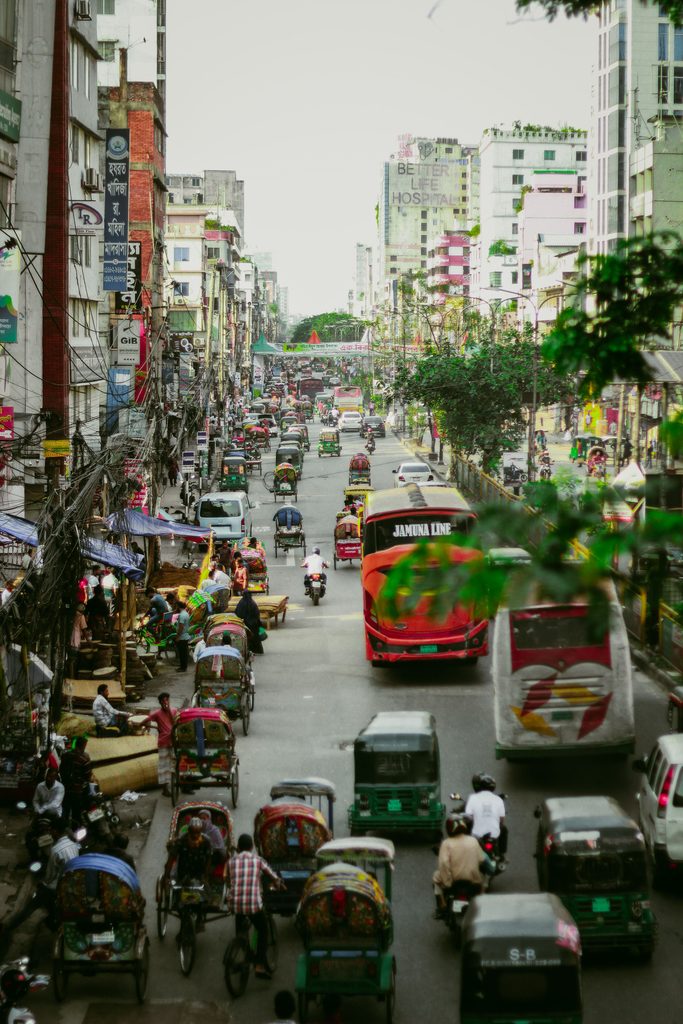
Traffic chaos in Dhaka — buses, cars, motorbikes, and rickshaws competing for every inch of road. I’ve experienced busy cities before, like Jakarta and Hanoi, but nothing quite like this!
It was beyond astonishing.
Buses, cars, motorbikes, tuk-tuks and rickshaws competed for every available inch of road. Drivers squeezed into gaps that barely seemed wide enough for a bicycle, let alone a bus.
There appeared to be very little consideration for other road users. Horns blared constantly, vehicles pushed forward from every direction, and the whole experience felt like organised chaos without much organisation!
Some of the roads were in dreadful condition, with potholes, broken surfaces and congestion making progress painfully slow.
I had read predictions suggesting that traffic congestion could become so severe that travelling just four kilometres might take an hour. After what I witnessed, that didn’t seem particularly difficult to imagine.
A City Struggling with Its Infrastructure
As we slowly made our way through Dhaka, I couldn’t help noticing the condition of the roads and surrounding infrastructure.
Potholes were everywhere, and in some areas, drainage appeared inadequate. Water had damaged sections of road and pavement, making an already difficult situation even worse.


Traffic congestion and air pollution are major challenges for a city with such an enormous population. Public transport struggles to meet demand, while the growing number of vehicles adds further pressure to the road network.
The smog hanging over the city made everything appear grey and hazy.
Coming from New Zealand, where we’re fortunate to have relatively open spaces and far less traffic, the contrast was extraordinary.
My First Impressions of Bangladesh
By the time I reached my accommodation, I was tired and ready for a decent night’s sleep.
Dhaka had certainly made an impression on me, although perhaps not quite the one I had expected.
It was noisy, crowded, polluted and chaotic, but I was also aware that I had barely scratched the surface of this enormous city.
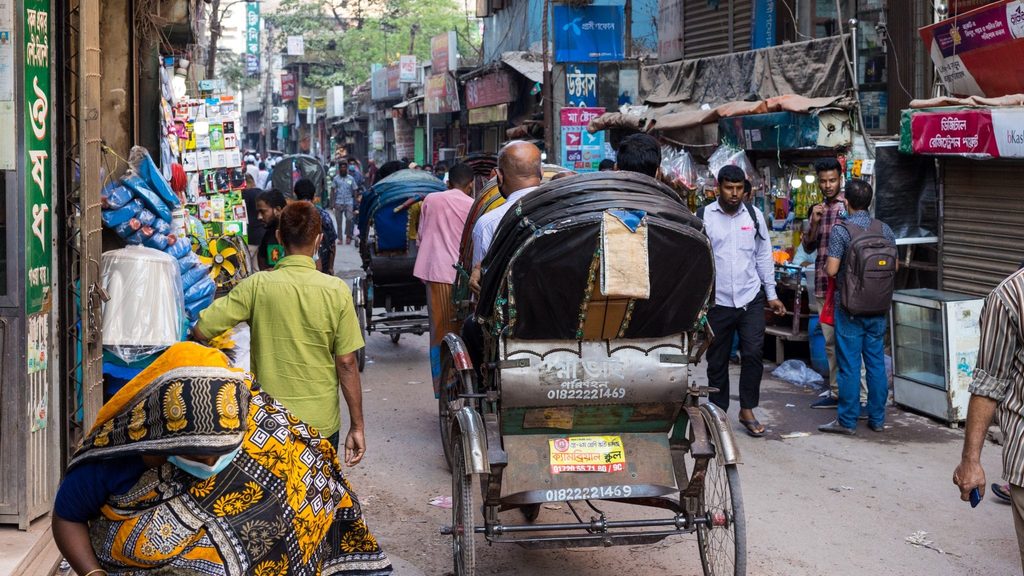
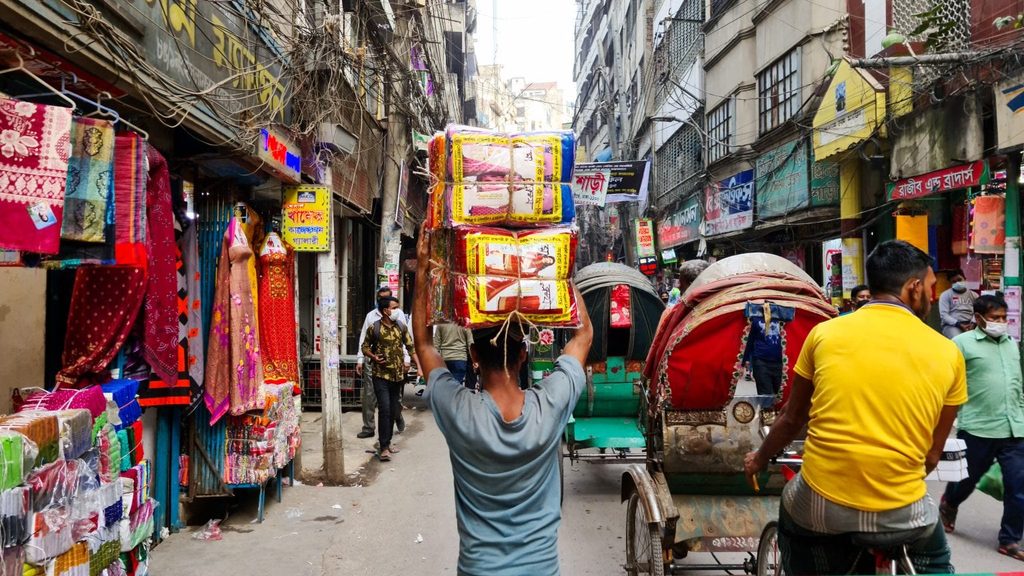
Travelling isn’t always about beautiful scenery, historic buildings or comfortable accommodation. Sometimes it’s about experiencing places that are completely different from anything you’ve known before.
And Dhaka was certainly different.


Little did I know that my first night in the city was about to become another adventure altogether.
Day 2: A Sleepless Night and a Hasty Exit
Weather Update: Hazy, with sunny periods and lower levels of smog. High 19°C.
Elevation Above Sea Level: Approximately 9 metres.
A Night to Forget
After arriving late at my hostel the previous evening, I was exhausted and looking forward to a decent night’s sleep.
Unfortunately, that wasn’t going to happen.
The hostel staff were gathered around the reception area, just outside my room, making an incredible amount of noise. I asked them three times during the night to keep the noise down, but my requests seemed to fall on deaf ears.
Eventually, at around 3:25 am, I managed to fall asleep.
My peace didn’t last long.
At 5:35 am, the noise started again, this time accompanied by two howling dogs. After barely two hours of sleep, I’d had enough.
There was absolutely no way I was spending another two nights in this place.
A Closer Look at My Room
In the morning, I began noticing things that I had been too tired to see when I arrived.
The room clearly hadn’t been properly cleaned for some time.
There was used soap stuck to the soap dish, and the shower consisted of little more than a hosepipe sticking out of the wall.
But the worst discovery came when I pulled the mattress away from the wall.
Hidden behind the bed was approximately six inches of accumulated rubbish!
I couldn’t believe what I was seeing.
I took photographs as evidence to show the booking agency exactly what its customers were being offered.
The accommodation photographs online had looked reasonably presentable, but I now realised that several appeared to show the same room from different angles.
It was certainly a lesson in not believing everything you see when booking accommodation.
Confrontation at Reception
I packed my bags and went to reception, handing over US$6 for the night I’d stayed.
The staff member insisted that I pay the full amount for my original booking.
I wasn’t having any of that.
I took him back to the room and asked him whether anyone had actually bothered to clean it.
The rubbish, dirty bathroom, and questionable stains on the walls spoke for themselves.
There wasn’t much he could say.
I left as quickly as possible, concerned that the disagreement might escalate. Thankfully, I managed to get away without any further trouble.
What a relief to be out of there!
Finding Somewhere Better
Before leaving, I’d already arranged alternative accommodation closer to the airport, as I was due to fly to Nepal on Sunday.
After the previous night’s experience, all I wanted was somewhere clean, quiet and comfortable.
Surely that wasn’t asking too much? So I left on a local bus.
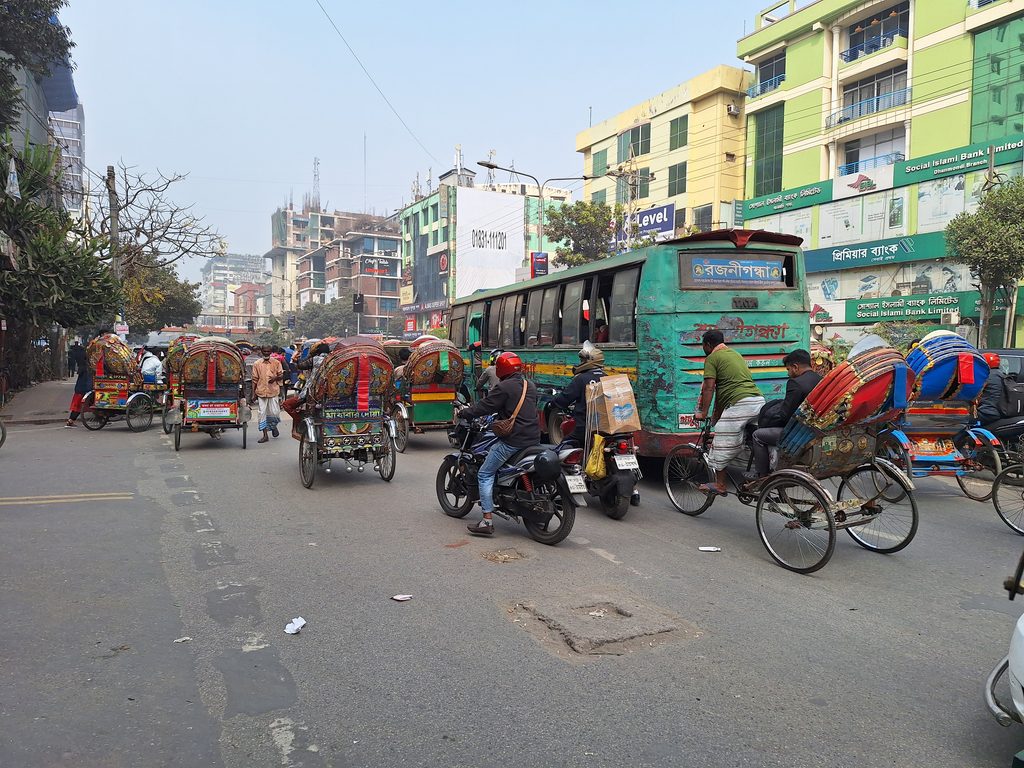
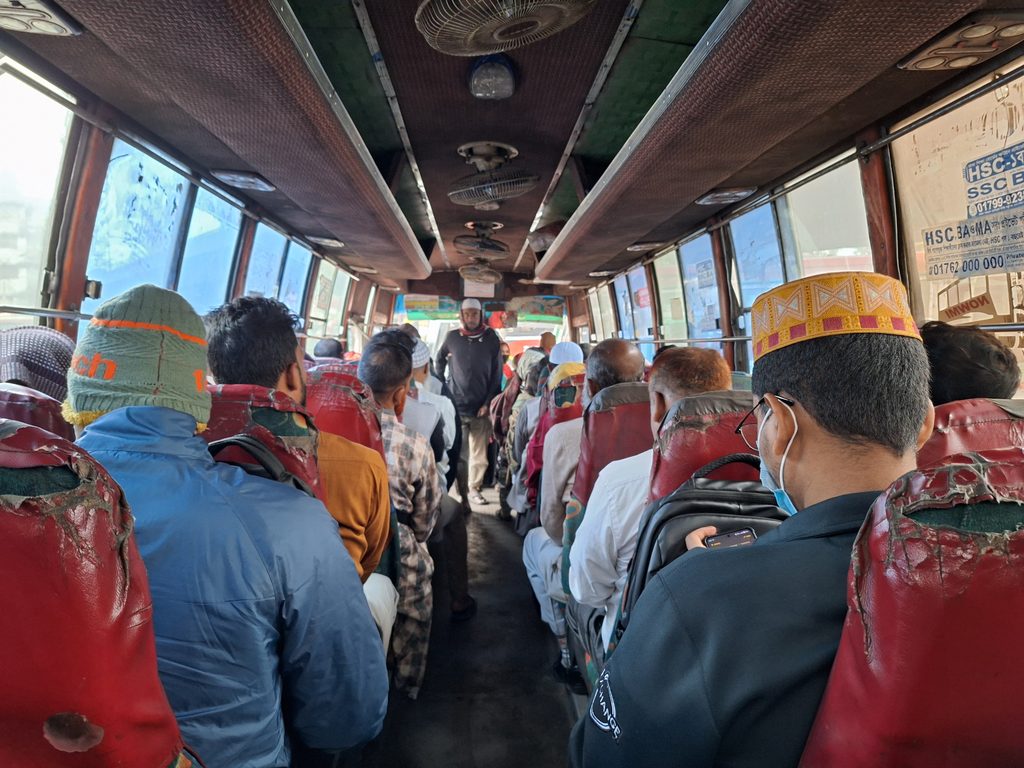
Local transport is very basic, with most buses badly damaged from multiple crashes
An Uncomfortable Visit to Hotel Elam
Later, I asked a local gentleman where I might find somewhere to have a beer.
He directed me to a place called Hotel Elam.
Unfortunately, it wasn’t quite what I had imagined.
The building was dark and dingy, and almost immediately I felt uncomfortable with my surroundings. Rather than take any chances, I decided to leave.
Interestingly, I managed to walk back to my hotel faster than the tuk-tuk driver had taken to find the place!
Sometimes walking really is the best form of transport.
Dinner Above the Chaos
After everything I’d experienced, I decided to treat myself to a decent meal.
I found a pleasant restaurant on the 12th floor of a building, where I could sit outside in the sunshine, well above the noise and congestion of the streets below.
What a difference!
For a little while, I could relax and enjoy my surroundings without constantly worrying about traffic, accommodation or getting lost.
The airport wasn’t far away, and I could hear aircraft taking off in the distance.

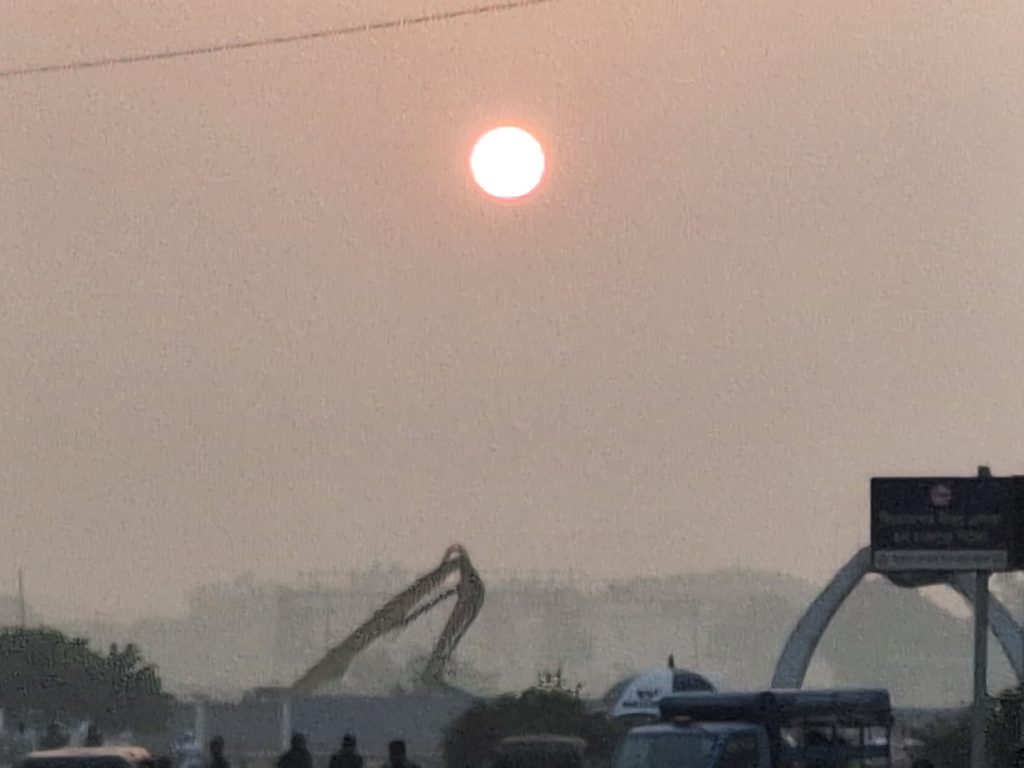
The strange thing was that I couldn’t actually see them.
The smog was so thick that the planes disappeared into the haze almost immediately.
It was another reminder of the air pollution affecting this enormous city.
Another Day, Another Experience
My second day in Dhaka certainly hadn’t gone according to plan.
A sleepless night, a filthy hostel, an argument over payment and an uncomfortable visit to a questionable establishment weren’t exactly the highlights I’d hoped for.
But that’s travelling.
Not every day is going to be wonderful, and not every place will live up to expectations.
The important thing is to deal with whatever comes your way, learn from the experience and keep moving forward.
Tomorrow would be another day, and hopefully a better one.
Day 3: Preparing for Nepal
Weather Update: Sunny, with high levels of air pollution. High 27°C.
Elevation Above Sea Level: Approximately 1.5 metres.
The Never-Ending Noise of Dhaka
One thing I’ve discovered about Dhaka is that silence is almost impossible to find.
From early morning until late at night, there’s a constant barrage of noise. Car horns, whistles, bells, motorbikes and buses all compete to make themselves heard.
It’s an extraordinary experience.
The noise continues throughout the day, with little relief until the city finally begins winding down around midnight.
Even then, Dhaka never seems to sleep completely.
At around 4 pm, I crossed the street for an evening meal at The Forest Lounge, a restaurant on the 12th floor of a nearby building.
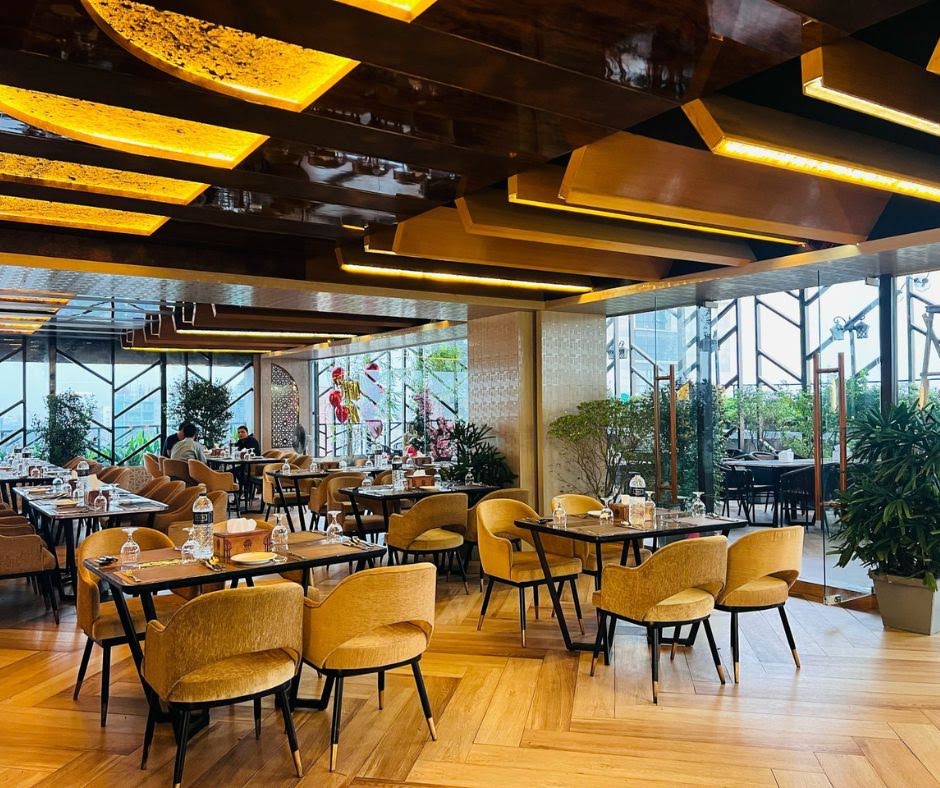
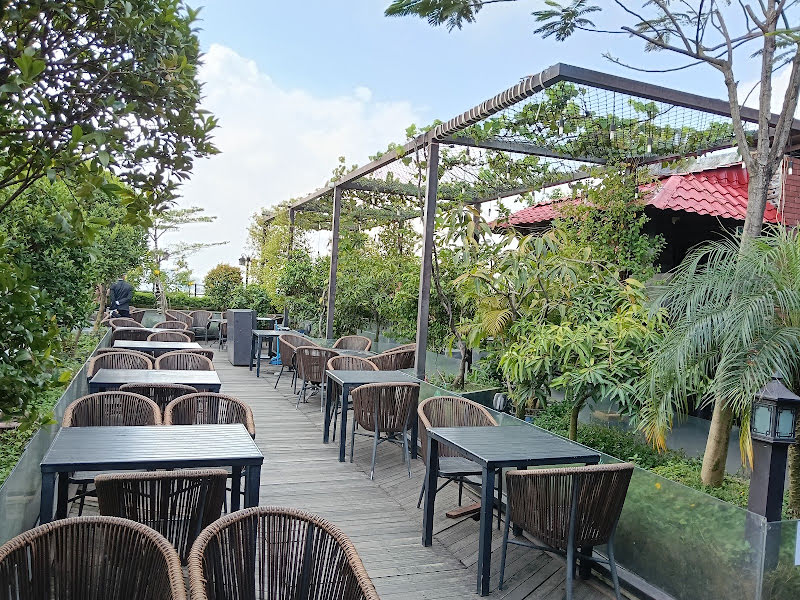
I’d enjoyed eating there previously, but today the pollution seemed even worse. Despite being so high above the streets, the haze was still noticeable.
It makes you appreciate the clean air we enjoy back home in New Zealand.
Visas — The Headache of International Travel
I hadn’t planned to do very much today.
My main priority was arranging passport photographs for my upcoming arrival in Nepal.
Visas are becoming one of the biggest headaches of my journey.
Every country seems to have different requirements, and just when you think you’ve worked everything out, another regulation or piece of paperwork appears.
So far, I’ve been fortunate that many countries have offered visas on arrival, making border crossings relatively straightforward.
Bangladesh also offers visas on arrival to eligible travellers, although there are conditions attached.
For some of the countries ahead, I’ll need to arrange electronic visas in advance. That means completing online applications, supplying documents and planning my movements several weeks ahead.
Sometimes I wish I had a personal assistant to take care of all these responsibilities so I could simply turn up at the border and continue my adventure!
Unfortunately, travelling independently means being your own travel agent, secretary and problem solver.
A Seven-Kilometre Walk That Became Twelve
I decided to go shopping for something warm to wear in Nepal.
Although the daytime temperatures there were expected to be around 19–21°C, I knew the evenings could be considerably cooler.
What was supposed to be a seven-kilometre return walk somehow turned into twelve kilometres.
It took me approximately three and a half hours.
That’s the trouble with exploring unfamiliar cities. What looks straightforward on a map can become an entirely different adventure once you’re walking through busy streets, navigating crossings and trying to find your destination.
But walking is also one of the best ways to experience a city.
You notice things that you’d never see from a taxi or bus.
Shopping in an Eight-Storey Mall
Eventually, I reached one of Dhaka’s large shopping centres.
The building had eight floors, with approximately 50 to 60 shops on each level.
What struck me was how the different types of businesses were grouped together.
The eighth floor was largely devoted to food, the seventh to jewellery, the sixth to shoes and the fifth to bags.
The pattern continued throughout the building.
It was certainly different from the shopping centres I’m accustomed to.
Despite the enormous selection of shops, I couldn’t find anything suitable to wear in Nepal.
The clothing styles were quite different from what I was looking for, so after all that walking, I returned empty-handed.
At least I’d had plenty of exercise!
Everyday Life on the Streets
Walking through Dhaka gave me a closer look at the everyday lives of the people who call this enormous city home.
Smoking appeared widespread, and I frequently saw people spitting in the streets.
There were busy market stalls, street vendors and small businesses operating wherever space was available.
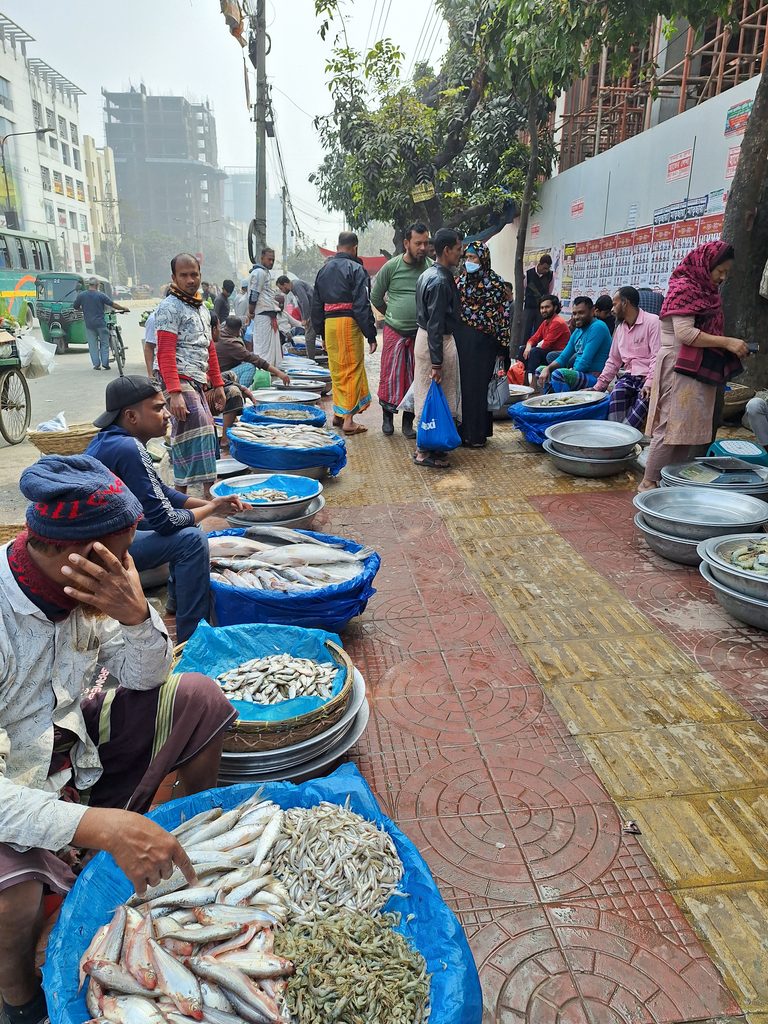

Unfortunately, I also noticed considerable amounts of rubbish.
Vacant lots were sometimes filled with discarded packaging and waste, while rubbish had accumulated near markets and along waterways.
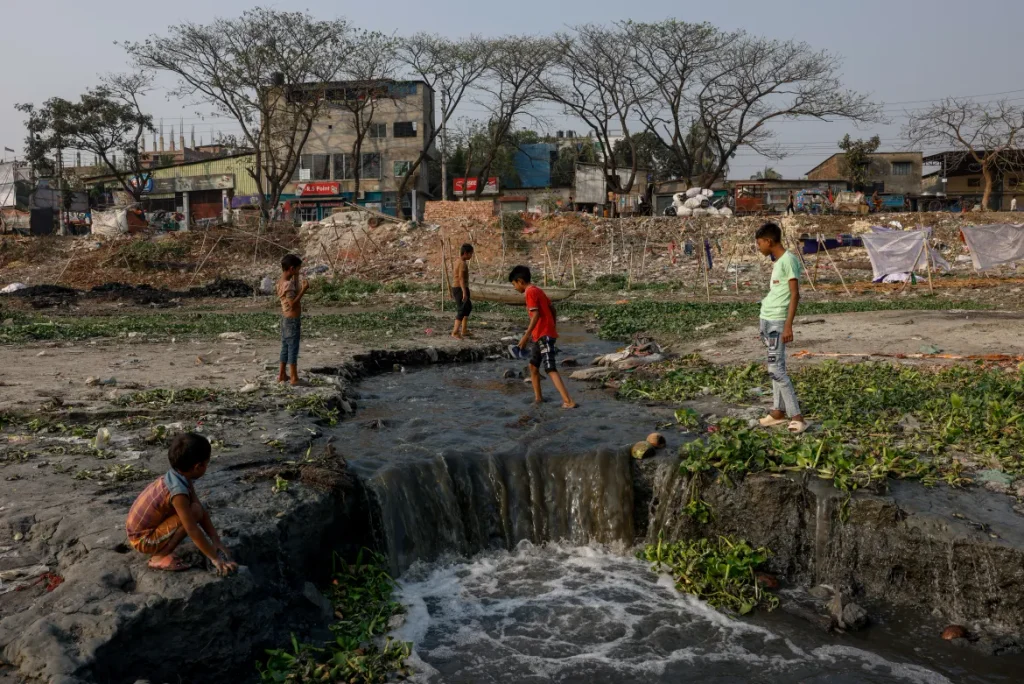
Children play near an area where sewage is directly discharged into the Buriganga river. It was disappointing to see, particularly when so many people were living and working in such difficult surroundings.
A City Facing Enormous Challenges
Dhaka is home to millions of people, and the pressure on its infrastructure is evident almost everywhere you look.
Some roads were in poor condition, while others appeared to have been partially closed because of damage or ongoing problems.
Traffic was forced to divert around obstacles, adding to the already extraordinary congestion.
The city faces enormous challenges with waste management, drainage, housing, transport and pollution.
As I walked around, I wondered what Dhaka might look like in another fifty years.
How do you rebuild and improve a city while millions of people continue to depend on its existing infrastructure?
It’s a question with no simple answer.
My Reflections on Dhaka
Bangladesh undoubtedly has much more to offer than the crowded streets of its capital.
There are historic places, rivers, villages and landscapes that I haven’t had the opportunity to explore on this short visit.
Perhaps one day I’ll return and discover more of the country beyond Dhaka and visit these.
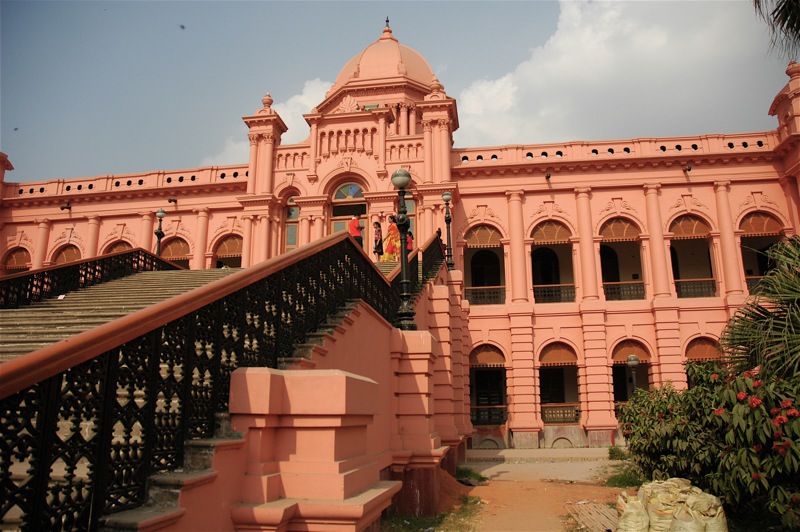
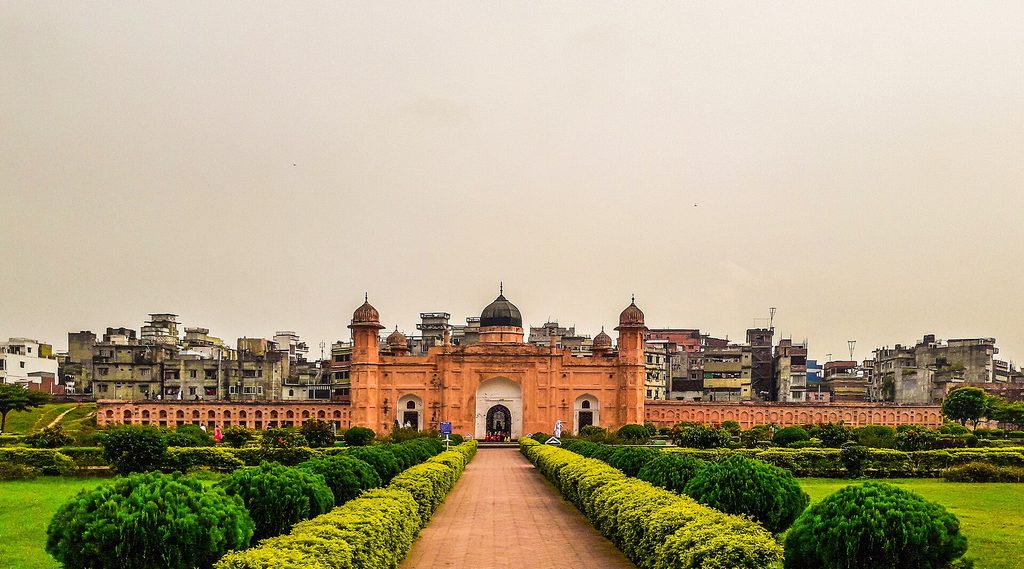
For anyone considering a visit, I’d suggest researching the places you’d like to see and allowing plenty of time to get around.
The Old Quarter of Dhaka would certainly be an interesting place to explore, although there are also many attractions outside the capital.
As for Dhaka itself, I can only describe it as the craziest city I’ve encountered so far on my journey.
You have to see it to believe it — and even when you see it, you might still struggle to believe it!
Tomorrow, I’ll be moving closer to the airport in preparation for my flight to Nepal.
But as I’ve already discovered, even a simple journey across Dhaka can turn into an adventure.
Day 4: Moving to the Airport — A Different Side of Dhaka
Weather Update: Sunny. High 27°C.
Elevation Above Sea Level: Approximately 1.5 metres.
Leaving the Hotel Behind
Today, I decided to move closer to Dhaka airport, a day earlier than originally planned.
With the extraordinary traffic congestion I’d experienced, I wasn’t prepared to risk getting caught in one of the city’s notorious bottlenecks and missing my flight to Nepal.
My new accommodation has also presented some rather unusual problems.

When I first arrived, I noticed condensation running down the windows. There was so much moisture that I used the bath mat to wipe down the glass and windowsill.
During the day, with the heat pump switched off, the room became incredibly damp.
The following morning, I set the temperature to 26°C and left it running, hoping that would improve things.
It didn’t.
I increased it to 30°C, but the moisture remained. Even the clothes I’d taken off the previous evening felt damp the following morning.
It was another accommodation experience I wouldn’t be forgetting in a hurry!
A Helpful Stranger
After breakfast, I set off to find a bus that would take me towards Mohammadpur Bus Stand.
Along the way, a young Bangladeshi man approached me, and we struck up a conversation.
He was friendly and genuinely interested in my travels.
When he discovered where I was trying to go, he offered to accompany me to the bus stand and show me which bus to catch.
He even explained where I needed to get off.
It’s moments like these that remind me why I enjoy travelling independently.
We exchanged contact details, and he hoped we might meet again if I returned to Bangladesh for a longer visit in November.
A complete stranger had gone out of his way to help me, asking for nothing in return.
A Battered Double-Decker Bus
The bus was a red double-decker that looked as though it had survived more than its fair share of encounters with Dhaka’s traffic.
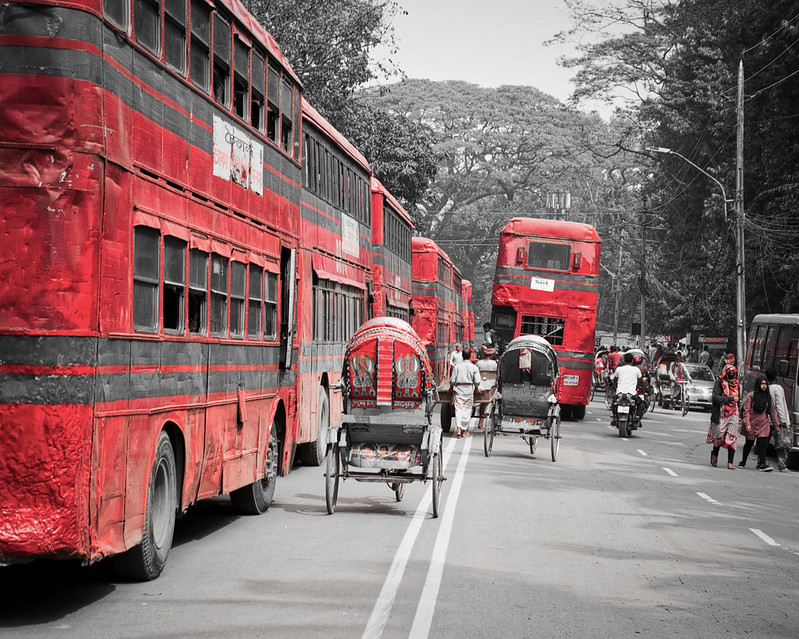
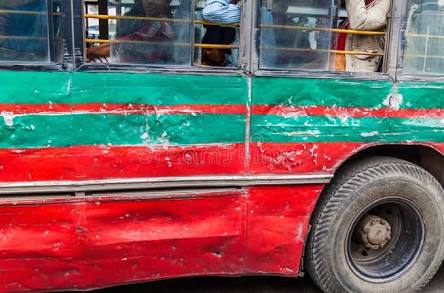
Dents and scratches covered the bodywork, but it was still doing its job.
I climbed aboard and continued towards Tejgaon railway station, where I planned to catch a train to the airport.
After everything I’d seen on Dhaka’s roads, travelling by train seemed a sensible alternative.
At least trains don’t have to compete with tuk-tuks, motorbikes and buses for every inch of road!
Waiting at Tejgaon Railway Station
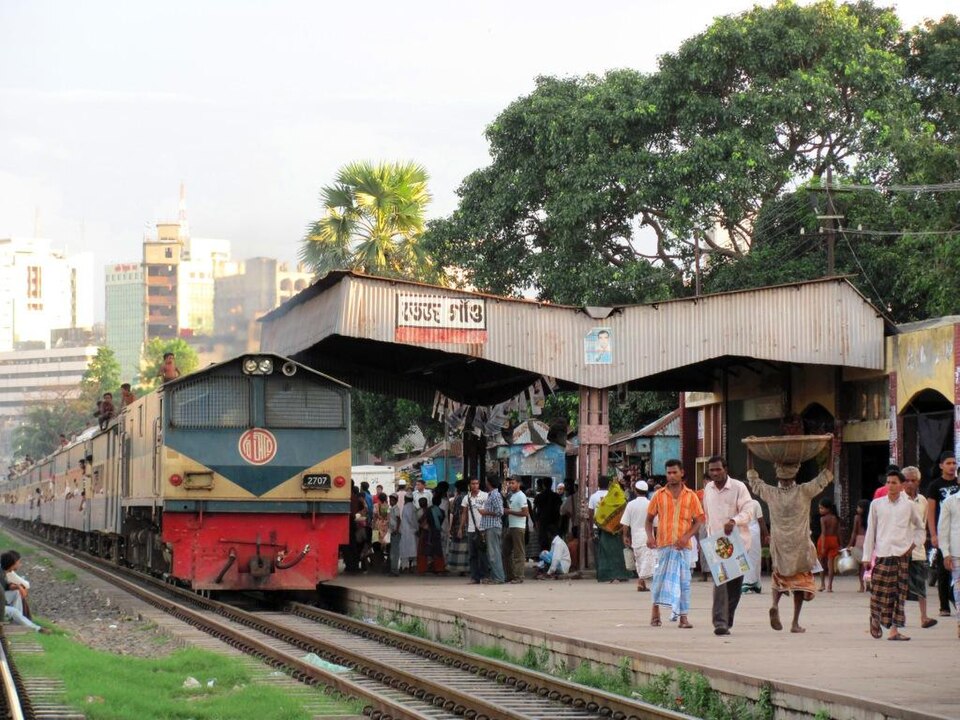
When I arrived at the station, I discovered that the train had just departed.
The station master explained that it would return at around 2 pm, leaving me with approximately two hours to wait.
There wasn’t much I could do except make myself comfortable and watch the world go by.
What happened next was one of the most memorable experiences of my visit.
The people at the railway station were incredibly welcoming.
They seemed genuinely concerned that I understood where I needed to go and made sure I knew which train to catch.
When the train eventually arrived, several people helped me board.
After the difficulties I’d experienced in Dhaka, their kindness was a wonderful reminder that a country’s people should never be judged solely by its traffic, pollution or infrastructure.
Sometimes it’s the smallest acts of kindness that leave the biggest impression.
Life Along the Railway Tracks
As I travelled through Dhaka, I witnessed a side of the city that many tourists may never see.
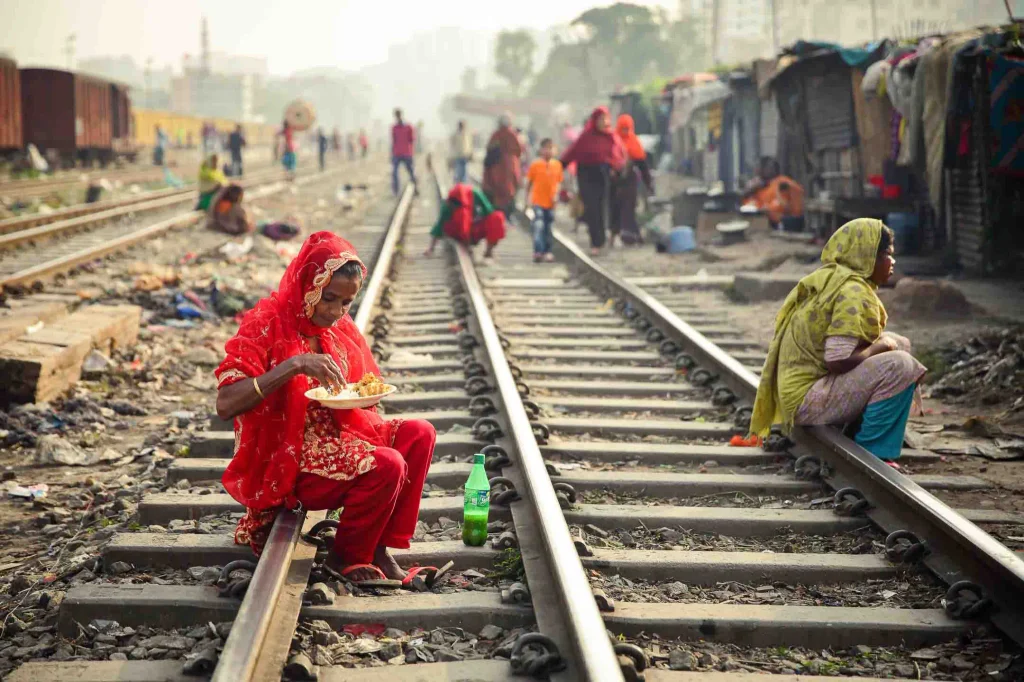
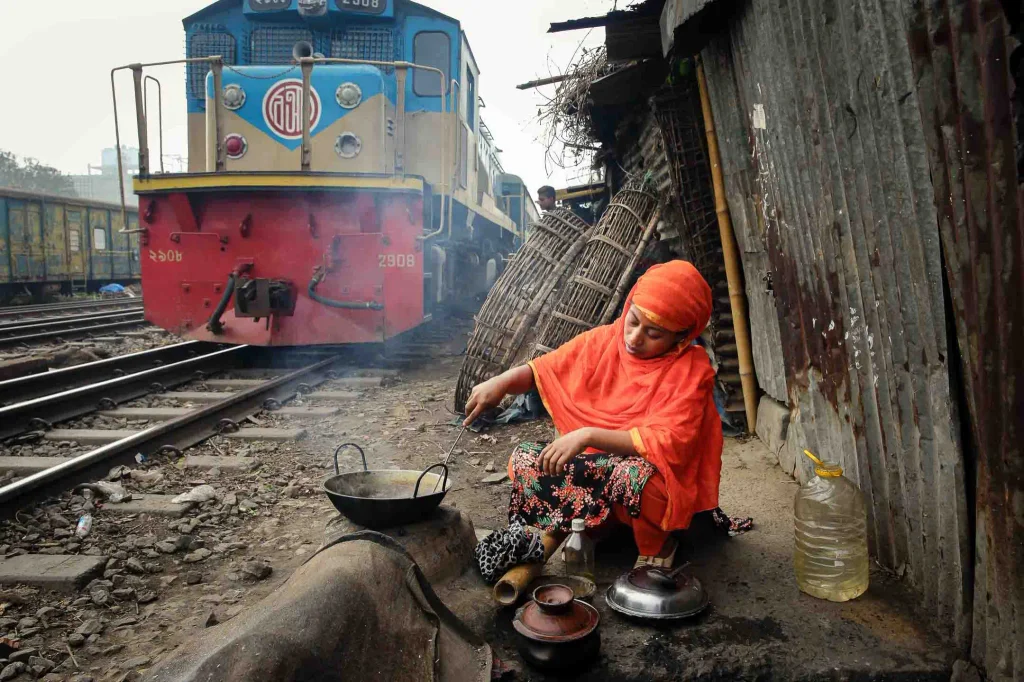
Families living in makeshift homes beside the railway tracks.
Some shelters consisted of little more than sheets of corrugated metal, timber and tarpaulins, assembled wherever there was enough space.
Children played nearby while adults went about their daily routines.
The railway wasn’t simply a transport corridor. For these families, it was part of their everyday lives.
Trains passed dangerously close to their homes, bringing noise, vibration and the constant risk of accidents.
When a train approached, people moved away from the tracks. Once it had passed, life resumed almost immediately.
I found myself wondering what it must be like to raise a family in such surroundings.
Understanding the Pressure of Population
Bangladesh is one of the most densely populated countries in the world.
Dhaka attracts people from rural communities who come searching for employment and a better future.
But finding affordable accommodation in such a crowded city is an enormous challenge.
For some families, living beside the railway is not a lifestyle choice but a consequence of poverty and limited housing opportunities.
A few pieces of tin and tarpaulin may be all they can afford to call home.
It made me think about the meaning of culture.
We often associate culture with music, art, literature, food and traditional celebrations.
But culture is also found in the everyday lives of ordinary people — how they work, raise their children, interact with neighbours and adapt to their surroundings.
The communities living beside Dhaka’s railway tracks showed me a very different side of Bangladesh.
Life Around the Railway Station
There was constant activity around the station.
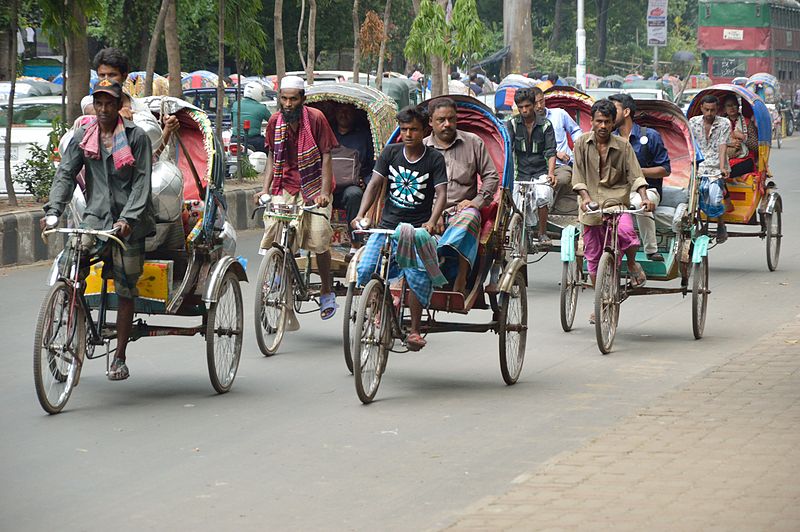
Rickshaw drivers waited outside, hoping to collect passengers arriving on the trains.
Small traders and vendors gathered nearby, selling goods and trying to earn a living.
Groups of men stood together, talking or conducting their daily business.
Everything seemed to happen at once.
Despite the noise and confusion, there was an unmistakable sense of community.
People were simply getting on with their lives, making the best of the circumstances in which they found themselves.
Bangladesh Compared with New Zealand
Travelling through Bangladesh made me appreciate just how fortunate we are to live in New Zealand.
Bangladesh covers approximately 147,630 square kilometres and, at the time of my visit, had a population of around 170 million people.
New Zealand, by comparison, covers approximately 267,710 square kilometres and has a population of just over five million.
Imagine trying to accommodate Bangladesh’s population in New Zealand.
Our North Island alone covers approximately 114,000 square kilometres.
Now imagine placing more than 160 million additional people there.
The pressure on housing, roads, hospitals, schools, water supplies and the environment would be almost impossible to comprehend.
It certainly makes you appreciate the open spaces we enjoy back home.
Bangladesh — A Country of Festivals
There is a Bengali saying:
Bangalir baro mashe tero parbon.
Translated, it means something like, “Bengalis have thirteen festivals in twelve months.”
It reflects the importance of celebrations in Bengali culture.
Throughout the year, Bangladesh hosts numerous religious, national, cultural and traditional festivals.
Some celebrations have roots stretching back many centuries.
These occasions bring families and communities together, with music, food, colourful clothing and religious observances playing important roles.
But major festivals also place enormous pressure on the country’s transport system.
Crowded Trains and Dangerous Journeys
I managed to photograph a train carrying an extraordinary number of passengers.
People were travelling not only inside the carriages but also on the roof.
By the time I took the photograph, much of the train had already passed.
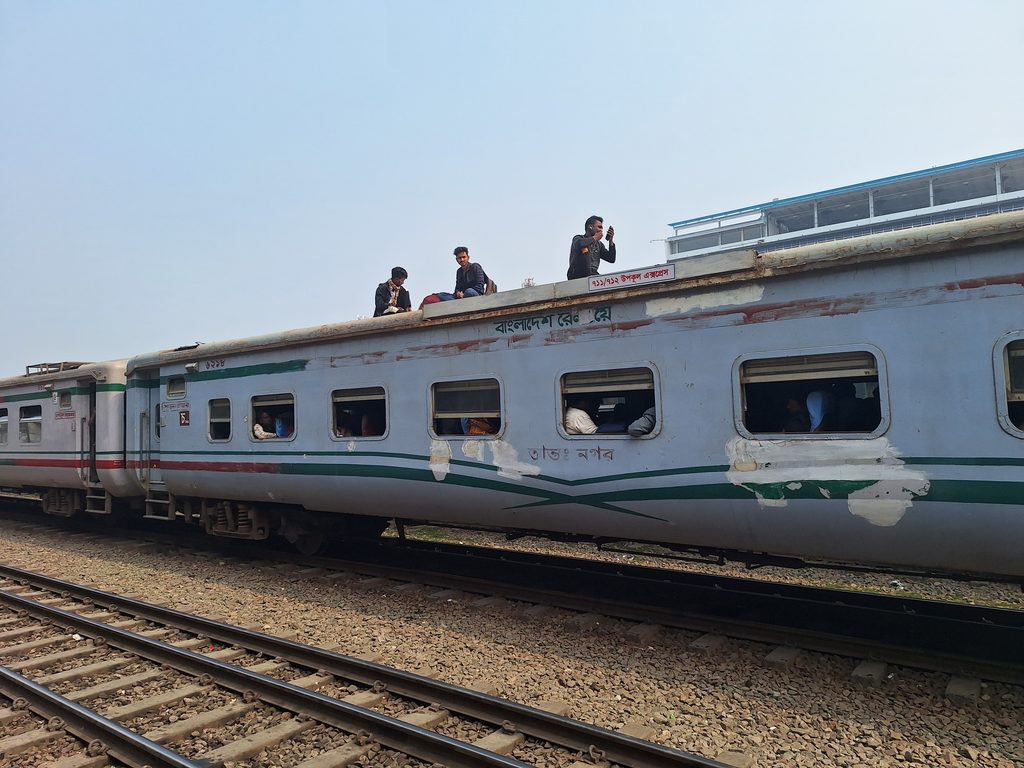
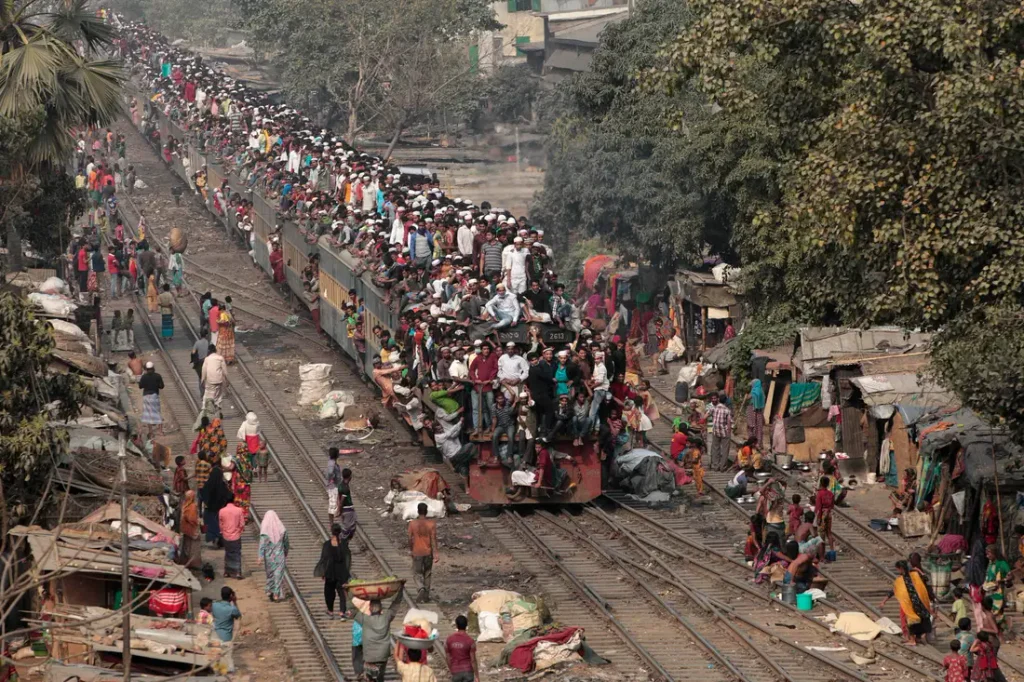
During major holidays and festivals, trains can become extremely overcrowded as people travel to visit their families.
Some passengers climb onto carriage roofs or cling to the outside, despite the obvious dangers.
Falls and other accidents can have tragic consequences.
Seeing people travelling in these conditions was something I found difficult to comprehend.
The train I travelled on was also extremely crowded.
Passengers were packed together, almost face-to-face, with barely enough room to move.
It certainly wasn’t a comfortable journey, but it was another unforgettable experience.
My Final Hotel Near the Airport
Eventually, I reached my accommodation near Dhaka Airport.
The hotel was approximately a twenty-minute walk from the terminal, which meant I could avoid another stressful journey through the city’s traffic the following morning.
That was a relief.
After several days of noise, congestion, accommodation problems and unexpected adventures, I was looking forward to a relatively straightforward departure.
Dinner and a Disappointing Rogan Josh
For my final evening, I decided to have dinner in the hotel restaurant.
One of my favourite Indian dishes, Rogan Josh, was on the menu, so naturally I ordered it.
The meal came with plenty of rice and a lovely paratha.
Unfortunately, the Rogan Josh itself was disappointing.
It lacked the rich, flavoursome sauce I was expecting.
Never mind. You can’t win them all!
After dinner, I returned to my room and prepared for an early night.
Tomorrow, Nepal awaited.
Final Thoughts — Four Days in Dhaka
My time in Dhaka had been an extraordinary mixture of experiences.
I’d encountered dreadful accommodation, unbelievable traffic, constant noise, pollution and scenes of poverty that were difficult to forget.
But I’d also met some wonderfully kind people.
The young man who helped me find the bus, the railway staff who made sure I boarded the correct train and the strangers who offered assistance along the way all left lasting impressions.
Dhaka wasn’t an easy city to visit, and I can’t pretend otherwise.
Yet travelling isn’t always supposed to be easy.
Sometimes the most challenging places teach us the most about the world and the people who live in it.
Bangladesh had certainly opened my eyes.
Now it was time to move on to Nepal, another country, another capital city and another step into the unknown.