

Bosnia and Herzegovina — Sarajevo: A City of History, Resilience and Unexpected Reunions
Day 168 — Arriving in Sarajevo
Weather: Sunny with occasional showers, high 19°C
Elevation: 518 metres (1,699 feet)
An Uncomfortable Night on the Road
After leaving Belgrade at 10 pm, I was heading towards Sarajevo, the capital of Bosnia and Herzegovina. Another country, another capital, and another stage of my journey around the world.
Unfortunately, the overnight bus was one of the more uncomfortable journeys I have experienced. There was very little legroom, the seats were cramped, and finding a comfortable sleeping position was almost impossible. My legs certainly weren’t impressed!
Travelling on a budget means accepting that not every journey will be comfortable. This one ranked among the worst, although the bus journey I experienced in Vietnam still holds that particular distinction.
The border crossing into Bosnia and Herzegovina was another experience I won’t quickly forget.
Leaving Serbia was straightforward, but the reception on the Bosnian side was very different. The immigration officer was aggressive and condescending, informing me that I could remain in the country for only 72 hours. If I wanted to stay longer, I would have to report to a police station.
It was an unsettling introduction to a country I had been looking forward to visiting. After such an uncomfortable night, I could have done without the attitude, but travelling teaches you to take these things in your stride.
A Steep Climb to Kucha Hostel
The bus finally arrived in Sarajevo at 6:33 am.
My hostel was approximately 2.9 kilometres from the bus station, so I decided to walk. Initially, the route was easy enough, but then I came face-to-face with a rather substantial hill.
For approximately 1.3 kilometres, I was climbing a gradient of between 1 in 12 and 1 in 10. With a backpack on my shoulders, very little sleep and two replacement hips, it was certainly a challenge.
At 72, I am still determined to do as much as I can under my own steam. I wasn’t going to set any speed records climbing that hill, but I eventually reached the top.
The important thing is not how quickly you get there, but that you keep moving forward. Sometimes that means slowing down, stopping for a rest and then continuing.
I nearly walked straight past the hostel because I was distracted by a supermarket next door.
The hostel, called Kucha, was exactly where I needed it to be. Although it was too early to check in, I was relieved to have arrived.
I managed to find something to eat, including a slice of toast with what I thought was margarine. After taking a bite, I discovered it was actually sour cream!
Not quite what I expected for breakfast, but another of those little surprises that make travelling interesting.
Discovering the Heart of Sarajevo
After resting for a while, I set off to explore the city.
Thankfully, the walk into the historical centre was downhill, a welcome change after my morning climb.
Along the way, I bought a chicken-filled French stick. It seemed rather expensive compared with similar food I had purchased elsewhere, but I was hungry, and it certainly served its purpose.
Sarajevo immediately struck me as a city with an extraordinary mixture of cultures and history.
For centuries, Ottoman, Austro-Hungarian and other influences have shaped its streets, buildings and traditions. Mosques, churches, historic markets and modern shops exist within a relatively small area.
It is also a city that has experienced terrible suffering, particularly during the Bosnian War of the 1990s.
Yet today, Sarajevo is full of life. People fill the cafés, tourists explore the narrow streets, and everyday life continues against the backdrop of a remarkable and sometimes painful history.
Sacred Heart Cathedral — A Magnificent Building Behind Closed Doors
One of my first destinations was the Cathedral of Jesus’ Sacred Heart, the largest cathedral in Bosnia and Herzegovina.
Unfortunately, when I arrived, the doors were closed.
I have encountered this problem several times during my travels. Churches and cathedrals are often among the most impressive buildings in a city, yet sometimes you can admire them only from outside.
For me, visiting a cathedral isn’t simply about looking at the architecture. I enjoy the sense of peace inside, the craftsmanship, the history and, when possible, hearing music or singing echoing through the enormous interior.
The acoustics in these buildings can be extraordinary.
Nevertheless, Sacred Heart Cathedral is certainly worth seeing from the outside.
Completed in 1889, the cathedral is a magnificent example of Neo-Gothic architecture. It was designed by Josip Vancaš and reflects the European architectural influences that became prominent during the Austro-Hungarian period.
Its two towers, pointed arches and carefully detailed façade give it an imposing presence in the centre of Sarajevo.

Inside are religious artworks, including frescoes associated with the painter Alexander Maximilian Seitz, although I was unable to see them on my first visit.
The cathedral also contains the tomb of Josip Stadler, the first Archbishop of Vrhbosna, who played a central role in its construction.
Outside stands a statue of Pope John Paul II, who visited Sarajevo in April 1997, not long after the Bosnian War ended.
His visit became an important symbol of peace, reconciliation and hope for a city recovering from years of conflict.
The square outside the cathedral is relatively flat, making it an easy location for most visitors to explore, even if the building itself is closed.
When I returned to the cathedral on 30 April, I finally had the opportunity to step inside. What a difference! The beautiful vaulted ceilings, stained-glass windows, decorated columns and magnificent altar made the return visit worthwhile. After my disappointment at finding the doors closed earlier, I was delighted to experience the interior for myself.


Baščaršija — Sarajevo’s Historic Ottoman Bazaar
Leaving the cathedral, I continued walking towards Baščaršija, Sarajevo’s historic old bazaar.
This is one of the most fascinating parts of the city.
The bazaar developed during the 15th century under Ottoman rule and became the centre of Sarajevo’s commercial and social life.
The name comes from Turkish words associated with the main marketplace.
Walking through Baščaršija is almost like stepping back in time.
Narrow cobblestone streets lead past traditional shops, cafés, restaurants and workshops. Some traders sell souvenirs, while others continue crafts that have been part of Sarajevo’s identity for generations.

Copperware is particularly prominent, with beautifully decorated coffee pots, trays and other items displayed outside small shops.

The smells of Bosnian coffee and grilled meat drift through the streets, mixing with conversations and the sounds of people working.
There is something special about a marketplace that has remained active for hundreds of years.
During the siege of Sarajevo between 1992 and 1996, parts of the historic centre suffered serious damage. Fortunately, much of the area has since been restored.
Today, Baščaršija is again a lively meeting place for local people and visitors alike.
The area is mostly level, although some of the cobblestones are uneven. Good walking shoes are definitely advisable.
For senior travellers, it is an ideal place to explore slowly. There is no need to rush. Stop for a coffee, watch the world go by and enjoy the atmosphere.
The Sebilj Fountain — A Symbol of Sarajevo
One of the most recognisable landmarks in Baščaršija is the Sebilj Fountain.
Standing in the middle of the main square, this ornate wooden structure is a wonderful reminder of Sarajevo’s Ottoman heritage.
Public fountains were once an important part of everyday life, providing drinking water for residents and travellers.
The present Sebilj was built in 1913, replacing an earlier fountain.
It has become one of Sarajevo’s best-known symbols and is surrounded by cafés, shops and visitors taking photographs.

There is also a local legend that anyone who drinks water from the Sebilj will one day return to Sarajevo.
Perhaps I should have made certain I drank some!
The square is a lovely place to stop for a few minutes and simply observe the people passing through.
Baščaršija Mosque — Peace Among the Market Stalls
Not far from the Sebilj is the Baščaršija Mosque, also known as the Havadža Durak Mosque.
It dates back to the early Ottoman period and was already mentioned in records from 1528.
The building is a beautiful example of traditional Ottoman religious architecture, with its dome, portico and slender stone minaret.
What I particularly appreciated was the contrast between the busy streets outside and the peaceful atmosphere of the mosque courtyard.
The courtyard contains a small fountain and greenery, providing a welcome break from the bustling marketplace.

Like many buildings in Sarajevo, the mosque suffered damage during the war but was subsequently restored.
Places like this remind me how different cultures and religious traditions have contributed to the character of Sarajevo.
Visitors should dress respectfully, and anyone entering the mosque should observe the customary requirements, including removing shoes.
Even if you don’t enter the building, the surrounding area provides an opportunity to appreciate its architecture and history.

An Unexpected Reunion at Kucha Hostel
After a long day exploring Sarajevo, it was time to make my way back to the hostel.
That meant another climb up the hill!
When I eventually arrived, I was in for a wonderful surprise.
Sitting at the hostel was Dima, a fellow traveller I had met several months earlier in Georgia.
What were the chances of meeting someone I knew in another country, thousands of kilometres from where we had first crossed paths?
We greeted each other with a big hug, and immediately the memories of Georgia came flooding back.
This is one of the things I love most about travelling.
You meet people from all over the world, share experiences, go your separate ways and sometimes unexpectedly cross paths again.
It turned out there was also a birthday celebration taking place at the hostel, and I was invited to join everyone.
An Argentinian lady named Dianna had been making pizzas, and they were absolutely delicious.
In fact, they were among the best pizzas I have eaten during my travels, far better than the offerings from many of the large international chains.
Good food, friendly people and an unexpected reunion made it a wonderful evening.
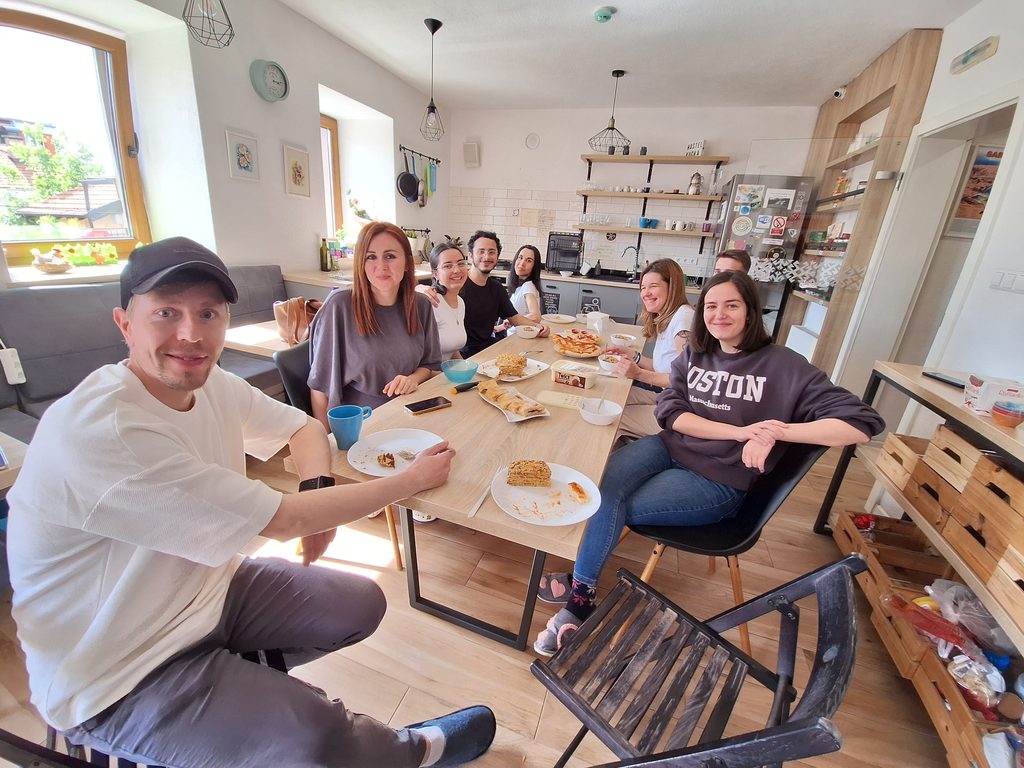
After an uncomfortable overnight bus journey, an unpleasant border crossing and a challenging climb to the hostel, the day had ended on a very positive note.
Hostels continue to be one of the best parts of my travels. At 72, I am often considerably older than most of the other guests, but age rarely seems to matter.
People are generally interested in where I have been, where I am going and why I have chosen to undertake such an enormous journey at this stage of my life.
And I am equally interested in their stories.
Exploring Sarajevo — Walking Through History
Weather: Sunny, high 23°C
Another Day on Foot
With a good night’s sleep behind me, I was ready to continue exploring Sarajevo.
The weather was excellent, sunny and warm, with the temperature reaching 23°C.
I wanted to visit some of the city’s most important historical landmarks, including the Latin Bridge, Emperor’s Mosque, Yellow Fortress and Gazi Husrev-beg Mosque.
I was also hoping to experience the Trebević cable car before leaving the city.
Walking remains my favourite way to explore a new place.
You see far more on foot than you ever will from the window of a bus, and there is always the opportunity to discover something unexpected.
I started by making my way towards the Miljacka River, which flows through the heart of Sarajevo.
Along the way, I stopped for a pancetta-filled French stick, costing 7.60 BAM, approximately €3.89 or NZ$7.43 at the time.
A simple meal, but just what I needed before another day of walking.
The Latin Bridge — Where World History Changed
My first significant stop was the Latin Bridge.
At first glance, it is simply an attractive old stone bridge spanning the Miljacka River.
But this small bridge is associated with one of the most consequential events of the 20th century.

On 28 June 1914, Archduke Franz Ferdinand, heir to the Austro-Hungarian throne, and his wife Sophie were assassinated by Gavrilo Princip near the bridge.
The assassination followed a series of events during the Archduke’s visit to Sarajevo.
Earlier that morning, an assassination attempt involving a bomb had failed. Later, as
the Archduke’s motorcade travelled through the city, his vehicle turned into a street near the Latin Bridge.
It was there that Princip fired the fatal shots.
The assassination triggered the July Crisis, setting in motion the diplomatic and military events that led to the outbreak of the First World War.
Standing beside the bridge, I tried to imagine what Sarajevo must have been like on that June morning in 1914.
Crowds lining the streets, the arrival of the royal motorcade, and then the sudden eruption of violence.
It is difficult to comprehend that an event in this relatively small location would contribute to a conflict that eventually engulfed much of the world.
During the Yugoslav period, the bridge was renamed Princip’s Bridge, but it later reverted to its traditional name, the Latin Bridge.
Today, it is a peaceful place where people stroll beside the river, cross between neighbourhoods and go about their daily lives.

For me, it was another opportunity to stand somewhere I had previously known only through history books.
Emperor’s Mosque — A Quiet Moment of Reflection
From the Latin Bridge, I continued towards the Emperor’s Mosque.
When I arrived, prayers were taking place, so I decided to sit quietly in the courtyard rather than disturb anyone.
Sometimes the most rewarding moments during a day’s sightseeing are those when you simply stop and observe.

The Emperor’s Mosque is one of Sarajevo’s oldest and most historically important mosques.
Its origins date to the 15th century, when Sarajevo was developing as an Ottoman settlement.
The original mosque was associated with Isa-beg Ishaković, who is widely recognised as the founder of Sarajevo, and was dedicated to Sultan Mehmed II.
After the original structure was damaged in the late 15th century, it was rebuilt during the reign of Sultan Suleiman the Magnificent.
The present building reflects centuries of Ottoman architectural and religious history.
Nearby is a cemetery containing the graves of several prominent figures.
Sitting quietly in the courtyard, surrounded by buildings that have witnessed so much history, was a welcome change from the busy streets outside.

The grounds were also relatively easy to walk around, making this a pleasant stop for travellers who prefer a slower pace.
The Yellow Fortress — Another Hill to Conquer
My next destination was the Yellow Fortress, also known as the Yellow Bastion.
There was, of course, another hill involved!
Sarajevo is surrounded by mountains, and many of its most impressive viewpoints require a considerable climb.
The walk to the Yellow Fortress took me approximately 30 minutes.
It was steep enough that I needed to stop and rest several times.

At my age, and with two replacement hips, I have learned to listen to my body rather than try to keep up with younger travellers.
There is no prize for reaching the top first.
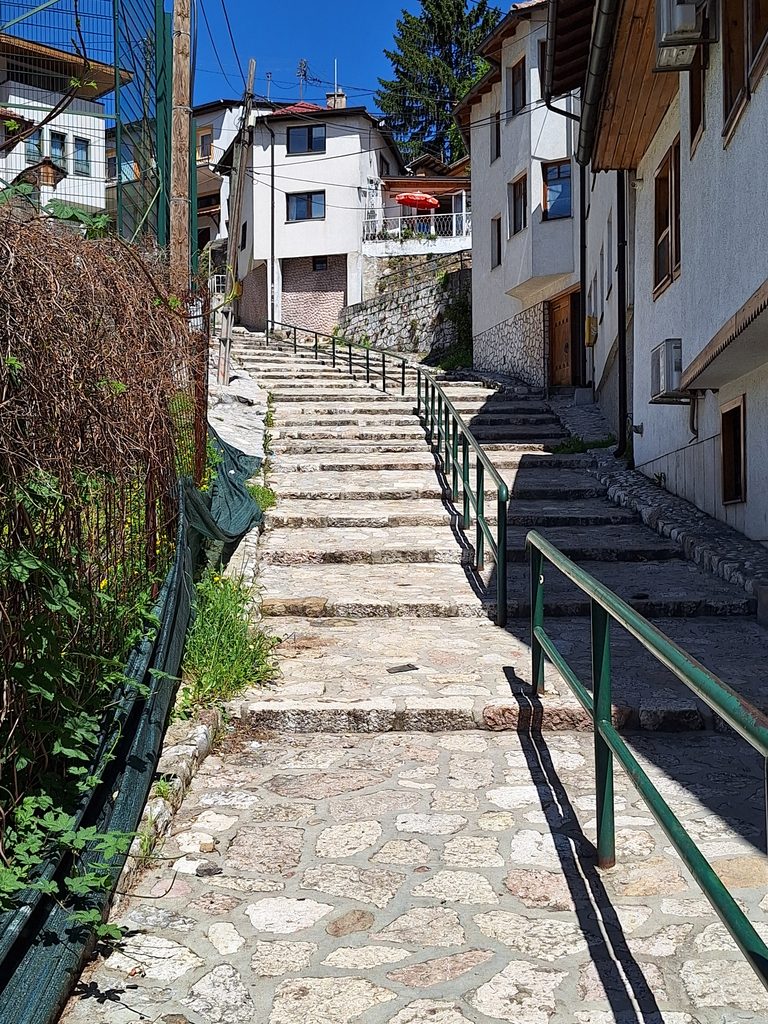
And when I finally arrived, the views were worth every step.
Sarajevo stretched out across the valley below me, with its buildings, mosques, church towers and surrounding mountains forming an extraordinary panorama.
From this height, you begin to understand the city’s geography and how it developed along the valley.
The Yellow Fortress was constructed during the 18th century, between approximately 1727 and 1739, as part of Sarajevo’s defensive fortifications.
It stands at the entrance to the old walled settlement of Vratnik.
The bastion was among the defensive positions used during the Austro-Hungarian occupation of Bosnia and Herzegovina in 1878.
Over the years, it has undergone several periods of damage and reconstruction, including restoration work in 1998.
Today, its military purpose has long disappeared, and it serves as one of Sarajevo’s most popular viewpoints.
Standing there, looking across the city in the warm sunshine, I was very glad I had made the effort.
The walk back down was much easier, although the uneven surfaces still required care.
The Trebević Cable Car — A Plan Delayed
I had also hoped to take the cable car up Mount Trebević.
Unfortunately, when I reached the station, it was closed for maintenance.
That was disappointing, particularly after making my way across the city.
However, I wasn’t leaving Sarajevo immediately, so I decided to try again before my departure.
The cable car has an interesting history closely tied to the city itself.
The original system opened in 1959, carrying passengers from Sarajevo into the surrounding mountains.
For decades, it was a popular attraction and an important connection between the city and the recreational areas of Mount Trebević.
During the Bosnian War, the cable car was destroyed, becoming another casualty of the siege.
Years later, plans were developed to rebuild it, and the modern Trebević cable car officially reopened on 6 April 2018.
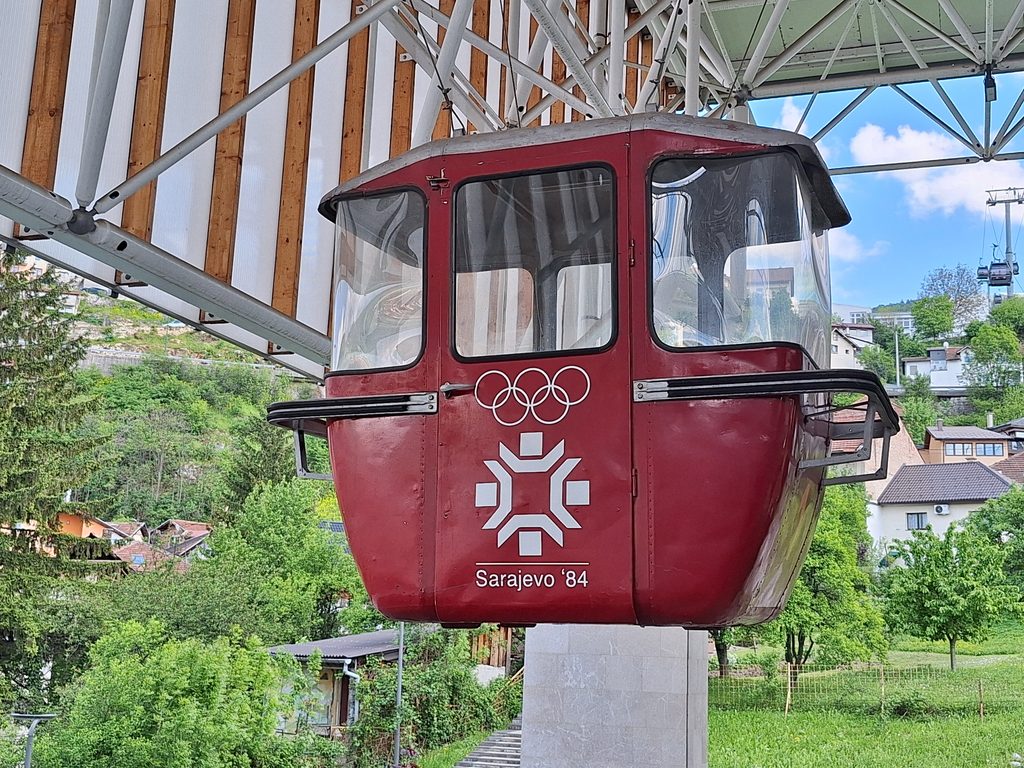
Its restoration became an important symbol of Sarajevo’s recovery.
The new system has 33 cabins and can carry approximately 1,200 passengers an hour, with the journey taking around nine minutes.
I hoped I would have the opportunity to experience it before moving on.
Gazi Husrev-beg Mosque — Sarajevo’s Ottoman Heritage
Continuing through the old town, I made my way towards Gazi Husrev-beg Mosque.
This magnificent mosque is one of Sarajevo’s most important religious and architectural landmarks.
It was commissioned during the 16th century by Gazi Husrev-beg, an Ottoman governor who played a major role in the development of Sarajevo.
The mosque is a fine example of classical Ottoman architecture and forms part of a larger historical complex that includes a madrasa, library and clock tower.
For centuries, it has been a centre of religious, educational and community life.
Unfortunately, the mosque was closed when I arrived, so once again, I had to appreciate the architecture from the outside.
Nevertheless, it was worth visiting.
The surrounding streets are full of character, and the mosque is an important part of the historic Baščaršija district.

Even when you cannot enter a building, simply standing outside and appreciating its history can be rewarding.
Discovering the Ruins of Tašlihan
One of the most interesting discoveries of the day was a place I hadn’t planned to visit.
While wandering through Sarajevo, I came across the remains of Tašlihan, also known as Tašli Han, meaning Stone Inn.
It wasn’t marked on the map I was using, which made the discovery even more interesting.
Tašlihan was once a large Ottoman caravanserai, a building designed to accommodate merchants, travellers and their goods.
It was constructed between approximately 1540 and 1543 as part of the charitable endowment associated with Gazi Husrev-beg.
The building stood beside the western side of Gazi Husrev-beg’s covered market, known as the bezistan.
Tašlihan was an impressive structure, approximately 47 metres along each side.
It had a central courtyard containing a fountain, with a small place of worship nearby.
The upper floors provided accommodation for travellers, while merchants operated shops and conducted business within the complex.
In many ways, it was a combination of a hostel, marketplace and commercial centre, serving people travelling along the great trading routes of the Ottoman Empire.
I found that especially interesting, considering how much of my own journey involves staying in hostels and meeting travellers from different countries.
The building was severely damaged during a fire in 1879 and was never restored to its former purpose.

Today, its ruins can be seen near Hotel Europe, where part of the site has been incorporated into an outdoor hospitality area.
It is a fascinating reminder of Sarajevo’s long history as a crossroads for merchants and travellers.
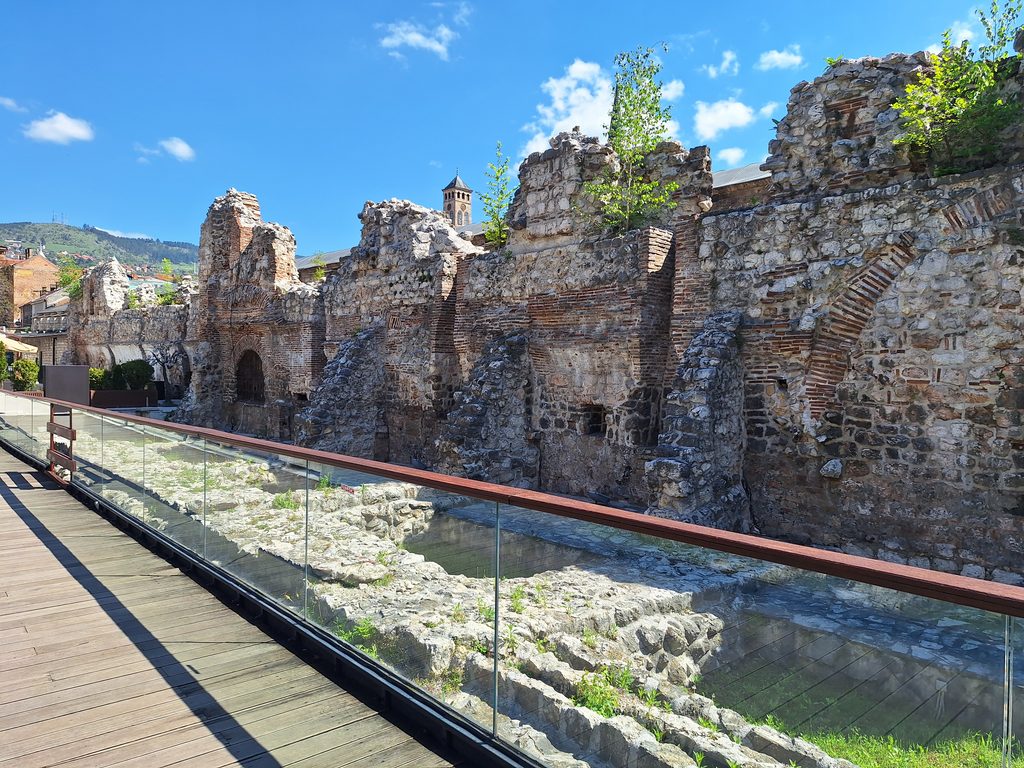
I am glad I stumbled across it.
My Final Day in Sarajevo — Above the City
Finally Riding the Trebević Cable Car
Having been disappointed when I first visited the cable car station, I decided to give it another try on my final day.
This time, I was in luck.
The cable car was operating, and I purchased a ticket costing 30 BAM, approximately €15.34 or NZ$29.32 at the time.
Was it worth the money?
Perhaps not entirely, especially when you are travelling on a tight budget, but it was certainly an enjoyable experience.
As the cabin climbed above Sarajevo, the buildings gradually became smaller, and the surrounding mountains came into view.

The ride provided a completely different perspective of the city I had been exploring on foot.

The upper station is approximately 1,160 metres above sea level, offering magnificent views across the valley.
For anyone who finds steep mountain climbs difficult, the cable car is a wonderful way to reach a higher vantage point without having to walk all the way up.
But there was something else on Mount Trebević that I particularly wanted to see.
The Abandoned 1984 Winter Olympic Bobsleigh Track
Sarajevo hosted the Winter Olympic Games in 1984, when the city was part of Yugoslavia.
It was a proud moment in Sarajevo’s history, bringing athletes and spectators from around the world to compete in the surrounding mountains.
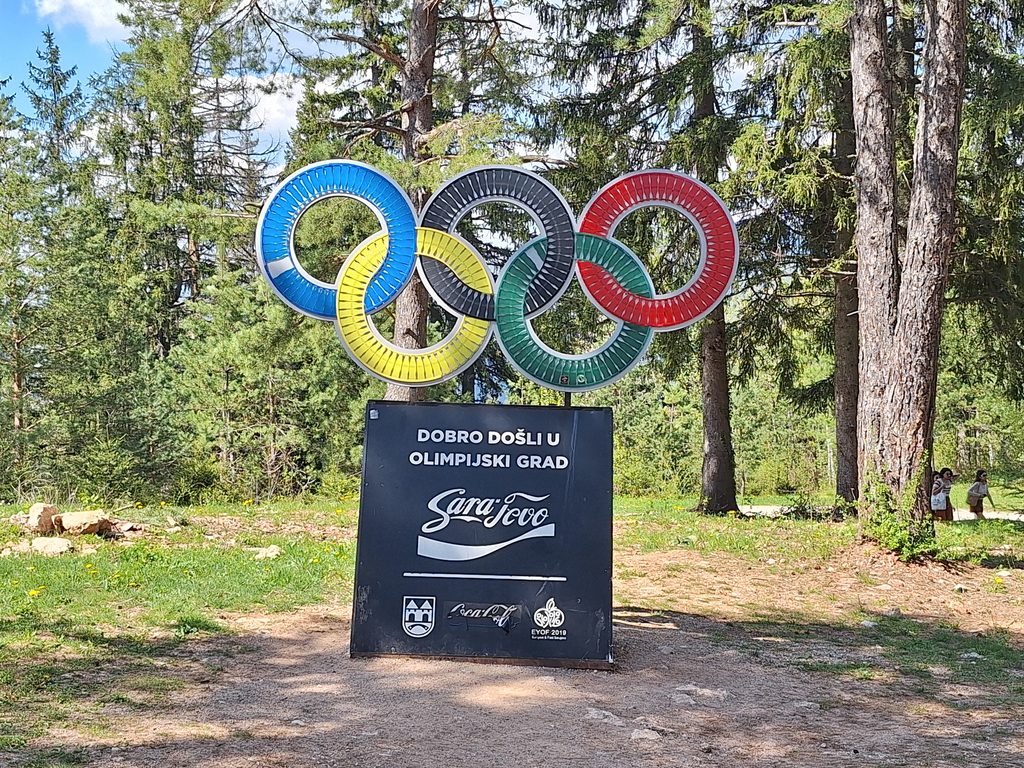
One of the facilities built for the Games was the bobsleigh and luge track on Mount Trebević.
Today, much of the concrete structure remains, although it is no longer used for its original Olympic purpose.
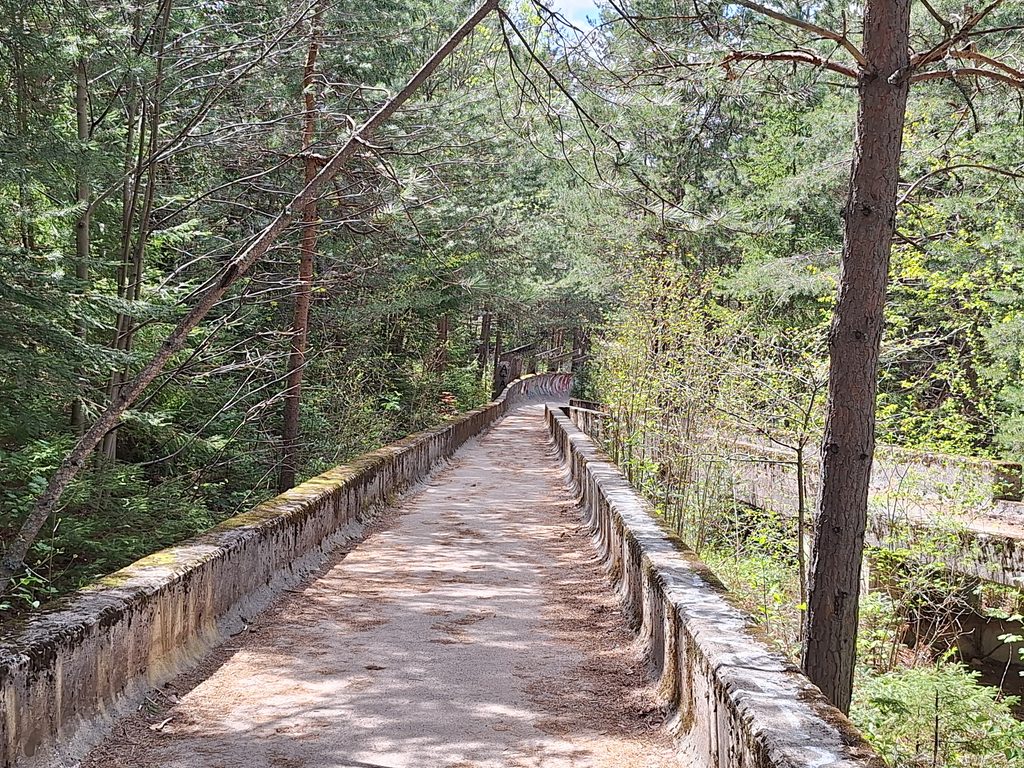
Over the years, it has suffered damage, neglect and extensive graffiti.
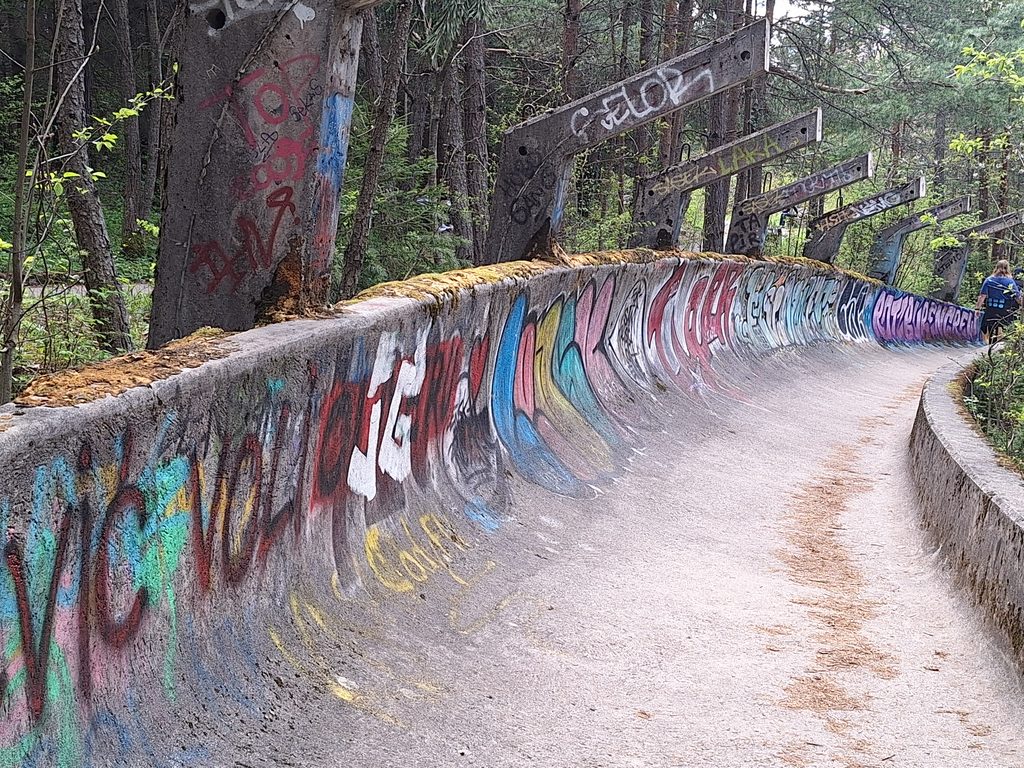
Walking along part of the old track was an extraordinary experience.
I could almost imagine the athletes hurtling down the twisting concrete course at tremendous speeds, cheered on by crowds of spectators.
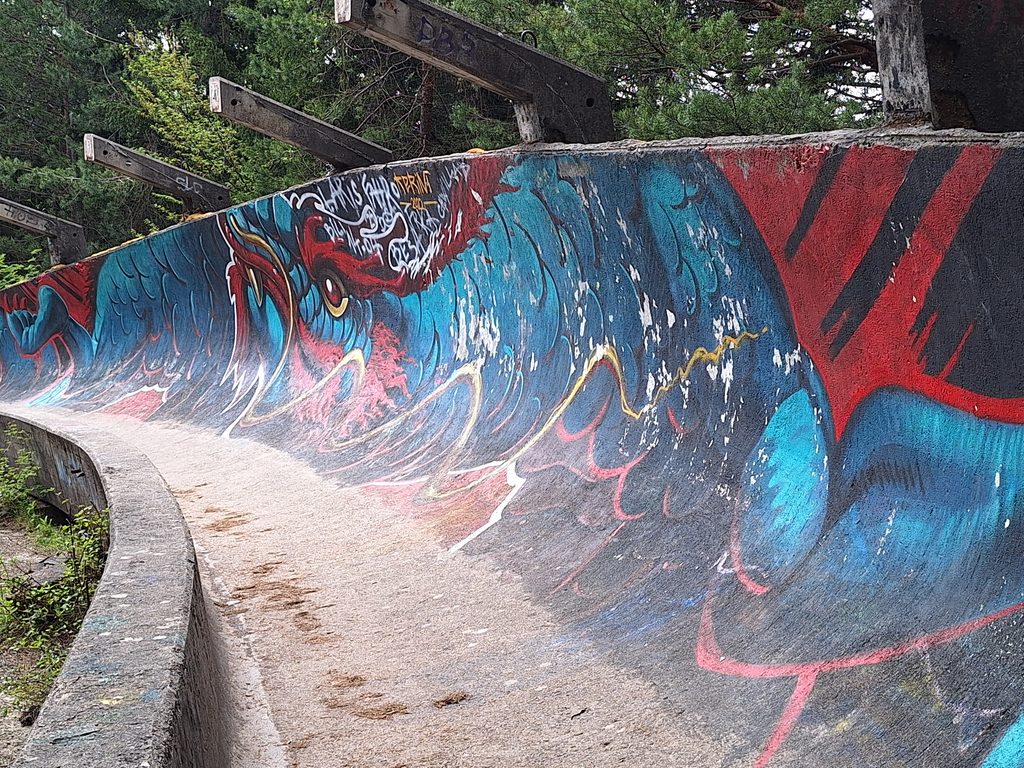
Now the track stands as a reminder of a very different period in Sarajevo’s history.
Only eight years after hosting the Winter Olympics, the city became engulfed in war.
The mountains that once welcomed athletes and visitors became part of the conflict surrounding Sarajevo.
That contrast is difficult to comprehend.
I walked down a section of the old concrete track, taking in the graffiti, the deteriorating surfaces and the surrounding forest.

It was fascinating, but also rather sad to see how much had changed.
During my walk, I encountered a group of teenagers who deliberately threw their empty water bottles and food packaging onto the ground.
I couldn’t help myself and said something to them about leaving rubbish behind.
Unfortunately, they simply laughed.
I found that disappointing. We have only one planet, and everyone has a responsibility to look after it.
Despite that encounter, visiting the old Olympic track was one of the more memorable experiences of my time in Sarajevo.
The People Who Made Sarajevo Special
Looking back, my visit to Sarajevo wasn’t simply about the historic buildings, mosques, bridges and fortresses.
It was also about the people I met.
Kucha Hostel turned out to be a very good place to stay, with a friendly atmosphere and plenty of opportunities to meet fellow travellers.

Meeting Dima again after our earlier encounter in Georgia was a wonderful surprise.
I also met Khan, a very experienced traveller who seemed to have visited almost everywhere!
These conversations are an important part of my journey.
We all come from different backgrounds, countries and generations, yet we share a curiosity about the world.
Travelling has reinforced something I have believed for a long time: age should never be a barrier to meeting new people or experiencing different cultures.
At 72, I am still learning, still exploring and still making friends.
Sarajevo — A City That Stays With You
Sarajevo is a remarkable city.
It has experienced centuries of cultural change, the assassination that helped set the First World War in motion, the glory of hosting the 1984 Winter Olympics, and the terrible suffering of the Bosnian War.
Yet its streets remain full of energy and life.
The historic bazaars are busy, the cafés are welcoming, and beautiful old buildings stand alongside reminders of the city’s more difficult past.
For senior travellers, the central historic area is relatively easy to explore on foot, although some cobbled streets require care.
The surrounding hills are a different matter!
If you plan to visit viewpoints such as the Yellow Fortress, allow plenty of time, wear comfortable shoes and take regular breaks.
Sarajevo also has an interesting public transport system, including trams that appear to come from four different generations: new, old, older and very old!
They are easy to distinguish, and the city’s public transport is generally inexpensive.
It is an interesting mixture of old and new, rather like Sarajevo itself.

My stay had begun with a cramped overnight bus, an uncomfortable border crossing and a long climb to my hostel.
It ended with wonderful memories of historic buildings, mountain views, unexpected friendships and a journey into Sarajevo’s extraordinary past.
It was another reminder that the difficulties of travelling are often outweighed by the experiences waiting at the destination.
Next Stop — Split, Croatia
Tomorrow, I am leaving Bosnia and Herzegovina and travelling to Split in Croatia.
Originally, I had intended to head towards Zagreb, but as often happens during a long journey, plans change.
Sometimes those changes lead to the most interesting experiences.
I am looking forward to reaching the Adriatic coast and discovering another part of Europe.
My journey continues, one step at a time, travelling through countries rather than simply flying over them.
And if there is one thing I hope my travels demonstrate, it is that life doesn’t have to become smaller as we get older.
There is still so much to discover, so many people to meet and so many experiences waiting around the next corner.
Until next time, happy travels!
Andrew
Inspire Seniors Travel — Stepping out of fear, one step at a time, into the unknown.