

Cambodia — Ten Days from Phnom Penh to Siem Reap
Cambodia was never going to be a country I could fully understand in ten days.
There is simply too much history, too much beauty and, in places, too much sadness. I spent my first three days in Phnom Penh before travelling north to Siem Reap, where most of my time would be spent among the extraordinary temples of Angkor.
As usual, I wasn’t trying to see everything.
I was picking my adventures as they came along.
Day 1 — Bangkok to Phnom Penh
Weather: Sunny with increasing clouds. High 29°C.
My journey into Cambodia began with a bus from Bangkok.
The first three hours took us towards the border, mainly along two-lane roads that weren’t always in the best condition. At times the road was so uneven that I was almost bouncing out of my seat.
The border crossing itself was surprisingly straightforward. I had expected considerably more security and perhaps lengthy checks, but it all went smoothly.
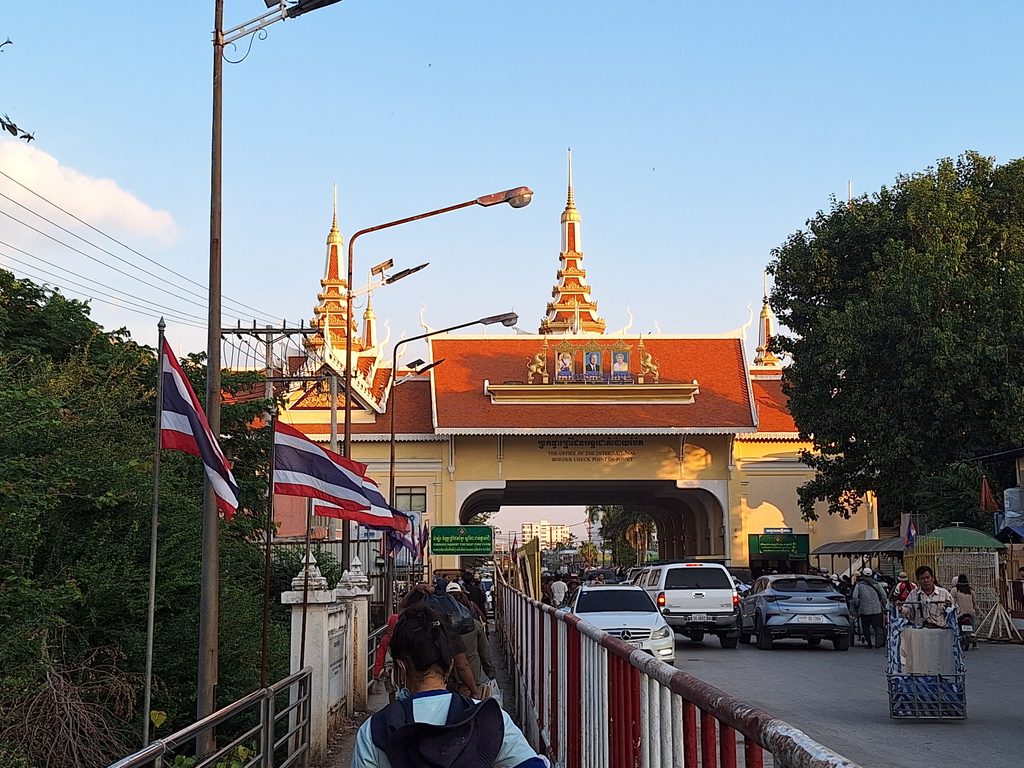
What followed was rather more interesting.
I was picked up and dropped off twice on motorcycles, without a helmet, as I made my way towards the pickup point for Phnom Penh.
Motorcycles are everywhere in this part of the world, and I was particularly struck by seeing small children standing at the front of them with virtually no protection. It is simply part of everyday life here, although it can be difficult to watch when you come from somewhere with very different safety standards.
Then came the sleeper bus.
The photographs advertising it suggested something rather luxurious.
Reality was slightly different.
The beds were basically flat sleeping spaces inside the coach, and the air conditioning was absolutely freezing. We were given thin blankets, but they didn’t offer much protection against the cold.
I managed to get some sleep, although passengers joining the bus during the night regularly woke me.
Eventually, at around 5:30 in the morning, I arrived safely in Phnom Penh and found my hostel called the Pooltop below is the dining and bar area that gives great views of the Mekong River.
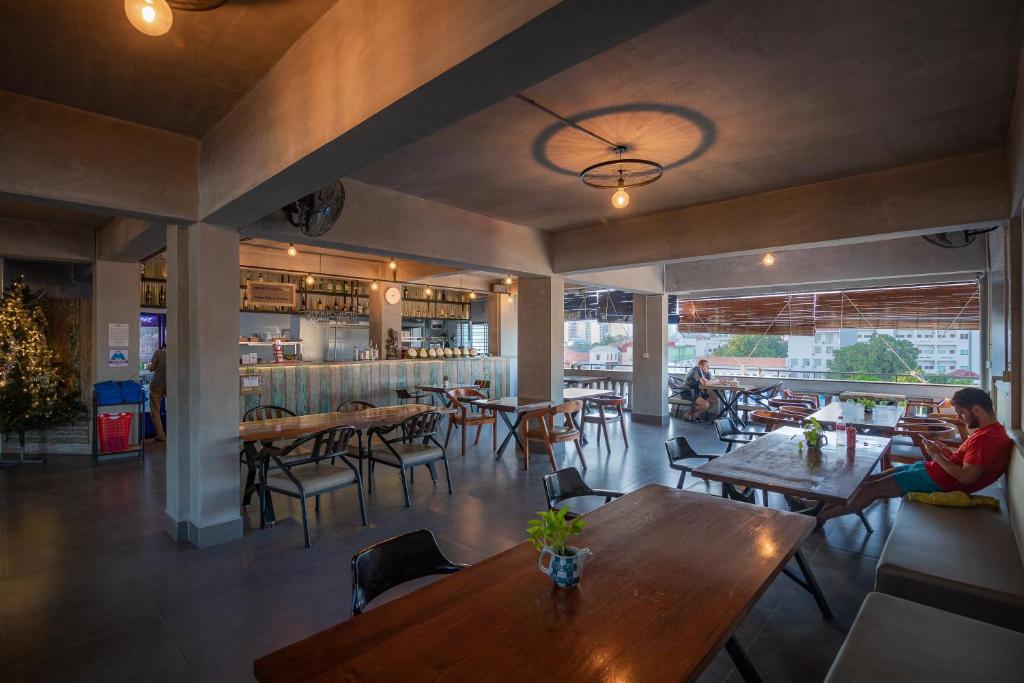
That was the important part.
Day 2 — The Killing Fields and S-21
Weather: Sunny with early morning clouds. High 29°C.
I spent the morning walking beside the Mekong River and enjoying the sunshine.
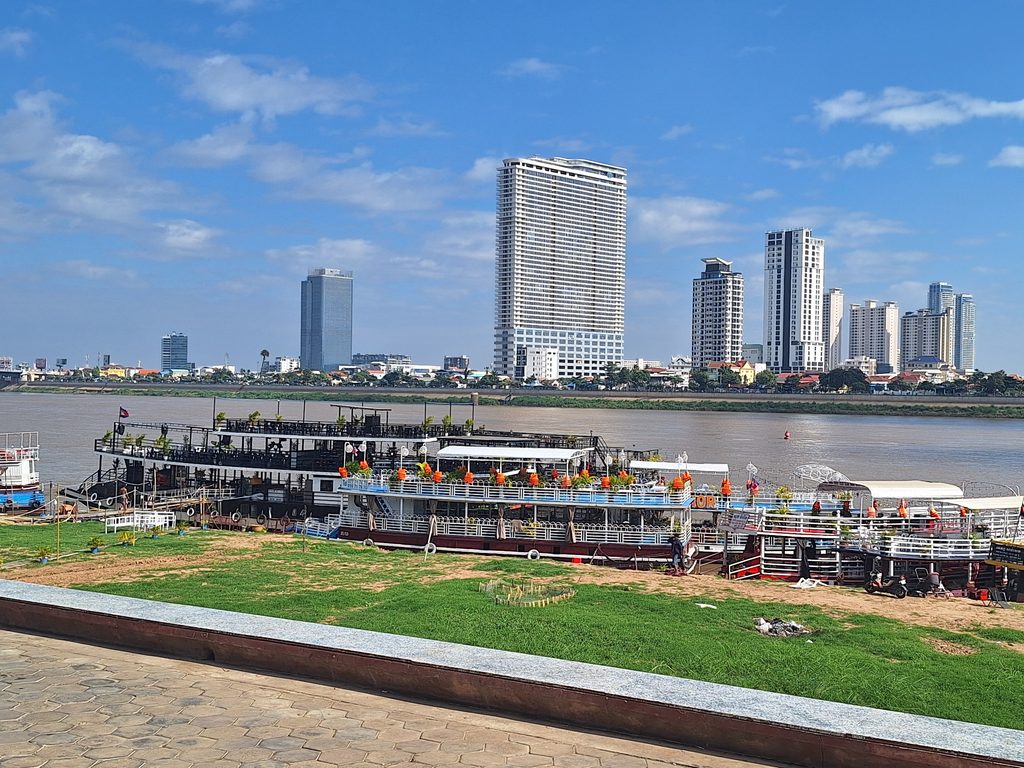
It was peaceful, but I knew the afternoon was going to be very different.
I was visiting two places associated with one of the darkest periods in Cambodia’s history: Tuol Sleng, better known as S-21, and Choeung Ek — the Killing Fields.
Tuol Sleng — S-21
Before the Khmer Rouge took control of Cambodia, the buildings at Tuol Sleng had been a school.

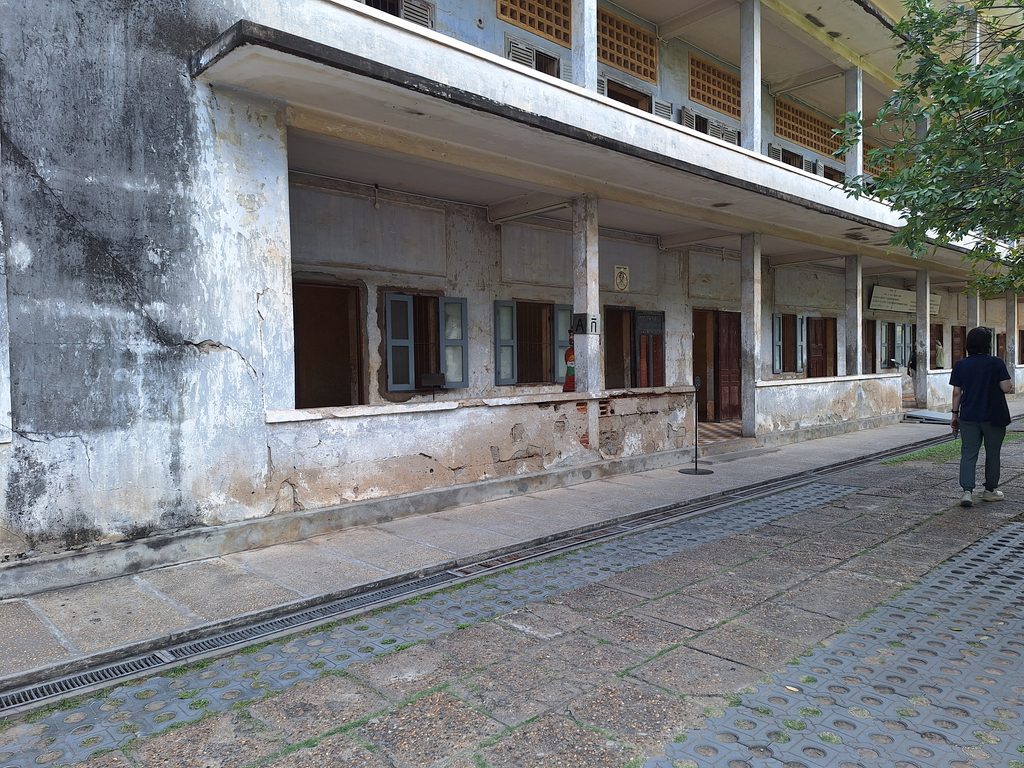
Under the regime they became S-21, a detention, interrogation and torture centre.
Walking through a former school and knowing what happened inside those rooms is difficult to comprehend. Places originally built for children and education were transformed into somewhere thousands of people were imprisoned, interrogated and killed.
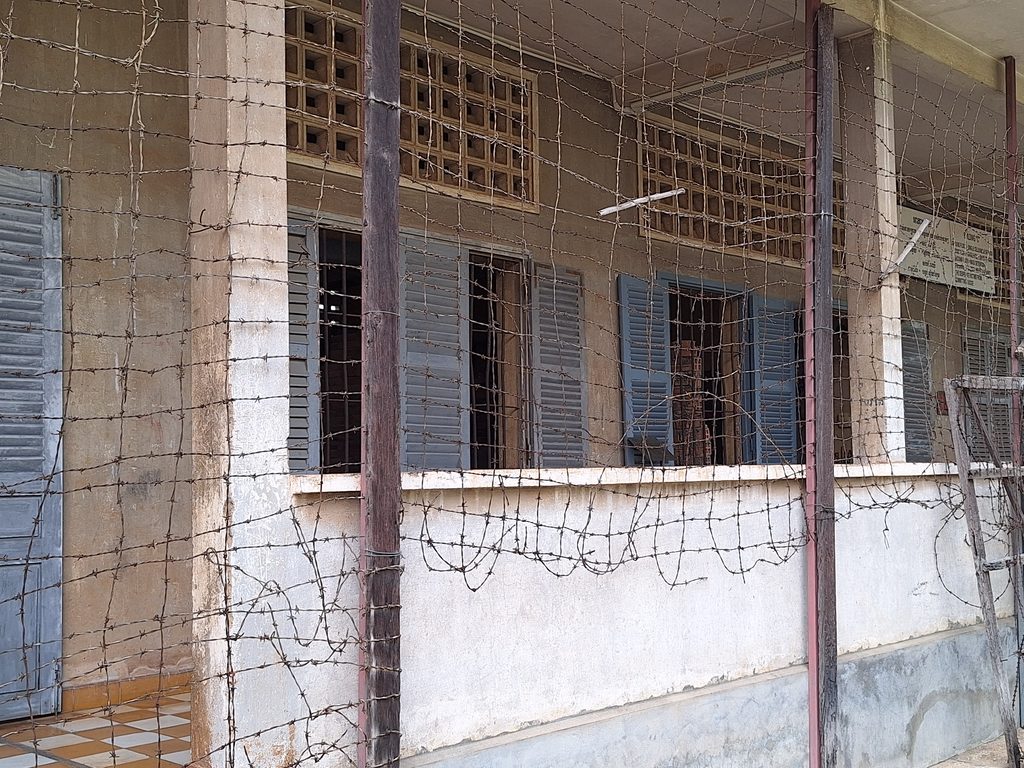
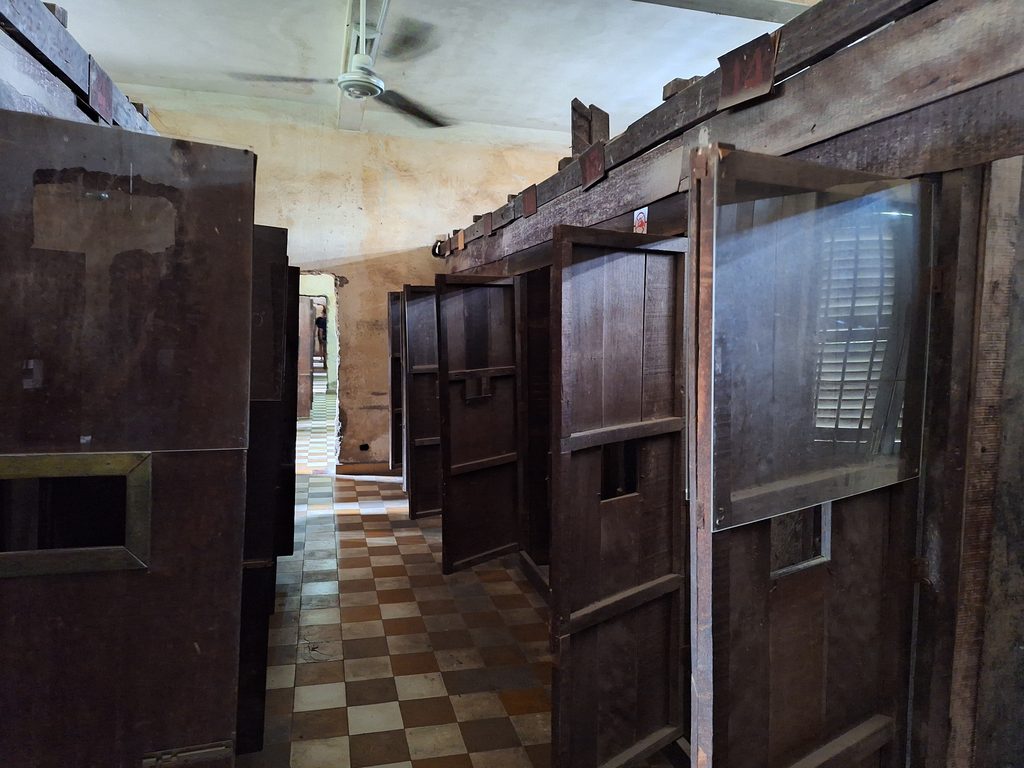
Photographs of prisoners remain as a record of the people who passed through S-21.
They weren’t simply numbers.
They had faces, families and lives.
Among the foreigners who died at S-21 was New Zealander Kerry Hamill, who had been sailing through Southeast Asia when his yacht strayed into Cambodian waters in 1978. He was captured, taken to S-21 and killed.
Perhaps because New Zealand is home for me, his story brought another dimension to what I was seeing.
The man who ran S-21, Kaing Guek Eav, known as Duch, was eventually prosecuted for crimes committed there and sentenced to life imprisonment. He died in 2020 while serving that sentence.
Choeung Ek — The Killing Fields
From S-21 I travelled to Choeung Ek, about 17 kilometres south of Phnom Penh.
It had once been an orchard and Chinese cemetery.
Under the Khmer Rouge it became an execution site.
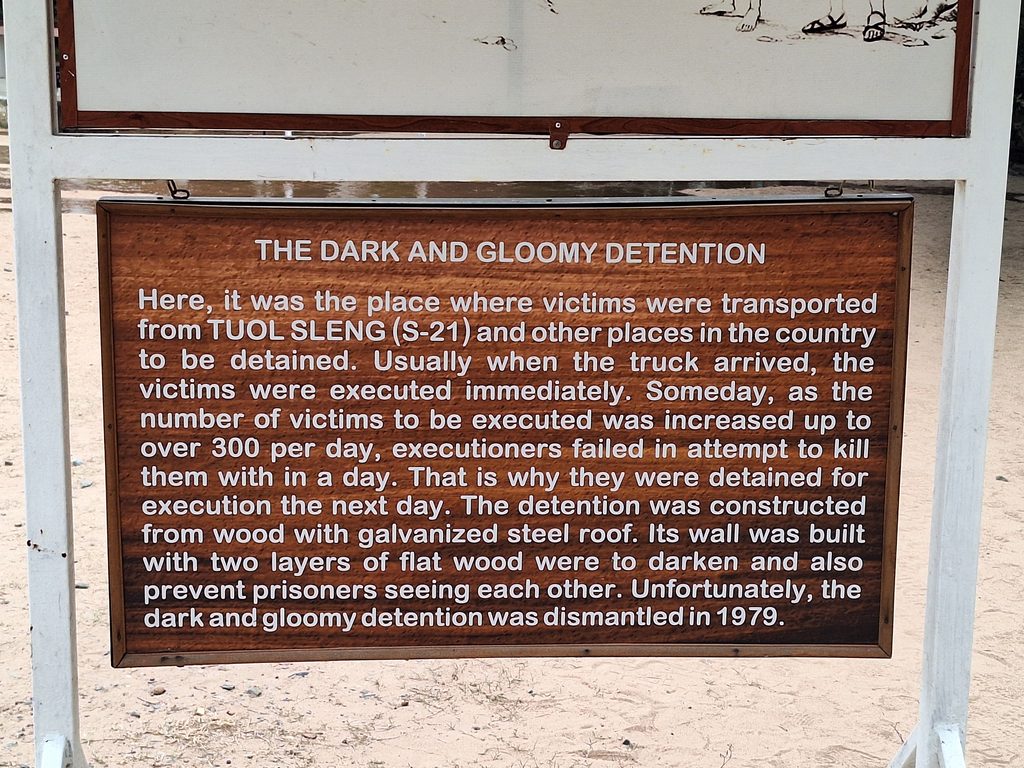

Mass graves were discovered here after the regime fell. Thousands of victims were exhumed, while other graves were left undisturbed.
At the centre of the memorial is a Buddhist stupa containing thousands of skulls.
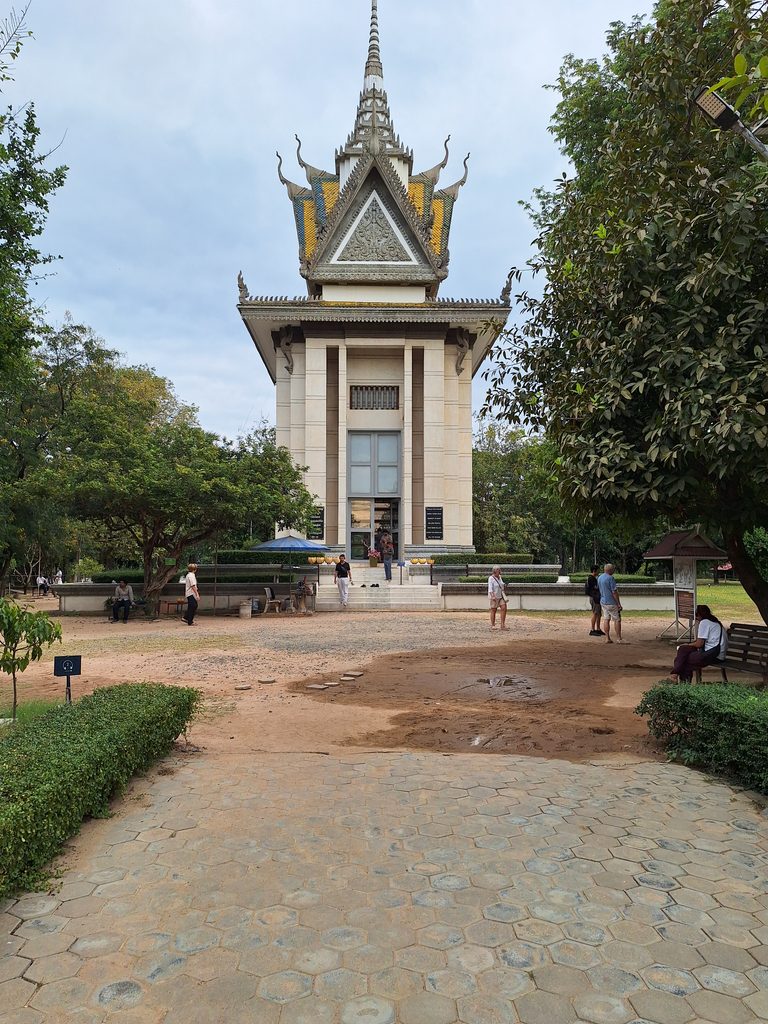
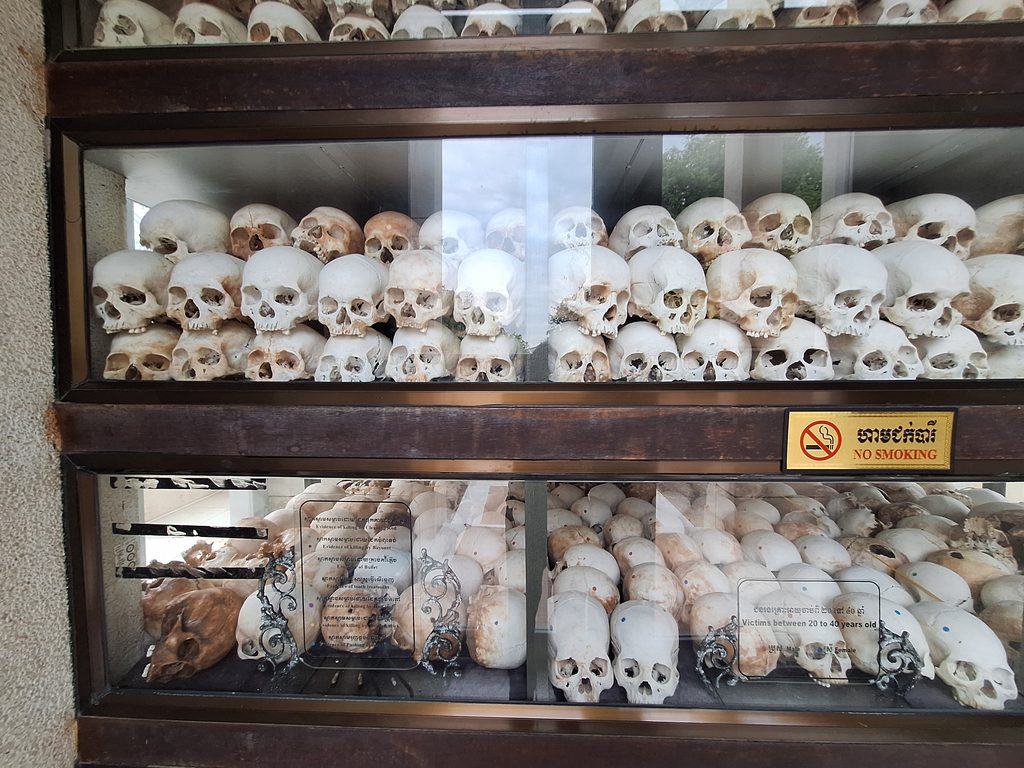
It is confronting.
There is no comfortable way of visiting somewhere like this, nor should there be.
As I walked around, I found myself thinking about how ordinary people can become caught up in something so horrific.
It was one of those travel days that wasn’t enjoyable in the normal sense of the word, but it was important.
Sometimes travelling isn’t about beaches, temples or spectacular scenery.
Sometimes it is about understanding what happened before you arrived.
That evening I returned to the hostel and ordered a large tuna wrap, fries and a beer for US$5.
After the intensity of the afternoon, something as ordinary as sitting down for a meal felt strangely comforting.
Day 3 — Exploring Phnom Penh
Weather: Sunny periods and windy. High 29°C.
My hostel in Phnom Penh had been great, and I was beginning to think seriously about ranking the hostels I stayed in from one to ten.
I set off to walk about two kilometres along the river towards what I knew as the Golden Temple, only to discover that it was closed.
Along the way I met a tourist guide named Vanna, who persuaded me to take a US$30 tuk-tuk tour around Phnom Penh.
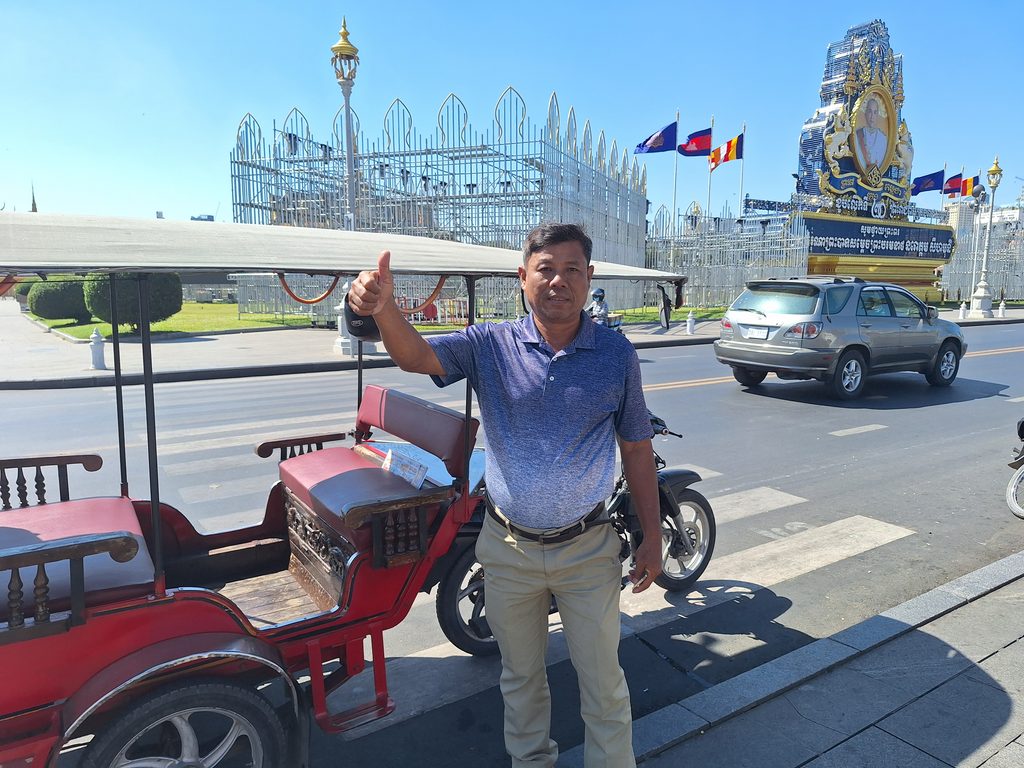
He told me he had family in Auckland who owned two businesses, although he had never visited New Zealand himself.
The tour didn’t quite deliver the cultural experience I had expected, but riding around Phnom Penh by tuk-tuk and later crossing the river by ferry made the day worthwhile.

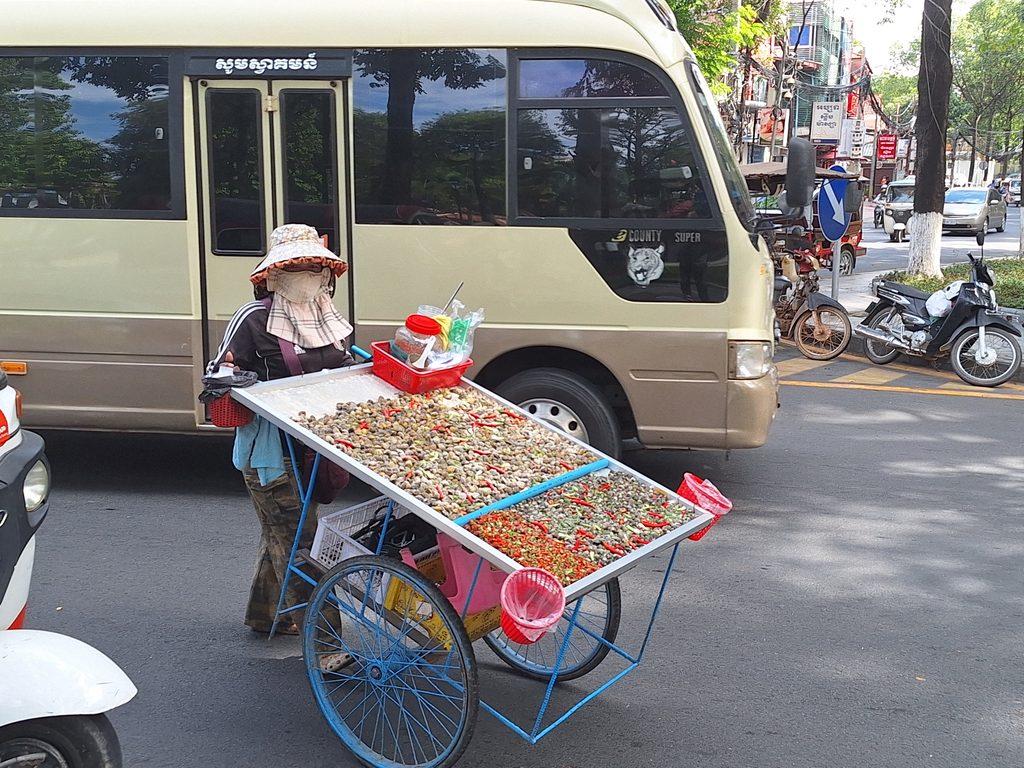
Wat Phnom
Our first major stop was Wat Phnom, one of Phnom Penh’s most important landmarks.

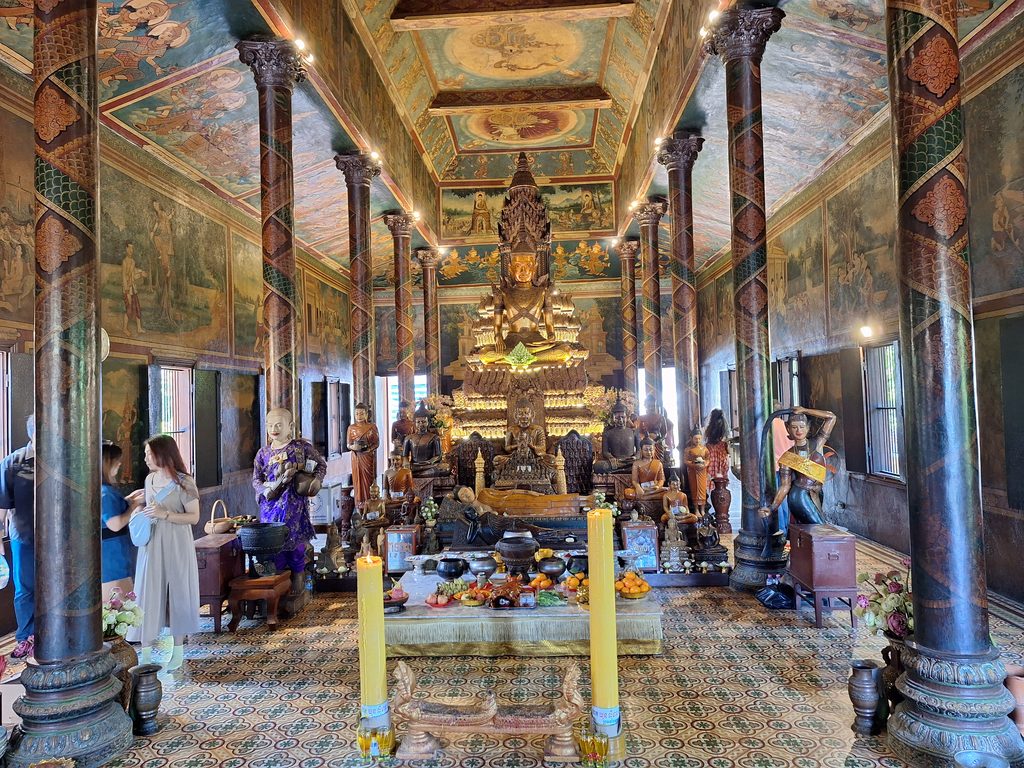
According to the traditional story, a wealthy woman named Lady Penh discovered sacred statues inside a tree that had floated down the river in the 14th century. A hill was raised and a shrine built to house them.
The city eventually took its name from the site — Phnom Penh, or Penh’s Hill.
It is one of those stories where history and legend blend together, but standing there made the name of the city suddenly mean something.
The Golden Temple and Riverside Shrines
We continued through the city and visited the area around the Golden Temple, with its pagodas, shrines and Buddhist decoration.

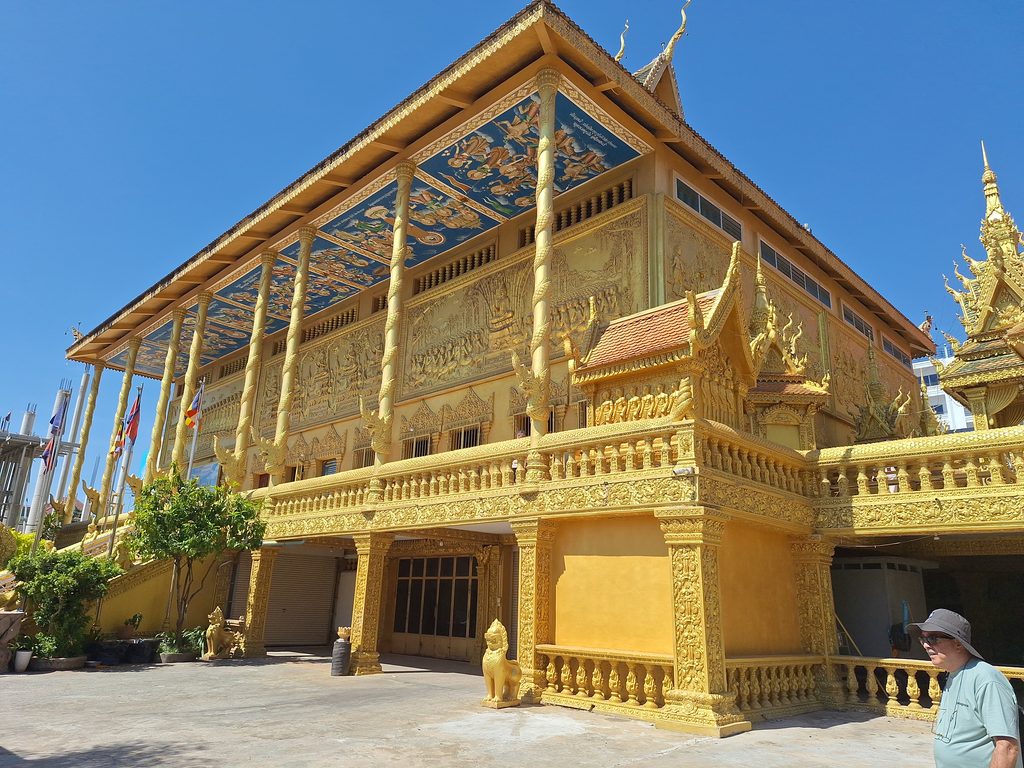
One shrine had a tree growing straight through its roof, another reminder that throughout Southeast Asia nature and religious buildings often seem to coexist rather than compete.
There was also a small Chinese temple and other shrines around the grounds.


Monkey Temple
Next came what is informally known as the Monkey Temple.
There wasn’t a great deal there apart from, unsurprisingly, monkeys, but it was another glimpse of a different side of Phnom Penh.
Nearby was a Buddhist cemetery, which I actually found more interesting.
Across the Mekong
One of my favourite parts of the day was simply taking the ferry across the river.


There was nothing luxurious about it.
Fishing boats sat nearby, local people went about their everyday business and the muddy brown water stretched out around us.
Looking down into the Mekong, it was difficult to imagine the amount of life beneath that murky surface.
Sometimes the simplest journeys give you the best glimpse of how people actually live.
And with that, my three days in Phnom Penh were coming to an end.
It was time to head north.
Siem Reap
Day 4 — Phnom Penh to Siem Reap
Weather: Sunny. High 29°C.
I started with an English-style breakfast before leaving around 11 a.m. for the bus to Siem Reap.
My first tuk-tuk driver assured me he knew exactly where he was going.
He didn’t.
We got lost, and I learned another useful travel lesson: agree on the fare before setting off.
US$8 felt rather expensive after the unwanted sightseeing tour.
The bus journey was another experience altogether.
I was sitting near the front, which gave me a perfect view of the driver’s technique.
Perhaps too perfect.
He repeatedly squeezed through gaps in the traffic, used his phone and appeared increasingly tired. At one point we began drifting towards the opposite lane and I called out.
I eventually made a formal complaint.
Despite all this, or perhaps because of the speed at which we were travelling, we arrived 32 minutes early.
Then came another tuk-tuk.
And once again, we got lost.
Eventually we discovered we were actually parked outside my accommodation.
After all that, a beer seemed appropriate.
Sleep would have been even better, but unfortunately that didn’t happen.
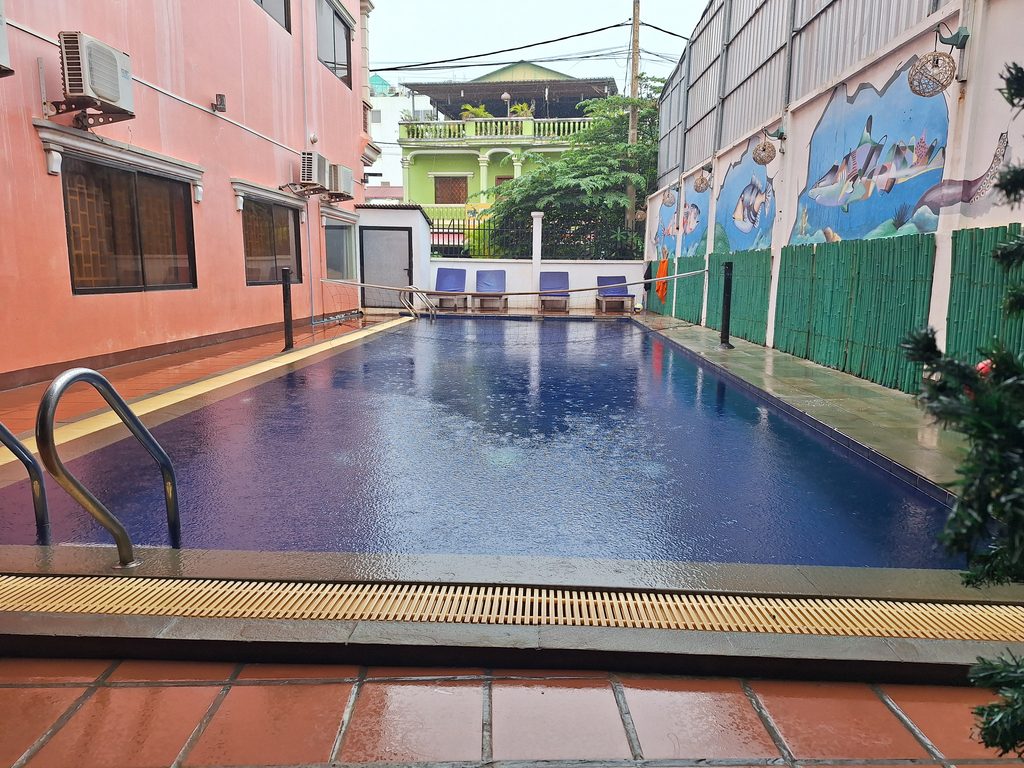
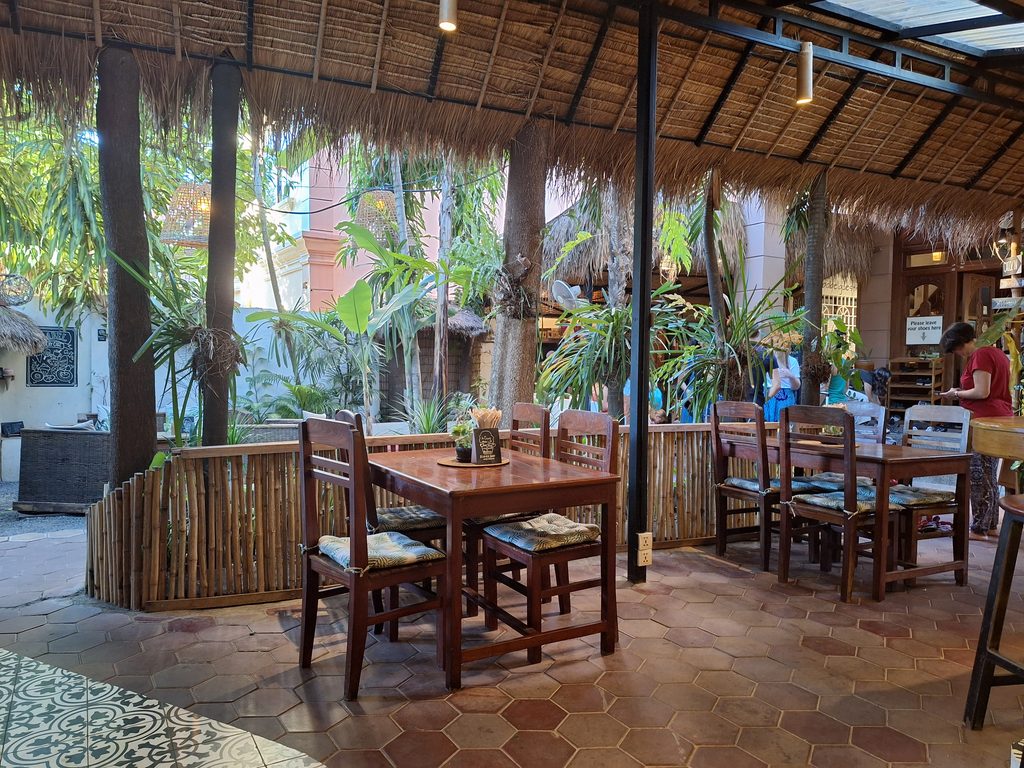
Day 5 — When Plans Change
Weather: Sunny. High 29°C.
Siem Reap had created a problem I hadn’t expected.
It hadn’t originally been part of my route.
My plan had been Phnom Penh to Ho Chi Minh City and then north through Vietnam towards Hanoi. Now I was sitting in Siem Reap trying to work out how to continue without going backwards.
I could return to Phnom Penh.
Or I could head towards Bangkok, which would mean leaving Vietnam for another journey.
It wasn’t simply about money or saving time. I had always imagined this journey moving forward.
But travel doesn’t always cooperate with plans.
That is part of the adventure.
My other challenge for the day should have been considerably easier.
I wanted to find the post office.
I received directions from several people and somehow each set of instructions seemed to take me farther away from it.
Tomorrow I would try again.
More importantly, I had decided how I wanted to explore Angkor.
Rather than racing around the temples for seven, eight or nine hours with a guide, I bought a three-day ticket.
I wanted time.
I didn’t want simply to say I had been there.
I wanted to experience it.
Day 6 — Angkor Wat by Bicycle
Weather: Cloudy early, sunshine during the afternoon. High 30°C.
This was going to be interesting.
I hadn’t ridden a bicycle for about twenty years.
Now I was doing it in Cambodia.
They drive on the opposite side of the road to New Zealand, and traffic can appear to come from almost anywhere. It certainly makes you concentrate.
But it was fun.
My biggest problem wasn’t staying on the bicycle.
It was remembering how to get home.
I tried taking a different route back and became hopelessly confused. I would ask someone for directions, follow them, then later be sent in another direction by somebody else.
All part of the adventure.
Angkor Wat
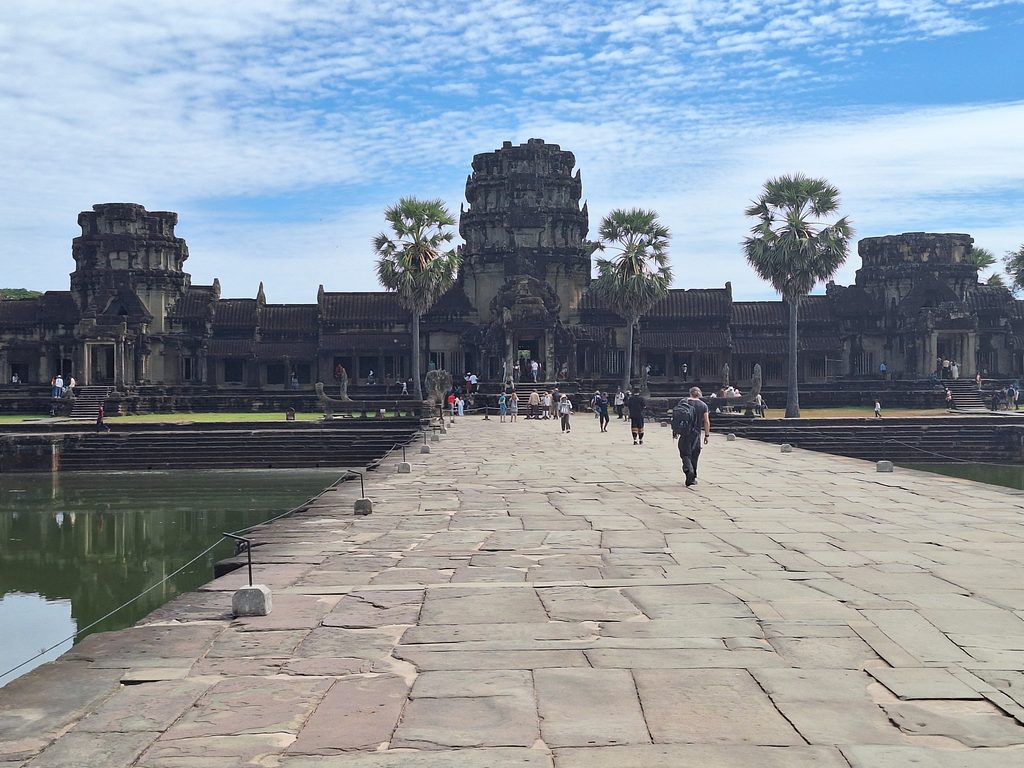
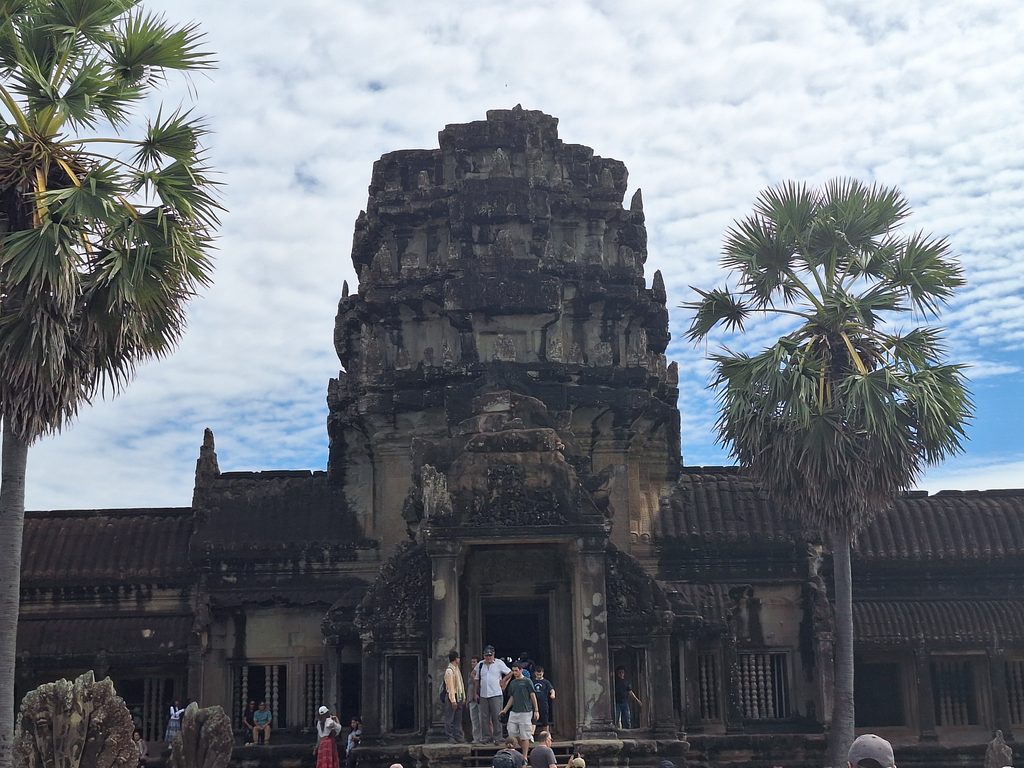
Nothing really prepares you for the scale of Angkor.
Angkor Wat itself is enormous, but it forms only part of a much larger archaeological landscape.
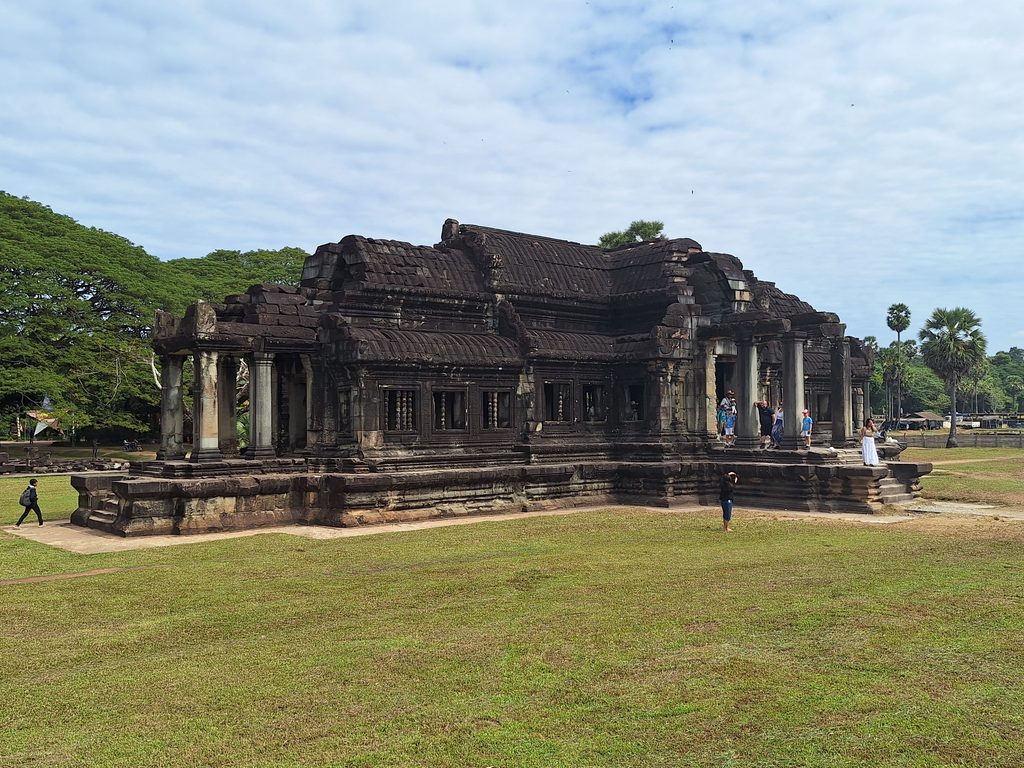

Standing there, I kept thinking about the number of people it must have taken to build these places and the enormous community that once lived and worked around them.
Angkor Wat was constructed in the early 12th century during the reign of King Suryavarman II, originally as a Hindu temple dedicated to Vishnu. Over time it became associated with Buddhism.
One thing that caught my attention was the dark colouring on parts of the stone.
At first glance it almost looked as though the temple had suffered a massive fire, but much of the black appearance comes from biological growth and weathering on the porous stone.
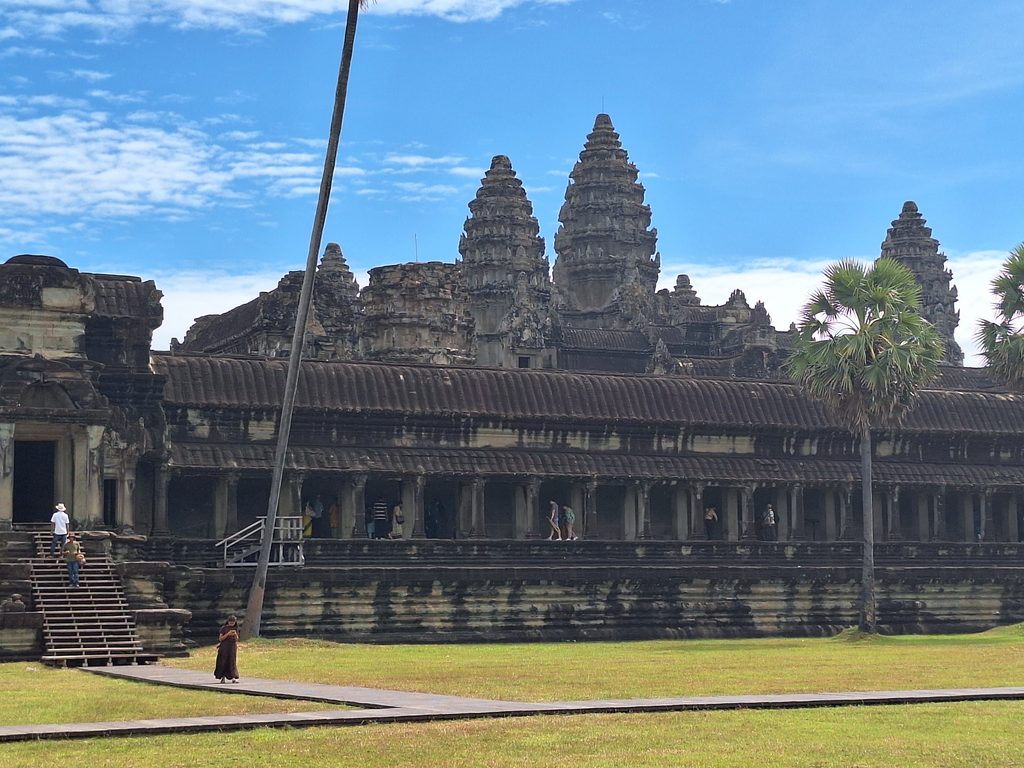
This wasn’t somewhere I wanted to rush.
My three-day ticket was already looking like a very good decision.
Day 7 — Kampong Phluk and Tonle Sap
Weather: Sunny periods. High 31°C.
Today I left the temples behind and travelled towards Kampong Phluk, near Tonle Sap Lake.

It was the dry season, so the water level was much lower than it would be during the rains.
That seasonal change completely transforms life here.
Roads that can be travelled when the water is low disappear beneath the water during the wet season, and boats take over.
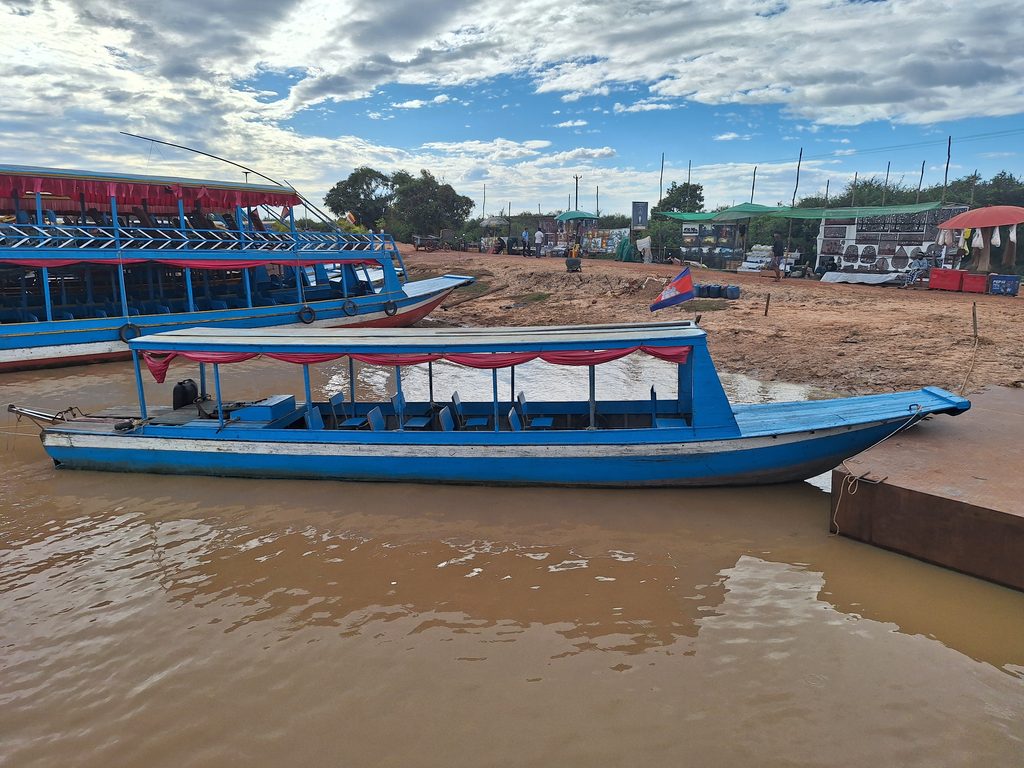
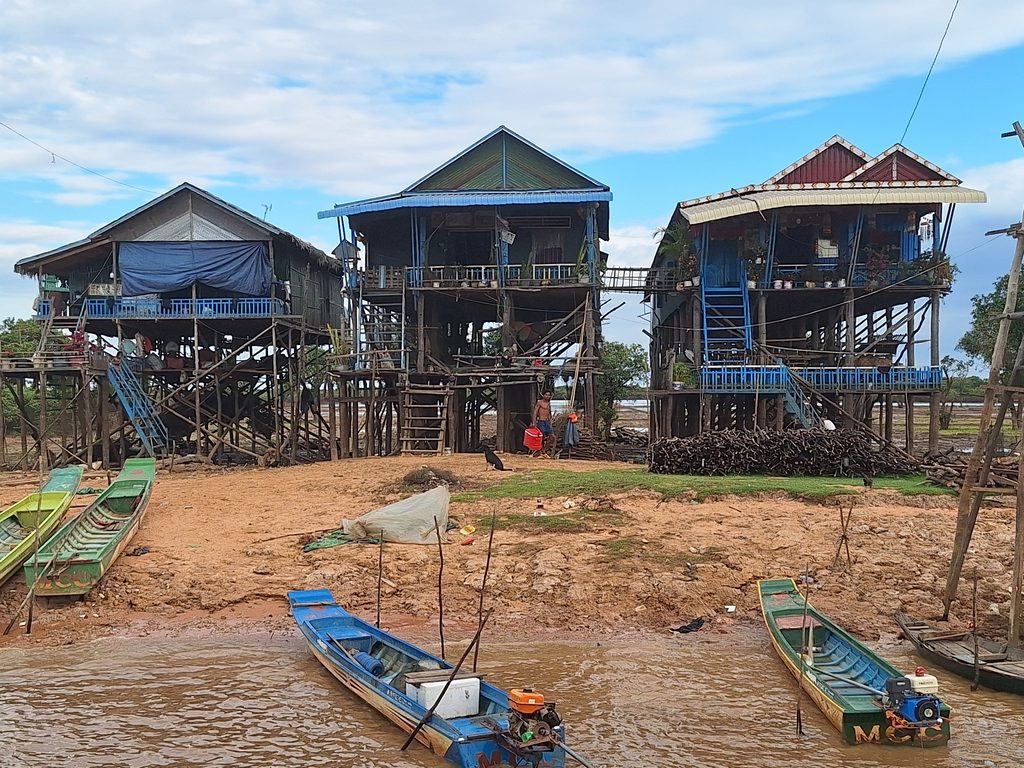
Tonle Sap itself is extraordinary. During the wet season, the lake expands dramatically as water from the Mekong system floods into the basin.
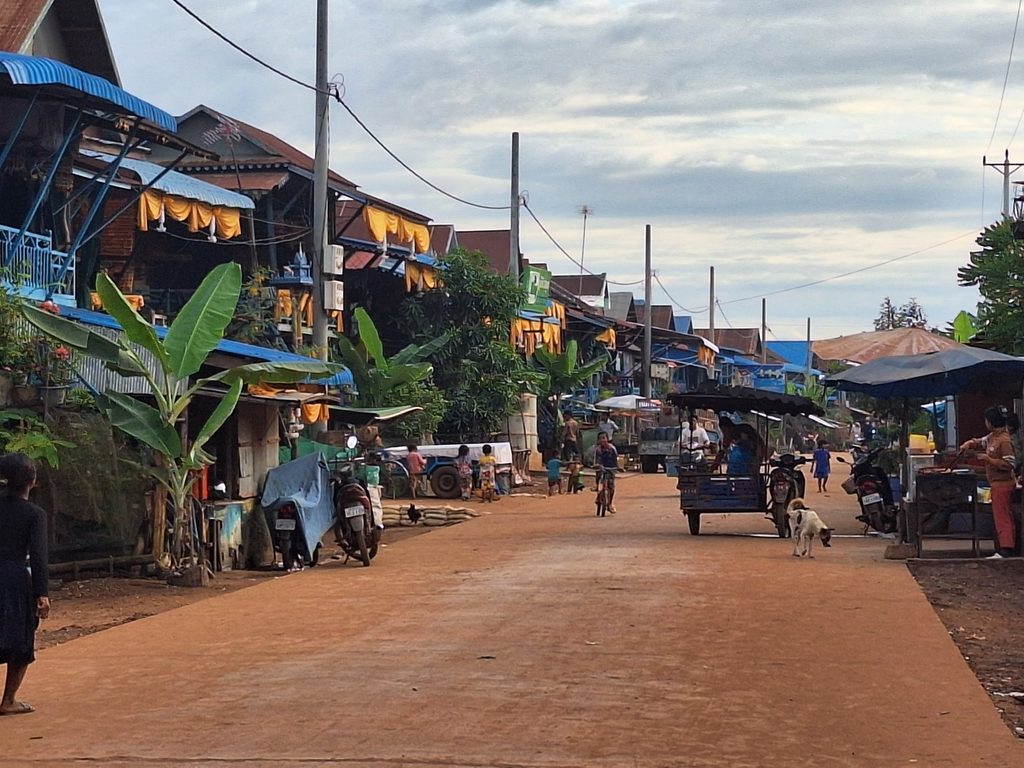
When I visited Kampong Phluk, it was the dry season and the village looked very different from the way it does during the rains. The road running through the village was clearly visible, with the houses standing high above it on their enormous stilts. When the rainy season arrives, the water rises and that road simply disappears beneath it. Boats then replace vehicles, travelling along what had only months earlier been a road. It is difficult to imagine just how dramatically everyday life here changes with the seasons.
Choosing the Quiet Option
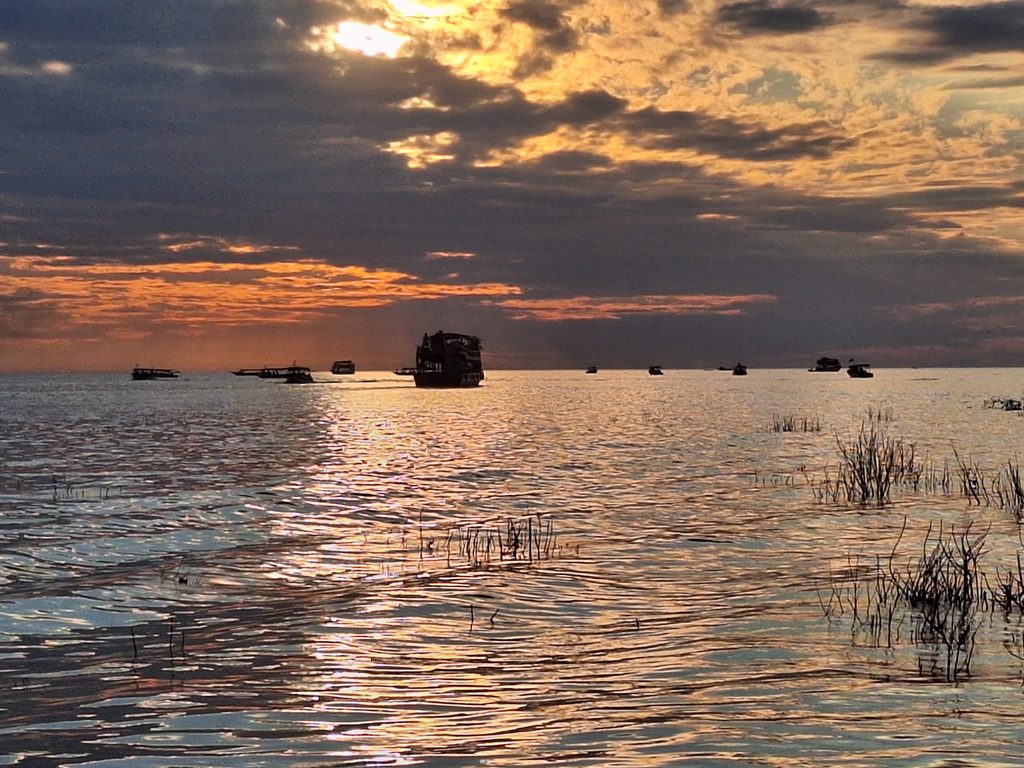
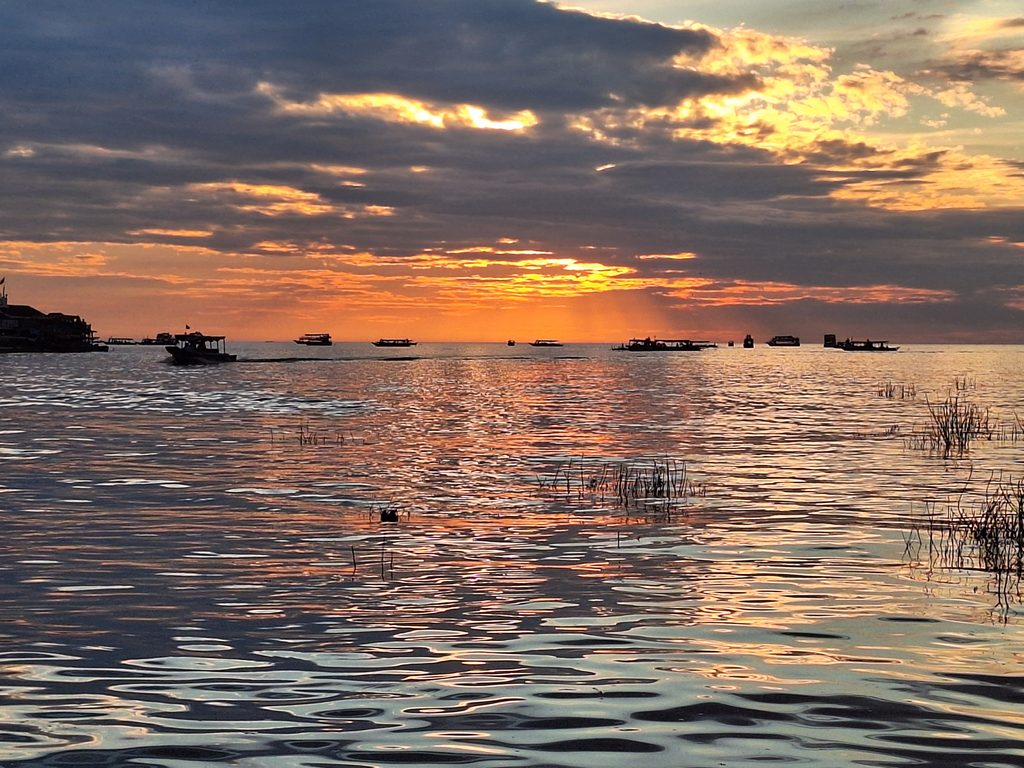
Our trip included a sunset excursion.
Dozens of tourist boats were preparing to head out onto the lake, all apparently chasing the same sunset.
I decided I didn’t need to join them.
Instead, I asked whether I could remain at a floating restaurant and be collected later.
So while everyone else disappeared across the lake, I sat there with a cold beer.
Quiet.
Peaceful.
No rush.
No crowd.
For me, it was perfect.
One other traveller had made the same decision.
We hadn’t spoken until we were standing on the dock waiting for the boat to return.
Then we discovered something remarkable.
We had once lived only a few miles apart in Bristol, England.
He was from Filton, where my wife had been brought up, while I had lived just down the road in Patchway.
I left Bristol in 1989.
Yet here we were, decades later, standing beside Tonle Sap in Cambodia.
Even stranger, only weeks earlier in Jakarta I had met a family whose parents lived in Bedminster, where we once had a flat.
The world is enormous.
And sometimes incredibly small.
Day 8 — I Challenged Myself
Weather: Sunny. High 30°C.
Yesterday it was a bicycle.
Today I went one step further.

After breakfast I hired an electric moped for US$10.
I hadn’t ridden anything like it for decades, but there is some truth in the saying that once you’ve learned how to ride a bike, you never completely forget.
The first challenge was remembering to stay on the right-hand side of the road.
The second was accepting that vehicles could appear from almost any direction.
Confidence is important.
So is paying attention.
Very close attention.
I also made sure I looked for landmarks because getting out was one thing.
Finding my way back again was another.

Bayon and Angkor Thom
I returned to the temple city and once again found myself struggling to comprehend its scale.
At the centre of Angkor Thom stands Bayon, famous for the enormous serene faces carved into its towers.
Wherever you seem to stand, another face is looking back at you.

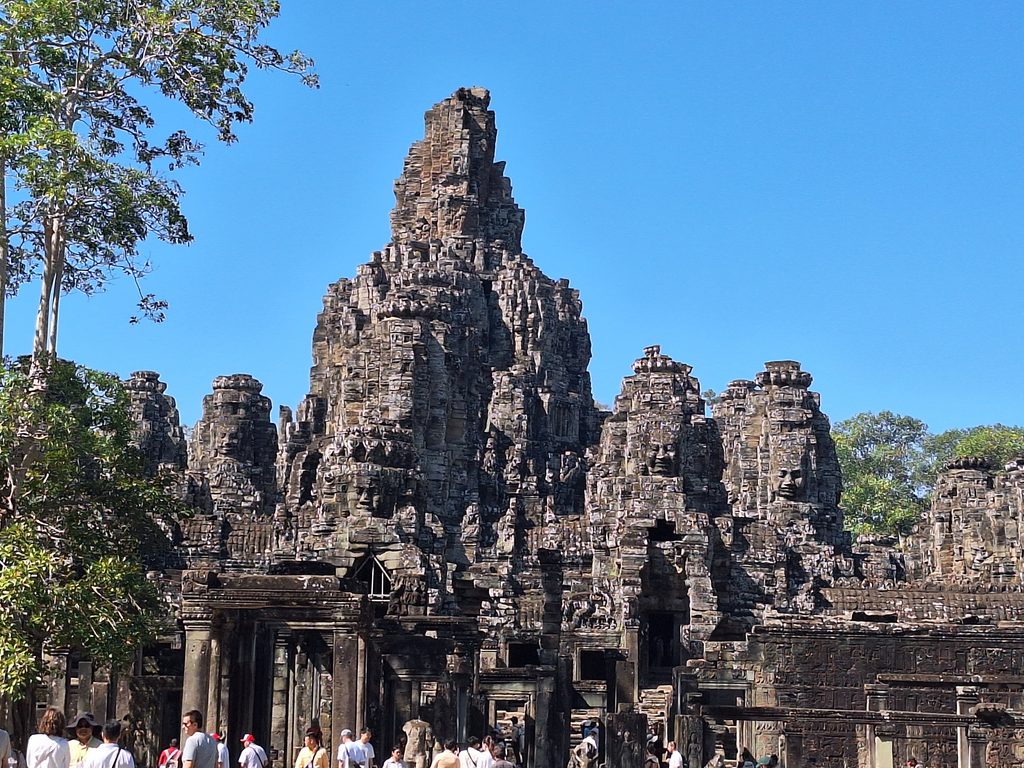
Angkor Thom itself was established under King Jayavarman VII in the late 12th century and became the great capital of the Khmer Empire.
Today we see stone temples and monuments, but that is only part of what once existed. Much of the everyday city would have been built from materials that have long since disappeared.
Ta Keo
I also visited Ta Keo, another enormous temple whose construction began around the end of the 10th century.
It was never fully completed, which gives it a very different appearance from some of the more elaborately decorated temples around Angkor.

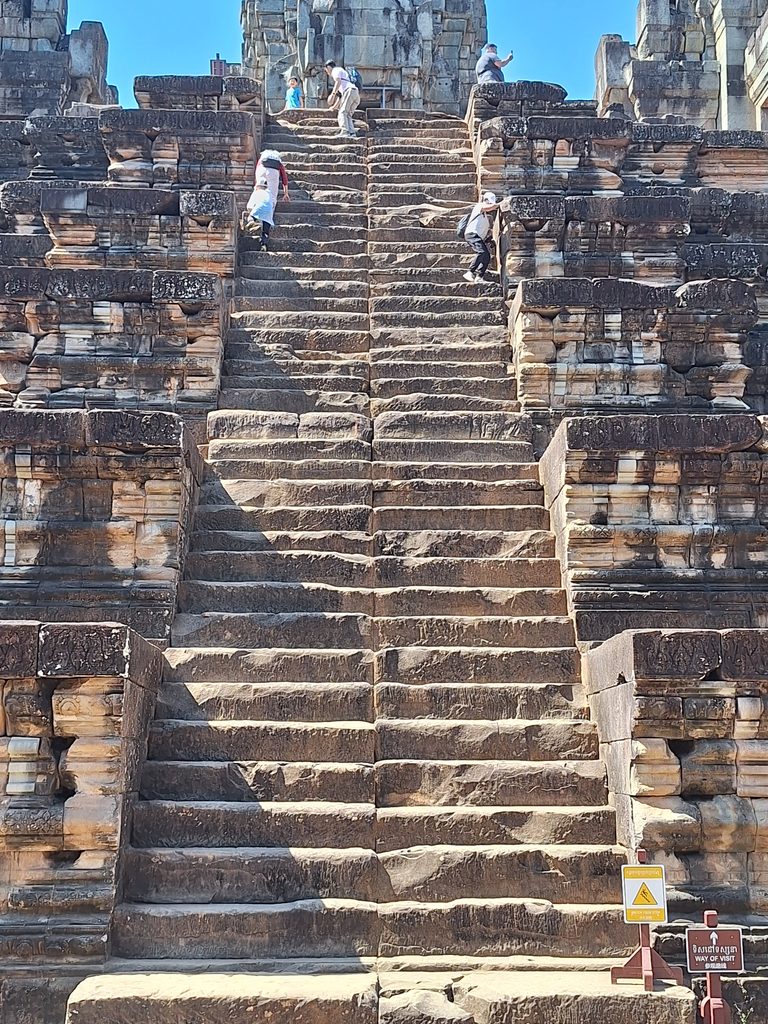
Everywhere I travelled within the complex, the same thought kept returning.
How extraordinary must this place have been when it was alive?
Day 9 — All in a Day’s Work
Weather: Sunny. High 31°C.
Travelling isn’t always temples and beautiful scenery.
Sometimes it involves disagreements over money.
I had met Maddy, a 27-year-old traveller from Sydney, and we were chatting over a meal when I noticed what I believed was a discrepancy with my change.
I was convinced I had handed over US$20 rather than US$10.
The staff called the owner.
The owner arrived with another man.
He was enormous.
About six feet four, arms crossed, staring at me.
I christened him “Man Mountain.”
I asked the owner whether Man Mountain was there to intimidate me or whether he intended to beat me up when I walked outside.
The owner assured me he was merely “along for the ride.”
I couldn’t help laughing.
The disagreement continued, but Maddy sensibly persuaded me not to take a photograph of Man Mountain.
She was right.
Some battles simply aren’t worth fighting.
We eventually said goodbye, assuming we would never see one another again.
Later that evening I was sitting beside the pool having a beer when Maddy walked in.
We were staying at the same place.
Travelling does that.
Mad Dogs and Englishmen
The daytime heat was becoming intense.
Local people had the right idea and stayed in the shade whenever possible.
Tourists, meanwhile, wandered around in the midday sun.
As the old saying almost goes, mad dogs and Englishmen go out in the midday sun.
I was supposed to catch a bus to the wildlife park and aquarium, but stepped inside Heritage Walk to escape the heat.
And missed the bus.
So much for that plan.
That evening Maddy, Joe — an Englishman originally from Abergavenny and now living in Newquay — and I settled in for one of those conversations travellers seem to have when they meet on the road.
I ordered a Long Island Iced Tea in the hope it might help me sleep.
It didn’t.
Then came the bar snacks.
Deep-fried grasshoppers.

I was brought up on Cornflakes and porridge.
Eating insects was definitely not part of my childhood culinary education.
But travelling is about stepping outside your comfort zone.
So I tried them.
Crunchy.
Certainly different.
And another small experience I probably wouldn’t have had sitting at home.
Day 10 — Ta Prohm and Reflections on the Future
Weather: Sunny intervals. High 30°C.
New Year had arrived with plenty of fireworks, although I was still struggling to get a decent night’s sleep.
At around 10:30 a.m. I headed back towards Angkor.
This time my destination was Ta Prohm, known around the world partly because of its association with Lara Croft: Tomb Raider.
I think I enjoyed Ta Prohm even more than Angkor Wat.
This was exactly why I had spread my Angkor visits over several days.
I didn’t want to rush.
I wanted to be a spectator rather than just a tourist.
When Nature Takes Over

Ta Prohm is extraordinary because the jungle has become part of the temple.
Enormous trees rise from the ruins, their roots spreading across walls and stonework like giant tentacles.
Here was something mankind had once built to last.
Centuries later, nature was slowly wrapping itself around it.
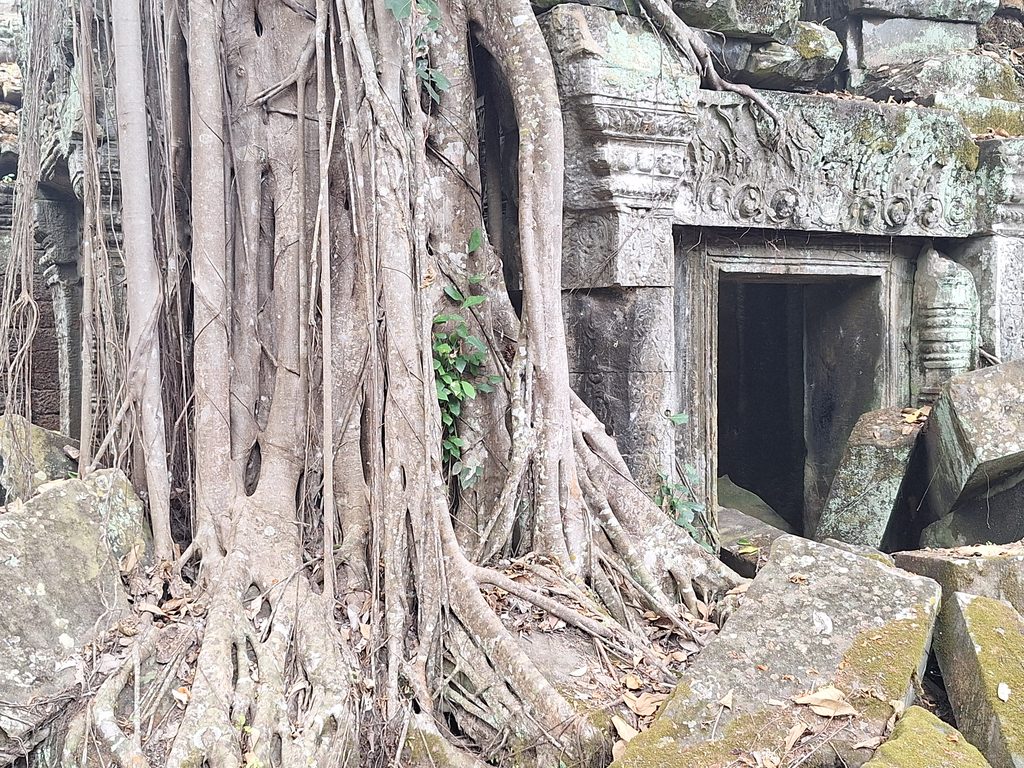
I stood looking at those trees and started thinking about time.
What must this place have looked like when it was filled with people?
And what will our cities look like a thousand years from now?
We like to think we control the world around us.
Ta Prohm is a reminder that Mother Nature always has a say.
It also made me think about the future more broadly.
When I was young, things we saw on programmes such as Star Trek seemed impossible. Automatic doors belonged to science fiction.
Today we walk through them without thinking.
Technology advances, empires rise and fall, societies change and the world keeps moving.
Standing among ruins that were once part of one of Southeast Asia’s great civilisations makes you think about how permanent our own world really is.
My thoughts turned to my children and grandchildren.
What sort of world will they inherit?
We often take the future for granted, but perhaps places like Angkor remind us that nothing lasts forever.
Angkor Wildlife & Aquarium
I still had one place left that I had missed earlier.
The Angkor Wildlife & Aquarium offered something completely different from temples.


After spending time looking at Cambodia’s great muddy rivers, it was fascinating to see some of the life that exists beneath that brown water.
Pub Street — A Different Side of Siem Reap
After days spent exploring ancient temples, floating villages and the countryside around Siem Reap, Pub Street showed me a completely different side of the city.

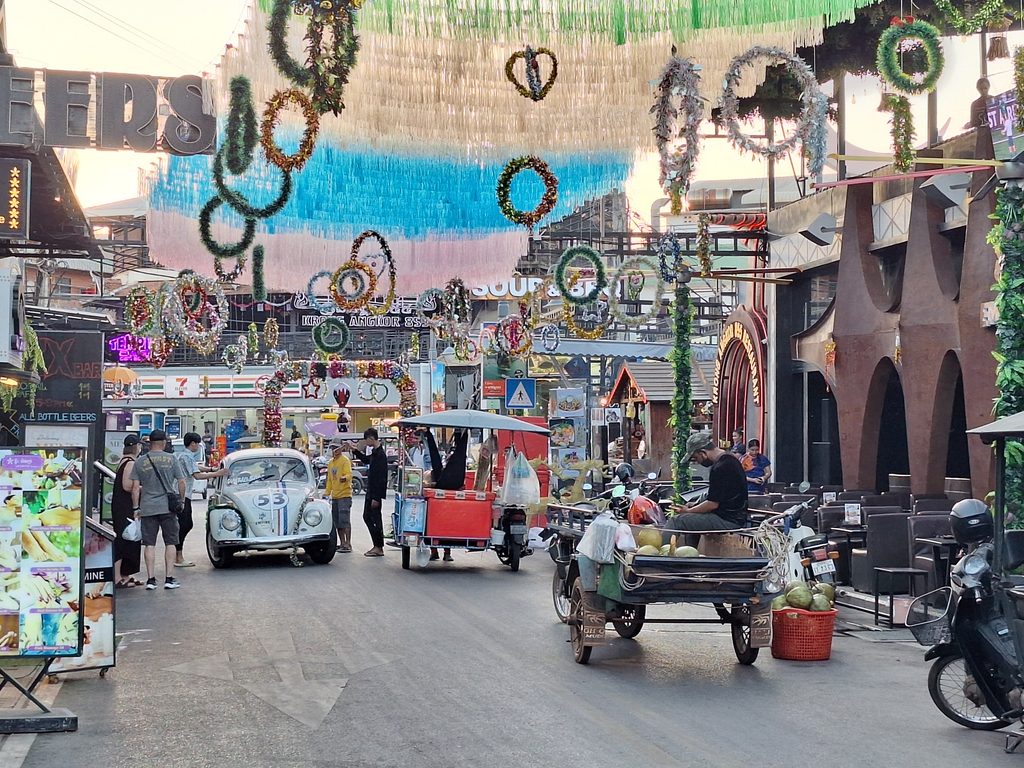
As evening arrives, the area comes alive. Restaurants and bars fill with people, music spills out into the street and colourful lights seem to be everywhere. After the relative peace of the temples, it was quite a contrast.
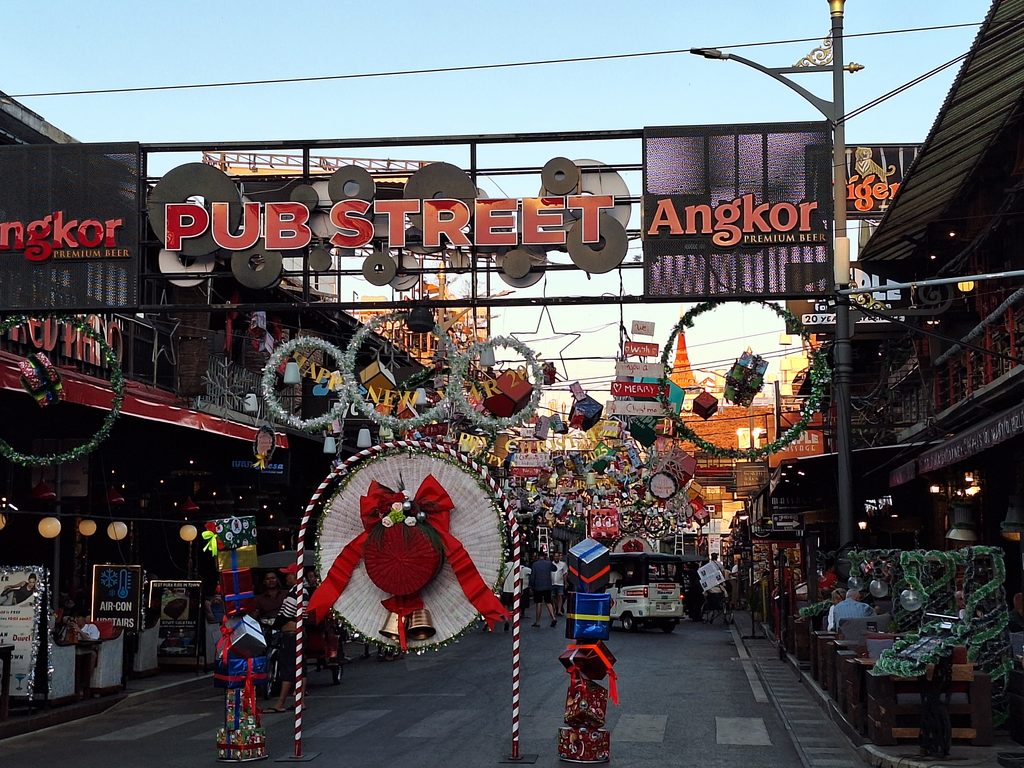
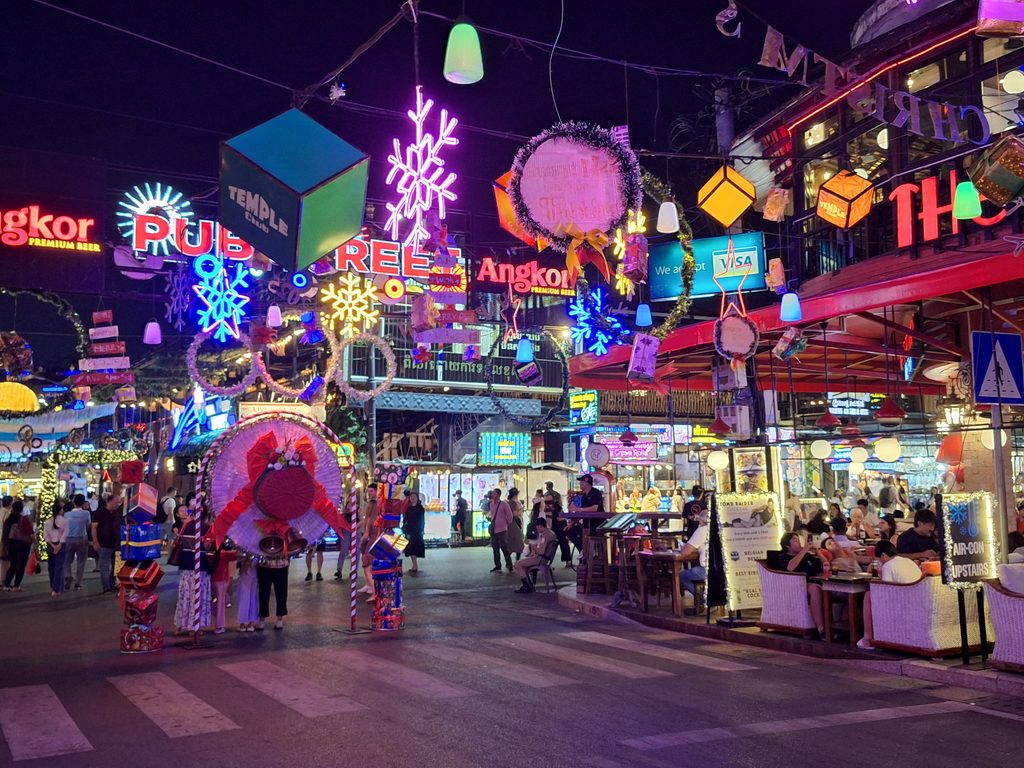
This became an easy place for me to return to in the evenings. I could find a bar, order a cold beer, watch the world go by and sometimes catch the cricket. Street-food stalls, restaurants, bars and shops all competed for attention, and there was always something happening.
It was busy, noisy and certainly not peaceful — but that was part of its character. You could spend the day surrounded by the history of Angkor and, a few hours later, be sitting in the middle of the nightlife of modern Siem Reap.
Sometimes travelling doesn’t need to be complicated. A cold beer, somewhere comfortable to sit and plenty of people to watch can be an enjoyable way to finish the day.
After days of temples, buses, bicycles, mopeds and sightseeing, doing very little felt rather good.
My Final Days — Doing Nothing
Weather: Sunshine. High 32°C.
And that was more or less it.
For my final couple of days I deliberately did nothing.
No temples.
No tours.
No major adventures.
I had seen what I wanted to see, and sometimes relaxing and doing absolutely nothing is exactly what travelling requires.
I could have spent weeks in Cambodia and still not seen everything.
But that isn’t what this journey is about.
I am picking my adventures as I come across them.
Vietnam was next, although only as a quick stop.
Beyond that, Laos was already calling me.
After ten days in Cambodia, it was nearly time to pack my bag again and keep moving forward.
Stepping out of fear one step at a time into the unknown.