

Cyprus — Exploring a Divided Island
Day 1 — A Long Journey from Istanbul to Cyprus
Weather Update: Clear blue skies
A Beautiful Day to Leave Istanbul
For the first time since arriving in Istanbul, I woke to spectacular weather. The sky was a beautiful, clear blue, a welcome change after the snow and freezing temperatures I’d experienced over the previous few days.
Typical! Just when the weather finally improved, it was time for me to leave.
My flight to Cyprus was scheduled for 4:45 pm, with an expected arrival at 5:15 pm local time, allowing for the time difference.
Three Trains to the Airport
I left my accommodation around 11:30 am, determined to reach the airport with plenty of time to spare.
Sabiha Gökçen Airport was approximately 60 kilometres away, and reaching it involved taking three trains. Fortunately, everything went smoothly, and I arrived well ahead of schedule.
Even passing through airport security was relatively painless, which is always a relief when travelling.
The Deodorant Dilemma
Something that continues to frustrate me at airports is the restriction on liquids in hand luggage.
I use spray deodorant, but the bottles I normally find in shops contain around 160 ml, exceeding the usual 100 ml allowance.
You would think that, with millions of people travelling by air, smaller bottles would be readily available.
Over the years, I’ve also noticed how inconsistent airport security can be.
I once lost a pair of children’s play scissors with rounded ends because they were considered a security risk.
This time, thankfully, I had no problems.
Delayed Before We Even Left
My flight was initially delayed by 25 minutes.
Then, just when I thought we were finally going to board, another announcement added a further 55 minutes.
Eventually, we were on board and ready to depart, but our troubles weren’t over.
We spent nearly an hour waiting on the airfield at Sabiha Gökçen Airport before being given permission to take off.
At one point, I watched another aircraft land while we were still waiting.
By now, my carefully planned arrival time in Cyprus was becoming a distant memory.
Arriving on the Wrong Side of Cyprus
When I finally arrived, I discovered something I hadn’t fully understood when booking my flight.
Cyprus is divided, and I had landed in the Turkish-controlled north, whereas my intended accommodation was in the Greek Cypriot-controlled south.
That meant another journey and a border crossing before I could reach my hostel.
I booked a seat on a local bus to take me towards the crossing, but the driver wasn’t going anywhere until the bus was full.
So there I sat, waiting for another hour and a half.
After the delays in Istanbul, it was the last thing I needed. Still, there was little I could do except sit back and wait.
An Unexpected Night in a Hotel
It was after 11 pm when I finally reached the border area of Nicosia.
By this stage, I was tired and concerned that my hostel might have closed its doors for the night.
Rather than risk arriving to find nobody there, I decided to look for a hotel nearby.
I eventually found somewhere that appeared reasonably priced, although the room cost NZ$67 for the night.
Unfortunately, the standard of the accommodation didn’t quite match the price.
Nevertheless, after such a long day, I was grateful to have a roof over my head and somewhere to sleep.
Tomorrow Is Another Day
What should have been a relatively simple journey had turned into an exhausting combination of trains, airport delays, waiting around and an unexpected overnight stay.
But I had made it to Cyprus.
Tomorrow, with a little luck, I would reach my hostel, settle in and start discovering what Nicosia had to offer.
Travelling isn’t always about spectacular sights and wonderful experiences. Sometimes it’s about getting through the difficult days and being ready for whatever comes next.
Another country, another adventure — and another step into the unknown.
Day 2 — Crossing into Nicosia
Weather Update: Sunny, high 12°C
Elevation Above Sea Level: 220 metres
A Fresh Start
After yesterday’s exhausting journey, I woke to a bright and sunny morning in Cyprus.
The temperature was a comfortable 12°C, and after a hearty breakfast — which seemed more like a pizza than a traditional breakfast — I was ready to make my way towards the Ledra Palace border crossing.
I was looking forward to reaching my hostel and finally settling into Nicosia.
Crossing the Border
Walking towards the Ledra Palace crossing felt rather like stepping into a scene from a film.
On the northern side, the entrance was plain and unassuming, with very little activity around it.
Once I passed through to the southern side, however, the atmosphere changed noticeably.
There were shops, bars, people walking around and a feeling of everyday city life.
It was such a pleasant day that I decided there was no hurry.
I found somewhere to sit, ordered a refreshing beer and spent about an hour enjoying my surroundings.
Eventually, I picked up my bag and began the 2.8-kilometre walk to Nex Hostel.
A Booking Mistake at Nex Hostel
The walk was straightforward, and I reached the hostel without too much trouble.
Unfortunately, when I arrived, I discovered that I had made a rather embarrassing mistake with my booking.
Instead of reserving accommodation for my arrival, I’d somehow booked the wrong dates in March.
Thankfully, the hostel staff were understanding and managed to rearrange things for me.
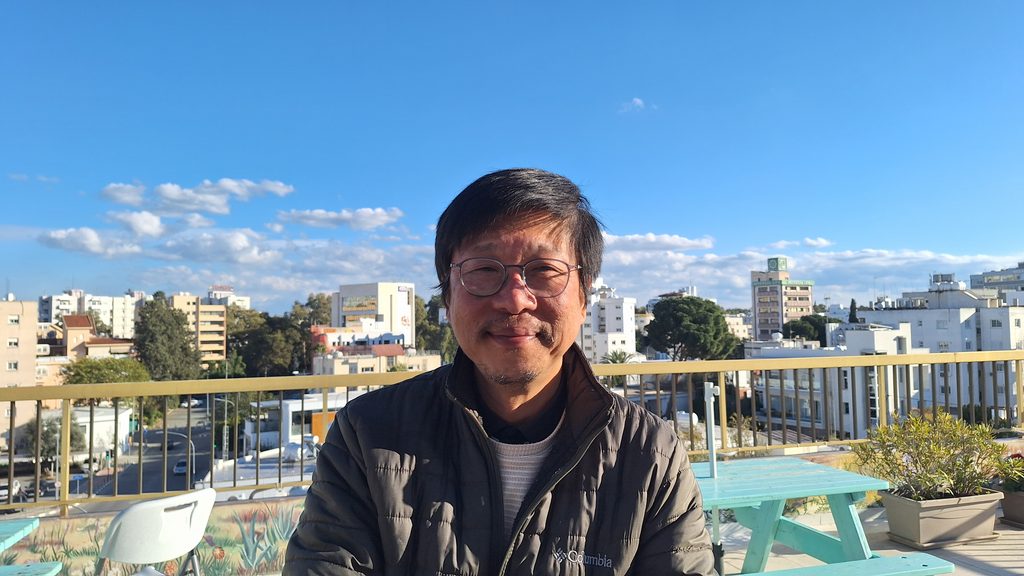
They found me a lovely room on the top floor, complete with a good view.
After being shown around, I headed to the balcony to relax and enjoy the scenery.
After the previous day’s troubles, it was wonderful to feel that things were finally coming together.
Exploring the Neighbourhood
Later, I decided to take a walk and investigate the local shops.
To my surprise, most of them appeared to be closed.
For a moment, I wondered whether I had lost track of the days. Was it Sunday?
No, it was only Tuesday!
I continued wandering, but before long, another familiar problem appeared.
I was lost.
I thought I was retracing my steps correctly until I came across the same orange tree I’d ducked beneath earlier.
That was when I realised I had been going around in circles.
Fortunately, I found a small shop offering free Wi-Fi and managed to check my location.
As it turned out, I was only five minutes away from the hostel.
A Lesson in Local Life
While I was in the shop, I asked the assistant why so many businesses had been closed.
The explanation was simple: it was lunchtime, and some local shops closed for a break around 3 pm.
It was another reminder that everyday routines can be quite different from those we’re accustomed to back home.
Meeting Alex from South Korea
Back at the hostel, I treated myself to a couple of beers and struck up a conversation with Alex, a traveller from South Korea.
I was curious about his name, and he explained that he had chosen “Alex” because it was easier for people to pronounce.
He was in Cyprus on a business trip but had spent about a month waiting for his visa to enter Turkey.
As we talked, I was reminded once again how many different reasons people have for travelling.
Some are exploring the world, others are working, and some are simply waiting for the next stage of their journey to begin.
The Small Moments Matter
Today hadn’t been filled with famous landmarks or grand adventures.
Instead, it had been about crossing a border, finding accommodation, getting lost in unfamiliar streets and meeting another traveller.
But those experiences are part of what makes travelling so rewarding.
You never know who you might meet or what you might learn simply by stepping outside.
And tomorrow, I intended to discover more of this fascinating city.
Day 3 — Exploring Nicosia’s Old City
Extending My Stay
On Wednesday, I decided to extend my stay in Nicosia until Sunday.
There was more to see than I’d originally anticipated, particularly within the Old City and around the remarkable Venetian walls.
Today’s plan was to visit two of the city’s historic entrances: Paphos Gate and Famagusta Gate.
With my route planned, I set off to discover a little more about the history of Lefkosia, as Nicosia is also known.
A Fountain and Some Beautiful Peacocks
On my way towards Paphos Gate, I passed a lovely water feature in a peaceful setting.
It was a good opportunity to stop and take a few photographs.

Nearby, I noticed a large enclosure containing seven peacocks — four males and three females.
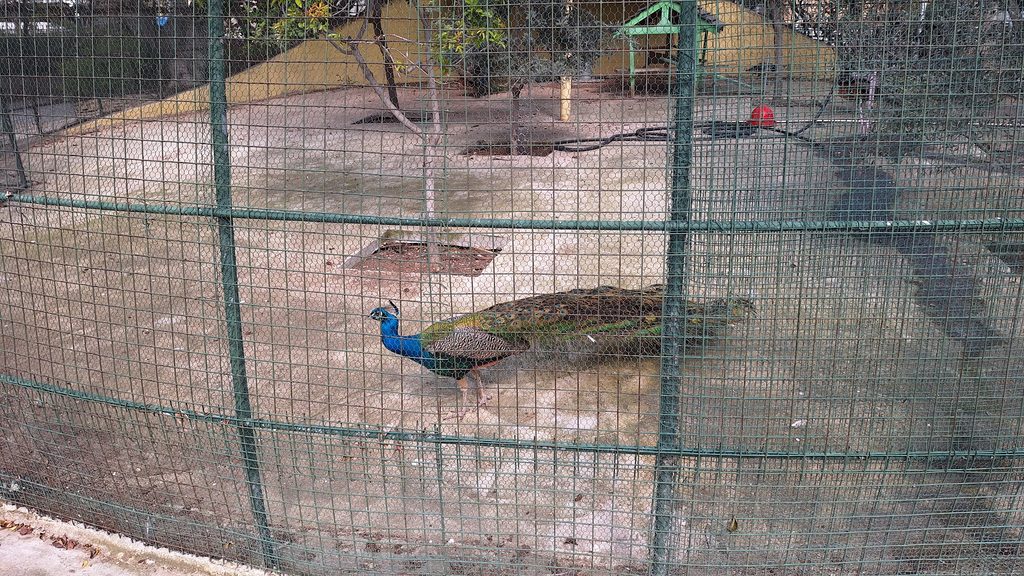
They were magnificent birds, particularly the males with their beautiful plumage.
However, I couldn’t help feeling disappointed that they were confined inside a cage rather than wandering freely around the park.
Paphos Gate — An Entrance Through History
I reached Paphos Gate without too much difficulty.
It is one of the three original gates in the Venetian fortifications surrounding Nicosia.
The road leading from this entrance once connected with Paphos, which explains its name.
Historically, it was also known as the Gate of San Domenico, after a nearby abbey. It replaced an earlier entrance from the Frankish period.
Unlike some of the grand gateways I’ve encountered during my travels, Paphos Gate is quite modest.
Essentially, it’s an opening through the fortification wall, covered by a barrel-vaulted passage.
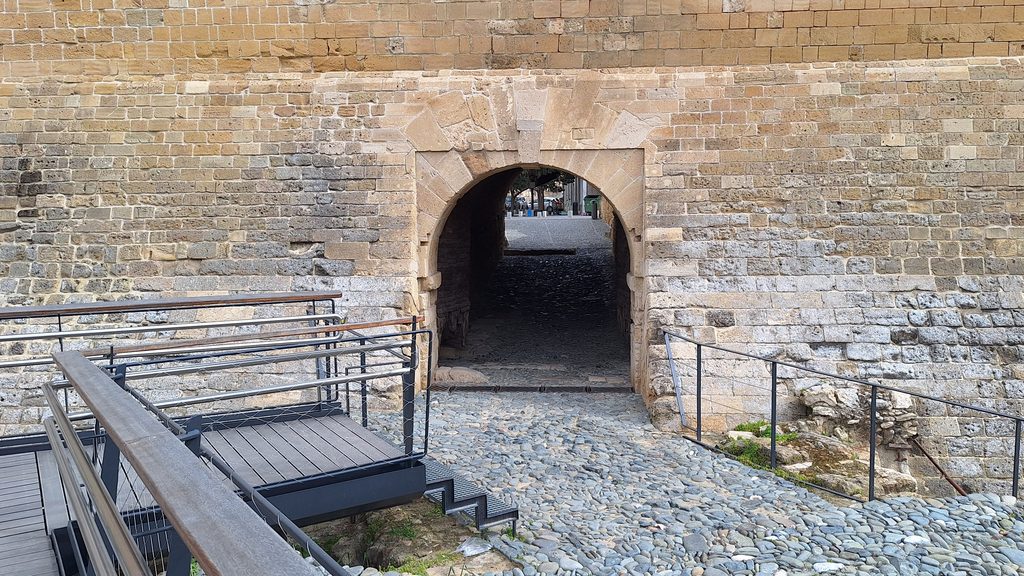
When the British arrived in 1878, part of the wall between Paphos Gate and the Roccas Bastion was demolished to create an additional opening for traffic.
Today, the Paphos Gate Police Station stands above the original entrance.

After taking my photographs, I continued towards Famagusta Gate on the other side of the Old City.
Another Wrong Turn
I had programmed a walking route into my phone, which seemed simple enough.
Unfortunately, when I reached the border area, the road shown on my map was blocked.
Google Maps may be useful, but it doesn’t always understand the realities of a divided city.
With my intended route unavailable, I had to find another way around.
The alternative led me through narrow streets, past historic buildings and alongside the border.

Although it took longer, it was an interesting opportunity to see parts of the Old City I might otherwise have missed.
Famagusta Gate — A Grand Venetian Entrance
Famagusta Gate is probably the most impressive of Nicosia’s historic gateways.
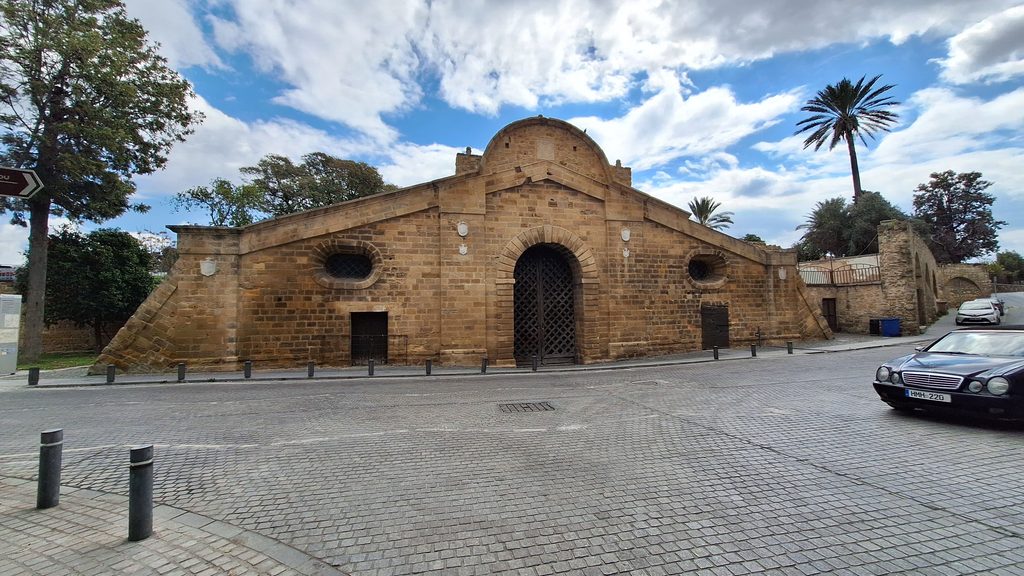
Originally known as Porta Giuliana, it was constructed during the Venetian period and is associated with the fortification designs of the architect Michele Sanmicheli.
It forms a substantial vaulted passage through the city’s defensive earthworks.
The central chamber has an impressive dome, approximately eleven metres across, with a circular opening above to admit daylight.
The passage was wide enough for two vehicles to travel through side by side.
On either side are entrances to chambers that once formed part of the structure, although some have since been closed off.
The exterior entrance has suffered damage over the centuries, and parts of its original stonework and doors have disappeared.
Nevertheless, the entrance facing the Old City remains an impressive reminder of the importance these fortifications once held.
Standing there, I tried to imagine the countless travellers, merchants and soldiers who would have passed through this gate over the centuries.
A Well-Earned Break at Cheers Bar
After a long day of walking and exploring, it was time for a break.
I stopped at Cheers Bar, where my host served me a welcome drink while I watched a replay of the previous night’s football match.
It was a pleasant way to relax after spending so much of the day discovering the history of Nicosia.
Dinner and Reflections
When the football finished, I made my way back towards the hostel.
Along the way, I stopped at a small local food shop and bought a generous serving of spaghetti bolognese with yellow rice.
Back at the hostel, I enjoyed my meal with a cold beer.
It had been a good day.
I’d walked quite a distance, become temporarily lost, discovered two remarkable historic gates and learned more about the city.
Sometimes the best experiences come from simply following a road and seeing where it leads.
Tomorrow, there would be more to explore.
Day 4 — Day 106: Scenic Views and Divided Histories
Weather Update: Sunny with cloudy periods, high 16°C
Elevation Above Sea Level: 220 metres
A Slow Morning in Nicosia
Today started slowly, which suited me perfectly.
I spent the morning catching up on my blog before deciding it was time to explore another part of Nicosia.
My first destination was the Shacolas Tower Museum and Observatory, where the viewing area on the eleventh floor promised panoramic views across the city.
I wasn’t disappointed.
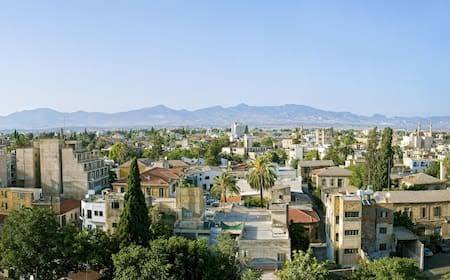
From the top, I could look across the rooftops of Nicosia and towards the distant mountains.
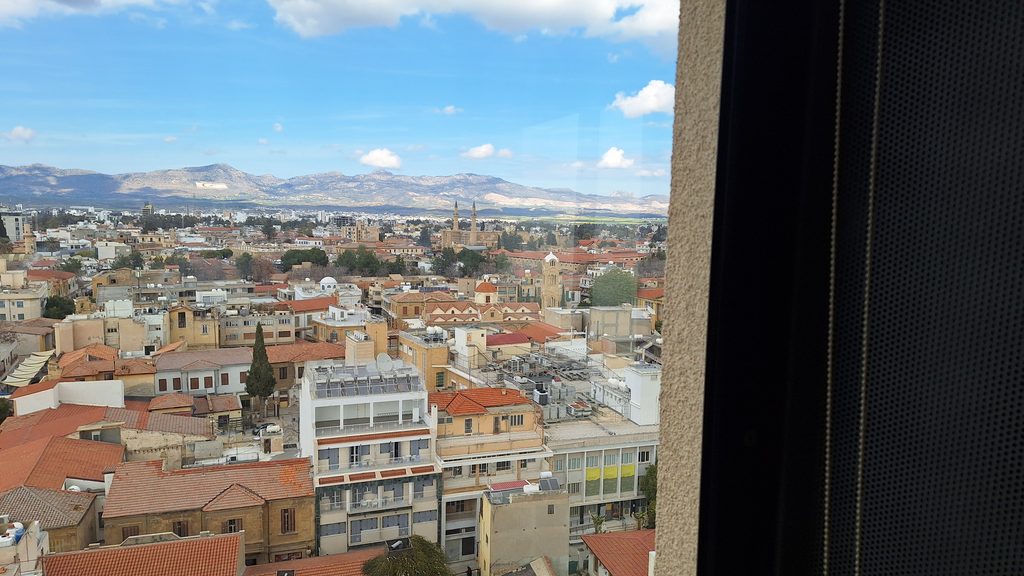
It was a wonderful place to appreciate just how far the city stretched.
However, calling the attraction a museum seemed rather generous. It was more of an information centre, with displays explaining the landmarks in different directions and a television showing a documentary about Nicosia’s history.
At €2.50, approximately NZ$4.64, the entrance fee was reasonable.
A Flag on the Mountainside
One feature immediately caught my attention.
Painted across the mountains to the north was an enormous Turkish Cypriot flag, clearly visible from the observatory.

It was a striking reminder of the island’s division.
Cyprus has remained divided since the events of 1974, when Turkey launched a military intervention following a coup supported by Greece’s military government.
Standing above the city, looking towards those distant mountains, I was reminded that political boundaries aren’t simply lines on a map.
They affect the people who live on either side of them.
The Complicated History of Cyprus
The more I discover about Cyprus, the more I realise how complicated its history is.
The island has two main communities, Greek Cypriots and Turkish Cypriots, whose cultural, religious and historical traditions have developed over many centuries.
Greek Orthodox Christianity has traditionally played an important role within the Greek Cypriot community, while Islam has been prominent among Turkish Cypriots.
Geographically, Cyprus is much closer to Turkey than to mainland Greece.
Throughout history, its strategic position in the eastern Mediterranean has attracted numerous rulers and empires.
Among those who controlled or influenced the island were the Assyrians, Egyptians, Persians, Romans, Arabs, Crusaders, Venetians and Ottomans.
Ottoman rule lasted from 1571 until Britain assumed administration in 1878.
Each period left traces of its influence, from religious buildings and fortifications to customs and architecture.
Cyprus has strong Greek cultural connections, but its history and identity are distinct from those of Greece.
Today, the division of the island remains an important part of everyday life.
It’s difficult to understand all the complexities during a short visit, but travelling through Nicosia certainly makes you more aware of them.

Walking Along Ledra Street
After leaving Shacolas Tower, I wandered through the pedestrian shopping area around Ledra Street.
There was plenty of activity, with visitors exploring the shops, cafés and surrounding streets.
Eventually, I reached the Lokmacı crossing, where people pass between the southern and northern sections of the city.
I intended to explore the Turkish-controlled side tomorrow and visit Kyrenia Gate, the final historic entrance on my list.
Another Meeting at Cheers Bar
Later, while enjoying a drink at Cheers Bar, I heard someone call my name.
It was Alex, who had recognised me by my red hat.
We sat down for a chat, and he explained a concern about his onward journey.
He had entered Cyprus through the Turkish-controlled north and was uncertain whether that might create difficulties when trying to depart from an airport in the south.
He had been looking into the travel regulations and believed there was a way to arrange his departure.
It was another reminder that the practical arrangements of travelling can become complicated when borders and political divisions are involved.
Before returning to the hostel, I also managed to post my postcards.
Not the most exciting achievement of the day, perhaps, but another little job completed.
New Faces at the Hostel
Back at Nex Hostel, I prepared a simple dinner of prawn noodles, saving my egg-fried rice for another day.
The evening developed into a series of interesting conversations.
I met Alex from Spain, who worked as a buyer in the gold and silver trade. He had some fascinating experiences to share.
Pedro, from Brazil, was another traveller I enjoyed talking with. We seemed to connect easily, despite coming from different backgrounds.
Then there was Alex from South Korea, whom I had met earlier in my stay.
He’d spent the day at the Turkish Embassy dealing with visa paperwork.
Our conversation eventually turned towards religion, faith, life and the challenges people carry with them.
One of the things I enjoy most about hostel life is meeting people I would probably never encounter otherwise.
You can start the evening sitting alone and end up discussing the world with travellers from three different countries.
Tomorrow — The Kyrenia Gate
Tomorrow, I intend to cross into the Turkish-controlled part of Nicosia and visit Kyrenia Gate.
That will complete my visits to the three historic gates of the Old City.
Today has been another mixture of sightseeing, history and unexpected friendships.
And that’s what makes travelling so interesting. You never really know what the day will bring.
Day 5 — Exploring the Turkish Quarter and Kyrenia Gate
Weather Update: Sunny, high 18°C
Elevation Above Sea Level: 220 metres
A Walk into Northern Nicosia
Today, I was heading into the Turkish-controlled part of Nicosia, known locally as Lefkoşa, to visit the last of the city’s three historic gates.
I had already explored Paphos Gate and Famagusta Gate, so Kyrenia Gate would complete my little historical tour.
My route took me near the United Nations compound and a military base, with Google Maps leading me along a rather unexpected path.

It promised to be another interesting day.
The Green Line and United Nations Peacekeepers
Cyprus has been associated with United Nations peacekeeping for many decades.
The United Nations Peacekeeping Force in Cyprus was established in 1964, ten years before the island’s division in 1974.
Canadian personnel played an important role in the mission for many years, with a substantial Canadian contingent serving until 1993.
The buffer zone, commonly called the Green Line, stretches approximately 180 kilometres across the island.
In some places, it passes directly through urban neighbourhoods, separating streets and buildings that once formed part of the same community.
Walking near the military and United Nations facilities made the division seem much more real than simply reading about it.
Photography is restricted in sensitive areas, so I was careful about where I pointed my camera.
Following the Ancient Venetian Walls
I walked approximately two or three kilometres beside the impressive old fortifications surrounding Nicosia.
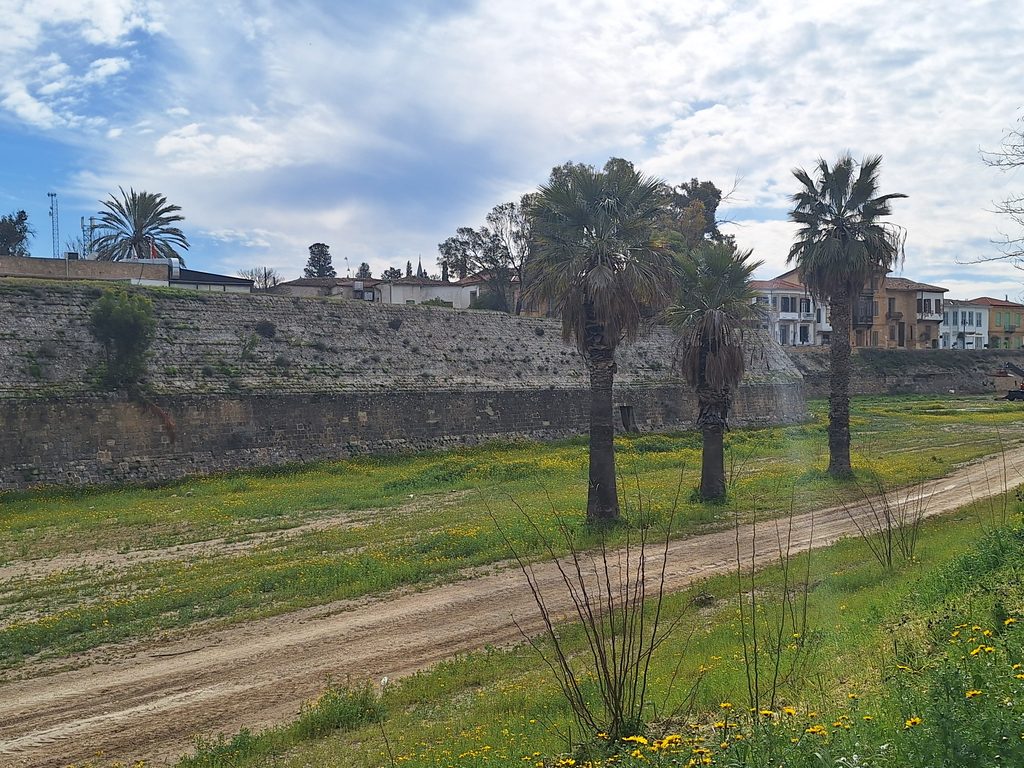
The earlier defensive walls were developed during the Lusignan period, but the Venetians later replaced them with a stronger system designed to protect the city against Ottoman attack.
The resulting fortifications incorporated eleven bastions and three principal gates.
Even today, the walls form a remarkable boundary around the Old City.
As I followed them, I tried to imagine what they must have looked like when defending Nicosia was a matter of life and death.
Crossing into the Turkish-Controlled Quarter
When I reached the checkpoint, the formalities were surprisingly straightforward.
A border guard visually checked my passport, and I was allowed to continue.
Before long, I reached Kyrenia Gate, also known as Girne Gate.

Originally built in the Venetian period, the gate was known as Porta del Proveditore and is traditionally associated with the Venetian engineer Francesco Barbaro.
A domed structure was added above it during the Ottoman period in 1821.
Later, during British colonial rule, sections of the surrounding walls were removed in 1931 to improve access for traffic.
Today, the historic gate serves as a tourist information centre.
Standing there, I realised I had now visited all three of Nicosia’s original gates.
The Venetian Column and a Chicken Doner
From Kyrenia Gate, I continued towards Atatürk Square, also known as Sarayönü.
One of the square’s main attractions is the Venetian Column.

The column dates from the period of Venetian rule and has experienced quite a history of its own.
It was erected during the Venetian period, later toppled under Ottoman rule, and restored by the British in 1915.
The square has changed names and appearances over the centuries, but the column remains an important landmark.
By this time, I was ready for something to eat.
I found a place serving chicken doner and paid 180 Turkish lira, approximately NZ$8.83.
It was a tasty and welcome breakfast after all the walking.
The British Colonial Law Courts
Across the square stood the British Colonial Law Courts, constructed in 1905 using cut yellow sandstone.
Their architecture was another reminder of the island’s British colonial period.
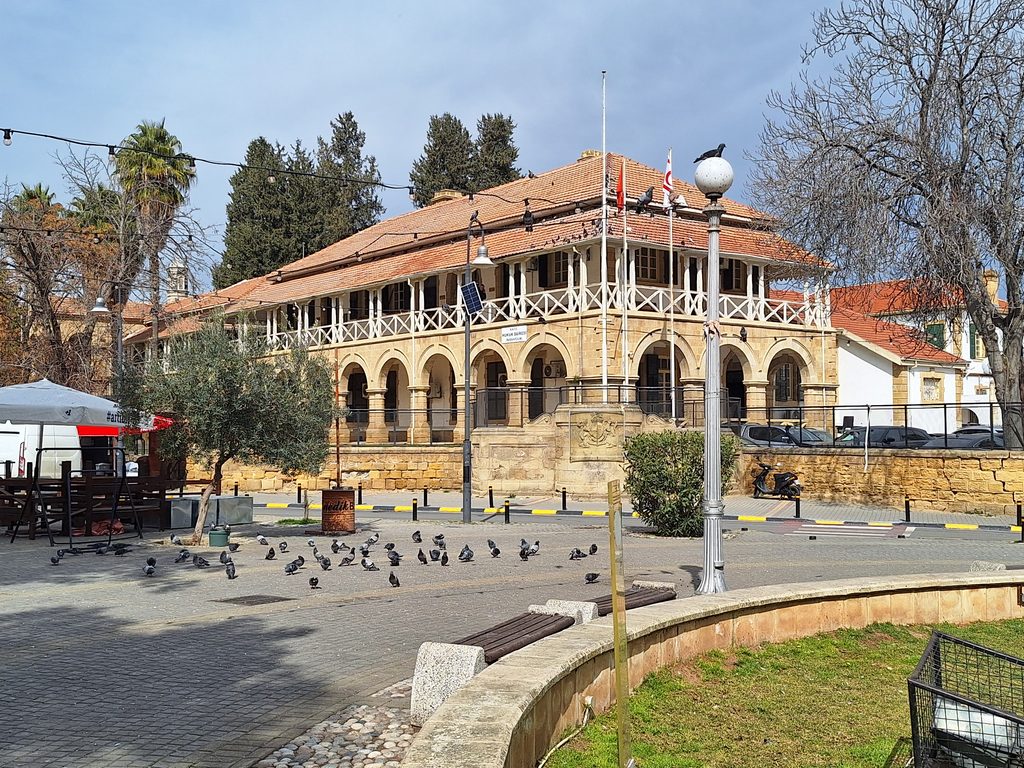
Nearby, I noticed a memorial commemorating the coronation of Queen Elizabeth II in 1953.
When travelling through places like Nicosia, it is fascinating to see evidence of different rulers and cultures so close together.
A Venetian monument, British colonial buildings and Ottoman architecture can all be found within a short walk.
Kumarcılar Han — An Old Travellers’ Inn
My next stop was Kumarcılar Han, also known as the Gamblers’ Inn.
This historic Ottoman building dates from the eighteenth century and once provided accommodation and facilities for merchants and travellers.
According to the historical information I encountered, 44 of its original 56 rooms remain.
The rooms served different purposes over the years, including sleeping accommodation, storage and space associated with animals and goods.
Walking through the building, I couldn’t help thinking about the generations of people who had passed through before me.

After all, travellers have needed somewhere to rest, eat and store their belongings for hundreds of years.
Some things never really change.
Büyük Han — The Great Inn
Just across the street was Büyük Han, or the Great Inn.
Built in 1576 during the early Ottoman period, it is regarded as one of the most significant surviving examples of Ottoman architecture in Cyprus.
The building has two storeys arranged around a central courtyard.
Originally, its numerous rooms and ground-floor facilities provided accommodation, shops, storage and space for merchants’ animals.
The upper floors were used primarily for lodging.
In the centre of the courtyard stands a small domed structure associated with a fountain and a place for prayer.

I found the architecture particularly appealing, with its stone arches and enclosed courtyard.
It was easy to imagine a very different scene here centuries ago, with merchants arriving, unloading their goods and settling in for the night.
Today, the building continues to attract visitors who come to admire its history and architecture.
Selimiye Mosque — Once a Cathedral
A little farther along my route stood Selimiye Mosque, formerly known as St Sophia Cathedral.
Unfortunately, it was undergoing extensive restoration work and was closed to visitors.
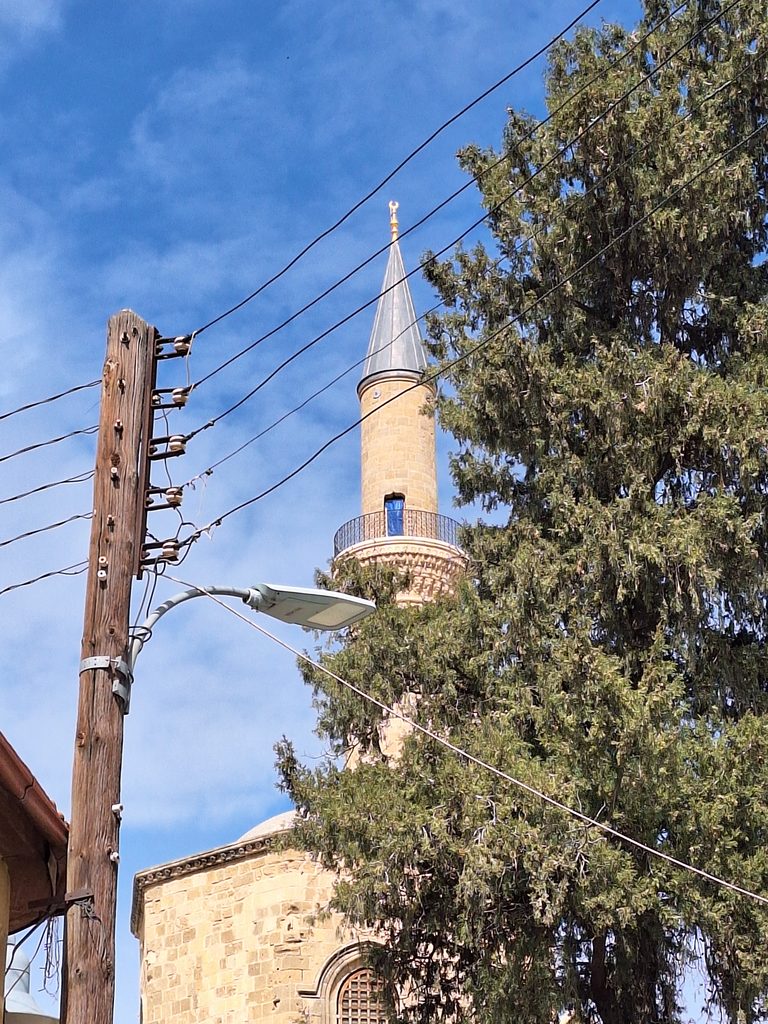
The building dates from the medieval period, with construction taking place between the thirteenth and fourteenth centuries.
Originally a Gothic cathedral, it served as an important religious and ceremonial centre during Lusignan rule.
Kings of Cyprus were crowned there, and several members of the nobility were buried within the building.
Following the Ottoman conquest in 1570, the cathedral was converted into a mosque, and minarets were added.
The result is a fascinating combination of Gothic Christian architecture and later Islamic features.
I would have liked to see the interior, but restoration work is part of preserving these magnificent buildings for future generations.
The Municipal Market
Continuing through the narrow streets, I came across the Municipal Market, also known as Bandabuliya.
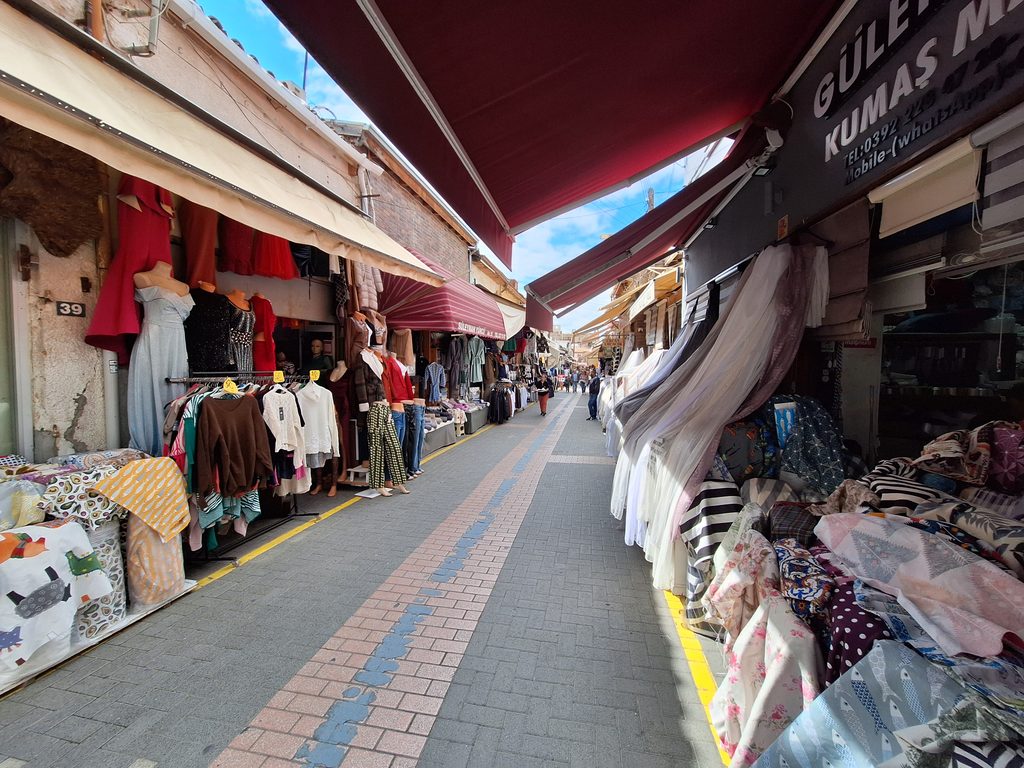
The surrounding streets were busy with shops, cafés, stalls and people enjoying the sunshine.

The market developed from an earlier open bazaar and was later enclosed in a stone building in 1881.
Further expansions during the twentieth century provided additional retail and wholesale facilities.
Over time, the market became an important centre for everyday shopping and trade.
I enjoyed wandering through the area and watching people go about their normal routines.
Historic buildings are fascinating, but local markets provide another insight into the lives of the people who live in a city.
Returning Through the Lokmacı Crossing
Eventually, I reached the Lokmacı crossing, which connects the northern part of Nicosia with the pedestrian shopping area of Ledra Street in the south.
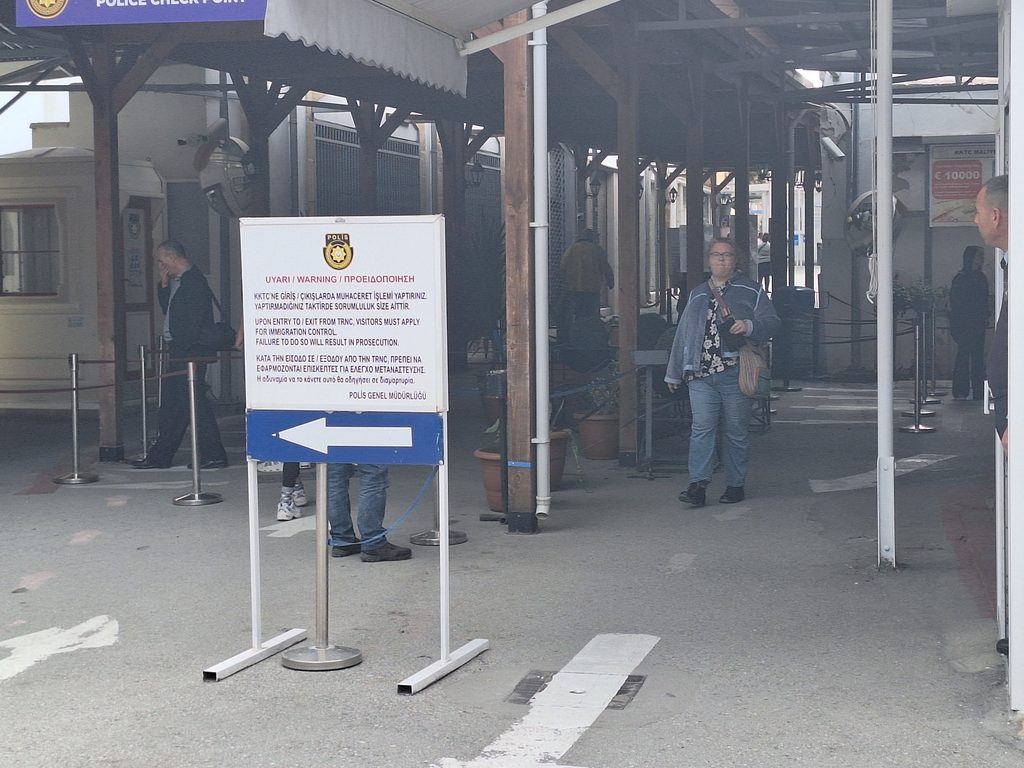
The crossing process was straightforward.
Foreign visitors presented their passports, while local identity documents were used by eligible residents.
I wasn’t entirely sure about the rules governing photography at the checkpoint, but I managed to take a few pictures without any problems.

Soon, I was back on the southern side of the city.
Cheers Bar and an Afternoon at the Hostel
After all that walking, I stopped at Cheers Bar.
I enjoyed a cold beer, some popcorn and another football match.
A little light rain began to fall, so eventually I made my way back to the hostel.
For dinner, I heated up the egg-fried rice I’d saved from yesterday.
As usual, there were interesting people to talk to.
Among them were an IT repair specialist based in the United Kingdom and a Spanish traveller who worked in stock-market trading to support his travels.
By the time I finished, I’d walked 8.14 kilometres.
Not a bad effort for a day of sightseeing!
Another Day of Discovery
Today had taken me through centuries of Nicosia’s history.
I’d visited the last of the old city gates, admired Venetian and Ottoman buildings, explored markets and wandered through streets shaped by the island’s complicated past.
What continues to amaze me is how much history can be found in a relatively small area.
For me, this is what travelling is all about.
Not simply visiting a destination, but walking through it, experiencing it and learning something along the way.
Days 6–11 — Chilling in Cyprus
Weather Update: Sunny with occasional showers, highs around 19°C
Elevation Above Sea Level: 220 metres
A Change of Plans
After several busy days exploring Nicosia, I decided it was time to slow down and enjoy a little relaxation before continuing my travels.
My original plan had been to travel onwards to Israel and Jordan.
Unfortunately, new entry requirements for Israel meant I needed to arrange an Electronic Travel Authorisation, which cost 25 Israeli shekels.
I hadn’t managed to obtain the necessary approval in time, so I decided to change my plans.
Instead of Israel and Jordan, my next destinations would be Greece and Albania.
One thing I’ve learned about travelling is that plans are never set in stone.
Sometimes circumstances force you to change direction, and there’s little point getting upset about something you cannot control.
Taking a Break from Constant Travelling
There is something wonderfully refreshing about spending a few days in one place without worrying about catching another train, bus or plane.
I’ve enjoyed being able to wake up in the morning and decide what to do without following a strict schedule.
Cyprus is gradually becoming busier as the weather improves and budget airlines such as easyJet, Ryanair and Wizz Air increase their services.
Over the past week, I’ve noticed more European travellers arriving, many of them escaping the colder weather farther north.
It’s easy to understand why.
Although the mornings can still be chilly, the sunshine makes being outdoors very pleasant.
Becoming a Regular at Cheers Bar
Most days, I wander into the centre of Nicosia and spend some time around Ledra Street.
I’ve also become something of a regular at Cheers Bar.
It’s a comfortable place to watch football, enjoy a cold beer and chat with people.
Julia, who looks after the place, always seems happy to see me and often brings out some popcorn to accompany my drink.
Little gestures like that make you feel welcome.
Today, I met two travellers from Vienna who had come to Cyprus to escape the Austrian winter.
Having visited Vienna during my travels, we had plenty to talk about.
It’s remarkable how often a casual conversation turns into an exchange of stories about places we’ve visited.
Sleeping Beneath the Stars
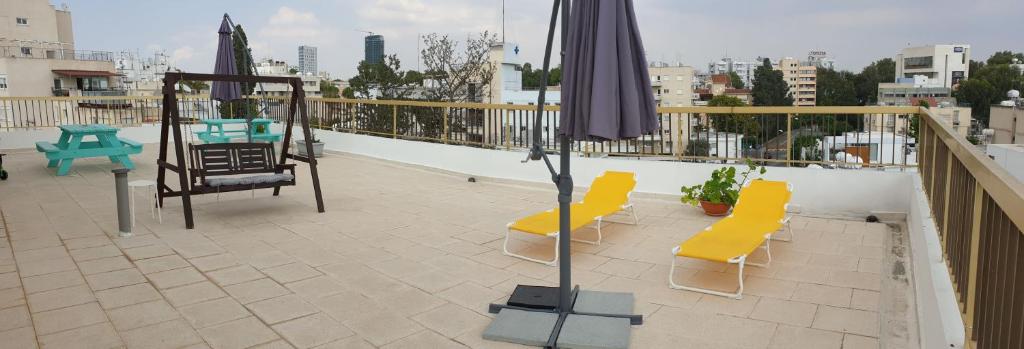
One of my favourite places at the hostel is the rooftop lounge.

On a clear evening, the view across the city is beautiful.
Last night, I spent some time looking up at the moon and the brilliantly shining planet Venus.
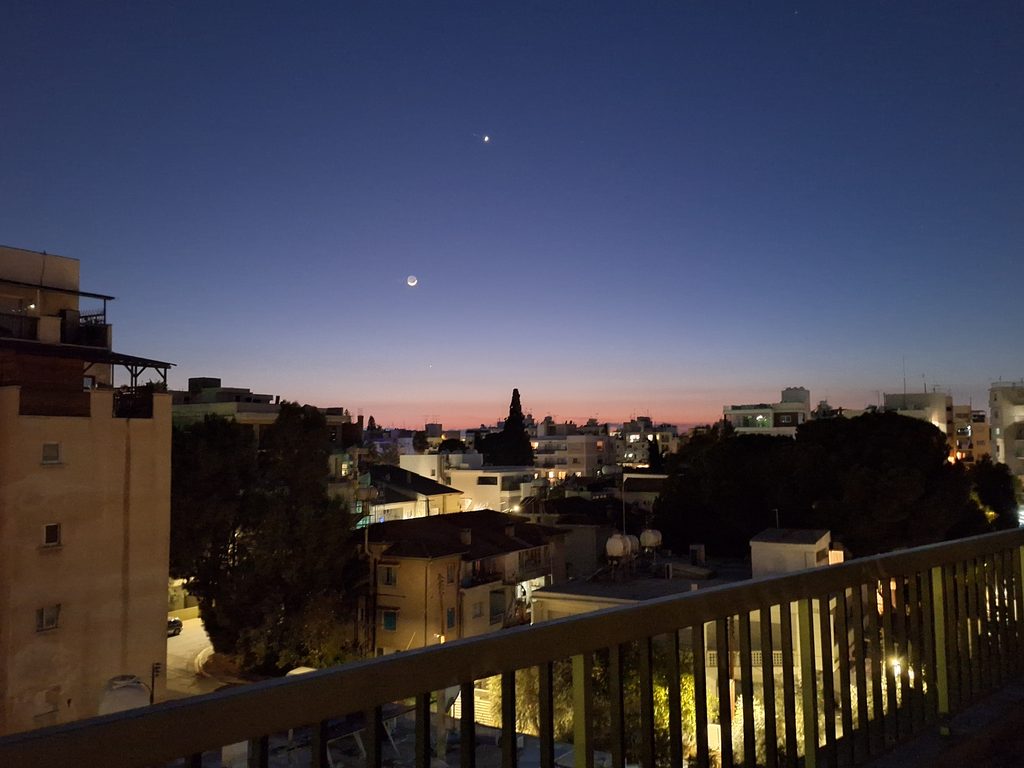
For a few moments, I simply sat there enjoying the night sky.
Experiences like that make me wish I had a better camera.
Of course, carrying a good camera would mean adding more weight to the approximately eight kilograms of personal belongings I already carry.
When you’re travelling for months at a time, every extra kilogram makes a difference!
Discovering the Local Food
I’ve found a lovely pastry shop near the hostel, and it’s quickly become one of my regular stopping places.
There’s something appealing about being able to walk a short distance and choose from a selection of freshly prepared food.
One evening, I decided to try squid for the first time.
The portions were surprisingly generous, with large pieces that made for a hearty meal.
I enjoyed the experience, although I’m not sure squid will become a regular part of my diet.
Rain arrived later that evening, but by the following day, the sunshine had returned.
It’s amazing how much difference a little sunshine can make to everyone’s mood.
A Fellow New Zealander Far from Home
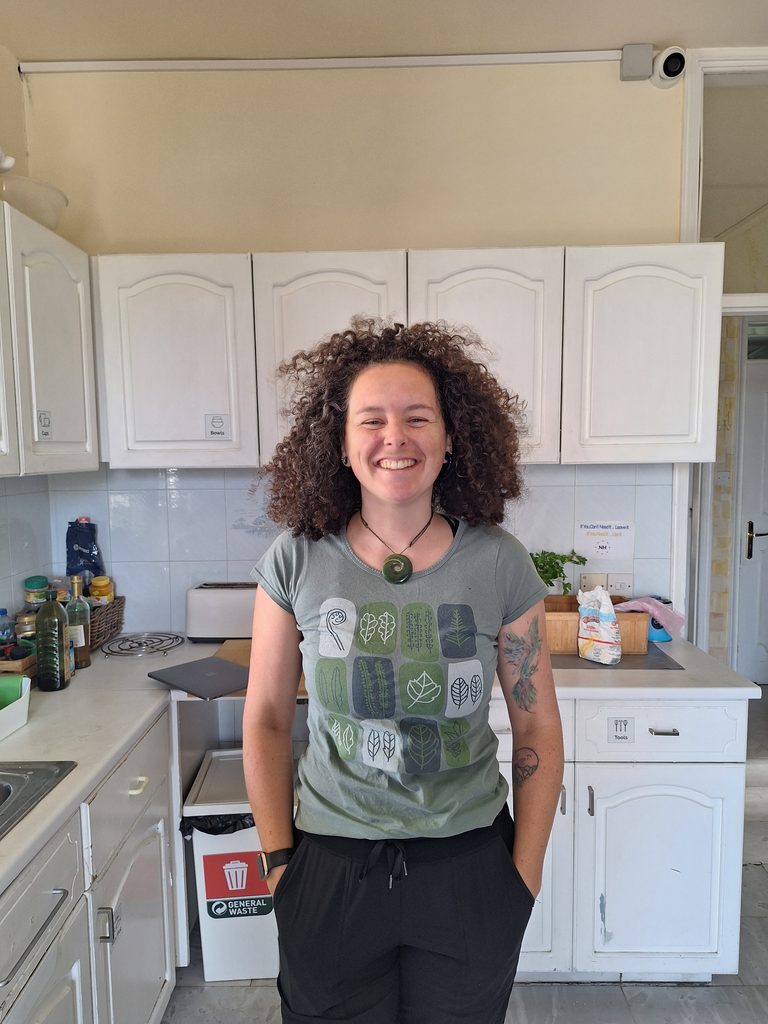
One of the most unexpected encounters during my stay was meeting Nina, a traveller from Wellington.
She’d been away from New Zealand for about a year and had almost given up hope of meeting another Kiwi.
Then she overheard me talking on the phone to my son in Whangārei.
That was enough to start a conversation.
Before long, we were exchanging travel stories and talking about home.
When you’re thousands of kilometres away, it’s always a pleasure to meet someone who understands where you’ve come from.
The world can seem enormous when you’re travelling through unfamiliar countries, yet moments like this make it feel surprisingly small.
Life in a Hostel
Nex Hostel has been a good place to spend some time.
People come and go constantly.
One day you might be sharing a kitchen with travellers from Spain, Brazil and South Korea, and the next day an entirely different group arrives.
I’ve met some interesting people and enjoyed conversations that I probably wouldn’t have had if I’d stayed in hotels.
Of course, hostel life has its disadvantages.
Snoring is one of them!
One evening, after enjoying a chicken curry and watching football, the sleeping arrangements became a little too noisy for my liking.
Rather than lie awake listening to everyone, I gathered some cushions and headed for the rooftop lounge.
I made myself comfortable on one of the lounge beds and spent several hours sleeping beneath the stars.
Eventually, I returned to my room in the early hours of the morning and spent some time working on my computer.
It wasn’t exactly a conventional night’s sleep, but it was certainly memorable.
Breakfast at the Pandora Pastry Shop
The following morning, I returned to the local pastry shop for breakfast.
I decided to try the Pandora Special.
It consisted of toast topped with grilled halloumi, bacon, two fried eggs and a mild mustard spread.
Unfortunately, the eggs were undercooked, and the combination didn’t quite work for me.
It wasn’t the best breakfast I’ve had during my travels.
However, the bakery had plenty of other tempting food, and its convenient location just a short walk from the hostel made it a useful place to visit.
Not every meal is going to be a winner!
Why I’ve Enjoyed Cyprus
Looking back over my time in Nicosia, I’ve grown rather fond of the place.
The weather has generally been pleasant, with chilly mornings giving way to warmer afternoons.
In some ways, it reminds me of the changing temperatures I’ve experienced in Nepal.
The local people have been friendly, and I’ve enjoyed exploring the city on foot.
There is an extraordinary amount of history here.
From the Venetian walls and old city gates to the Ottoman buildings and British colonial architecture, every walk seems to reveal another chapter of the past.
The division of Nicosia adds another dimension to the experience.
It’s not every day that you can walk through a city and cross between two different administrations simply by showing your passport.
But beyond the historic landmarks, it’s the everyday encounters I’ll remember.
The conversations at the hostel, the friendly welcome at Cheers Bar, meeting Nina from Wellington and the quiet evenings on the rooftop have all added something special to my stay.
Leaving Nicosia for Larnaca
Eventually, the time came to pack my belongings and continue towards Greece.
After breakfast, I walked a little over 1.5 kilometres to the bus station.
The bus from Nicosia to Larnaca cost €4, approximately NZ$7.53.
From Larnaca, another bus took me to the airport for €2.40, approximately NZ$4.52.
Larnaca has a different atmosphere from Nicosia.
It’s a Mediterranean coastal city, popular with tourists, and I could see why people enjoy visiting it.
I was interested in seeing its historic castle, but my travel schedule didn’t allow much time for sightseeing.
Although Larnaca seemed appealing, I felt a stronger connection with Nicosia.
Perhaps that’s because I had spent more time there, explored its streets and become familiar with some of the local people.
Athens — My Next Adventure
My flight was scheduled to leave Cyprus at 5 pm and arrive in Athens at approximately 6:45 pm.
From the airport, I expected another journey of around 40 to 50 minutes to reach my next accommodation, Bedway Athens Hostel.
Greece would be another country to explore, with its remarkable ancient history, famous landmarks and countless stories waiting to be discovered.
I was also looking forward to continuing towards Albania afterwards.
Final Thoughts — The Value of Slowing Down
These last few days in Cyprus haven’t been filled with dramatic adventures or long sightseeing expeditions.
Instead, they’ve given me something equally valuable: time to rest, meet people, enjoy the local atmosphere and reflect on how far I’ve travelled.
When you’re on a journey like mine, it’s easy to become so focused on reaching the next destination that you forget to enjoy where you are.
Cyprus has reminded me that slowing down is sometimes just as rewarding as moving forward.
I’ve enjoyed my stay, but now it’s time to shoulder my bag once again.
Greece is calling, and my journey continues — one step at a time into the unknown.