

Day 369 — Exploring Ho Chi Minh City’s Chinatown
November 5, 2026 | by Andrew Matthews
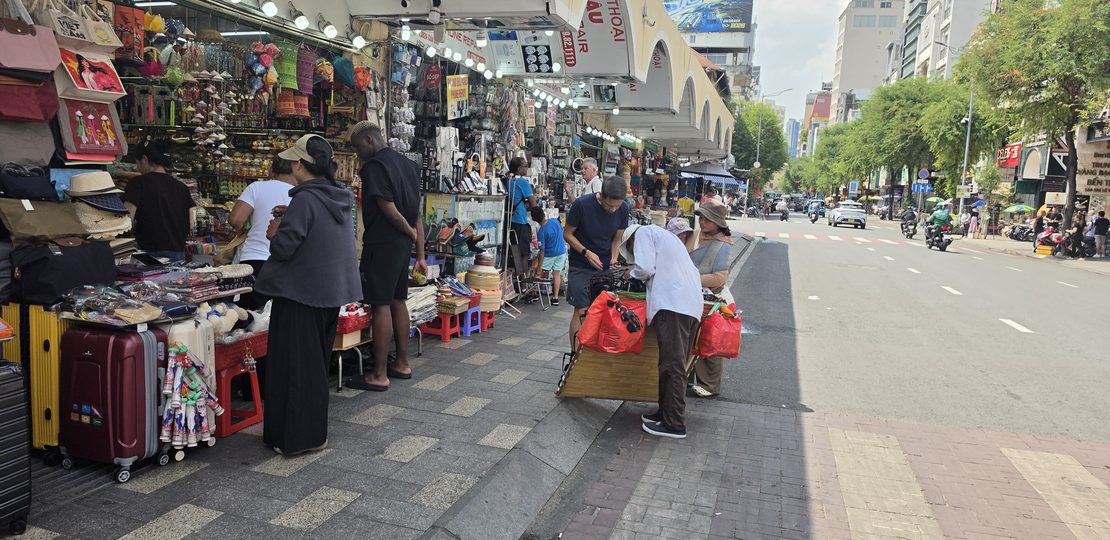
Weather: 32°C, with thunderstorms forecast for later.
A Vietnamese Breakfast to Start the Day
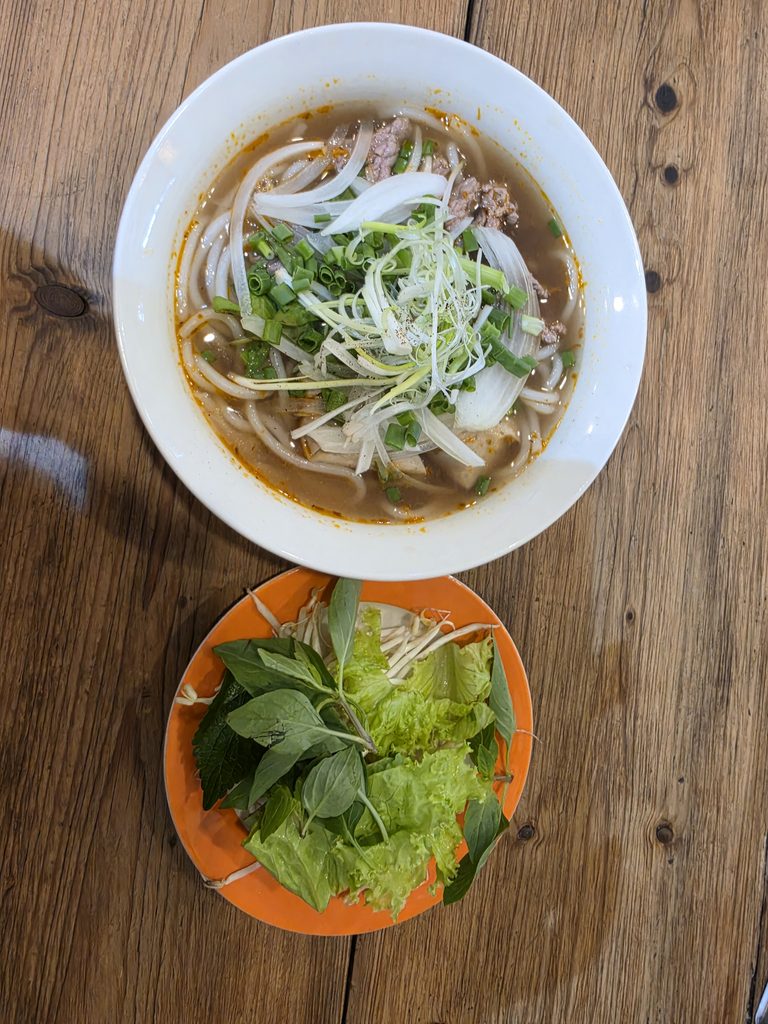
I got up at 7.35 am and headed downstairs for breakfast. Instead of opting for a traditional English-style breakfast, I decided to try something different — Bún Bò Huế (Hue Beef Noodle Soup).
To my surprise, it tasted wonderful. The broth was a delight, awakening my taste buds and stirring my senses. I enjoyed every mouthful before it was time to venture out into the craziness of Ho Chi Minh City.
My first stop was an ATM, as I needed some cash for taxis and Grab rides.
There was an ATM directly across the street, but when I went to use it, a security guard ushered me away and directed me to another machine further down the road.
Unfortunately, that machine had seen better days and wasn’t working either.
Another security guard pointed me across the street to a third ATM, where I joined a queue.
An Australian gentleman in front of me inserted his card, but the machine failed to dispense his money. He then spent about half an hour dealing with the bank to sort out the problem.
Fortunately, when my turn came, everything worked perfectly. Nevertheless, watching someone else experience problems with an ATM certainly plays tricks on your mind when you’re about to put your own card into the machine!
Heading into Chinatown
I ordered a Grab to take me to Chinatown, just over four kilometres away.
Despite the relatively short distance, the journey took around half an hour as we weaved through a seemingly endless maze of motor scooters, cars and traffic.
The fare was only 54,000 Vietnamese dong (NZD $3.74).
Cheap as chips, as they say!
To put that into perspective, back in New Zealand, a taxi travelling just 750 metres from my place costs approximately NZD $11.50, or around 167,000 dong.
The difference is astonishing.
Something else that continues to amaze me is the way people dress in this heat.
With temperatures reaching 32°C, I see people wearing jackets and even coats. Meanwhile, I’m wandering around in a T-shirt, already sweating and feeling damp.
I’m hoping to enjoy this warm weather for the next three or four months before making my way towards the Middle East, provided things begin to settle down.
From there, the plan is to travel into Europe during the summer months and complete the remaining twenty-odd countries on my worldwide journey.
What a feeling it will be when I can finally tick that goal off my list!
Rubbish, Pollution and the Environment
While walking around this morning, I noticed someone casually throwing rubbish across the pavement without a second thought.
It made me think about the environmental challenges facing countries like Vietnam.
New Zealand certainly isn’t perfect, but compared with many places I’ve visited, we are generally much more environmentally conscious.
Vietnam faces significant problems with plastic waste, recycling and rubbish disposal.
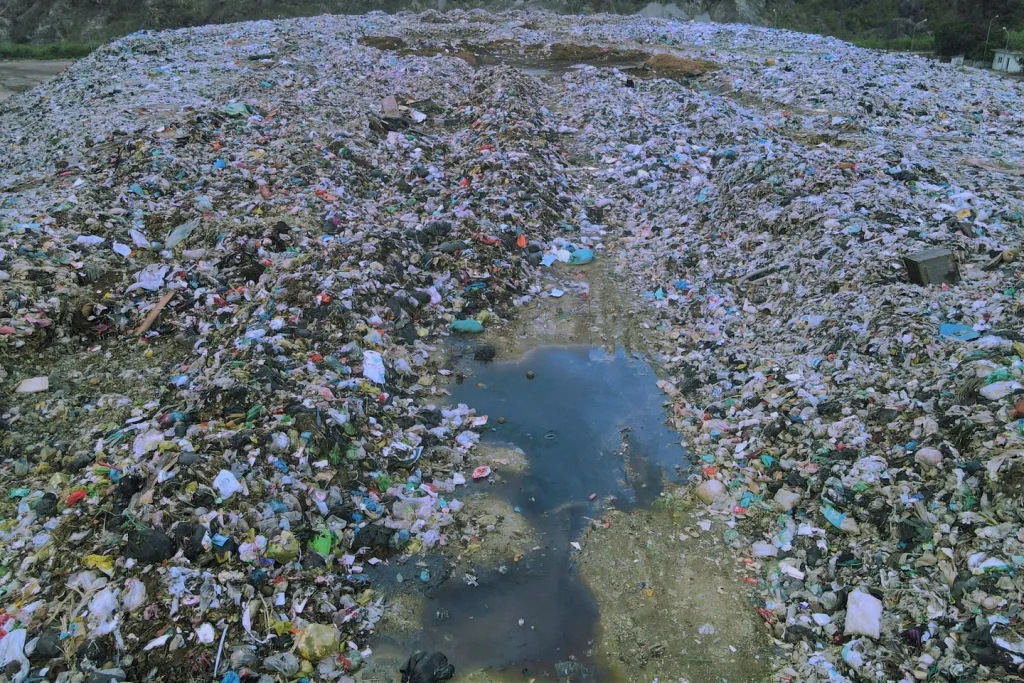
Estimates suggest that only around 20–33% of plastics are recycled, although the actual figures vary depending on how recycling is measured.
Waste management is another significant challenge. Some disposal sites lack adequate systems for capturing methane, treating contaminated water or protecting surrounding land.
These problems can contribute to groundwater contamination, greenhouse gas emissions and environmental damage.
Seeing someone throw rubbish onto the street reminded me that environmental responsibility begins with small individual actions.
The Incredible World of Motor Scooters
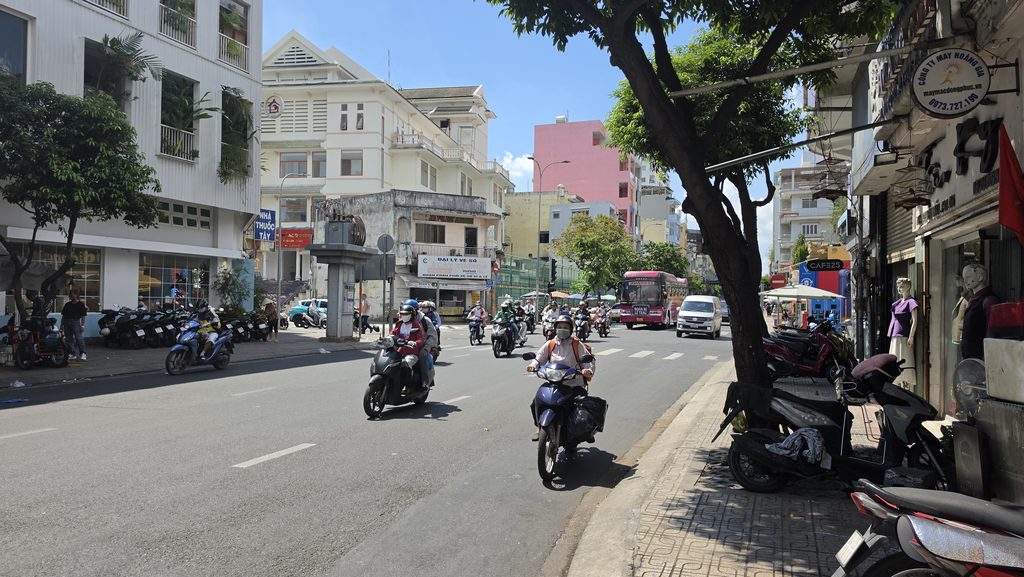
Ho Chi Minh City is dominated by motor scooters.
Millions of motorcycles and scooters are registered across the city, and they are the primary means of transport for much of the population.
Some estimates put the number of scooters and motorcycles in the city at around ten million.
They seem to be used for absolutely everything.
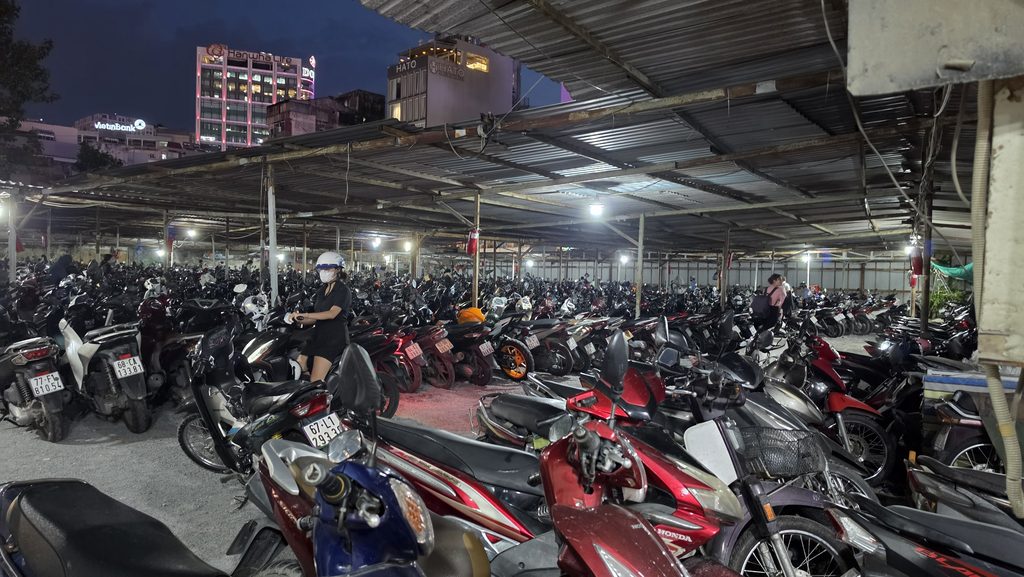
People commute to work, take their children to school, transport enormous loads of goods and even carry their pets on these little machines.
It’s remarkable what can be balanced on two wheels!
Although millions of scooters are registered, they aren’t all on the roads at once. Estimates of daily motorcycle journeys run into the millions, which certainly explains why the streets seem permanently crowded.
One reason scooters are so popular is the layout of the city.
Many of Saigon’s best food stalls, markets and residential neighbourhoods are tucked away inside narrow alleyways that cars simply cannot enter.
Motorcycles can weave through these narrow streets, making them far more practical than cars.
For anyone brave enough to rent a scooter, daily rental prices generally range between 120,000 and 200,000 dong (approximately USD $5–8).
Personally, I think I’ll stick with Grab!
Another interesting feature I’ve noticed along the roads is the blackened bark on many of the trees.
Heavy traffic, engine exhaust and airborne dust can accumulate on the rough bark over time.
This sometimes combines with mould or algae, giving the lower trunks a dark, weathered appearance.
It’s another reminder of the effects that heavy traffic can have on the urban environment.
A Traveller, Not a Holidaymaker
Stepping out of my air-conditioned Grab into the afternoon heat was quite a shock.
The temperature seemed to hit me like a wall, and my first thought was to find somewhere cool to shelter.
Fortunately, I found a bar where I could sit down, enjoy a drink and begin putting together today’s travel story.
As I sat there, I remembered something someone had said to me before I left New Zealand.
“Enjoy your holiday!”
I explained that I wasn’t really going on holiday.
I was travelling, having experiences and continuing an adventure.
There is a considerable difference between taking a two-week holiday and travelling for months or even years.
When you go on holiday, you’re usually escaping your everyday routine. You have a limited amount of time to relax, explore and enjoy yourself before returning home.
Long-term travel is different.
You have to build a completely new routine that constantly adapts to your surroundings.
There are travel days to organise, buses and trains to catch, accommodation to find, photographs to take, blogs to write and all the ordinary tasks of daily life to manage.
You quickly realise that it’s impossible to maintain the frantic pace of a two-week holiday without eventually becoming exhausted.
Instead, travelling becomes about slowing down and experiencing the places you visit.
Taking local trains, buses and ferries gives you an opportunity to see everyday life rather than simply rushing from one famous landmark to another.
Sometimes, spending an afternoon sitting in a café or watching people going about their daily lives can be just as rewarding as visiting a major tourist attraction.
A holiday is often planned to make life as effortless as possible.
Long-term travel, on the other hand, requires constant problem-solving.
You have to navigate unfamiliar transport systems, adapt to different climates and altitudes, deal with language barriers and manage your money carefully enough to continue travelling.
There’s also the social side.
On a two-week holiday, you know you’ll soon be returning to familiar faces, friends and family.
As a long-term traveller, your social world becomes a constantly changing collection of people.
You meet fellow backpackers in hostels, strike up conversations with strangers on buses and trains, and share brief but memorable encounters with local people.
Some friendships last only a few hours, while others may continue for years.
That is part of what makes travelling so rewarding.
It’s not simply about seeing places.
It’s about experiencing life in a completely different way.
For me, this isn’t a holiday. It’s an adventure and a lifestyle choice that continues to challenge, educate and inspire me.
Visiting Thiên Hậu Temple in Chinatown
Eventually, I ventured back outside into the intense heat.
Originally, I had planned to walk approximately three kilometres and visit several temples in Chinatown.
However, with temperatures reaching 32°C and the humidity making everything feel even hotter, I soon realised that walking that distance was going to be impossible.
I decided to concentrate on one temple instead.
My choice was Thiên Hậu Temple, also known as Ba Thien Hau Pagoda or the Tuệ Thành Assembly Hall.
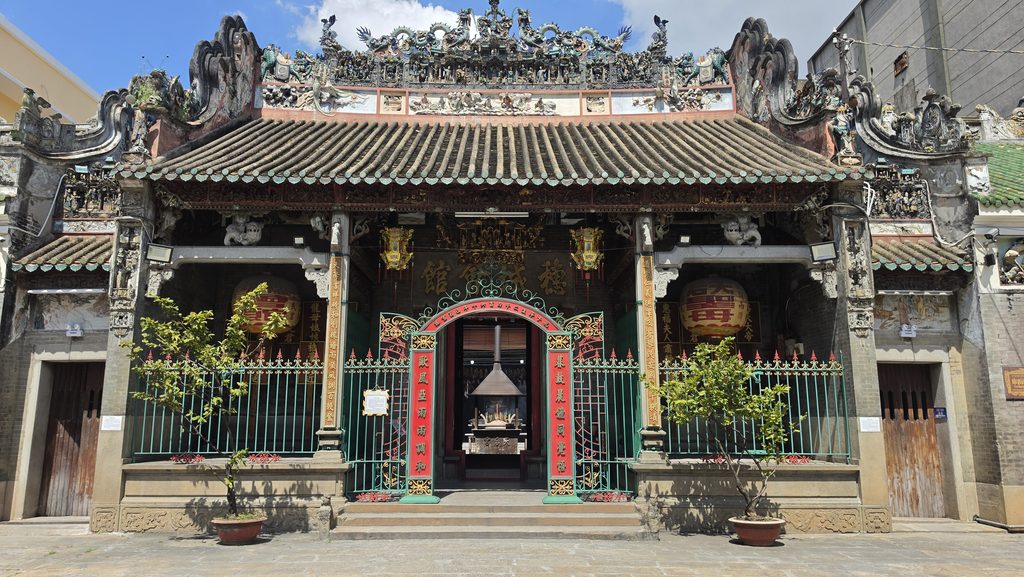
This beautiful Chinese-style temple is dedicated to Mazu, the Chinese Goddess of the Sea.
Thiên Hậu is the Vietnamese version of the Chinese title Tianhou, meaning “Empress of Heaven”.
According to traditional stories, Mazu was originally a young girl named Lin Moniang from China’s Fujian province.
She became associated with protecting sailors and fishermen after stories spread of her spiritual powers and her ability to save people from danger at sea.
Over time, she became widely worshipped throughout coastal Chinese communities and across parts of Southeast Asia.
In Vietnam, she is sometimes known as the “Lady of the Sea”.
Her worship combines elements of Chinese folk religion, Taoism and Buddhist traditions.
Inside the temple, I discovered a fascinating courtyard that was partly open to the sky.
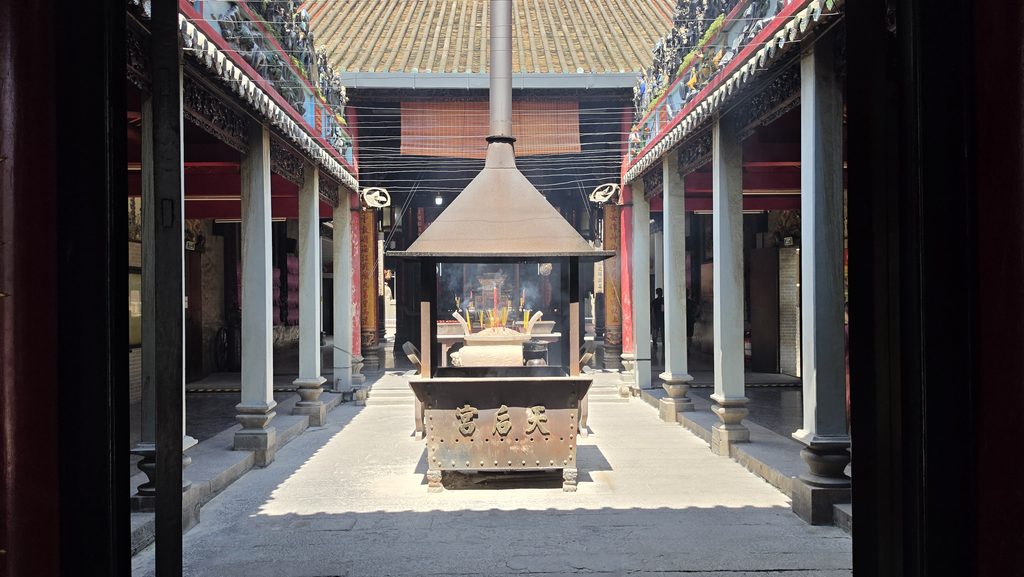
The peaceful inner courtyard of Thiên Hậu Temple.
Incense burners were positioned throughout the building, and the air carried the distinctive fragrance of burning incense.
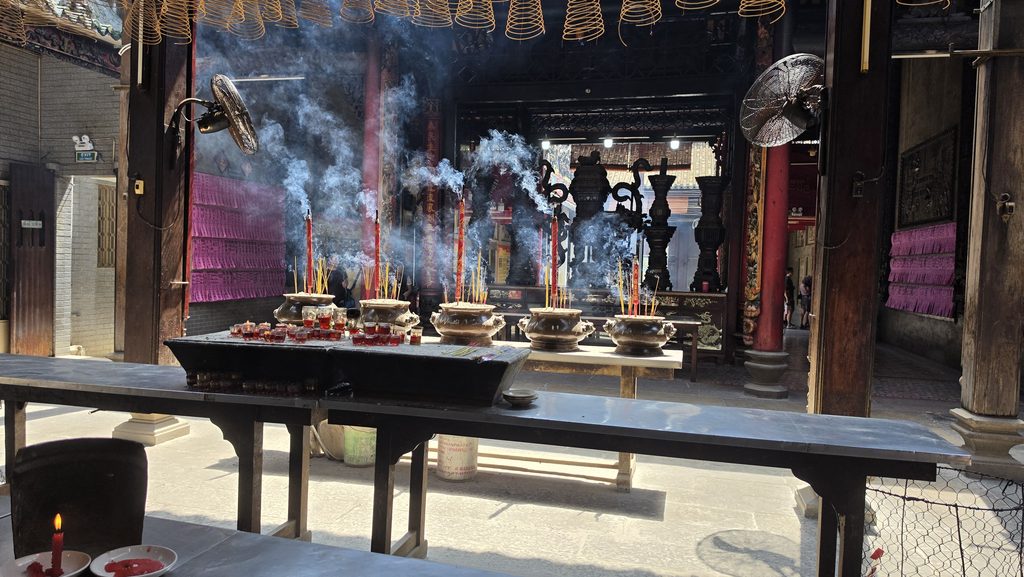
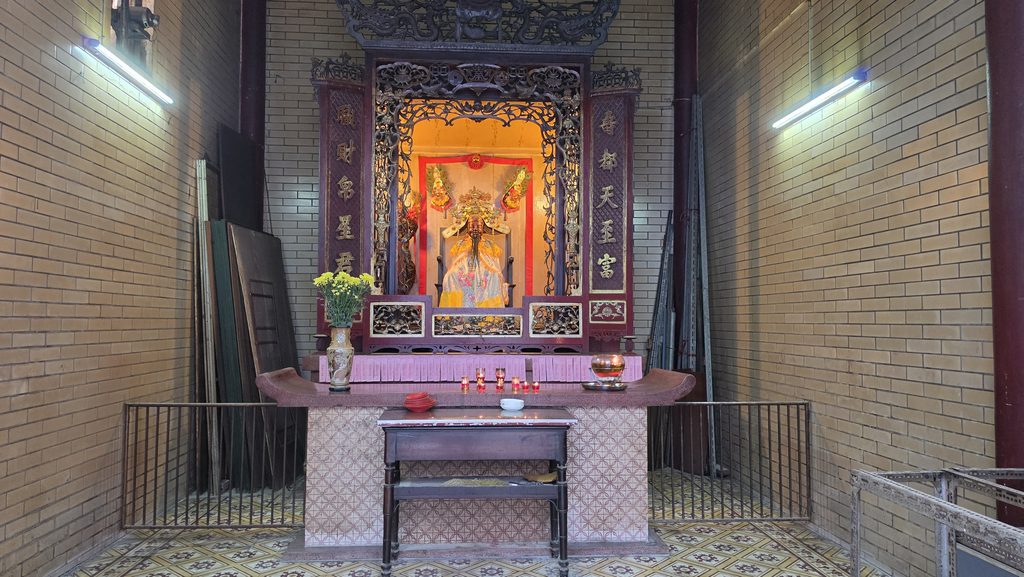
At the far end stood the main altar dedicated to Mazu.
Three statues of the goddess dominated the altar, their bronze-coloured faces contrasting with their brightly coloured clothing and elaborate crowns.
It was a fascinating place to explore, offering a glimpse into the traditions and beliefs of the Chinese community that has lived in Saigon for generations.
A Small Act of Kindness
After leaving the temple, I decided that I’d had enough of walking in the heat for one day.
I ordered another Grab to take me back towards the centre of Ho Chi Minh City.
While standing outside waiting for my driver, I was exposed to the full afternoon sun.
A gentleman nearby noticed me standing there and kindly offered to share the shade beneath his umbrella.
It was such a simple gesture, but one that I really appreciated.
In temperatures like these, shade quickly becomes your best friend!
It’s often these little acts of kindness that stay with you long after the day has ended.
Back to the Aussie Sports Bar
Eventually, my Grab arrived, and I headed back into the city.
I found myself at the Aussie Sports Bar, where I settled down with a cold beer and continued writing today’s blog.
One thing I’ve quickly learned about Saigon is that walking isn’t always the easiest way to get around.
The heat, humidity, crowded streets and relentless traffic can make even relatively short distances exhausting.
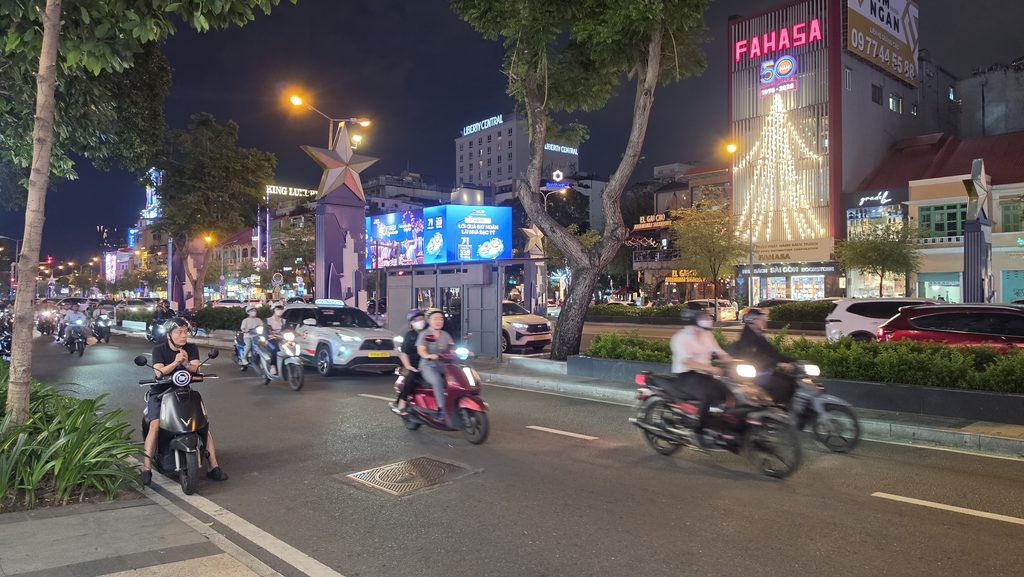
Sometimes, the easiest solution is simply to grab a Grab — pun not intended!
For now, I’m enjoying settling back into the rhythm of travelling.
I’ve already booked my next destination, Can Tho in the Mekong Delta, where I plan to spend three days exploring the area and visiting the famous floating markets.
After that, I’ll begin heading north again, possibly stopping overnight in Ho Chi Minh City before continuing my journey.
I’ll be back with another update in a couple of days.
Andrew — Inspiring Seniors to Travel
Stepping out of fear, one step at a time, into the unknown.
RELATED POSTS
View all


Nam Tho Homestay Review — Mui Ne, Vietnam
November 14, 2026 | by Andrew Matthews

Day 367 — New Zealand to Ho Chi Minh City
November 5, 2026 | by Andrew Matthews

Day 374-377: Can Tho, Vietnam
November 12, 2026 | by Andrew Matthews