

Denmark — From Frederikshavn to Copenhagen: Coastal Towns, Castles and Unexpected Adventures
Day 312 — Crossing to Denmark and Discovering Sæby
Ferry to Denmark
The morning began at 7:15 am when I woke and prepared to leave Gothenburg for my next country — Denmark.
Making my way to the port, I boarded the Stena Line ferry bound for Frederikshavn. The ten-deck vessel looked imposing, although it was beginning to show its age. Beyond the windows, the sea stretched into the distance beneath a grey sky.
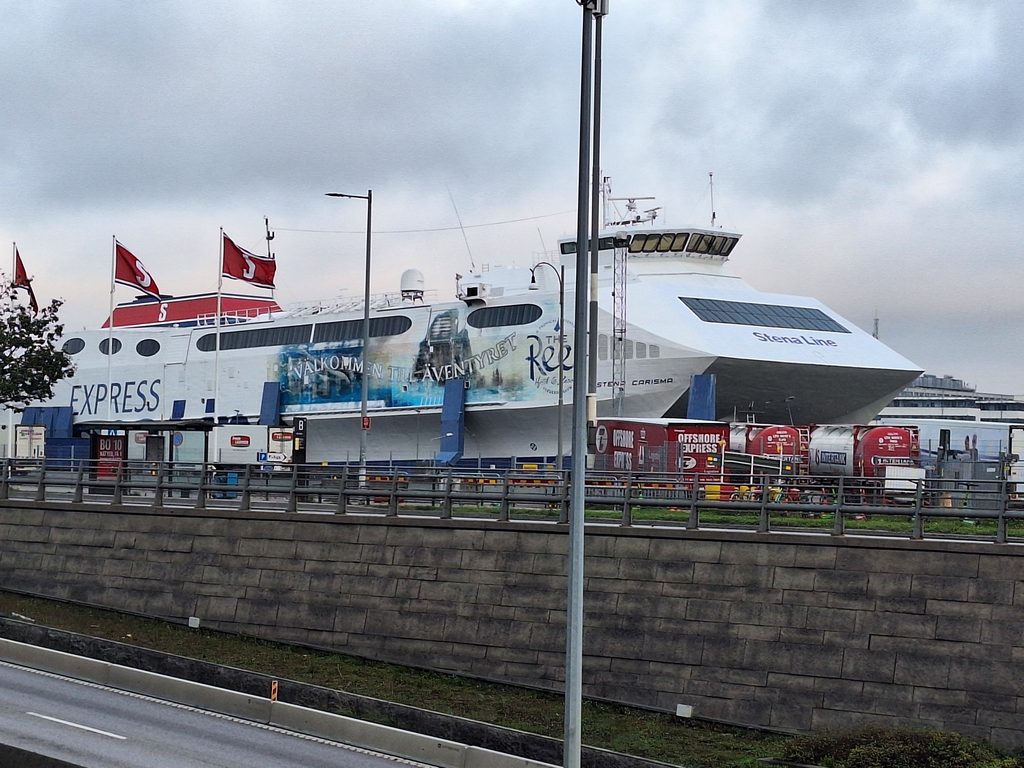
The ferry was almost empty. There was certainly no need to worry about reserving seats, and I could settle down wherever I pleased.

During the crossing, an onboard quiz provided some unexpected entertainment. Competing entirely on my own, I managed to score seven points, beating several groups of passengers. The winning team scored eleven, but there were four of them!
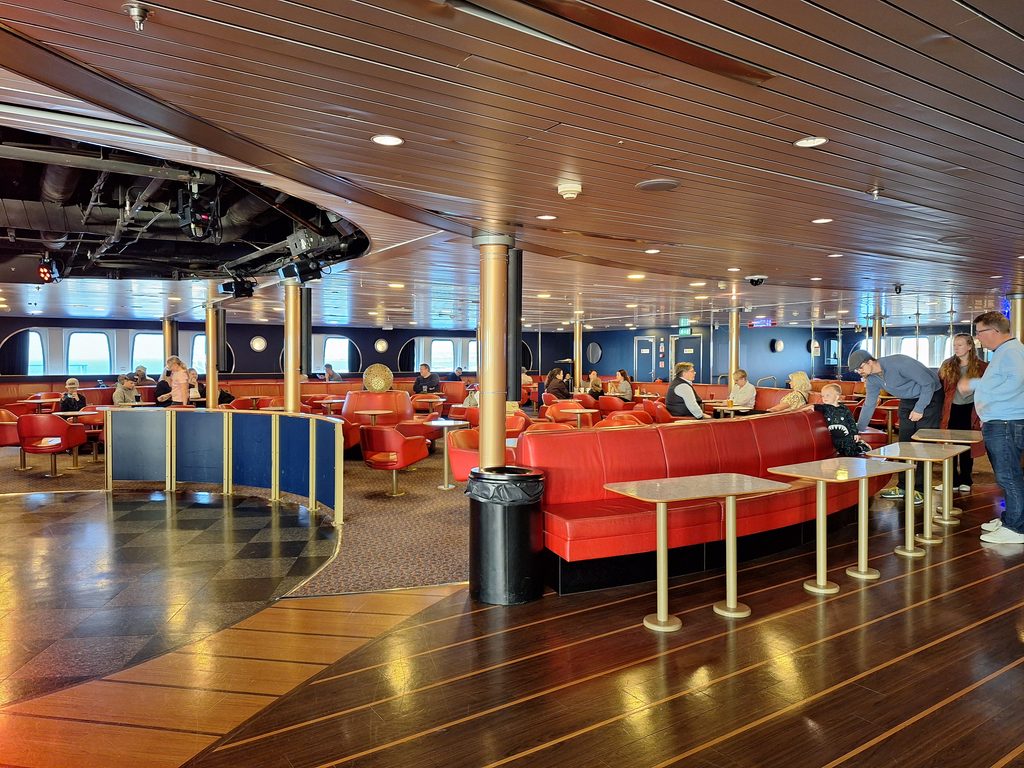
I had to laugh. I hadn’t won, but I was rather pleased with my performance.
Sometimes it’s these little moments that make a long journey so enjoyable.
Arriving in Frederikshavn
We docked at Frederikshavn around 1 pm.
Stepping off the ferry was almost an anticlimax. There was no passport control, no lengthy queues and no formalities. Just like that, I had arrived in another country.
My first priority was getting connected to the internet so I could work out the next stage of the journey.
I found somewhere that looked promising, only to discover there was no Wi-Fi available. Fortunately, the manager kindly allowed me to connect through his phone.
Another example of how a little kindness can make travelling so much easier.
With the internet sorted, I checked my route and arranged to catch a bus to Sæby, a coastal town approximately 12 kilometres away, where I had booked accommodation for the next three nights.
Frederikshavn — A Port with a Long History
Frederikshavn is much more than a modern ferry terminal.
Archaeological discoveries in the surrounding area reveal human activity stretching back to the Stone Age, through the Viking period and into the development of Denmark’s coastal trading communities.
Its position on the Kattegat made it an important centre for shipping and fishing.
Today, Frederikshavn remains a busy maritime town, with ferry connections to Sweden and Norway, fishing industries, technical education facilities and a naval presence.
I didn’t spend much time exploring, but it was interesting to arrive somewhere where the sea has shaped everyday life for centuries.
Sæby — A Charming Coastal Town
After catching the bus from Frederikshavn, I arrived in Sæby, looking forward to settling into my accommodation.
Unfortunately, things didn’t go quite according to plan.
The property I had booked used a coded entry system. That should have made checking in straightforward, except the owner hadn’t provided me with the necessary instructions.
There I was, standing outside a locked door, unable to get in.
Not exactly the welcome I had imagined!
The Kindness of Strangers
Eventually, I found my way to a local bar, The Hillier, where the locals became my rescuers.
They listened to my predicament, offered suggestions and helped me work through the problem.
What had begun as a frustrating arrival gradually turned into a thoroughly enjoyable evening.
Once I finally managed to gain access to the apartment, I could relax.
The conversations, laughter and drinks with the locals were a reminder of something I’ve discovered repeatedly on this journey: when travel plans go wrong, complete strangers can become your greatest allies.
Without that difficulty getting into the apartment, I might never have met them.
Exploring Sæby’s Old Town
Sæby is a delightful little place with an atmosphere quite different from the larger European cities I’d been visiting.
Its narrow streets are lined with historic houses, some dating back to the 16th century. Timber-framed buildings, old doorways and carefully preserved façades give the town a sense of stepping back through time.

I wandered through the streets, photographing buildings that caught my attention and enjoying the slower pace.

Sæby has around 8,000 permanent residents, although its population grows considerably during the summer months when visitors arrive for the beaches, marina and coastal scenery.
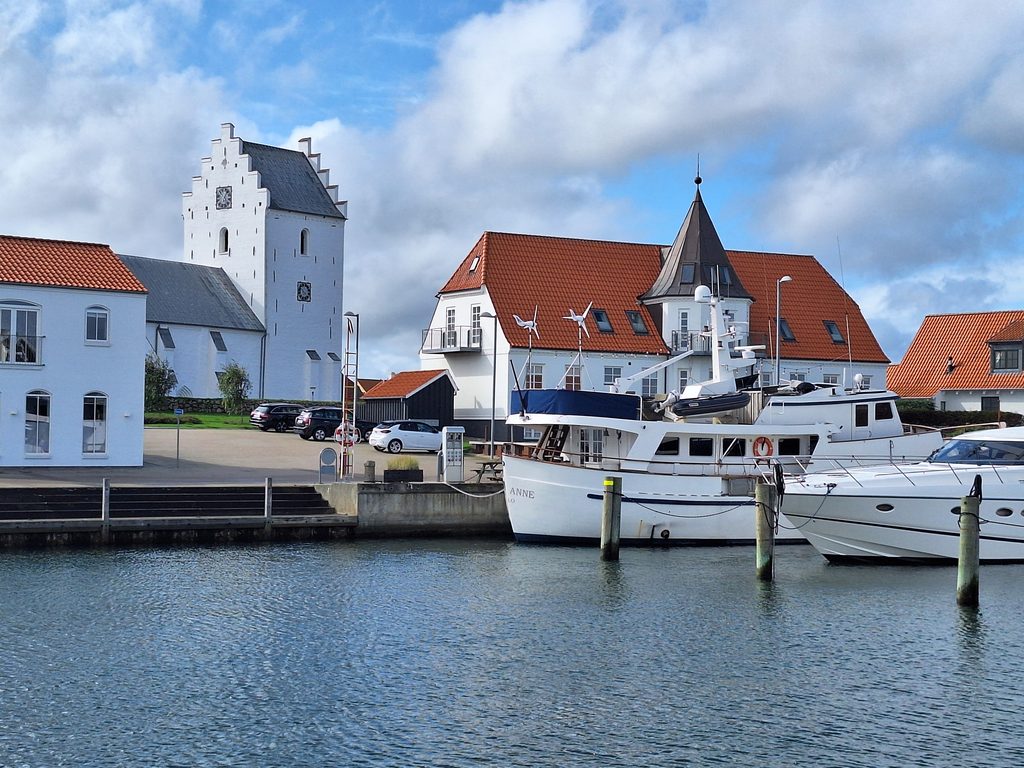
It’s the sort of town where you can walk without a particular destination and still discover something interesting around every corner.
Sæby Church — Centuries of Religious History
One of the town’s most remarkable buildings is Sæby Church, also known as Skt. Mariæ Kirke.
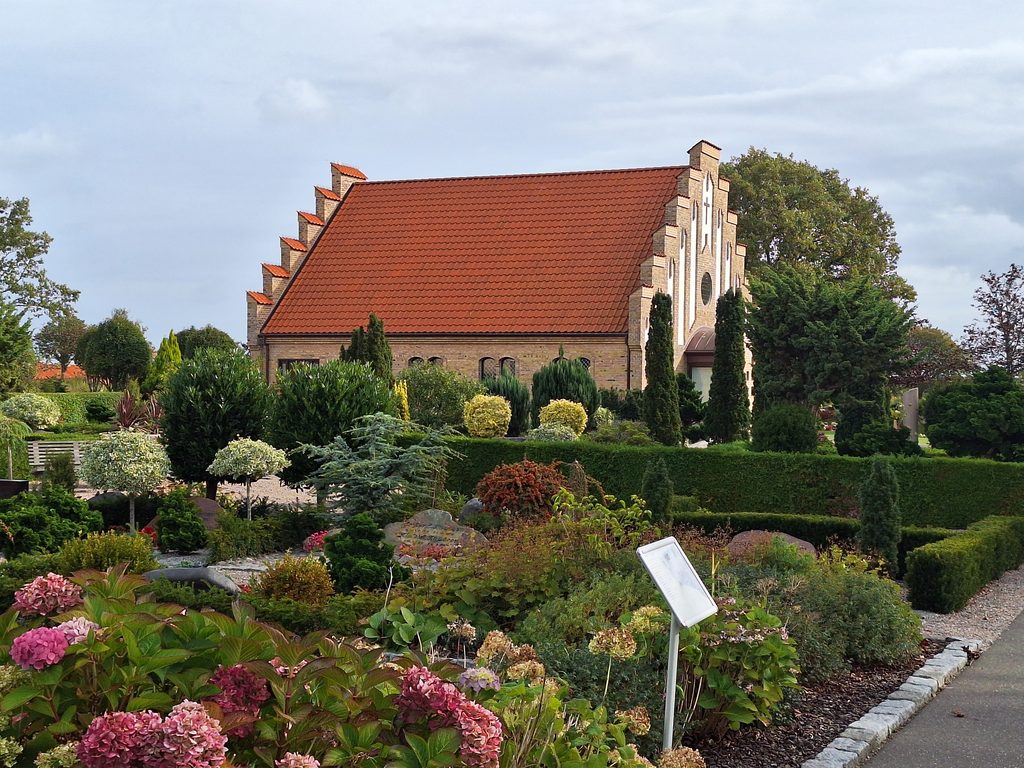
The church has its origins in the medieval period and was associated with a Carmelite monastery.
Inside are historic frescoes that provide a fascinating glimpse into Denmark’s religious and artistic past.

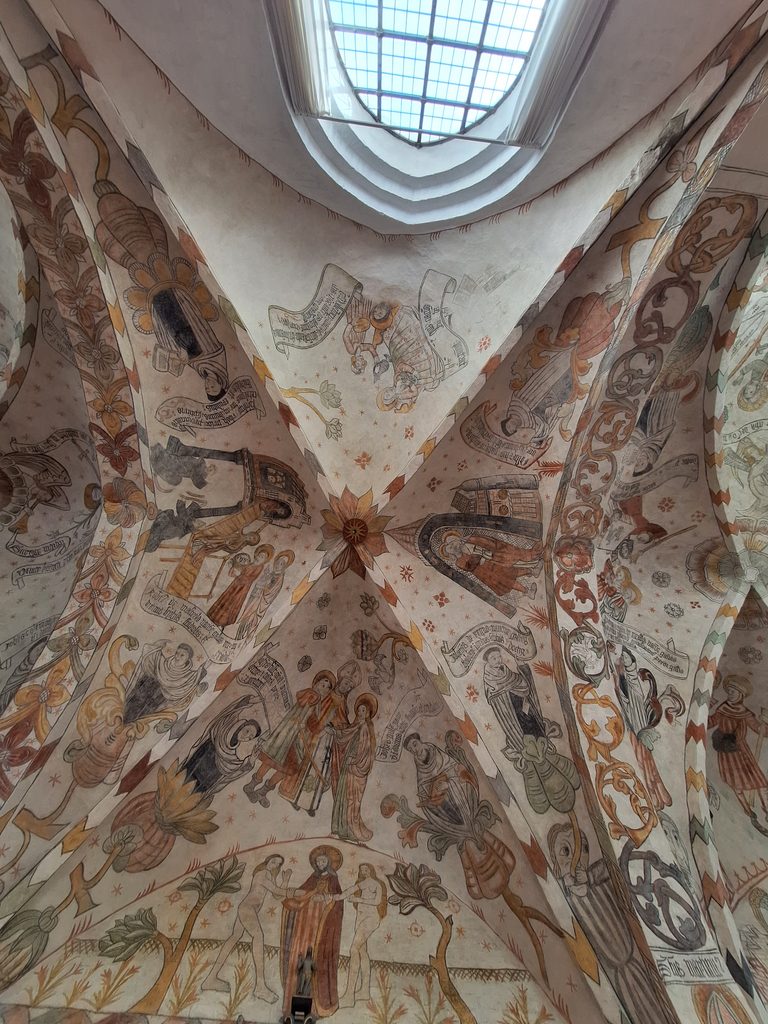
The building reflects centuries of change, from medieval Catholic worship to the Lutheran traditions that emerged during the Reformation.
Standing in a place like this reminds me how much history can be found in even the smallest European towns.
Sæby Museum and Sæbygaard Manor
Another reminder of the town’s heritage is Sæby Museum, housed in a historic half-timbered building dating from the 17th century.
The museum preserves stories of local life, giving visitors an insight into the people, occupations and traditions that shaped the community.
Nearby, Sæbygaard Manor provides another layer of history.
This Renaissance manor house is associated with generations of Danish nobility and contains collections that include silver, porcelain, textiles and portraits.
These buildings offer a fascinating contrast: the everyday lives of local townspeople on one hand and the wealth and influence of noble families on the other.
Reflections — Days 312–314
My introduction to Denmark had certainly been memorable.
From the nearly empty ferry and my unexpected success in the onboard quiz to being locked out of my accommodation and rescued by the locals, there had been plenty of surprises.
Some historic buildings and attractions weren’t as accessible as I had hoped, but that is part of travelling independently.
You cannot expect every door to be open or every arrangement to go smoothly.
What matters is how you respond.
Sæby reminded me that travel isn’t simply about visiting famous landmarks. Sometimes the most memorable experiences come from an unexpected conversation in a local bar or the generosity of people you’ve never met before.
Day 315 — From Sæby to Aarhus
Another Day on the Rails
My morning began with the journey from Sæby to Frederikshavn, where I boarded a train that felt more like a modern tram — quiet, sleek and comfortable. The journey to Aalborg took about an hour, and from there I changed to an Intercity train heading south towards Aarhus, Denmark’s second-largest city.
I planned to spend a couple of days exploring Aarhus before catching the train to Copenhagen on Thursday.
The sun was warm, but whenever the train stopped at a station and the doors opened, a cold wind swept through the carriage, reminding me that autumn was creeping closer.
Inside, the train was spacious and clearly built for speed. As the engines hummed into life, I felt the acceleration as we gathered pace, travelling at what I estimated to be somewhere between 150 and 200 km/h.
Unfortunately, I seemed to have drawn the short straw with the seating. Almost everyone else had an empty row, while I was sharing mine. Even worse, I didn’t have my usual window seat.
One of the pleasures of travelling by train is watching the countryside unfold — the little towns, farms, stations and everyday life passing by. Instead, I watched much of Denmark rush past in a blur.
Still, another journey completed, another city waiting to be explored.
First Impressions of My Hostel
Arriving in Aarhus, I made my way to the hostel.
Although calling it a hostel seemed rather generous. It had the appearance of a hotel without quite being one, reminding me of somewhere I’d stayed in Zagreb — another establishment that didn’t seem entirely sure what it wanted to be.
The welcome was polite, and the staff were helpful whenever I asked questions. But to me, a proper hostel welcome involves more than checking someone in and handing over a key.
Normally, someone shows you around, points out the kitchen, explains where the tea and coffee are kept and shows you the showers, toilets and communal areas.
It’s a small gesture, but it helps you settle in and feel welcome, particularly when you’re travelling alone.
Here, none of that happened.
Fortunately, the atmosphere improved later in the evening when several of us gathered around a communal meal of chicken tacos and salad.
There is something wonderful about sharing food with strangers. Conversations begin, barriers disappear and suddenly you’re no longer just another traveller passing through.
Later, I went looking for a sports bar where I could watch a game. A helpful local woman pointed me in the right direction, but when I arrived, I discovered that the advertised guest Wi-Fi wasn’t actually available to guests.
I had to laugh at the contradiction.
Eventually, I gave up, returned to the hostel and watched the game on my laptop before heading to bed.
Unfortunately, what followed wasn’t much of a night’s sleep.
Day 316 — Exploring Aarhus
A Rough Night at the Hostel
What a night!
The hostel had installed motion-sensor lighting in the bedrooms, which might sound like a clever modern convenience until you’re trying to sleep in a shared room.
Every time somebody moved or entered, the lights switched on.
Between 11:30 pm and 2:30 am, it felt as though somebody was operating a lighthouse inside the bedroom.
Just as I began drifting off, on came the lights again.
By three in the morning, I’d given up trying to sleep.
Tonight, I might need a couple of sleeping pills to get some rest!
Breakfast cost 89 Danish kroner, fairly typical for this part of Europe. After eating, I headed out to discover what Aarhus had to offer.
Despite the poor night’s sleep, I was determined not to waste the day.
Toldboden — Aarhus Custom House
My walk took me along the river towards the harbour, where I came across Toldboden, the old Aarhus Custom House.
Standing on a solid granite base, with its red-brick walls, green roofs and copper detailing, the building immediately caught my attention.
Built in the early twentieth century in the National Romantic style, it reflects a period when Aarhus was establishing itself as an important commercial and maritime centre.
The central tower, crowned by a clock and flagpole, gives the building a commanding appearance.
I went inside, although much of the original interior has been adapted for modern university use.
Nevertheless, traces of its past remain.
Standing there, I tried to imagine the days when ships arrived at the harbour, sailors unloaded cargo and merchants passed through the building to pay duties on their goods.
The façade was deliberately positioned towards the waterfront, making it a statement of the city’s growing importance.
Buildings like this remind me that even the most ordinary administrative work once took place in surroundings designed to impress.
Aarhus Theatre — A Grand Building Behind Closed Doors
A few streets inland, I reached Aarhus Theatre.
Unfortunately, it was closed, with no performances taking place during my visit.
That seems to happen rather frequently on my travels!
Even from outside, however, the theatre was impressive.
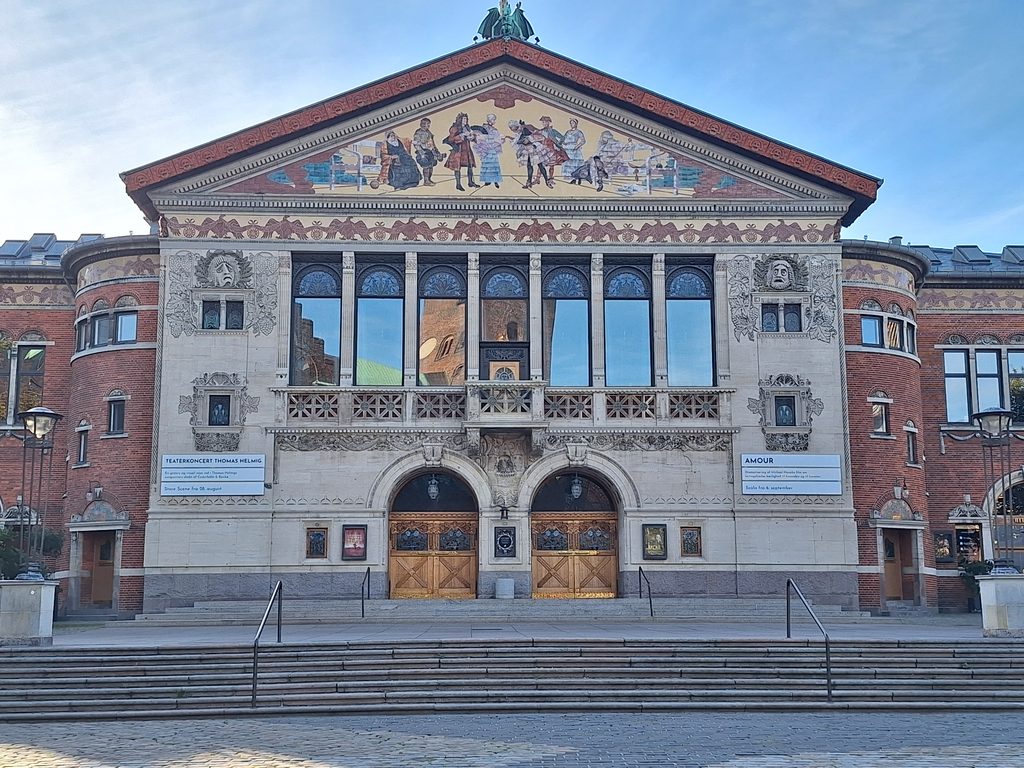
Constructed in the 1890s and opened in 1900, it is one of Denmark’s most important regional theatres, designed in an ornate architectural style influenced by the great European theatres of the period.
Its decorative façade, sculptures and elegant detailing speak of an era when attending the theatre was a major social occasion.
I stood on the steps for a while, imagining an opening night more than a century ago.
Ladies arriving in their finest dresses, gentlemen in formal suits, carriages pulling up outside and the foyer filling with conversation and excitement.
Although I couldn’t go inside, the building certainly deserved a photograph and a few minutes of appreciation.
Aarhus Cathedral — Centuries of Faith and History
I’d passed Aarhus Cathedral earlier when its doors were closed, but when I returned, they were open.
I didn’t need a second invitation.
Stepping inside, I was immediately struck by the height of the ceilings, the painted decorations and the light filtering through the windows.
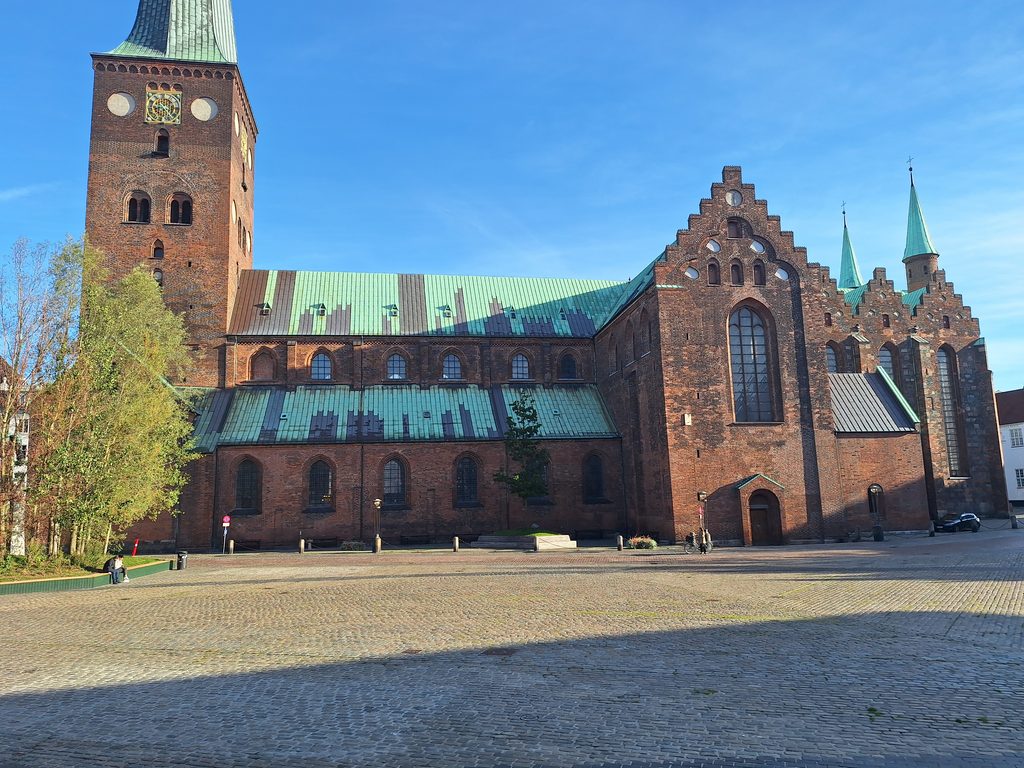
Aarhus Cathedral is Denmark’s longest church, measuring approximately 93 metres, while its tower rises to around 96 metres.
The cathedral’s origins go back to the late twelfth century, when it was established as a Roman Catholic church. Following the Reformation, it became Lutheran.
It is dedicated to St Clement, the patron saint of sailors, an appropriate choice for a city with such strong connections to the sea.
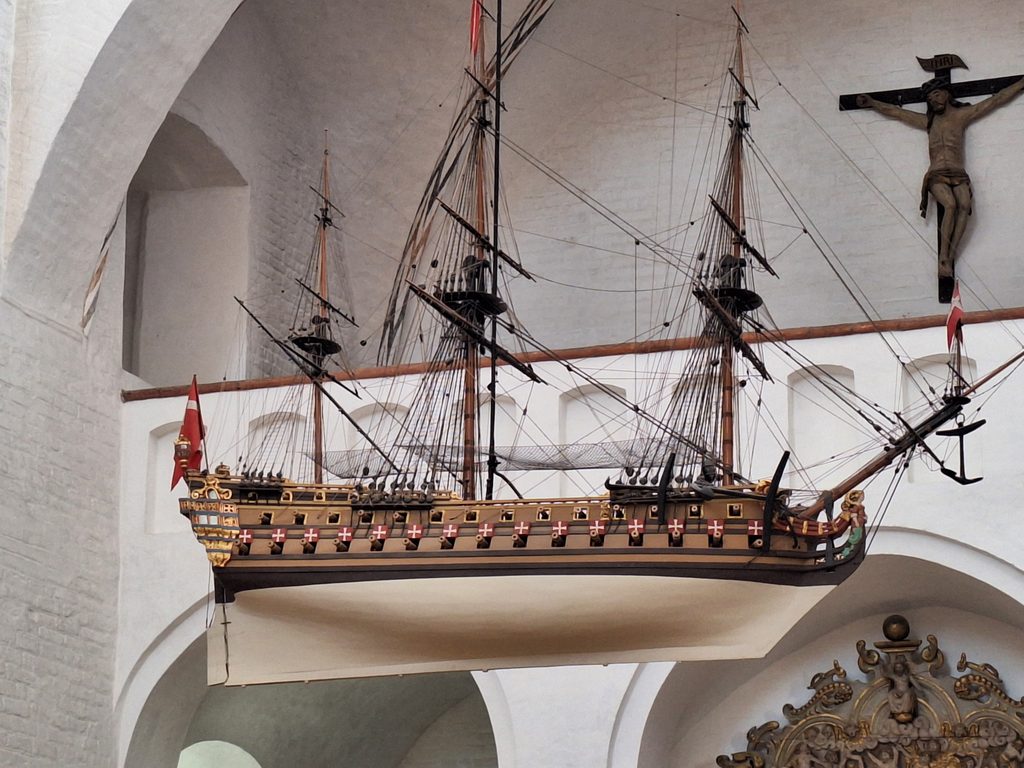
One of the most interesting features is a model sailing ship suspended inside the church.
These votive ships are found in many Danish churches, reflecting the country’s maritime traditions and the prayers of sailors and their families.
Looking up at the little galleon, I imagined the generations of seafarers who had entered this cathedral before setting out on uncertain voyages.
There was a wonderful sense of space and tranquillity inside.
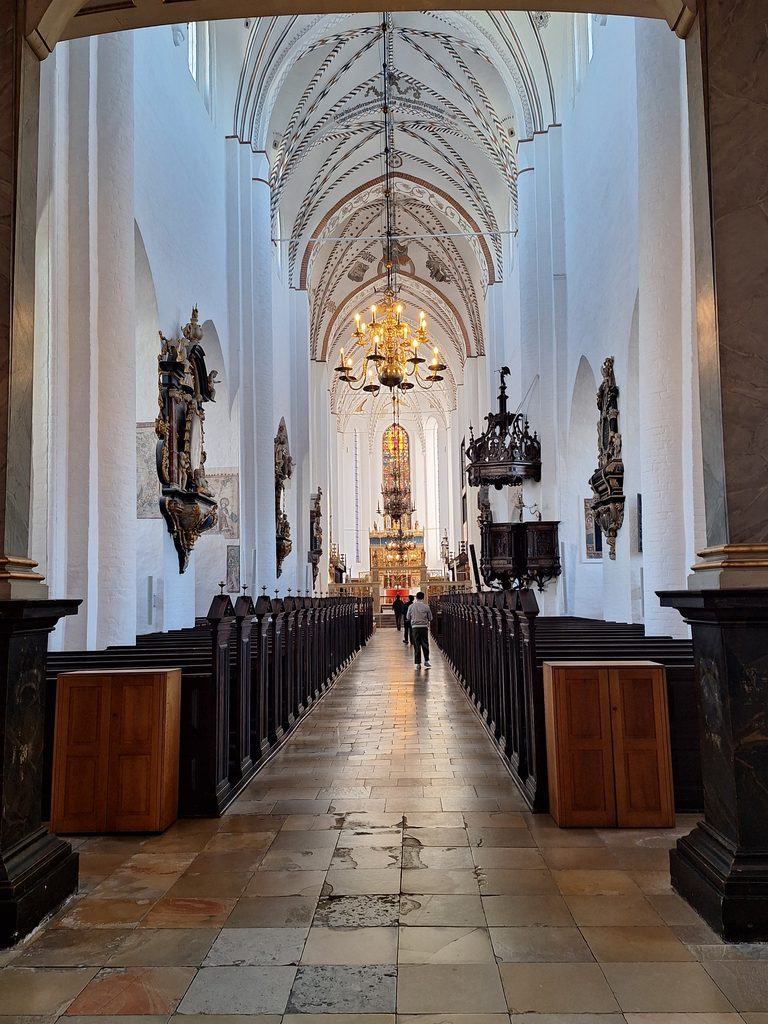
After the noise of the city streets, it was a pleasure simply to stand quietly and appreciate the craftsmanship.
Hotel Royal — A Glimpse of Another World
Next door to the cathedral stands the Hotel Royal, a building that looks as though it belongs in an Agatha Christie novel.
Established in 1838, the hotel has welcomed generations of wealthy travellers, royalty, politicians and notable guests.

I decided to take a look inside.
The foyer was magnificent, with polished wood, brass fittings and an old-fashioned lift that seemed to belong to another century.
I could almost imagine Hercule Poirot appearing around the corner, inspecting the guests and searching for suspicious behaviour!
There was an atmosphere of old-world elegance that modern hotels often struggle to reproduce.
The thought of a doorman in a top hat welcoming guests, and fashionable visitors gathering in the Marble Room before an evening function, brought the building’s history to life.
Rooms were advertised at around €283 a night.
Well beyond my travelling budget!
Still, there’s nothing wrong with enjoying a little luxury from the foyer before returning to the more affordable world of hostels and shared bedrooms.
And at least I didn’t have to worry about motion-sensor lights switching on every few minutes!
Juul’s House — A Building That Refuses to Stand Straight
Continuing through the Latin Quarter, I came across Juul’s House, one of the most charming old buildings I’d seen in Aarhus.
Built in 1629, this timber-framed building looks as though it’s leaning on sheer determination.
Its crooked lines and ancient timbers give it tremendous character.
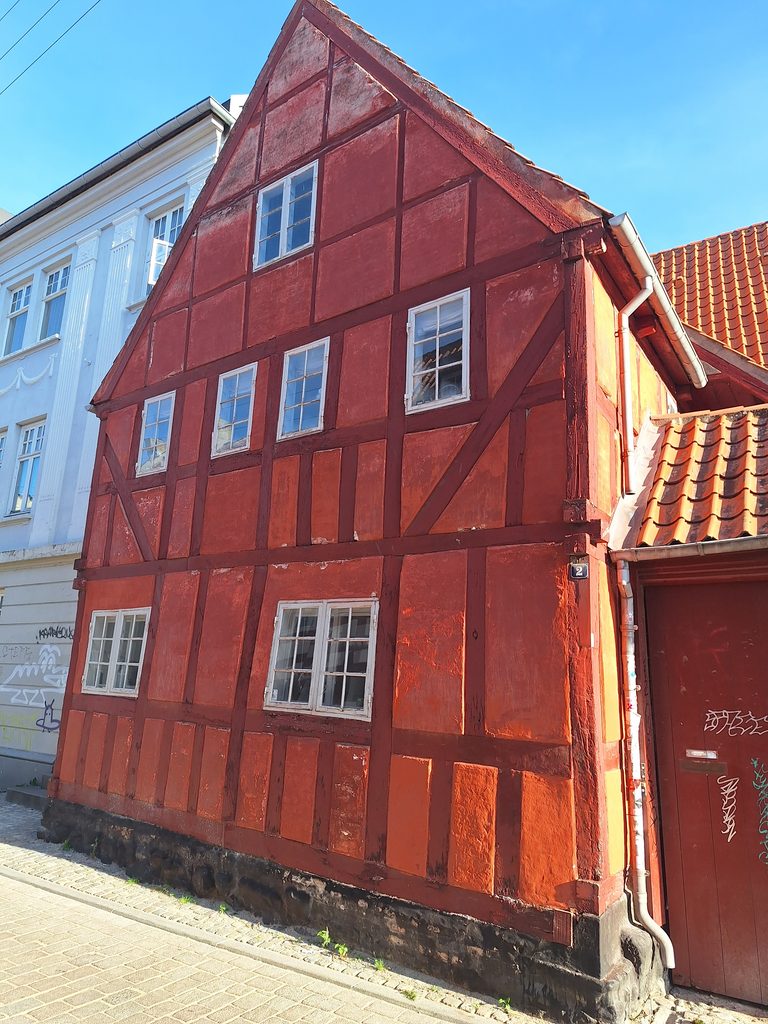
Since 1842, the premises have been associated with the paint trade, making it a remarkable survivor of the city’s commercial history.
Inside, there were paint samples more than a century old and even a bucket bearing signatures from employees dating back to the 1880s.
These might seem like ordinary objects, but they tell wonderful stories about the people who worked here.
I love discovering places like this.
They’re not always the grand monuments mentioned in tourist brochures, but they reveal the everyday lives of the people who helped shape a city.
Standing inside Juul’s House, surrounded by old timber and generations of trade, I felt as though the centuries had gathered quietly around me.
Vor Frue Kirke — The Church of Our Lady
Not far from the cathedral, I visited Vor Frue Kirke, the Church of Our Lady.
As I entered, an organ was playing.
The music was slow, mournful and almost funereal, filling the church with a sombre atmosphere.
It was quite a contrast to the busy streets outside.
This is one of Aarhus’s most historically significant religious sites. Its surviving stone crypt dates from around the eleventh century, making it one of Denmark’s oldest surviving ecclesiastical spaces.
I made my way down the steps into the crypt.
The air grew cooler, the ceilings lower and the stone walls seemed to close around me.
Suddenly, the modern city above felt a thousand years away.
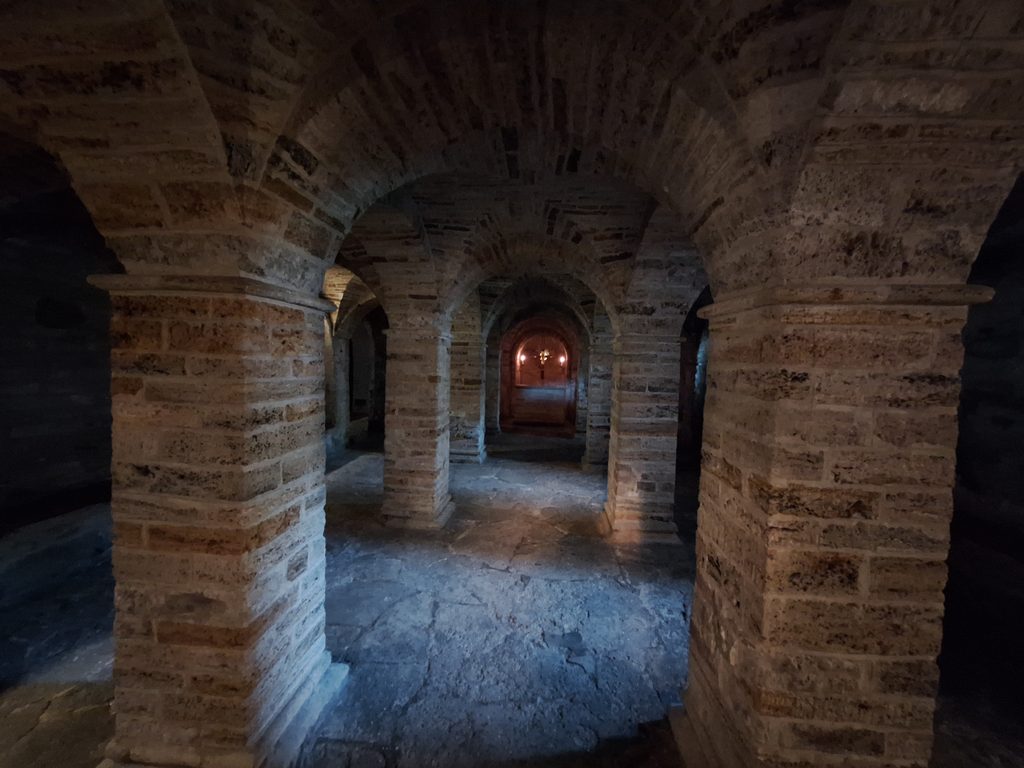
Unlike the grand spaces of Aarhus Cathedral, this was an intimate and quiet place.
No towering columns or enormous windows.
Just ancient stonework, stillness and the unmistakable feeling of standing somewhere generations of people had worshipped long before our modern world existed.
For me, these quieter historical places can be every bit as memorable as the famous landmarks.
Den Gamle By — Walking Through Denmark’s Past
My next destination was Den Gamle By, the Old Town Museum, about a mile and a half from the city centre.
I decided to hire a scooter.
Naturally, Google Maps had other ideas about where I should enter and directed me towards the back of the complex!
After a little confusion and some extra travelling, I finally found the proper entrance.
And what a place it turned out to be.
Den Gamle By is an extraordinary open-air museum where historic buildings from towns and villages throughout Denmark have been carefully moved and reconstructed.
Around 75 buildings create the atmosphere of a living Danish town.
Walking through its streets was like stepping into another century.
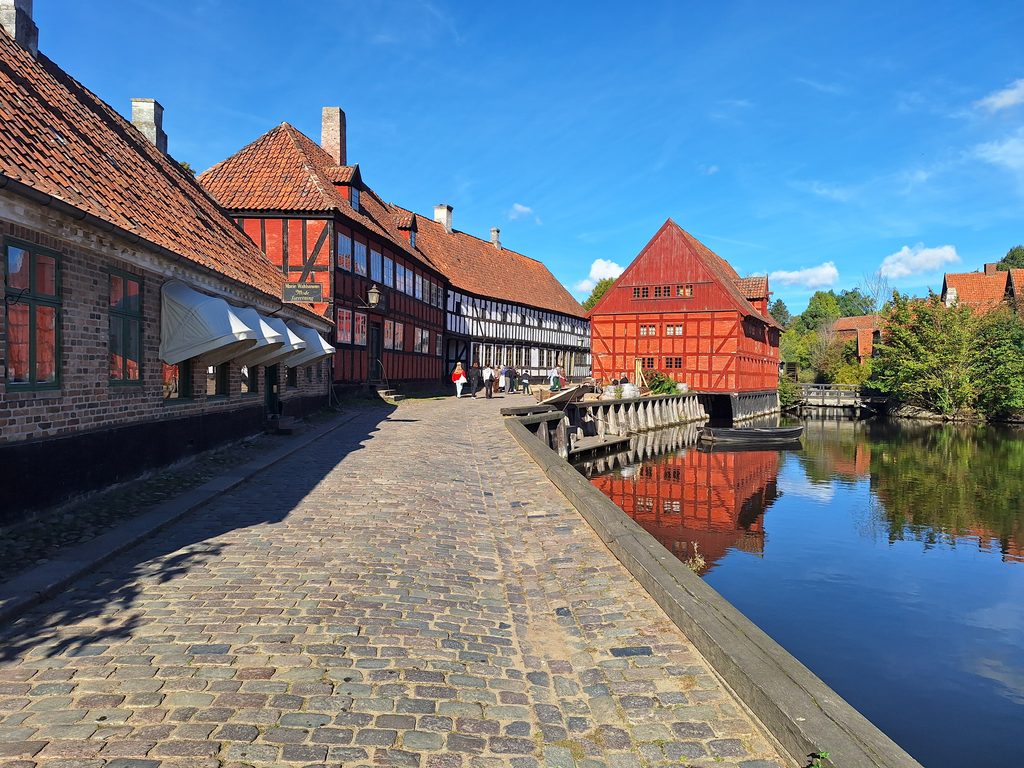
Half-timbered houses leaned over narrow lanes, old shops displayed goods from long ago, and costumed interpreters brought historical occupations and everyday life to the streets.
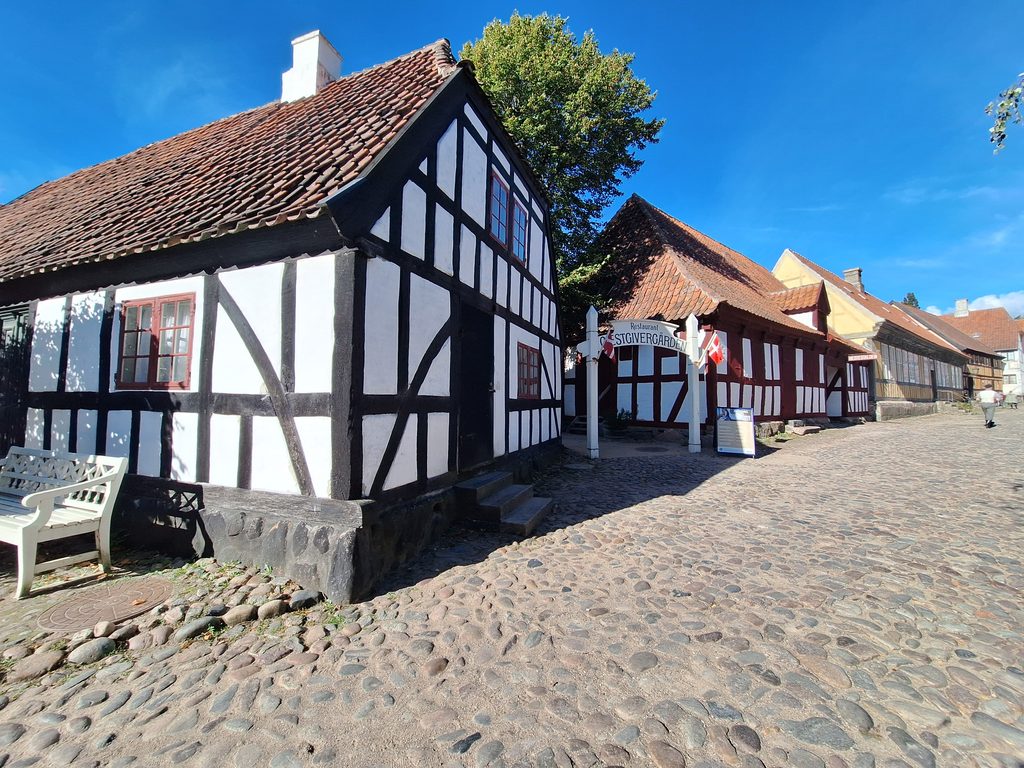
There were craftsmen at work, including a blacksmith, and children dressed in period clothing.
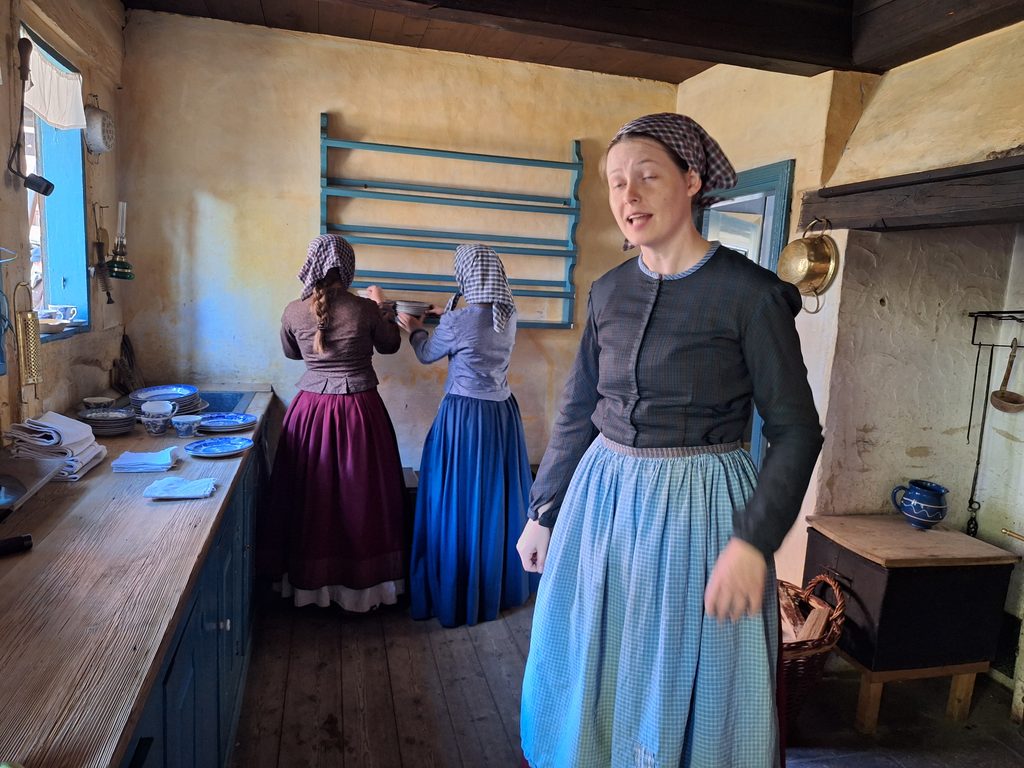
It wasn’t simply a collection of buildings.
It was an attempt to recreate the sights, sounds and atmosphere of Danish life through different periods of history.
Some streets reflected life centuries ago, while other displays brought visitors forward to the twentieth century, including domestic interiors from the 1970s.
One moment I was standing among buildings that looked as though they belonged in the sixteenth century.
A few minutes later, I was looking into a living room that reminded me of more recent times.
It was fascinating to see how homes, shops, furniture and everyday habits had changed.
My camera was working overtime.
Every corner seemed to reveal another building, another doorway or another small detail worth remembering.
I spent hours exploring, occasionally losing all sense of which century I was supposed to be in.
For anyone interested in history, Den Gamle By is one of those places where you can easily lose an entire day.
Salling Rooftop — Aarhus from Above
After spending so much of the day walking, exploring and travelling through history, I returned to the city centre for one final experience.
The Salling Rooftop.
Situated six floors above the streets, this rooftop attraction offers wonderful views across Aarhus.
The terraces reminded me of the open decks of a cruise ship, with seating areas, small gardens, loungers and places where visitors could enjoy a drink.
I particularly wanted to experience the glass viewing platform extending out over the street.
Standing on it, with the city visible beneath my feet, was quite something!

It’s certainly not an attraction for anyone who dislikes heights.
Looking out across the rooftops, I could see the streets and buildings I’d spent the day exploring.

The rooftop is also a lively entertainment venue, particularly when DJs and musical events take place.
Fortunately, on my visit it was peaceful and sunny.
I found myself a chair, sat back and enjoyed watching the city from above.
After hours on my feet, it was a wonderful way to finish the afternoon.
Reflections — A City of Contrasts
Despite my dreadful night’s sleep, Aarhus turned out to be a fascinating city.
I’d wandered through grand churches, explored ancient crypts, admired beautiful historic buildings, visited a hotel well beyond my budget and stepped back through centuries of Danish history.
I’d ridden scooters along cobbled streets, discovered crooked houses and finished the day high above the city on a rooftop terrace.
It had been a day of contrasts.
From the solemn atmosphere of an eleventh-century crypt to the sunshine and open spaces of Salling Rooftop.
From the leaning timbers of Juul’s House to the polished elegance of the Hotel Royal.
And from the carefully preserved streets of Den Gamle By to the modern bustle of Denmark’s second-largest city.
That, for me, is one of the greatest pleasures of travelling.
You never quite know what the next street or doorway will reveal.
Back at the hostel tonight, there’s a quiz taking place.
But after everything I’d seen and experienced today, I felt I’d already enjoyed a very rewarding day.
Tomorrow, Copenhagen awaits.
Day 317 — From Aarhus to Copenhagen
A Relaxed Start to the Journey
My morning began with a pleasant walk to Aarhus railway station.
There was no rush, and the walk gave me an opportunity to stretch my legs before boarding the train to Copenhagen.
The journey was scheduled to take approximately two and a quarter hours, and as I’ve come to appreciate in this part of Europe, the trains generally operate with impressive punctuality.
After months of travelling through countries where transport schedules could be more of a suggestion than a guarantee, there’s something reassuring about a train arriving and departing on time.
As the countryside slipped past the window, my thoughts turned towards Copenhagen and someone I was looking forward to seeing again.
Reuniting with Alexandra
Back in June, while travelling through Poland, I’d met Alexandra.
We had clicked almost immediately, partly because we discovered that we were both originally from Bristol in England.
It’s remarkable how quickly a shared connection to home can bring two strangers together when they’re thousands of kilometres away.
Alexandra had been living in Denmark for the past fifteen years and had generously invited me to stay with her for four days before she departed for Budapest.
One thing I had learned early on was that she preferred to be called Alexandra — never Alex!
I was looking forward not only to catching up but also to exploring Copenhagen with the benefit of someone who knew the city well.
One of the joys of this journey has been the friendships formed along the way.
What begins as a conversation in a hostel or café can develop into something much more lasting.
Day 318 — A Long Walk Through Copenhagen
Setting Off to Explore
I set off at around 10 am, determined to make the most of my first full day exploring Copenhagen.
My walking shoes were firmly on, and I expected to cover quite a distance.
As things turned out, that was something of an understatement.
By the end of the day, I would have walked approximately sixteen kilometres, explored an extraordinary collection of historical landmarks and enjoyed an evening discovering Copenhagen’s famous brewing heritage.
Jesuskirken — The Carlsberg Family’s Church
My first discovery happened almost by accident.
Walking through Valby, I came across Jesuskirken, an impressive church commissioned by Carl Jacobsen, the son of the founder of the Carlsberg brewery.
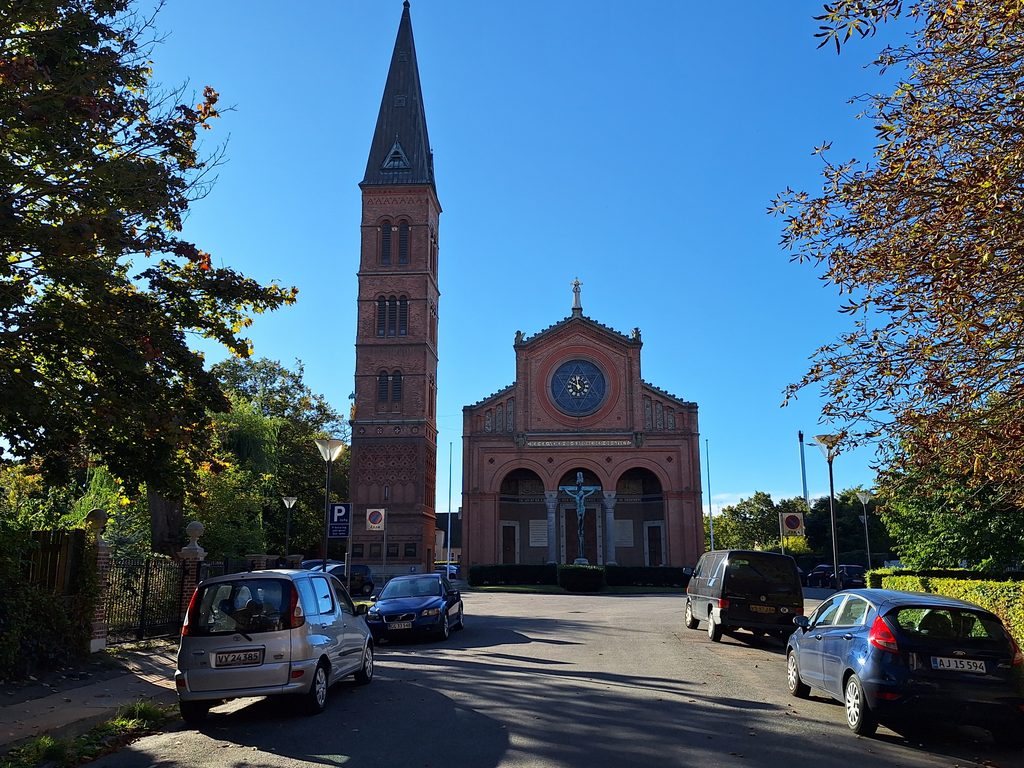
The building immediately caught my attention.
Its marble columns, decorative stonework and beautiful stained-glass windows hinted at the grandeur waiting inside.
Entering the church, I found myself in an extraordinary interior.
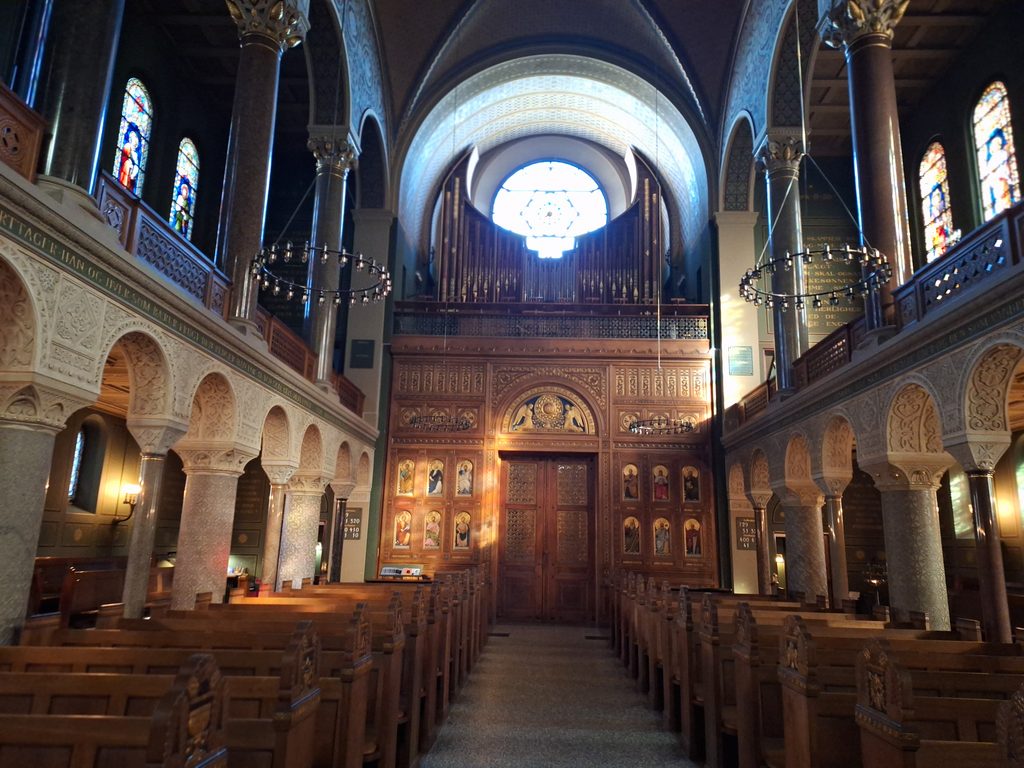
Balconies surrounded the main auditorium, and from the stairways I could look down into the space below.
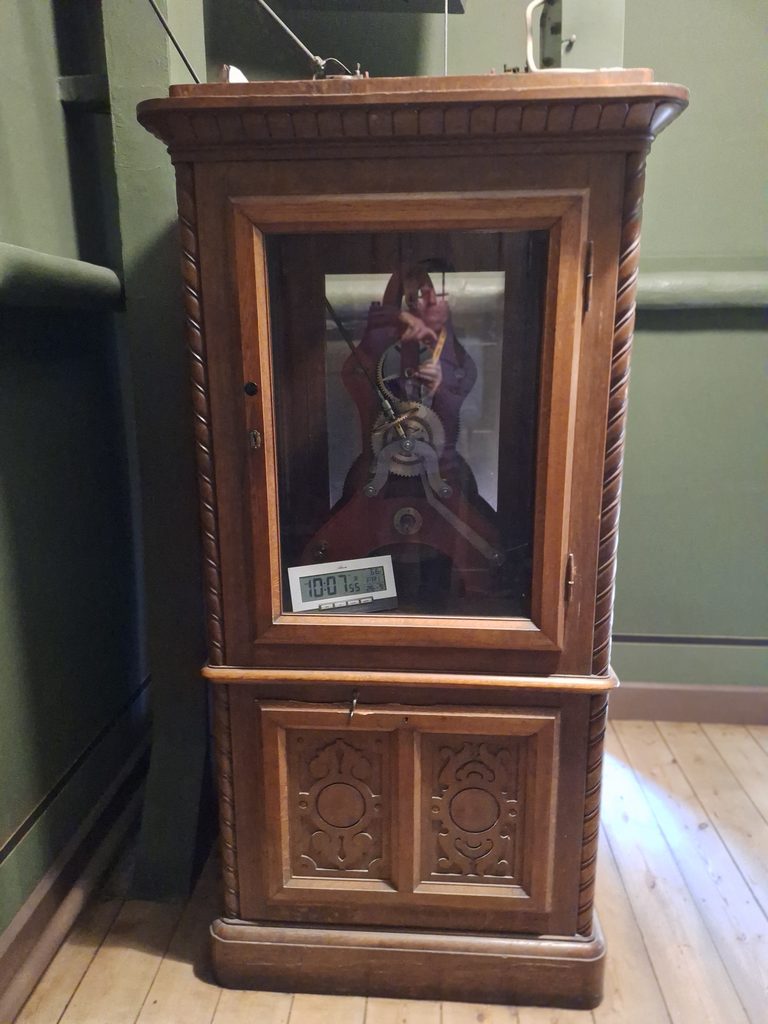
I made my way towards the tower, where the clock mechanism ticked steadily above the church.
There was something fascinating about standing beside the machinery that had measured the passing hours for generations.
A Church, a Mausoleum and a Family Legacy
Construction of Jesuskirken began in the 1880s, following a commission from Carl Jacobsen.
The building was intended not only as a place of worship but also as a lasting memorial to the Jacobsen family.
Within the crypt lie members of the family, their sarcophagi surrounded by elaborate architectural details and inscriptions.
Carl Jacobsen was known for his strong personality and independent thinking.
He was described as a freethinker, someone who did not always conform to religious expectations. Even members of the clergy reportedly found him stubborn and difficult to persuade.
Some critics have suggested that the church was an extravagant monument to his own importance.
Perhaps there’s some truth in that.
But standing beneath those magnificent arches, looking at the craftsmanship and the extraordinary attention to detail, I couldn’t help feeling admiration.
Whatever his motivations, Jacobsen left something remarkable behind.
Copenhagen — A City of Bicycles
Leaving Valby, I decided to use a scooter for part of the journey into the city centre.
I’ve relied on scooters in quite a few European cities, particularly when my legs need a break or the distance between attractions is too great.
Copenhagen, however, is a different world.
There are bicycles everywhere.
Thousands of them.
They fill the streets, occupy huge parking areas and move along dedicated lanes in a seemingly endless stream.
It’s no exaggeration to say that Copenhagen belongs to cyclists.
Compared with the bicycles, electric scooters almost seem like an endangered species!
Copenhagen City Hall
Arriving at City Hall Square, I found the area packed with tourists and organised sightseeing groups.

I made my way through the crowds and entered Copenhagen City Hall.
Just inside the entrance stood a fascinating clock mechanism, its polished brass components and intricate gears working together with extraordinary precision.
Even without understanding exactly how everything operated, it was mesmerising to watch.
Further inside, the building opened into an impressive courtyard beneath a glass roof containing more than 3,000 panels.
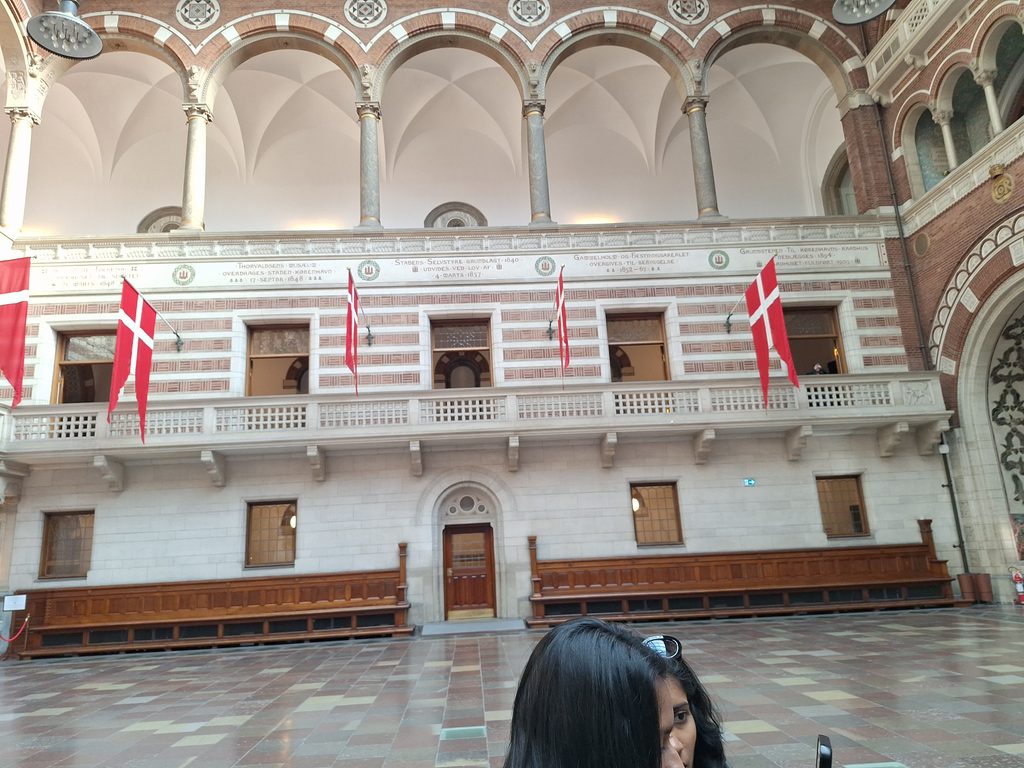
The architecture alone was worth the visit.
But the real treasure was still to come.
Jens Olsen’s World Clock — A Mechanical Masterpiece
Deep inside City Hall stands Jens Olsen’s World Clock, one of the most remarkable timepieces ever constructed.
Containing 15,448 individual components, this extraordinary machine does far more than tell the time.
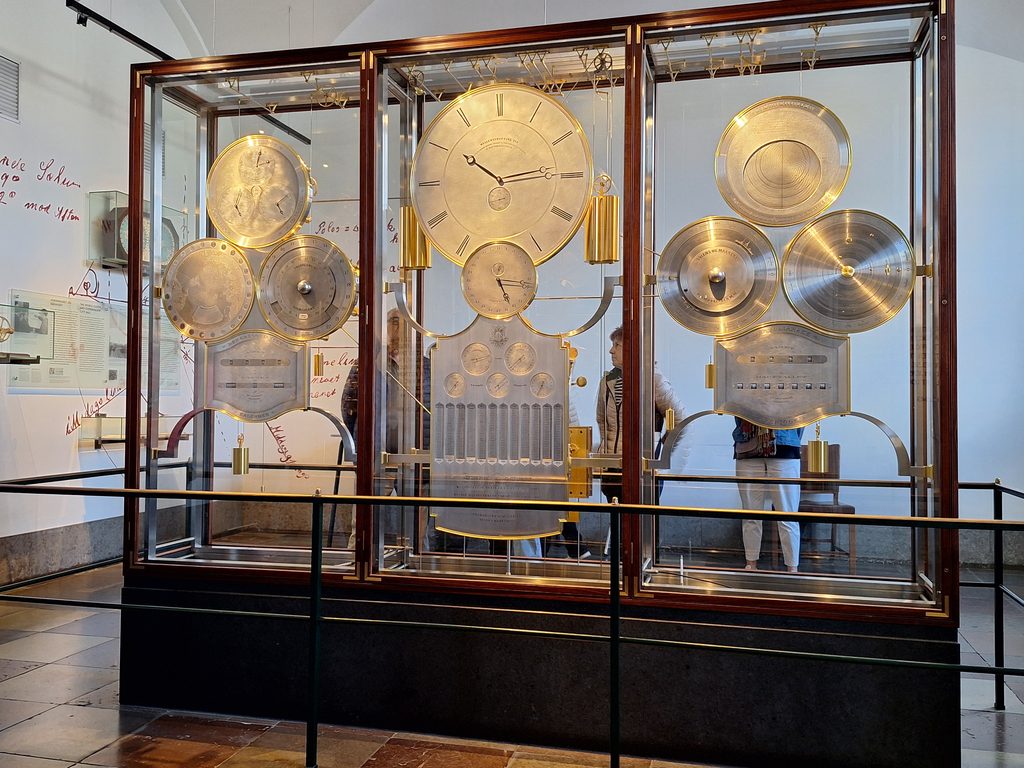
It calculates astronomical movements, solar and lunar eclipses, planetary positions and the gradual movement of the stars.
Some of its mechanisms move almost constantly.
One gear completes a revolution every ten seconds.
At the other extreme, another takes an astonishing 25,753 years to complete a single revolution.
Imagine that!
Jens Olsen began life as a locksmith before developing an extraordinary passion for clockmaking and astronomy.
He spent years designing and calculating the clock’s complex mechanisms but sadly died in 1945 before his masterpiece was completed.
Standing in front of it, I found myself thinking about time differently.
Not simply the hours and minutes that organise our daily lives, but centuries, thousands of years and the immense movements of the universe.
It was one of those unexpected discoveries that stays with you long after you’ve moved on.
Tivoli Gardens — Closed, but Still Magical
My next destination was Tivoli Gardens, one of Copenhagen’s most famous attractions.
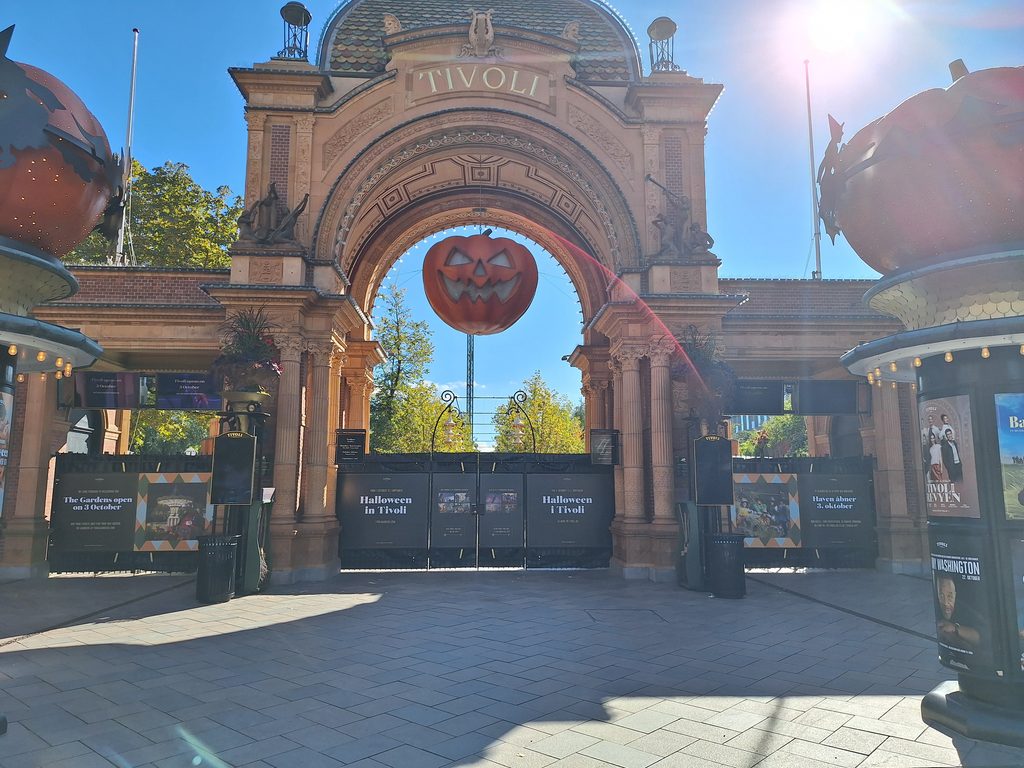
Unfortunately, the gates were closed.
The park was preparing for its Halloween season and wouldn’t reopen until October.
Disappointing, certainly, but there was still something special about standing outside a place with so much history.
Opened in 1843, Tivoli is one of the world’s oldest amusement parks.
Its beautifully landscaped gardens, theatres, restaurants and historic rides have entertained generations.
Walt Disney visited Tivoli and drew inspiration from its atmosphere when developing his own theme parks.
One of Tivoli’s greatest treasures is its wooden roller coaster, built in 1914 and still operating more than a century later.
The gardens also survived the hardships of World War II.
In 1944, parts of Tivoli were destroyed by sabotage during the German occupation, but the damaged buildings were quickly rebuilt, restoring a much-needed source of enjoyment for the Danish people.
Although I couldn’t go inside, I enjoyed imagining what it must be like when the gardens are illuminated and filled with music and laughter.
Christiansborg Palace — Another Closed Door
Continuing through Copenhagen, I made my way towards Christiansborg Palace.

This is one of Denmark’s most important political and historic buildings.
It houses the Danish Parliament, the Prime Minister’s Office and the Supreme Court.
Remarkably, it brings together all three branches of national government within one building.
Parts of the palace are also used by the Danish monarchy for official functions.
Unfortunately, the grounds were filled with temporary structures, tents and covered passageways in preparation for what appeared to be a major event.
Access was restricted, and photography was difficult.
Another disappointment.
But travelling independently means accepting that not everything will be accessible when you arrive.
Børsen — Copenhagen’s Fire-Damaged Old Stock Exchange
Not far away stood Børsen, Copenhagen’s historic Old Stock Exchange.
Or rather, what remained visible of it.
The building was wrapped in scaffolding and protective coverings following the devastating fire of April 2024.
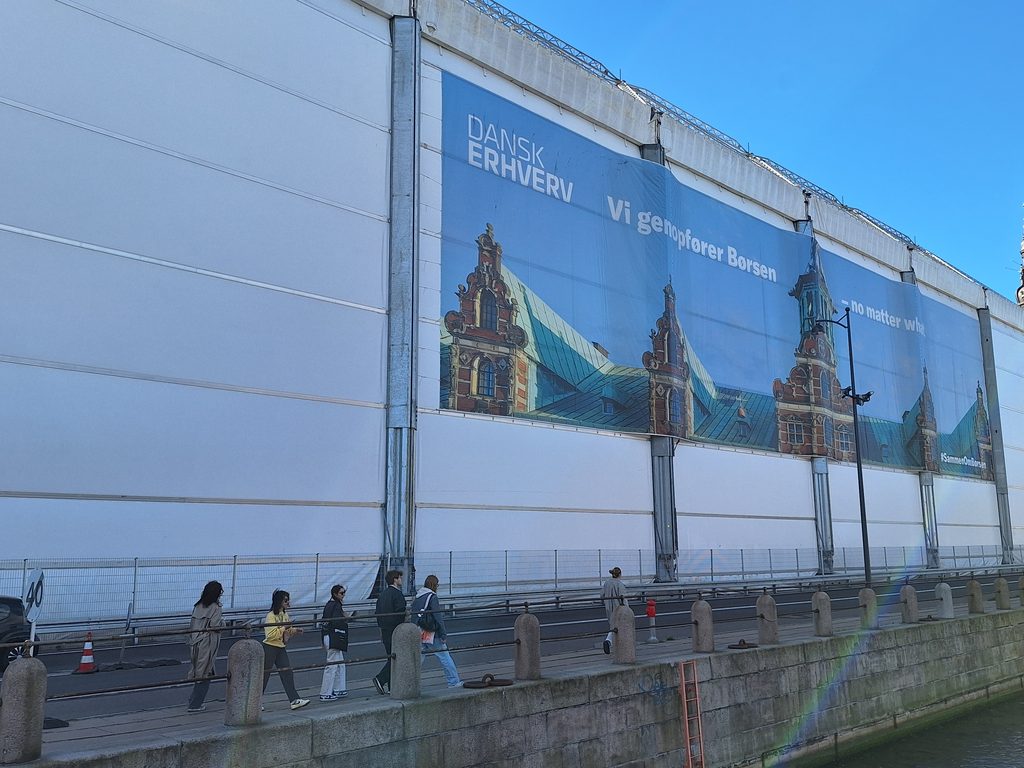
The fire tore through parts of the approximately 400-year-old structure, causing enormous damage.
One of the greatest losses was the famous Dragon Spire, formed by the intertwined tails of four dragons.
For centuries, it had been one of Copenhagen’s most recognisable architectural features.
Seeing the damaged building was a sobering reminder that historic monuments are not indestructible.
Even after surviving wars, political upheavals and centuries of changing ownership, they remain vulnerable to disaster.
I could only hope that the restoration would return this extraordinary building to its former glory.
The Stork Fountain — A Living Tradition
My walk brought me to Amagertorv, one of Copenhagen’s historic squares.
Here stands the Stork Fountain, an elegant bronze monument presented in 1894 to commemorate the silver wedding anniversary of Crown Prince Frederik and Crown Princess Louise.
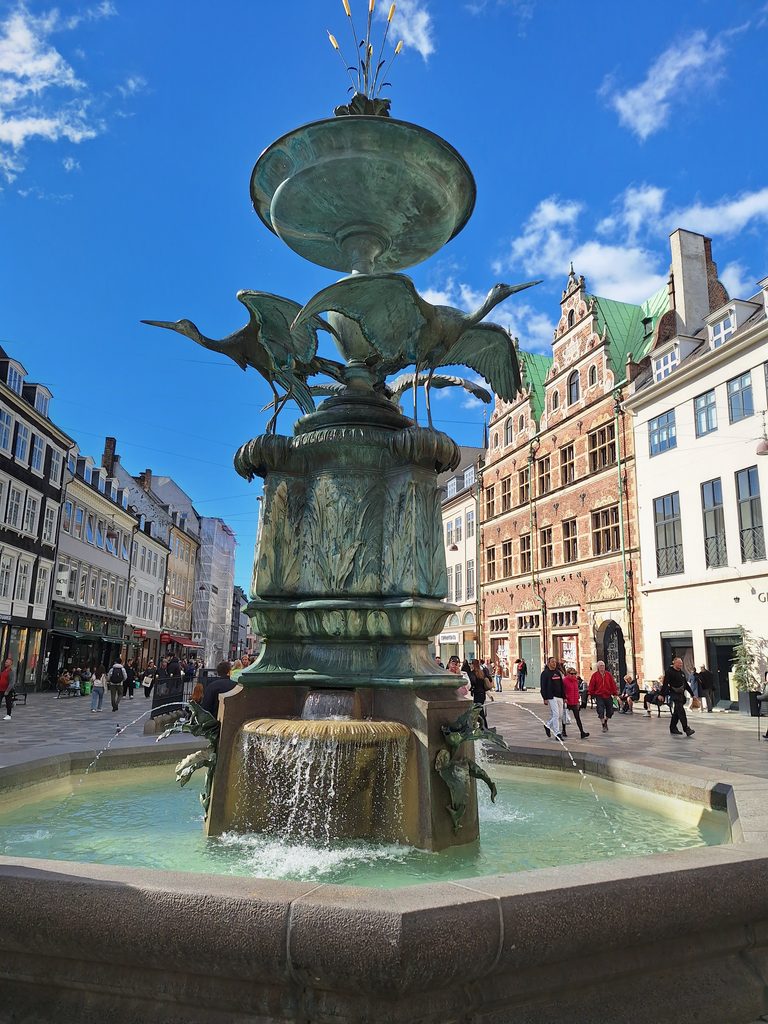
The fountain features three storks in a decorative arrangement.
Interestingly, the birds have sometimes been mistaken for herons.
What makes the fountain particularly special is the tradition associated with Denmark’s graduating midwives.
Since 1950, newly qualified midwives have gathered here to celebrate, dancing around the fountain and splashing in its water.
I love discovering these little traditions.
A monument that might otherwise be just another photograph becomes something far more meaningful when you understand the stories behind it.
A Welcome Rest at the Old English Pub
By late afternoon, my feet were beginning to complain.
After hours of walking through Copenhagen, I needed a rest.
The Old English Pub looked inviting, particularly when I discovered that a pint of Carlsberg cost just 20 Danish kroner before 5 pm.
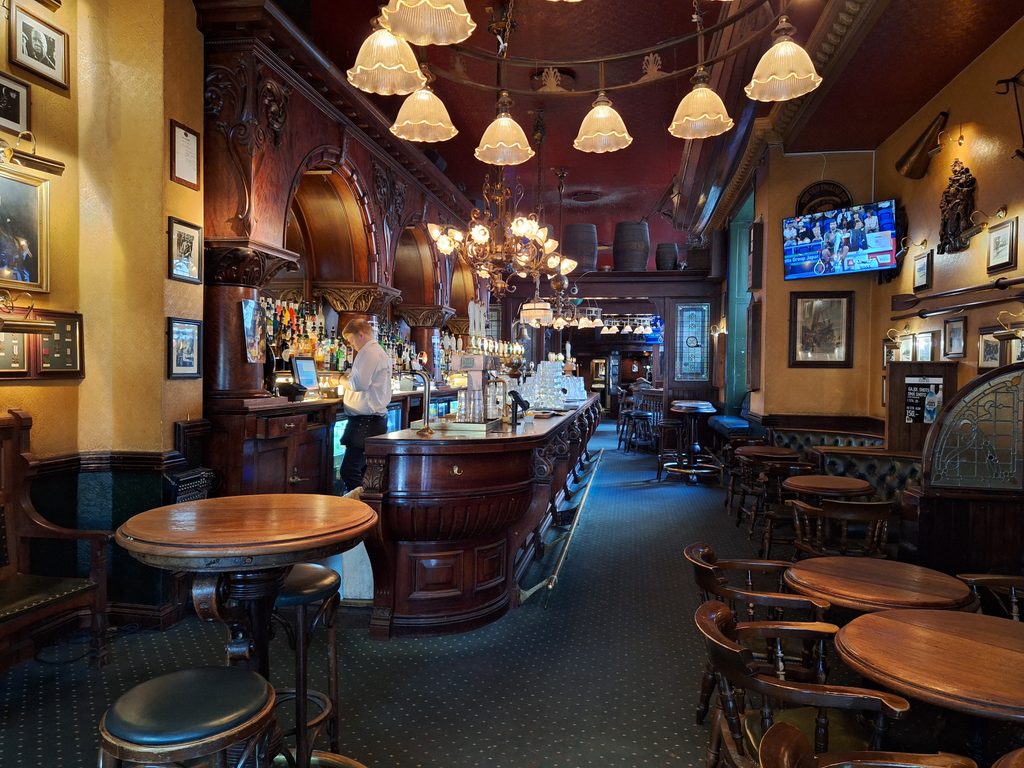
Considering that beer in other Copenhagen establishments could cost 55–70 kroner, this was a bargain!
The pub seemed especially popular with local pensioners, who gathered to chat and enjoy an affordable drink.
Inside were antiques and old furnishings, including a magnificent wooden bar said to be around 200 years old and imported from England.
Whether that story was entirely accurate, I couldn’t say.
But the atmosphere was welcoming, the beer was inexpensive, and my feet appreciated the break.
Sometimes the simplest pleasures are the best.
Carlsberg — Elephants, Horses and Brewing History
At around 4 pm, I met Alexandra and her friend David at Carlsberg station.
What began as a little sightseeing tour soon developed into something of a pub crawl!
Our first stop was ÅBEN, a modern craft brewery housed in one of the old Carlsberg industrial buildings.
The contrast between the historic brickwork and the contemporary brewing equipment was fascinating.
Copenhagen’s brewing heritage is everywhere in this neighbourhood.
The Famous Elephant Gate
We continued towards the Elephant Gate, one of the most recognisable landmarks of the old Carlsberg brewery.
Four enormous granite elephants support the structure above the entrance.
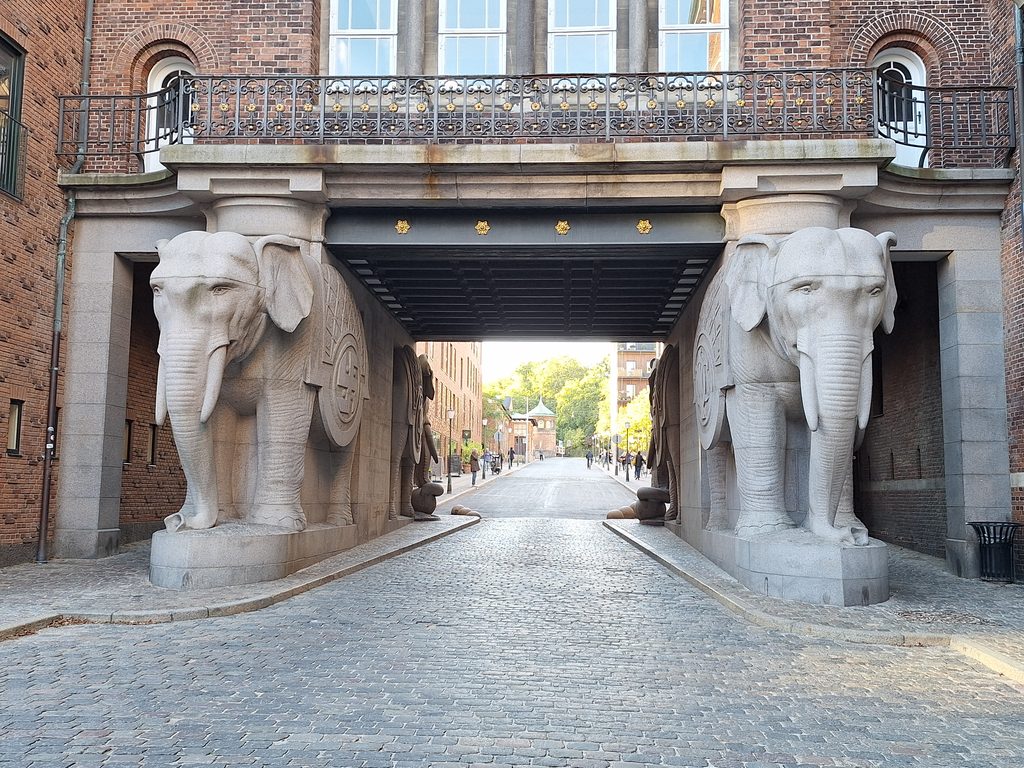
They are magnificent.
The elephants symbolise strength, loyalty and industriousness, qualities closely associated with the brewery and its founders.
They also represent the four surviving children of Carl Jacobsen: Theodora, Paula, Helge and Vagn.
Each elephant carries an ornamental blanket bearing the initial of one of the children.
It’s a remarkable combination of architecture, family symbolism and industrial heritage.
Standing beneath those enormous animals, it was easy to appreciate why the gate has become such a popular Copenhagen landmark.
The Carlsberg Horses
Inside the historic brewery courtyard, the atmosphere was lively.
Music played, people gathered over drinks and the old industrial surroundings were filled with activity.
Nearby were the Carlsberg stables.
We wandered over to see the brewery’s magnificent horses.

These large working horses, with their distinctive colouring and impressive build, are part of a tradition stretching back to the days when horse-drawn wagons delivered beer through Copenhagen’s streets.
They reminded me of the beautiful Lipizzaner horses I had seen in Austria, although the Carlsberg horses are working breeds rather than elegant riding horses.
It was wonderful to see this tradition being preserved.
An Evening with Friends
As the evening progressed, we wandered through the streets of Valby, surrounded by reminders of the Carlsberg family’s influence.
Their name seems to appear everywhere, from historic buildings to streets and public spaces.
Our final stop was Ginez Bar, its name a playful reference to Guinness.
There we raised another glass, enjoying the conversation and the pleasure of being together.
It had been a wonderful evening.
Reflections — Sixteen Kilometres and Countless Memories
By the time I returned, I had walked approximately sixteen kilometres.
My joints were certainly reminding me of it!
But what a day.
I’d explored magnificent churches, discovered one of the world’s most extraordinary clocks, visited historic royal landmarks and learned about Copenhagen’s brewing heritage.
Most importantly, I’d enjoyed the company of Alexandra and David.
The Carlsberg family’s legacy seemed to run like a thread through the entire day, from Jesuskirken and its family mausoleum to the Elephant Gate and the historic brewery.
Some might see these grand monuments as expressions of wealth and vanity.
Others see them as enduring contributions to Denmark’s culture and architecture.
For me, they were fascinating pieces of history waiting to be discovered.
Copenhagen is a city where the past remains very much alive.
A long day, certainly.
But one I wouldn’t have missed.
Day 319 — Copenhagen’s Mermaid Walk
Another Day on Foot
I woke to a beautiful sunny morning after a reasonably good night’s sleep.
Today I planned to explore Copenhagen’s harbour area, following what I called the Mermaid Walk.
Alexandra had suggested several interesting landmarks the previous evening, and I was looking forward to seeing them for myself.
I caught the S-Train for part of the journey but managed to get off too early.
That mistake added another three kilometres to my walk before I’d even reached the first attraction!
After covering sixteen kilometres yesterday, my legs weren’t particularly impressed.
Still, the sunshine was glorious, and Copenhagen is such a beautiful city to explore that I couldn’t complain too much.
The Little Mermaid — Copenhagen’s Famous Statue
My first destination was the Little Mermaid, one of Denmark’s most recognisable landmarks.
Arriving at the waterfront, I discovered that I wasn’t the only person with the same idea.
A cruise ship had recently docked, and the entire area was crowded with visitors.
There were tourists everywhere, cameras and mobile phones raised as everyone tried to capture the famous statue.
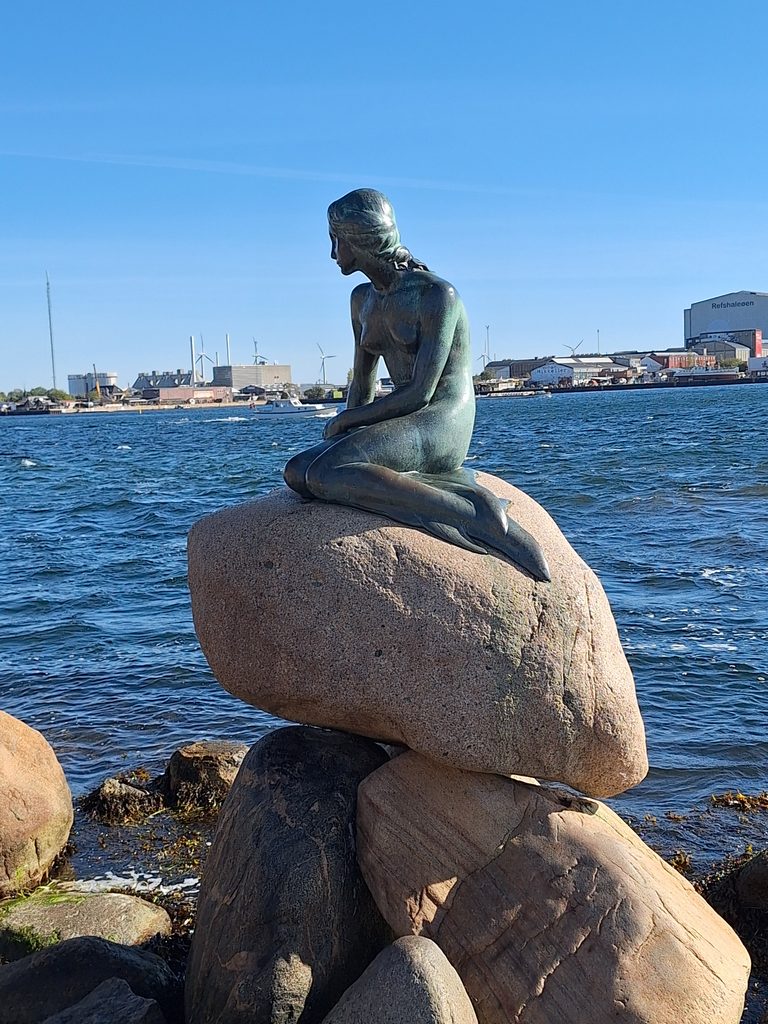
The Little Mermaid was commissioned in 1909 by Carl Jacobsen of the Carlsberg brewing family.
Inspired by Hans Christian Andersen’s famous fairy tale, the bronze sculpture was created by Edvard Eriksen and unveiled in 1913.
The ballerina Ellen Price inspired the head, while Eriksen’s wife, Eline, modelled for the body.
For such an internationally famous monument, the statue is surprisingly small.
Yet there she sits, quietly perched on her rock, gazing out towards the water.
After managing to take a few photographs, I decided to escape the crowds and continue walking.
Kastellet Fortress — Copenhagen’s Star-Shaped Defence
A short distance away stands Kastellet, one of Northern Europe’s best-preserved historic fortifications.
From above, its outline forms a distinctive five-pointed star, surrounded by wide moats and substantial earthworks.

Construction began in 1626 under King Christian IV, although financial difficulties delayed progress.
Later, King Frederik III continued the project, and Dutch military engineer Henrik Ruse strengthened the fortifications following conflicts with Sweden during the 1650s and 1660s.
The great grassy ramparts were designed to absorb cannon fire and protect the buildings within.
It was an ingenious defensive arrangement for its time.
Walking along the raised earthworks, I enjoyed excellent views across Copenhagen’s harbour.
Inside the fortress, rows of long, orange-washed buildings reminded me of old military barracks.
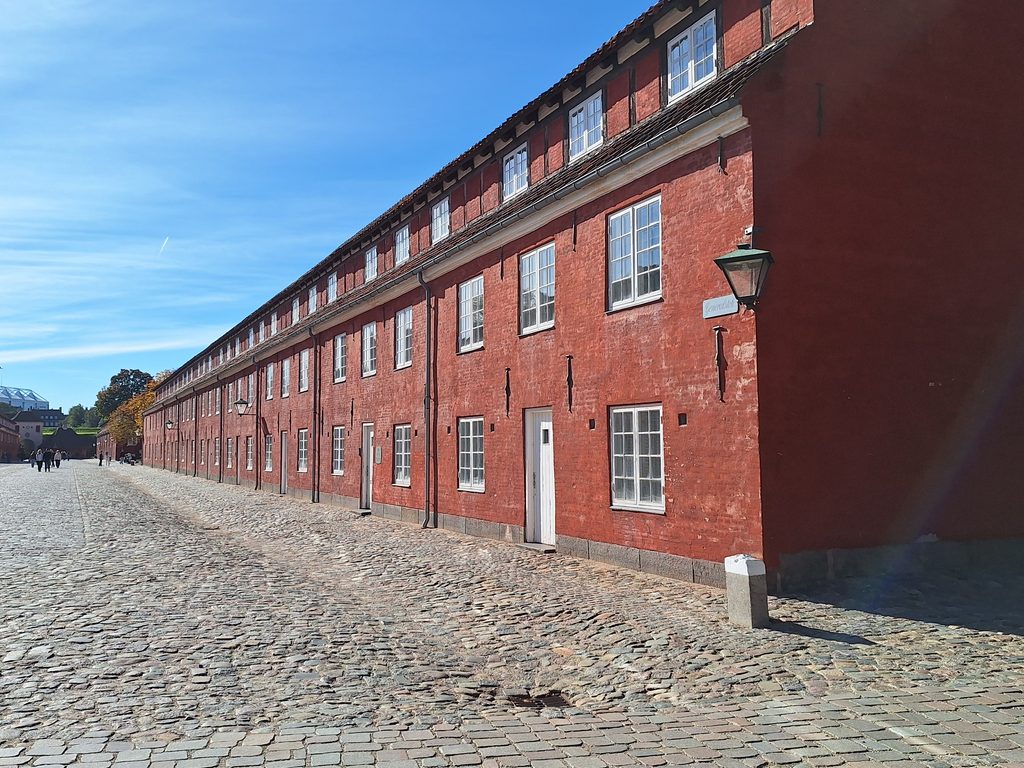
Similar houses outside the walls continued the architectural theme.
Although Kastellet remains under the authority of Denmark’s Ministry of Defence and contains military offices, much of the surrounding area feels like a peaceful public park.
It was difficult to imagine the military tension that once surrounded these quiet grounds.
Gefion Fountain — A Legend Carved in Stone
Leaving the fortress, I crossed a bridge and arrived at the impressive Gefion Fountain.
This dramatic monument depicts Gefjon, a goddess from Norse mythology, driving four enormous oxen.
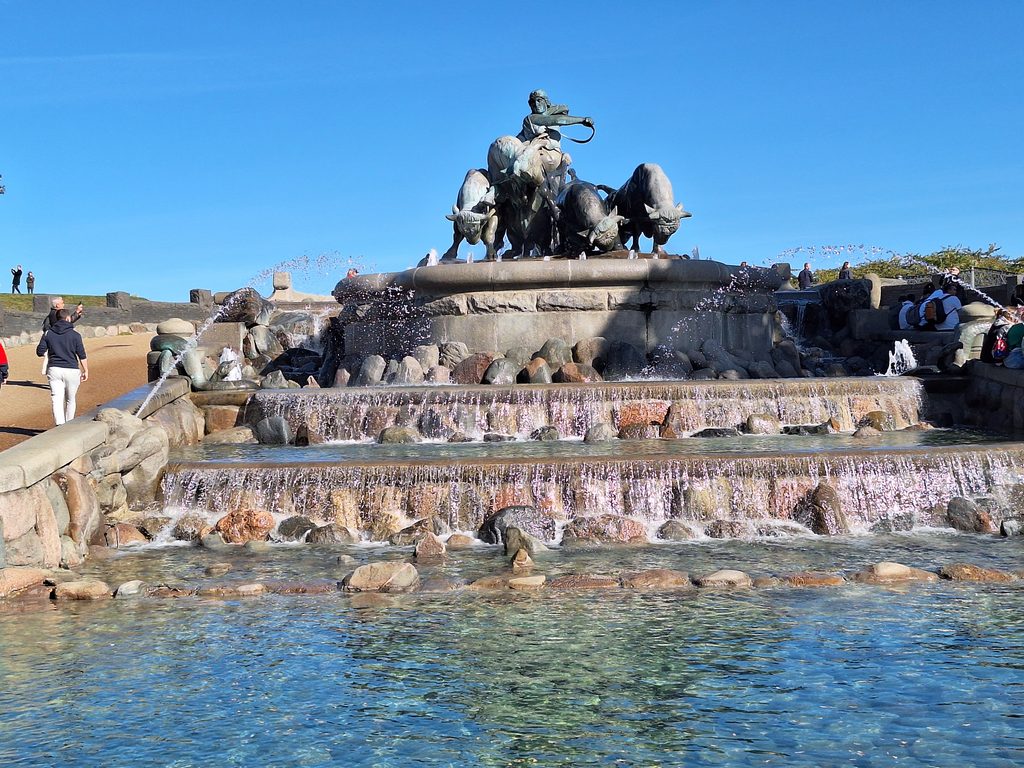
According to legend, the oxen were actually her sons, transformed into animals to help her plough a vast piece of land from Sweden.
The land they created became Zealand, the island on which Copenhagen stands.
Water cascades around the powerful sculptures, adding movement and energy to the scene.
It’s a wonderful example of how Denmark’s ancient mythology continues to influence its public art.
St Alban’s Church — Copenhagen’s English Church
Beside the fountain stands St Alban’s Church, commonly known as the English Church.

Built between 1885 and 1887, it was established to serve Copenhagen’s Anglican community.
The Gothic Revival building looks almost as though it has been transported from the English countryside.
Its stone walls, pointed windows and elegant tower are particularly attractive.
The church also has an interesting connection to the British royal family.
Its tower was fitted with tubular bells because the structure could not support the weight of traditional church bells.
Eight bells were donated by Albert Edward, Prince of Wales, who later became King Edward VII.
In 2013, Prince William supported the addition of seven more, bringing the total to fifteen.
Today, the bells are controlled electronically.
Inside, I found the familiar beauty of a traditional church: fine craftsmanship, carefully detailed furnishings and a peaceful atmosphere.
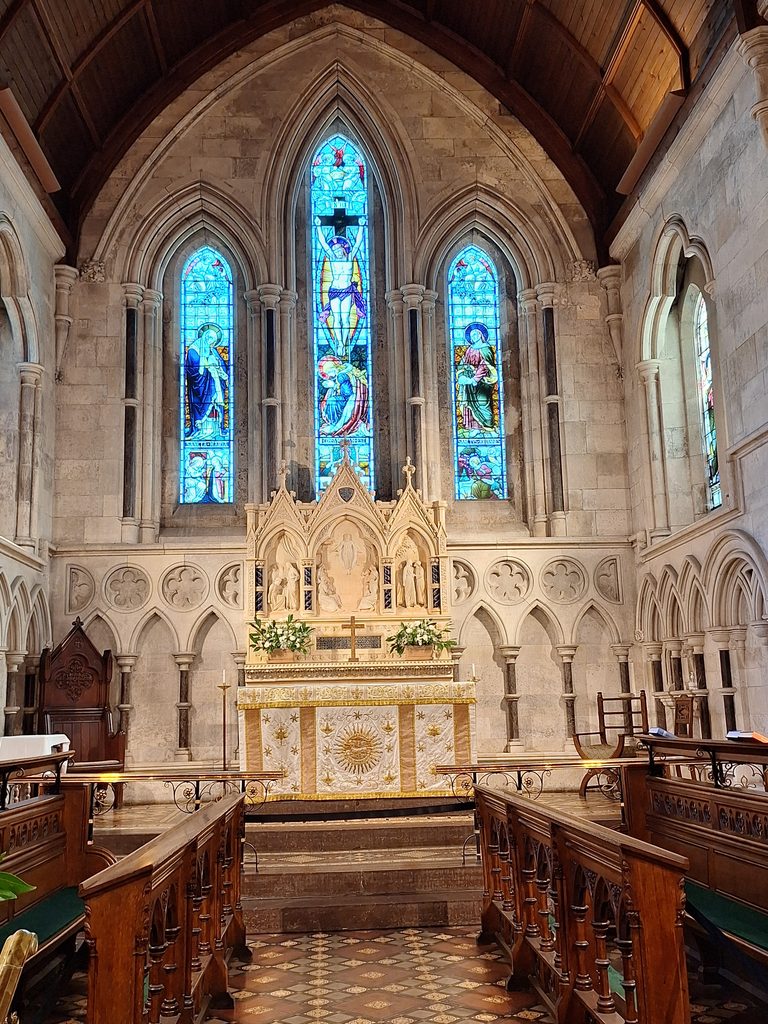
After travelling through so many European countries, I still find myself drawn into churches.
Each one has its own story to tell.
Alexander Nevsky Church — A Russian Connection
Continuing west, I passed one of Copenhagen’s surviving World War II bunkers.
Most are locked and inaccessible.
I couldn’t help thinking how interesting it would be if someone converted one into a small underground café or bar.
Soon afterwards, I reached Alexander Nevsky Church, Copenhagen’s Russian Orthodox church.
Built in 1883, it commemorates the marriage of Alexander Alexandrovich, later Tsar Alexander III, and Princess Dagmar of Denmark.
The project was funded by the future Tsar and reflected the close dynastic connections between Denmark and imperial Russia.
Alexander’s wife later became known as Empress Maria Feodorovna.
Apparently, there were concerns about the church’s location because Orthodox tradition generally favoured free-standing religious buildings.
The church occupies an unusual position within Copenhagen’s streetscape.
When I arrived, a service was underway, so I waited quietly until it was appropriate to take photographs.
The interior was dark and atmospheric, with substantial wooden panelling and subdued lighting.

It created a very different feeling from the bright, open interiors of many Lutheran churches I had visited.
Frederik’s Church — The Marble Church
A short walk brought me to Frederik’s Church, more commonly known as the Marble Church.
Its enormous green dome dominates the surrounding Frederiksstaden district.

With a diameter of approximately 31 metres, the dome is one of the largest in Scandinavia.
The church was designed in the 18th century by architect Nicolai Eigtved as part of a grand royal building programme.
Work began in 1749, but construction eventually stopped in 1770.
For more than a century, the unfinished building stood as an enormous ruin.
It wasn’t until the late 19th century that the project was finally completed.
Inside, the scale is breathtaking.
The dome rises high above the congregation, surrounded by elegant decoration and carefully proportioned architectural details.
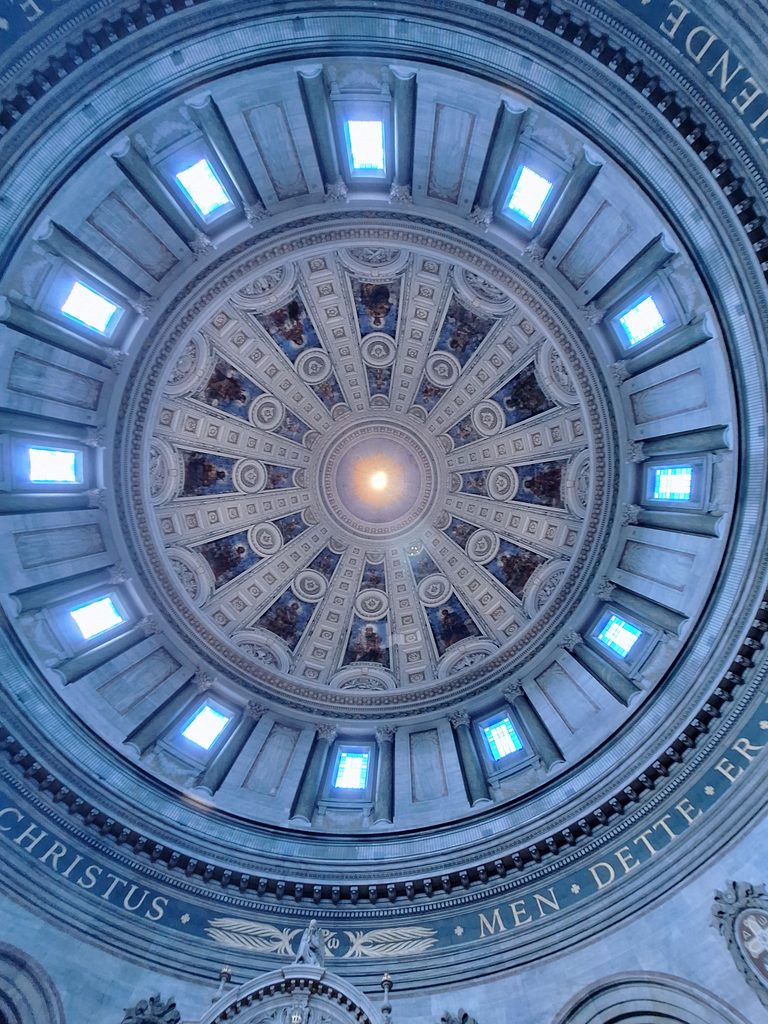
I found a place to sit quietly and take everything in.
Moments like these are important during a long journey.
Sometimes you need to stop looking, stop walking and simply appreciate where you are.
Frederiksstaden’s Historic Mansions
My next stop was the Moltke Mansion.

Originally constructed around 1700–1702, the building was once known as Gyldenløve’s Little Mansion.
Its exterior features elaborate sandstone carvings, including elephants and lions.
In 1842, it was acquired by Adam Wilhelm Moltke, who later became Denmark’s first Prime Minister under the constitutional monarchy.
I managed to enter the hallway, but the interior doors were locked.
That was as far as I could go.
Still, even the entrance revealed something of the elegance associated with Copenhagen’s historic aristocratic residences.
Nearby stood the Odd Fellows Mansion.
Unfortunately, it too was closed.
The building has been associated with the Independent Order of Odd Fellows since 1900.
The organisation originated in Britain and promotes the principles of friendship, love, truth and charitable service.
I would have enjoyed seeing inside, but yet again I was reminded that travelling doesn’t mean every building will open its doors for you.
Amaliehaven Gardens — A Waterfront Oasis
Making my way back towards the waterfront, I arrived at Amaliehaven.
This attractive formal garden was created in 1983 on the site of a former shipyard.
Its symmetrical layout includes a central fountain, with paths and planting connecting the harbour to nearby Amalienborg Palace.
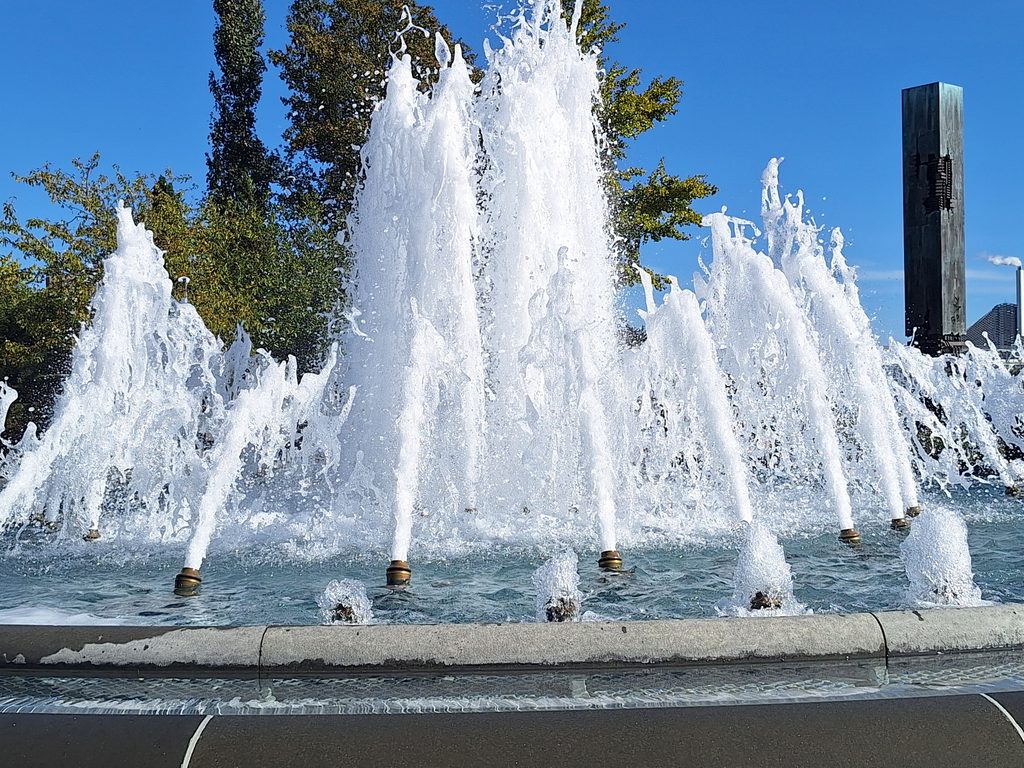
The gardens were particularly pleasant in the sunshine.
Flowers filled the air with their fragrance, and the trees provided a welcome touch of greenery after hours among Copenhagen’s historic buildings.
Nearby, a vendor was selling oysters accompanied by glasses of wine or beer.
It added a rather sophisticated touch to the waterfront atmosphere!
Amalienborg Palace — Home of Denmark’s Royal Family
Across from the gardens stands Amalienborg Palace, the official residence of the Danish royal family.
The complex is arranged around an impressive octagonal courtyard.
Four almost identical Classical palaces face one another, with an equestrian statue of King Frederik V standing at the centre.
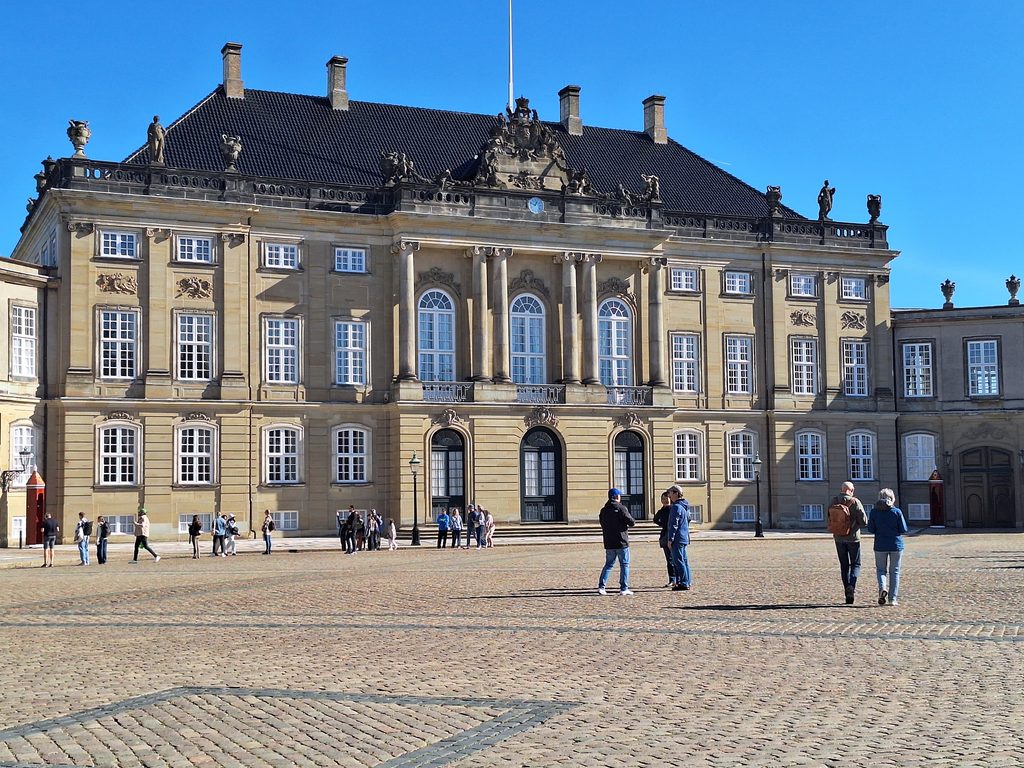
Originally, these residences were constructed for wealthy noble families.
However, after a fire destroyed Christiansborg Palace in 1794, the royal family moved into Amalienborg.
It has remained a royal residence ever since.
When I arrived, the courtyard was extremely busy.
I counted at least nine groups of tourists moving around the square.
It was difficult to appreciate the elegant symmetry of the buildings with so many people competing for photographs.
But Amalienborg has witnessed far more dramatic events.
On 9 April 1940, during the German invasion of Denmark, Danish royal guards clashed with German troops in the area.
Standing in the square today, surrounded by tourists, it’s difficult to imagine the tension and uncertainty of that morning.
Evening Reflections — Walking Through Copenhagen’s History
By late afternoon, my legs had done enough.
I returned to the Old English Pub for a well-earned pint before catching the train back towards Valby.
On the way to Alexandra’s apartment, I picked up a chicken kebab for dinner.
Back at the apartment, Alexandra was interested to hear about my day.
She laughed when I described how I’d nearly been run over while crossing Copenhagen’s cycle lanes.
I was quickly learning that bicycles rule this city!
You really do have to pay attention.
We spent some time discussing the places I’d visited, and I enjoyed hearing her perspective as someone who had lived in Denmark for so many years.
There is something valuable about combining a visitor’s curiosity with a local resident’s understanding.
A Tip for Fellow Travellers
Copenhagen is a wonderful city to explore on foot, although attractions and individual admission fees can quickly become expensive.
For visitors planning to enter several museums and historic buildings, the Copenhagen Card may be worth considering.
It includes public transport and admission to numerous attractions, including museums in the city and destinations such as Kronborg Castle and the Louisiana Museum of Modern Art.
For senior travellers working with a budget, it’s worth comparing the price of the card with the attractions you genuinely intend to visit.
I certainly discovered that walking, using public transport and taking advantage of free-entry sites could help keep costs down.
Looking Ahead
Another full day was complete.
I’d explored Copenhagen’s waterfront, visited historic churches, walked through military fortifications, discovered royal palaces and enjoyed yet more reminders of Denmark’s fascinating history.
My legs were tired, but the experiences made every kilometre worthwhile.
Tomorrow I would be leaving Denmark behind and continuing south towards Hamburg in Germany.
Another country, another chapter and another step into the unknown.
Andrew — Inspire Seniors Travel
Stepping out of fear, one step at a time, into the unknown.
inspireseniorstravel.com