

Germany — Days 320–327: Between Grit and Grandeur
The Road South — From Copenhagen to Hamburg
I left Copenhagen early, slipping out of Alexandra’s flat and making my way towards the bus terminal. Another country, another journey, and another capital behind me.
The FlixBus was only a few minutes late, and before long, we were travelling south through Denmark. Autumn was beginning to make its presence felt. The leaves were thinning, the colours across the fields were becoming more subdued, and the countryside seemed to be preparing itself for winter.
I’d expected us to travel towards Odense and cross the magnificent Great Belt Bridge, an 18-kilometre connection between eastern and western Denmark. Instead, the bus headed south towards Rødbyhavn, where we would take the ferry across to Germany.
The Princess Benedikte — Crossing the Baltic
After waiting around half an hour, we were finally waved forward to board the M/F Prinsesse Benedikte.
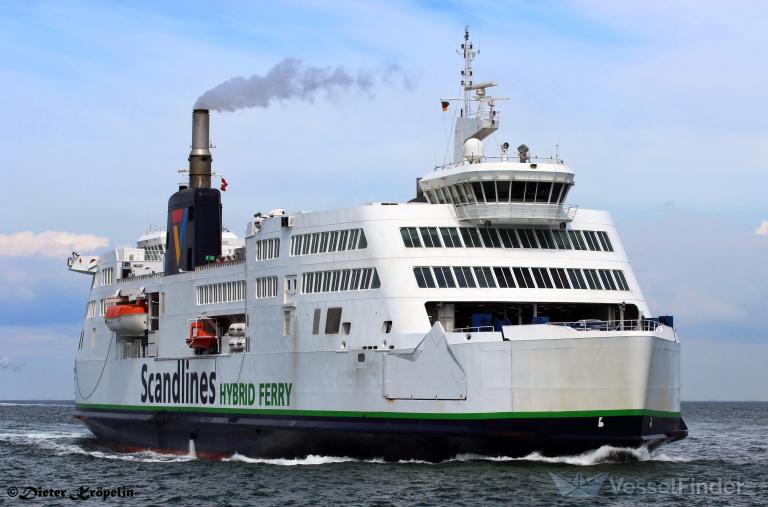
The route is part of the historic Vogelfluglinie, or Bird Flight Line, an im
portant transport corridor connecting Scandinavia with continental Europe.
Once aboard, passengers made a beeline for the cafeterias. I’d already eaten breakfast, so I treated myself to a beer and found a quiet seat beside a window.
The sea was reasonably calm, although the ship gave the occasional shudder as it passed through the waves.
Getting back to the bus turned out to be more challenging than the crossing itself!
Deck 2 had both inner and outer sections, separated by steel walls. I walked up and down searching for the bus, becoming increasingly concerned that everyone had boarded and I was about to be left behind.
Eventually, I spotted it tucked away in another section.
Relief!
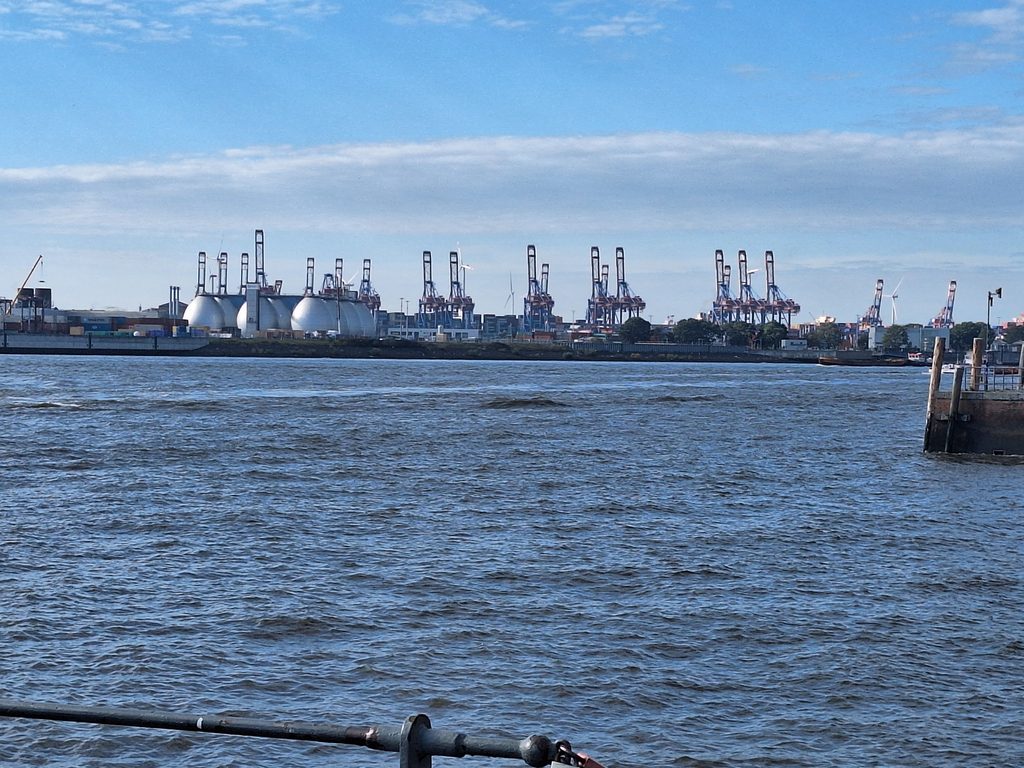
Arriving in Germany, I expected another border crossing with passport checks and officials. Instead, there was very little ceremony. Our tyres were sprayed as a precaution against animal disease, and we were soon travelling through the German countryside.
The skies were blue, the fields were green, and for a while everything seemed to be going according to plan.
That wouldn’t last.
A Rocky Start in Hamburg
Approaching Hamburg, traffic slowed to a crawl.
Ahead of us was a road accident involving two badly damaged cars. There were seven ambulances, two fire engines, several first responders, police vehicles and flashing emergency lights everywhere.
Whatever had happened, it had brought traffic to a standstill.
We eventually arrived in Hamburg almost an hour late.
From the bus terminal, I caught two local trains towards my hostel, stopping along the way to buy some groceries.
I couldn’t believe the price of eggs. One carton of ten was marked at €15! I eventually found six for €4, which seemed considerably more sensible.
However, the biggest surprise was waiting at my accommodation.
The hostel Wi-Fi apparently worked with Apple devices but wouldn’t connect properly to my Android phone or Windows computer.
For most travellers, this might be a minor inconvenience. For me, maintaining Inspire Seniors Travel, writing my diary, organising photographs and planning my next destination, having reliable internet access is essential.
I cancelled my second night and booked another hostel nearby.
Fortunately, I managed to find Wi-Fi across the road and salvage something of the evening.
Back at the hostel, I got talking to travellers from Turkey, India and Germany. We shared stories of our journeys, our homes and our experiences.
It’s remarkable how often a difficult day can be improved by a simple conversation with a complete stranger.
Hamburg’s Red-Light District — Another Side of the City
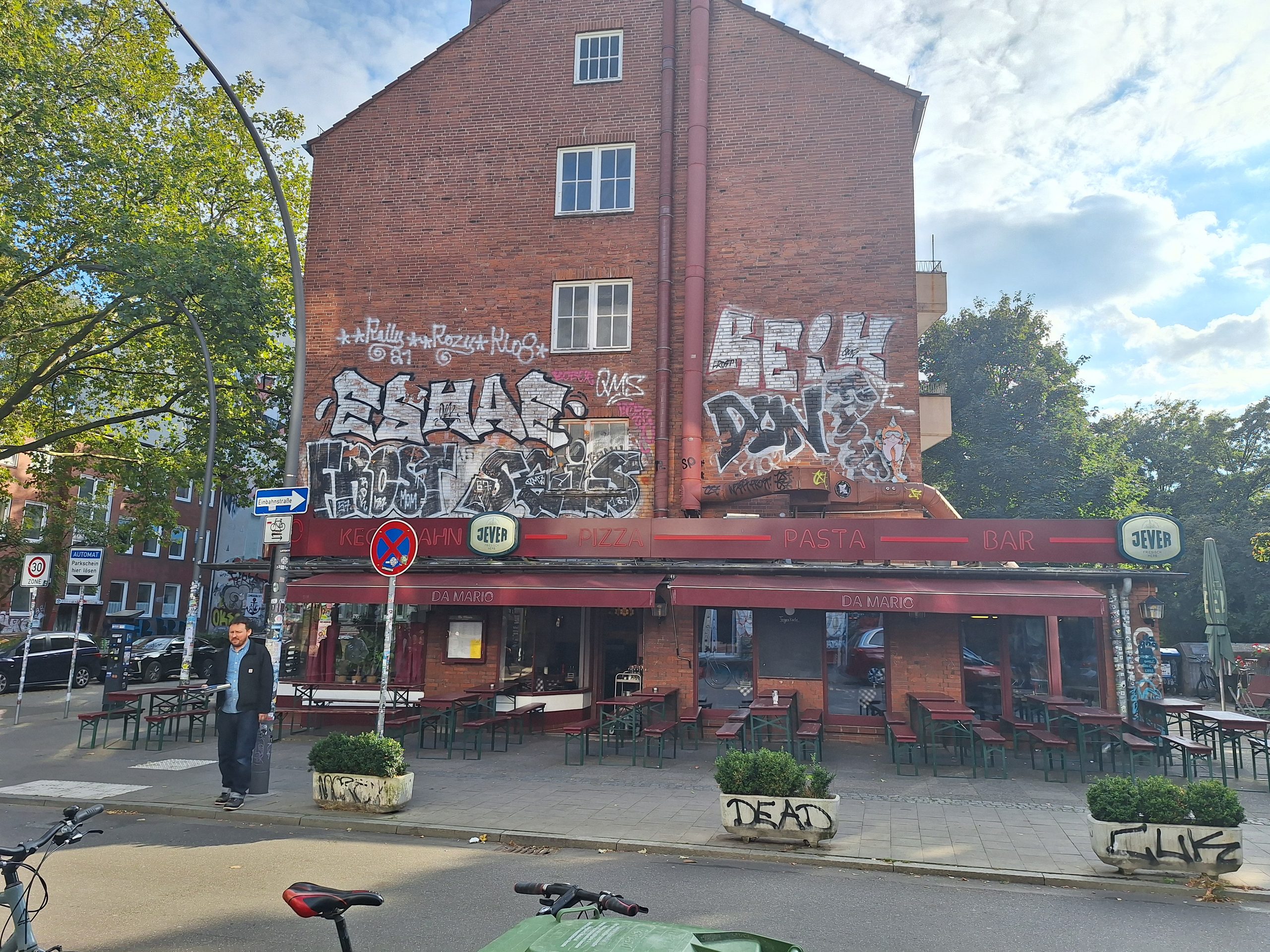
My new hostel was close to Hamburg’s red-light district, and the surrounding streets were certainly an eye-opener.
Graffiti covered walls, doors, buildings and even public toilets.
I watched maintenance workers cleaning graffiti from walls along the promenade, only for more to appear almost immediately.
It must be an endless and frustrating job.
There’s a difference between street art that enhances a neighbourhood and graffiti that simply leaves a place looking neglected. Much of what I saw here fell into the second category.
The area had a rough atmosphere, and it wasn’t somewhere I could imagine wanting to live.
Of course, a city shouldn’t be judged entirely by one neighbourhood. Hamburg has a remarkable history, and I was determined to see more of it.
Hamburg’s Maritime Heritage — The Fish Market
I made my way towards the waterfront and the famous Altona Fish Market.
Hamburg has been one of Europe’s great trading ports for centuries, and its connection with the sea is visible everywhere.
The fish market dates back to 1703, when local fishermen were permitted to sell their catch on Sundays before it spoiled.
Over the centuries, it became a major marketplace selling not only fish but also fruit, vegetables and many other goods.
Its impressive red-brick fish auction hall, constructed in the 1890s, remains one of the area’s distinctive landmarks.
Even with Oktoberfest decorations around the waterfront, it wasn’t difficult to imagine the generations of fishermen, merchants and dock workers who had passed through this place.
The Soviet Submarine U-434
Further along the waterfront, I came across something completely different.
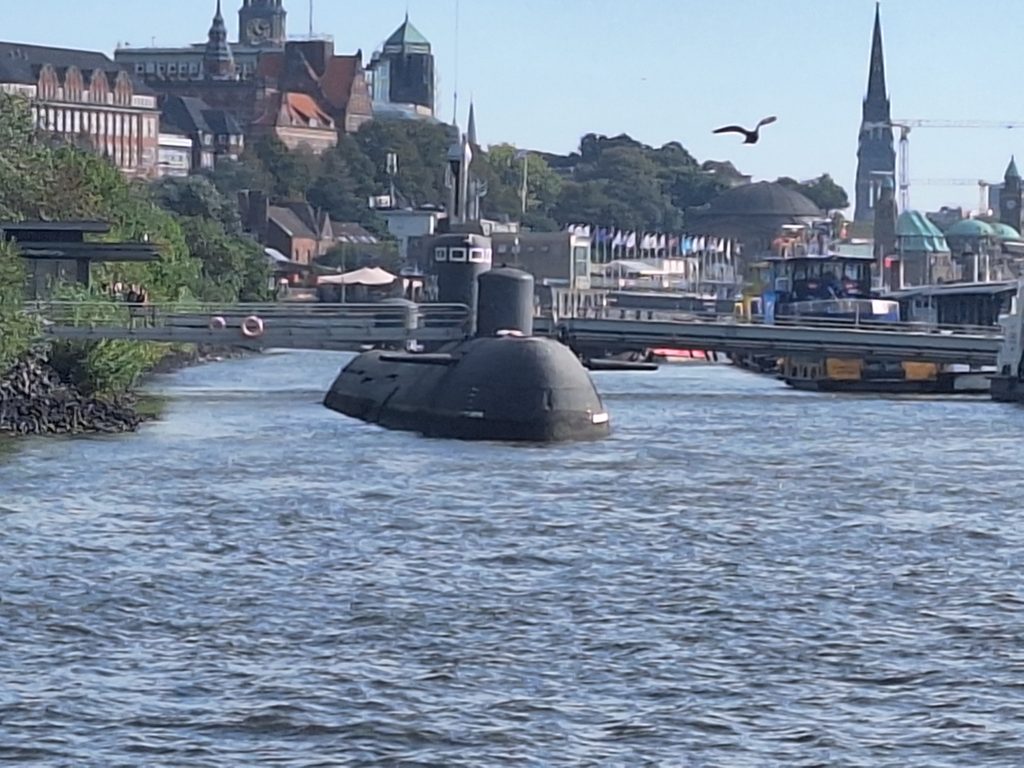
Moored at the dock was the former Soviet submarine B-515, now known as U-434.
This Tango-class submarine served during the Cold War, when the world’s major powers were engaged in an extraordinary contest of military technology and intelligence gathering.
The submarine’s hull had been designed with acoustic protection to help reduce its detectability underwater.
Today, instead of enemy sonar, its occupants are mostly pigeons!
The vessel was looking rather weathered, and the birds had certainly left their mark.
There was an admission charge of around €30, which I decided was more than I wanted to pay.
I was content to admire the submarine from outside and reflect on how something once associated with secrecy and military power had become a tourist attraction.
Rickmer Rickmers — A Beer on a Historic Sailing Ship
A short distance away stood one of Hamburg’s most impressive maritime landmarks, the magnificent three-masted sailing ship Rickmer Rickmers.
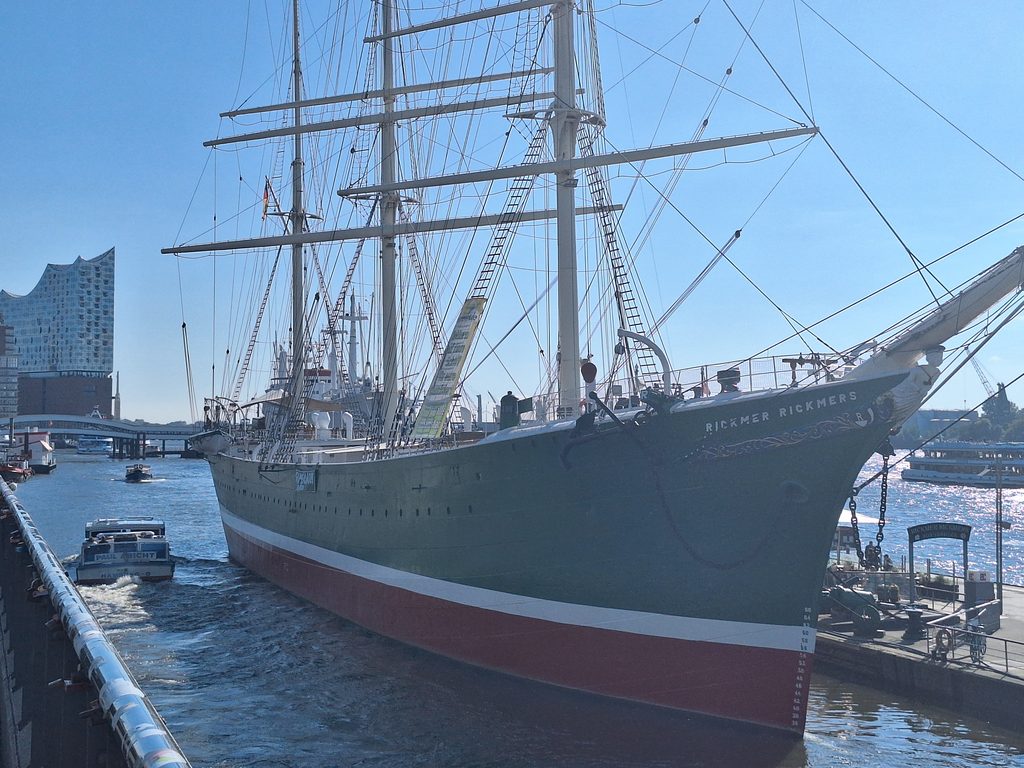
Launched in 1896, she once carried goods such as rice and bamboo across the world’s oceans.
Her long history included service under different national flags and a period connected with Britain’s wartime maritime operations.
Today, the ship is preserved as a museum and visitor attraction, with a restaurant and other activities on board.
Standing beside her, looking upwards towards the towering masts and rigging, I couldn’t help thinking about the sailors who once crossed oceans aboard ships like this.

Life at sea in those days must have been incredibly demanding.
I decided a beer on her deck was a far more attractive proposition than another museum admission.
Sitting there, with the masts rising above me and Hamburg’s waterfront stretching into the distance, I finally began to enjoy the city.
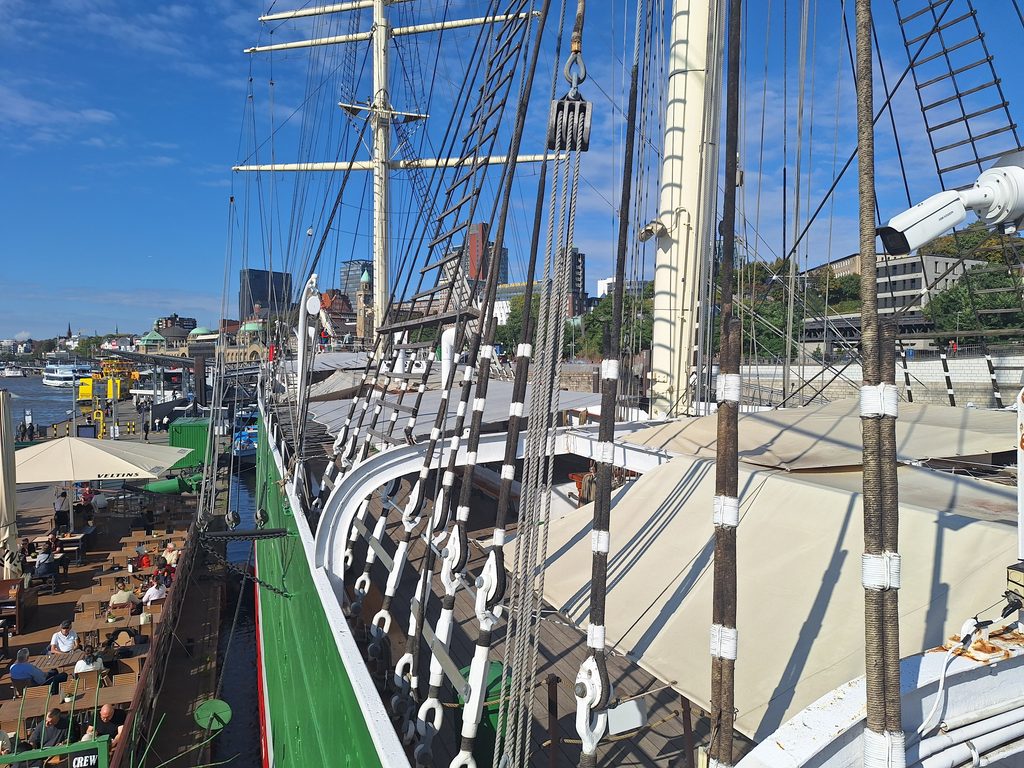
Sometimes the simplest moments are the best.
Bureaucracy, Beer and a Very Disappointing Pizza
Unfortunately, my difficulties weren’t over.
My mobile SIM card had become another problem, and what should have been a straightforward task turned into hours of frustration.
There were online registrations, identity checks, passport requirements and shop assistants who either couldn’t or wouldn’t help.
When you’re travelling alone and rely on your phone for navigation, communication, transport and accommodation bookings, these things become more than minor inconveniences.
Eventually, tired and hungry, I abandoned the effort and went looking for something to eat.
A pizza seemed a safe option.
It wasn’t.
The meal was disappointing, and I told the waiter that food is a form of art. When somebody prepares it without care, the result is obvious.
He didn’t argue.
The Green Bunker of St Pauli
The following morning, as I headed towards Hamburg’s Town Hall, I passed an extraordinary building.
Rising above the surrounding streets was the enormous St Pauli Bunker, a World War II anti-aircraft structure that has been transformed into one of Hamburg’s most unusual landmarks.
What caught my attention was the vegetation growing across its upper levels.
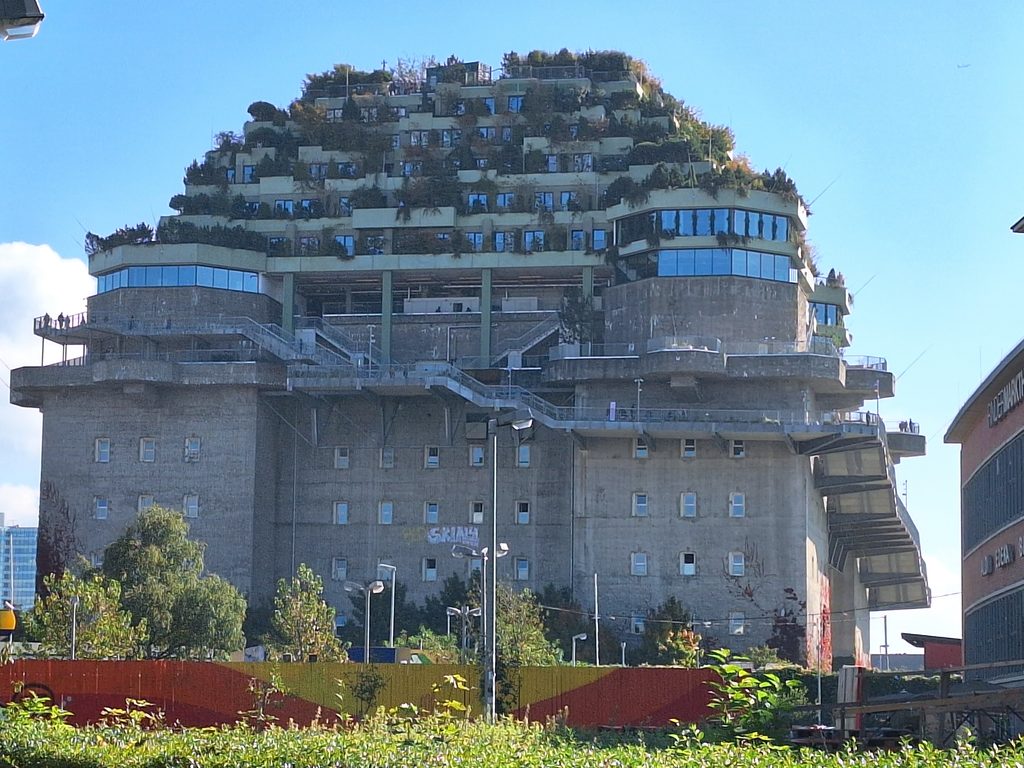
Trees, shrubs and plants now cover parts of the building, creating what is known as the Green Bunker.
It’s a remarkable contrast: a massive concrete military structure, originally associated with war and destruction, gradually being transformed into something greener and more welcoming.
It was certainly unlike anything I’d expected to find in the middle of Hamburg.
I also returned to the mobile phone shop and finally obtained a refund for my SIM card.
A visit to a Telekom shop produced a completely different experience. Within ten minutes, I was registered, connected and ready to go.
Why couldn’t the first shop have managed that?
Another reminder that persistence can sometimes be the traveller’s most valuable possession.
Hamburg Rathaus — A Magnificent Town Hall
My next stop was Hamburg’s magnificent Rathaus, or Town Hall.
Completed in 1897, the building replaced an earlier town hall destroyed in the great fire of 1842.
The architecture is extraordinary, with an imposing façade, ornate details and a grandeur that reflects Hamburg’s historic prosperity.
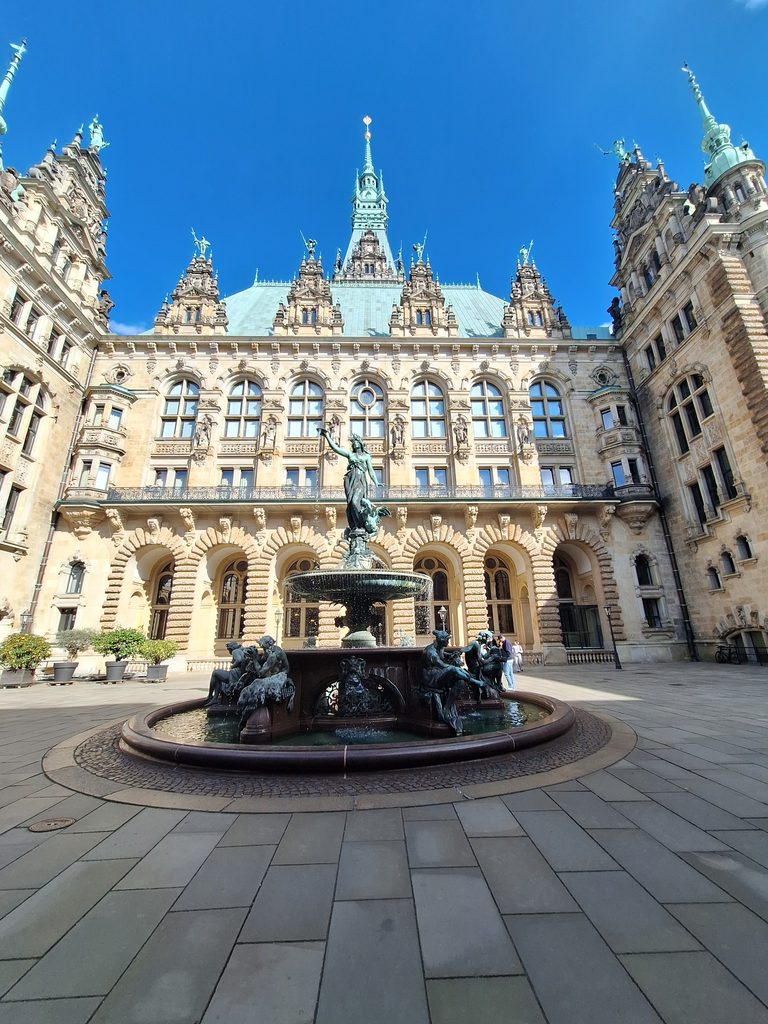
The building contains an astonishing 647 rooms, more than Buckingham Palace, and its interior is every bit as impressive as its exterior.
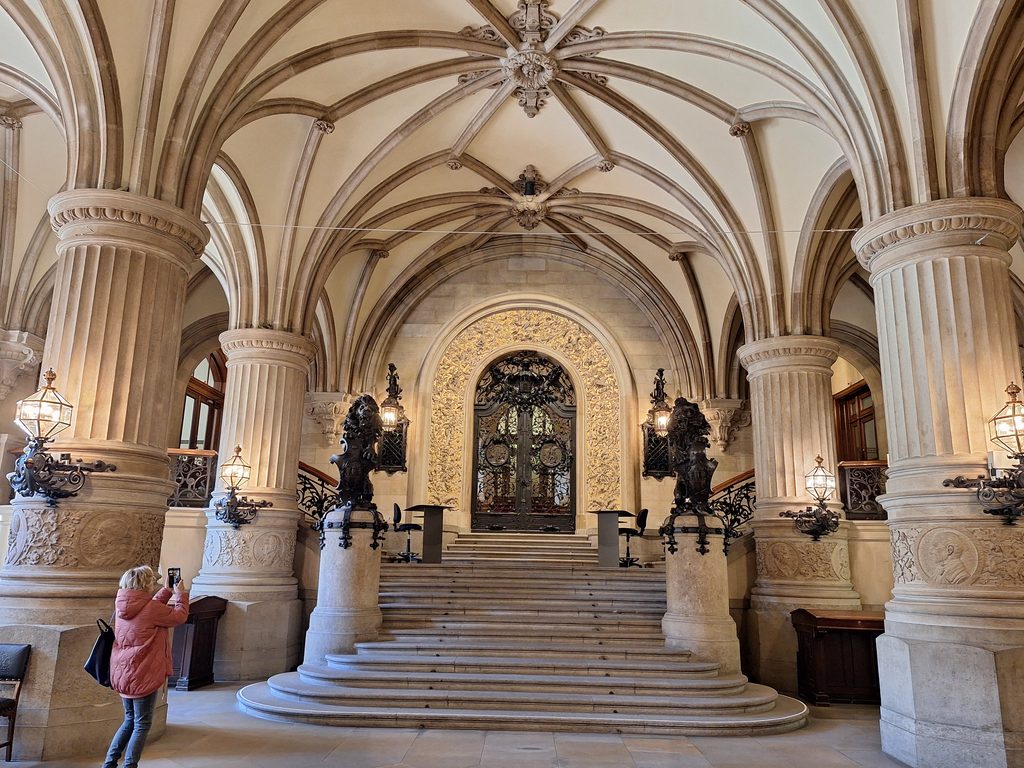
Hamburg suffered devastating bombing during World War II, yet the Rathaus survived with comparatively limited damage.
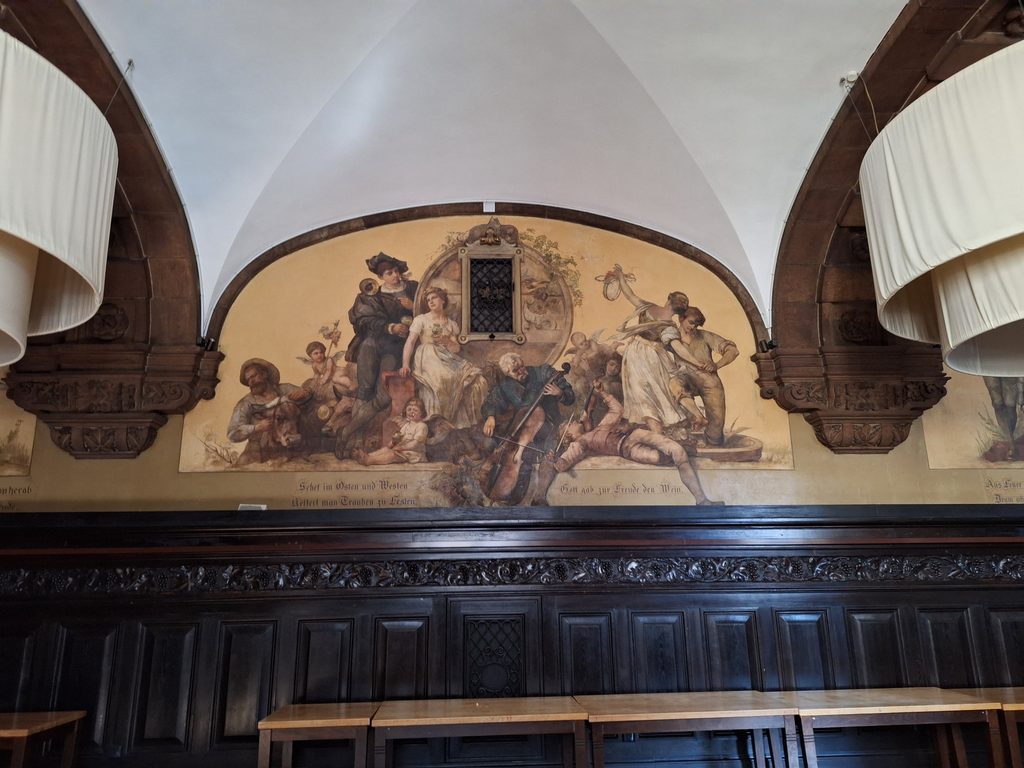
Standing in its courtyard, surrounded by such impressive architecture, I found myself thinking about the resilience of cities.

Buildings are destroyed, neighbourhoods are rebuilt, generations pass, and somehow the life of a city continues.
Inside, I found a restaurant and enjoyed a beer while chatting with the barman.
He was planning to travel through Thailand, Vietnam and Australia.
Naturally, I suggested he should add New Zealand to his itinerary.
It would be a shame to travel all that distance and miss our beautiful country!
Reflections on Hamburg
Hamburg was a city of contradictions.
Its magnificent Town Hall, historic sailing ships and maritime heritage told a story of enterprise, ambition and centuries of trade.
Yet other parts of the city left me disappointed.
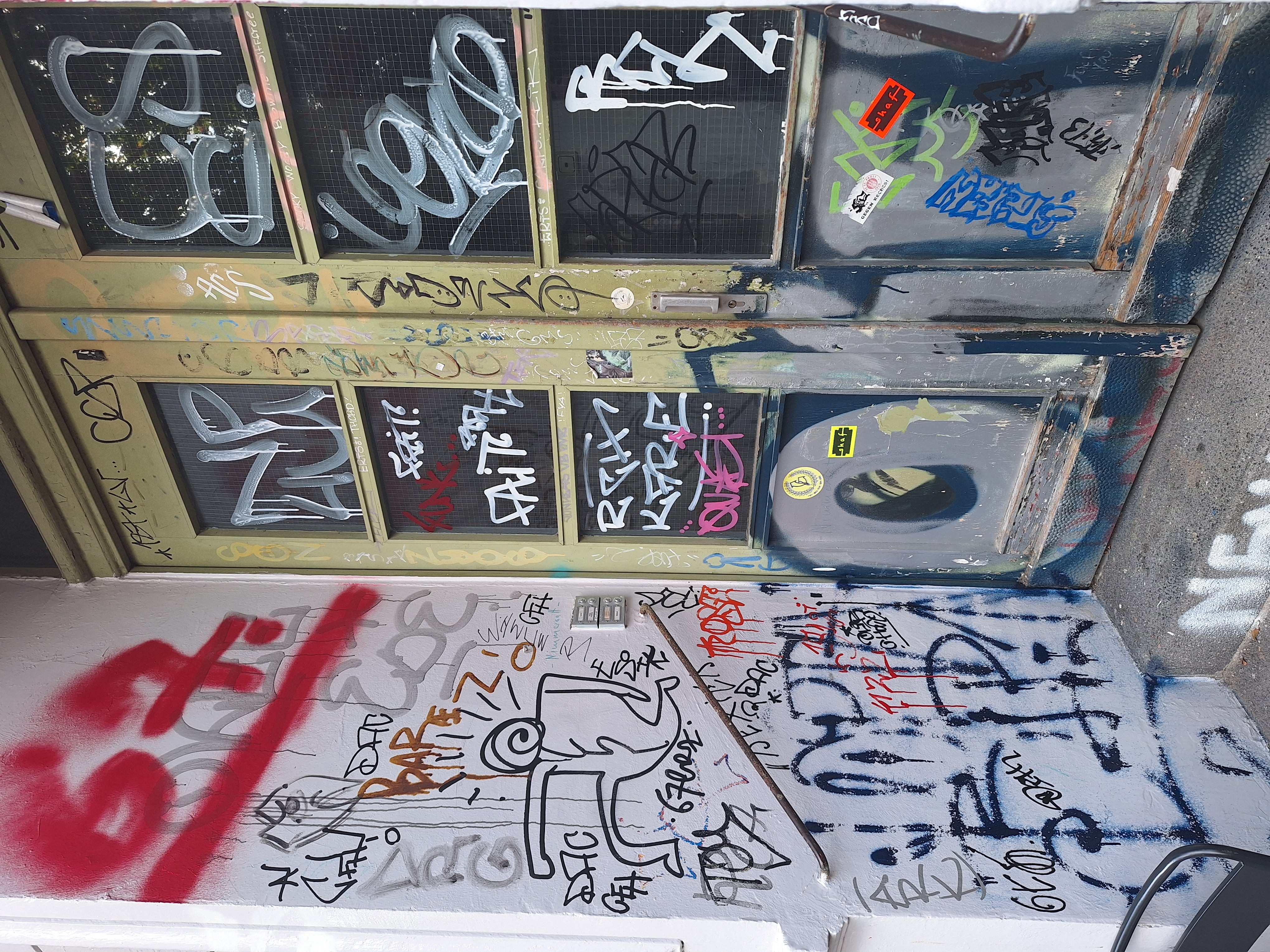
Graffiti, neglected buildings, rubbish, drug dealing in public view and people searching through bins for discarded bottles created a very different impression.
I walked more than ten kilometres exploring Hamburg, bringing my total walking distance since the beginning of this journey to approximately 2,064 kilometres.
There were moments I genuinely enjoyed, particularly standing aboard Rickmer Rickmers and exploring the historic waterfront.
But Hamburg tested my patience.
The accommodation difficulties, problems with the mobile phone and general atmosphere in some neighbourhoods took some of the pleasure out of my visit.
Travel isn’t always about beautiful scenery, magnificent buildings and wonderful experiences.
Sometimes it’s frustrating, uncomfortable and downright exhausting.
But those experiences are also part of travelling through the world rather than simply flying over it.
Tomorrow, it would be time to leave Hamburg behind and head to Berlin.
Day 324 — The Long Road to Berlin
Another Travel Day
I was up early and made my way towards the Green Bunker, where I would catch the train to the central transport connections for my bus to Berlin.
Breakfast was at McDonald’s, of all places.
Not exactly my favourite restaurant, and certainly not an exciting way to begin the day, but it provided something to eat before setting off.
The bus journey was scheduled to take around three hours and fifteen minutes.
I found a comfortable seat and settled in.
Everything went smoothly until we reached the outskirts of Berlin.
Then the traffic stopped.
For more than an hour, we crawled along as the minutes slipped away.
Several passengers became increasingly worried about missing onward connections. Their concerns were justified, as many had connecting buses waiting in Berlin.
Fortunately, the bus company handled the situation reasonably well, arranging alternative departures for those who had missed their connections.
Once we finally arrived at Berlin’s Central Bus Station, I set about finding my way to the hostel.
It was approximately 8.7 kilometres away, but thankfully there was a railway station close to the bus terminal.
Two train journeys later, I arrived at my accommodation.
Heart of Gold Hostel
My home for the next few days was the Heart of Gold Hostel.
The place had an unusual payment arrangement.
They accepted cards for accommodation and breakfast, but the bar operated on cash only.
I found this rather frustrating.
I’d largely stopped withdrawing cash several months earlier because using ATMs could cost me around €7 in fees, whereas paying directly in euros with my travel card avoided those charges.
Rather than pay to withdraw cash just to buy drinks at the bar, I visited a nearby bottle shop and bought something to accompany the spaghetti bolognese I already had.
The hostel was busy, particularly because the following day was a national public holiday.
One of the pleasures of hostel life is meeting unexpected people.
That evening, I got talking to two young men from Palmerston North in New Zealand.
When they learned about my family, it turned out they knew my son’s music, Lee Mvtthews, and had seen them perform in Napier.
What a small world!
Here I was, thousands of kilometres from New Zealand, meeting two strangers who were familiar with my son’s music.
I stayed up watching football before eventually heading to bed around 11.30 pm.
Tomorrow would be German Unity Day.
Hopefully, Berlin would provide a brighter experience than Hamburg.
Day 325 — German Unity Day: Finding My Way Around Berlin
A Public Holiday and Enormous Crowds
I was awake around 7 am.
In hostels, other travellers leaving early have a habit of waking everybody, particularly when they leave packing their bags until the last possible moment.
After breakfast, I finished another instalment of my travel blog and set off around 11 am.
Today was German Unity Day, celebrated on 3 October to commemorate the reunification of East and West Germany in 1990.
Unfortunately, I’d underestimated how many people would be out celebrating.
My first difficulty involved my phone.
The mobile internet connection still wasn’t working correctly, which meant I couldn’t reliably use an electric scooter. Without a connection, I might not be able to end the hire properly, and the charges could continue.
With the shops closed for the holiday, I would have to wait until Saturday to get the problem sorted.
Walking it would be.
The Reichstag — Germany’s Parliamentary Heart
My first destination was the Reichstag, home of the German Bundestag.
Constructed between 1884 and 1894, the building has witnessed some of the most dramatic events in modern European history.
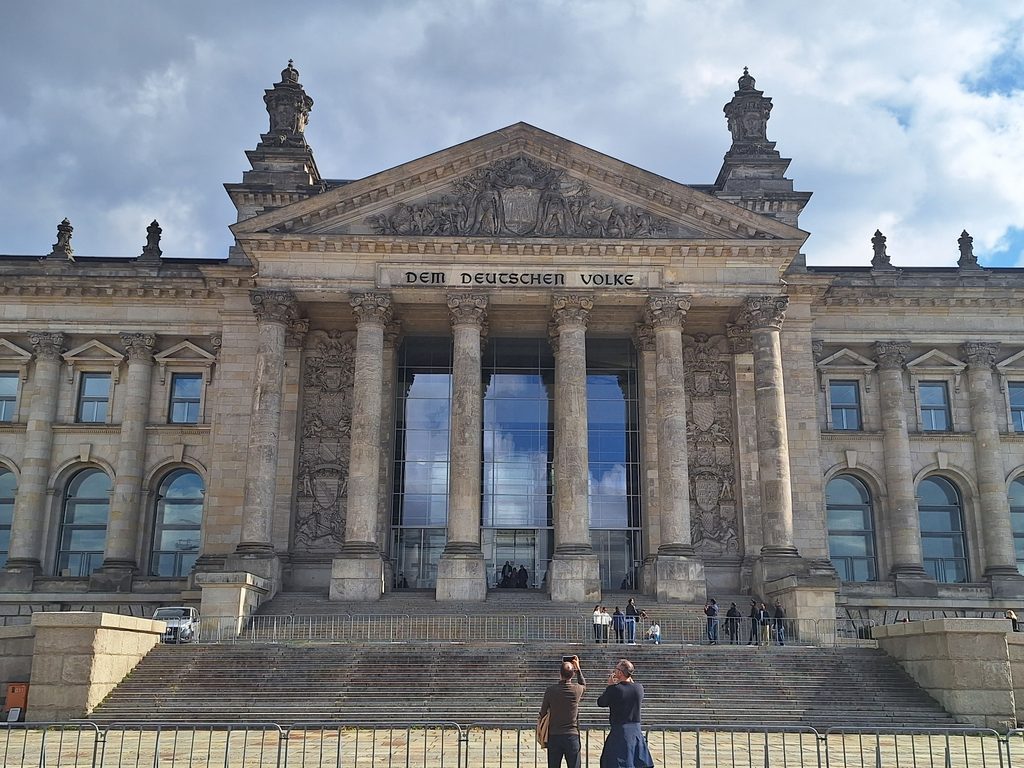
The Reichstag fire in 1933 became a pivotal event in Adolf Hitler’s consolidation of power.
During World War II, the building was badly damaged, and for decades after the war it stood as a reminder of Germany’s divided past.
Following reunification, British architect Norman Foster oversaw its transformation into the modern parliamentary building, incorporating the famous glass dome.
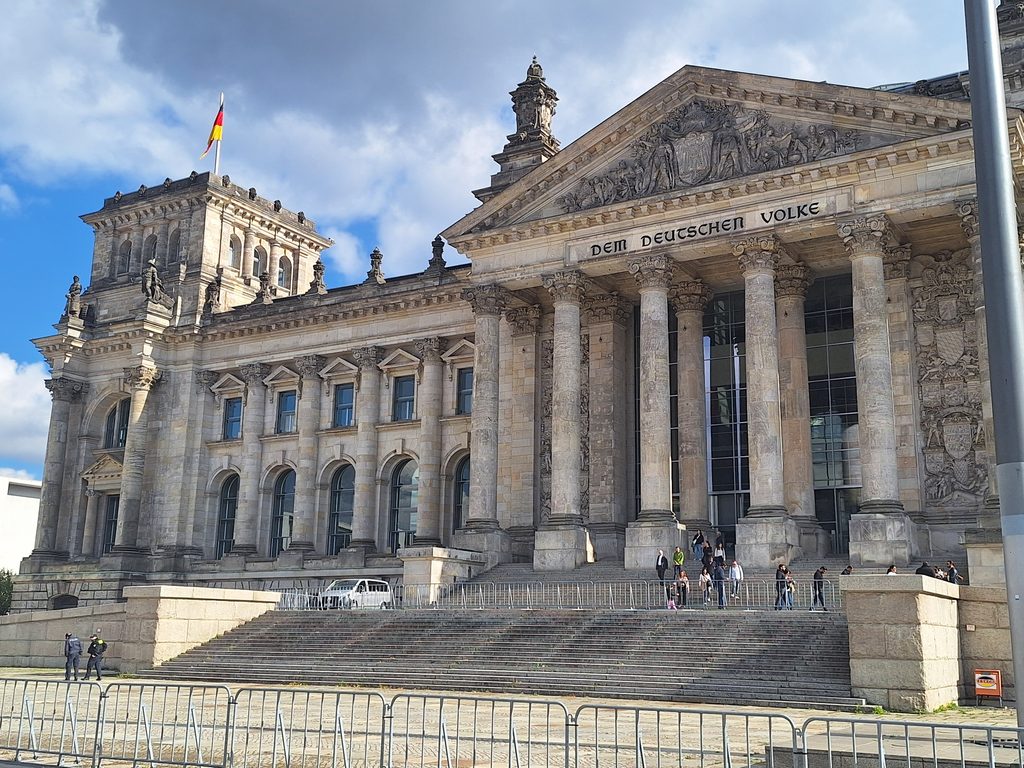
The dome symbolises openness and transparency in democratic government.
On this particular morning, however, the crowds were enormous.
Visitors needed advance reservations, and without reliable internet access I couldn’t arrange entry.
There was apparently also the possibility of visiting the restaurant with a booking.
Neither option was practical for me.
So I stood outside, admired the impressive architecture and took my photographs.
Not quite the visit I’d imagined.
Brandenburg Gate — A Symbol of Freedom
Next, I made my way towards one of Germany’s most famous landmarks, the Brandenburg Gate.

Built between 1789 and 1793, the neoclassical monument stands at the western end of Unter den Linden.
It is the only surviving example of Berlin’s historic city gates.
Over the centuries, the Gate has witnessed enormous political and social change.
During the Cold War, it stood near the Berlin Wall, becoming one of the world’s most recognisable symbols of a divided nation.
When the Wall opened in November 1989, the surrounding area became a centre of celebration.
Today, the Brandenburg Gate represents German reunification and the freedom that followed decades of division.
Unfortunately, being German Unity Day, the crowds were almost overwhelming.
Pariser Platz was packed with visitors, flags, cameras and people moving in every direction.
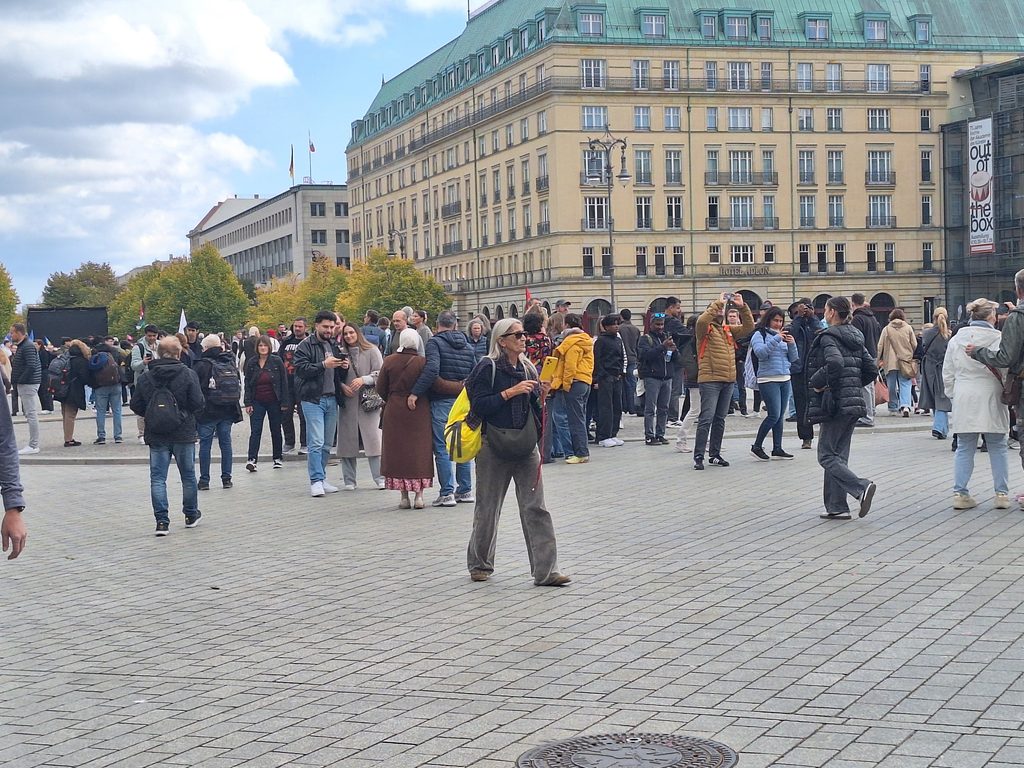
Trying to take a photograph without somebody walking into the picture was almost impossible.
I knew I was standing in a place of enormous historical importance, yet the sheer number of people made it difficult to appreciate properly.
Sometimes tourism itself gets in the way of seeing what you’ve travelled so far to experience.
An Unexpected Encounter — The Mainz Carnival Ranzengarde
Walking back towards the Brandenburg Gate, I came across a colourful group of people dressed in elaborate military-style uniforms. At first glance, they looked like soldiers from another era, but there was something rather theatrical and humorous about their appearance.

I discovered a fascinating connection with the Mainz Carnival tradition, particularly the famous Mainzer Ranzengarde.
Founded in 1837 by Johann Maria Kertell, the Ranzengarde is affectionately known as the Mutter aller Mainzer Garden, meaning the Mother of All Mainz Carnival Guards.
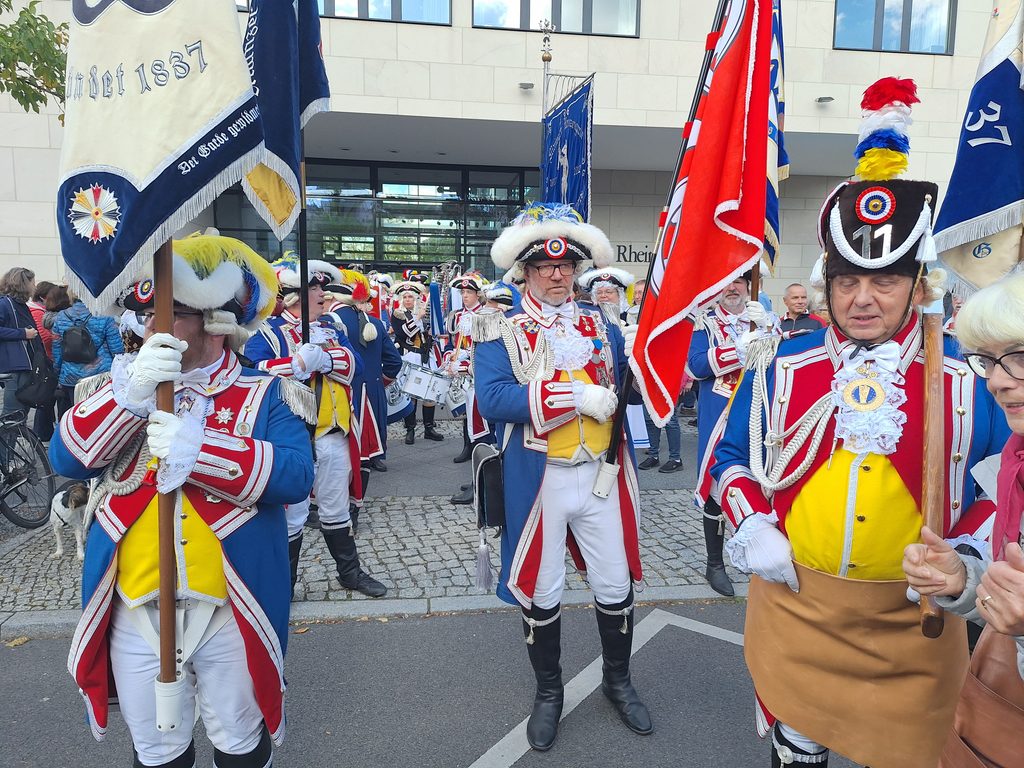
The organisation was originally created as a humorous parody of the Prussian military presence in Mainz during the nineteenth century.
Rather than honouring military discipline and authority, its elaborate uniforms, exaggerated ranks and ceremonial traditions were designed to poke fun at the soldiers and their rigid military customs.
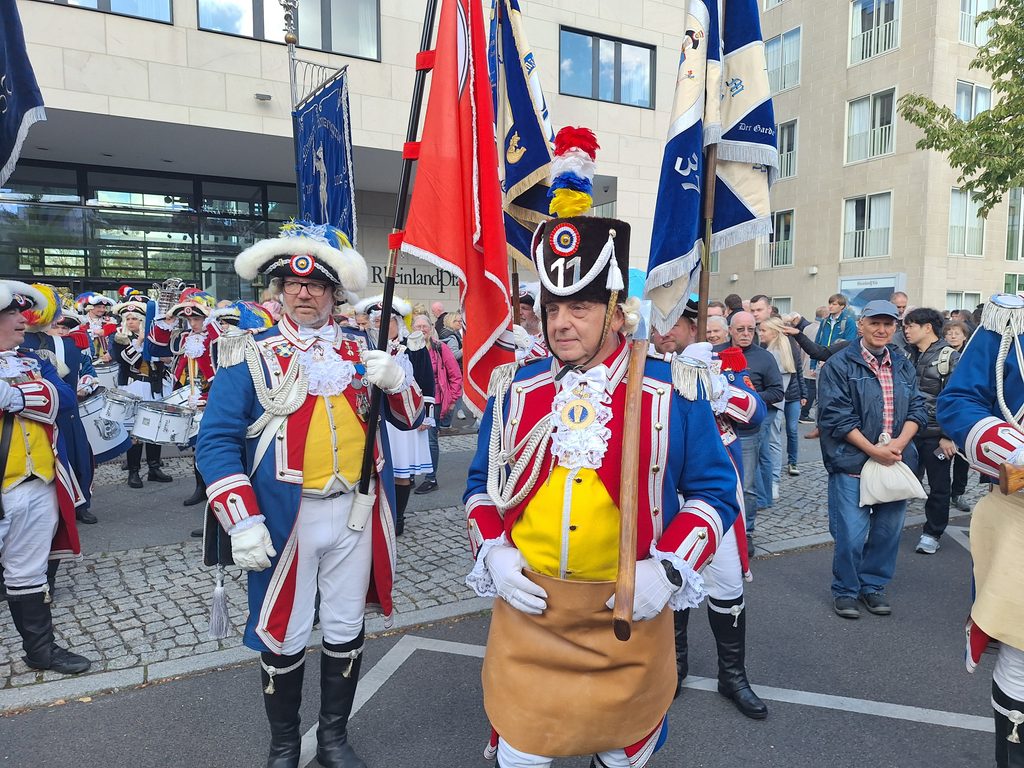
One of the more amusing traditions involved membership requirements.
The name Ranzen comes from the Mainz dialect and refers to a large belly. Historically, members were supposedly expected to weigh at least 100 kilograms or have a waist circumference of approximately 183 centimetres!
It was a deliberate contrast to the tall, disciplined soldiers associated with the Prussian military.
Over the years, the Ranzengarde became an important part of Mainz’s famous carnival celebrations, preserving a tradition of humour, satire and colourful public performances.

After spending so much of the morning surrounded by enormous crowds and serious historical monuments, seeing these wonderfully unusual costumes brought a welcome touch of humour to my walk through Berlin.
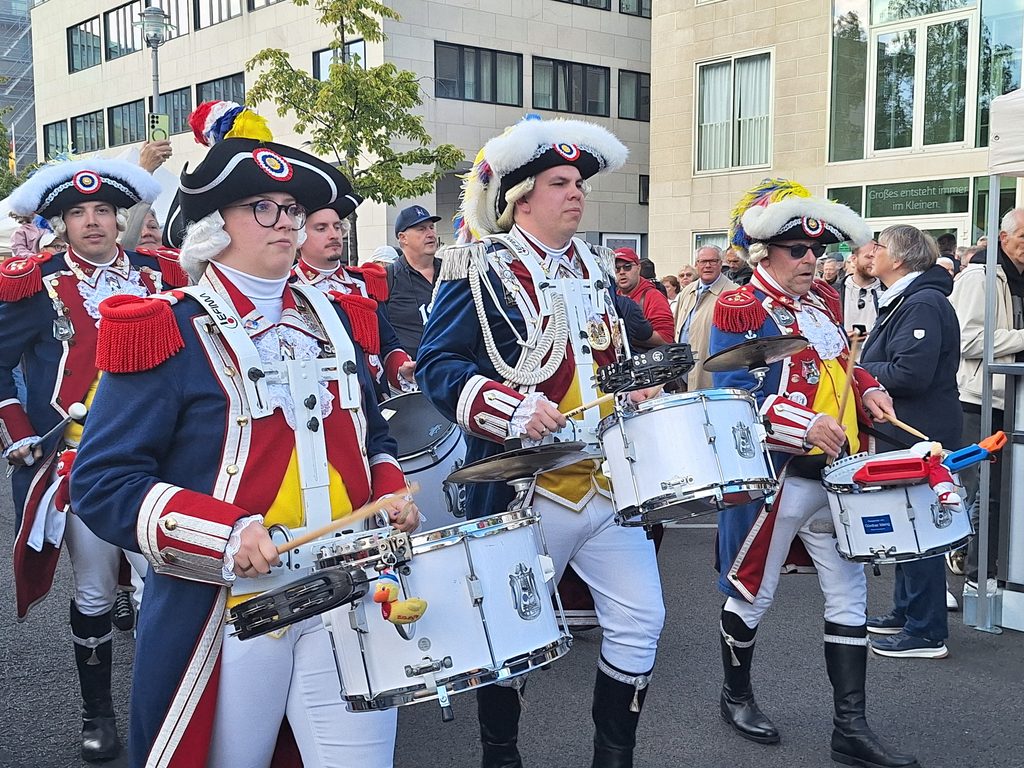
Sometimes it’s the unexpected encounters, rather than the famous attractions, that make a day travelling memorable.
The Holocaust Memorial — A Place Deserving Respect
A short walk from Brandenburg Gate brought me to the Memorial to the Murdered Jews of Europe.
Designed by architect Peter Eisenman, the memorial opened in 2005.
It consists of 2,711 concrete slabs arranged across an undulating site covering approximately 1.9 hectares.

As you walk between the slabs, their changing heights and the narrowing passages create a sense of uncertainty and isolation.
It’s a powerful memorial to the millions of Jewish people murdered during the Holocaust.
Before entering, I read the notices explaining how visitors should behave.
I was disappointed to see people climbing onto the slabs, posing for photographs and treating the memorial as though it were a playground.
When I saw one group behaving disrespectfully, I approached them and pointed out the rules and the significance of the place.
They seemed surprised.
Perhaps they genuinely hadn’t understood what the memorial represented.
But I found it disheartening.
I thought about the people who had suffered persecution, and about the families whose relatives were murdered.
For their descendants, seeing such behaviour must be deeply upsetting.
Historical memorials aren’t simply tourist attractions.
They exist because we have a responsibility to remember.
Unter den Linden — Berlin’s Historic Boulevard
Leaving the Holocaust Memorial, I headed back towards Brandenburg Gate and continued along Unter den Linden.
The boulevard takes its name from the linden trees that line its central promenade.
Historically, it formed an important ceremonial route through Berlin, connecting the royal palace with the western parts of the city.
Today, the avenue passes many significant landmarks, including Humboldt University, the State Opera and the reconstructed Berlin Palace.
However, on this particular afternoon, a large demonstration was gathering.
Thousands of people were heading in the same direction, carrying banners and chanting as they moved towards the Palace.

I stopped for a while to watch the demonstration unfold.

Berlin certainly isn’t a city where people are reluctant to express their opinions.
But after the enormous crowds around the Reichstag and Brandenburg Gate, I was beginning to feel overwhelmed.
Eventually, I decided I’d seen enough for one day.
I made my way back towards the river Spree and found a bar where I could sit quietly with a beer.
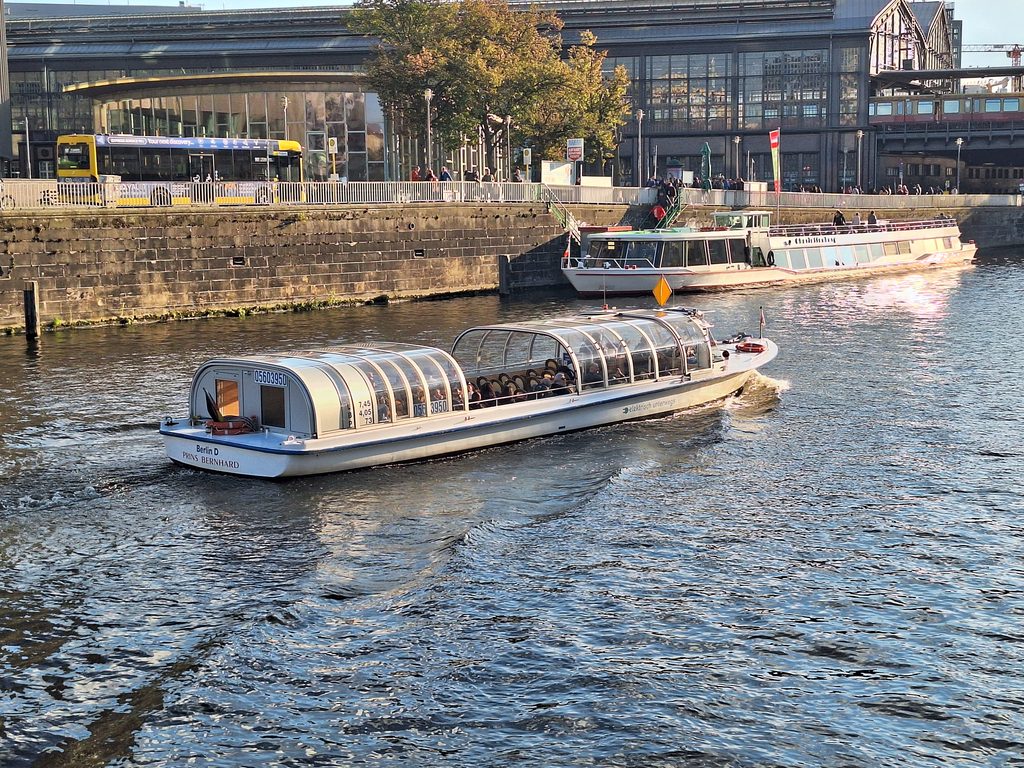
Caption: Busy outdoor riverside bars in Berlin, where I stopped after a long day exploring.
The bars and restaurants were packed, but I eventually managed to find a seat.
Looking back over the day, I couldn’t help feeling disappointed.
I’d visited some of the most historically important places in Europe, yet the crowds, demonstration and problems with my phone had made the experience much less enjoyable than expected.
Had I realised how busy Berlin would be on German Unity Day, I might have stayed in Denmark for another week.
Still, that’s the nature of travelling.
You make plans, but the world doesn’t always cooperate.
Tomorrow, I intended to explore Berlin’s churches.
Hopefully, things would improve.
Day 326 — Rain, Rain and More Rain
I woke to another grey morning.
Before long, the rain began, and it showed little sign of stopping.
I tried venturing outside, but it didn’t take long to become thoroughly damp.
After the previous day’s enormous crowds, I wasn’t particularly enthusiastic about wandering through Berlin in heavy rain.
Instead, I found shelter at the Killarney Pub, tucked beneath the railway arches not far from my hostel.

I spent much of the afternoon watching football while the rain hammered down outside.
Around five o’clock, I spotted a break in the weather and made my way back to the hostel before the rain returned.
Three days in Berlin so far.
The first had been spent travelling, the second had been sunny but overcrowded, and the third had disappeared under grey skies and persistent rain.
Not exactly the Berlin adventure I’d been hoping for.
But travelling for almost a year teaches you something important.
Not every day needs to be filled with sightseeing.
Sometimes you have to accept the circumstances, take shelter and recharge your batteries.
Tomorrow, I’d try again.
Day 327 — A Walk Through Faith and History
Berlin Cathedral — A Magnificent Beginning
Once again, I was awake around 7 am, partly thanks to other travellers preparing to leave the hostel.
Today’s plan was to visit six churches in central Berlin.
The weather remained unsettled, but I wasn’t going to spend another day sitting around waiting for sunshine.
My first destination was Berlin Cathedral.
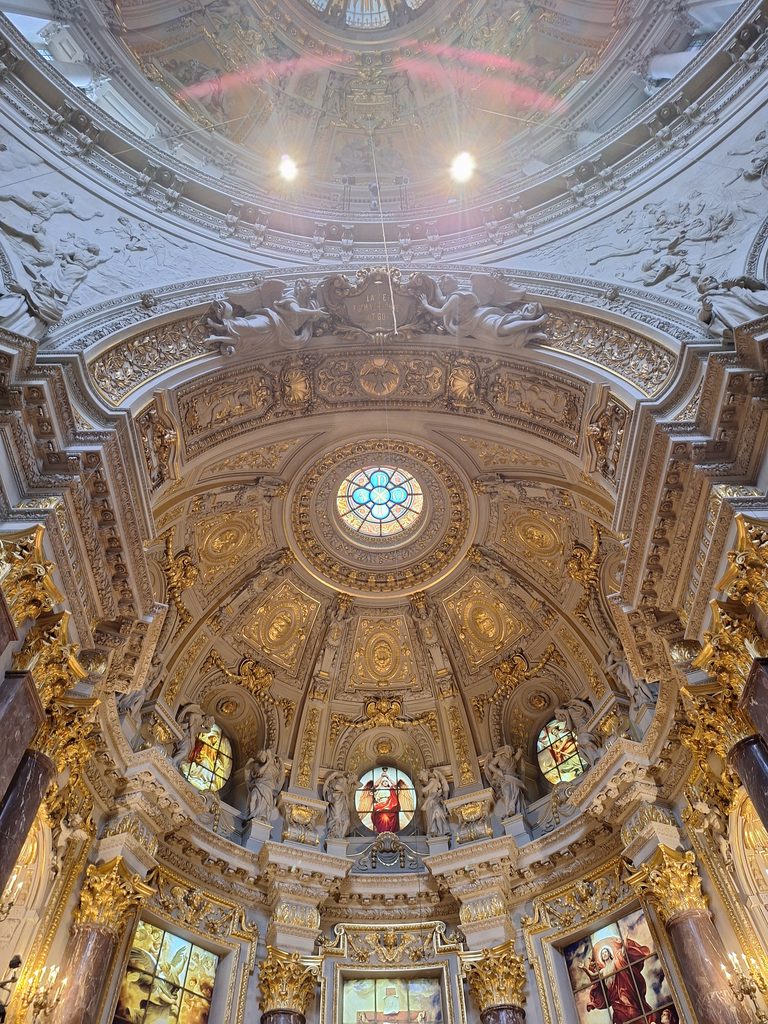
This magnificent building, completed in 1905, is one of Berlin’s most imposing religious landmarks.
Although commonly called a cathedral, it has never been the seat of a bishop in the traditional sense. Today it is a major Protestant church.
Its history reaches back through centuries of religious and political change.
During World War II, the building suffered severe damage.
In May 1944, an incendiary bomb struck the dome, starting a fire that eventually caused part of the structure to collapse into the interior.
After years of restoration, the cathedral reopened in the 1990s, although maintenance and repairs have continued.
I attended the morning service.
The interior was magnificent, with its enormous dome, decorative architecture and impressive organ.

The service itself, however, felt rather formal and subdued compared with the joyful praise and worship I’d experienced in some other European churches.
After the service, we were told that photographs could be taken.

But another member of staff began stopping visitors from using their cameras.
I found the conflicting instructions frustrating.
When I returned to collect my hat, a woman who had originally told us photographs were permitted confirmed that I could take them.
I explained that somebody else was preventing us.
She told me to ignore the objections.
That didn’t go down particularly well when I passed the message on!
Eventually, I managed to take most of the photographs I wanted, although I missed a good shot of the organ and sanctuary.
The cathedral normally charges tourists for admission, so I wondered whether the urgency to clear the building was connected with preparing for paying visitors.
Despite the confusion, the architecture was certainly worth seeing.
St Mary’s Church — Marienkirche
My next destination was St Mary’s Church, also known as Marienkirche.
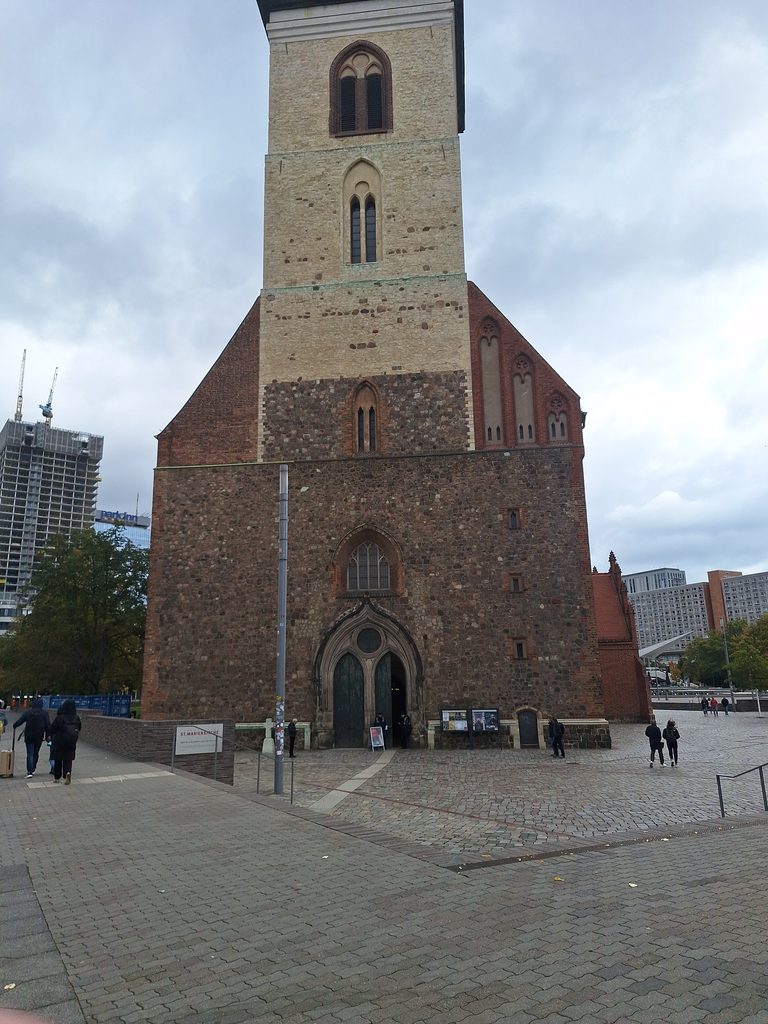
Dating back to the late thirteenth century, it is one of Berlin’s oldest surviving churches.
Originally Roman Catholic, it became Lutheran during the Reformation in 1539.
The church suffered damage during World War II and was subsequently restored.
When I first arrived, however, I was stopped at the entrance because a service was underway.
I explained that I wanted to attend the service rather than simply enter as a tourist.
Unfortunately, the attendants refused to let me in, even though the sign indicated worshippers were welcome.
Another frustrating experience.
I returned later in the day, just as the rain began falling again.
This time I was able to enter.
Inside, the tall Gothic vaulted ceiling immediately drew my attention.
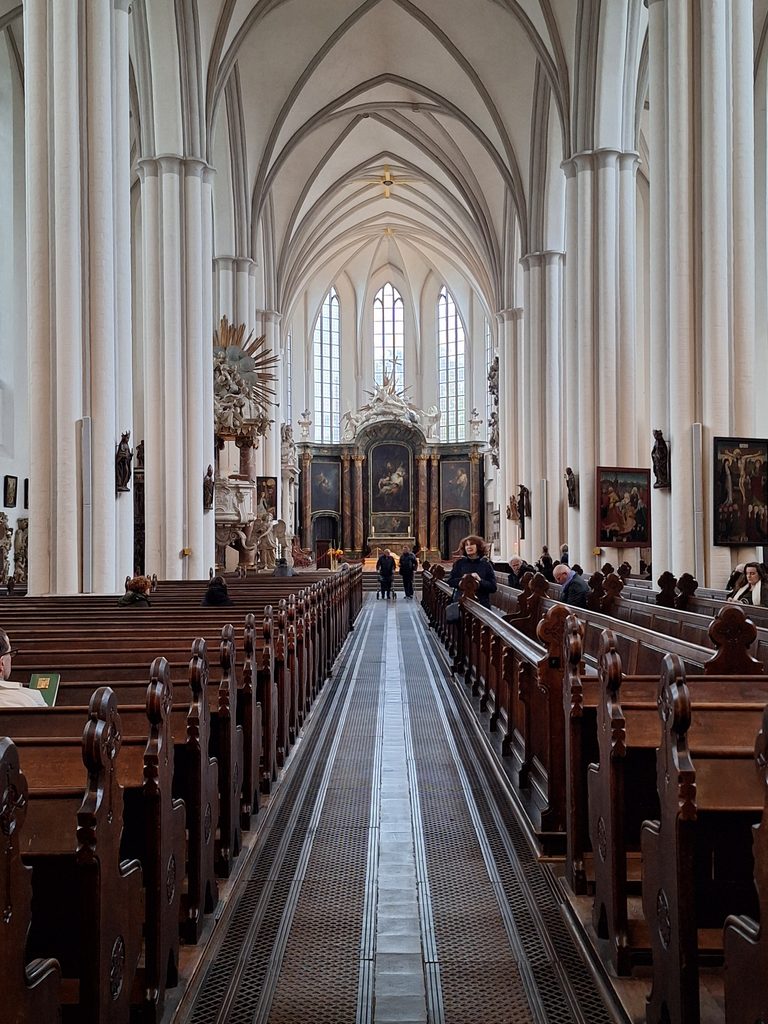
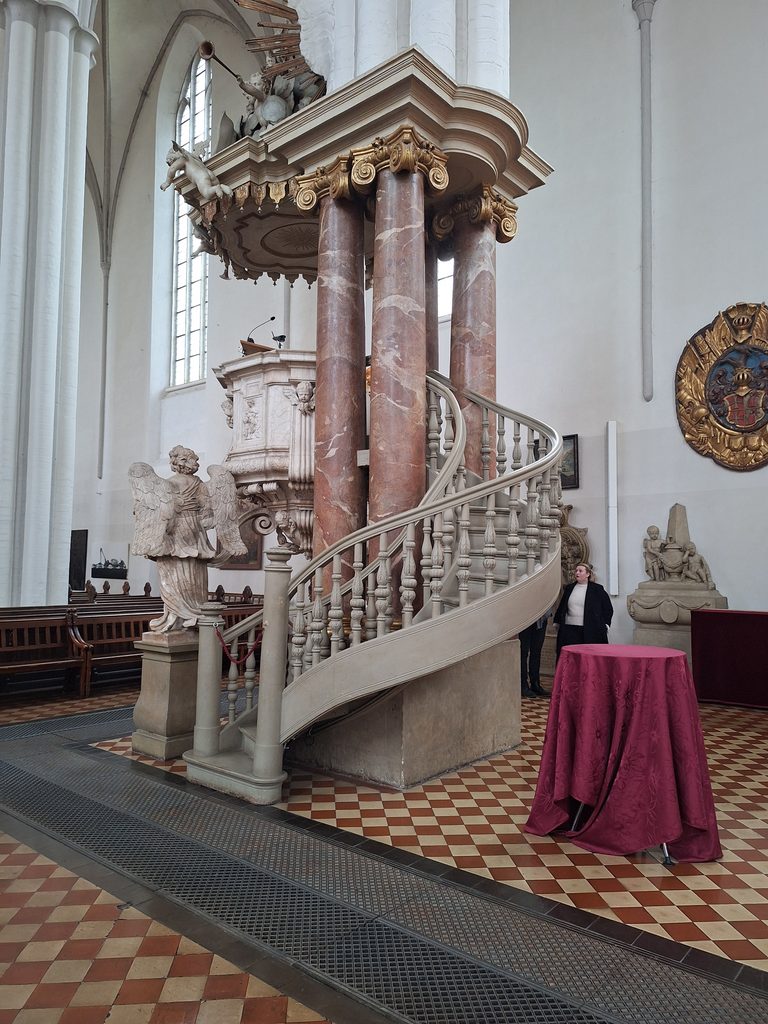
The great columns, ornate pulpit and magnificent organ created a sense of history and quiet dignity.
One of the church’s important historical features is the medieval Dance of Death fresco, a reminder of the devastating plagues that swept through Europe.
Outside, a statue of Martin Luther stands near the entrance.
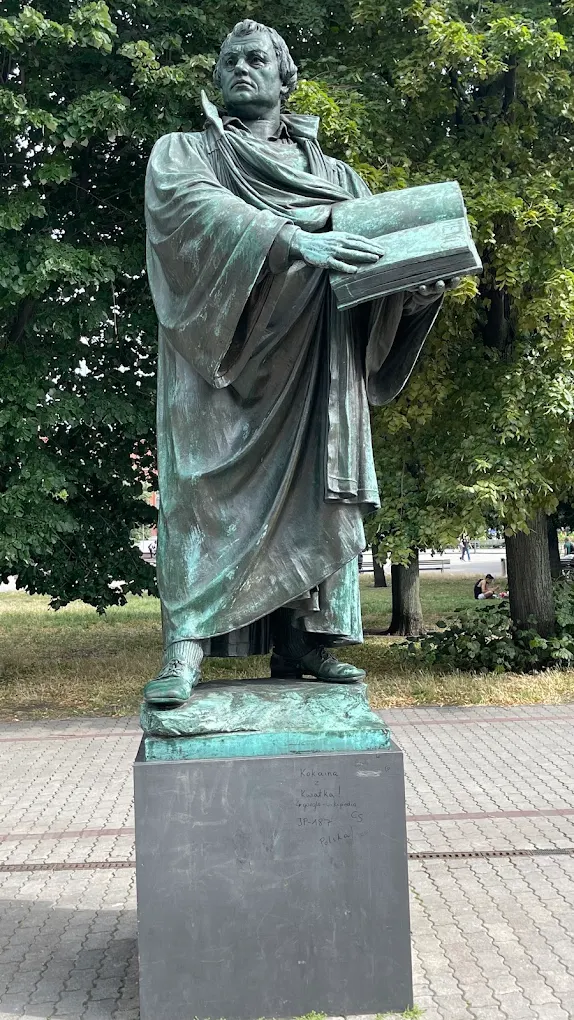
His hand rests against the pages of a book, as though reminding visitors of one of the central teachings of the Reformation:
“By faith alone.”
Whatever one’s religious beliefs, these old churches represent centuries of devotion, political change and human struggle.
St Nicholas Church — From Worship to Museum
My next stop was St Nicholas Church, or Nikolaikirche, approximately 400 metres away.
Dating back to around 1230, it is regarded as Berlin’s oldest church building.
Originally Roman Catholic, it became Lutheran during the Protestant Reformation.
Religious services ceased in 1939, and the building suffered extensive damage during World War II.
Following restoration, it eventually reopened as a museum.
It also played a role in the city’s reunification period, when Berlin’s first freely elected city parliament met there in 1991.
Inside, I found a beautiful historical space filled with displays and marble statues.
But I have to confess that museums don’t always inspire me in the same way churches do.
I prefer to experience a building as a living place of worship rather than simply as a collection of historical objects.
My eyes were drawn more towards the Gothic arches, magnificent ceiling and windows than the museum displays.

Nevertheless, the building has survived almost eight centuries, and that alone deserves admiration.
St Hedwig’s Cathedral — A Church of Simplicity
From St Nicholas Church, I continued towards St Hedwig’s Cathedral on Bebelplatz, close to Humboldt University.
The rain had eased for a while, although the cold wind remained.
St Hedwig’s is Berlin’s principal Roman Catholic cathedral.
Commissioned during the reign of Frederick the Great, it opened in 1773 and was designed with inspiration from the Pantheon in Rome.
It was intended to provide a place of worship for Berlin’s Catholic population at a time when Protestantism dominated Prussia.
Like many of Berlin’s historic buildings, the cathedral was badly damaged during World War II.
Its reconstruction after the war brought significant changes, and more recent renovations have created a strikingly modern interior.
St Hedwig herself was a remarkable historical figure.
Born into nobility, she became known for her devotion to the poor, the sick and those suffering hardship.
Tradition tells of her willingness to give away her wealth and possessions to support people in need.
Inside the cathedral, the design was quite unlike the elaborate interiors of some other churches I’d visited.

The circular arrangement, columns and great dome created a sense of simplicity and order.

At the centre stood a modern altar intended to bring the congregation closer to the religious service.
The organ rose impressively towards the dome, while subtle patterns in the ceiling drew my attention upwards.
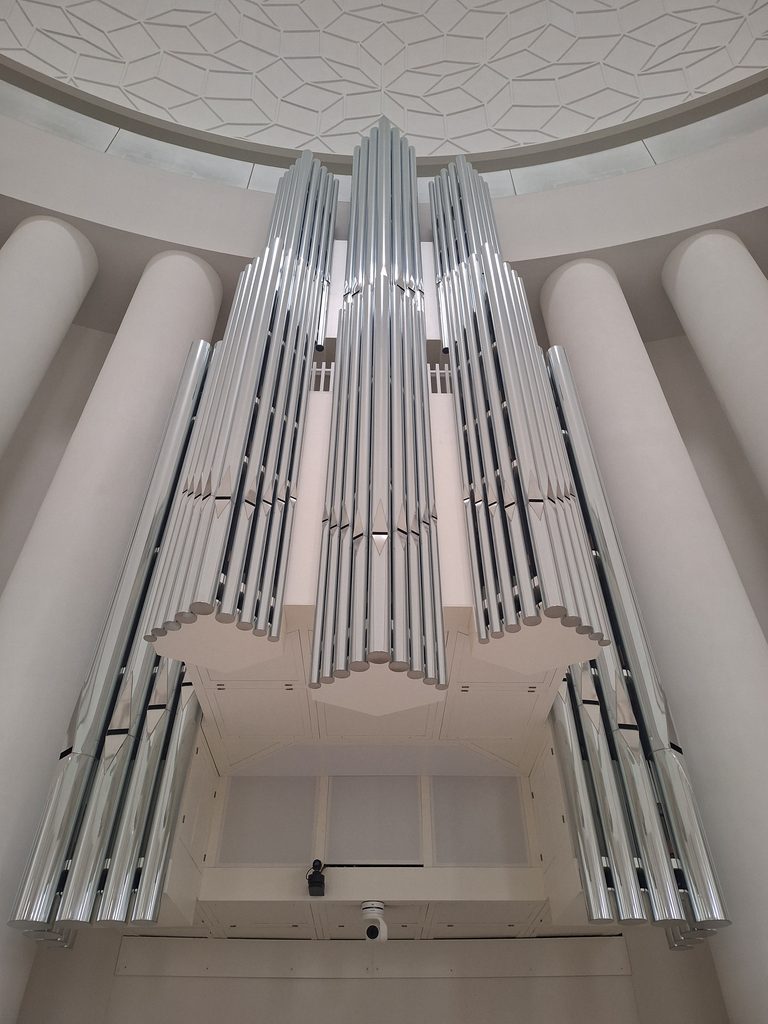
There were also small alcoves containing information about the cathedral’s history, although much of the material was in German.

Despite the language barrier, it was another fascinating stop on my walk through Berlin’s religious history.
Gendarmenmarkt — The French and German Cathedrals
Leaving St Hedwig’s, I walked towards Gendarmenmarkt, one of Berlin’s most impressive historic squares.
Facing one another across the square are the French Cathedral and German Cathedral.

The architectural symmetry is remarkable.
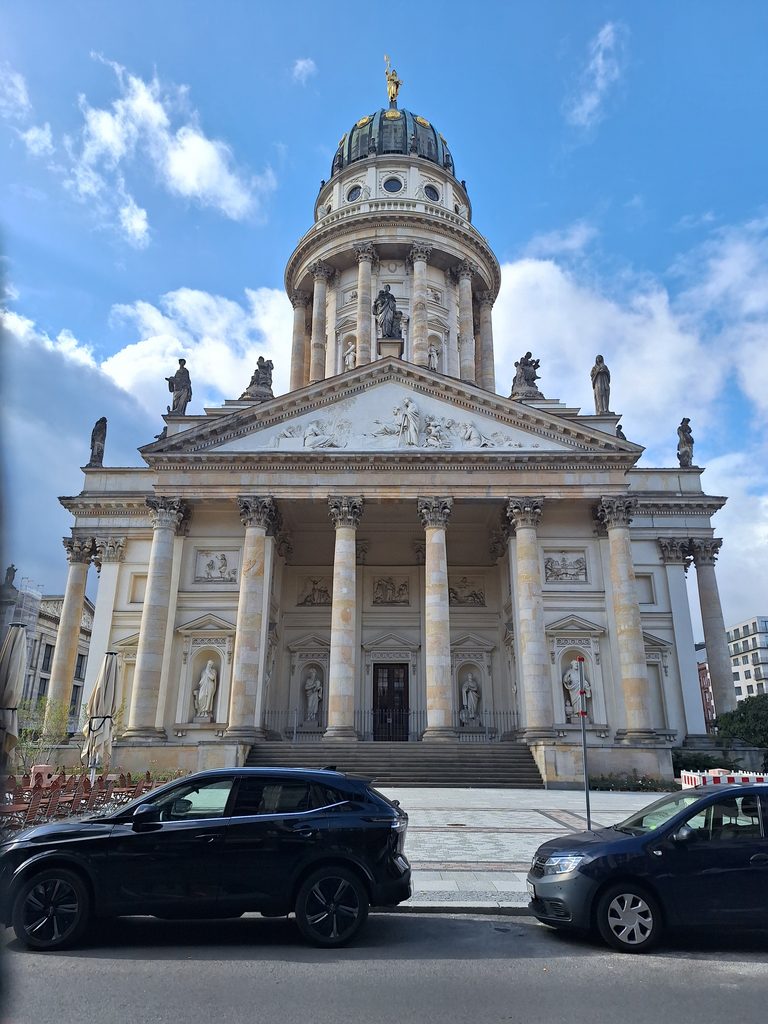
The French Church was built in the early eighteenth century for Huguenot Protestants who had fled religious persecution in France.
Its later domed tower became one of the square’s defining features.
Opposite stands the German Cathedral, developed from the German Church and subsequently enhanced with an impressive domed tower.
Although both are commonly called cathedrals, their buildings now serve important cultural and museum functions rather than operating simply as traditional places of worship.
The German Church was originally completed in the early eighteenth century, with its grand domed tower added later in the 1780s.
Like so many buildings in Berlin, these landmarks suffered wartime destruction and underwent extensive restoration.
Standing in the square, looking from one monumental building to the other, I could appreciate the ambition of the architects and the importance that religion once held in public life.
For somebody who enjoys museums, there would have been plenty to explore.
I considered paying around €5 to climb a tower for views across the city.
But the cold wind was biting, the rain had returned, and after several hours on my feet, my enthusiasm was beginning to disappear.
Four of the six churches I’d planned to see were now functioning primarily as museums or had significant museum roles.
It wasn’t quite the church walk I’d imagined.
Nevertheless, I’d seen some magnificent architecture and learned a great deal about Berlin’s complicated religious history.
Kilkenny’s Pub — Good Company on a Cold Afternoon
With the weather deteriorating, I decided it was time to head indoors.
I found an electric scooter and made my way back towards Friedrichstraße and Kilkenny’s Pub.
Sometimes a warm pub, a comfortable seat and good conversation can be more appealing than another historic monument.
At Kilkenny’s, I met a father and son from the New York area.
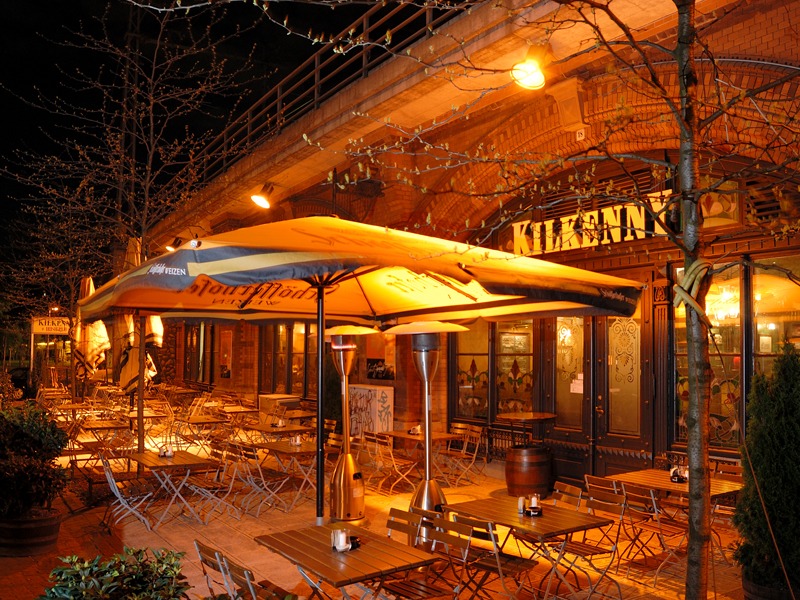
We spent several hours chatting about travel, sport and life in different parts of the world.
The son had recently attended the Ryder Cup and was already making plans for the next event at Adare Manor in County Limerick, Ireland.
Adare Manor is regarded as one of Ireland’s finest golf courses and will host the 2027 Ryder Cup.
Later, a young man named Aiden joined us.
He was a Celtic supporter, so naturally the conversation turned towards football.
I should have taken a photograph of the three of us.
But sometimes, when you’re enjoying a good conversation, reaching for a camera simply doesn’t occur to you.
And perhaps that’s how it should be.
Not every memorable experience needs to be photographed.
Some are better remembered through the people you meet.
Reflections on Berlin — When Travel Doesn’t Go to Plan
My time in Berlin had been a mixture of fascination and frustration.
The history was extraordinary.
The Reichstag, Brandenburg Gate, Holocaust Memorial, Berlin Cathedral and the city’s many historic churches revealed a place that has experienced war, division, persecution, destruction and rebuilding.
Few cities carry the scars of twentieth-century history as openly as Berlin.
Yet I have to admit that I struggled to enjoy much of my visit.
On German Unity Day, the enormous crowds made it difficult to appreciate the landmarks properly.
My ongoing mobile phone problems complicated getting around.
Then the weather deteriorated, bringing cold winds and seemingly endless rain.
I had also experienced difficulties with accommodation, technology and some of the people I’d encountered.
At times, the atmosphere felt tense and unwelcoming.
Of course, I recognise that a few difficult experiences cannot represent an entire city or country.
Perhaps I simply arrived in Germany at the wrong time, with the wrong weather and a growing sense of travel fatigue.
After so many months on the road, there are days when your mind gets in the way of appreciating what’s directly in front of you.
You become so preoccupied with the weather, transport, accommodation or the next problem that you almost forget why you started travelling in the first place.
And that, in itself, is an important lesson.
Travelling through the world is very different from taking a two-week holiday.
You experience ordinary frustrations alongside extraordinary sights.
Some days you feel excited and inspired.
Other days, you simply want a comfortable seat, a good meal and a little peace and quiet.
Perhaps I need to return to Germany during warmer weather, with more time to explore and a different frame of mind.
I’m sure there’s much more to discover.
Looking Ahead — Prague, Czech Republic
On Wednesday, 8 October 2025, I’ll be leaving Germany behind and travelling to Prague, the capital of the Czech Republic.

After Hamburg’s busy waterfront, Berlin’s enormous crowds and several days of cold rain, I’m hoping for a change of scenery.
Prague is a city I’ve been looking forward to visiting, with its historic squares, cobbled streets, castles, churches and centuries of European history.
But if this journey has taught me anything, it’s that expectations and reality don’t always meet.
Sometimes you arrive somewhere full of enthusiasm and leave disappointed.
Sometimes a place you knew little about becomes one of your favourite memories.
And sometimes the most memorable moments are not the famous attractions at all, but a chance conversation with somebody in a hostel, a pub or on a train.
Germany hasn’t been the easiest chapter of my journey.
But every country, every person and every experience teaches us something.
At 72, I’m still learning that stepping out of fear and into the unknown means accepting the difficult days along with the wonderful ones.
Tomorrow, a new country and another capital await.
Stepping out of fear, one step at a time, into the unknown.
Andrew — Inspire Seniors Travel
inspireseniorstravel.com