

Trieste, Italy — Roman Ruins, Grand Canals and a City Between Two Worlds
Exploring Trieste on Foot
After a reasonable night’s sleep, I was awake by 7 a.m., thanks to the familiar sound of fellow hostel travellers rustling through their backpacks.
With the morning free, I decided to explore Trieste on foot. Over the past year, I’ve discovered that walking is one of the best ways to understand a new city. You see so much more when you’re not rushing between attractions, and there’s always something unexpected waiting around the next corner.
Before setting out, here’s a little travel tip.
I’ve been using an app called GPSmyCity, which has become one of my regular travelling companions. It allows me to create personalised walking tours and find interesting landmarks without constantly relying on organised excursions.
I’m not sponsored by the company. I simply find the app useful. The subscription I was looking at cost approximately US$12.99 a year, providing access to walking guides and maps for cities around the world.
My hostel didn’t have a proper kitchen, just a microwave and a kettle, so breakfast would have to be found somewhere along the Grand Canal.
That suited me perfectly.
The Grand Canal — A Little Venice in Trieste
There’s something special about Trieste’s Canal Grande in the early morning.
The sunlight catches the water between elegant pastel-coloured buildings, while cafés begin preparing for another busy day.
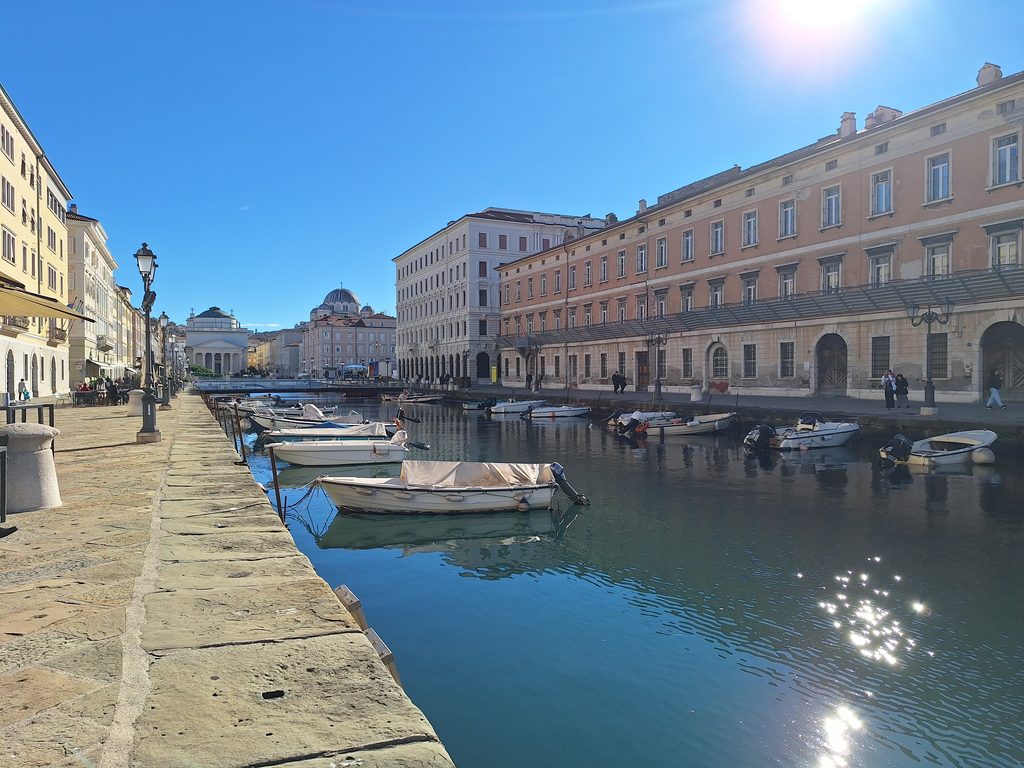
Bridges cross the canal at intervals, and the surrounding architecture reflects the city’s long history as an important trading port.
I stopped at a nearby supermarket and purchased a slice of pepperoni pizza and a ham-and-salad sandwich.
Finding a table beneath an umbrella beside the water, I settled down to enjoy my breakfast while watching the city slowly come to life.
It was a lovely way to begin the day.
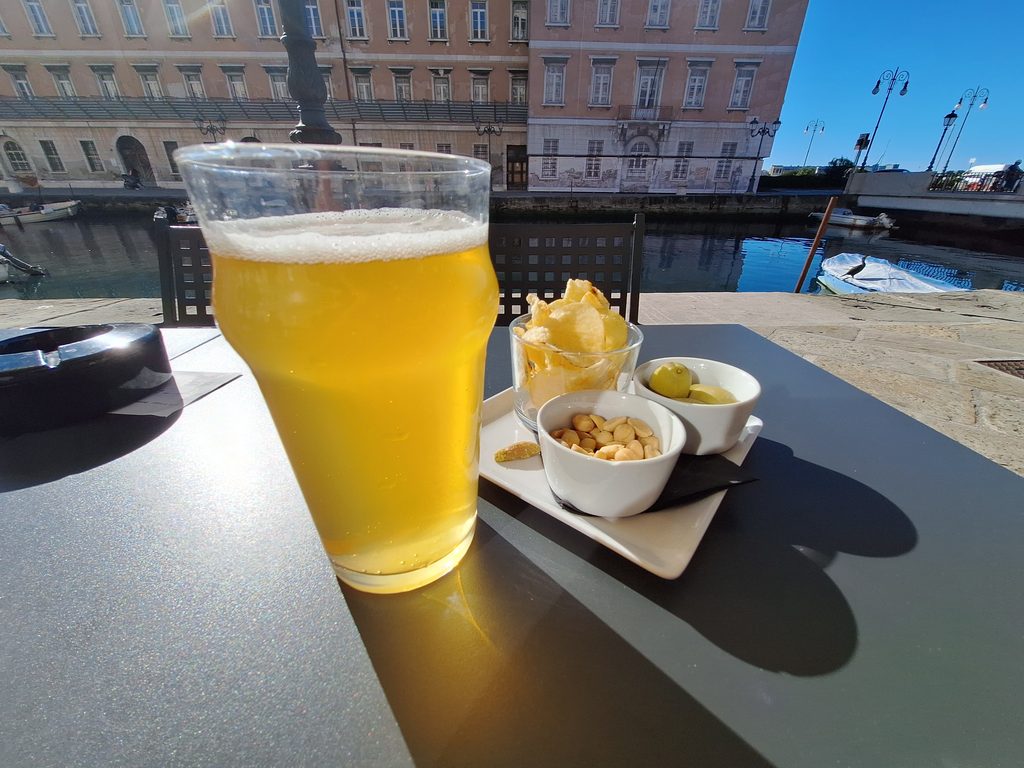
3. Historic canal and bridges
How the Grand Canal Was Built
Trieste’s Grand Canal was constructed between 1754 and 1756 under the direction of Venetian architect Matteo Pirona.
Its purpose was practical rather than decorative.
At the time, Trieste was developing into an important commercial port within the Habsburg Empire. The canal allowed small vessels to travel directly into the city, where their cargo could be unloaded close to warehouses and merchants’ premises.
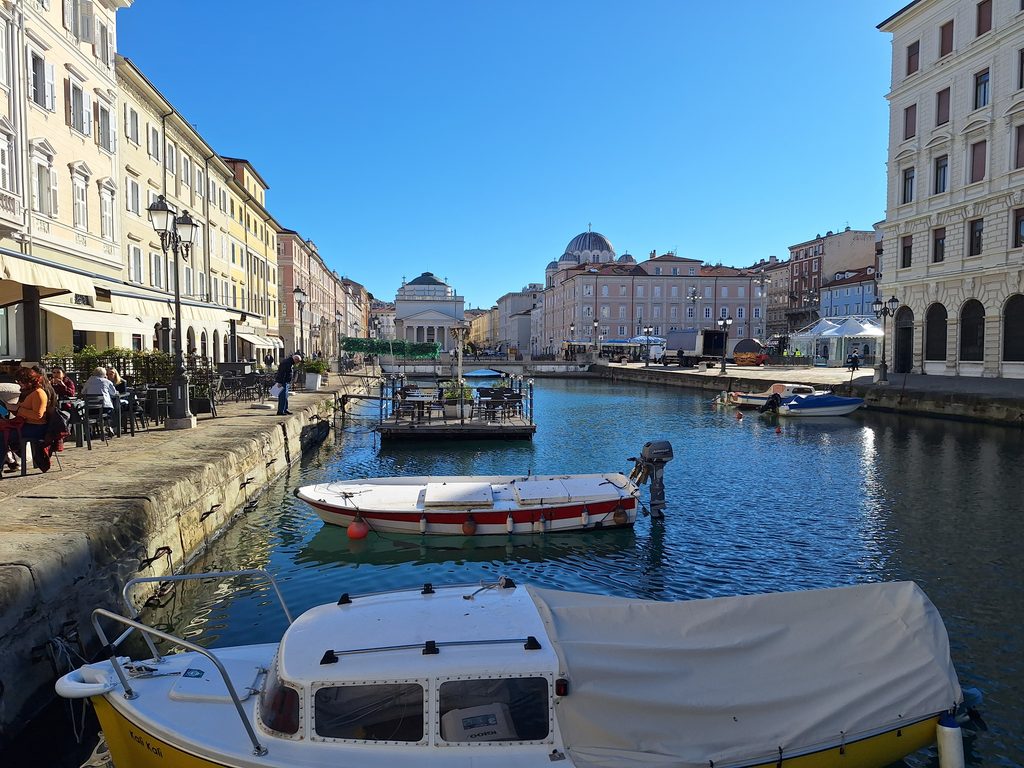
Originally, the canal extended farther inland, reaching towards the Church of Sant’Antonio.
However, during 1934, its final section was filled in using rubble from demolished buildings in the old city, creating the open space visitors see today.
There is even a local story suggesting that a small torpedo boat was buried beneath the newly filled section.
Whether that actually happened remains uncertain, and surviving historical photographs do not appear to confirm the tale.
Nevertheless, it’s exactly the sort of story that makes exploring old European cities so fascinating.
The Historic Bridges of Trieste
The bridges crossing the Grand Canal each have their own history.
Ponte Rosso — The Red Bridge
The original Red Bridge was constructed in 1756 as a wooden drawbridge.
It could be opened to allow vessels to pass along the canal, although crossing it was not always particularly convenient for pedestrians.
Its distinctive red colour became associated with the bridge and eventually gave the surrounding district its name, Ponterosso.
Today, the bridge is especially interesting because of a bronze statue of the famous Irish writer James Joyce.
The statue depicts Joyce walking across the bridge, carrying his books and seemingly lost in thought.

Joyce spent a significant part of his life in Trieste, working as an English teacher and developing his literary career.
I rather liked the idea of the celebrated writer permanently strolling through a city that played such an important role in his life.
Ponte Verde — The Green Bridge
The Green Bridge was constructed in 1858.
In 1904, it was joined by the White Bridge, associated with a railway connection between the city’s old and new port areas.
Originally, some of these crossings could be moved to accommodate vessels travelling along the waterway.
Today, the bridges are fixed structures, and navigation beneath them is restricted.
Sitting beside the canal, watching the tide move gently against the stonework, I tried to imagine the scene more than a century ago.
Small trading vessels would have been passing beneath the bridges, merchants arranging deliveries, and workers carrying goods into the surrounding warehouses.
It’s remarkable how an ordinary-looking canal can reveal so much about a city’s commercial past.
Saint Spyridon Church — A Serbian Orthodox Treasure
Following the Grand Canal brought me to one of Trieste’s most striking religious buildings, the Serbian Orthodox Church of Saint Spyridon.
From the outside, its domes and patterned stonework give it a distinctly Eastern appearance.

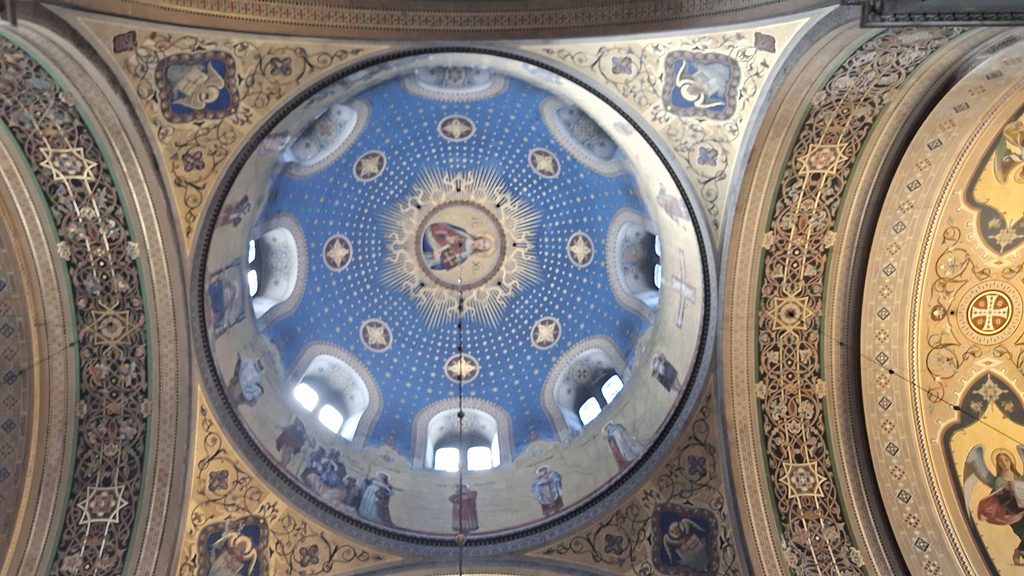
Inside, however, the church reveals the magnificent traditions of Byzantine religious architecture.
Richly decorated walls, colourful frescoes, religious icons and gilded ornamentation create an atmosphere quite different from the Catholic churches I had visited elsewhere in Europe.

The original Orthodox church on this site was established during the eighteenth century to serve the city’s Serbian and Greek communities.
Over time, differences between the two communities led them to establish separate places of worship.
The original building also suffered structural difficulties because of the unstable ground near the canal.
It was eventually replaced by the impressive church standing here today.
Saint Spyridon is a wonderful reminder that Trieste has always been a meeting place for different cultures, nationalities and religious traditions.
Although now firmly part of Italy, the city retains strong connections with Central Europe and the Balkans.

My Unsuccessful Search for an Italian SIM Card
After exploring the church, I turned my attention to something rather more practical.
I needed an Italian SIM card.
With only about a week remaining in Europe before returning to New Zealand, I wasn’t looking for anything expensive.
A small amount of mobile data would have been perfectly sufficient.
Unfortunately, the telephone companies seemed determined to sell me far more than I needed.
The first shop offered 150 GB for €20.
That’s an enormous amount of data for somebody staying only a few days!
Vodafone wanted €25 for 100 GB, which was equally unnecessary.
Eventually, I abandoned the search and decided to rely on the free Wi-Fi available in cafés and restaurants.
Sometimes the simplest solution is the cheapest.
Unfortunately, my next little problem was entirely of my own making.
Somewhere along the way, I accidentally deleted the walking route I had prepared on my phone.
What should have been a straightforward walk towards San Giusto Castle turned into an unexpected detour.

I found myself wandering uphill, discovering a closed church and trying to work out where I had gone wrong.
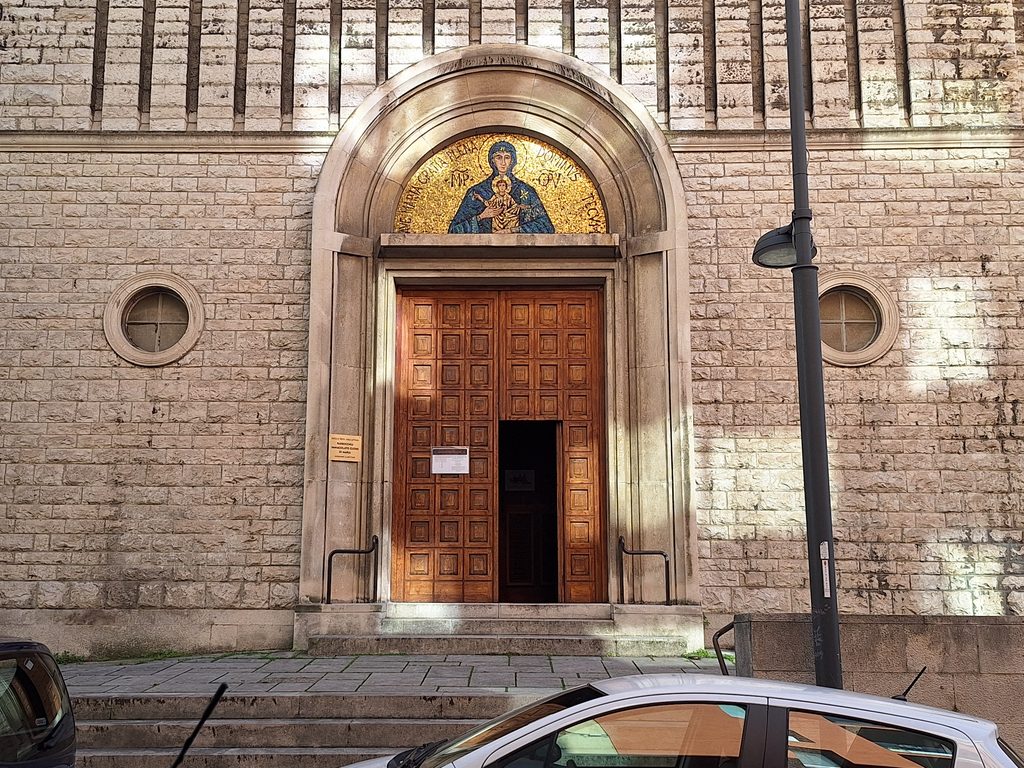
After eventually finding my bearings, I decided that a cold beer was necessary to restore morale.
Then it was back to exploring.
The Roman Theatre — Ancient History Among Modern Streets
At the foot of San Giusto Hill, I came across the remarkable Roman Theatre of Trieste.
It’s extraordinary to find such an impressive ancient structure surrounded by the streets and buildings of a modern city.
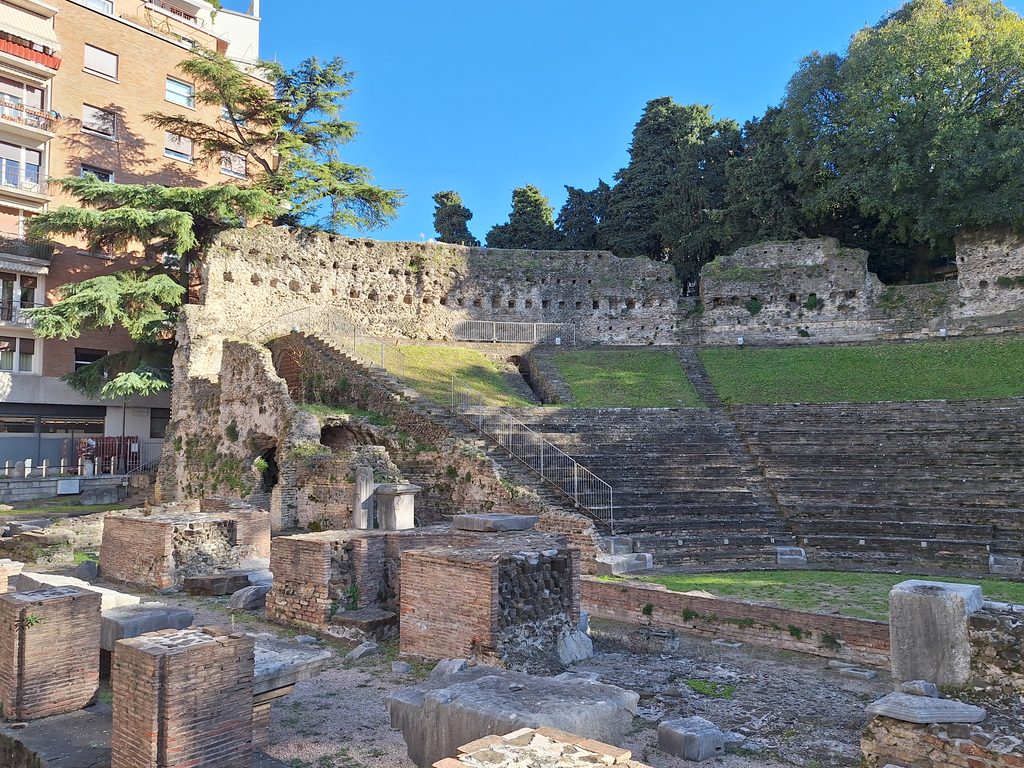
The theatre was developed during the Roman period, around the late first century BC and early centuries AD.
Estimates suggest that it could accommodate several thousand spectators, perhaps between 3,500 and 6,000 people.
What makes the site particularly interesting is its position.
In Roman times, the shoreline was much closer to the theatre than it is today.
The builders took advantage of the natural slope of San Giusto Hill to support the seating, creating a semicircular auditorium overlooking the stage.
Over the centuries, as Trieste expanded, buildings gradually covered much of the ancient site.
The theatre was recognised again during the nineteenth century, but major archaeological excavations took place in the 1930s.
In 1938, surrounding structures were demolished to reveal the Roman seating and architectural remains.
Today, visitors can admire the graceful stone terraces and imagine the performances that entertained audiences nearly two thousand years ago.

Many statues, inscriptions and archaeological discoveries from the area have been preserved in local museums.
Standing there, surrounded by modern streets, I found myself imagining Roman citizens arriving for an afternoon’s entertainment.
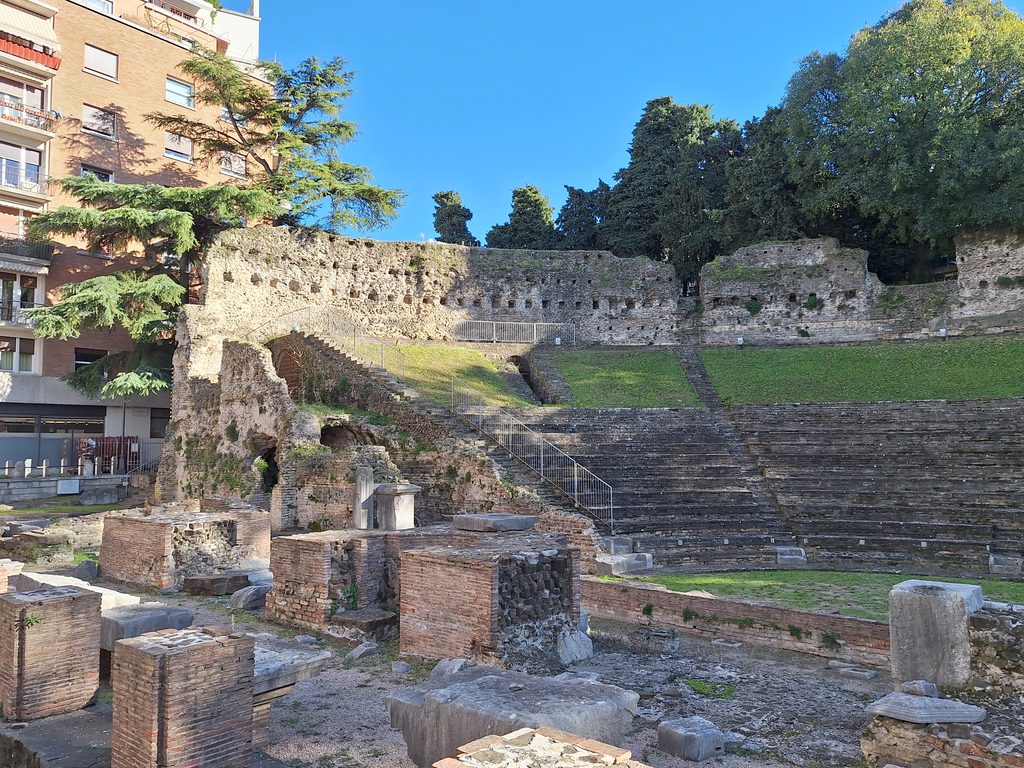
Another remarkable connection between the ancient world and the city we see today.
Climbing San Giusto Hill
From the Roman Theatre, I continued climbing the cobbled streets towards the cathedral and castle.
The hill is steep in places, and after spending so much of the day walking, I was beginning to feel the effort.
Nevertheless, the historic surroundings made the climb enjoyable.
Old buildings, narrow streets and unexpected views across the rooftops provided plenty of excuses to stop and take photographs.
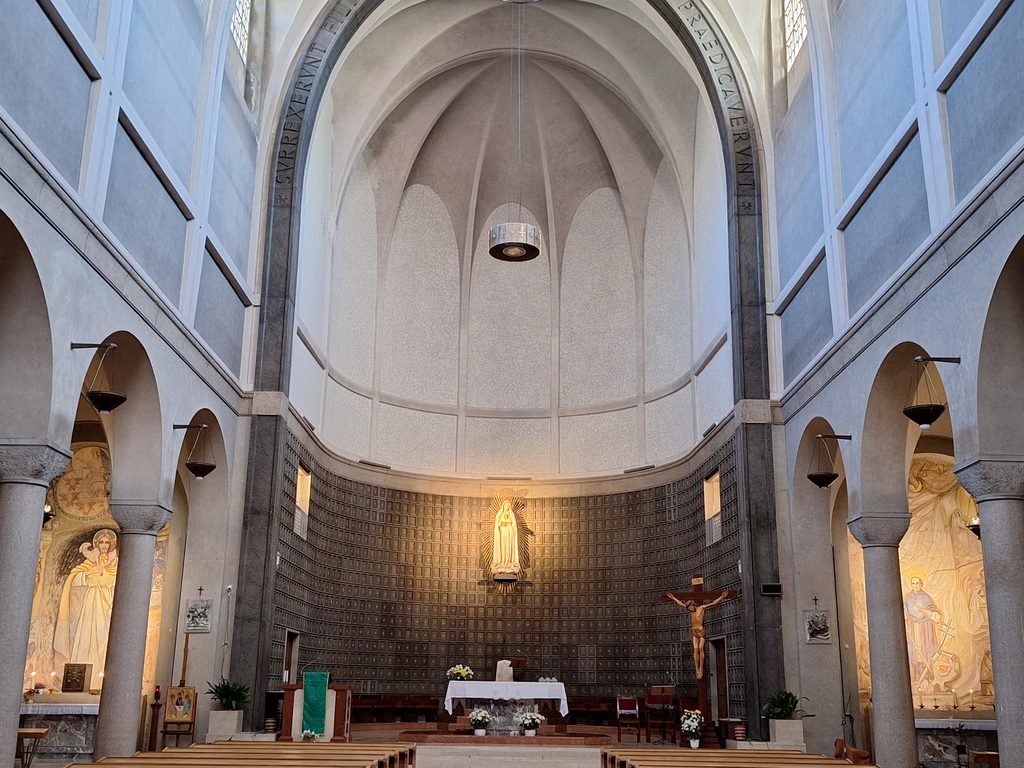
Eventually, I reached the Cathedral Basilica of San Giusto Martire.

Cathedral Basilica of San Giusto Martire
The Cathedral of San Giusto is Trieste’s principal Roman Catholic church and one of the city’s most important historic landmarks.
Its rather austere exterior contrasts with the more elaborate Baroque churches I had visited in other European cities.
The façade features an impressive rose window carved from local Karst stone.

The present cathedral developed during the fourteenth century through the combination and alteration of earlier religious buildings on the site.
Its history stretches back even further, with Roman remains and early Christian structures associated with the hill.
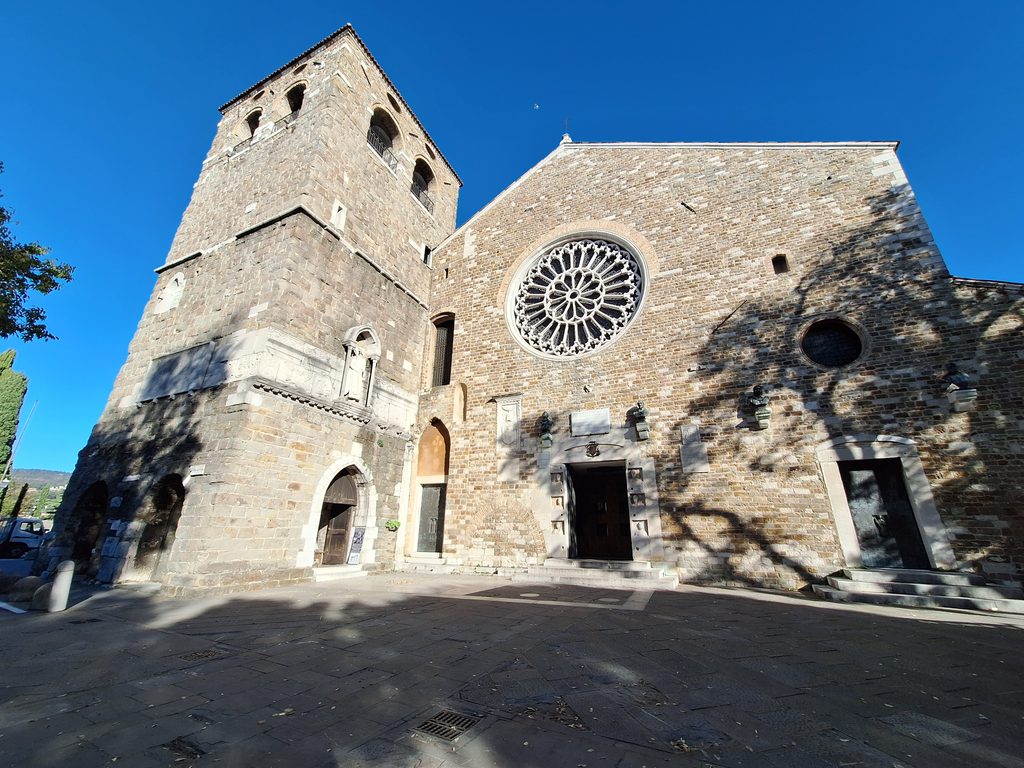
The bell tower incorporates material from earlier periods, including Roman architectural fragments.
In 1422, lightning damaged the tower, contributing to changes in its height and appearance.

What fascinated me was the way different centuries seemed to be incorporated into the same building.
Roman stones, medieval construction and later alterations all formed part of the cathedral’s character.

Trieste has repeatedly built upon its own past, quite literally in some places.
Castello di San Giusto — A Fortress Above the Adriatic
Just above the cathedral stands the magnificent Castello di San Giusto.

The castle occupies one of the city’s most commanding positions, overlooking Trieste, its harbour and the Adriatic Sea.

I was pleasantly surprised to discover that senior admission cost only €5.
After encountering some rather expensive attractions elsewhere in Europe, this was a welcome change.
I spent several hours exploring the fortress, walking along its ramparts and through its courtyards.
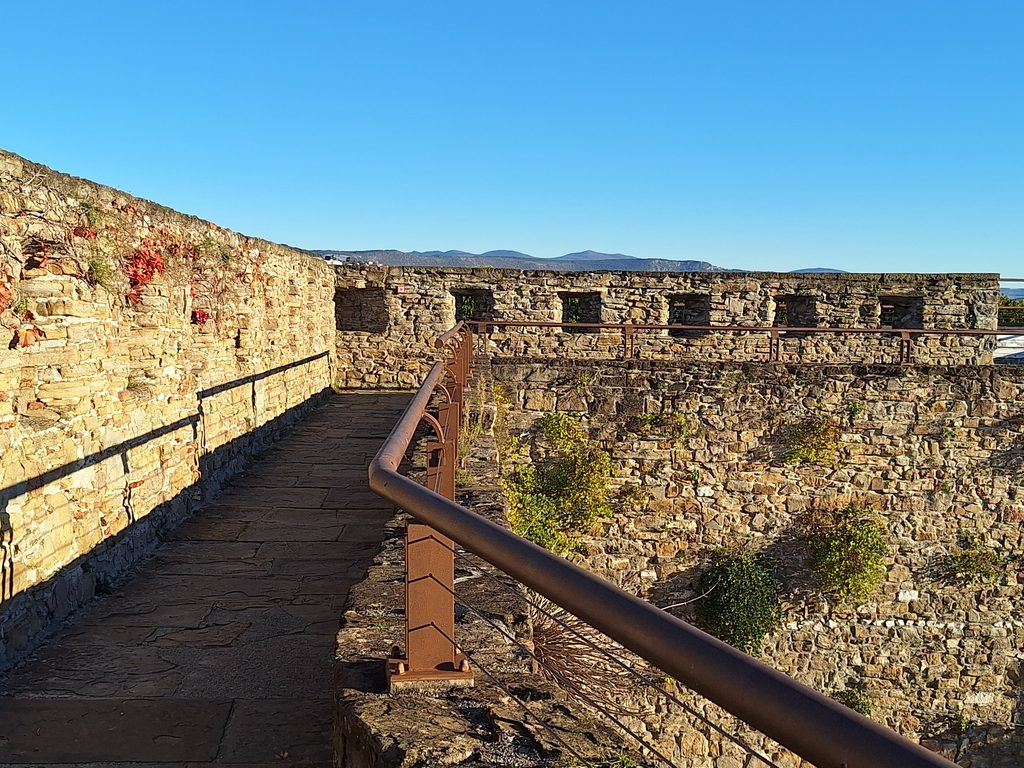
The views were wonderful.
From the elevated position, I could look across the city’s rooftops, the busy harbour and the blue waters of the Adriatic stretching towards the horizon.
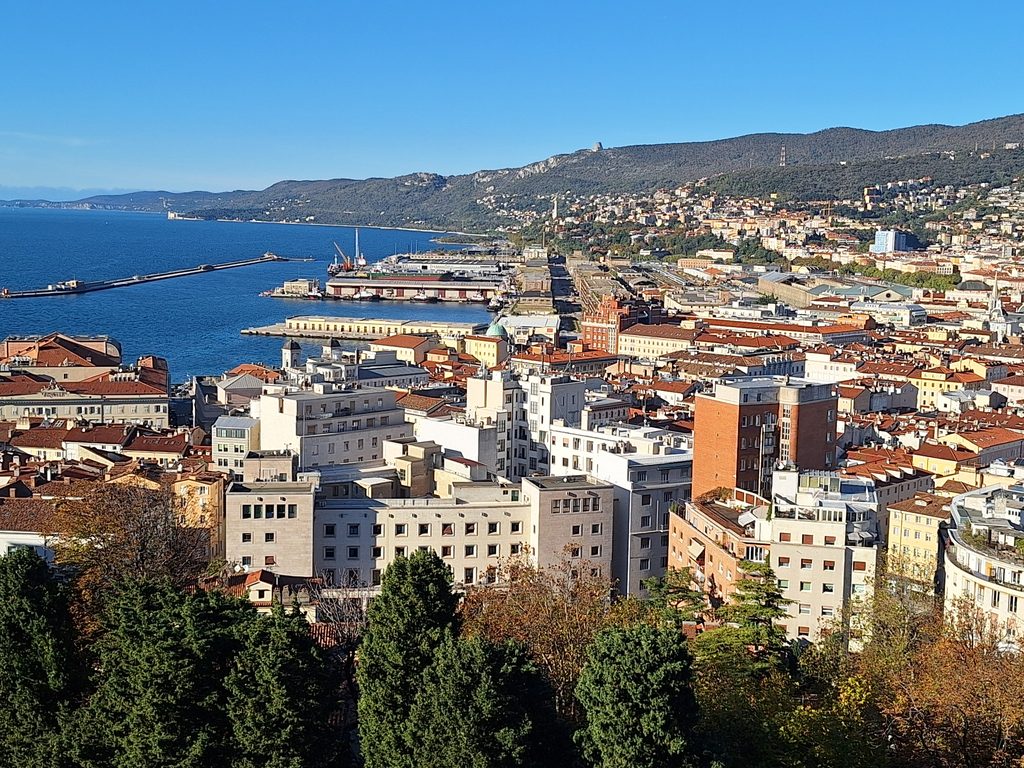
It was easy to understand why this hill had been strategically important for so many centuries.
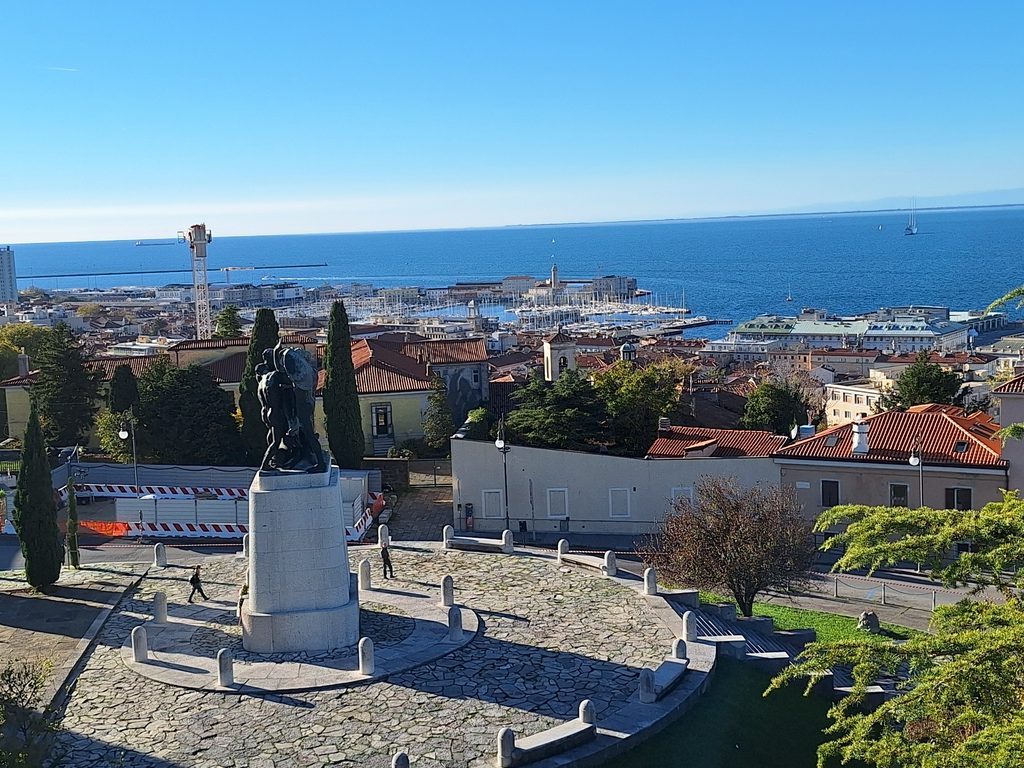
The Castle’s History
Construction of the present fortress began during the fifteenth century, following earlier defensive structures associated with the Venetian and medieval periods.
The castle expanded gradually, with additional fortifications and bastions strengthening its defences.
Despite its formidable appearance, it was not the scene of many major battles.
Its military history includes events during the Napoleonic period and later use connected with the Second World War.

In more recent years, extensive restoration has helped preserve the structure and open it to the public.
Today, the castle serves as a museum and cultural attraction.

It also houses the Tergestino Lapidary, a collection of Roman inscriptions, sculptures and architectural fragments associated with ancient Trieste.
These archaeological exhibits offer another glimpse into the city’s history as the Roman settlement of Tergeste.
A Glass of Wine on the Ramparts
One of my favourite parts of the castle was the Round Bastion.
Below the armoury, I discovered a small restaurant where I could sit in the sunshine and enjoy a glass of wine.
After a morning of climbing hills and wandering through historic streets, it was a welcome opportunity to rest.
I sat looking out across Trieste and the harbour, appreciating the magnificent surroundings.
Sometimes, travel doesn’t need to involve doing anything particularly dramatic.
A beautiful view, a glass of wine and a moment to appreciate where you are can be just as rewarding as visiting another museum.
Arco di Riccardo — A Roman Arch Hidden in the City
After leaving the castle, I began making my way downhill through the old town.
During my wanderings, I unexpectedly came across the Arco di Riccardo, or Richard’s Arch.
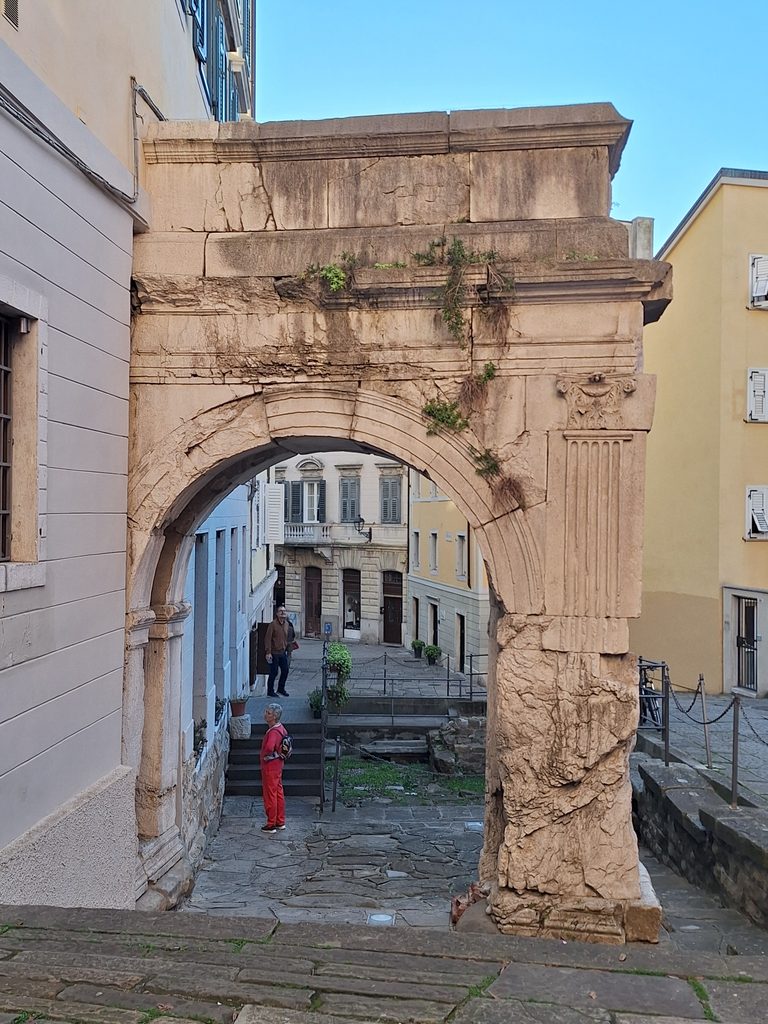
This ancient Roman structure dates from approximately 33–32 BC and is traditionally associated with the Roman walls of Tergeste.
One side of the arch stands exposed, while the other is incorporated into a neighbouring building.
It’s a fascinating example of the way the modern city has grown around its ancient remains.
There are several theories about the origin of the name.
One romantic explanation links it to Richard the Lionheart, who travelled through this region during his return from the Third Crusade.
However, historians generally consider the connection doubtful.
Another explanation suggests that the name evolved from Arco del Cardo, referring to a principal Roman street.
Whatever the origin of its name, the arch is a remarkable survivor.
I stood looking at the ancient stonework, imagining how many people had passed through or around this structure during the past two thousand years.
Trieste is full of these unexpected historical discoveries.
Piazza Unità d’Italia — Trieste’s Grand Seafront Square
Eventually, my walk brought me to the magnificent Piazza Unità d’Italia.
This enormous square opens directly towards the Adriatic Sea and is surrounded on three sides by impressive historic buildings.

Elegant palaces, municipal offices and grand architectural façades reflect Trieste’s prosperity during the Austro-Hungarian period.
It is widely described as one of Europe’s largest public squares opening directly onto the sea.
Standing in the square, I was struck by its scale.
Unlike many European squares enclosed entirely by buildings, here the fourth side opens towards the harbour and the distant horizon.
The result is a wonderful combination of architecture and open space.
Over the years, the square has hosted major public celebrations, political gatherings and concerts.
Modern rock bands, including Green Day and Iron Maiden, have performed here, bringing contemporary entertainment into a setting shaped by centuries of history.
I found it a fascinating place to stop, take photographs and watch people enjoying the waterfront.
The Bathyscaphe Trieste — Exploring the Deepest Ocean
One of Trieste’s most remarkable connections with modern exploration is the famous Bathyscaphe Trieste.
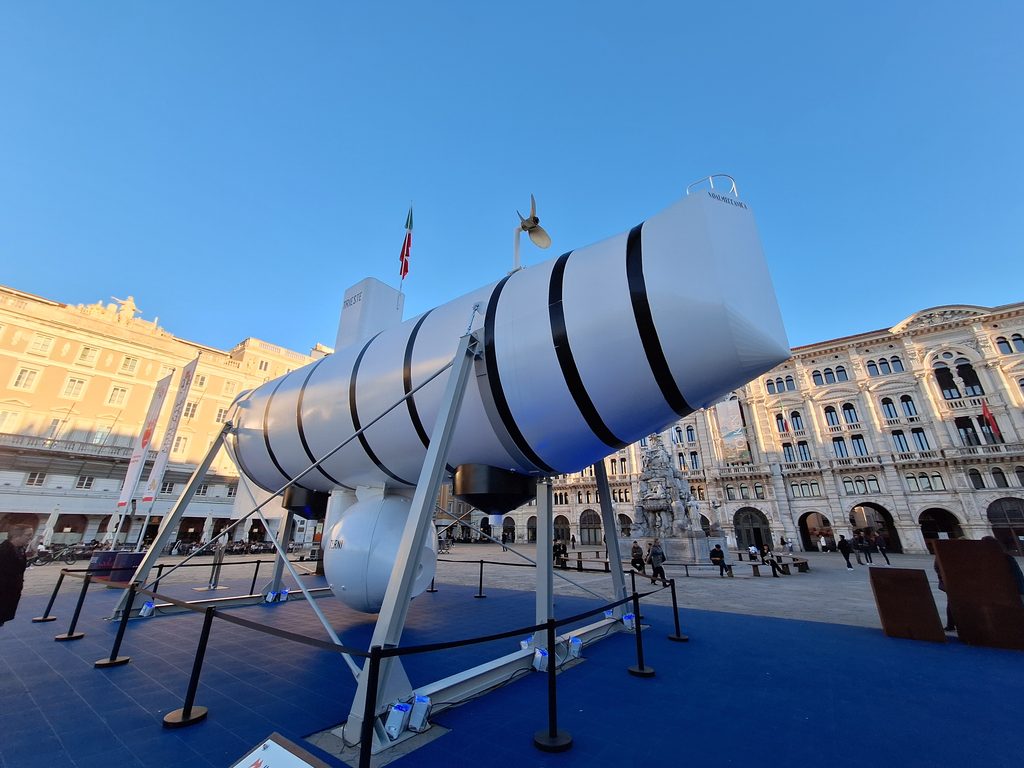
The vessel was designed by Swiss inventor Auguste Piccard and constructed in Italy during the 1950s.
It was subsequently acquired and operated by the United States Navy.
On 23 January 1960, Jacques Piccard and US Navy Lieutenant Don Walsh descended into the Challenger Deep in the Mariana Trench.
They reached a depth of approximately 10,900 metres, almost eleven kilometres beneath the ocean’s surface.
It was an extraordinary achievement.
The bathyscaphe used a large float filled with gasoline, which is lighter than water, above a heavily reinforced steel pressure sphere containing the crew.
The design allowed the vessel to withstand the enormous pressure encountered in the deepest parts of the ocean.
The achievement marked a major milestone in deep-sea exploration.
The vessel itself is now preserved in the United States, but its association with Trieste remains an important part of the city’s scientific and maritime heritage.
I found the story fascinating.
Here was a city whose history was built around the sea, yet its name had also travelled to the deepest known part of the world’s oceans.
It seemed an appropriate symbol for a place shaped by exploration, trade, engineering and curiosity.
A Final Evening in Trieste
By late afternoon, my feet were beginning to remind me just how far I had walked.
I slowly made my way back towards the hostel, stopping to purchase a ready-made lasagne for dinner.
Unfortunately, it looked considerably better than it tasted!
Still, after such a long day exploring, I wasn’t particularly concerned.
I had enjoyed discovering a city that felt different from anywhere else I had visited in Italy.

Trieste combines Roman ruins, grand Habsburg architecture, Serbian Orthodox churches, Italian cafés and an extraordinary maritime history.
Its position near the borders of Slovenia and Croatia has created a fascinating blend of cultures and traditions.
Although unmistakably Italian today, the city retains a distinctly Central European atmosphere.
Walking along the waterfront, with the Adriatic gently lapping against the quay, I reflected on just how many layers of history I had encountered in a single day.
Tomorrow, I would continue towards Venice and San Donà di Piave.
Another train journey, another destination and another opportunity to discover something unexpected.
But Trieste had certainly earned a place among the memorable cities of my European adventure.
Practical Travel Tips for Visiting Trieste
Getting Around
Trieste is an excellent city to explore on foot.
Many of the principal attractions, including the Grand Canal, Roman Theatre, Piazza Unità d’Italia and San Giusto Hill, are within reasonable walking distance of one another.
However, some streets leading towards the castle and cathedral are steep.
For senior travellers, I recommend allowing plenty of time, wearing comfortable footwear and taking regular breaks.
There’s no prize for reaching the top of a hill faster than everyone else!
Public Transport
Local buses provide a useful alternative if you prefer to avoid the steeper streets.
Services connect the railway station with different parts of the city.
For visitors with limited mobility, checking bus routes before setting out can save considerable effort.
Admission Charges
During my visit, I paid €5 for senior admission to Castello di San Giusto.
The Roman Theatre can be viewed from the surrounding public area, while cathedral access and any charges for individual attractions should be checked locally.
Always ask whether senior concessions are available.
Over the course of a long journey, even small discounts can make a difference.
Best Places for Photographs
The castle ramparts provide some of the finest panoramic views across Trieste and its harbour.
The Grand Canal is particularly attractive in the morning and late afternoon, when sunlight reflects against the surrounding buildings.
Piazza Unità d’Italia is another wonderful location, especially when the square and waterfront are illuminated in the evening.
Food, Coffee and Local Culture
Trieste has a unique food and coffee culture influenced by its Italian, Austrian and Central European heritage.
The city has a long history as a major coffee-trading port.
Even the names used when ordering coffee can differ from those in other Italian cities.
It’s worth stopping at a traditional café and experiencing this part of local life.
Useful Walking App
GPSmyCity has been a helpful tool throughout my travels.
It allows independent travellers to plan routes and explore interesting landmarks without joining organised walking tours.
The subscription I encountered was approximately US$12.99 annually, although prices and features may change.
Mobile Internet
For short visits, purchasing a new SIM card may not be economical.
I was offered large data packages that were far more than I needed.
Many cafés and restaurants provide Wi-Fi, although travellers should avoid accessing sensitive accounts through unsecured public networks.
Final Reflections — A City Worth Discovering
Trieste may not attract the same attention as Rome, Florence or Venice, but it has a character entirely of its own.
Its fascinating history reflects centuries of political change, international trade, religious diversity and cultural exchange.
I particularly enjoyed how easily I could move between different periods of history.
One moment I was looking at a Roman theatre.
A little later, I was standing inside a magnificent Orthodox church.
Then I was walking through a medieval fortress, admiring the Adriatic Sea from the castle ramparts.
And somewhere along the way, I still managed to get lost trying to find a SIM card!
That’s the beauty of independent travel.
You can plan your route, but you never quite know what the day will bring.
At 72, I continue to believe that adventure is not limited by age.
It’s about curiosity, being willing to explore unfamiliar places and having the confidence to take another step into the unknown.
Trieste reminded me once again why I began this journey.
Jesolo and Venice — Rediscovering Old Friends and Timeless Canals
After fifty years, I found myself back in Italy, reconnecting with an old friend and returning to one of the world’s most extraordinary cities.
Venice had been part of my memories for half a century. I was curious to discover how much it had changed, whether its famous canals and historic buildings would still hold the same fascination, and how I would feel walking through its crowded streets again.
But before Venice came another reunion, one that meant considerably more to me than visiting another famous landmark.
From Trieste to Jesolo — A Journey and a Reunion
I was up early in Trieste and made my way to the railway station to purchase a ticket towards Jesolo.
The train ticket cost €12.50 (approximately NZ$25.71), and I was directed towards platform 8.
Standing beneath the platform signs, I wondered whether I had an allocated seat or whether it was simply a matter of finding somewhere to sit.
I asked a railway attendant, who explained there were no reserved seats and urged me to hurry because the train was about to depart.
Fortunately, I had asked.
Although the signs indicated platforms 7 and 8, my train was positioned much farther along the platform, around a corner and almost out of sight.
Had I simply stood waiting beneath the sign, I would probably have missed it.
Another little reminder that independent travel requires you to ask questions rather than assume everything is straightforward.
The journey covered approximately 93 kilometres to San Donà di Piave, where I would transfer to a bus for the final section to Jesolo.
But today’s journey was about much more than trains and buses.
Meeting an Old Friend After Fifty Years
I was travelling to meet John, an old friend whom I had recently reconnected with after approximately fifty years.
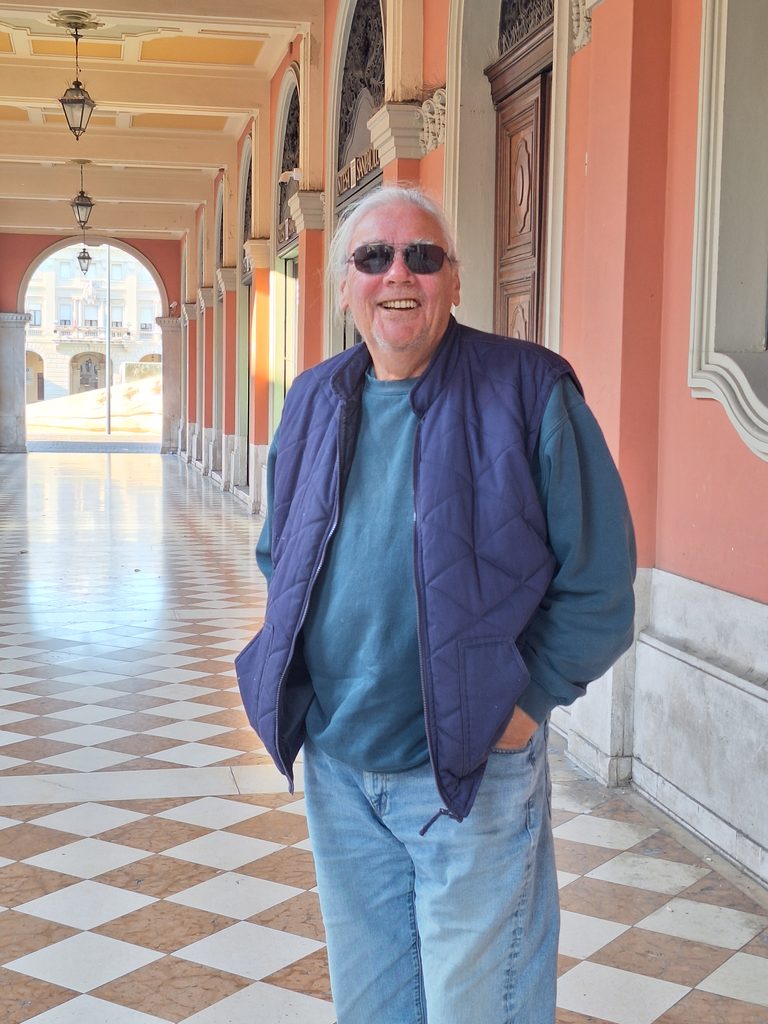
Youth clubs were an important part of growing up in those days.
They offered somewhere for teenagers to meet, enjoy music, attend discos and dances, and spend time together in a safe and friendly environment.
Looking back, those really were some wonderful years.
Life was different then. We didn’t have mobile phones, social media or the constant distractions that seem to dominate the world today.
Friendships were built through face-to-face conversations and shared experiences.
Now, half a century later, John was living near the area I would be visiting, and he had kindly offered me somewhere to stay until my flight on Tuesday, 11 November.
Because of my continuing SIM card problems, we had been communicating by email rather than telephone.
When I arrived in Jesolo, I stopped at Snack Bar Martin and treated myself to a beer while waiting to meet him.
As it turned out, John’s place was only about five minutes’ walk from where I had left the bus.
Once I had settled in, the conversations began.
We talked about school, our youth club, old friends and all the experiences that had filled the intervening fifty years.
It was extraordinary how quickly familiar memories returned.
For me, moments like these are among the greatest rewards of travelling.
You can visit hundreds of historic buildings, but reconnecting with someone from your past brings a completely different kind of pleasure.
Discovering Jesolo and the Adriatic Coast
Jesolo lies along the Adriatic coast, northeast of Venice, and is particularly famous for its long sandy beaches and holiday resorts.
Tourism transformed the area during the twentieth century.
What had once been a relatively modest coastal community developed into one of northern Italy’s popular seaside holiday destinations.
Its beaches, hotels, restaurants and lively promenades attract large numbers of Italian and international visitors during the summer.
However, my arrival was in November.
The summer crowds had disappeared, many establishments had closed for the season, and the atmosphere was noticeably quieter.
That suited me perfectly.
I enjoy seeing places away from their busiest periods, when everyday life becomes more visible and the pressure of tourism begins to fade.
San Donà di Piave, where I had changed from train to bus, has its own interesting history.
Situated near the Piave River, the town was heavily affected by fighting during the First World War.
The Piave became an important defensive line for Italian forces, and the surrounding region witnessed some of the most significant fighting on the Italian front.
Today, it is difficult to imagine the devastation that once affected this peaceful part of northern Italy.
An Evening of Simple Pleasures
Later in the afternoon, while the sun was still shining, I walked to the local Co-op supermarket.
I bought ingredients for spaghetti bolognese, along with a couple of 600 ml bottles of Stella Artois at €1.54 each.
I had been carrying pasta around in my backpack for the past couple of months.
It was about time I used some!
The ingredients should provide enough food for several evenings.
After spending so many months living in hostels, travelling by train and bus, and constantly moving between destinations, having somewhere comfortable to stay and preparing a proper meal was a welcome change.
Tomorrow, I planned to return to Venice.
It had been fifty years since my previous visit, and I was looking forward to seeing what remained familiar.
Setting Off for Venice — A Ferry Across the Lagoon
The following morning, I woke after spending the night in a proper bed rather than a hostel bunk.
It was the first time I had enjoyed that experience since Sæby in Denmark.
I can’t say I had a magnificent night’s sleep, but it was certainly different.
I was awake by 7.30 am and prepared myself a mushroom omelette for breakfast.
At approximately 10 am, we left for the ferry terminal, around 21 kilometres away.
The return ferry ticket cost €19.
I boarded at approximately 10.40 am for the twenty-to-twenty-five-minute crossing towards Venice.

It was a pleasant journey across the lagoon, although a cold wind sweeping over the water encouraged most passengers to remain inside or seek shelter.
As we approached Venice, its distinctive skyline gradually appeared.
Church domes, historic towers and waterfront buildings rose above the water.
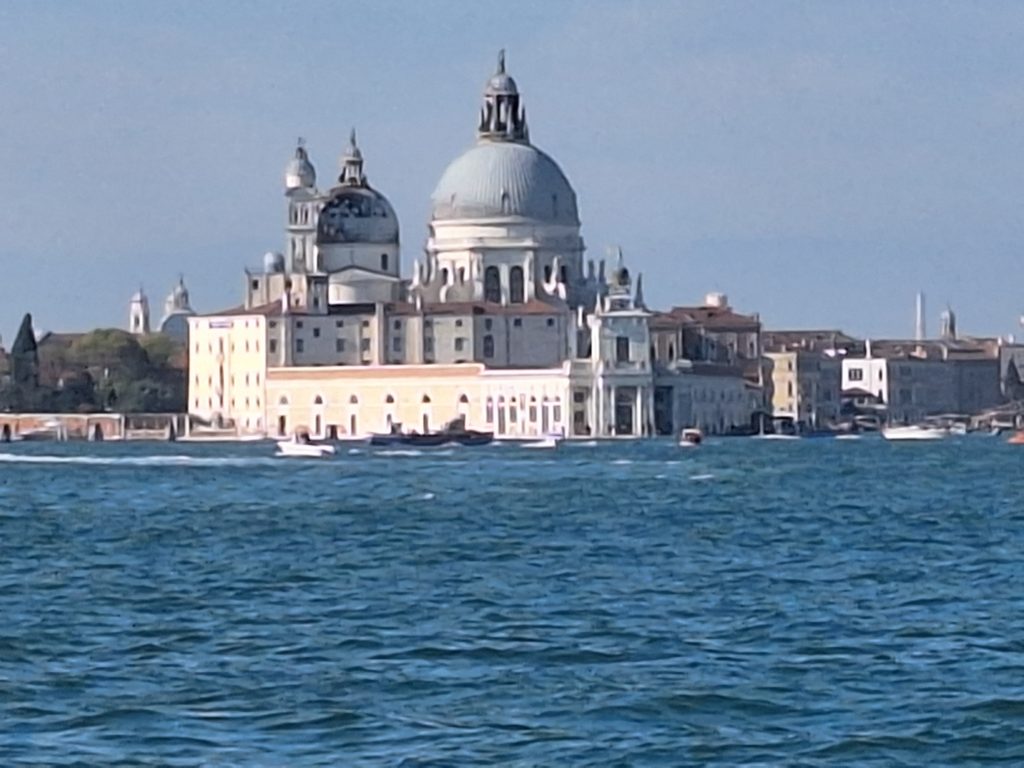
This was the Venice I remembered from half a century earlier.
But the moment I stepped ashore, I realised just how much tourism had changed the experience.
Venice — A City Overwhelmed by Visitors
Considering that it was November, I expected Venice to be relatively quiet.
How wrong I was!
People were everywhere.
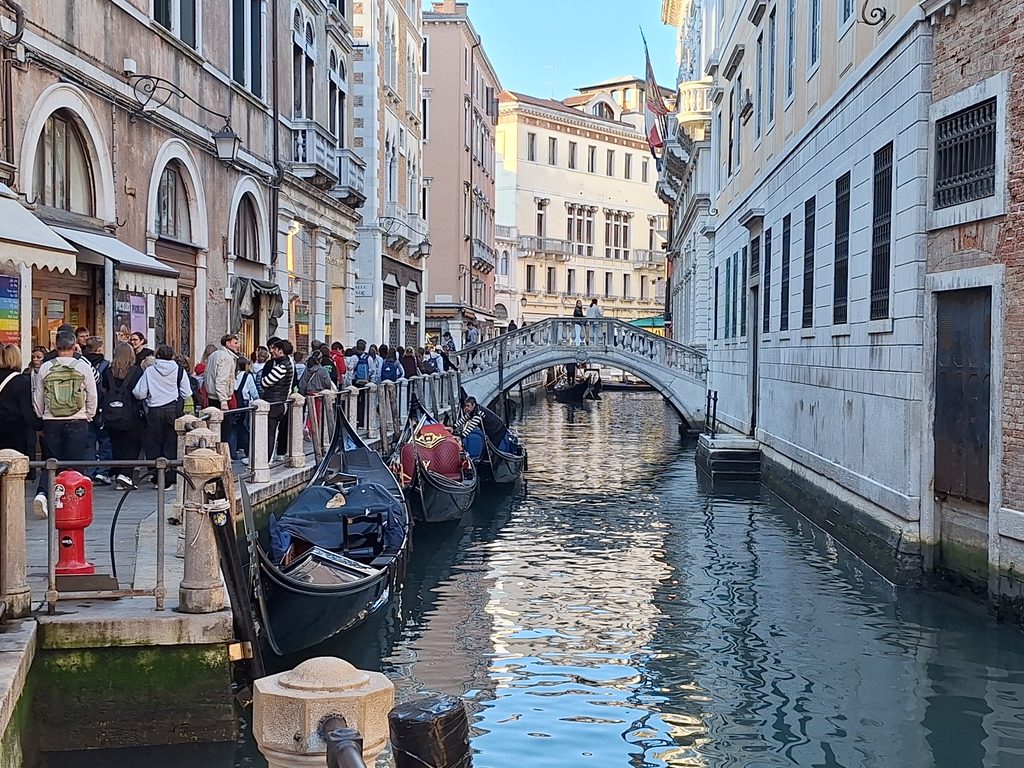
Cruise passengers, school groups, organised tours and independent visitors from every corner of the world filled the waterfront and narrow streets.
I had remembered a Venice where it was possible to wander through quiet lanes and appreciate the canals without being surrounded by crowds.

Now, even outside the main tourist season, the city seemed extraordinarily busy.
Of course, Venice has always attracted visitors.
Its remarkable setting, architecture, history and cultural heritage make it one of the world’s most recognisable destinations.
But returning after fifty years gave me a particularly interesting perspective on how international tourism has developed.
I decided not to allow the crowds to spoil my visit.
Instead, I would take my time, enjoy the atmosphere and revisit some of the places I remembered.
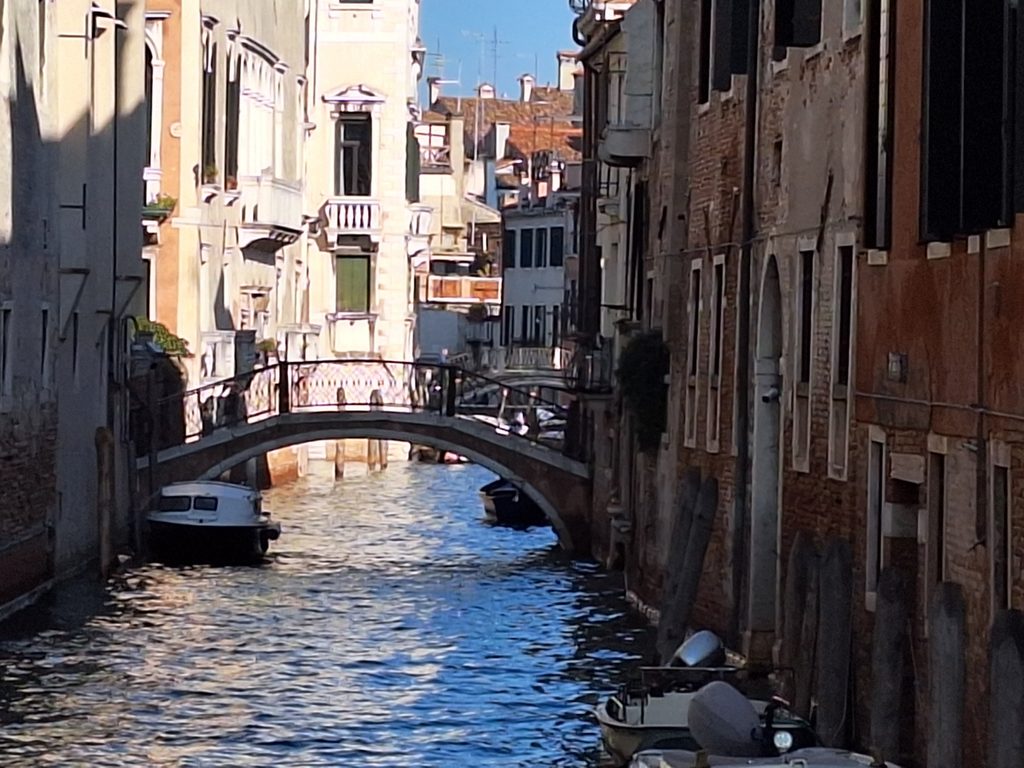
Lunch Beside the Grand Canal
By lunchtime, I was ready for something to eat.
And what better choice in Italy than pizza?
I spent some time walking past restaurants and examining their menus before settling on one beside the Grand Canal.
I ordered my favourite, a Capricciosa pizza, accompanied by a cold beer.
I had been looking forward to enjoying a traditional Italian pizza for months.
It was pleasant enough, although somehow it didn’t taste quite like the pizzas I remembered.
Recipes change, tastes change, and perhaps our memories sometimes make the food of earlier years seem particularly special.
I found myself thinking about my former wife, who could make a pizza that left you wanting another slice long after the meal had finished.
The setting, however, was wonderful.
Sitting beside the canal, watching boats move through the water while the city carried on around me, was a pleasure in itself.
Venice certainly isn’t cheap.
My meal included two beers costing €16, a pizza costing €14, and a €3.50 table-service charge.
It is important to look carefully at restaurant charges before sitting down, particularly in popular tourist areas.
Sometimes the setting costs almost as much as the food!
Doge’s Palace — The Power and Wealth of Venice
After lunch, I continued along the waterfront towards one of Venice’s most magnificent historic buildings, the Doge’s Palace.
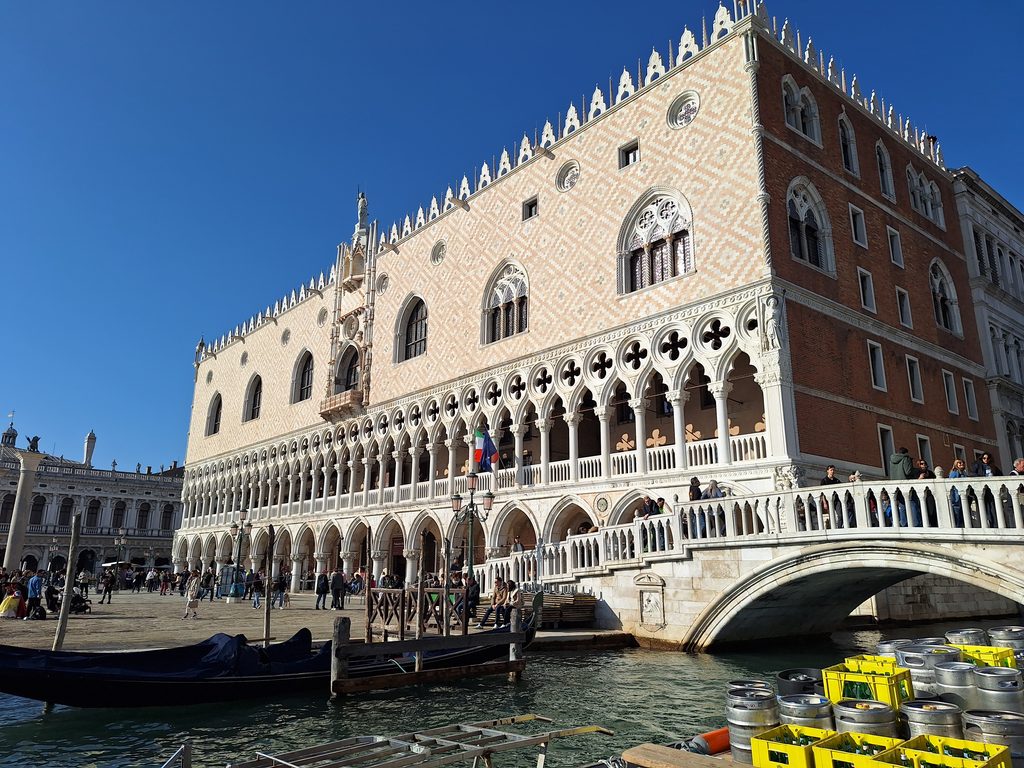
I obtained a reduced admission ticket for €15.
Senior concessions are always worth asking about, although eligibility requirements vary, and some attractions require identification or proof of age.
The Doge’s Palace, known in Italian as Palazzo Ducale, was once the political and administrative centre of the powerful Venetian Republic.
Its origins stretch back to the ninth century, although the magnificent Gothic building visible today developed through centuries of reconstruction and expansion.

For hundreds of years, Venice was one of Europe’s greatest maritime and trading powers.
Its merchants travelled throughout the Mediterranean and beyond, establishing commercial networks that brought enormous wealth into the city.

The Doge was the republic’s elected head of state, but his authority was restricted by a complex system of councils and institutions.
The palace housed important governing bodies, including the Great Council and the Council of Ten.

Decisions made within these walls influenced trade, diplomacy, military campaigns and political affairs across vast areas of Europe and the Mediterranean.

Walking through the enormous chambers, I tried to imagine the discussions, arguments and decisions that once took place there.

The elaborately decorated ceilings, paintings, carved stonework and magnificent halls demonstrated the wealth and ambition of the Venetian Republic.

I took my time exploring.

After several hours, some of the rooms began to feel rather similar, but the history remained fascinating.
The palace represents far more than beautiful architecture.
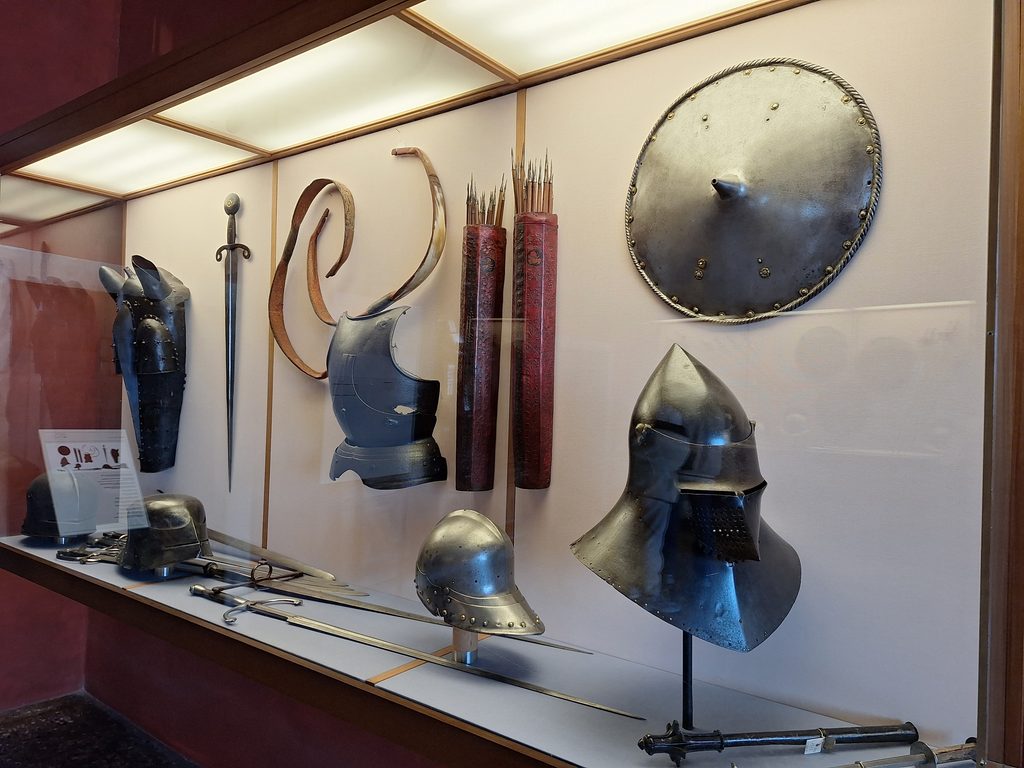
It tells the story of a city that once exercised extraordinary influence over international commerce and politics.
The Bridge of Sighs — A Passage into Imprisonment
One of the most famous features associated with the Doge’s Palace is the Bridge of Sighs.
Completed in the early seventeenth century, the enclosed bridge connects the palace’s interrogation rooms with the New Prisons across a narrow canal.

Constructed from pale Istrian stone, its elegant exterior contrasts with the darker history of those who passed through it.
The popular story behind its name suggests that prisoners sighed when catching their final glimpse of Venice through its small windows.
Whether every detail of that romantic interpretation is historically accurate is another matter, but it certainly adds to the bridge’s atmosphere.
Inside the prison complex, the surroundings were very different from the palace’s grand chambers.
The cells were small, gloomy and uncomfortable.
Stone walls, barred openings, narrow passages and confined spaces created a distinctly oppressive atmosphere.
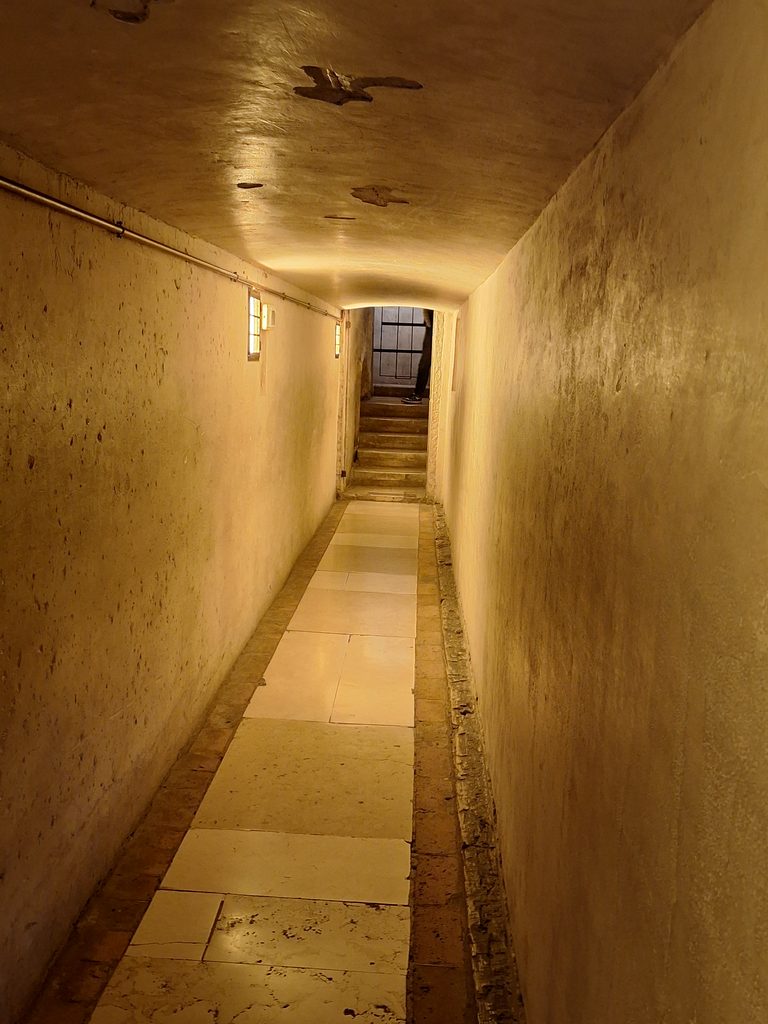
Some cells offered little natural light.

Imagining prisoners spending years in such conditions was unsettling.

It reminded me that behind the wealth and splendour of many great civilisations lay systems of punishment and control that could be extraordinarily harsh.
Standing there, I found myself thinking about the contrast between those who governed from the magnificent palace and those who were imprisoned only a short distance away.
St. Mark’s Square — The Heart of Venice
Leaving the palace, I made my way into St. Mark’s Square.
Piazza San Marco has been the political, religious and ceremonial centre of Venice for almost a thousand years.
Its development began during the early medieval period, with significant expansion during the twelfth century.
The square is surrounded by some of Venice’s most recognisable buildings.

The magnificent Basilica di San Marco dominates one end, while the Doge’s Palace stands nearby.

The elegant arcades of the Procuratie frame the surrounding sides.
For centuries, this was the setting for public celebrations, religious processions, political ceremonies and important gatherings.

It was also a place where the wealth and confidence of the Venetian Republic were displayed.
Napoleon is traditionally credited with describing St. Mark’s Square as the drawing room of Europe.
Looking around, it wasn’t difficult to understand why.
The architecture is magnificent.
But the atmosphere had changed since my visit fifty years earlier.
The crowds, souvenir shops, restaurants and constant movement of visitors made the experience very different from my earlier memories.

Even so, there is something extraordinary about standing in a square that has witnessed so many centuries of European history.
I continued walking, photographing buildings and enjoying the spectacle of Venice going about its busy daily life.
The Rialto Bridge — A Landmark Across the Grand Canal
My next destination was the famous Rialto Bridge.
This is one of Venice’s most recognisable landmarks and among its most photographed attractions.
The bridge crosses the Grand Canal, connecting the districts of San Marco and San Polo.
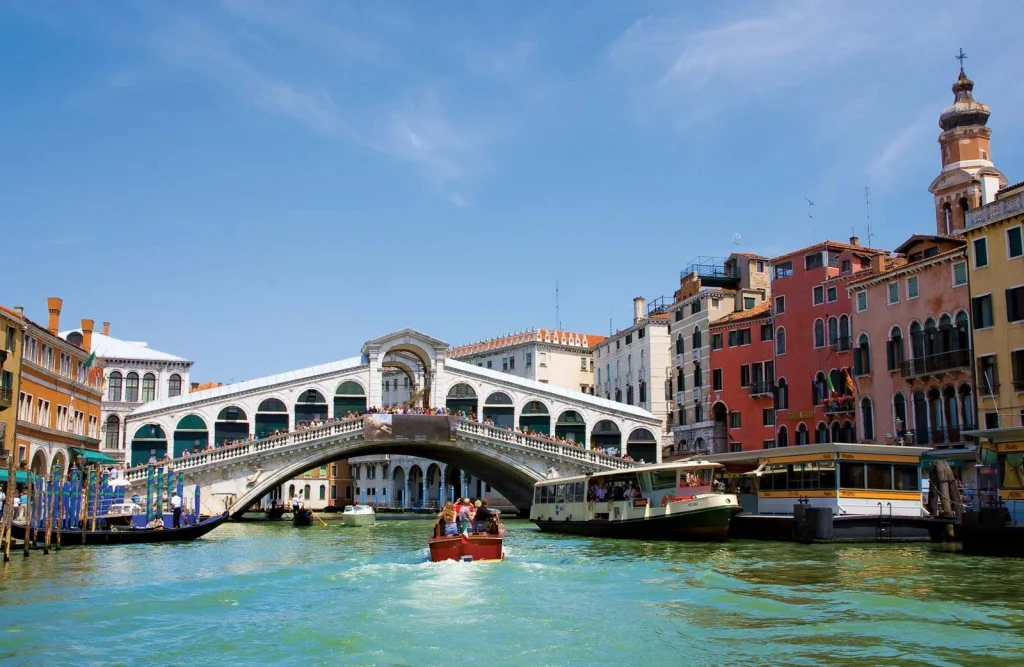
The present stone bridge was designed by Antonio da Ponte and constructed between 1588 and 1591.
Its distinctive design consists of a single large arch supporting a broad walkway with shops along either side.

Despite doubts expressed about its construction, the Rialto Bridge has survived for more than four centuries.
Today, thousands of visitors cross it every day.
Naturally, it was crowded during my visit.
There were tourists taking photographs, people browsing the shops and others simply stopping to admire the canal below.
I joined them for a while.

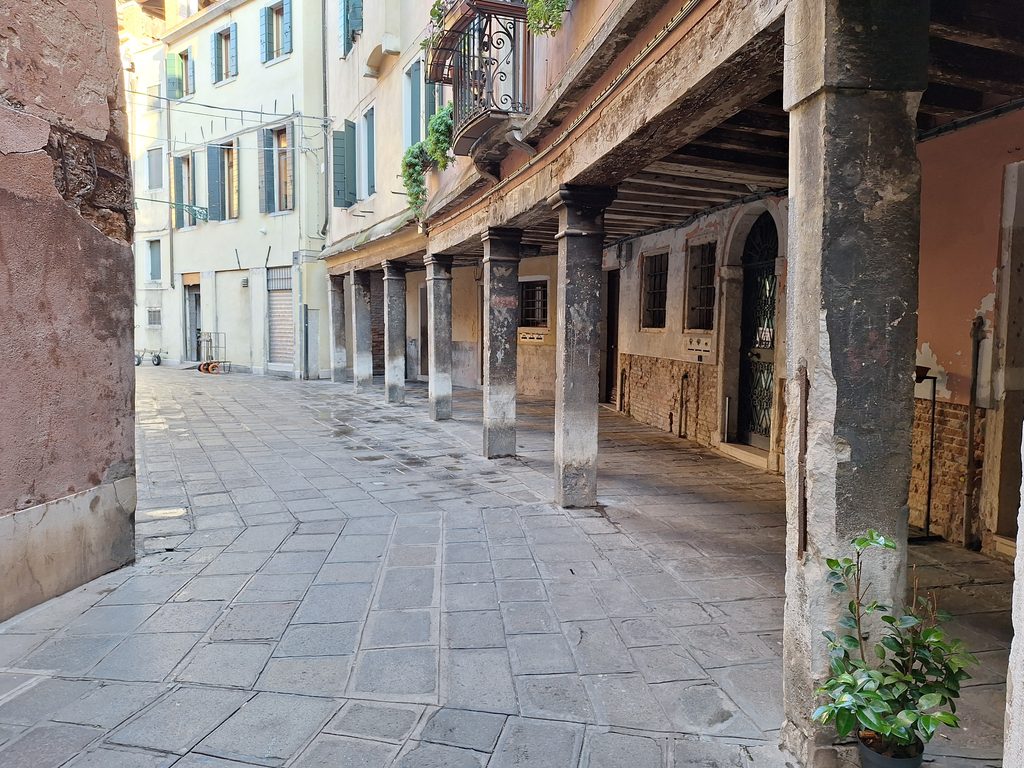
Venice is one of those places where even a short walk can reveal something fascinating.
A narrow street suddenly opens onto a canal.

A small bridge leads towards an unexpected square.
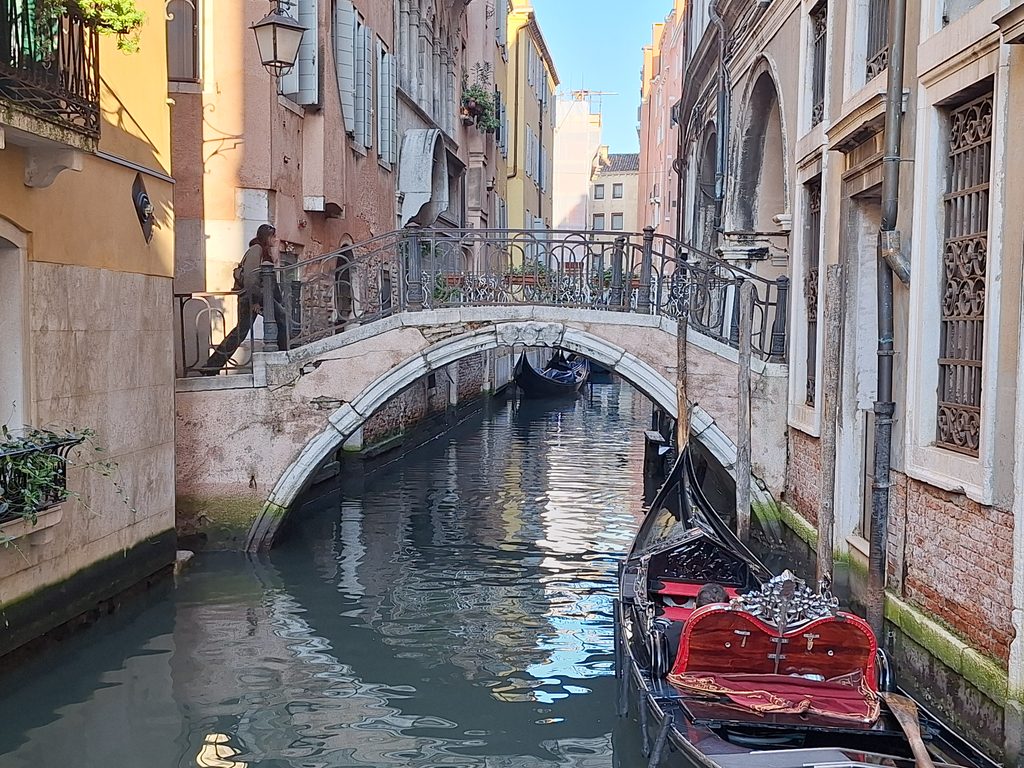
A historic building appears around the next corner.
It is a city that encourages curiosity, provided you have the patience to explore it.
Returning to Jesolo — A Long Day Comes to an End
By late afternoon, I was beginning to feel tired.
I had spent much of the day walking, exploring historic buildings and negotiating crowded streets.
I caught the 4 pm ferry for the return journey across the lagoon.
From there, I continued towards Jesolo by bus.
Unfortunately, the return journey didn’t work quite as smoothly as I had hoped.
I wanted to get off at Jesolo Centro, but the bus continued to the main station.
By now, it was becoming dark.
Jesolo was very quiet, with many businesses closed for the season.
I eventually found a café bar near the Welcome to Jesolo sign and ordered a beer.
I asked the lady behind the counter whether she would telephone John and ask him to collect me.
Thankfully, she agreed.
Otherwise, I would have faced a walk of approximately 3.2 kilometres in the dark.
After a long day on my feet, that wasn’t particularly appealing.
Another small act of kindness made my journey a little easier.
Was Venice Worth Returning To?
Looking back, it had been an enjoyable day.
But was it one of those extraordinary experiences that makes you stop and say, “Wow!”?
Not particularly.
Perhaps that sounds surprising, considering Venice is regarded as one of the most beautiful cities in the world.
But I think returning somewhere after fifty years creates expectations that are difficult to satisfy.
I remembered a quieter city.
The canals and magnificent buildings were still there, but the atmosphere had changed.
There were more visitors, more commercial activity and considerably higher prices than I remembered.
Nevertheless, I was pleased to have returned.
The Doge’s Palace, Bridge of Sighs, St. Mark’s Square and Rialto Bridge remain extraordinary reminders of the city’s history.
And simply walking through Venice again brought back memories of a different period in my life.
Sometimes revisiting a place is as much about understanding how we have changed as it is about seeing how the destination has changed.
What My Day in Venice Cost
Travelling on a pension means paying attention to expenses.
Venice is certainly not one of Europe’s cheapest destinations.
Here is what I spent during the day.
| Expense | Cost |
|---|---|
| Return ferry | €19.00 |
| Postcards and stamps | €17.10 |
| Lunch | €33.00 |
| Doge’s Palace | €15.00 |
| Bus | €3.50 |
| Total | €87.60 |
That worked out to approximately NZ$179.41 using the conversion figures I recorded at the time.
It was a fairly expensive day compared with many of the destinations I had visited during the previous year.
But Venice is one of those cities where you should expect tourist prices, particularly around the most famous landmarks.
Practical Travel Tips for Visiting Venice
Ferries and public transport
Check ferry routes and return schedules carefully. Buying a return ticket can simplify your day, especially when travelling from outside Venice.
Allow plenty of time
Venice is best explored slowly. Its bridges, narrow streets and crowded squares can make walking surprisingly tiring.
Wear comfortable footwear
There are countless bridges and steps throughout the historic centre. Good walking shoes are essential.
Ask about senior discounts
Museum and attraction concessions vary. Carry identification and check eligibility before purchasing tickets.
Watch restaurant charges
In popular locations, table-service charges and other extras can add significantly to your bill. Read menus carefully.
Explore beyond the main attractions
The smaller streets and quieter canals can be just as interesting as the famous landmarks.
Take photographs early or late
Morning and late-afternoon light can make Venice particularly beautiful, while the busiest areas may be less crowded outside peak visiting hours.
Plan your return journey
Know where your ferry or bus departs and check the last available services.
Don’t try to see everything
Choose the attractions that interest you most and allow time to enjoy them properly.
At my age, I have learned that there is no satisfaction in rushing from one landmark to another simply to tick them off a list.
Final Reflections — Travel, Friendship and the Passing of Time
My return to Venice was another reminder of how much the world changes over fifty years.
But perhaps the most meaningful part of this visit to Italy wasn’t Venice at all.
It was reconnecting with John.
After half a century apart, we could still sit together, share memories and laugh about our younger days.
There is something rather special about that.
During the past year, I have travelled through dozens of countries, stayed in countless hostels, used trains, buses and ferries, and met people from all walks of life.
Some days have been extraordinary.
Others have been tiring, frustrating or simply ordinary.
Travel isn’t always easy.
Being away from friends and family for long periods can be difficult, particularly when plans change, problems arise or you find yourself somewhere unfamiliar.
But the experiences continue to teach me something.
My original travel blog began as a simple diary, recording where I had been and what I had done.
Over time, it has evolved into something much more meaningful.
It has become a record of the people I meet, the history I discover, the challenges I overcome and the memories I create.
I hope that sharing these experiences encourages others, particularly older travellers, to recognise that adventure doesn’t have to end when we reach retirement.
Sometimes the greatest adventure is simply having the confidence to take the next step.
My European journey was gradually coming to an end.
I would soon be flying home to New Zealand for medical treatment, including an appointment relating to my umbilical hernia.
But I knew that once I had recovered, there would be more places to visit, more people to meet and more stories to share.
After all, my journey has always been about one simple idea.
Stepping out of fear, one step at a time, into the unknown.
Andrew
Inspire Seniors Travel
inspireseniorstravel.com