

Singapore — Four Days in the Lion City
After roughly 40 hours aboard the Kelud crossing the Java Sea, I finally arrived in Batam at around 7:30 in the morning.
But I hadn’t reached my next country yet.
After breakfast, I transferred to the ferry terminal for the final journey across to Singapore — another 38 kilometres and about an hour by ferry.
After the chaos, flooded streets and sometimes unpredictable traffic of the previous couple of weeks, Singapore was about to feel very different.
Day 1 — Arrival in Singapore
Weather: Sunny periods, 33°C
Batam to Singapore
The ferry terminal at Batam felt more like an international airport than a traditional ferry terminal. There were shops and plenty of places to eat while passengers waited for their departures.
Then it was time to cross the water.
Although Singapore didn’t look particularly far away, the ferry journey covered about 38 kilometres.
An hour later, I had arrived.
What a Difference
My first introduction to Singapore’s public transport system was the Metro.
It was fast, clean and busy.
When I emerged from the station, one of the first things I noticed was the traffic — or rather, the relative lack of chaos.
There were controlled pedestrian crossings.
Drivers appeared to obey road rules.
Traffic moved in an orderly fashion.
After some of the roads I had experienced during the previous couple of weeks, it was almost relaxing.
Singapore immediately felt different.
The heat, however, hadn’t disappeared.
Before continuing to my hostel, I stopped just down the road for a cold beer.
Sometimes priorities are important.
Rucksack Inn
I was staying at the Rucksack Inn on Tyrwhitt Road, in an area surrounded by Asian food.
At around NZ$27 a night, the hostel exceeded my expectations.
As always with hostel accommodation, your experience can depend enormously on the people sharing the room with you.
I met an Indian couple who had been married for two years and were visiting Singapore for seven days.
For lunch, I tried Kampua — noodles with pork — along with chicken soup. The meal cost around NZ$6.39.

Cheap, filling and local.
Exactly what I needed.
I had three days initially planned for Singapore, although by now I was becoming accustomed to making decisions as I travelled rather than having everything organised months in advance.
That freedom was becoming an important part of the journey.
Day 2 — Finding My Feet
Weather: Cloudy with sunny intervals and windy, 30°C
Finally, a Good Night’s Sleep
I woke at 7:15 am after what was probably the best night’s sleep I’d had since starting this journey.
Even better, my roommates were still asleep at 9:30.
Light rain delayed my start slightly, but by around 10:00 am it had eased enough for me to head out.
Today’s mission wasn’t particularly glamorous.
I needed sandals.
The Great Sandal Expedition
Beach flip-flops might be fine beside a swimming pool, but they weren’t proving particularly practical for the amount of walking I was doing.
I took the Metro to Paya Lebar Square in search of something better.
Success.
I became the proud owner of a pair of Weinbrenner sandals.
Not just ordinary sandals either.
These apparently came with peppermint-infused antimicrobial protection.
After weeks of walking in tropical temperatures, perhaps the people sharing my hostel dormitory would appreciate the investment as much as I did.
No more smelly feet!
A Bottom Bunk at Last
There was another small victory back at the hostel.
Following my hip surgery, climbing into a top bunk wasn’t something I particularly wanted to do every night.
I managed to change to a bottom bunk, which made life considerably easier.
It might sound like a small detail, but when you’re travelling for months and staying predominantly in hostels, things like bunk position matter.
This is something older travellers should remember when booking hostels: ask for a bottom bunk whenever possible. Don’t assume one will automatically be available.
Where Next?
The heat made spending long periods outside tiring, so I decided not to push myself unnecessarily.
One of the lessons I was learning was that long-term travel isn’t a holiday where you have to cram something into every minute.
Sometimes you need to slow down.
I began thinking about the next stage of the journey.
Kuala Lumpur was ahead of me, but Malacca looked interesting enough to justify stopping for a few days on the way.
Nothing was fixed.
I could wake up tomorrow and decide whether to stay or move on.
I rather liked that feeling.
Day 3 — Not a Productive Day
Weather: Cloudy with sunny intervals, increasing wind, 32°C
Some days everything falls into place.
Other days don’t.
This was one of those days.
I had plans, but for various reasons very little went according to them.
That’s travelling.
An Offer I Couldn’t Refuse
While wandering around looking for somewhere to eat, I encountered a particularly persistent woman trying to persuade tourists to eat at her establishment.
Making eye contact was apparently a mistake.
If you so much as looked in her direction, she followed you until you either escaped or surrendered and sat down.
Eventually, I surrendered.
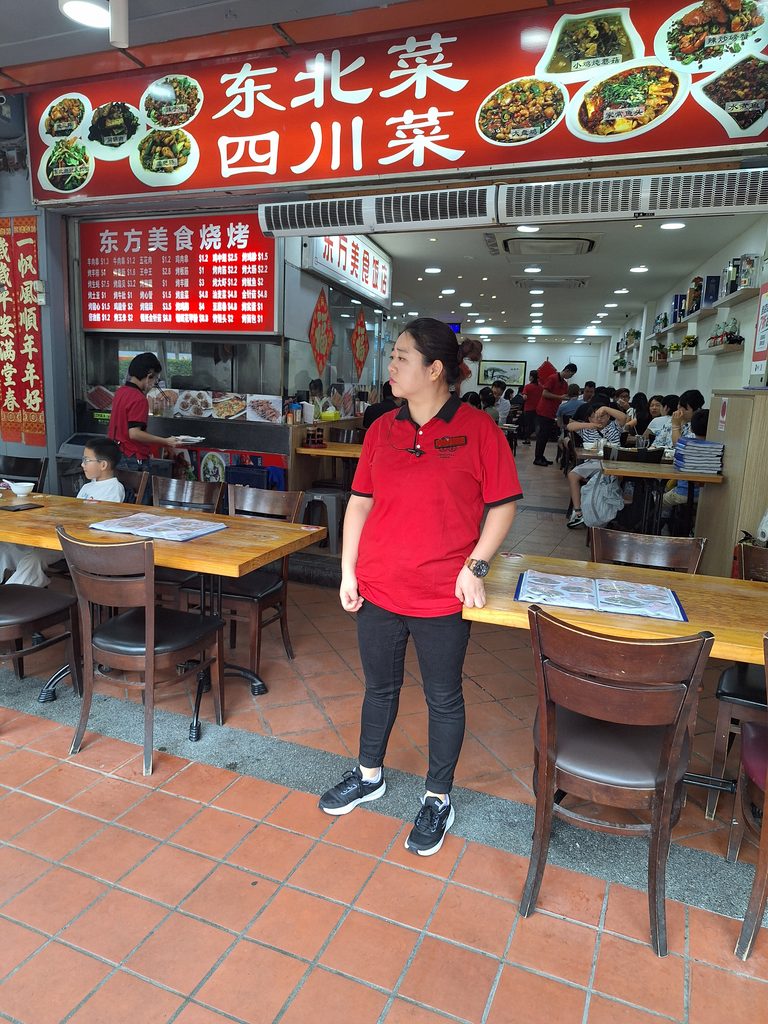
I needed lunch anyway.

Meeting Yanjing
I also met someone named Yanjing.
Yanjing was rather shy and didn’t want to be photographed, which of course I respected.
It was nevertheless another friendly encounter on a day when not much else had gone according to plan.
These brief meetings are one of the pleasures of travelling independently. You may only speak with someone for a short time, but they become part of the story.
Singapore’s Metro
One thing continued to impress me enormously — Singapore’s rail system.
You could travel across the city in almost any direction, shop and find somewhere to eat without even needing to leave some stations.
It made me think about Auckland.
If a comprehensive above-and-below-ground metro system had been developed there decades ago, perhaps today’s traffic problems would look very different.
At the time, I paid around SGD$10 to set up my travel card, while individual journeys were relatively inexpensive.
The system made getting around Singapore remarkably easy.
Respect for Older Passengers
Something else stood out.
People regularly offered their seats to older passengers.
As a senior traveller, you notice these things.
Public transport can be one of the biggest challenges when you’re travelling independently, particularly when carrying a backpack or standing for long periods.
Seeing people automatically make room for older passengers left a very positive impression on me.
My Impression of Singapore
By now, Singapore had really impressed me.
It was clean, organised, efficient and incredibly easy to get around.
Food seemed to be everywhere. Train stations, shopping centres and street corners offered endless choices.
Singapore is also extraordinarily multicultural, reflecting generations of Chinese, Malay, Indian and other communities that have helped shape the country.
Looking around at the business and financial centre Singapore had become, I found myself thinking that if I were 30 years younger — and knew then what I know now — this might have been an interesting place to live and work.
But I wasn’t 30 years younger.
I was travelling around the world in my seventies.
And I wasn’t finished yet.
Day 4 — Chinatown
Weather: Sunny with occasional clouds, 33°C
My final day in Singapore had arrived.
That evening I would be catching a bus into Malaysia, stopping first in Malacca before eventually continuing towards Kuala Lumpur.
My bag was packed early, and by about 9:30 am I was ready for one final exploration.
Today’s destination was Chinatown.
Walking Through Singapore’s History
It was incredibly hot.
People searched for whatever shade they could find as I wandered through Chinatown’s streets.
Singapore today is one of the world’s great modern cities, but its story stretches much further back.
The island was known as Temasek centuries before Stamford Raffles established a British trading post here in 1819. Singapore later became part of the British Empire, endured Japanese occupation during the Second World War, joined Malaysia in 1963 and became an independent republic in 1965.
The transformation since then has been remarkable.
And Chinatown provides a fascinating window into part of that history.
Singapore’s Chinatown
Chinatown developed during Singapore’s growth as a trading port and became home to generations of Chinese migrants.
Today, colourful shophouses, temples, mosques, markets and hawker centres sit only a short distance from Singapore’s modern financial district.
Walking through the streets, the contrast is striking.
Behind the beautifully restored buildings, however, lies a much more complicated history.
Sri Mariamman Temple
One of my stops was the Sri Mariamman Temple on South Bridge Road.
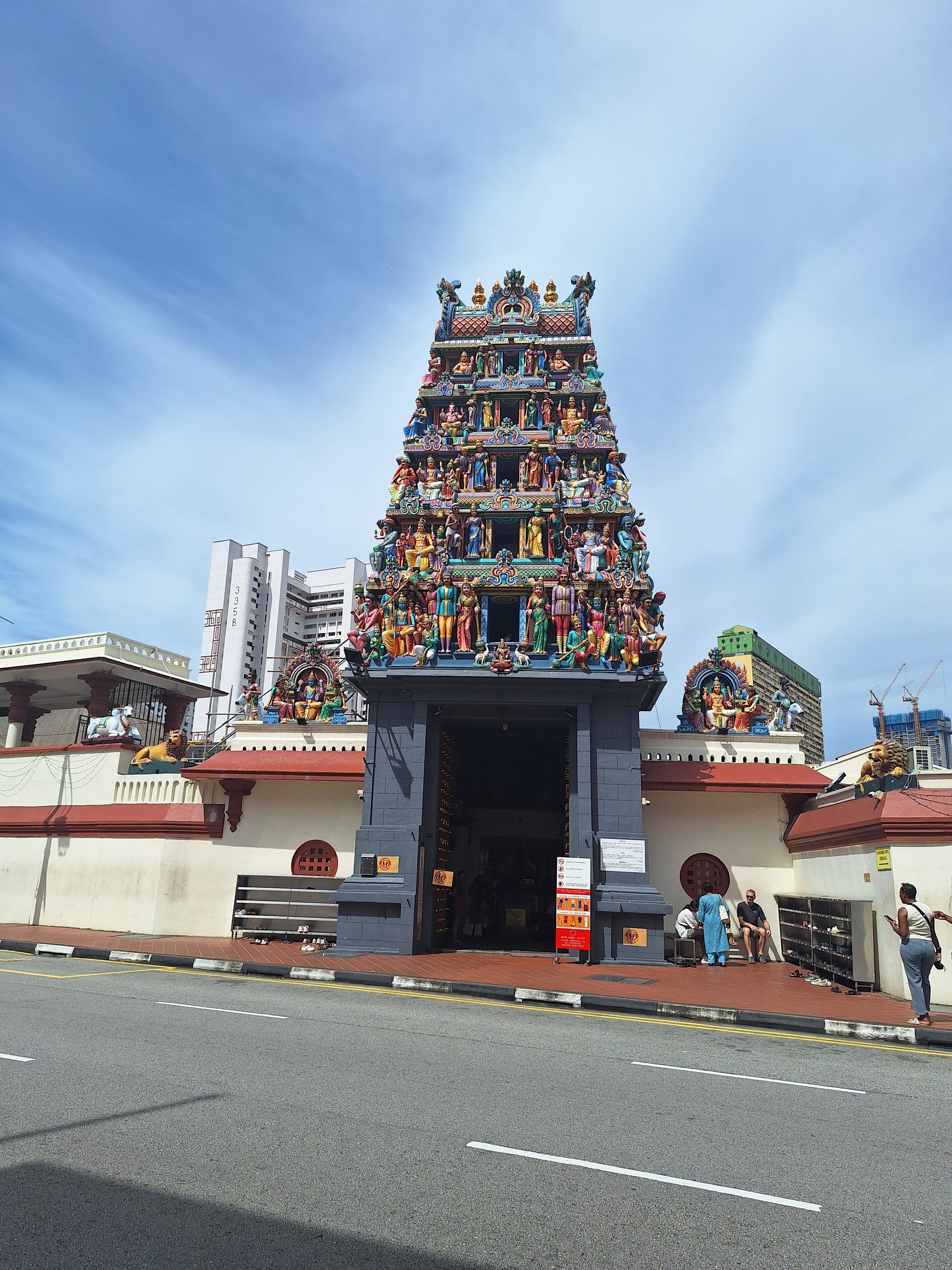
Founded in the 1820s, it is Singapore’s oldest Hindu temple and remains an important religious and cultural landmark.
Its elaborate entrance tower immediately stands out among the surrounding streets.
Singapore’s Chinatown isn’t exclusively Chinese, and seeing a Hindu temple here was another reminder of the mixture of cultures and religions that have shaped the city.
Buddha Tooth Relic Temple
Another striking building was the Buddha Tooth Relic Temple.
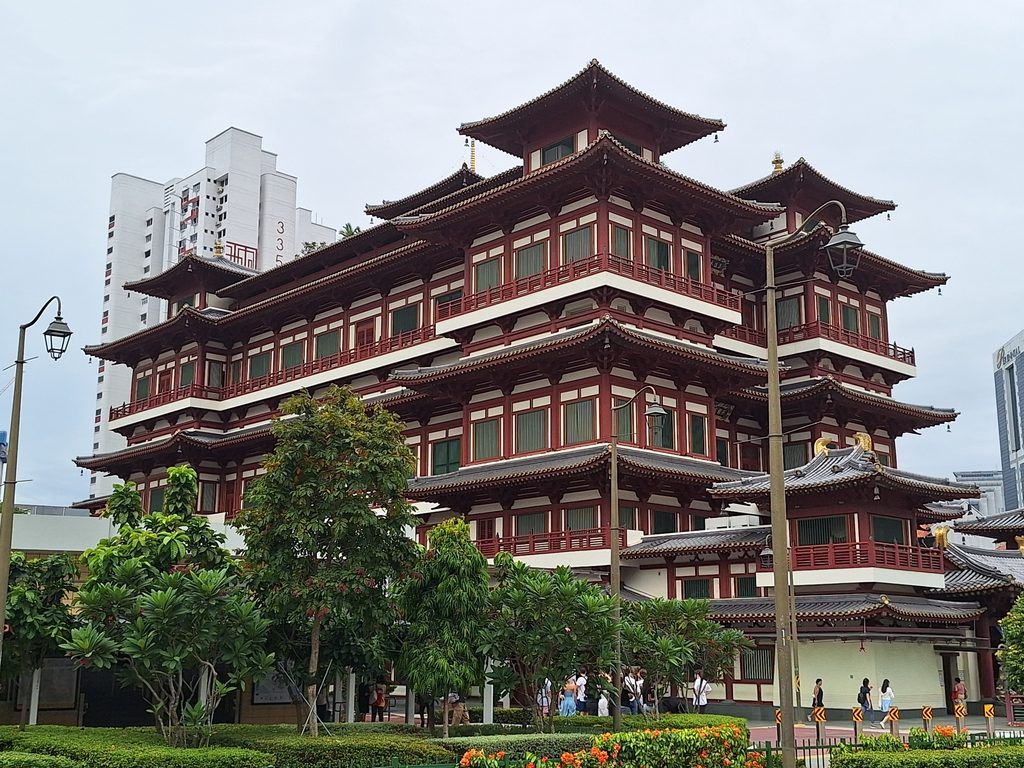
Unlike some of Chinatown’s older religious buildings, this temple is relatively modern, opening in 2007.
Its Tang-style architecture makes it appear considerably older.
Inside are museum spaces and Buddhist artefacts, while the temple takes its name from a relic regarded by its custodians as a tooth of the Buddha.
Whatever your beliefs, it is an impressive building.
Chinatown Markets
Today’s clean and colourful Chinatown is very different from the neighbourhood that existed generations ago.
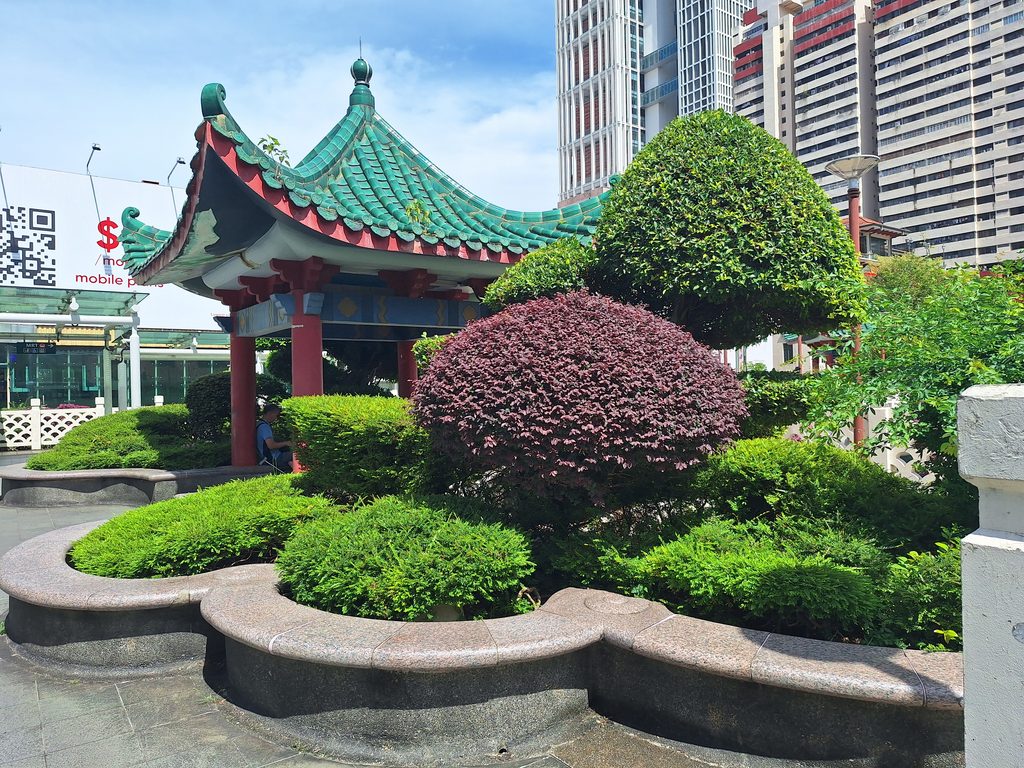
Chinatown Markets | Ornamental shrubs
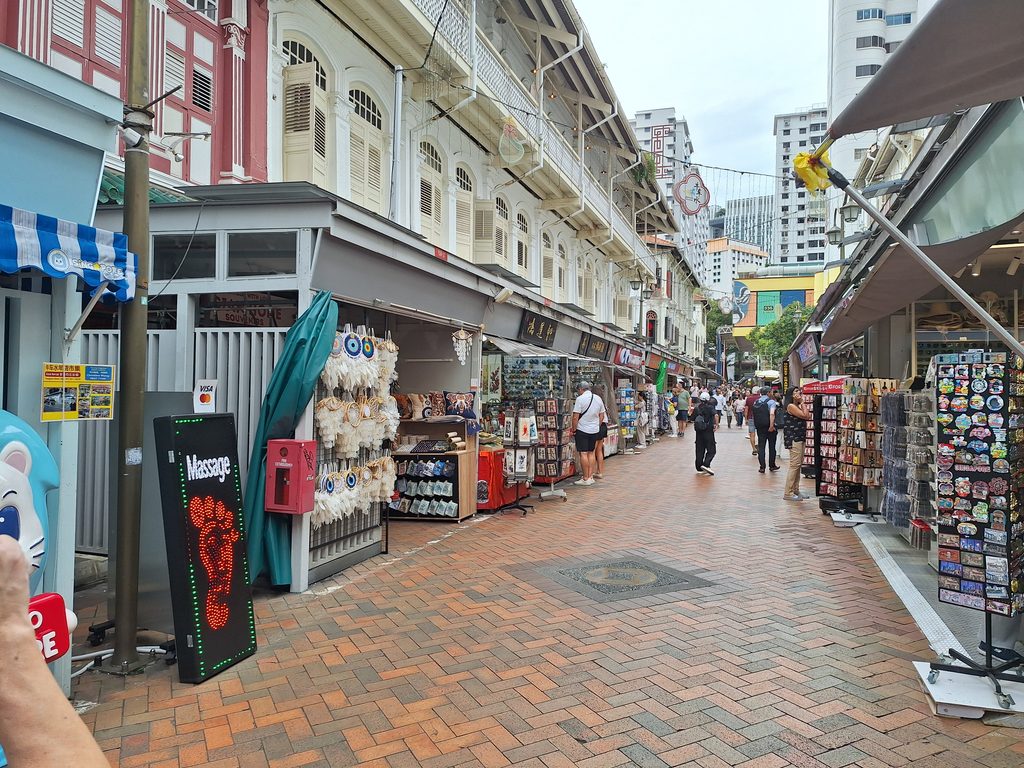
During Singapore’s rapid development as a trading port, many migrants arrived with very little money and lived in overcrowded conditions.
Parts of the district became associated with opium dens, secret societies, crime and exploitation.
Many of the old shophouses have now been restored, but knowing something about their past changes the way you look at them.
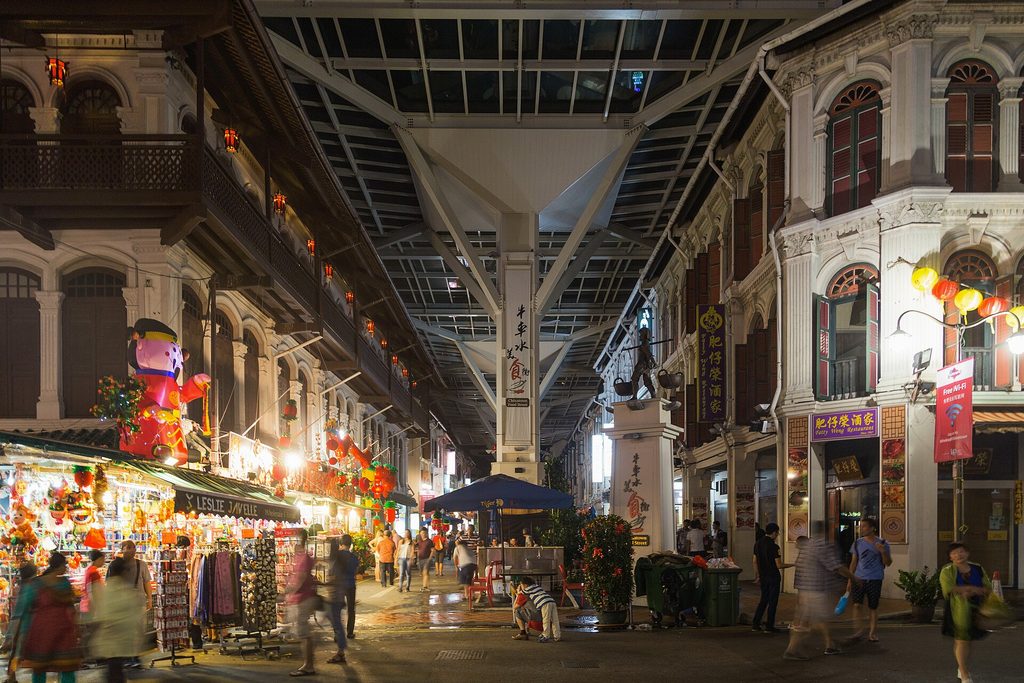
Pagoda Street
Pagoda Street is now colourful, busy and filled with shops and visitors.
Its history was considerably harsher.
The surrounding area once contained overcrowded accommodation for migrant labourers as well as establishments associated with the opium trade.
Standing among the restored buildings today, it is difficult to imagine just how different life here once was.
That’s one reason I enjoy learning some history while travelling.
Without it, an attractive old building is simply an attractive old building.
Once you know what happened there, you begin looking at it differently.
Historic Pagoda Street in Singapore’s Chinatown

Smith Street
Smith Street also has a colourful past.
In the early 20th century, parts of this neighbourhood were associated with brothels, gangs and other activities far removed from the polished tourist district visitors see today.
Nearby Temple Street takes its name from the Sri Mariamman Temple.
Walking through these streets gave me another glimpse beneath Singapore’s immaculate modern surface.
The city hadn’t always looked like this.
Historic Smith Street in Singapore’s Chinatown
Leaving Singapore
My time in Singapore had been relatively short, but the country made a strong impression on me.
The public transport was outstanding.
The streets felt organised.
Getting around independently was straightforward.
People showed consideration towards older passengers.
And beneath all that modern development was a fascinating mixture of cultures and history.
Singapore also gave me something I badly needed after the previous couple of weeks — a chance to slow down slightly and find my feet.
Literally, in this case.
I was leaving with a new pair of sandals.
Journey Totals
By the time I prepared to leave Singapore, my journey had reached:
Flights: 6 — 6,904 km
Ships: 2 — 941 km
Trains: 12 — 2,762 km
Buses: 5 — 246 km
Cars: 5 — 263 km
Walking: 153 km
Total distance travelled: 11,269 km
That evening, it was time to shoulder the backpack once again.
Singapore had been clean, comfortable and remarkably easy to navigate.
Now I was heading back onto the road.
Next stop: Malacca, Malaysia.