

Slovakia — Discovering Bratislava, the Capital on the Danube
Day 184 — An Unexpected Arrival in Bratislava
Weather: Sunny, high 22°C
Elevation: 124 metres (405 feet)
Farewell Budapest — Another Chapter Begins
At 71-plus, I sometimes reflect on the extraordinary journey life has taken me on. When I left New Zealand to travel around the world, my aim was not simply to visit capital cities, but to challenge perceptions, discover unfamiliar places and demonstrate that adventure doesn’t have an age limit.
After several enjoyable days in Budapest, Hungary, it was time to move on to my next destination: Bratislava, the capital of Slovakia.
I had enjoyed Budapest enormously, not only for its magnificent buildings and rich history, but also for the friendships and conversations that had developed at Shantee House.
The evening before leaving, I had another meaningful conversation with my Australian friend Attila, who had been travelling for 15 years. We discussed life, people and the experiences that shape our understanding of the world.
Saying goodbye to my fellow travellers was surprisingly emotional.
Ole, from Norway, seemed reluctant for everyone to go their separate ways. But that is the nature of hostel life. People arrive, friendships form, and then, almost before you know it, everyone is heading towards a different destination.
Those brief connections are among the greatest treasures of travelling.
An Early Start and a Breakfast of Pasta
My bus to Bratislava was scheduled to depart at 9:10 am.
Although I had plenty of time, I was ready to leave by eight o’clock.
I have always preferred arriving early for transport rather than rushing at the last minute. The anxiety of missing a bus or train simply isn’t worth the extra few minutes in bed.
Breakfast was rather unconventional — the remainder of my pasta from the previous day.
Not exactly a traditional breakfast, but perfectly adequate when you’re travelling on a budget!
After exchanging hugs and handshakes, I collected my backpack, said my final farewells and headed towards the tram station.
Another country was waiting.
A Delayed Departure from Budapest
I arrived at the station at approximately 8:15 am, comfortably ahead of my scheduled departure.
Everything appeared straightforward until the departure time came and went.
There was no bus.
Travellers around me began looking at one another, clearly wondering what was happening.
Unfortunately, I didn’t have a local SIM card or access to mobile internet, so checking for updates wasn’t an option.
Eventually, a young man nearby kindly explained that the bus was running approximately 25 minutes late.
That was reassuring. At least we knew something.
But the wait continued.
When the bus finally appeared, it was almost 50 minutes behind schedule, apparently delayed by heavy traffic in Budapest.
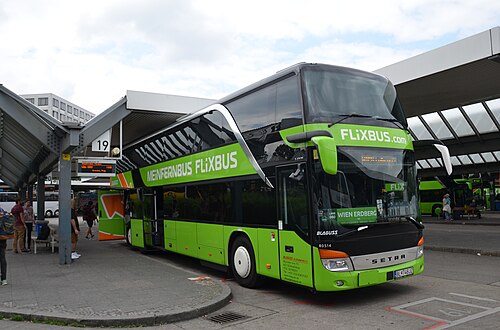
It was a modern double-decker coach, and I was fortunate enough to have an empty seat beside me.
After weeks of travelling on buses, trains and other forms of public transport, having a little extra space is always welcome.
I settled into my seat, made myself comfortable and prepared to watch the countryside unfold.
Wind Turbines, Farmland and a Smooth Journey
Once we escaped the city traffic, the journey progressed smoothly.
The roads were good, and the countryside consisted largely of agricultural land, stretching away towards the horizon.
One thing that particularly caught my attention was the enormous number of wind turbines.
There seemed to be hundreds of them, their great blades slowly turning above the fields.
They were a striking reminder of how Europe’s landscape is changing as countries develop alternative energy sources.
The journey from Budapest to Bratislava was supposed to take approximately two hours and twenty-five minutes.
But as I have learned repeatedly on this adventure, timetables are sometimes more of a suggestion than a guarantee!
Another Delay — and an Unexpected Tyre Wash
Partway through the journey, we encountered roadworks on the motorway.
Traffic slowed considerably, adding more time to an already delayed trip.
Then, as we approached the border area near Bratislava, something rather unexpected happened.
Our bus, along with other vehicles, was directed through an area where the tyres were sprayed with a chemical solution.
I had not encountered this particular procedure before.
My understanding was that it might have been connected with biosecurity precautions against livestock diseases such as foot-and-mouth disease.
Whatever the reason, it was another delay to add to the journey.
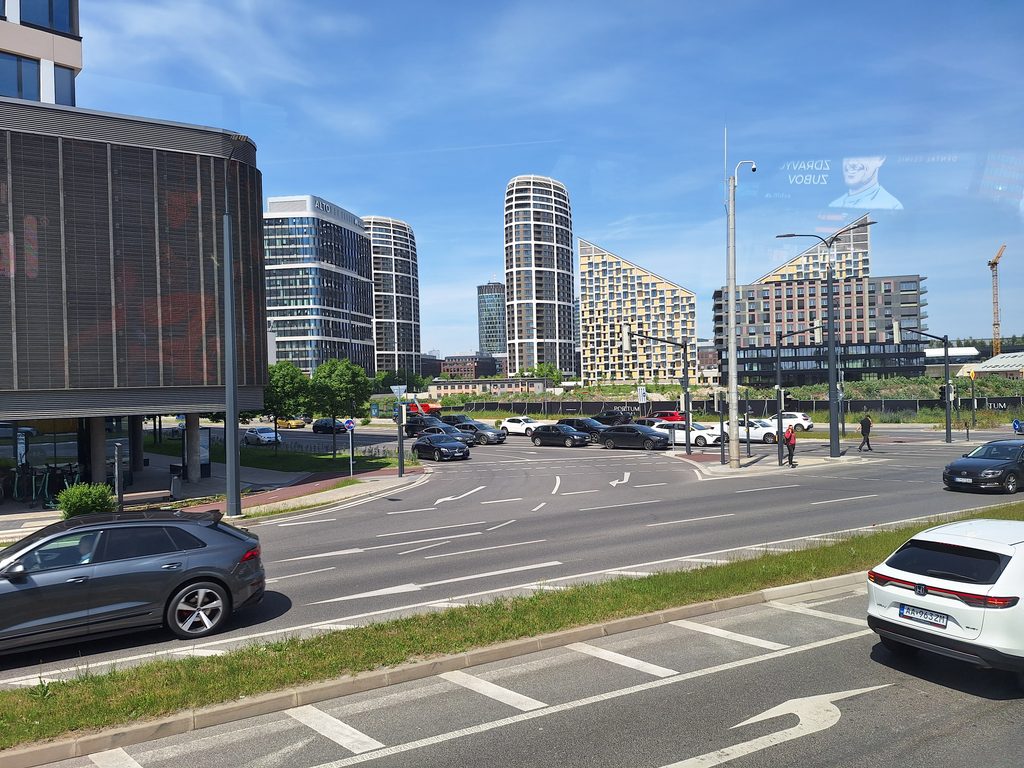
Eventually, we were moving again, and before long, the outskirts of Bratislava appeared.
Finally Arriving in Slovakia
We arrived in Bratislava one hour and six minutes later than scheduled.
Fortunately, the delay hadn’t caused any serious problems.
I couldn’t check into my hostel until 2 pm anyway, so there was no particular reason to rush.
It was lunchtime, and I decided to celebrate my arrival in another capital city with something to eat and a refreshing beer.
Sitting there in the sunshine, watching people passing by, I began taking in my first impressions of Slovakia.
The weather was delightful, with blue skies and a pleasant temperature of 22°C.
After lunch, it was time to find my accommodation.
According to my information, the hostel was approximately a 25-minute walk away.
That sounded manageable enough.
Finding My Way — Sometimes a Compass Beats Google Maps
Getting out of the bus station turned out to be more complicated than expected.
There appeared to be several exits, passages and possible routes, not all of which led where I wanted to go.
For a while, I felt as though I was wandering through a maze.
Thankfully, I had my trusty compass.
In an age when so many travellers depend entirely on their phones, a simple compass remains one of the most useful things I carry.
It doesn’t require an internet connection, a charged battery or expensive roaming data.
With a little patience, I eventually found the correct direction and made my way out into the streets of Bratislava.
The walk to the hostel was pleasant, giving me an opportunity to see a little of the city before I began exploring properly.
I was looking forward to putting my backpack down and getting settled.
Unfortunately, things weren’t quite that straightforward.
Too Old for the Hostel!
When I arrived at my pre-booked hostel, I discovered a rather unexpected problem.
Somewhere in the small print of the booking conditions, I had apparently overlooked a rule limiting accommodation to younger travellers.
Now, I’ve stayed in plenty of hostels that cater mainly to people between 18 and 40, and I’ve never had much difficulty fitting in.
Age has rarely been an issue.
But this time, the receptionist politely explained that I couldn’t stay.
At 71-plus, I was apparently too old!
I couldn’t help finding the situation rather ironic.
Here I was, travelling around the world independently, carrying my backpack and walking kilometres every day, yet I was being turned away because of the number on my birth certificate.
Fortunately, the receptionist was helpful and suggested another hostel just around the corner.
I thanked her and set off again.
A New Hostel and a Fresh Start
The alternative hostel turned out to be a perfectly reasonable option.
There were rooms available, and I secured accommodation for the night.
My diary recorded the price as €51, although the New Zealand dollar equivalent I originally noted appears inconsistent, so I’ve kept the euro amount.
It wasn’t luxurious, but it was comfortable enough, with some areas appearing recently updated.
As far as I’m concerned, a hostel doesn’t need to be fancy.
It needs to be clean, reasonably comfortable and provide somewhere safe to sleep.
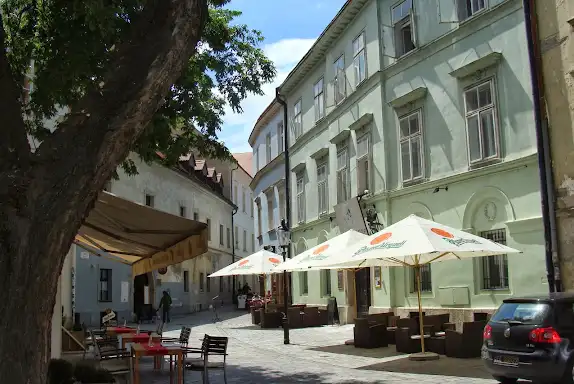
After dropping off my backpack, I was ready to explore.
And the best part was that Bratislava’s historic Old Town was practically across the street.
Discovering Bratislava’s Old Town
Stepping into the Old Town felt like walking into another period of European history.
Bratislava is a relatively compact capital city, and its historic centre has a charm that is sometimes missing in Europe’s larger cities.
The streets are lined with centuries-old buildings, attractive squares, churches and impressive architectural details.
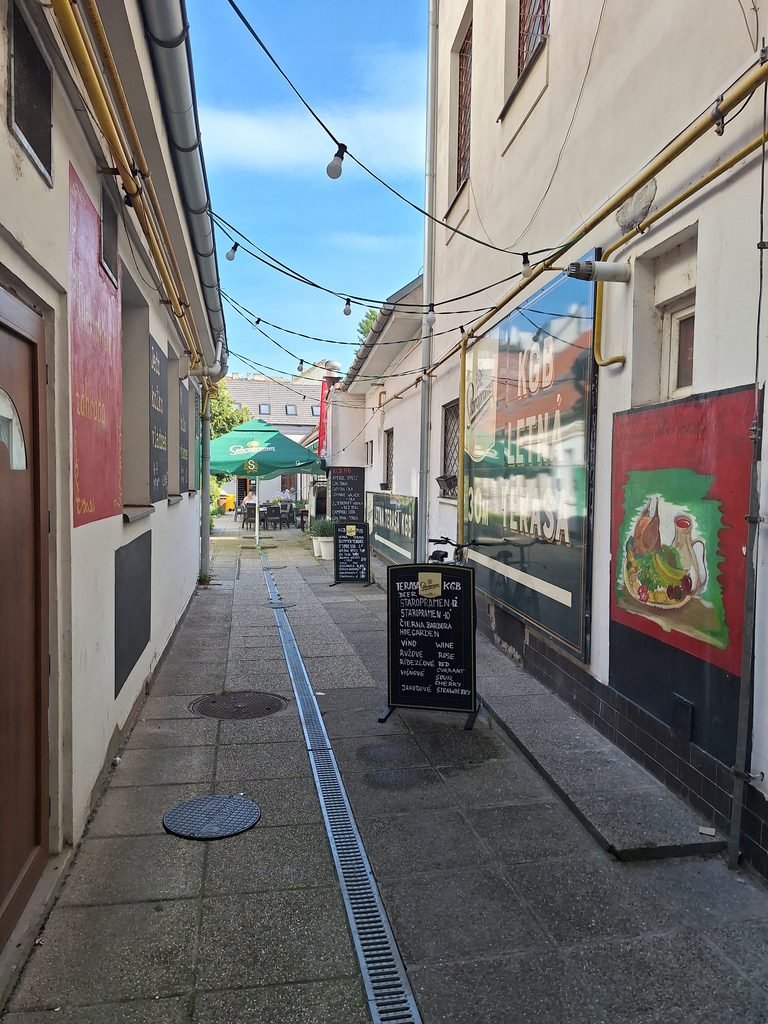
However, I quickly discovered that I wasn’t the only person interested in exploring.
The area was packed with tourists.
Large coach groups were arriving continuously, including many visitors from China.
As soon as one group moved on, another seemed to appear.
Trying to take photographs without dozens of people filling the frame required considerable patience.
I found myself waiting for the right moment, watching people pass, and then quickly taking a photograph before another crowd arrived.
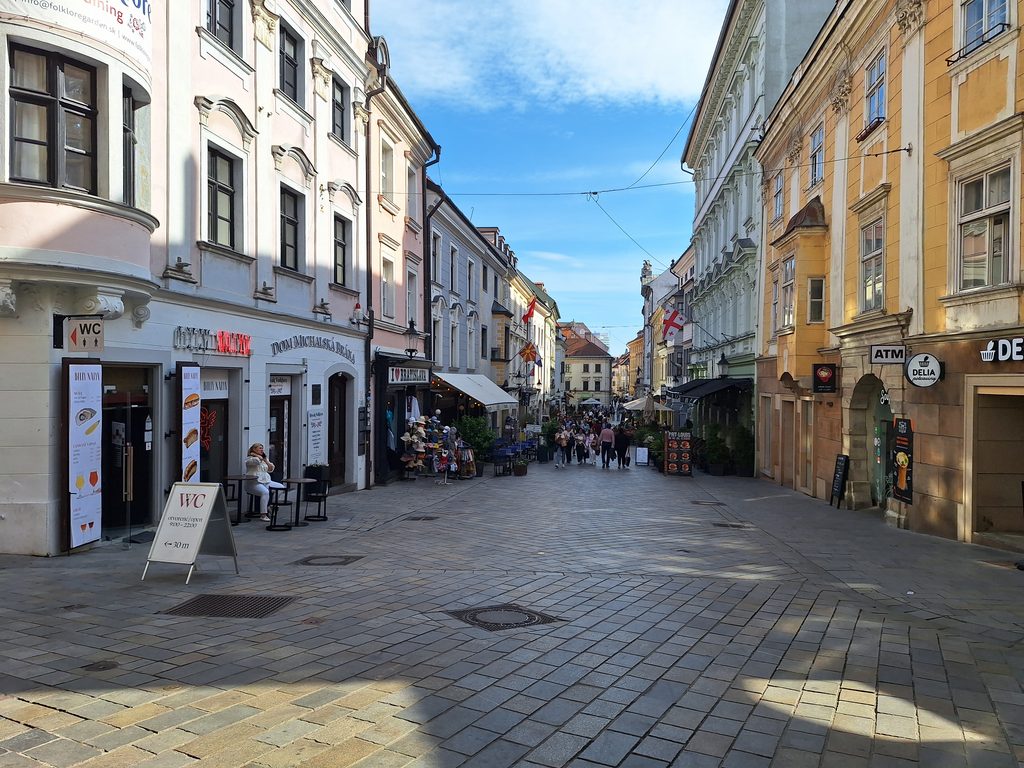
It made me appreciate how much effort sometimes goes into obtaining those beautiful, seemingly effortless travel photographs.
Still, the atmosphere was lively, and I was enjoying discovering another European capital.
Michael’s Gate — A Survivor of Medieval Bratislava
One of my first stops was Michael’s Gate, one of Bratislava’s most recognisable historic landmarks.
Dating back to the medieval period, it is the only surviving gate from the city’s original fortifications.
The gate takes its name from the nearby former Church of St. Michael, which once stood outside the town walls.
The earliest written reference to the gate dates from 1411, although its origins reach back to the late thirteenth century.
Originally, entry was protected by defensive features including a moat, drawbridge, heavy wooden doors and a portcullis.
These fortifications were essential when Bratislava was a walled medieval town.
Today, the elegant tower rises above the surrounding streets, providing a reminder of the city’s long and sometimes turbulent history.
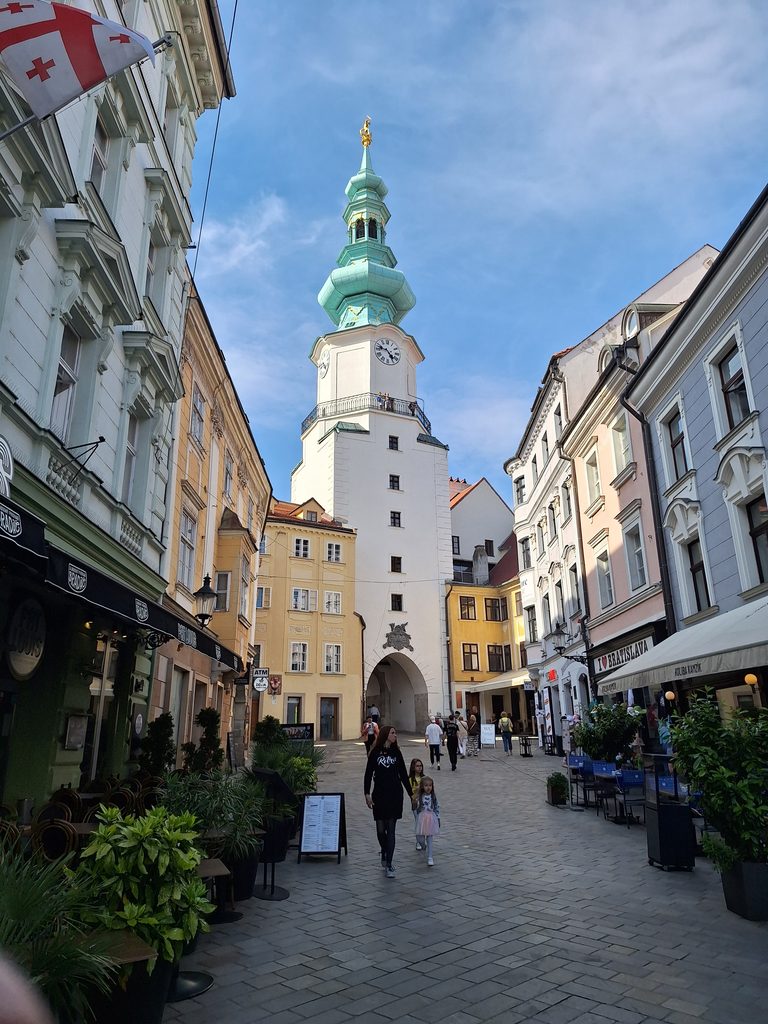
Standing beneath the gate, I tried to imagine the traders, soldiers and ordinary townspeople who would have passed through it hundreds of years ago.
It is remarkable how much history can be contained in one relatively small part of a city.
Old Town Hall — Centuries of Civic History
My next stop was the Old Town Hall, another of Bratislava’s important historic buildings.
Situated in the heart of the Old Town, it is one of the oldest surviving stone buildings in the city and contains the oldest town hall complex in Slovakia.
Its tower dates from approximately 1370.
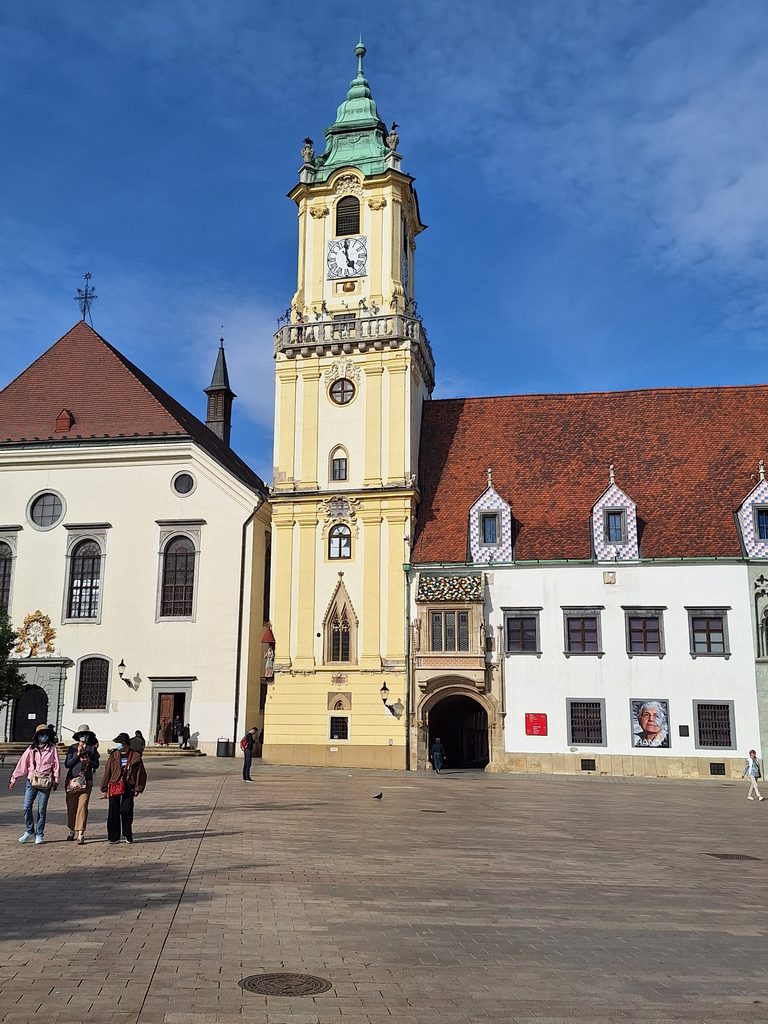
The Town Hall developed over several centuries, with adjoining medieval houses eventually incorporated into the complex during the fifteenth century.
Over the years, the buildings underwent numerous alterations and reconstructions.
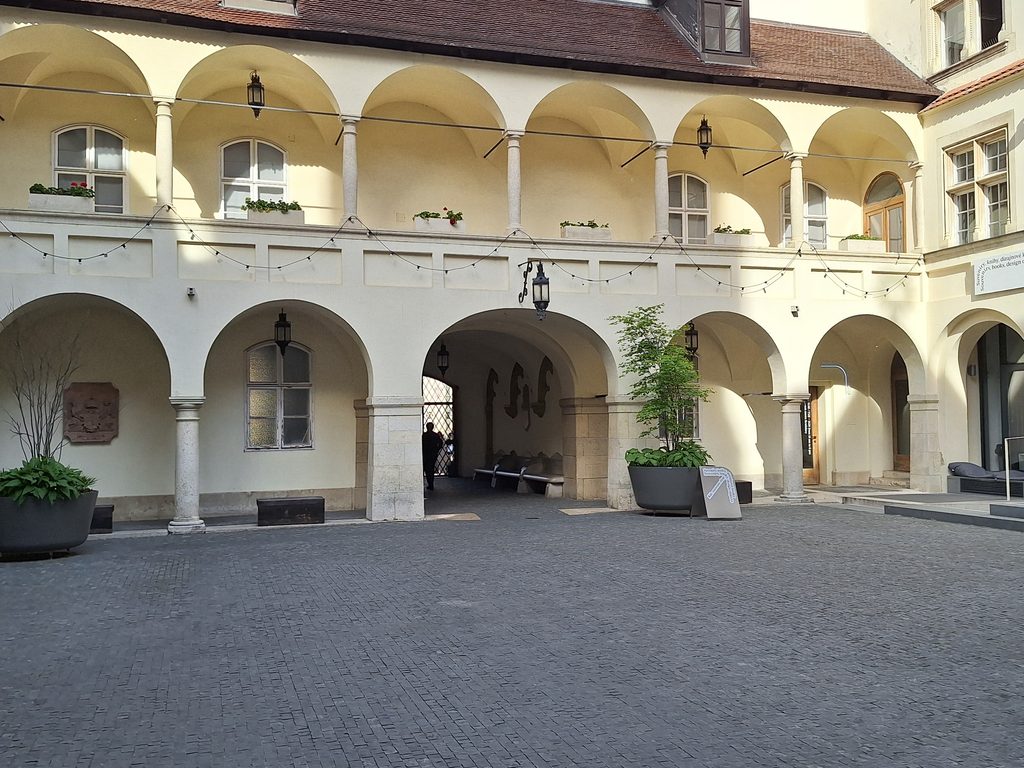
Standing in the square, surrounded by historic architecture, I was reminded again of how deeply European cities are connected to their past.
Buildings that have witnessed hundreds of years of political upheaval, war and social change continue to stand as part of everyday life.
For me, that is one of the great attractions of travelling through Europe.
History isn’t confined to museums.
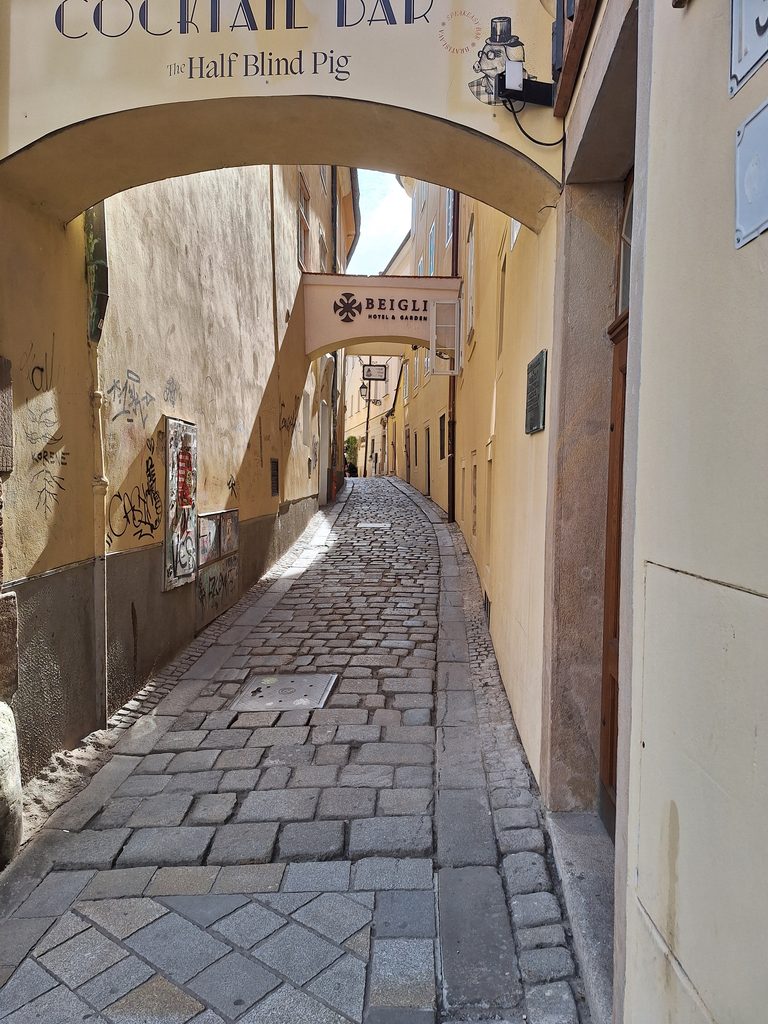
It is all around you.
Primate’s Palace — Where European History Was Made
Another fascinating discovery was Primate’s Palace, an elegant neoclassical building in the Old Town.
Constructed between 1778 and 1781 for Archbishop József Batthyány, the palace has played an important role in European diplomatic history.
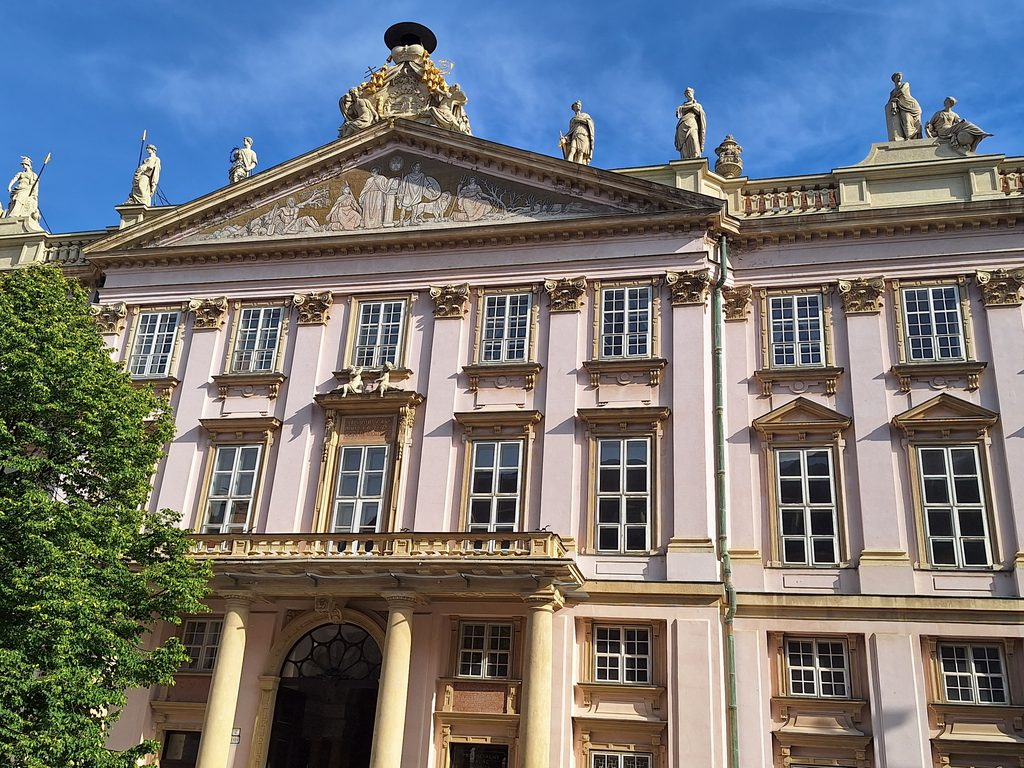
Its most famous room is the Hall of Mirrors.
In December 1805, following Napoleon’s victory at the Battle of Austerlitz, representatives of France and Austria signed the Treaty of Pressburg here.
The agreement ended Austria’s participation in the War of the Third Coalition and contributed to the political changes that led to the dissolution of the Holy Roman Empire in 1806.
Today, the palace remains one of Bratislava’s architectural treasures.
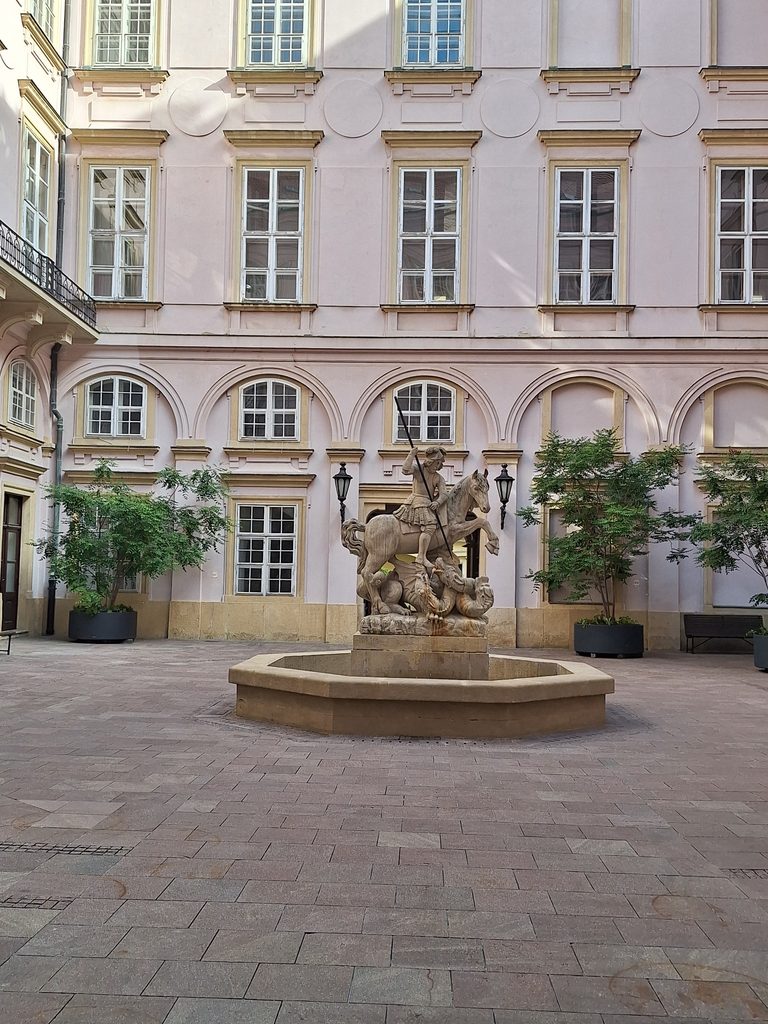
It is extraordinary to think that decisions made inside these walls helped reshape the political map of Europe.
As I stood admiring the building, I reflected on the thousands of people whose lives were affected by events that unfolded here more than two centuries ago.
Church of the Annunciation — A Place of Kings and Coronations
My fourth historic stop was the Church of the Annunciation, also known as the Franciscan Church.
This is one of Bratislava’s oldest surviving religious buildings.
It was consecrated in 1297 in the presence of King Andrew III of Hungary.
Over the centuries, the church played an important role in the city’s religious and political life.
Following the Battle of Mohács, Ferdinand I was elected King of Hungary here in 1526.
During the coronation ceremonies of Hungarian monarchs, the church was associated with the knighting of nobles into the Order of the Golden Spur.
Despite suffering damage from fires and earthquakes, important medieval architectural features have survived.
The adjoining Chapel of St. John the Evangelist, constructed in the fourteenth century, is regarded as an outstanding example of Gothic architecture in Bratislava.
Standing before another building with more than seven centuries of history, I found myself thinking about the generations who had worshipped here.
Churches like this are much more than old stone buildings.
They represent the beliefs, traditions and struggles of countless people who came before us.
An Evening of Sorting Photographs
After several hours exploring Bratislava, I returned to the hostel.

There was still some work waiting for me.
One of the unexpected challenges of long-term travel is managing photographs.
By this stage of my journey, I had accumulated approximately 8,000 images!
Every day brings more photographs, and every country adds another collection of memories that need to be organised.
Unfortunately, digital storage was becoming a problem.
My free 5GB of OneDrive storage was full, and although I had managed to reduce my Google Drive usage from 15GB to approximately 11GB, there was still a considerable amount of sorting to do.
When you’re travelling continuously, even simple administrative tasks can consume a surprising amount of time.
And of course, the longer you leave them, the bigger the job becomes.
Nevertheless, I was determined to keep recording my experiences, because the photographs are an important part of the story I want to share.
A Noisy Night in Bratislava
By approximately 11 pm, I was ready for bed.
It had been a long day, beginning in Budapest and ending in another country’s capital.
Outside my room, young people were enjoying themselves, with music and animated conversations carrying through the open window.
For a while, it seemed as though sleep might be difficult.
Fortunately, closing the window reduced the noise considerably.
Before long, I drifted off.
Another travel day was complete.
Reflections — The Unexpected Is Part of the Adventure
Looking back, the day had included just about everything that makes independent travel interesting.
A delayed bus, motorway roadworks, an unexpected vehicle wash, difficulties finding my way out of a bus station and, of course, being rejected by a hostel for being too old!
Yet none of these things spoiled the day.
I had arrived safely in Slovakia, found somewhere to sleep, enjoyed exploring the Old Town and discovered several remarkable historical landmarks.
Travelling teaches patience, flexibility and the importance of keeping a sense of humour.
Things don’t always go according to plan.
Sometimes, those unexpected moments become the stories you remember most vividly.
Tomorrow, I would have more time to discover Bratislava.
And I was looking forward to it.
Day 185 — Walking Bratislava: Castle, Cathedral and the Blue Church
Weather: Showers with sunny periods, high 14°C
Elevation: 124 metres (405 feet)
A New Day Exploring Slovakia’s Capital
After my eventful arrival in Bratislava, I was eager to spend another day exploring the city.
The weather had changed considerably overnight.
Yesterday had been beautifully sunny and warm, with temperatures reaching 22°C.
Today was much cooler, with a high of only 14°C, showers and a rather chilly wind.
But a little cold weather wasn’t going to stop me.
Bratislava, situated along the River Danube, is a fascinating mixture of medieval history, grand architecture and modern city life.
Unlike some of Europe’s larger capitals, its historic centre is compact enough to explore comfortably on foot, although certain streets and hills can still provide a challenge.
I set out determined to see some of its most important landmarks.
St. Martin’s Cathedral — Where Kings Were Crowned
One of my first destinations was St. Martin’s Cathedral, a magnificent Gothic church near the foot of Bratislava Castle Hill.

For almost three centuries, this cathedral played an extraordinary role in European history.
Between 1563 and 1830, it served as the coronation church for Hungarian kings and queens.
Eleven kings and eight queens consort were crowned here, including Maria Theresa in 1741.
Its towering Gothic architecture is impressive, and the 85-metre-high cathedral tower is a prominent feature of Bratislava’s skyline.
The cathedral’s location near the Old Town makes it relatively straightforward to reach on foot.
Inside, the high ceilings, historic features and atmosphere of centuries of worship create an unforgettable impression.
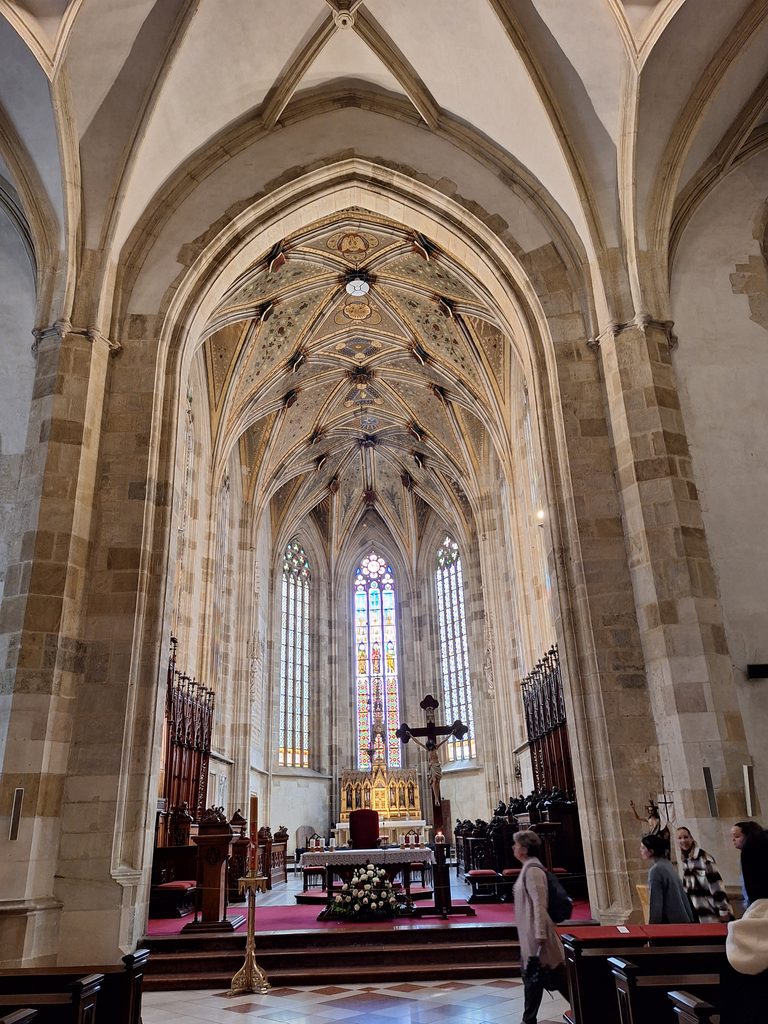
I also spent time looking around the surrounding area, where old buildings and the nearby seminary add to the cathedral’s historic setting.
It is remarkable to think that rulers who shaped the history of central Europe once stood within these walls.

The Climb to Bratislava Castle
From the cathedral, I continued towards Bratislava Castle.
Standing high on a hill above the Danube, the castle dominates the city’s skyline.
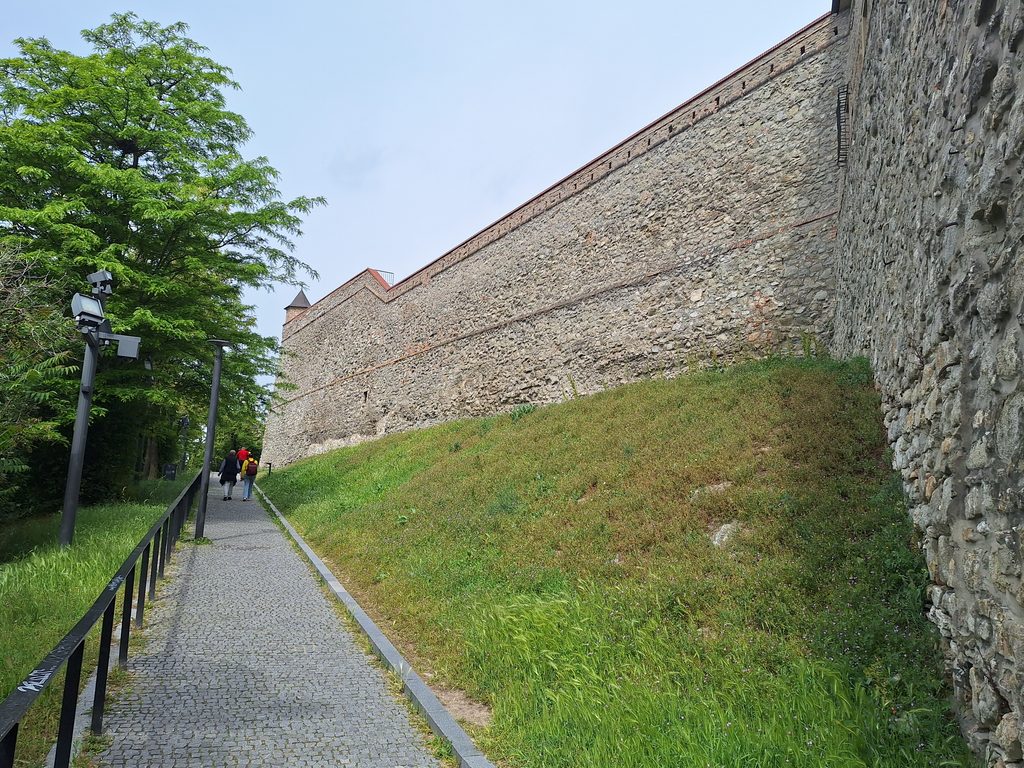
It is a massive rectangular building with distinctive corner towers, visible from many parts of Bratislava.

Getting up there involves a considerable uphill walk.
And I certainly felt it!
The pathway is paved, but it climbs steadily, and anyone with mobility difficulties would be wise to take their time.
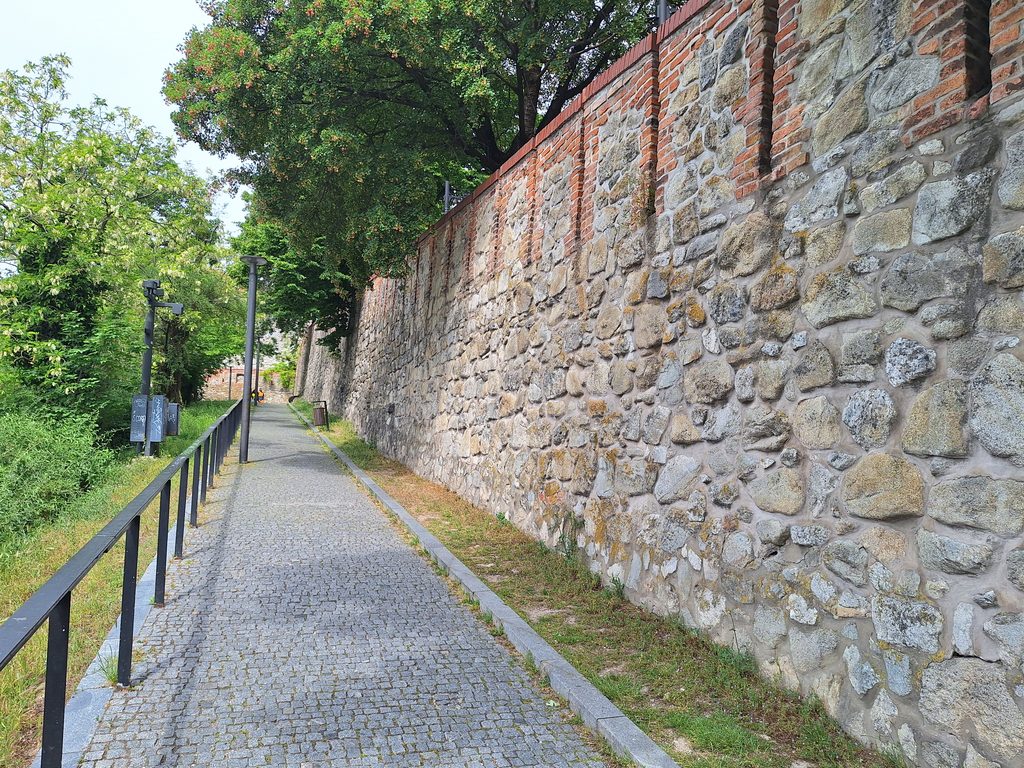
I stopped occasionally to catch my breath and admire the views.

For those who would rather avoid the climb, taxis and some tourist transport options may provide an easier way to reach the castle area.
But having made the effort, I was glad I’d walked.
The higher I climbed, the more spectacular the views became.
Bratislava Castle — A Window into the Past
Bratislava Castle occupies a site that has been inhabited and fortified for thousands of years.
Its position overlooking the Danube made it strategically important long before the modern city existed.
Over the centuries, the site developed into an important royal residence and fortress.
During the period when Bratislava served as a major political centre of the Kingdom of Hungary, the castle was associated with royal administration and the safeguarding of the Hungarian crown jewels.
Today, parts of the complex house exhibitions of the Slovak National Museum.
The castle grounds are spacious, with impressive courtyards, walkways and views across the surrounding landscape.

On a clear day, it is possible to see towards Austria and Hungary from the hill.
Standing there, looking over Bratislava and the Danube, I had another of those wonderful moments when the effort of travelling seemed completely worthwhile.
The Beautiful Baroque Castle Gardens
One of my favourite discoveries was the castle’s beautiful Baroque garden.
Inspired by the eighteenth-century gardens associated with Empress Maria Theresa’s period, the reconstructed grounds are carefully laid out with decorative shrubs, pathways and a central fountain.
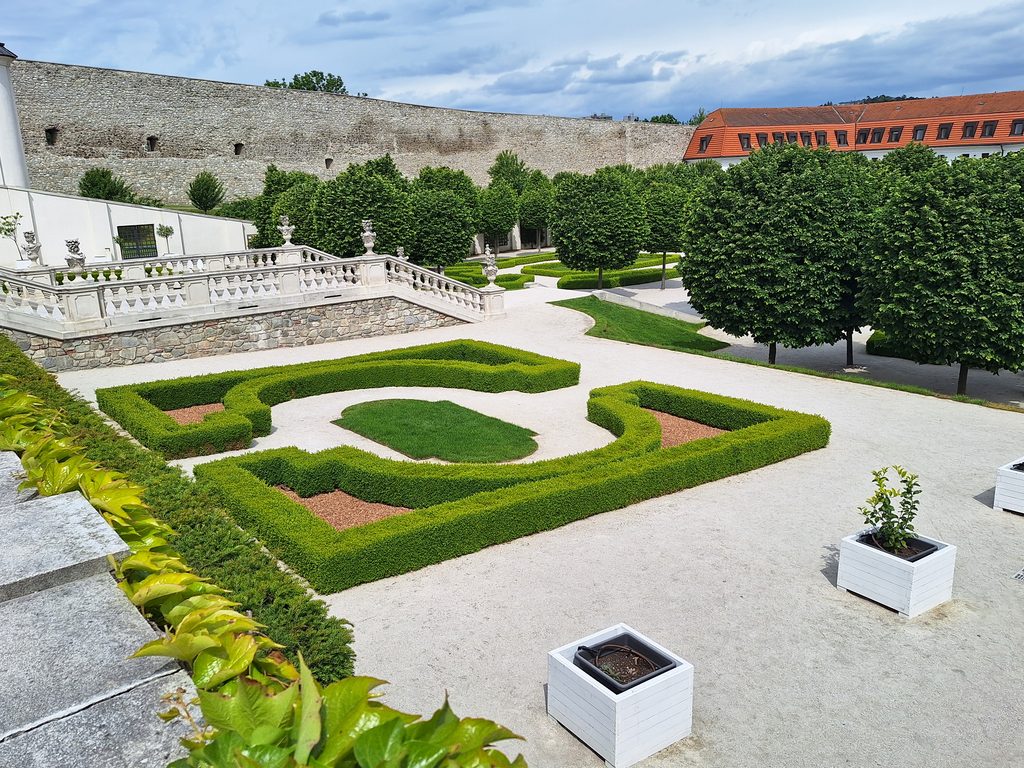
The clipped greenery creates elegant geometric patterns, giving the whole garden a wonderfully formal appearance.
Silver linden trees add to the atmosphere, and the gardens provide a peaceful contrast to the busy streets below.
After the climb to the castle, wandering through these carefully maintained grounds was particularly enjoyable.
There were places to pause, rest and simply appreciate the surroundings.
For senior travellers, the castle grounds and gardens offer a good opportunity to explore at your own pace without feeling rushed.
I spent time admiring the symmetry of the gardens, reflecting on the history of the castle and enjoying the views.
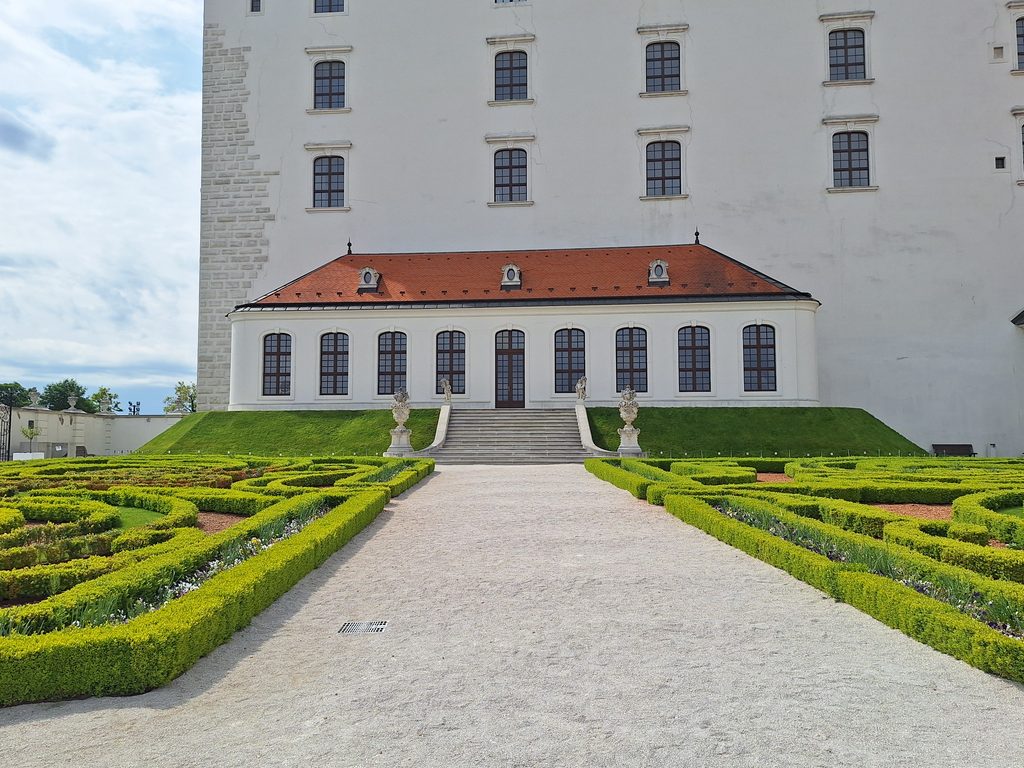
It was one of the most memorable parts of my day.
Returning to the Danube
Eventually, I made my way down from Castle Hill and towards the river.
The Danube is central to Bratislava’s character, just as it is in Budapest.
Walking beside the water provides a completely different perspective of the city.
The riverside paths are generally much flatter than the streets leading up to the castle, making them particularly pleasant after a steep climb.
I watched the river traffic and enjoyed the changing views of Bratislava’s skyline.

Despite the cooler weather and occasional showers, it was a lovely place to wander.
There is something special about following the Danube through different European countries.
Although the cities change, the river continues its journey, linking them through geography, history and trade.
The Blue Church — Bratislava’s Architectural Surprise
Another highlight of the day was a visit to the Church of St. Elizabeth, better known as the Blue Church.
And blue it certainly is!
This extraordinary building looks almost as though it belongs in a fairy tale.
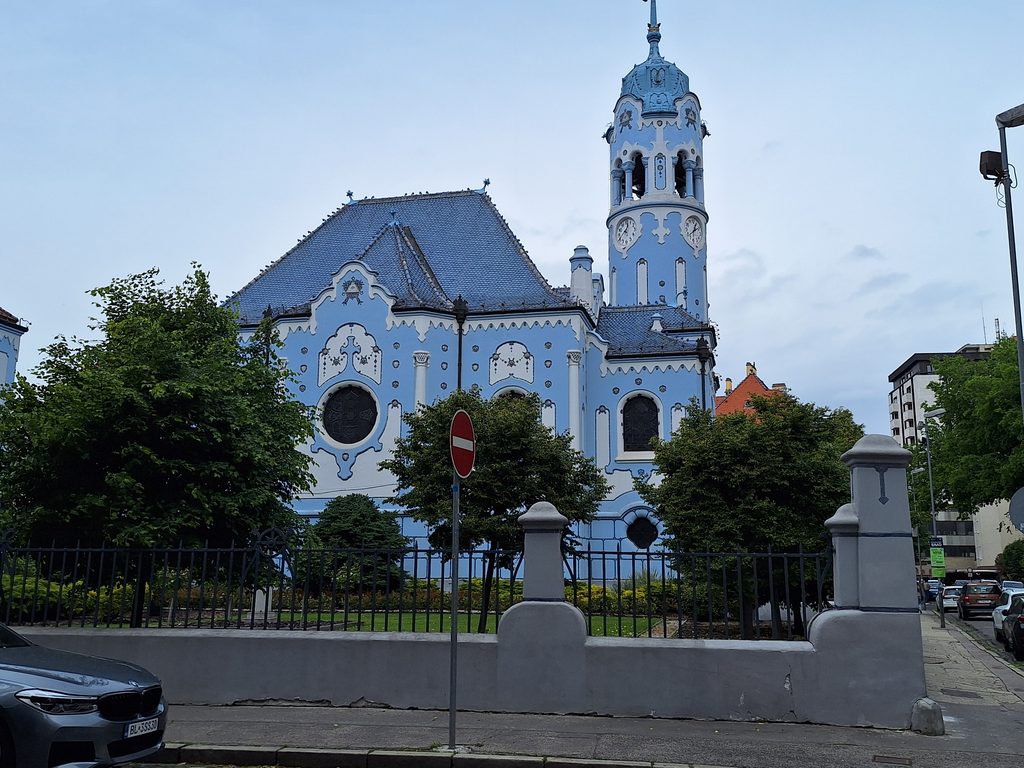
Its pastel-blue exterior, decorative mosaics, curved architectural details and blue-glazed roof give it an appearance unlike any ordinary church.
Built in the early twentieth century, it is a beautiful example of Hungarian Secessionist architecture, a distinctive form of Art Nouveau.
The design is both elegant and unusual.
Even among the many beautiful churches I have visited during my travels, this one stands out.
Unfortunately, I couldn’t go inside.
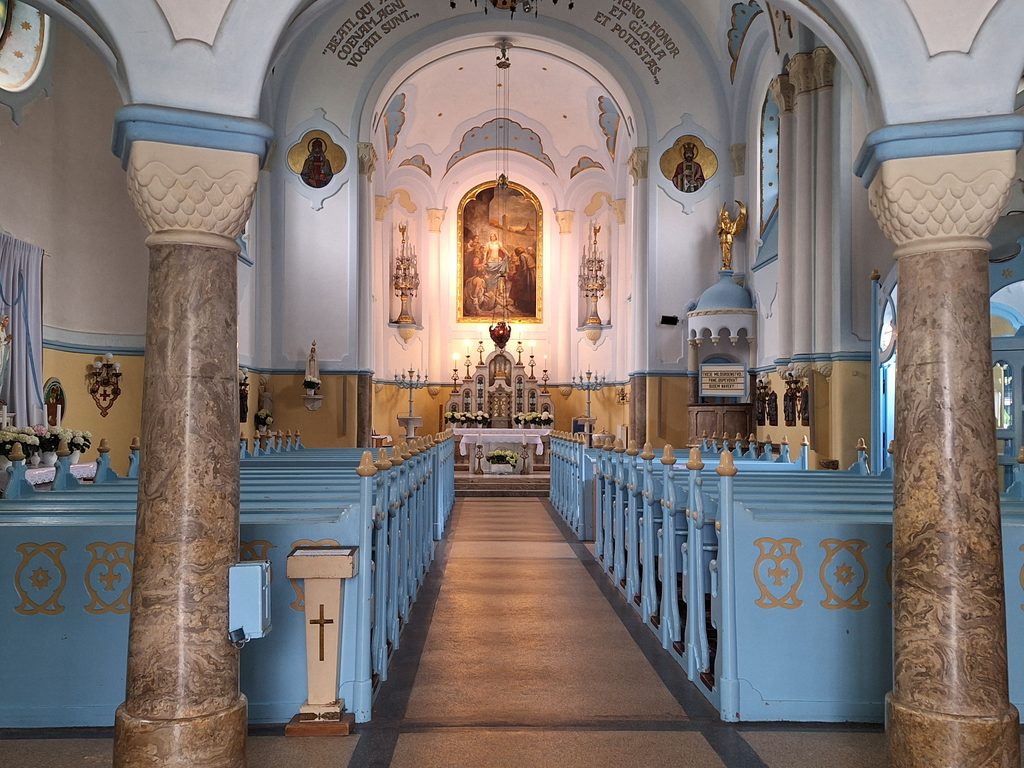
The inner gate was locked during my visit, so I had to admire the building from outside.
Nevertheless, the exterior alone made the visit worthwhile.
I spent time looking at its colours, details and unusual shape, taking photographs and appreciating the imagination that had gone into its design.
It is certainly one of Bratislava’s most memorable buildings.
Nearly 12 Kilometres on Foot
By the end of the day, I had walked almost 12 kilometres exploring Bratislava.
That included the climb to the castle, time wandering through the gardens, exploring the Old Town and walking beside the Danube.
Not a bad effort for a 71-plus traveller!
Of course, I don’t expect everyone to cover those distances.
Every traveller has different physical abilities, and the important thing is to work within your own limits.
I have learned that taking regular breaks, choosing suitable routes and allowing plenty of time makes travelling far more enjoyable.
There is no need to race around trying to see everything in a single day.
The pleasure comes from experiencing a place, not simply ticking attractions off a list.
Practical Advice for Senior Travellers Visiting Bratislava
Bratislava is a good destination for senior travellers because many of its main historic attractions are located relatively close together.
However, there are a few things worth considering.
Walking and footwear: The Old Town contains cobblestones and uneven surfaces. Comfortable, supportive shoes are essential, especially if you intend to visit the castle.
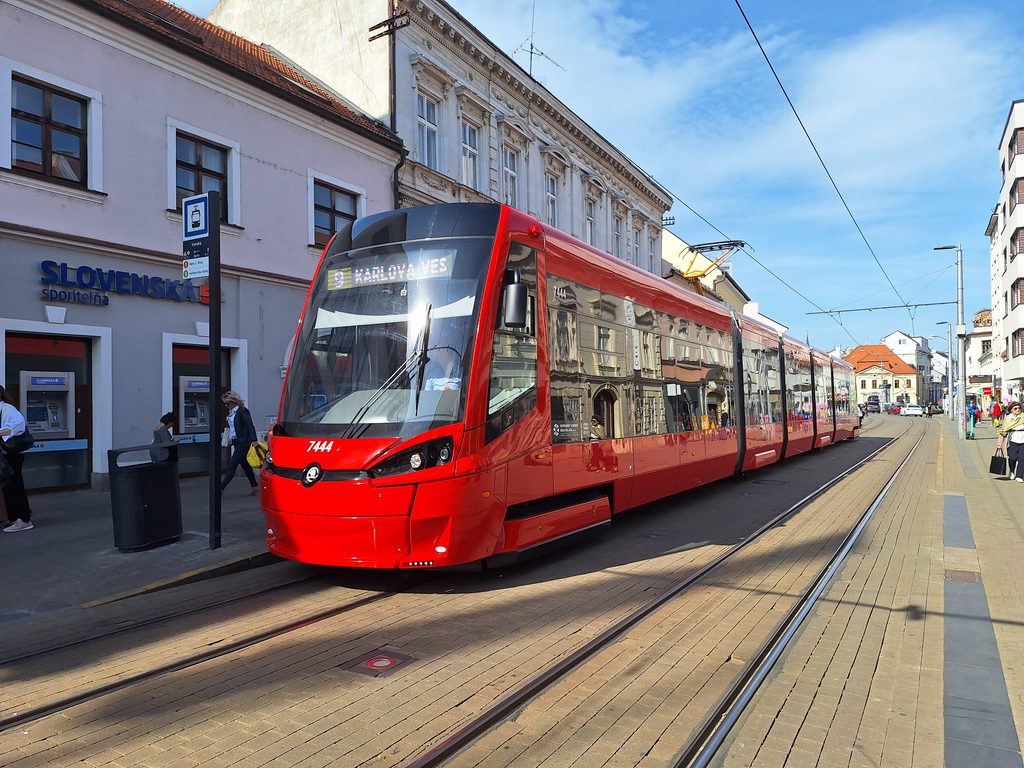
Public transport: Bratislava has a useful network of buses, trams and trolleybuses. These can save considerable walking, particularly when travelling beyond the historic centre.
The castle climb: The walk uphill can be demanding. Take your time, stop regularly or consider alternative transport if necessary.
Weather: Spring weather can change quickly. During my visit, the temperature dropped from a warm 22°C to a chilly 14°C in just one day. Carrying an extra layer and a waterproof jacket is sensible.
Accommodation: Always check hostel booking conditions carefully, particularly age restrictions. My own experience demonstrated that not every hostel welcomes older guests, regardless of how independent or capable they may be.
Health and wellbeing: Stay hydrated, rest when you need to and ensure that any medication and travel insurance arrangements are suitable for your circumstances.
Travelling independently can be extremely rewarding, but a little preparation makes the experience much easier.
Reflections on Bratislava — Another Capital Discovered
Bratislava surprised me.
Before arriving, I knew relatively little about the city.
Yet over two days, I discovered an attractive capital filled with history, beautiful architecture and interesting places to explore.
From Michael’s Gate and the medieval Old Town to the imposing castle and unusual Blue Church, there was far more to see than I had imagined.
I particularly enjoyed the contrast between the busy tourist streets and the peaceful castle gardens.
And once again, my journey demonstrated that age alone should not determine what we can or cannot attempt.
Being turned away from a hostel because I was considered too old was frustrating, but it certainly wasn’t going to stop me exploring another country.
My journey is about stepping beyond those kinds of limitations.
Through Inspire Seniors Travel, I hope to encourage other older people to remain curious, embrace new experiences and recognise that life still holds opportunities for adventure.
I am also continuing to raise awareness of arthritis in New Zealand, sharing my experiences to show that physical challenges do not necessarily mean the end of an active and adventurous life.
Two days in Bratislava had given me another wonderful collection of memories.
There were still many countries ahead of me and plenty more unknown experiences waiting around the next corner.
Until next time, stay safe and keep exploring!
Andrew
Inspire Seniors Travel