

Slovenia — From Ljubljana to Lake Bled: Castles, Alpine Adventures and Fifty Years of Memories
An Unexpected Departure from Vienna
Weather: Sunny, 14°C
Elevation: Approximately 298 metres
My journey into Slovenia began under rather unexpected circumstances. After spending several days in Vienna, I discovered that I had apparently overstayed my Schengen allowance. I had understood that my British passport permitted me to spend up to 90 days in individual Schengen countries, but the rules governing travel within the Schengen Area are more complicated than that.
When I explained that I lived in New Zealand, the border officials carefully checked my documents and travel history. Thankfully, after completing their checks, they allowed me to continue, and I caught my bus to Ljubljana just in time.
The morning had already been chaotic.
I had started at 7:30 a.m., using my phone to navigate to Vienna’s Central Bus Station. Unfortunately, Vienna has more than one major bus terminal, and I managed to arrive at the wrong one.
By the time I realised my mistake, I had missed the 9:25 a.m. departure and had to purchase another ticket for the 11:55 a.m. bus. Looking back, had I caught that earlier bus, I might have avoided the later passport checks altogether.
Travelling independently certainly has its moments!
After finally arriving in Ljubljana, Slovenia’s capital, I was ready to relax. I spent the evening enjoying a few beers and watching football, allowing the day’s frustrations to fade into the background.
Something else had been changing recently: my body clock.
For years, I had been accustomed to going to bed around 10 p.m., but now I was staying awake until midnight or even 12:30 a.m. Perhaps my internal clock was beginning to anticipate returning home to New Zealand in a couple of weeks.
Whatever the reason, I was finding that travelling for so long had changed even the smallest details of my daily routine.
Ljubljana — A City of Dragons, Bridges and History
My first night in Ljubljana was hardly restful.
Every time I rolled over, the hostel bed squeaked loudly enough to wake me. If the person in the bunk above moved, the entire frame shook.
Welcome to hostel life!
By 7:30 a.m., I was already awake, catching up on my blogging and planning a day of exploration.
Breakfast was a simple tuna baguette, which I ate while strolling beside the Ljubljanica River. The riverside was peaceful, with attractive bridges, trees and cafés giving the capital a relaxed atmosphere.

My first destination was the famous Dragon Bridge. I knew it was one of Ljubljana’s best-known landmarks, but I was curious to discover how it had acquired such an unusual name.
Dragon Bridge — Legends and Four Watchful Dragons
The Dragon Bridge crosses the Ljubljanica River between Kopitar Street and Ressel Street, just north of the Central Market at Vodnik Square.
Constructed in the early twentieth century, when Slovenia was part of the Austro-Hungarian Empire, it was an innovative example of reinforced-concrete engineering and the Vienna Secession architectural style.
Today, it is protected as an important technical and architectural monument.
However, the engineering is not what attracts most visitors.
It is the four magnificent dragons standing guard at the corners of the bridge.

According to a rather amusing local legend, whenever a virgin crosses the bridge, the dragons wag their tails!
The dragon has become one of Ljubljana’s most recognisable symbols, appearing on the city’s coat of arms and throughout the capital. Its history is connected with various legends, including the story of Jason and the Argonauts.
I paused to take photographs of these fearsome-looking creatures, fascinated by the detail in their bronze bodies.
Tourists were beginning to gather, so I continued exploring.
Taking the Funicular to Ljubljana Castle
From the bridge, I made my way towards Castle Hill.
I had originally considered walking to the top, but when I spotted the funicular, I decided to investigate.
A combined ticket for the funicular and castle cost €12.30, approximately NZ$24.81. My plan was simple: ride up and walk down.
Looking at the steep incline brought back memories of the recent funicular accident in Lisbon. I found myself considering the possible consequences of something going wrong.
In my younger years, I would probably have treated the steep journey as an exciting adventure. Now, at 72, the thought of an unnecessary injury occasionally enters my mind.
Nevertheless, I climbed aboard and chose a seat facing uphill.
When the doors finally opened at the top, I was rather pleased to be standing on solid ground again!
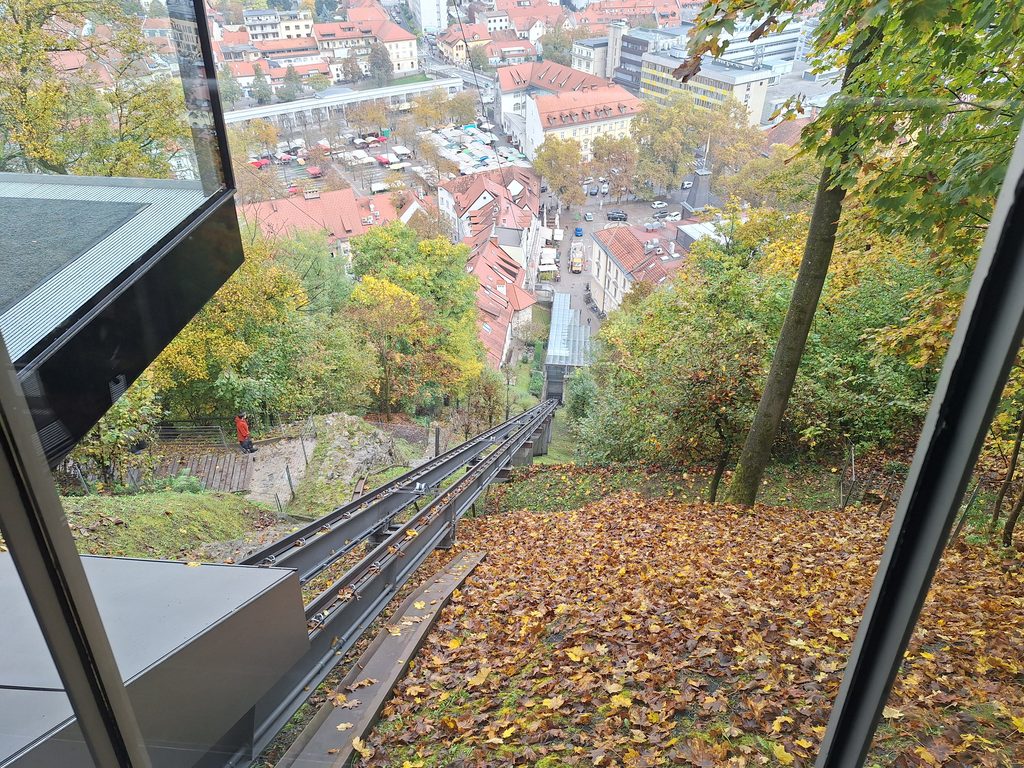
It is interesting how ageing changes our perception of risk without necessarily diminishing our desire for adventure.
Ljubljana Castle — Centuries of Slovenian History
Ljubljana Castle dominates the city from its hilltop position.
Archaeological discoveries suggest that people were living on Castle Hill as far back as approximately 1200 BC. Different communities occupied the area over the centuries, including Celtic and Roman inhabitants.
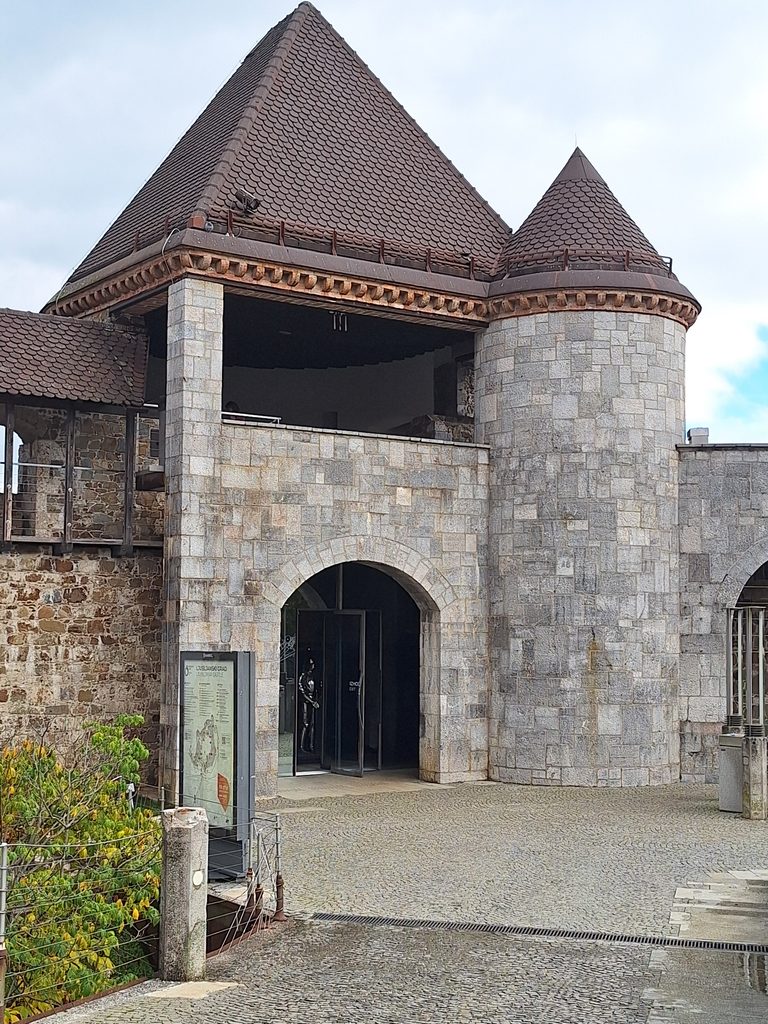
Over its long history, the castle has served as a defensive stronghold, a residence associated with the rulers of Carniola, a prison and, more recently, a cultural and tourist attraction.
Major restoration work during the twentieth century helped preserve and stabilise the complex.
I spent around two hours wandering through its courtyards, towers and exhibitions.

One of the highlights was climbing to the viewing tower, where the panorama across Ljubljana was spectacular.
The city’s red rooftops spread out beneath me, with distant mountains rising beyond the urban landscape. Although clouds occasionally interrupted the sunshine, the view was magnificent.
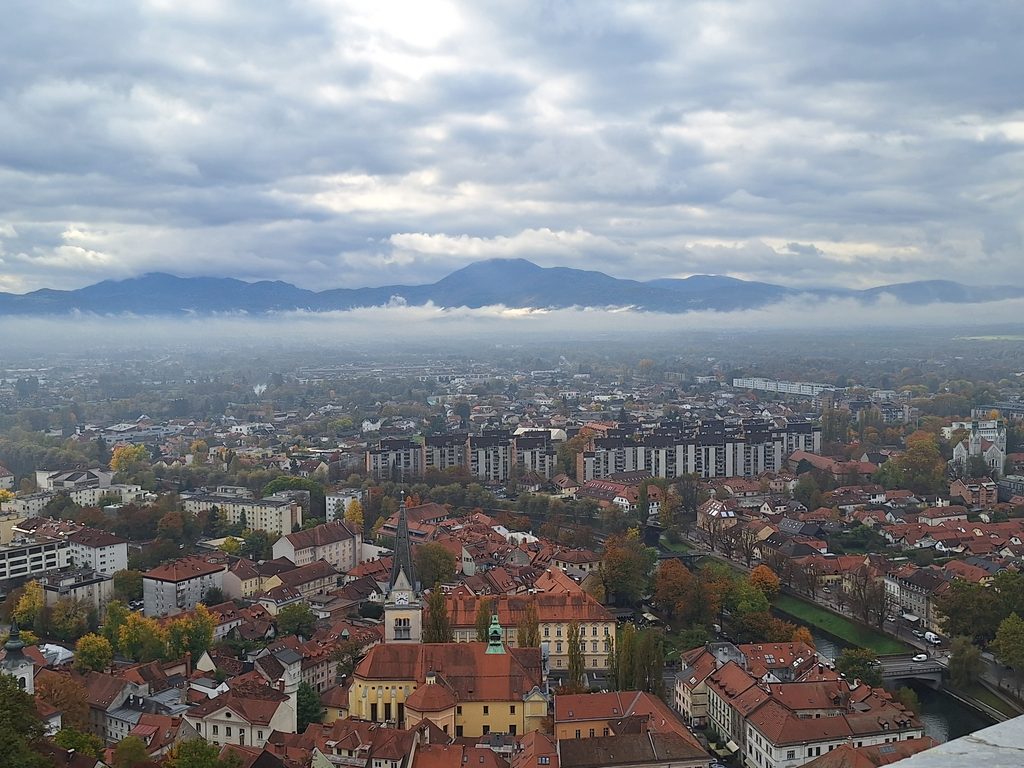
The castle itself is not enormous, but there was plenty to discover.
I also watched a twelve-minute immersive presentation illustrating the castle’s development through the centuries.
At one point, objects appeared to fly towards me, and I instinctively ducked!
It was an entertaining way to experience history.
The Chapel of St George and the Castle Exhibitions
Inside the castle, I entered the Chapel of St George.
Its beautifully decorated ceiling immediately caught my attention. The colourful paintings and heraldic designs provided a striking contrast to the castle’s heavier stone architecture.

Nearby, a calligrapher was demonstrating traditional writing techniques for visitors.
I also saw the old prison cells and wondered about the people who had spent time confined within those walls during earlier centuries.
The castle’s Impressionist Experience provided a completely different atmosphere.
Dedicated to four Slovenian Impressionist painters, the exhibition uses projections, music and moving images to bring their paintings to life.
Inside the Casemate, one of the castle’s largest halls, images appeared to surround me.
Leaves seemed to swirl around my feet as landscapes transformed across the walls.
For a few moments, I felt as though I had stepped directly into the paintings.
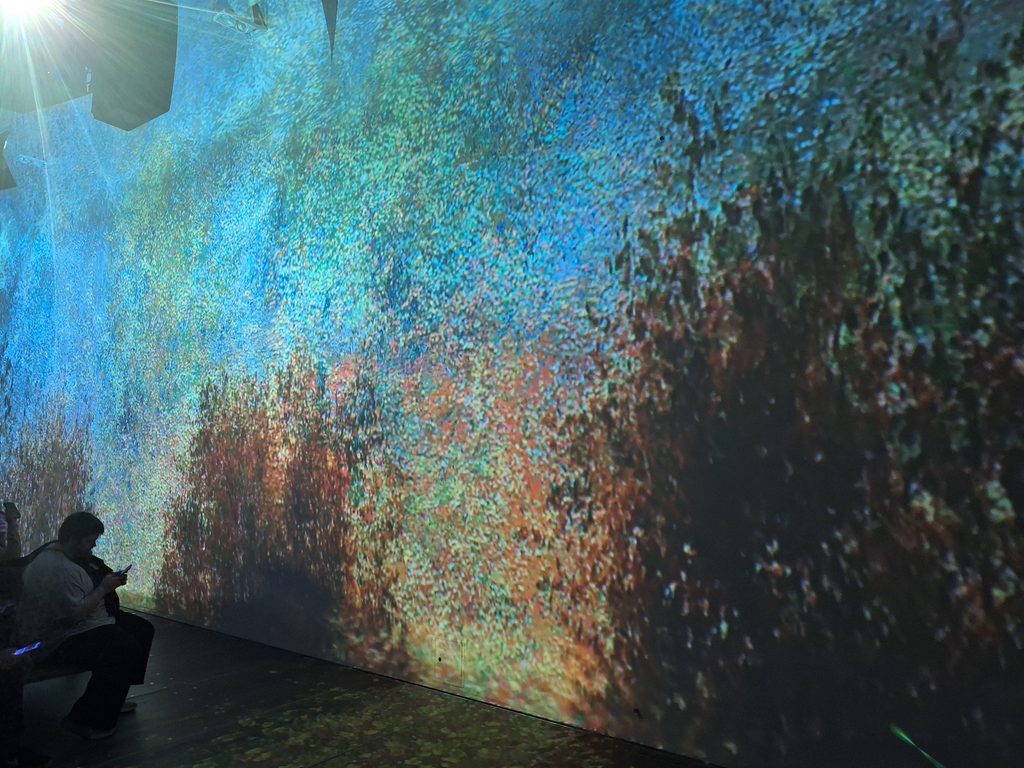
It was an imaginative combination of history, art and modern technology.
St Nicholas Cathedral — Baroque Beauty
After descending from Castle Hill, I visited St Nicholas Cathedral, commonly known as Ljubljana Cathedral.
I paid a €3 contribution towards the building’s maintenance before stepping inside.
The interior was magnificent.
The cathedral’s Baroque decoration, elaborate frescoes, gilded details and impressive architectural features made it one of the highlights of my visit.
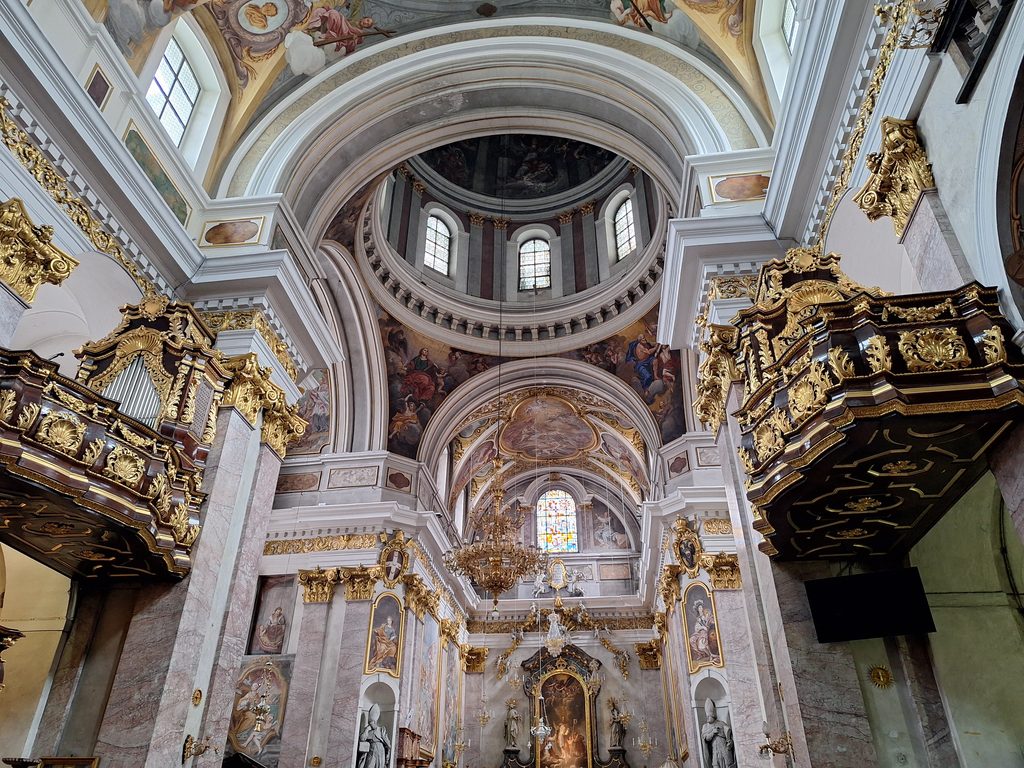
Outside, the cathedral’s green dome and twin towers form part of Ljubljana’s distinctive skyline.
I spent time studying the remarkable bronze doors.
The Slovene Door depicts important episodes in the history of Christianity in the region, while the Southern Door commemorates Pope John Paul II’s visit to Slovenia in 1996.

They represent centuries of belief, craftsmanship, sacrifice and human history.
Even when you are not attending a service, there is often a particular sense of peace within their walls.
Riverside Cafés and a Bristol City Victory
Returning to the river, I wandered along the attractive embankments, passing cafés, restaurants and groups of people enjoying the afternoon.
I eventually settled at a bar where a football match was playing on a large television.
To my delight, my home team, Bristol City, were playing Southampton.
Even better, Bristol City won 3–1!
Sometimes, when you have been travelling for almost a year, something familiar from home can bring enormous pleasure.
I enjoyed a few drinks and watched the city come alive as the evening approached.
Lights began reflecting across the Ljubljanica River, while locals and tourists filled the riverside restaurants.

Ljubljana has a lovely atmosphere, particularly around its historic centre.
Triple Bridge — A Remarkable Architectural Landmark
One of the city’s most unusual attractions is the Triple Bridge.
At first glance, it appears to be three separate bridges standing side by side.
Originally, a single stone bridge was constructed in 1842 and named the Franz Bridge.
During the 1930s, the famous Slovenian architect Jože Plečnik transformed the crossing by adding two pedestrian bridges at angles alongside the original structure.
The result is an elegant and highly practical landmark, connecting Prešeren Square with the old town.
I admired the stonework, balustrades and unusual layout, which gives pedestrians several ways to cross the river.
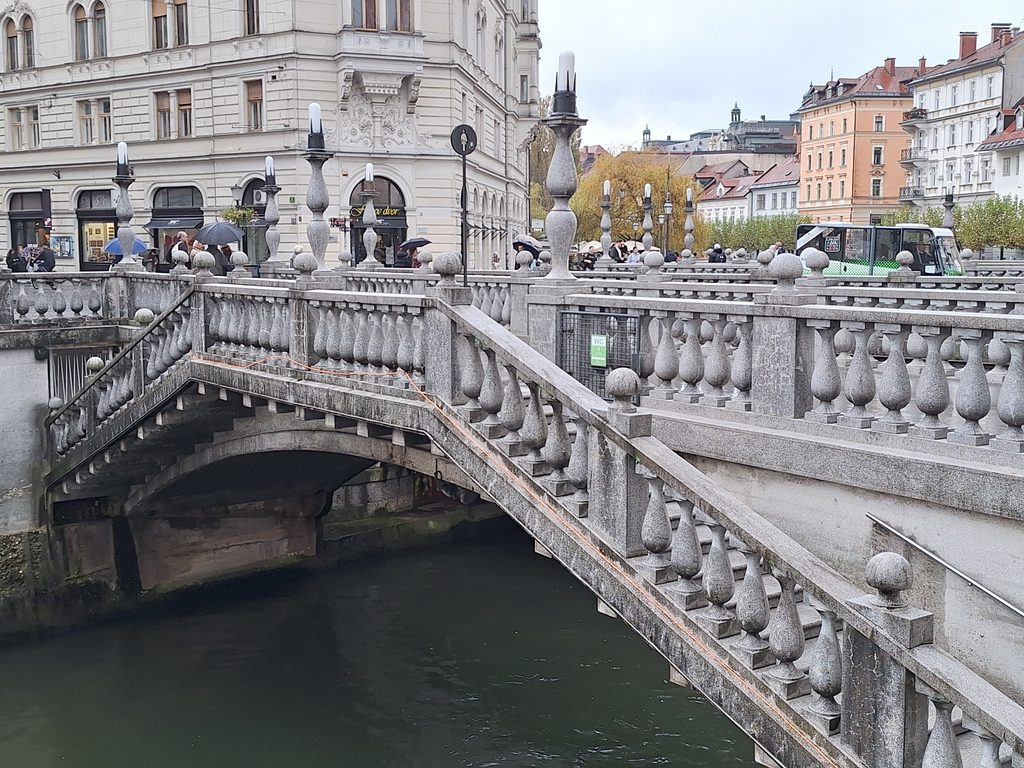
I also discovered some public toilets beneath the bridge — a useful little detail worth remembering when exploring the city!
Prešeren Square — The Heart of Ljubljana
Prešeren Square is one of the busiest and most recognisable places in Ljubljana.
Surrounded by historic buildings, it forms an important meeting point for locals, visitors and organised tour groups.
The striking pink Franciscan Church of the Annunciation dominates one side of the square.
Street musicians entertained passers-by, while cafés and stalls contributed to the lively atmosphere.
The smell of freshly roasted chestnuts drifted through the air. At €2.50, approximately NZ$5.06, they were a tempting seasonal treat.
The square regularly hosts concerts, festivals, cultural activities, public gatherings and demonstrations.
It felt like a place where the everyday life of the city unfolded before my eyes.
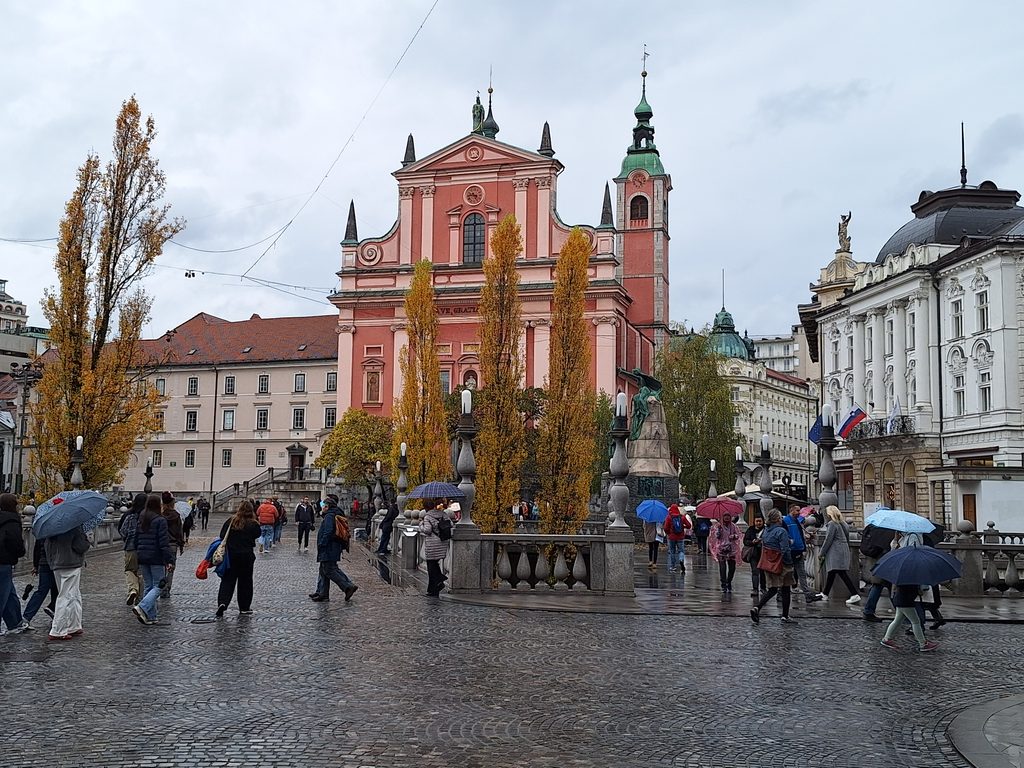
Exploring Ljubljana’s Old Town
From Prešeren Square, I continued through Stari trg, the Old Square, admiring the mixture of medieval and Baroque architecture.
I stopped at the Hercules Fountain and thought about the local folklore surrounding Urška and the Water Man.
St James’s Church was closed, so I photographed its exterior before making my way towards Cobbler’s Bridge.
This elegant crossing is another of Plečnik’s contributions to Ljubljana.
Today it is a beautiful pedestrian bridge, decorated with classical columns, but the location has a much less glamorous history.
Earlier crossings were associated with butchers’ stalls, creating smells that would hardly have appealed to modern visitors!
Further along my walk, I visited the Church of Our Lady of Mercy and admired its restored altar and historic connections with the former monastery.
I also attempted to visit the University of Ljubljana, only to discover that tourist access was restricted to certain occasions or prior arrangements.
At the end of the building, an unusually carefully maintained arrangement of shrubs caught my attention.

Naturally, I stopped for another photograph.
Sometimes it is the unexpected little details that make a city memorable.
The Ursuline Church of the Holy Trinity
My final church visit was the Ursuline Church of the Holy Trinity.
I climbed the entrance staircase and admired its impressive interior, particularly the marble altar associated with the sculptor Francesco Robba.
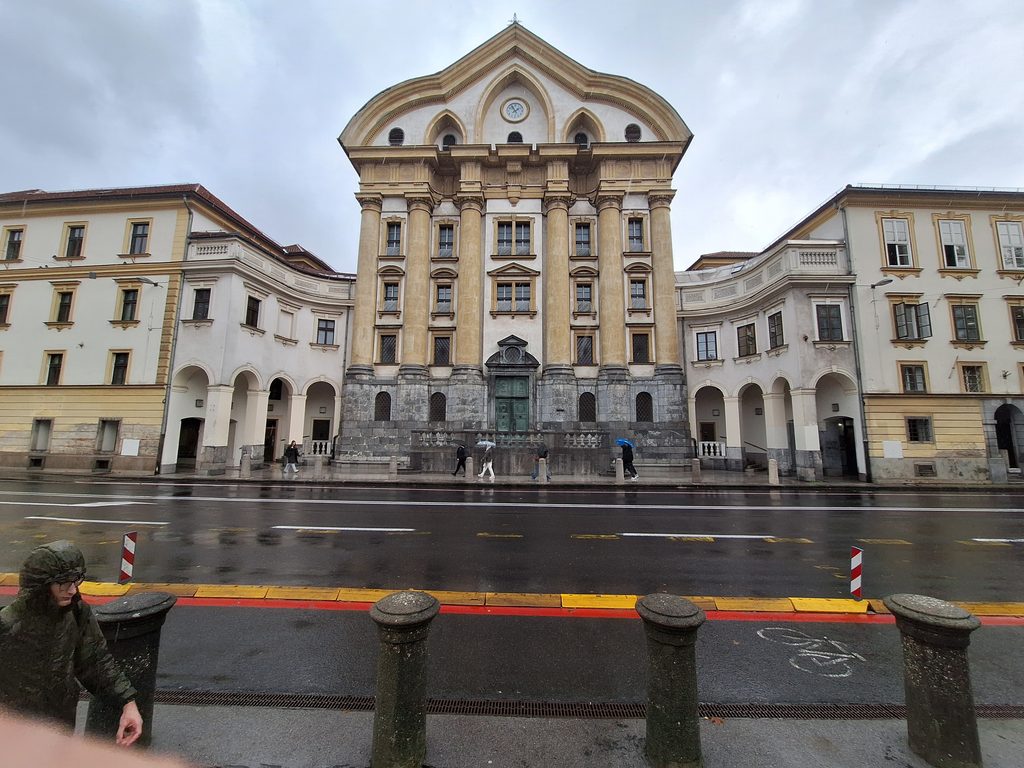
The building also reflects the architectural influence of Jože Plečnik.
Opposite the church stands the Holy Trinity Column, a monument that has witnessed centuries of change in the city.
Ljubljana’s history is marked by earthquakes, rebuilding, changing political systems and remarkable cultural resilience.
Walking through the city, I found myself constantly discovering another historic landmark or another interesting story.
Reflections on Ljubljana
Ljubljana genuinely surprised me.
Before arriving, I knew relatively little about Slovenia’s capital. Yet its riverside setting, beautiful bridges, lively squares and imposing castle made it a thoroughly enjoyable place to explore.
I loved being able to wander without constantly relying on buses or taxis.
The river provides a natural route through much of the old town, with cafés and interesting buildings never far away.
I found myself stopping regularly to photograph architecture, watch people or simply enjoy the atmosphere.
My journey had begun with missed buses and passport complications, but it had developed into another wonderful travel experience.
Nearly fifty years ago, I had visited this region when it was part of Yugoslavia.
Returning today, I was beginning to appreciate how dramatically both the country and I had changed.
My next destination was Kranj, a smaller city further up the valley and closer to the magnificent Slovenian Alps.
Kranj — Medieval Streets Beneath the Slovenian Alps
Kranj is Slovenia’s fourth-largest city and the principal urban centre of Upper Carniola.
Located approximately twenty kilometres northwest of Ljubljana, it stands at the meeting point of the Kokra and Sava rivers.
Its historic centre occupies a rocky plateau above the surrounding river valleys, creating a naturally defensive position that has been occupied for centuries.
The city is an excellent base for exploring this part of Slovenia, with railway and bus connections to Ljubljana, Škofja Loka and the Alpine region.
I caught the train from Ljubljana and enjoyed the thirty-five-minute journey through the valley.
With clear skies overhead and mountains rising in the distance, it was a lovely introduction to another part of the country.
Finding my hostel was relatively straightforward, although I somehow managed to walk about thirty metres past the entrance!
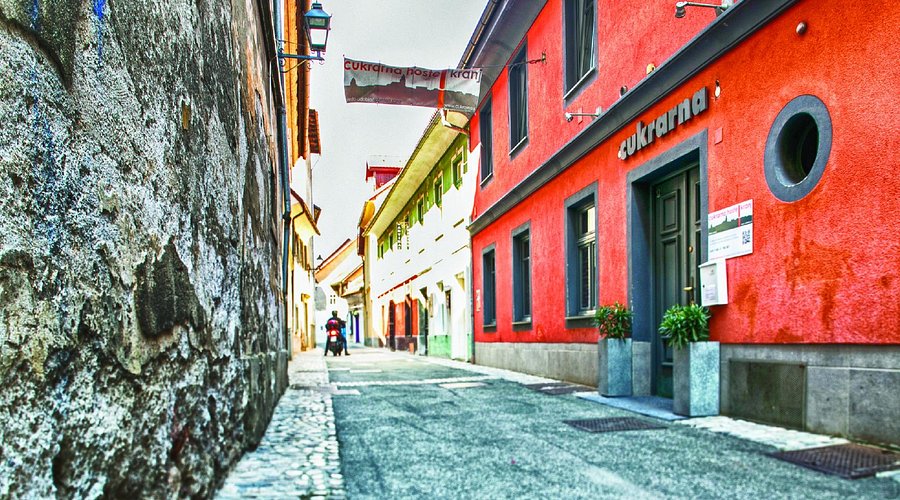
After a small misunderstanding at check-in, everything was sorted.
The hostel had a welcoming atmosphere, and I settled down with a cold beer while attempting to catch up with my blogging.
Keeping a travel diary while constantly moving from country to country is almost a full-time occupation!
A Slow Morning in Kranj
That evening, I had the dormitory to myself.
For a hostel traveller, this is a rare luxury.
Unfortunately, even with nobody snoring nearby, I struggled to sleep.
I had run out of my usual medication while travelling through Denmark and had subsequently tried magnesium tablets purchased from a Ljubljana pharmacy.
Whether they were helping remained uncertain.
The following morning, I took my time getting organised before heading into town around 11 a.m.
My hostel hosts had recommended a local bakery.
Slovenian pastries are delicious, although ordering something when you cannot understand all the descriptions can be something of a gamble.
There was certainly no familiar New Zealand mince-and-cheese pie on the menu!
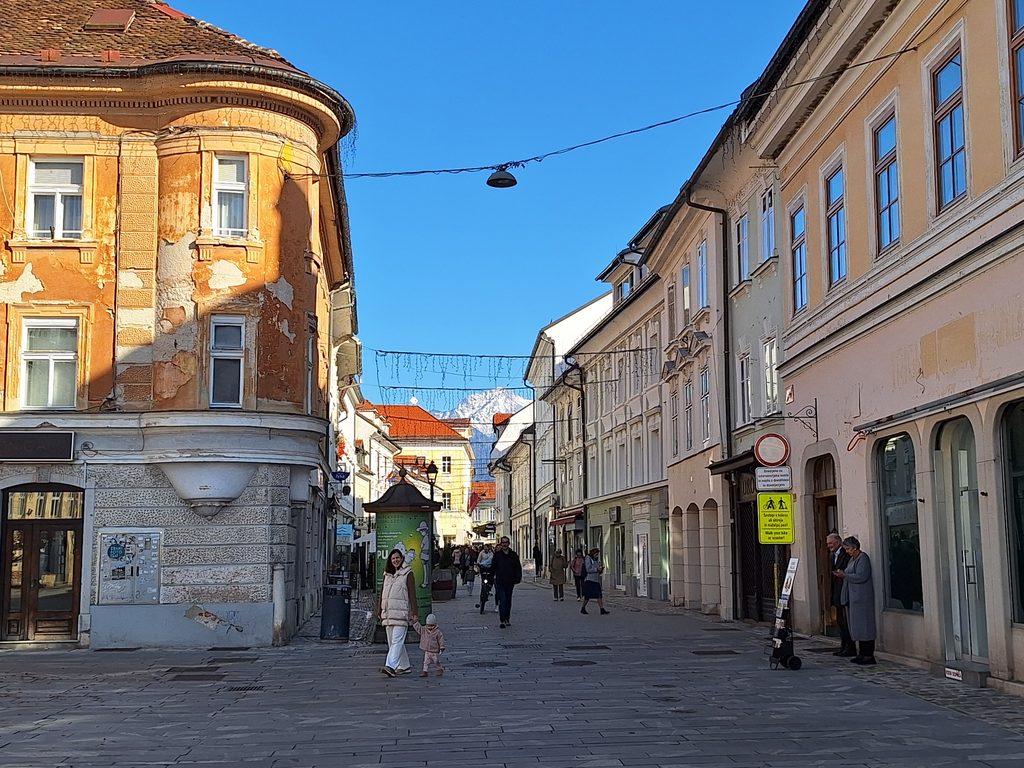
I eventually chose a cheese-filled pastry and continued towards the main square.
Market stalls were selling fresh produce, while people gathered around a nearby fountain.
It was a pleasant, relaxed atmosphere, far removed from the crowds of Europe’s larger capitals.
St Cantianus Church and the 163-Step Bell Tower
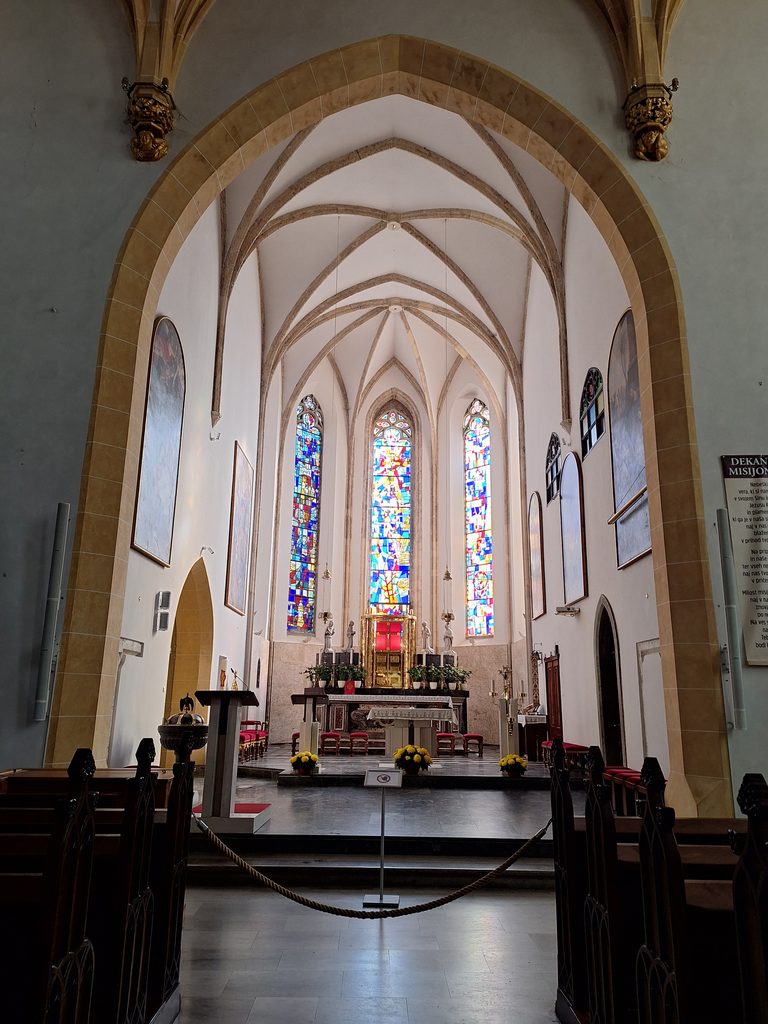
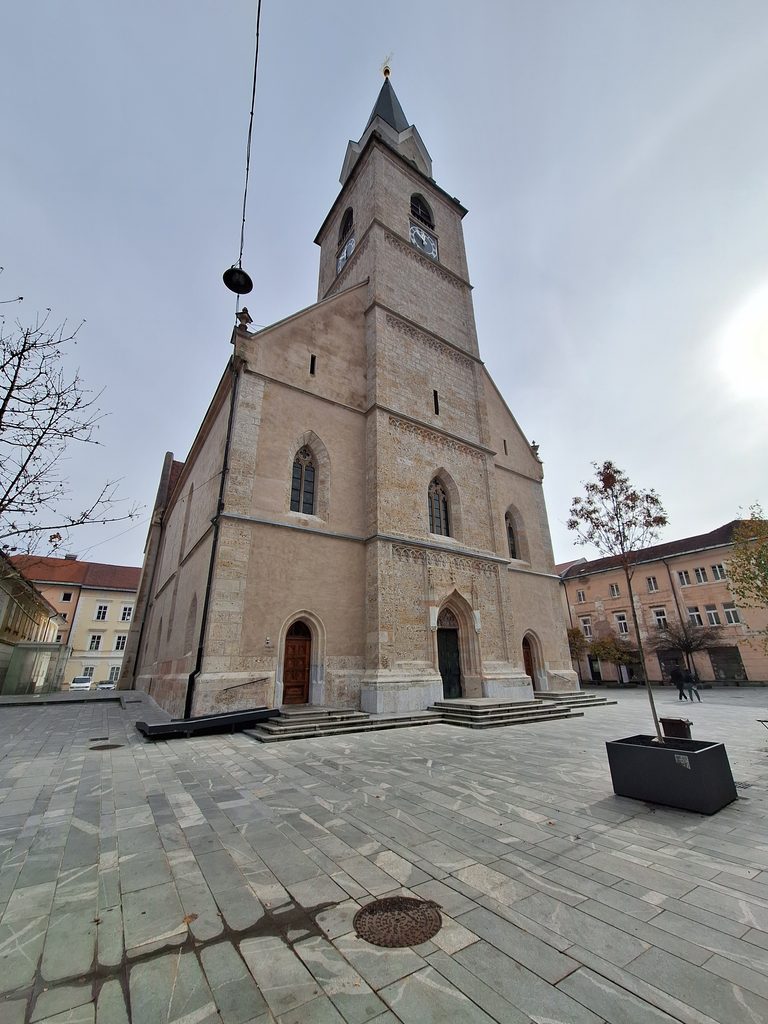
Dominating the old town is the late-Gothic Church of St Cantianus.
Dating largely from the fourteenth and fifteenth centuries, it is one of Kranj’s most important historic buildings.
Its bell tower rises approximately sixty metres above the town.
For €4, I purchased a ticket from the nearby tourist information centre and began the climb.
There were 163 steps to the top.

Some sections were narrow and steep, with limited handrails.
I certainly wouldn’t recommend the climb to anyone uncomfortable with heights or unsteady on their feet.
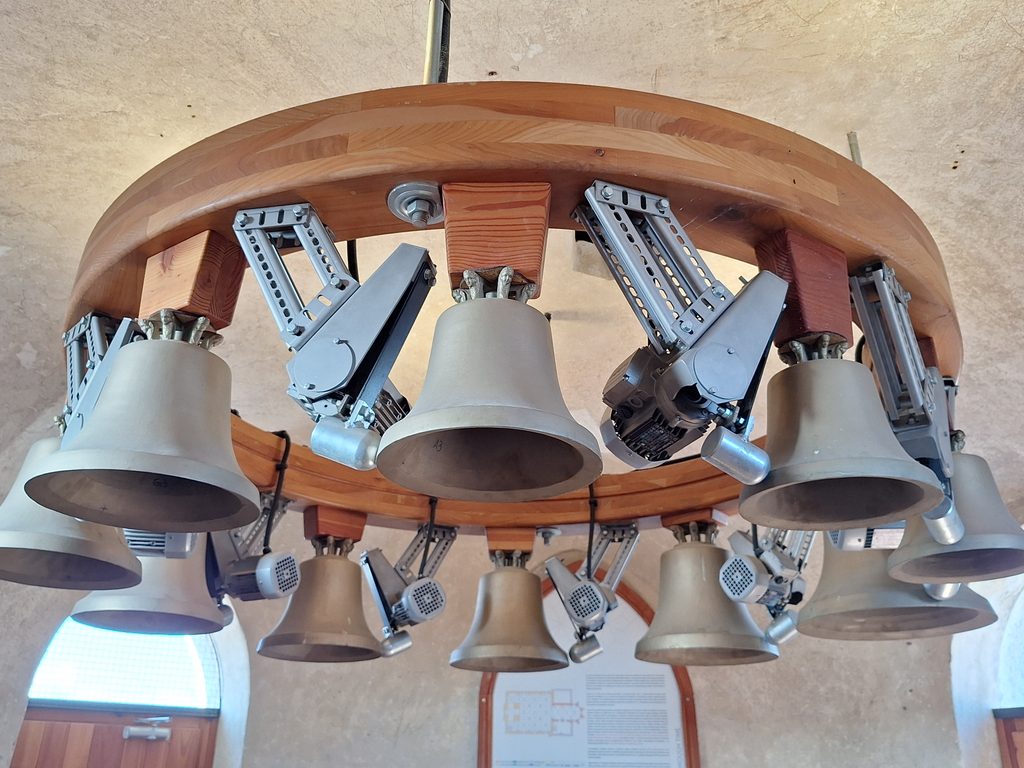
Along the way, I passed the bell chambers.
One contained three large bells, while another held ten smaller bronze bells that ring at various times throughout the day.
Eventually, I reached the viewing platforms.
Four openings provide views in different directions, and what a reward they offer!
The red rooftops of Kranj stretched beneath me, with the Kokra Canyon cutting through the landscape.
Beyond the town, the mountain ranges of the Slovenian Alps rose majestically against the blue sky.
After climbing 163 steps, I was more than happy to spend time admiring the panorama.
These are the moments that make the effort worthwhile.
France Prešeren — Slovenia’s Celebrated Poet
Near the theatre stands an impressive monument to France Prešeren, Slovenia’s most famous poet.
Created in 1952 by sculptors Frančišek Smerdu and Peter Loboda, it depicts the poet striding forward, his coat appearing to blow in the wind.
The movement gives the statue an almost lifelike quality.

Prešeren played an important role in the development of Slovenian literary and national identity, and his poetry remains deeply respected.
It is always interesting to discover how different countries honour the writers, artists and thinkers who helped shape their culture.
Kranj’s Historic Churches
From the bell tower, I had noticed several other church spires scattered around the town.
I decided to investigate.
Unfortunately, they were all closed!
The Church of St Mary of the Rosary dates from the early sixteenth century and has connections with Kranj’s religious history.
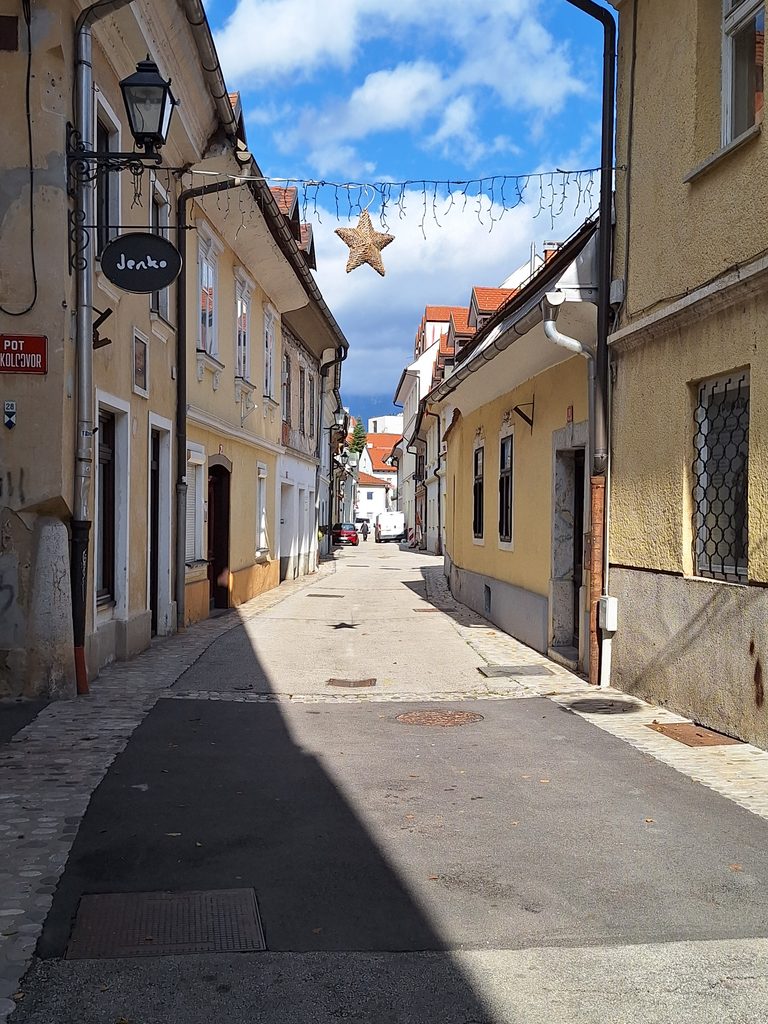
Nearby are the Plečnik Arcades and Fountain, designed by the architect responsible for so many of Ljubljana’s distinctive landmarks.
The elegant arrangement includes a tiered fountain topped with a bronze rooster.
Further south, I discovered the Church of St Fabian, St Sebastian and St Roch.
Built in 1478, it is associated with the townspeople’s prayers for protection against plague.
The small church stands above the river valleys, its setting almost as interesting as its history.
Although I couldn’t enter, I enjoyed exploring the surrounding streets.
Pungert Tower — From Defence to Creativity
At the southern end of Kranj’s historic centre stands Pungert Tower.
This well-preserved sixteenth-century defensive tower once formed part of the town’s fortifications.
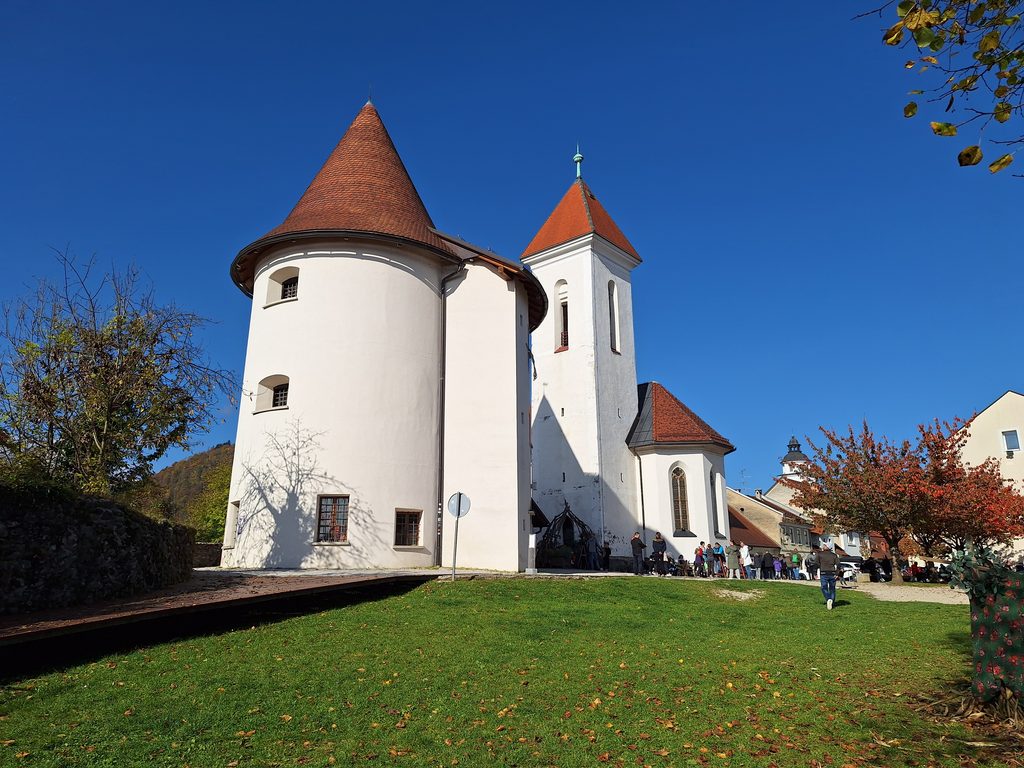
Its name comes from the German word Baumgarten, meaning orchard, referring to the gardens that once occupied the area.
Over the centuries, the tower has served several purposes, including accommodation and imprisonment.
Among those associated with its prison history was the painter Leopold Layer, who was convicted of counterfeiting money.
Today, the building has a much more cheerful purpose.
It is used for children’s activities and creative workshops, while a nearby café contributes to the relaxed atmosphere.
During the annual Jazz Kamp Kranj Festival, the area becomes a venue for live music.
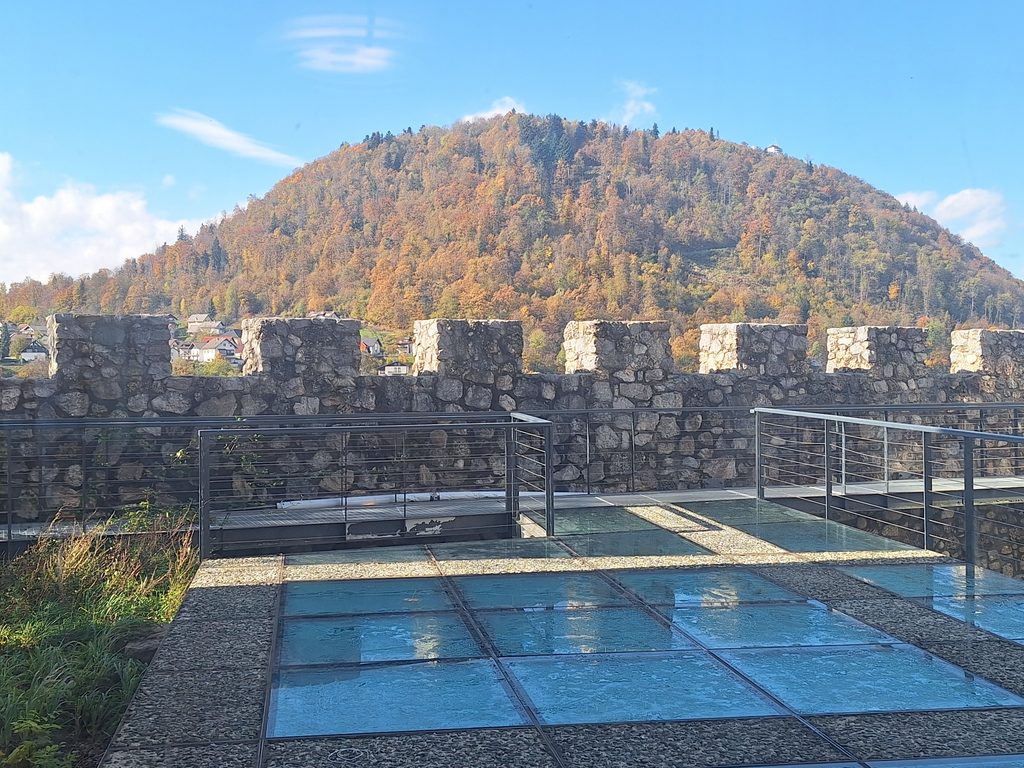
I also found a viewing platform overlooking the Kokra Canyon.
The glass-bottomed section offers a rather unnerving perspective of the drop below.
Once again, I was reminded that exploring historic towns can provide unexpected little adventures.
Khislstein Castle and Layer House
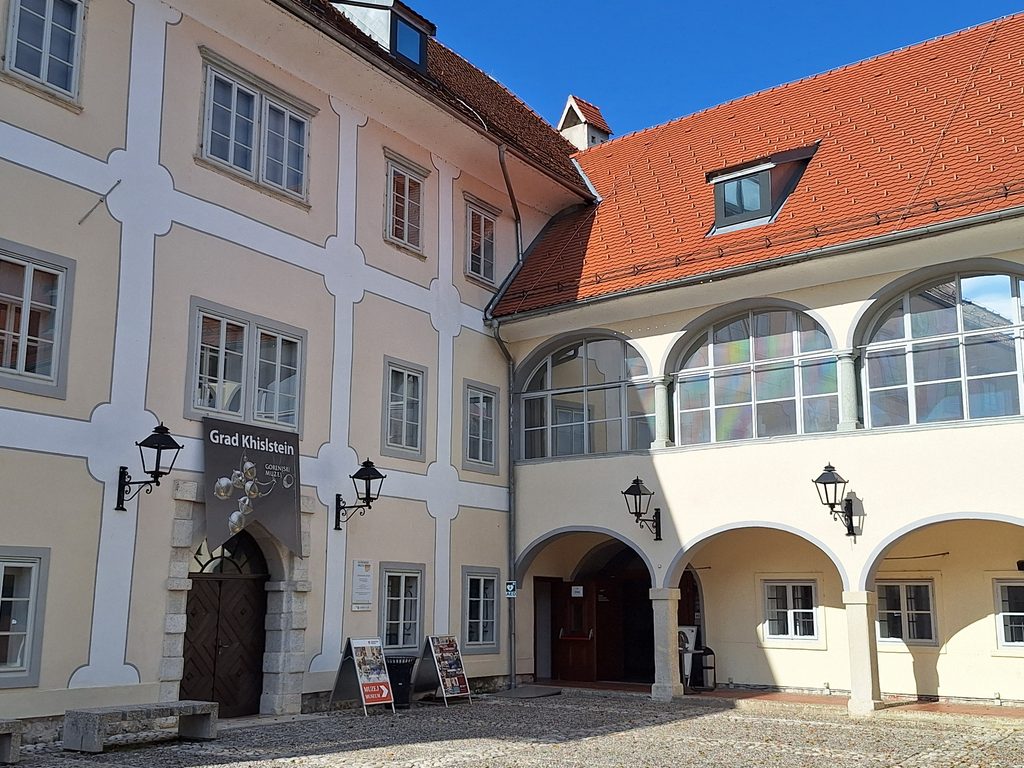
My next destination was Khislstein Castle, whose history stretches back to the medieval period.
The castle once helped protect the important river crossing and eventually became an aristocratic residence.
Much of the old structure was obscured by vegetation, and the extensive alterations made it difficult to appreciate what the original fortress might have looked like.
Fortunately, the nearby Layer House was more rewarding.
Once associated with the painter Leopold Layer, the building is now a cultural centre used by artists and visitors.
I found a pleasant courtyard where I could sit with a cold beer, looking towards the river and the surrounding historic buildings.
Not far away, a staircase of 138 stone steps descends towards the riverbank.
I sat enjoying the afternoon sunshine, listening to the water and appreciating the slower pace of this smaller city.
I had decided to remain in Kranj for several days, using it as a base for excursions into the surrounding countryside.
Sometimes the best way to appreciate a place is simply to stop rushing.
A Few Unexpected Days in Kranj
One morning, I looked out of the hostel window to discover clear blue skies and not a breath of wind.
The previous day’s weather forecast had predicted thunderstorms, persuading me to stay around the hostel.
Of course, the storms never arrived!
By the afternoon, the weather had improved, and I went for another wander through the old town.
At the tourist information centre, I purchased a ticket to explore the underground tunnels.
The first ticket failed to work.
A second ticket appeared successful, but when I reached the entrance, the main door was locked.
Back to the information centre I went.
The staff initially seemed surprised and decided to investigate for themselves.
Naturally, they discovered exactly what I had told them: the door was locked!
When I asked why the streets were so quiet and so many attractions were closed, I learned that it was a public holiday.
Even the ossuary was closed.
I told the staff I would return later in the week.
Independent travel teaches you patience, whether you want to learn it or not.
Škofja Loka — The Three-Castle Walk
Weather: Sunny, 17°C
Elevation: Approximately 352 metres
On another glorious morning, I stopped at my favourite bakery for breakfast before walking approximately 1.2 kilometres to the bus stop.
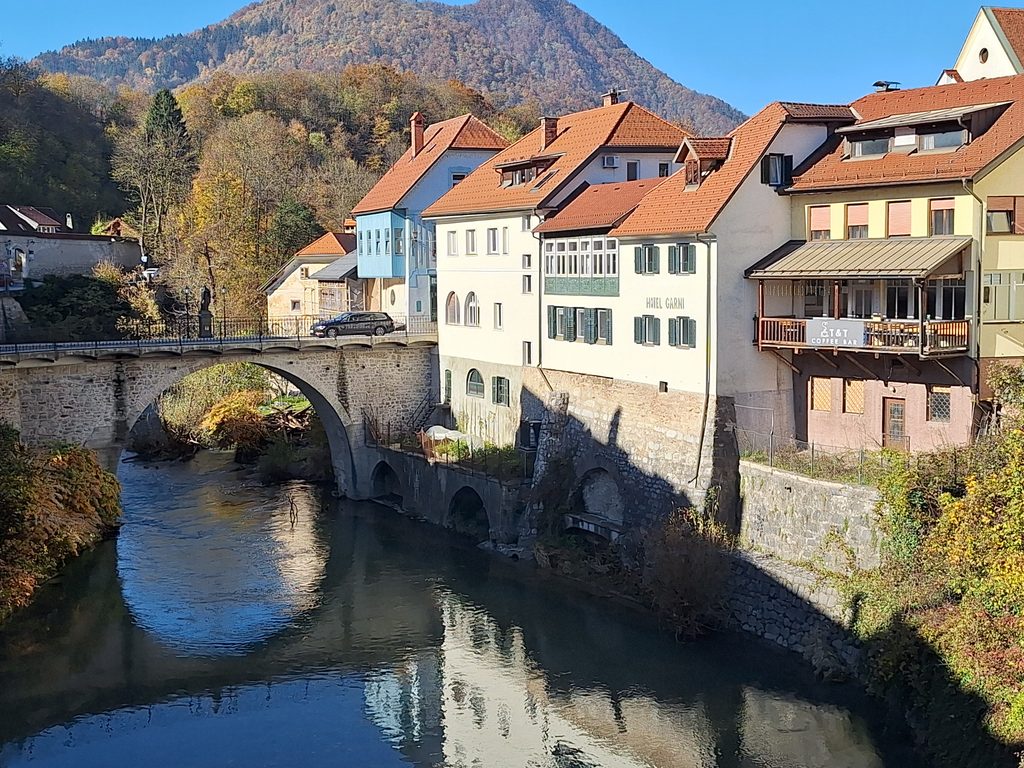
My destination was Škofja Loka, a picturesque medieval town surrounded by hills.
I wanted to attempt the Three-Castle Walk, described as a medium-grade route through the nearby countryside.
The bus journey was delightful.
We passed small villages, green fields and rolling hills, with mountains creating a magnificent backdrop.
St Jakob’s Church — A Moment of Peace
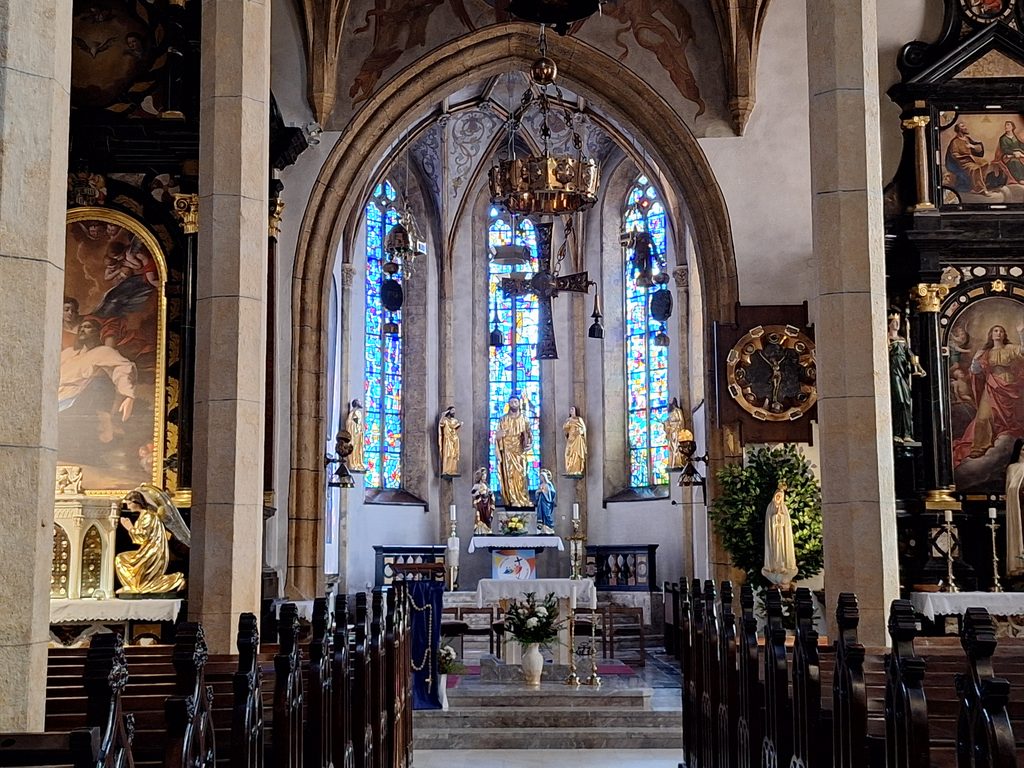
My first stop in Škofja Loka was St Jakob’s Church.
The church has medieval origins dating back to the thirteenth century, although it has been rebuilt and altered over subsequent centuries.
When I entered, I discovered that I was completely alone.
I took the opportunity to sing and pray aloud.
I’ve never quite understood why we are so often expected to worship silently when scripture encourages people to praise with all their hearts.
There was something very special about having the church entirely to myself.
No crowds, no distractions — just a peaceful moment in a beautiful historic building.
Loka Castle — History Above the Town
From the church, I began climbing towards Loka Castle.
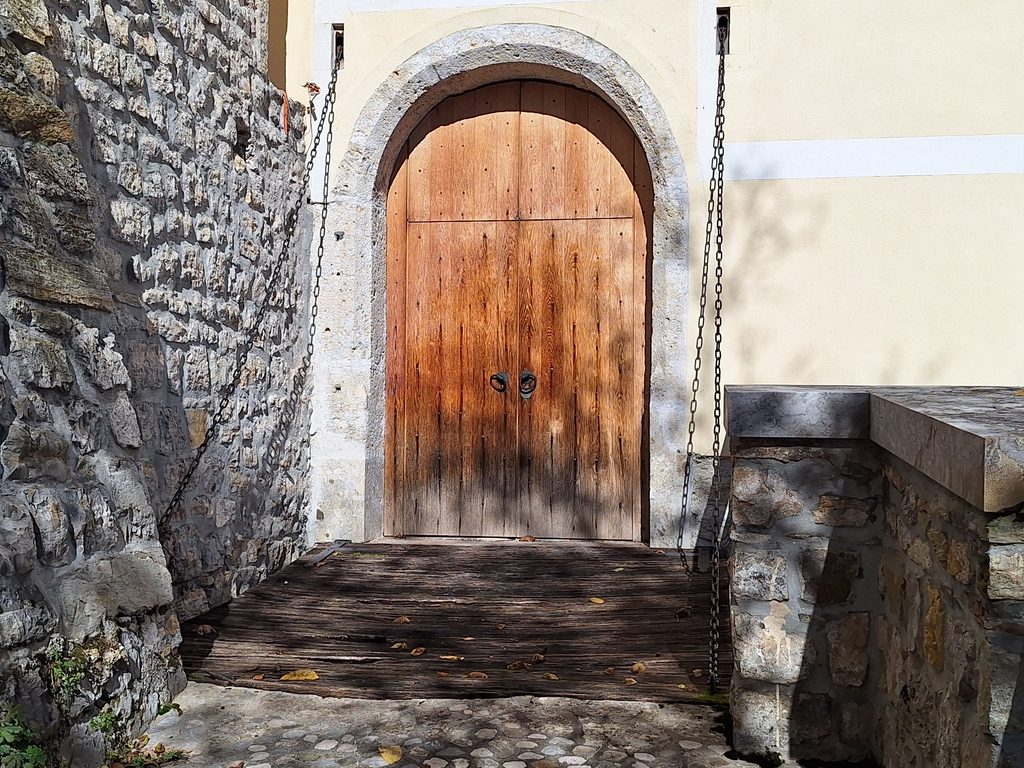
The castle is first mentioned in historical records in the early thirteenth century and was associated with the Bishops of Freising, who controlled the surrounding territory.
Indeed, the name Škofja Loka reflects this ecclesiastical connection.
The castle’s long history includes a particularly dark period during the Second World War, when it was used as a prison.
After the war, mass graves containing victims of the conflict were discovered in the surrounding area.
Today, the castle houses a museum displaying artefacts and exhibitions relating to local history.
Personally, I prefer castles that retain more of their original appearance.
Although restoration is necessary to preserve historic buildings, extensive modernisation can sometimes remove the atmosphere that makes them special.
Rather than spend my time inside the museum, I decided to continue into the surrounding hills.
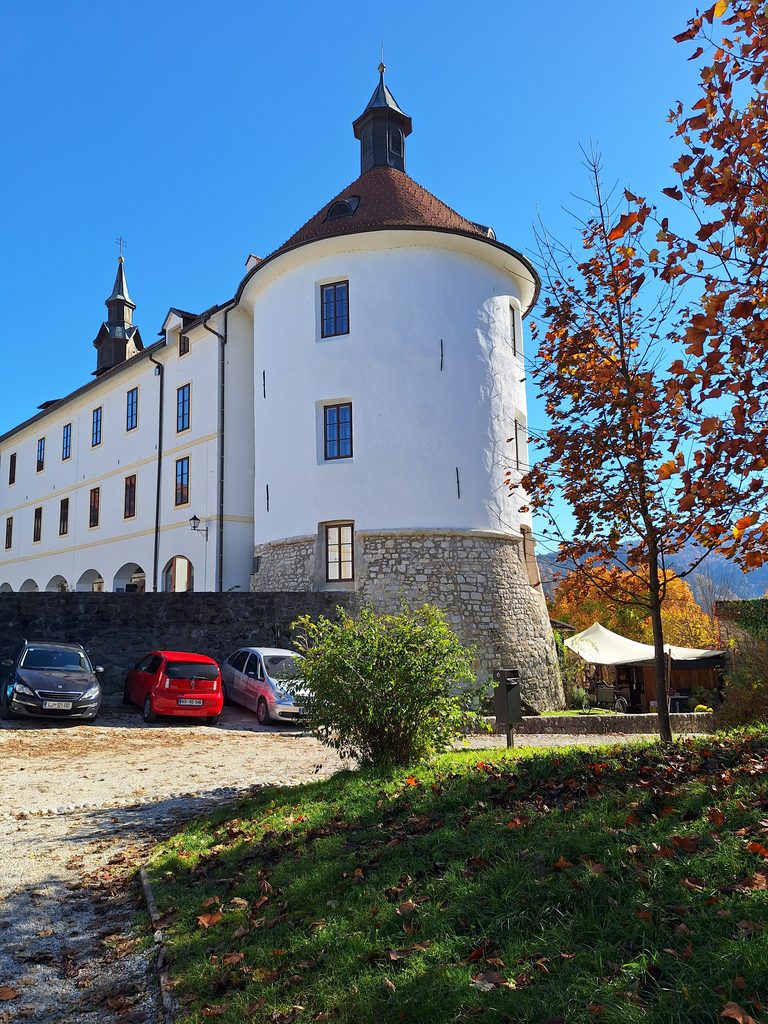
Lost Trails and Unexpected Discoveries
The Three-Castle Walk sounded straightforward enough.
Unfortunately, the signposting was not particularly helpful.
Before long, I had missed the first lookout tower, which I later discovered was little more than a ruin.
I continued walking, following a couple for a while and then a cyclist.
Eventually, they disappeared, leaving me alone on the forest tracks.
At various junctions, I searched for painted red markings and symbols on the trees.
Some were easy to spot.
Others were not!
I took several wrong turns and eventually found myself heading back towards town rather than reaching the next castle.
Still, it was hardly a wasted day.
The countryside was magnificent.

Open fields, forested hills, quiet tracks and spectacular mountain scenery surrounded me.
The autumn sunshine made everything feel even more beautiful.
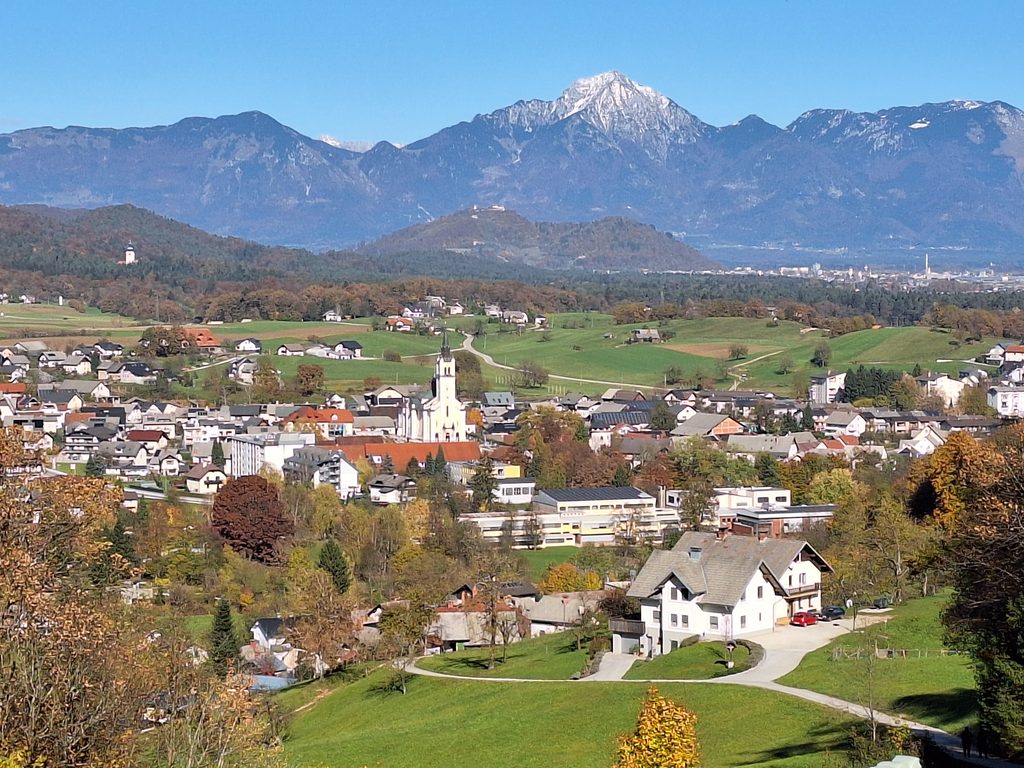
Sometimes the unexpected journey is more memorable than the planned destination.
Back in Škofja Loka’s main square, I rewarded myself with a cold beer before catching the bus to Kranj.
That evening, I enjoyed a surprisingly generous lasagne at the hostel.
It cost just €3, approximately NZ$6.04, and was large enough to provide two meals.
Not a bad result for a budget traveller!
A Familiar Face — Six Unexpected Encounters
During my time in Kranj, something rather amusing kept happening.
I repeatedly encountered the same young woman from Prague.
Our first meeting was at the tourist information centre.
Then I saw her again at the Pungert Tower café.
Later, she appeared at Layer House.
Another encounter occurred on the bus returning from Škofja Loka.
Then I saw her at the Town Hall.
And finally, we crossed paths again at the ossuary.
Six separate encounters!
She was rather reserved, and although I attempted a little conversation, she seemed to prefer keeping to herself.
By the sixth meeting, I was quietly laughing to myself.
If I encountered her again in Trieste, perhaps it would be fate — or a sign that one of us needed to change hostels!
Beneath Kranj — Underground Tunnels and an Ancient Ossuary
Weather: Overcast, 12°C
After several nights in Kranj, I was becoming increasingly frustrated with one particular feature of hostel life.
Snoring.
For three consecutive nights, someone in the dormitory had been producing a noise resembling a chainsaw operating at full power.
Sleep was almost impossible.
I sometimes wonder whether people who snore that loudly realise just how much they disturb everyone around them.
My plan for the day was straightforward.
Breakfast at the bakery, a walk beside the river, a visit to the underground tunnels and the ossuary, and finally a haircut.
Breakfast was a chocolate-filled pastry eaten on the move.
Later, I purchased a chicken roll, which turned out to be disappointingly dry.
Not every meal on the road is a culinary triumph!
The Underground Tunnels of Kranj
Beneath Kranj’s historic centre lies a remarkable network of underground tunnels.
Approximately 1,300 metres of passages were excavated through the conglomerate rock during the Second World War to provide shelter during air raids.
Walking through them is an unusual experience.
The underground environment resembles a natural cave, with cool air, damp surfaces and formations created by dripping water.
Small cave-dwelling creatures, including crickets and spiders, also inhabit parts of the tunnels.
The lighting was dim, and in places I found myself stepping carefully, uncertain what the ground ahead might be like.
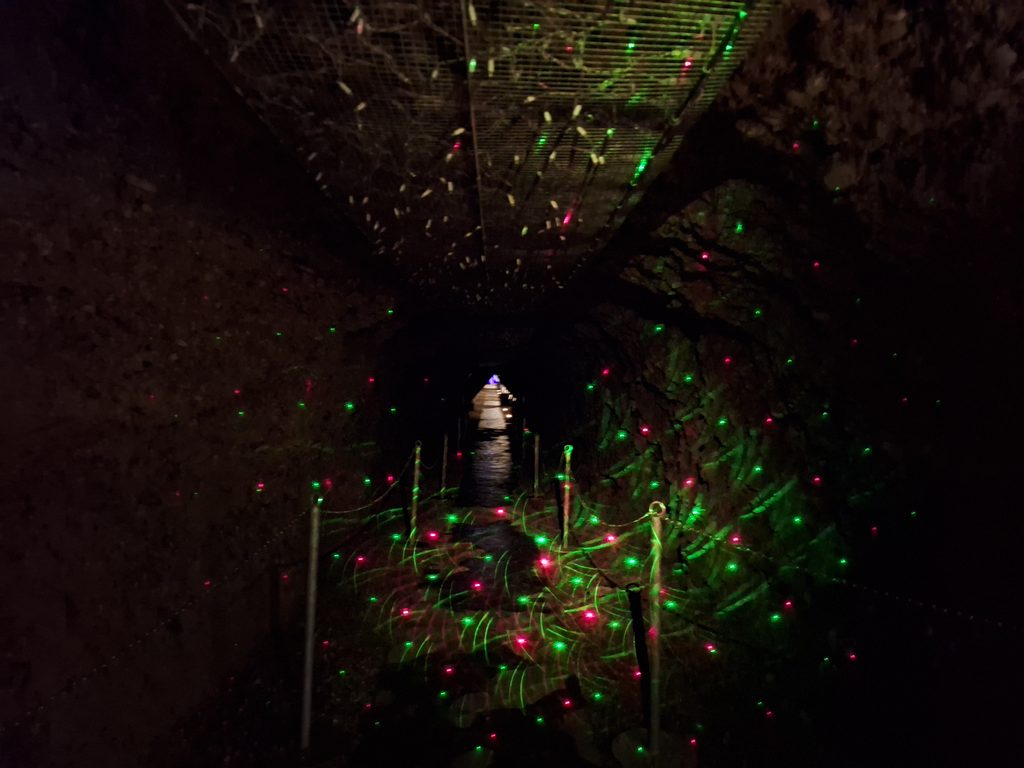
The tunnels contain historical displays, films and exhibits explaining the wartime occupation.
Some of the posters reproduced Nazi propaganda, reminding visitors of the fear and political manipulation experienced during that period.

Other sections included projections and a dramatic light display.
The tunnels opened as a tourist attraction in 2008 and subsequently received recognition for innovative tourism.
It was a fascinating experience and another reminder of the history hidden beneath Europe’s modern towns.
The Ossuary of St Cantianus
My next visit was to the ossuary near the Church of St Cantianus.
Admission cost €1.50, approximately NZ$3.02.
Although the site is relatively small, I found it deeply moving.
Rows of human skulls and bones are displayed beneath the old town.
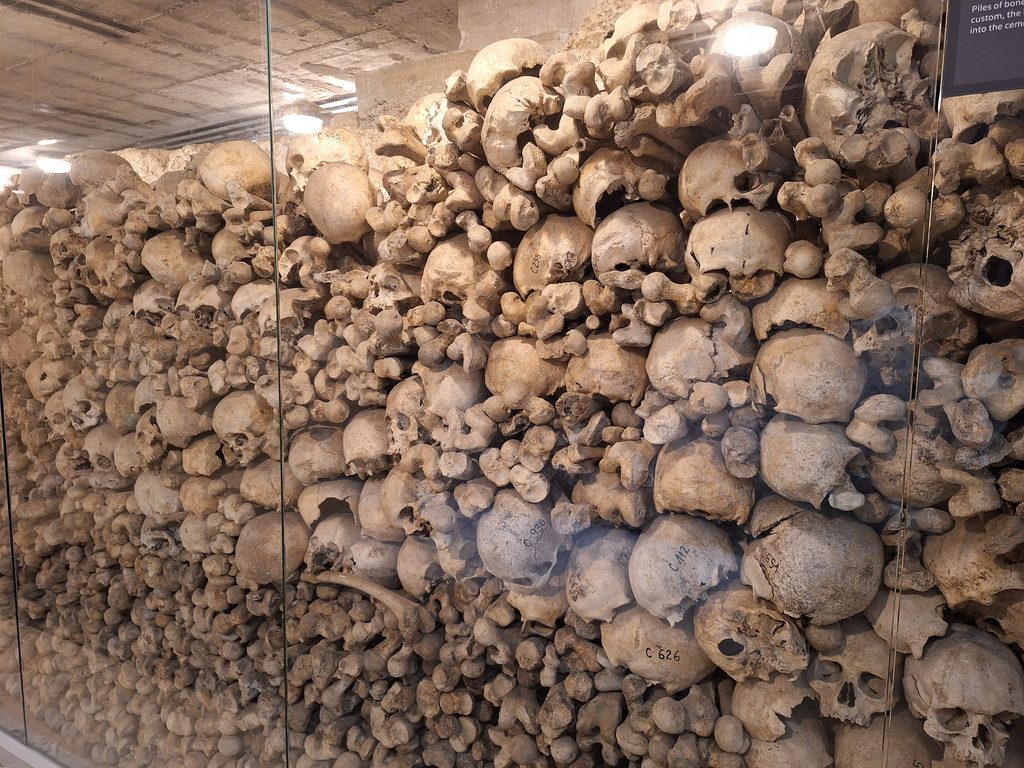
The remains reflect centuries of burial practices and the long history of the community.
Standing there, I couldn’t help thinking about my visit to Cambodia’s Killing Fields.
The circumstances and histories are very different, but the sight of human remains always encourages reflection on mortality.
The ossuary lies among archaeological remains that reveal several periods of settlement, including traces of earlier Roman and medieval structures.
It is extraordinary to think how many generations have lived, worshipped and died in this small area.
Afterwards, I continued with my planned haircut and returned to the hostel for some rest.
If the weather improved, I intended to travel to Lake Bled.
I had last visited the lake in the early 1970s, when Slovenia was still part of Yugoslavia.
It would be fascinating to discover how much had changed in fifty years.
Lake Bled — Returning After Fifty Years
Weather: Sunny, 17°C
Elevation: Approximately 475 metres
A Journey into My Own Memories
Some places remain etched in your memory for a lifetime.
Lake Bled is one of those places for me.
Nearly fifty years earlier, I had stood on the shores of this beautiful Slovenian lake as a much younger man.
Back then, Slovenia was part of Yugoslavia, and travelling through this region felt very different from exploring modern Europe.
Returning after five decades was about much more than sightseeing.
I wanted to discover what had changed, what remained familiar, and how my own perspective had developed with age.
Can we ever truly return to a place we remember from our youth?
Or do we inevitably see it through different eyes?
The Train and Bus Journey to Lake Bled
I left the hostel early, delighted to escape the noisy dormitory for another day.
From Kranj, I caught the train towards Lesce-Bled.
My return rail ticket cost €8.60, approximately NZ$17.33.
It was another reminder of how affordable public transport can be in this part of Europe.
From Lesce-Bled station, I caught a local bus into Bled.
The journey cost €1.50, approximately NZ$3.02, and took around twenty minutes.
As the bus descended towards the town, the landscape opened up.
I was looking forward to seeing that famous lake again.
First Impressions — Beautiful but Changed
Arriving around midmorning, I found a café and settled down for a late breakfast.
I ordered three fried eggs, some rather questionable bacon and three small slices of ciabatta toast, served with salad.
The meal cost €10, approximately NZ$20.15.
Sitting in the sunshine with a beer, I looked around and began comparing the surroundings with my memories.
Lake Bled was still breathtakingly beautiful.
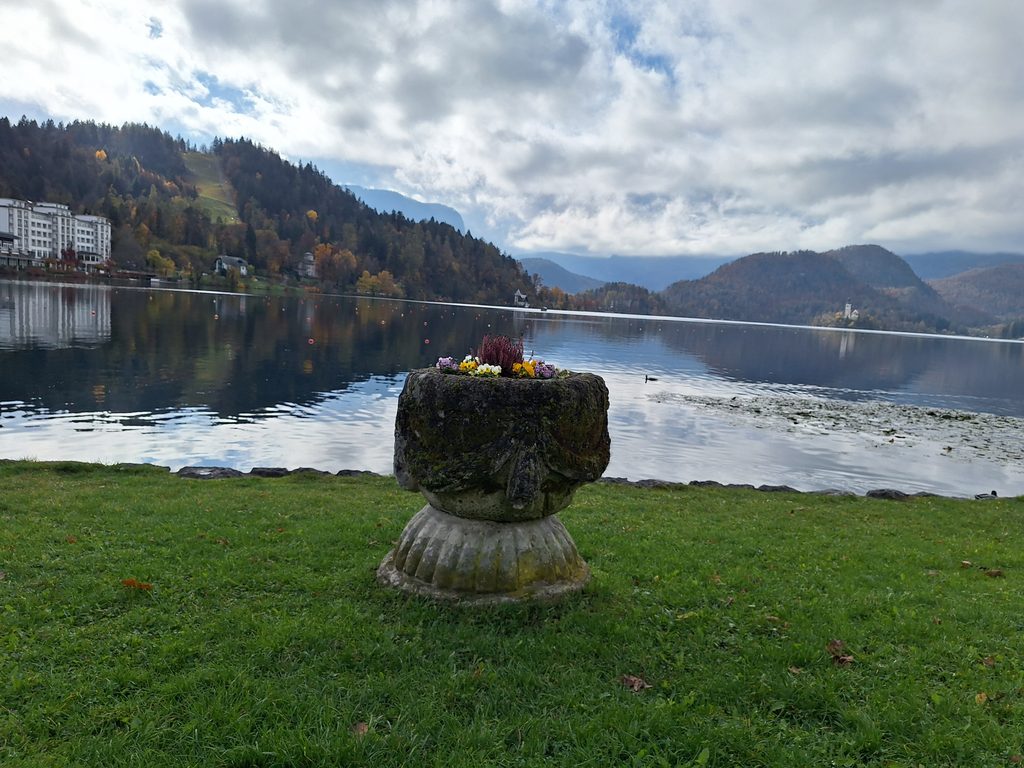
The mountains, the calm water and the small island church created the same remarkable picture I remembered.
But the atmosphere was different.
The relatively quiet destination I had known as a younger traveller had become a major international tourist attraction.
Hotels, restaurants, tourist services and visitors were everywhere.
Of course, tourism creates employment and brings investment to local communities.
It also changes the character of a place.
I found myself feeling both pleased to return and slightly saddened that the quieter Yugoslavia of my memory no longer existed.
Perhaps that is simply the nature of travelling across a lifetime.
Walking Around Lake Bled
I decided to walk around the lake, following the approximately six-kilometre circuit.
The pathways were far more developed than I remembered.
Where I might once have passed just a handful of people, I now encountered visitors from many countries.
The scenery, however, remained magnificent.
Across the water stood the famous island church, surrounded by forested hills and mountains.
Traditional wooden boats carried visitors across the lake, while walkers stopped regularly to take photographs.
It was the sort of landscape that encourages you to slow down and appreciate every view.
Hotel Park — A Connection with the Yugoslav Era
During my walk, I reached Hotel Park, a building with particular significance for my memories of Lake Bled.
The hotel is associated with the development of Bled as a major holiday resort during the Yugoslav period.
Opened in its modern form during the early 1970s, it reflects the era when the government was promoting tourism around this beautiful Alpine lake.
The hotel has undergone substantial renovation since Slovenia’s independence in 1991 and is now associated with modern hospitality and wellness tourism.
Its café is also known for serving the famous Bled cream cake.
Seeing the hotel brought back memories of a different political era.
I also recalled the atmosphere surrounding Tito’s residence in the region.
When I first travelled through Yugoslavia, photographing politically sensitive buildings could attract unwanted attention.
Today, visitors are free to explore much of this history as part of the country’s tourist heritage.
It is remarkable how much can change in one person’s lifetime.
A Closed Path and the Kindness of a Stranger
As I continued around the lake, I encountered a section of pathway that had been closed because of erosion.
I wasn’t sure how to get around it.
After speaking with a police officer, I learned that I might be able to ask a passing motorist for help.
I approached a driver, explained the situation, and he kindly offered me a lift past the closed section.
Another example of the kindness of strangers.
Travelling alone teaches you to be resourceful, but it also reminds you that asking for assistance is sometimes the most sensible solution.
Later, I met a delightful Irish lady living in Norwich.
We struck up a conversation and eventually spent around half an hour chatting at a bar beside the lake.
We talked about travel, life and the different places we had experienced.
These unexpected encounters are among my favourite parts of travelling.
It doesn’t matter whether someone comes from Ireland, India, Brazil or New Zealand.
Often, a simple conversation reveals how much we have in common.
Bled Island and the Church of the Mother of God
Perhaps the most recognisable feature of Lake Bled is the little island rising from the centre of the water.
The Church of the Mother of God on the Lake stands among trees, its bell tower creating one of Slovenia’s most photographed scenes.
I stood on the shore, admiring the church and reflecting on its remarkable history.

Archaeological discoveries suggest that the island was occupied long before Christianity reached the region.
During the early medieval period, it became an important religious site.
Excavations have revealed more than a hundred early graves and foundations of an earlier chapel.
A Romanesque church was established during the twelfth century, followed by later Gothic and Baroque alterations.
An earthquake in the early sixteenth century caused extensive damage, and the church was subsequently rebuilt.
Its interior contains an elaborate eighteenth-century altar dedicated to the Virgin Mary.
I would have enjoyed exploring the island and church, but transport costs were considerable.
I was quoted approximately €20 for a traditional boat journey, around NZ$40.55.
I also learned about rowing-boat options, although these are more economical when the cost is shared.
For a solo budget traveller, such expenses soon add up.
So I contented myself with enjoying the magnificent views from the lakeshore.
Bled Castle — A Fortress Above the Lake
High above the water, Bled Castle stands on a sheer rocky cliff.
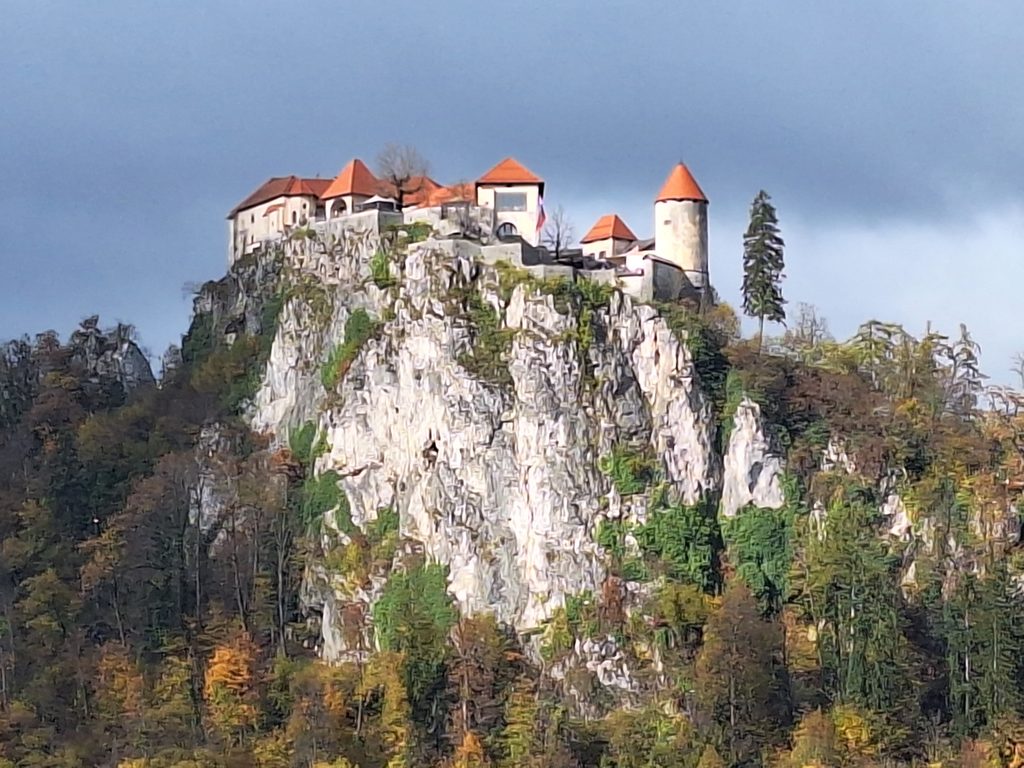
Its position is spectacular.
The history of the castle stretches back more than a thousand years.
In 1004, the German king Henry II granted the estate to the Bishop of Brixen.
The earliest fortifications developed during the following decades, and the castle gradually expanded through the medieval period.
After damage caused by earthquakes and the passage of time, various sections were rebuilt and restored.
During the twentieth century, further restoration transformed the site into a museum and tourist attraction.
Today, its courtyards contain historical displays, a chapel, a printing demonstration, a wine cellar and a restaurant with panoramic lake views.
I learned that the senior admission price was €15, approximately NZ$30.41, compared with €18 for adults.
I looked up at the steep ascent and considered whether my legs would appreciate another climb.
At 72, the decision to tackle a steep hill is not something I make quite as casually as I once did.
I had hoped to return and explore the castle properly the following day.
Vintgar Gorge — An Adventure Planned but Missed
Another attraction on my list was Vintgar Gorge, located a few kilometres northwest of Bled near Triglav National Park.
The gorge is approximately 1.6 kilometres long, with steep rock walls and the Radovna River flowing through its narrow passage.
Wooden walkways and bridges allow visitors to follow the river through sections of dramatic natural scenery.
The gorge is also associated with Šum Waterfall, one of Slovenia’s impressive river waterfalls.
I visited the tourist information centre to ask about access, prices and the best way to reach it.
The area attracts large numbers of visitors, creating challenges in protecting its natural environment.
I was keen to experience the gorge for myself, particularly after hearing about its beauty.
However, my plans depended on the following day’s weather.
For fellow senior travellers, it is worth remembering that walks through narrow gorges can involve uneven surfaces, steps and damp conditions.
Good footwear and an honest assessment of your fitness are always important.
Unfortunately, as events turned out, I never got to visit Vintgar Gorge.
The Challenge of Public Transport
After a wonderful day beside the lake, I headed towards the bus station for my return to Kranj.
What greeted me was an enormous crowd.
Despite travelling outside the peak summer season, the number of visitors waiting for buses towards Ljubljana was extraordinary.
As more people arrived, it became clear that not everybody would be able to board.
When the bus finally appeared, there was a determined movement towards the doors.
I had to be rather assertive to secure a place.
I must confess that I applied a little gentle pressure to the gentleman in front of me so that we both moved closer to the entrance.
Fortunately, I managed to board.
Many other travellers were left waiting for another bus.
Later, at the railway station, I discovered that the bus and train schedules didn’t connect particularly well.
This meant another lengthy wait.
Rather than become frustrated, I started talking with a family from Brazil who were travelling towards Budapest.
Once again, what might have been an inconvenience became another opportunity to meet interesting people.
Public transport in Slovenia is generally affordable, but visitors should allow additional time when travelling to popular tourist destinations.
In my experience, the buses were often more convenient than the trains.
An Evening Conversation Back at the Hostel
By the time I returned to Kranj, I was ready for a quiet evening.
Thankfully, I had managed to secure a different room at the hostel, away from the snoring that had disturbed my previous nights.
Over a glass of wine and a football match on television, I met Sarang, an Indian gentleman living and working in Ljubljana.
He was an enthusiastic traveller who had already explored countries including Vietnam and Spain.
We spoke about our journeys and his ambitions to visit places such as Portugal and Montenegro.
It was another enjoyable conversation with someone who shared my enthusiasm for exploring the world.
One of the greatest rewards of travelling is discovering that friendship and understanding are not limited by age, nationality or background.
A Rainy Day and a Change of Plans
I had intended to return to Lake Bled the following day.
My plans included visiting Vintgar Gorge, exploring Bled Castle and possibly finding a way to reach the island church.
Unfortunately, the weather had other ideas.
Heavy rain continued throughout the day.
Rather than risk a miserable excursion in wet conditions, I stayed behind.
It was disappointing, particularly as I was so close to these wonderful attractions.
Nevertheless, I had enjoyed a beautiful day beside Lake Bled and had seen enough to appreciate why it attracts visitors from around the world.
There is always something we miss during our travels.
Perhaps those unfinished experiences give us a reason to return.
Reflections on Slovenia — Fifty Years of Change
My time in Slovenia had been filled with contrasts.
Ljubljana surprised me with its elegant architecture, historic bridges and lively riverside atmosphere.
Kranj offered a quieter experience, with medieval streets, magnificent Alpine views and fascinating underground history.
Škofja Loka introduced me to beautiful countryside, an unexpected woodland adventure and another glimpse into the region’s complicated past.
Lake Bled brought me face to face with memories from almost fifty years earlier.
In that time, countries had changed, governments had disappeared, borders had shifted and tourism had transformed once-quiet destinations.
I had changed too.
As a younger man, I travelled with different expectations, different abilities and perhaps less appreciation for the small moments along the way.
Now, at 72, I find myself taking greater pleasure in conversations, quiet reflections, beautiful scenery and the kindness of strangers.
It is no longer simply about reaching another destination.
It is about understanding the people, the history and the experiences that make each place unique.
Slovenia has reminded me that travelling through a country is far more rewarding than simply flying over it.
There is something special about watching the landscape change from the window of a train, wandering through an unfamiliar old town or sitting quietly beside a river.
Of course, not everything goes according to plan.
Buses are missed, attractions are closed, weather forecasts are wrong, hostel beds squeak and somebody always seems to be snoring!
But these experiences become part of the story.
Farewell to Slovenia — Onwards to Trieste
With my Slovenian adventure drawing to a close, it was time to continue towards Trieste, just across the border in Italy.
I had thoroughly enjoyed returning to a part of Europe that I first visited nearly half a century ago.
The journey had given me much more than photographs of castles, churches and mountains.
It had given me another opportunity to reflect on life, ageing, friendship and the extraordinary privilege of being able to explore the world.
What began as a simple travel diary has gradually become something more — a way of sharing history, personal experiences and the people I encounter along the road.
Although my website focuses on inspiring senior travellers, I hope these stories appeal to anyone who feels the desire to explore.
You do not have to be young, wealthy or fearless to enjoy an adventure.
Sometimes you simply have to take that first step into the unknown.
Stepping out of fear, one step at a time, into the unknown.
I would love to hear your thoughts about my journey and whether any of these experiences connect with your own travels.
Until the next adventure.
Andrew
Inspire Seniors Travel
inspireseniorstravel.com