

Day 304: Leaving for Turku
Travel to Date: 36,367.98 km
Morning Departure: Setting Off in the Rain
I woke to rain, but that wasn’t going to dampen my spirits. I hopped on a scooter bound for the river and caught the Orange Ferry towards the port. Being outside the high season has its perks—the ship was half empty, and you could sit anywhere you liked. Every seat promised a great view.
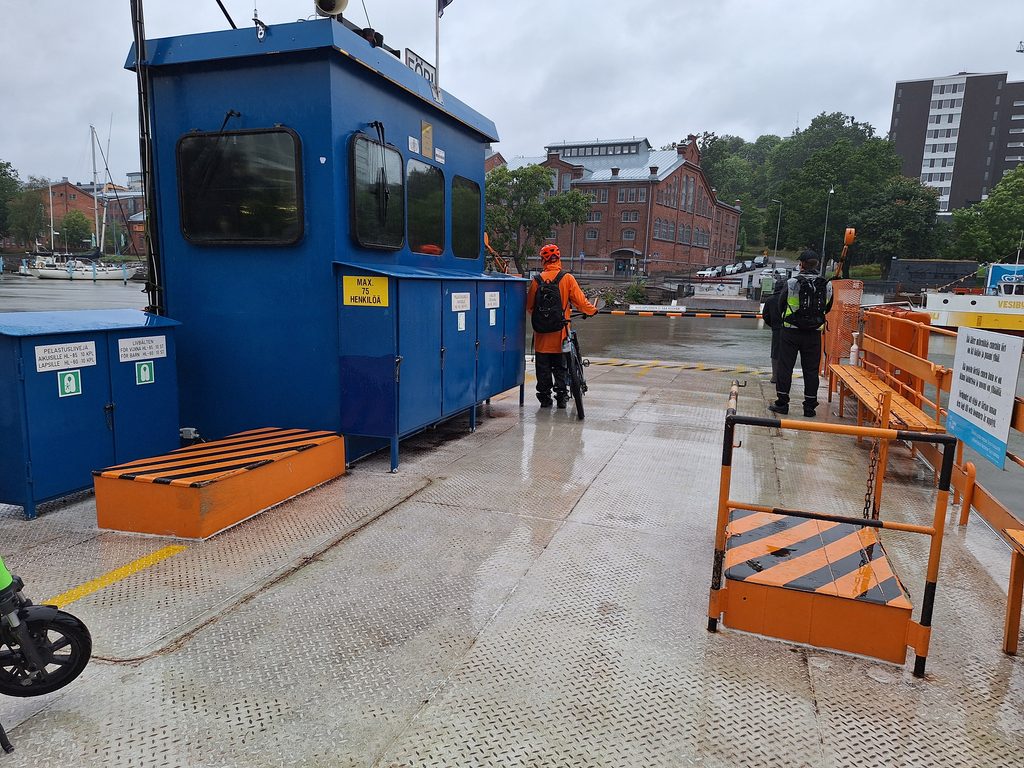
Earlier, I ventured up top, but the wind whipped so fiercely around the corners that even under shelter it felt like a storm. I quickly ducked back inside.
Viking Glory Ferry
The MS Viking Grace is a Ro-Ro passenger vessel operated by the Finland-based Viking Line. It has a capacity of 2,800 passengers, 500 cars, and 75 trucks. Launched in 2013, it runs the Sweden–Finland route between Stockholm and Turku (about 10 hours), with a stop at Åland (Mariehamn).

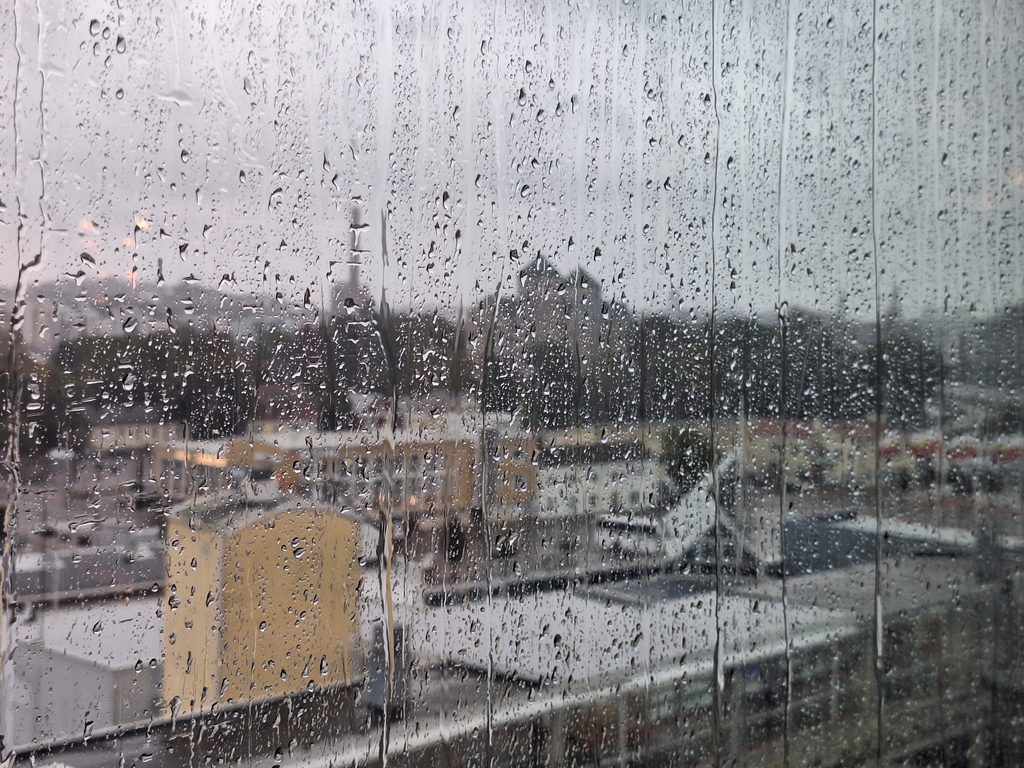
It’s funny how the ship’s movement reminded me of a car. As it turned out, I found myself leaning with it, giving the odd sensation of sliding across the seat. From my panoramic window, I watched as the morning gloom lifted, the rain eased, and then returned a few hours later. The sea swelled, but a ship this size cruised through.
Life Onboard
With 11+ hours ahead, I settled into routine: finished yesterday’s blog, posted it, and began writing today’s.
The Viking Grace has 11 decks and 880 cabins. All are air-conditioned with en-suites, HDTVs, and phones. Suites and premium cabins come with extras like double beds, sofas, refrigerators, and toiletries. Some rooms are wheelchair-accessible, while allergy-friendly cabins use non-allergenic materials.
Entertainment
Onboard life resembled what I imagine a cruise ship to be: restaurants, cafés, bars, duty-free shops, a casino, children’s play areas, an arcade, dancing, and more.

Lunch was classic Scandinavian fare—meatballs with mash, mustard sauce, red currant, and pickles—washed down with a beer (📸 photo attached).

Cruise Ship Trivia
I once read about a couple who lived on a cruise ship for three years because it was cheaper than maintaining a home. More recently, in August 2025, someone from America purchased a 15-year cabin lease, planning to live permanently at sea. Mario Salcedo, who has spent 25 years living on cruise ships, admitted he’s lost his “land legs”—his body sways so much he can’t walk straight anymore.
Stops Along the Way
We paused at Mariehamn, in the Åland Islands. Some passengers disembarked, and for a moment I wondered if I should too. Staff quickly assured me I was to stay on board. Soon, new passengers boarded, and we were back out on open water.

The further we sailed, the more the rocking grew more noticeable. At times, the horizon tilted right across the deck, only to vanish again. Not extreme, but enough to feel. By the time we neared Sweden, the waters had calmed. Passing Furusund, a large island off the coast, reminded me that Stockholm was just a few hours away.

Arrival in Stockholm
We docked around 6:50 pm. I bought a bus ticket on board for the ride into the city. At first, the route seemed to head away from my hostel. A small panic bubbled—I almost asked the driver to stop—but then realised we were bound for the central station. From there, I could retrace my steps. Relief.

Driving into Stockholm felt dazzling. The city glowed like Disneyland—bright lights, neon signs, and video screens flashing everywhere. My priorities were simple: a SIM card, a scooter, and then the 3.9 km trip to the hostel.
But the SIM card came without a number, which meant no scooter (the app sends codes by SMS). So, I pressed on foot.
I reached the hostel around 9:30 pm, checked in, watched a little TV, and finally drifted off—until 1:25 am, when two new guests arrived. The downside of 24-hour check-in.
Reflections
The day started smoothly, stumbled a bit at the end, but as the saying goes, all’s well that ends well.
Andrew – inspireseniorstravel.com
Day 305: Gamla Stan (Old Town), Stockholm
Weather Update: Sunny with a cold wind, high 19°C
Setting the Scene
Stockholm, the capital of Sweden, spreads across 14 islands connected by more than 50 bridges on the Baltic Sea archipelago. The city is nearly 773 years old, founded in 1252, and today its metro population reaches over 2.4 million.
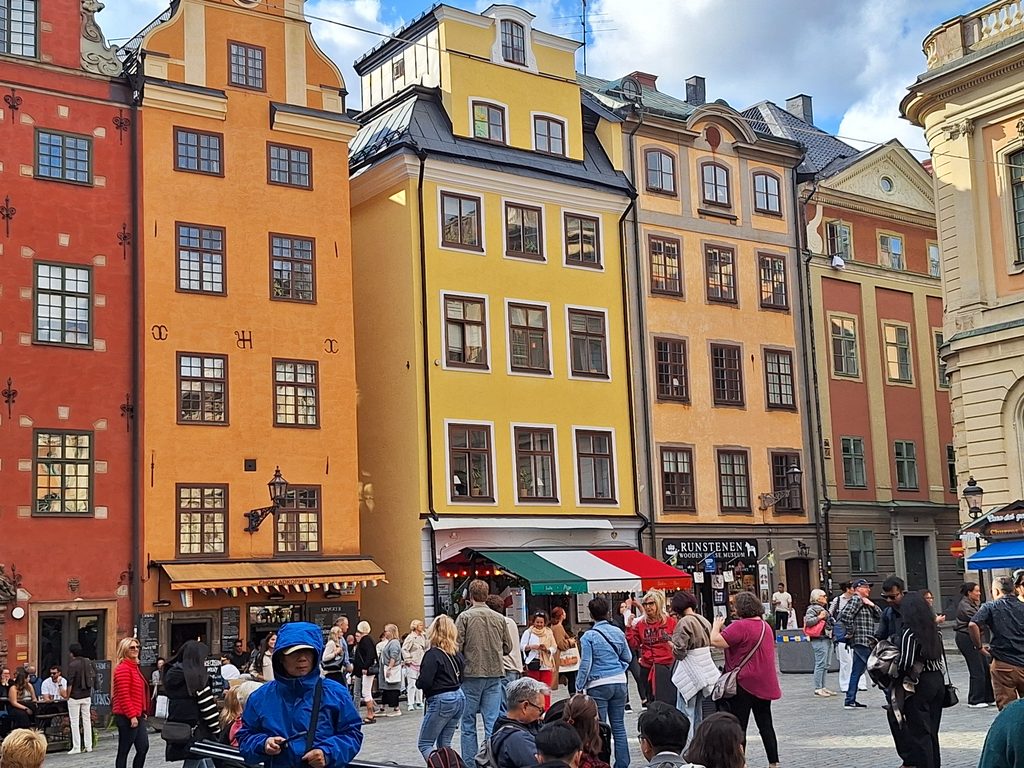
Gamla Stan, the medieval Old Town, is where Stockholm began. Its cobblestone streets and ochre-coloured buildings are home to treasures like the 13th-century Storkyrkan Cathedral, the Kungliga Slottet Royal Palace, and the Nobel Museum. Ferries and sightseeing boats weave between the islands, linking the historic heart with the modern sprawl beyond.
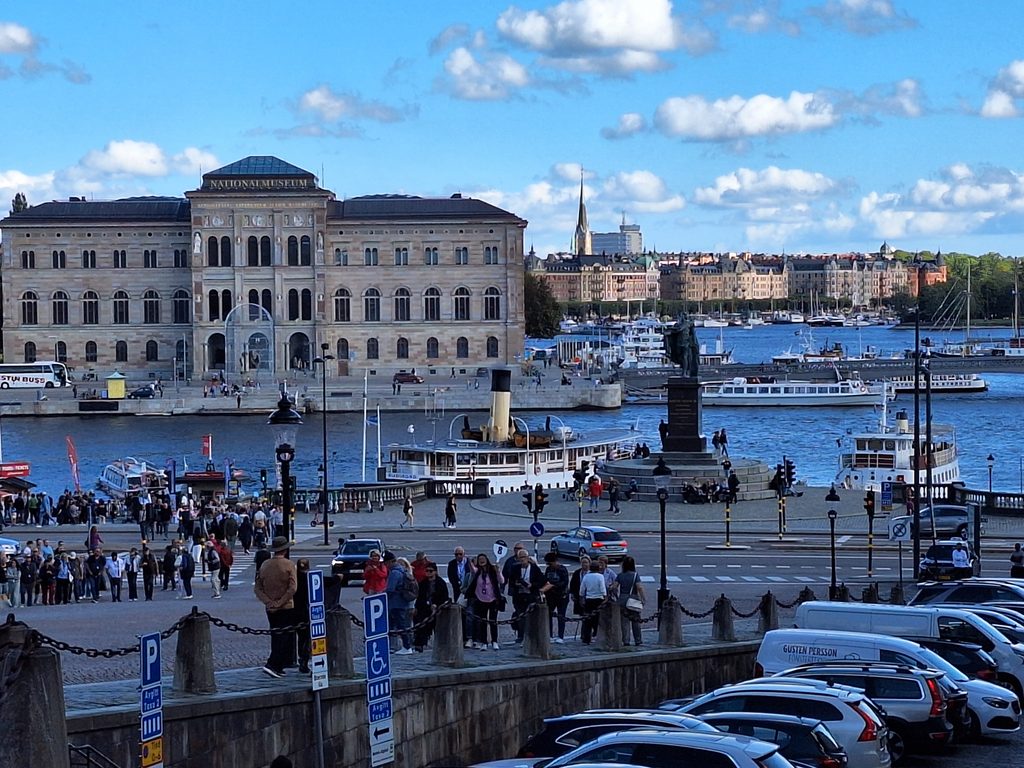
From here, my day began.
Morning Start & Getting Around
I slept reasonably well last night, breakfasting on leftovers—turkey slices and cheese—while chatting with other hostel guests. After sorting out my last phone number, I was good to go.
Stockholm transport has proven pricey. Last night, I rode a tram for two stops and paid 43 SEK (€3.39 / NZD 7.74) for a short 500-metre trip. Today, I tried a scooter: four kilometres for €2.10 (NZD 4.14). Scooters are now my transport of choice.
Crossing the bridge into Gamla Stan, the medieval heart of Stockholm, I arrived at Stortorget Square, its cobbled stones and ochre buildings leading me straight toward the crowd gathering at the Royal Palace.

At the Royal Palace
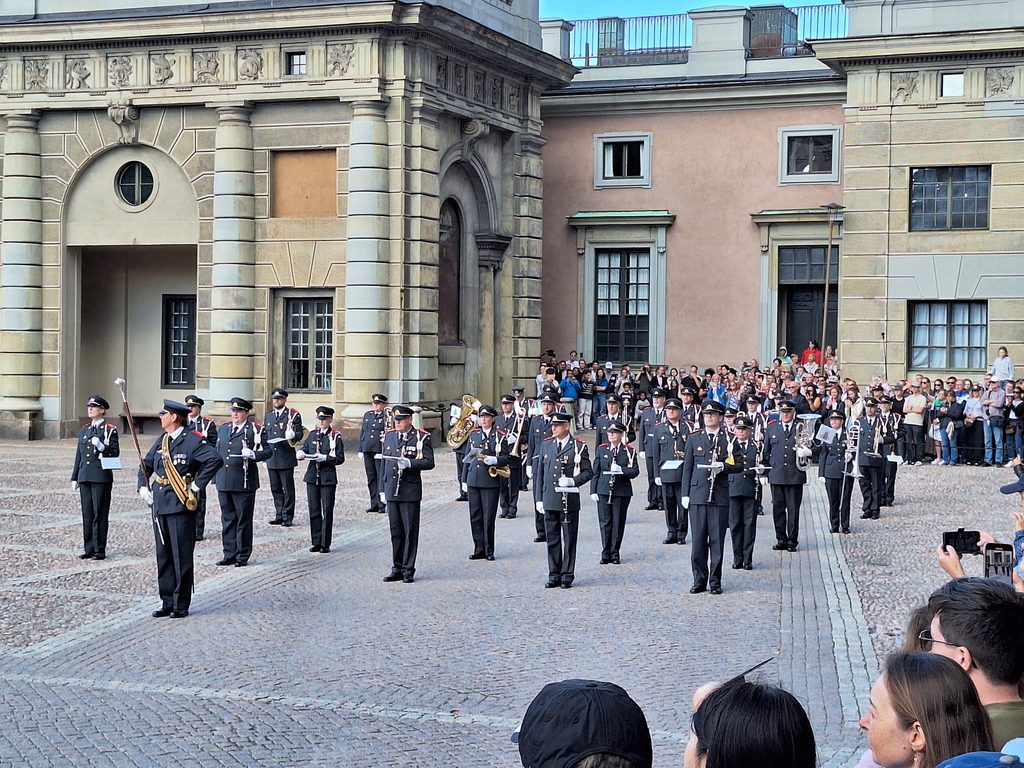
The palace forecourt was packed for the Changing of the Guard. Many strained for a view, but I managed to perch on the corner of a column for a partial vantage point, though a sentry box blocked some of the action.

The Kungliga Slottet (Royal Palace) is more than a ceremonial stage—it is the official residence of the Swedish monarch. After the medieval Tre Kronor Castle was destroyed in a fire in 1697, the palace was rebuilt in the 18th century by architect Nicodemus Tessin the Younger. Its baroque façade hides over 600 rooms, making it one of the largest royal residences in Europe.
The guard ceremony itself is a tradition dating back to the early 1500s. Brass bands, crisp uniforms, and marching soldiers maintain a centuries-old ritual that still marks the rhythm of royal life today. Watching it with the crowd, you sense how history and pageantry continue to breathe life into this space.
A Pause to Recharge
My phone battery began to falter—I had left my charger behind, assuming it was full. I ducked into Rodolfino, an Italian restaurant open since 1972, where I ordered a beer and found a power socket.
Beer in Stockholm isn’t cheap: 110 SEK (€10 / NZD 19.80). Pizza runs 165–210 SEK. For something more affordable, I’d recommend Wirstroms Pub in Old Town, where a beer is 75 SEK. It’s also here in Sweden that I first encountered automatic tipping on card terminals—5 to 20 per cent is added, though you can opt out, but ask for it.. After 35 countries on this trip, this was a first for me. Leaving for the Cathedral, I stumbled upon a film set of a period piece set in Sweden during the Napoleonic Wars.
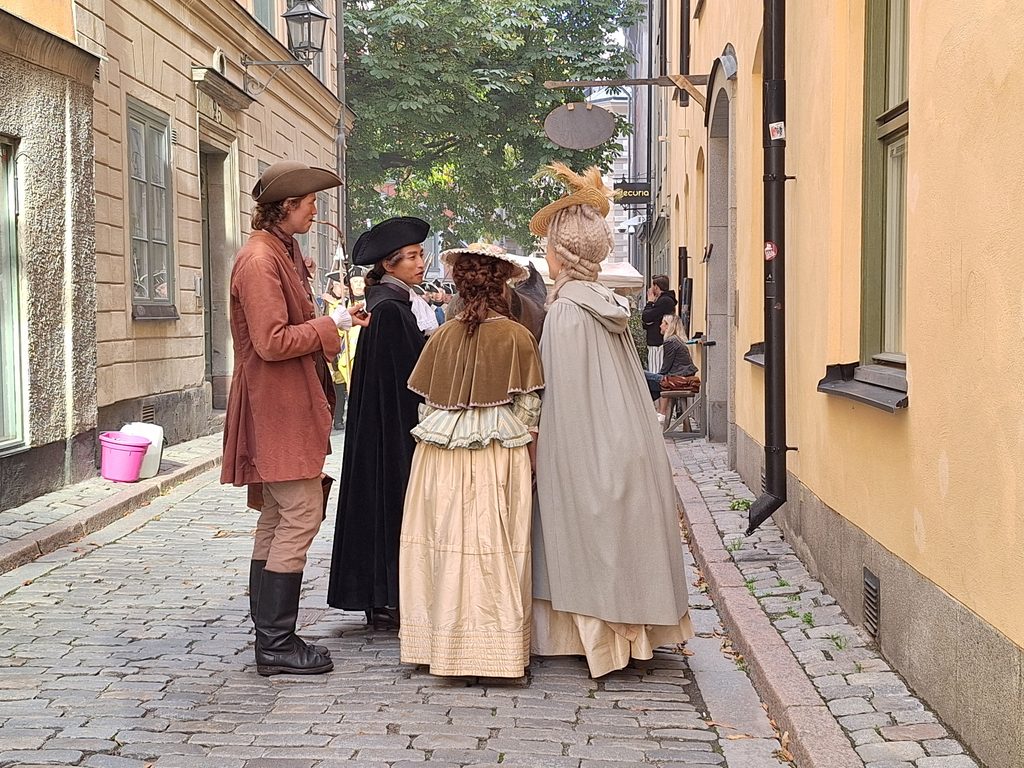
Stockholm Cathedral (Storkyrkan)
Once recharged, I made my way to Storkyrkan, Stockholm’s Cathedral. Admission was 95 SEK (€8.69 / NZD 17.12), but I was fortunate—entry was waived as I came to pray. In many churches, you’re charged even for that.
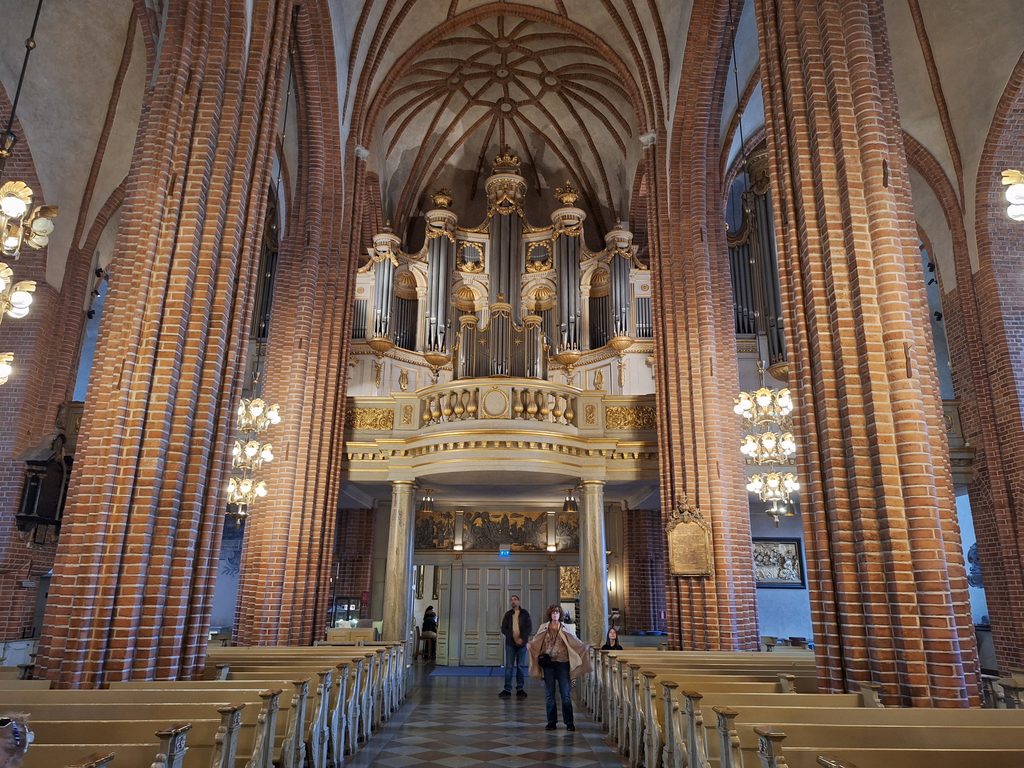
Storkyrkan is the oldest church in Gamla Stan, founded in the 13th century. Its brick Gothic interior has hosted royal weddings, coronations, and sermons for more than 700 years. Inside, I stood in awe before St. George and the Dragon, a monumental wooden sculpture carved in 1489 by Bernt Notke. The knight and beast embody Sweden’s victory over Denmark—a blend of myth and national pride.
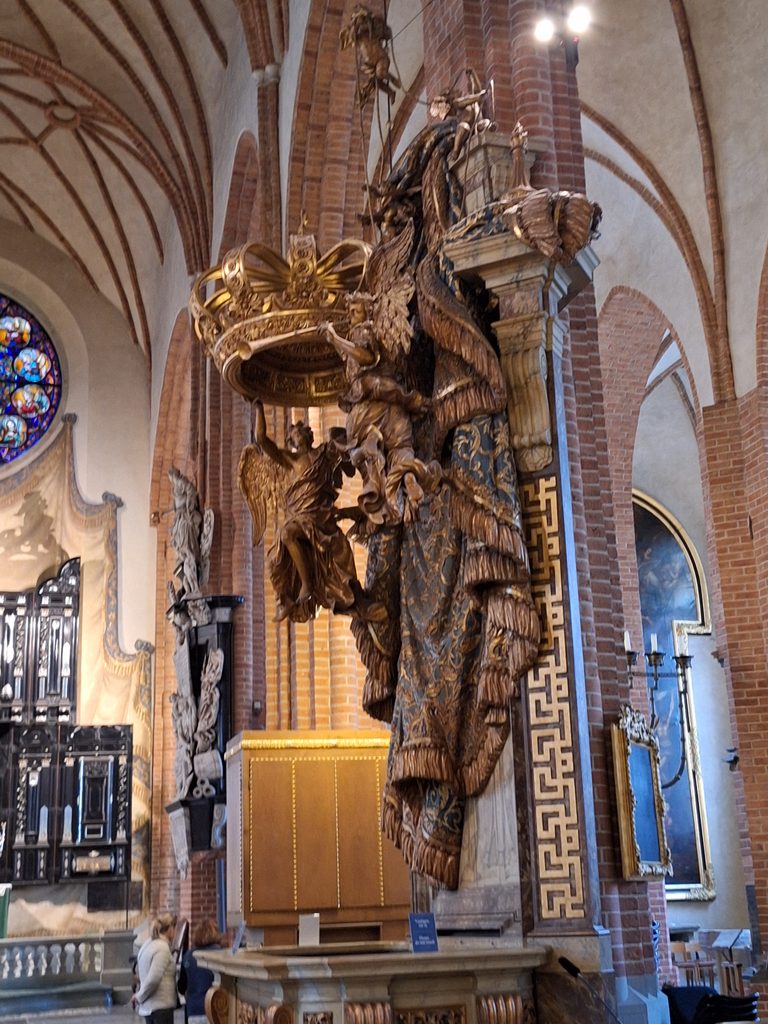
Another treasure is the silver altarpiece, donated in the 1600s by Queen Hedwig Eleonora, glittering in candlelight. More recently, the cathedral became known worldwide when Crown Princess Victoria married here in 2010.
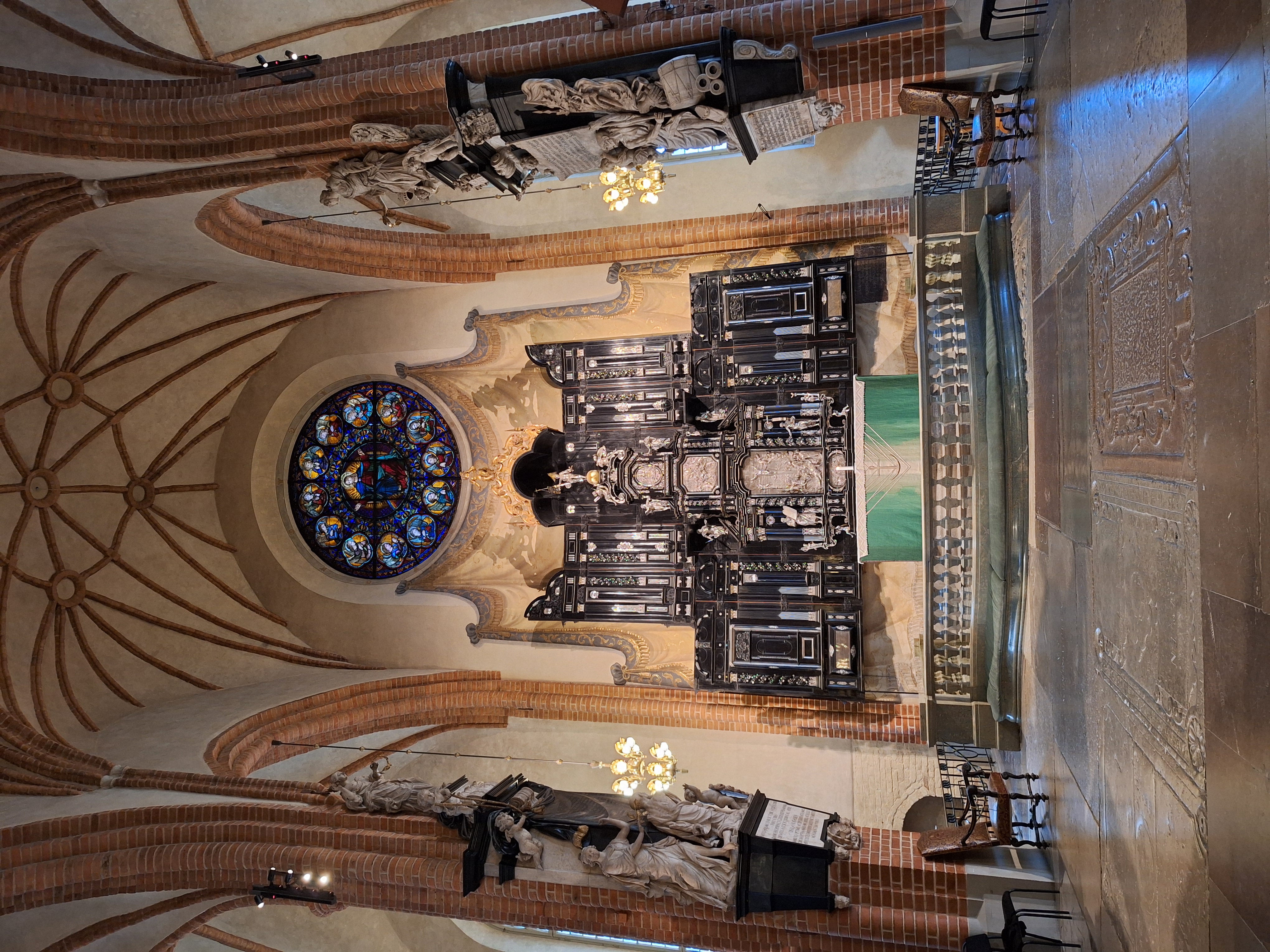
Standing beneath its vaulted arches, I felt dwarfed by history. The grandeur, the stained glass, the sheer weight of centuries was overwhelming—words fall short, but I hope my photos capture something of what I carried in my heart.
Evening Return
When I passed the Royal Palace again, the crowds were gone. Where earlier there had been brass bands and ceremony, now silence reigned—you could hear a pin drop. The narrow streets of Gamla Stan, glowing ochre in the evening light, seemed to belong entirely to me.
Later, I grabbed a VOI scooter and zipped back to the hostel. Dinner was a simple tuna pasta, shared alongside easy conversation with fellow travellers.
It was a good day—full of history, ceremony, and quiet moments of awe. Tomorrow remains undecided, but Stockholm has already left its mark
Day 306: Easy Day in Stockholm
Weather Update: Sunny with rain later, high 19°C
Elevation: 28 metres
Morning with Words & Photos
The morning was spent tying up loose ends—finishing blog entries, sorting through photos, and giving myself a gentle start. Sometimes the best part of travel is these quiet, practical hours where memories are gathered before the next adventure.
Namaste Stockholm – A Celebration of India
By midday, my trusty scooter carried me into the centre where Kungsträdgården park was alive with colour and sound. The occasion was Namaste Stockholm 2025, a vibrant celebration of Indian culture organised by India Unlimited in association with the Embassy of India in Sweden.
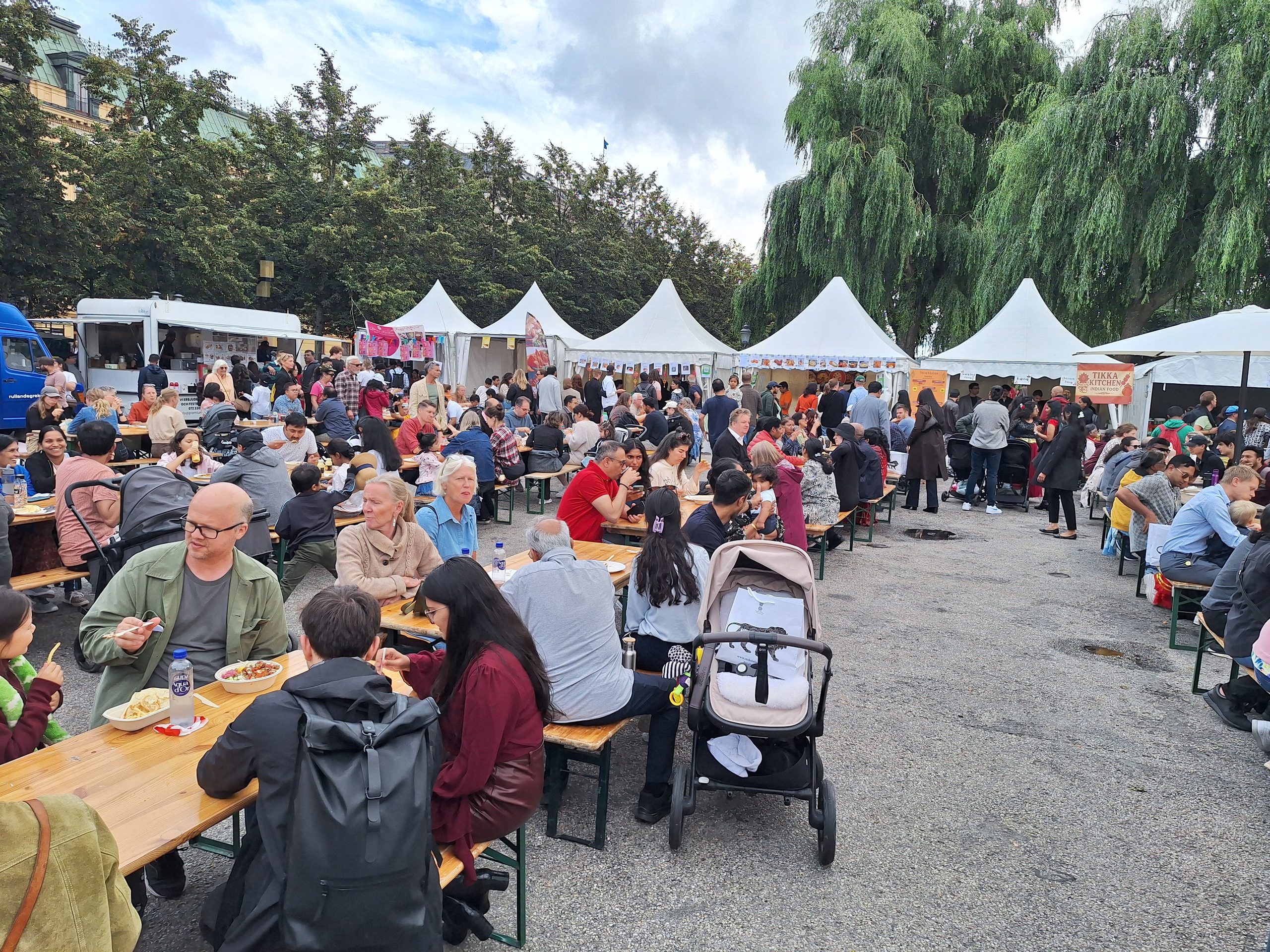
The theme this year was “Bridging Cultures – Celebrating Diversity.” The festival offered a range of activities, including yoga and wellness sessions, live dance and music, art and crafts, and, of course, a “Taste of India” food court. I learned that the Indian community here is raising around 7 million SEK (€640,000 / NZD 1.26 million) to help fund the purchase of land for a temple—a powerful expression of heritage and belonging in Sweden.
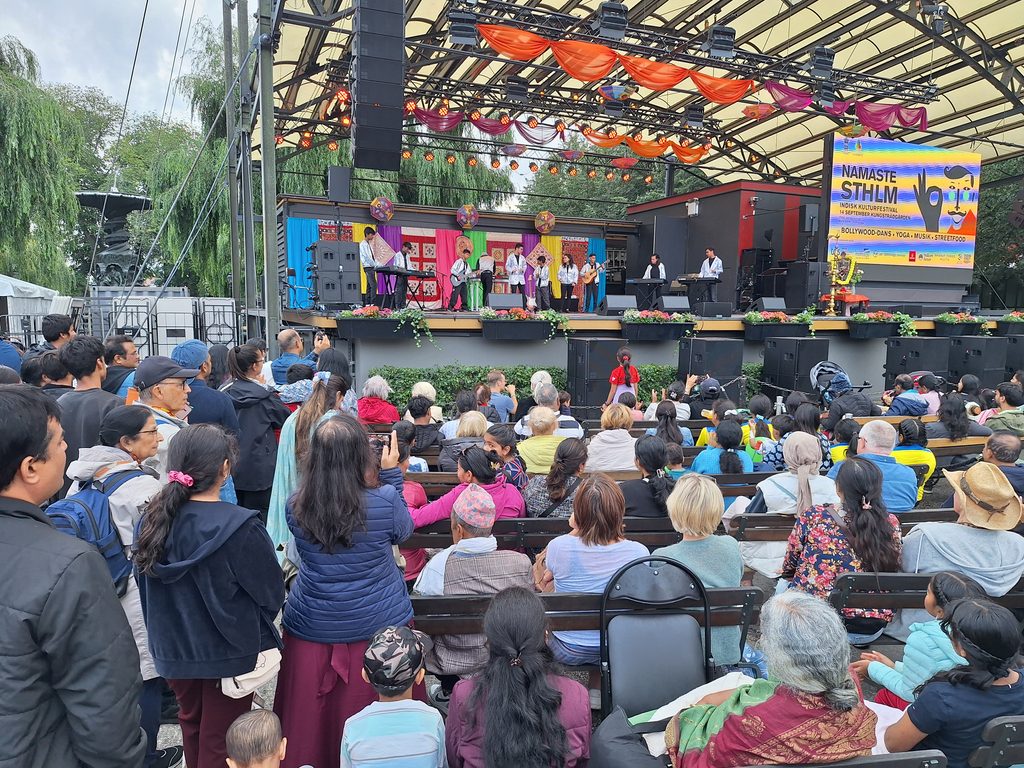
Tempting as the food stalls were, I had already prepared a meal waiting for me at the hostel—at a fraction of the price—so I contented myself with wandering, soaking up the atmosphere, and admiring the energy.
Kungsträdgården – From Royal Garden to Public Park
Kungsträdgården, where the festival was held, has an intriguing history of its own. Once the royal kitchen garden in the 15th century, it gradually evolved into a pleasure garden for the court before finally opening to the public in the late 18th century. Today it’s one of Stockholm’s most popular gathering places, hosting concerts, markets, and festivals throughout the year.
The park’s layered history—from royal grounds to people’s park—made it the perfect backdrop for a celebration of cultural diversity.
A Ship with a New Life
On my way back, I paused at the waterfront and found myself face to face with the striking silhouette of the af Chapman.
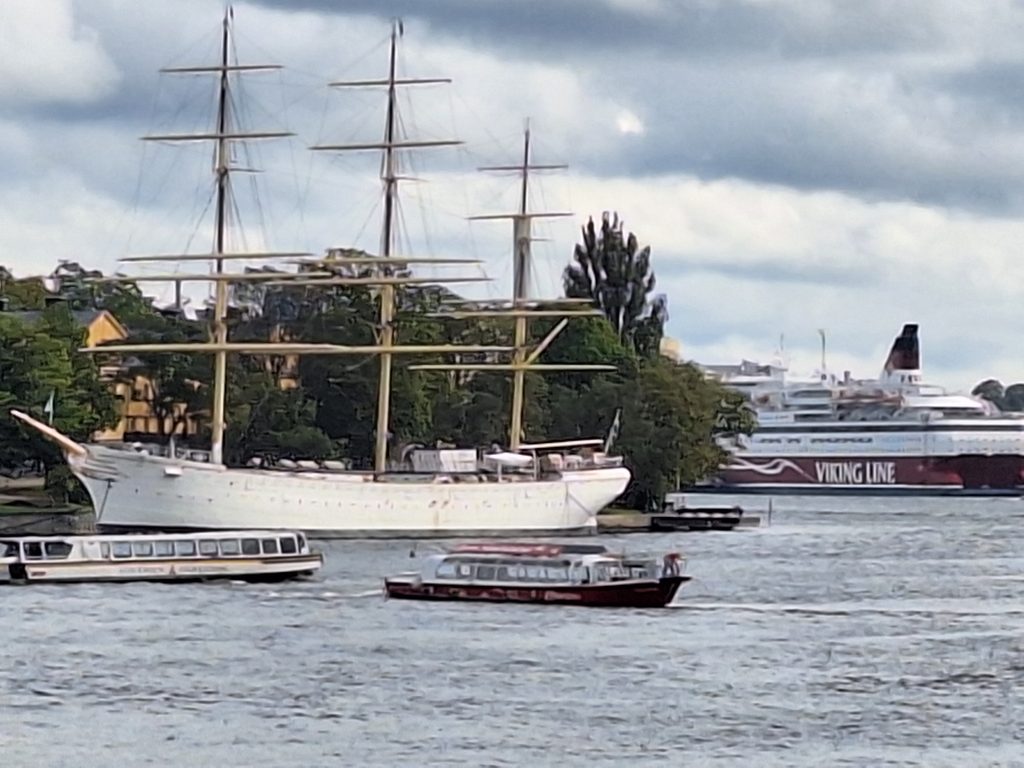
This full-rigged steel ship was originally launched in 1888 as the Dunboyne and later sailed under the name G.D. Kennedy until 1923. After years of service at sea, she was eventually retired and permanently moored on the western shore of Skeppsholmen Island.
Rather than being left to decay, the ship was repurposed in 1949 into something remarkable: today, she serves as one of Stockholm’s most iconic youth hostels, welcoming travellers from across the globe. It’s a beautiful example of how the city preserves its maritime heritage while keeping it alive for new generations of explorers.
An Eye for Architecture
Walking further through Stockholm, I passed some fabulous buildings that caught my eye. I promised myself to photograph them properly on the way back. The architecture here is nothing short of stunning—its survival owes much to Sweden’s neutrality during World War II, which spared Old Town the destruction that scarred so many other European cities. On my way home, it was getting dark, so I left the photos until tomorrow.
Football, Cards & Conversations
The afternoon was slower in pace. I settled into Wirstroms Pub, a favourite spot of mine in Gamla Stan, to watch the football and enjoy the local atmosphere. Later, I hurried back to the hostel for what was meant to be a card night. Sadly, the organiser, Alexandra, was either absent or not encouraging guests to join in, so the night fizzled out. Still, there were a few good conversations with fellow travellers, which made for a pleasant enough ending.
Looking Ahead
Tomorrow, I hope to do the Ferry Tour around six key sites—where you can hop on and hop off as you please—so I’ll be hoping for good weather and sunshine. Later this week, I’ll be heading on to Oslo and then into Denmark, where I plan to meet up with Lauris (a friend I met back in Poland), who has promised to show me around.
Andrew
(inspireseniorstravel.com)
Day 307: Wind, Churches, and a Ship Hostel in Stockholm
Weather Update: Sunny with a cold wind. High —
Elevation: 28 metres
A Slow Start to the Day
Breakfast was simple: toast, jam, and hot chocolate. I wrapped up the blog entries with photos, but felt little enthusiasm to do much. Overnight rain had cleared, leaving behind bright sunshine, but the wind had a sharp bite that cut straight through me. Since losing my jacket on the bus in Tallinn, I’ve been making do — today I decided to track down something second-hand.
The map promised a 2.2 km walk to a shop, but it was much further. Inside, I scrolled through racks of jackets, shocked at the prices, but I managed to find a thin jumper for 58 SEK (€5.31 / NZD 10.41). It’s light, but enough to take the edge off the Stockholm wind.
St. Clara Church – An Open Door
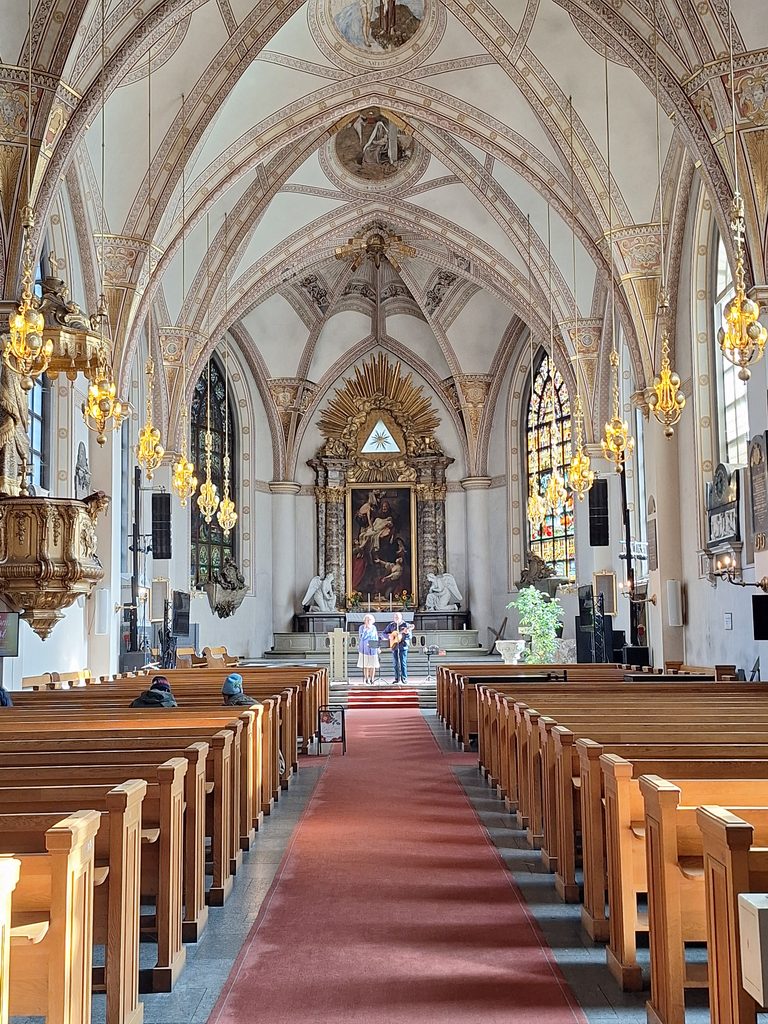
Heading back into the city centre to get my bearings, I passed S:ta Clara kyrka (St. Clara’s Church) and decided to step inside. I was glad I did. Despite being right in the heart of Stockholm, entry is free, and the church is known for its open policy toward the homeless — people are allowed to rest on the pews during the day, though they’re encouraged to move aside during services.

📸 Interior of St. Clara Church with ceiling paintings and the organ
Inside, I admired the colourful ceiling paintings, the elegant apse with its fine façade, and the grand organ above the entrance. Built in the 16th century on the site of a former convent, St. Clara has long been a place of refuge and continues that tradition today.

Searching for Routes and Sending Postcards
Afterwards, I wandered past the bus and train stations, still undecided whether to head north toward Oslo via a different route. Practicalities aside, I stopped in Old Town to pick up postcards and stamps for the grandchildren.
On the way, I paused at the Swedish Parliament Building (Riksdagshuset) to take photographs.
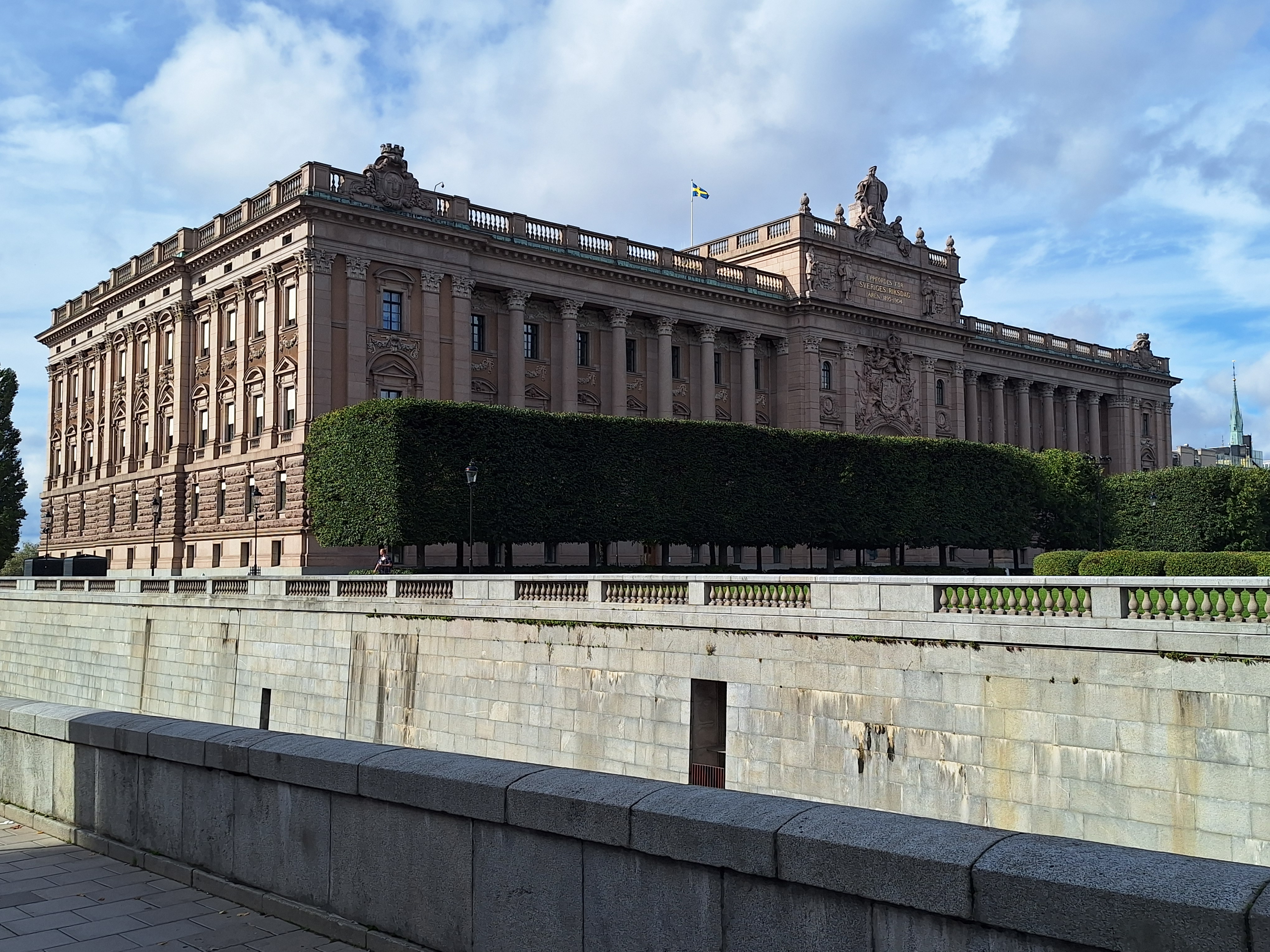
📸 The Swedish Parliament Building
My timing was less than perfect, as a large group of Chinese tourists descended just before me, posing in all angles for ten minutes. Finally, it was my turn — mission accomplished.
I had hoped to revisit Wirstrom Pub, but it was closed, so I ducked into an Irish bar nearby to recharge my phone, which has been draining battery at an alarming rate, and to fill out my postcards.
The Af Chapman Ship and Skeppsholmen
Later in the afternoon, I set off toward Skeppsholmen. My target was the af Chapman, a full-rigged steel ship built in 1888. Once named Dunboyne and later G.D. Kennedy, it sailed as a merchant vessel before retiring here in the 1940s. Today, it serves as one of Stockholm’s most unique youth hostels.
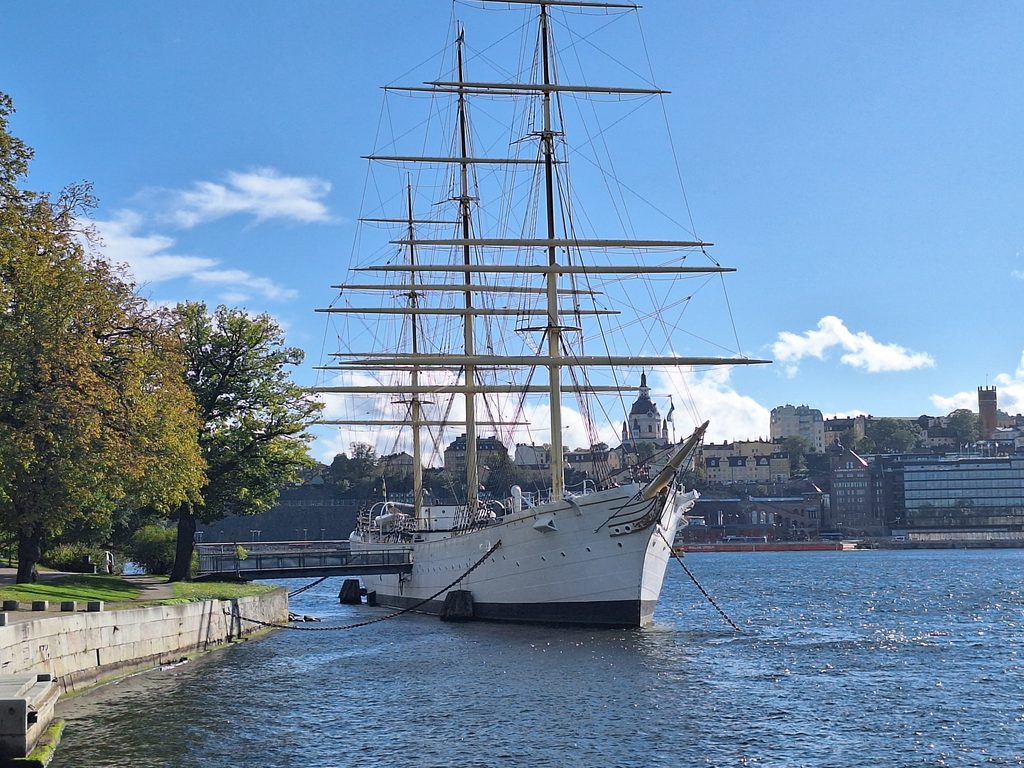
📸 The af Chapman ship moored at Skeppsholmen
Unfortunately, the ship wasn’t open when I arrived, but standing beside it, moored proudly along the waterfront, I could easily imagine life aboard.
Nearby stands the Skeppsholmen Church, built in the 19th century with an unusual octagonal design. Once a naval church serving Stockholm’s fleet, it has since been deconsecrated and today hosts cultural events.

📸 Exterior of Skeppsholmen Church
It, too, was closed, but the building itself — with its simple neoclassical lines — is worth the walk.
Glimpses of Djurgården
From Skeppsholmen, I could see across the water to Gröna Lund, Stockholm’s historic amusement park.

📸 View across to Gröna Lund amusement park
Opened in 1883, it remains one of the oldest amusement parks in the world, a summer haven of roller coasters, funhouses, and concerts. It looked lively from afar, though I didn’t cross over this time.
Evening with Travellers
By evening, I made my way back to the hostel, where a bottle of Merlot was shared among fellow travellers. We swapped stories well into the night, the kind of conversations that make hostelling such a rewarding way to travel.
Reflections
Though the day started slowly, it unfolded with small surprises — a jumper found in a second-hand shop, a church that welcomed all, and the sight of a ship transformed into a hostel. Even with closed doors at Skeppsholmen and the sharp wind cutting across Stockholm, the city revealed another side of its character: resilient, open, and full of history at every turn.
Andrew. (inspireseniorstravel.com)
Day 308: Djurgården, Vasa, and Skeppsholmen
Weather Update: Sunny with a Cold Wind, Chance of Showers. High 17°C
Elevation: 28 Metres
A Slow Start to the Day
Breakfast was the same as yesterday—toast, jam, and hot chocolate. I wrapped up some blog posts with photos, but I wasn’t feeling particularly enthusiastic. Still, I set off towards Djurgården, Stockholm’s “island of museums.”
Officially called Kungliga Djurgården (“The Royal Game Park”), the island has been crown land since the late 16th century, when King John III designated it a royal hunting ground. Today, it’s one of Stockholm’s most beloved leisure spots, filled with museums, parks, and cultural attractions.
The Vasa Museum
My original plan was to visit the Nordiska Museet, Stockholm’s largest cultural history museum, but I quickly lost interest. A Japanese lady from the hostel had also said it wasn’t particularly special. So instead, I made my way to the Vasa Museum—and what a decision that turned out to be.
Entry was 230 SEK (€21 / NZD 41.50), but worth every crown. Inside stands the Vasa warship, one of the world’s most extraordinary maritime recoveries.

A Ship Too Grand to Sail
Commissioned by King Gustavus Adolphus during Sweden’s war with Poland-Lithuania, the Vasa was designed to be one of the most powerful warships in the world. Richly decorated, heavily armed, and meant to project Sweden’s rising power, she was also dangerously unstable.
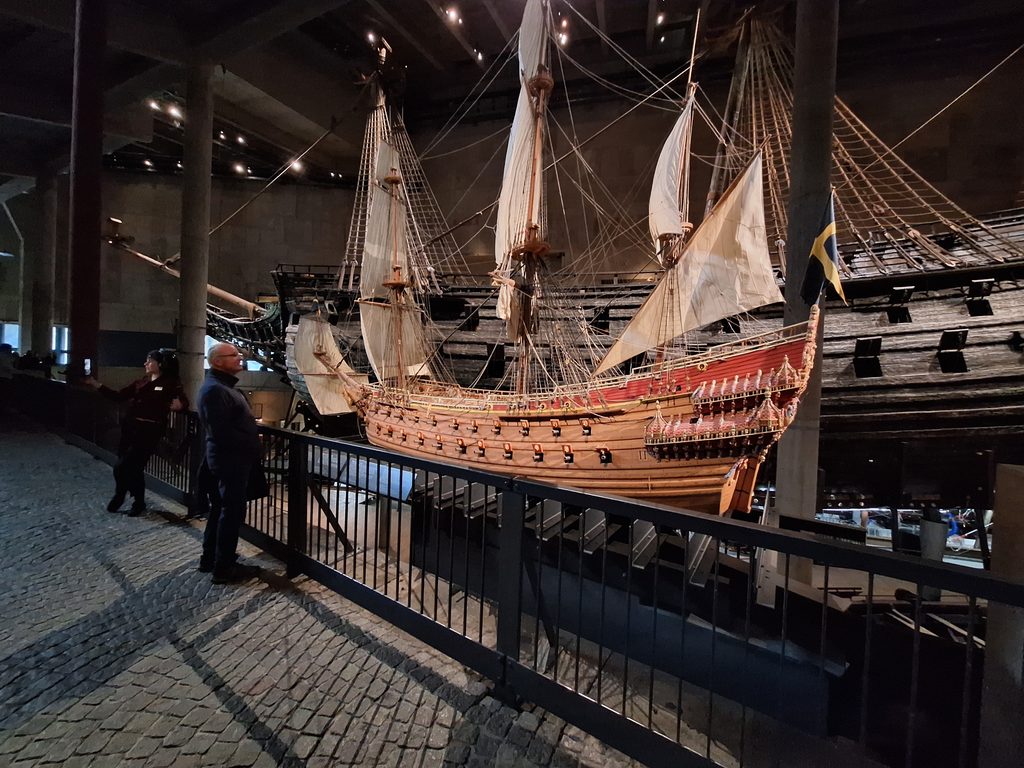
On 10 August 1628, the Vasa set sail on her maiden voyage—only to capsize after barely 1,300 metres. An inquiry followed, but no one dared lay blame too close to the king.
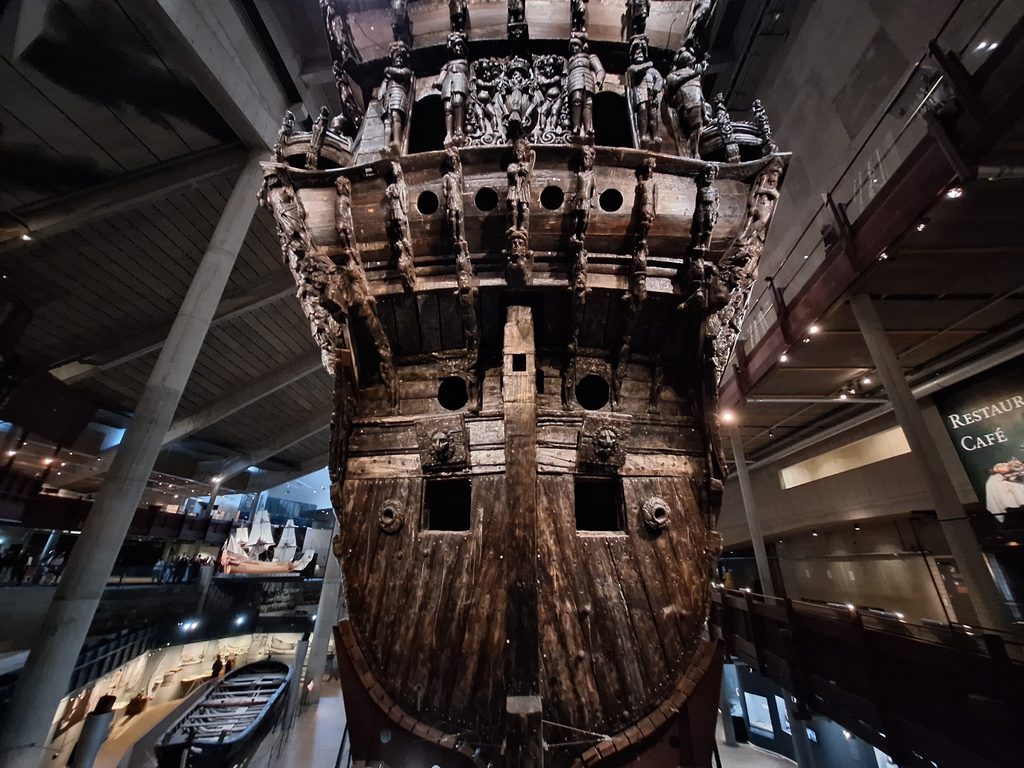
For over 300 years, she lay forgotten in Stockholm harbour until her rediscovery in the 1950s. In 1961, the ship was raised with her hull largely intact, along with thousands of artefacts that revealed incredible details about 17th-century life, naval warfare, and shipbuilding.
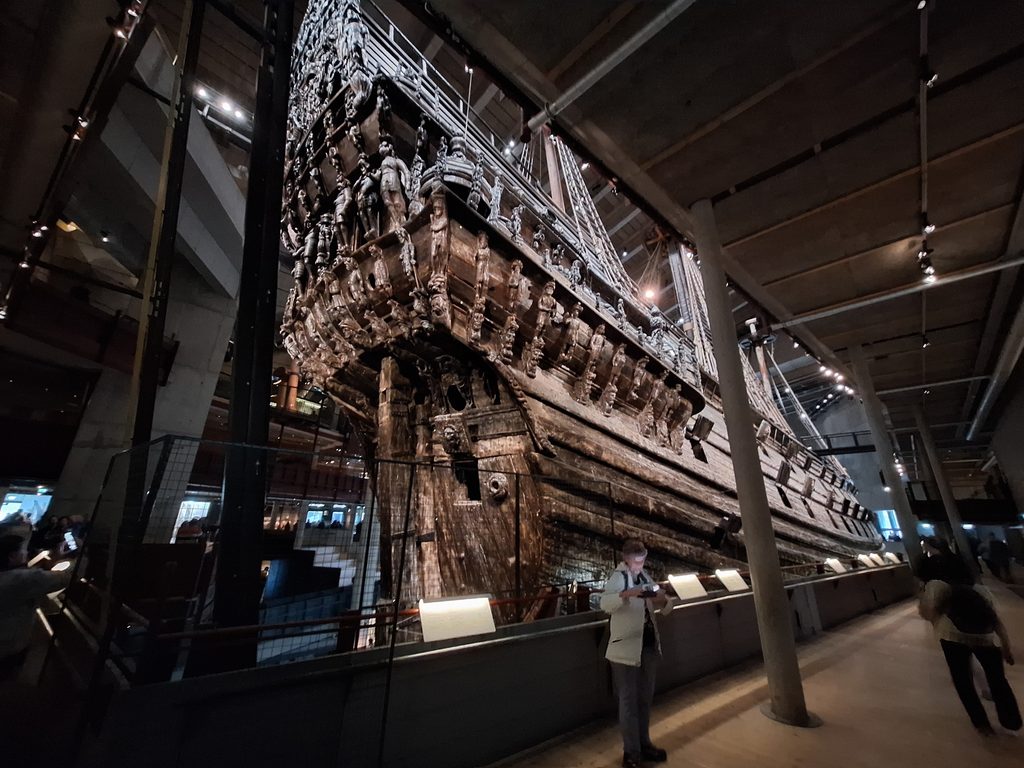

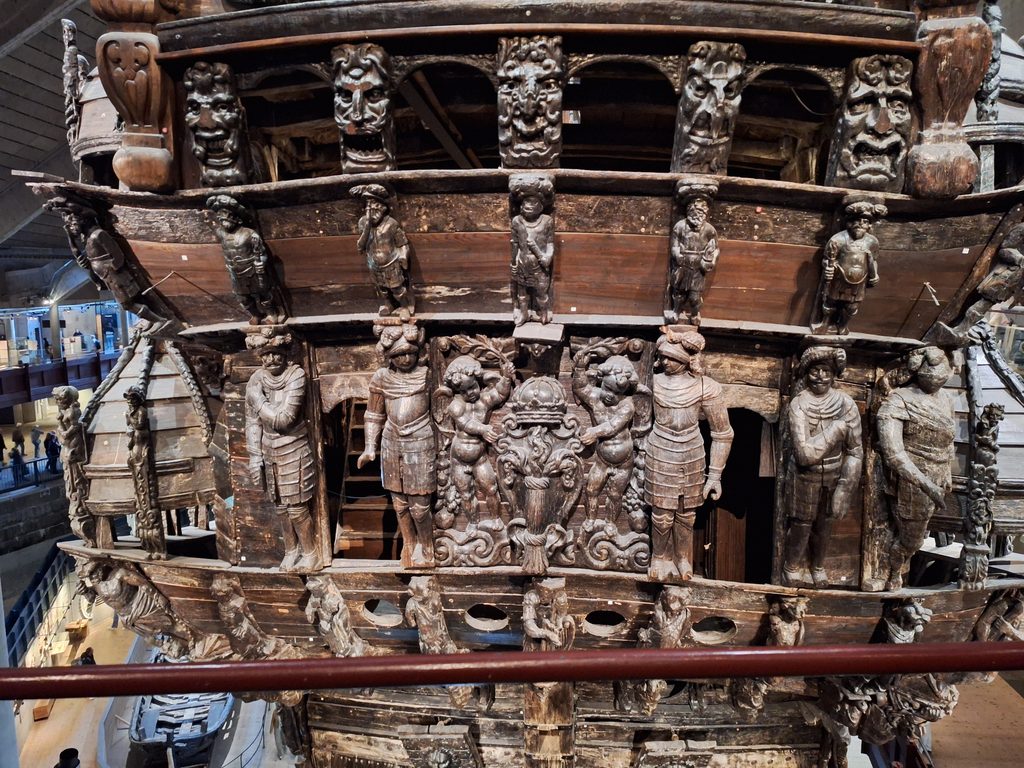
Today, she’s the world’s best-preserved 17th-century ship, seen by over 45 million visitors since recovery. Walking around her dark timbers, towering masts, and ornate carvings, I was struck by both her grandeur and her tragedy. The colour of the ship is due to being underwater for over 350 years, and the gilding and paint have been lost.

(Note: Djurgården also hosts the ABBA Museum. Entry is 359 SEK (€33 / NZD 65). Stockholm attractions can add up quickly, but the Stockholm Pass (999–2149 SEK / €89–192) gives access to around 70 sites and may be worth considering.)
A Pizza Price Shock at Gallerian
After leaving Djurgården, I went in search of more mobile data and ended up at the Gallerian, Stockholm’s first modern shopping mall, when it opened in 1976. Today, it’s one of the city’s busiest commercial hubs, located right in the city centre.
Among the shops, I spotted a pizza stand called Molo Pizza. The slices looked tempting, so I ordered a Capricciosa with a cold beer.

The cost? 79 SEK (€7.21 / NZD 14.27) for a single slice. To make it worse, a similar pizza, slightly smaller, was priced at 155 SEK (€14.12 / NZD 28.20). The mark-up made no sense, and I couldn’t help comparing it to Kotor in Montenegro, where I’d bought a massive slice for just €2 (21 SEK / NZD 3.50).
Stockholm clearly wasn’t a place for cheap pizza. Lesson learned: keep an eye on menus before ordering!
A Walk on Skeppsholmen
Later, I walked over to Skeppsholmen, a peaceful island once central to Stockholm’s navy and shipbuilding. Today, it’s home to museums, boats tied up for the winter, and some of the city’s best views. Across the water, I could see the bright colours and rollercoasters of Gröna Lund, Sweden’s oldest amusement park.
Gröna Lund: Stockholm’s Playground
Opened in 1883, Gröna Lund has entertained generations with rollercoasters, carousels, and summer concerts. It’s a tradition for Stockholmers, though with its compact location on the waterfront, it feels almost crammed into every available space. The park is especially lively in summer, when international bands and artists perform with the city skyline as a backdrop.
The Royal Ice Skating Pavilion
Crossing to Kastellholmen Island via a small bridge, I came across the Royal Ice Skating Pavilion (Skridskopaviljongen). Built in 1882, it was a winter retreat for Stockholm’s high society, with ornate red-brick architecture and even ceiling paintings that survive today. Closed to the public, it now serves as an event venue for the nearby Hotel Skeppsholmen.

Kastellet Citadel
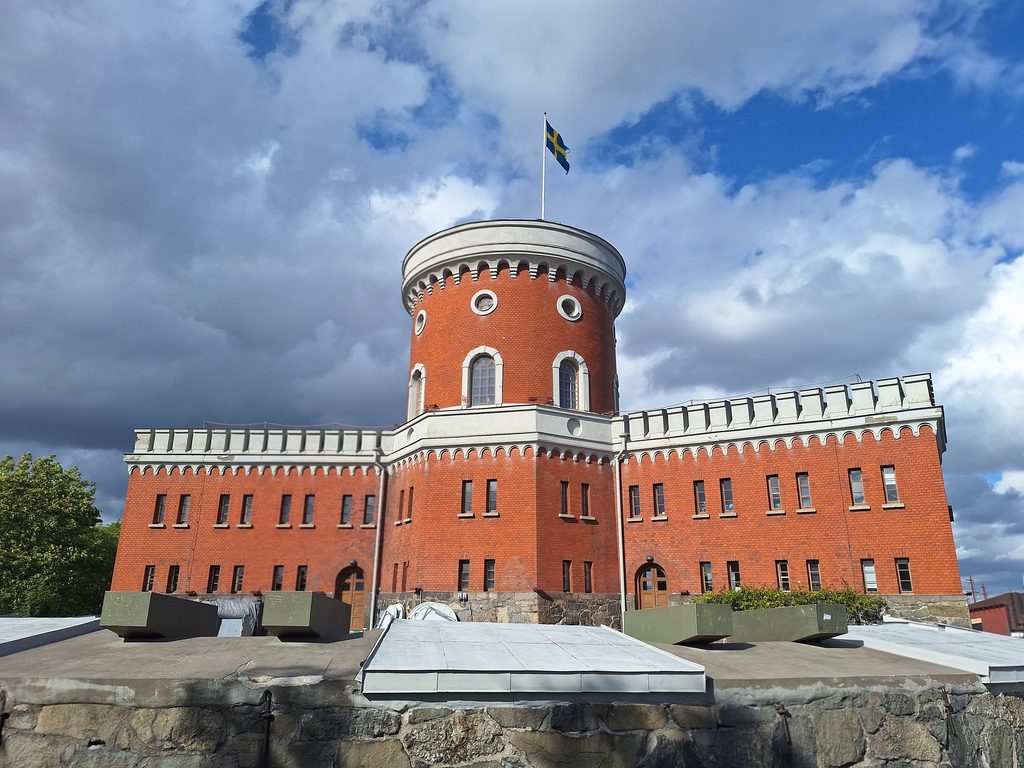
Further along stood the Kastellet, a small red-brick citadel perched above the water. First built in 1660 as part of Stockholm’s naval defences, it was rebuilt in 1848 after a gunpowder explosion destroyed its predecessor. Painted bright red with its tower rising above the harbour, it has long been a symbol of the city’s military vigilance.
Evening in Gamla Stan
A little disappointed by the closures, I wandered back into Gamla Stan. A couple of beers there lifted my mood before I returned to the hostel, where the evening turned into another thoughtful night of shared conversation—one of the real joys of travel.
About My Blog
Welcome to Inspire Seniors Travel.
When I first set out on my journey, my blog began as a simple diary — notes about where I went, what I ate, and the daily rhythm of travel. Over time, it has grown into something more: a space where I not only share the sights I see, but also the stories, history, and culture behind them.
I’ve discovered that travel is about more than ticking off places on a map — it’s about stepping into the layers of history that shaped them, the conversations with people along the way, and the personal reflections that stay with you long after the journey ends.
Here you’ll find:
Immersive stories that make you feel part of the journey.
Historical context to bring landmarks and cities alive.
Practical insights for fellow travellers — especially seniors who still have the spirit of adventure.
A blend of everyday details and big discoveries — from a simple breakfast to a fortress that’s stood for centuries.
Writing these stories takes time and thought, but it’s worth it to capture both the wonder and the realities of life on the road. My goal is simple: to inspire others — especially senior travellers — to embrace the world with curiosity, courage, and joy.
I hope you enjoy following along as much as I enjoy sharing.
— Andrew Matthews
📧 a.matthews2453@gmail.com
🌐 inspireseniorstravel.com